
Excited to share the Best Aubergine Miso recipe! This miso-glazed aubergine (Nasu Dengaku) is one of my favourites: simple, flavourful and ready with just five ingredients and minimal prep. It’s an easy, crowd-pleasing dish you’ll return to again and again.

Recipe Difficulty – Very Easy
Table of Contents
- Why this recipe works
- Ingredients to make Aubergine Miso (Nasu Dengaku)
- Substitutions
- Variations
- How to make Aubergine Miso (Nasu Dengaku)
- Serving Suggestions
- Leftovers
- Recipe FAQs
- More Aubergine Recipes
- The BEST Aubergine Miso (Nasu Dengaku) Recipe
Why this recipe works
Nasu Dengaku, or miso-glazed aubergine, is a classic Japanese preparation celebrated for its intense umami. The miso provides a savory depth while the maple syrup creates a glossy, sticky glaze that caramelises beautifully in the oven. Roasting the aubergine until tender gives a silky interior and a slightly charred, flavourful surface that pairs perfectly with the miso glaze. The result is an easy, satisfying dish that works as a main or a side.
Aubergines are versatile, nutritious and often underrated. When roasted and glazed with miso they become remarkably rich and satisfying.
Ingredients to make Aubergine Miso (Nasu Dengaku)
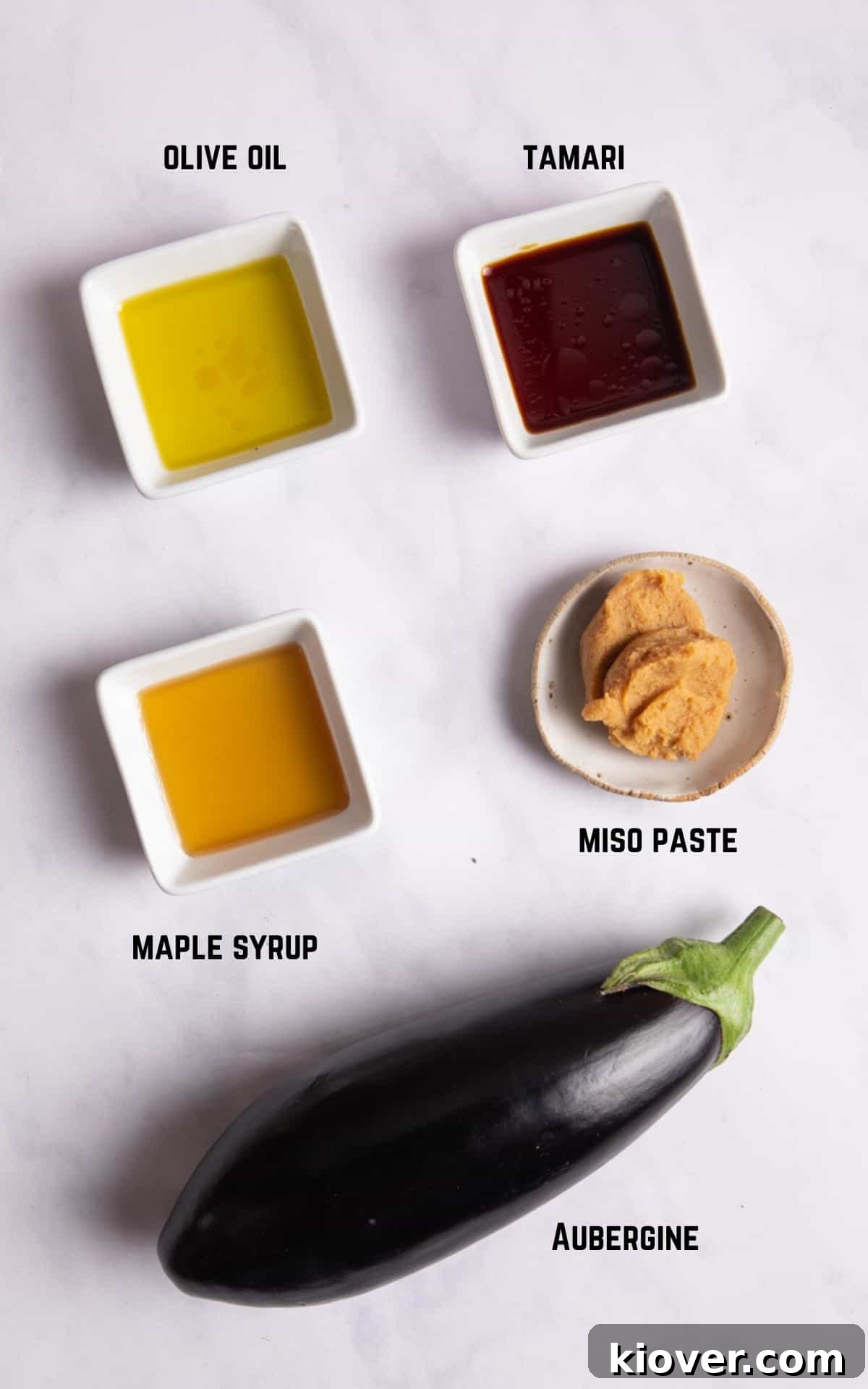
- Aubergines – also called eggplants. Roasted, they develop a silky texture that soaks up the miso glaze.
- Miso paste – white miso is recommended for its mild, umami-rich flavour. Miso is a fermented soybean paste that adds savoury depth.
- Tamari – a gluten-free soy sauce alternative that brings salty richness. Regular soy sauce works fine if gluten isn’t a concern.
- Maple syrup – used as the sweet component to help the glaze caramelise and become glossy.
- Olive oil – helps the aubergines roast evenly and rounds out the glaze.
See the recipe card below for exact quantities and full instructions.
Substitutions
- Aubergine – if you prefer, courgettes (zucchini) can be used as an alternative for a lighter texture.
- Maple syrup – honey or another liquid sweetener can be substituted if needed.
- Tamari – soy sauce can replace tamari unless you need the recipe to be gluten-free.
Variations
- Spicy – add 1/2 tsp cayenne to the glaze or finish the baked aubergines with sliced fresh chillis for heat.
- Deluxe – serve the aubergines on rice or quinoa with steamed greens like tenderstem broccoli, scatter sesame seeds and finish with lime wedges for brightness.
- Kid friendly – reduce the miso slightly to lower the saltiness for children and keep the glaze milder.
How to make Aubergine Miso (Nasu Dengaku)
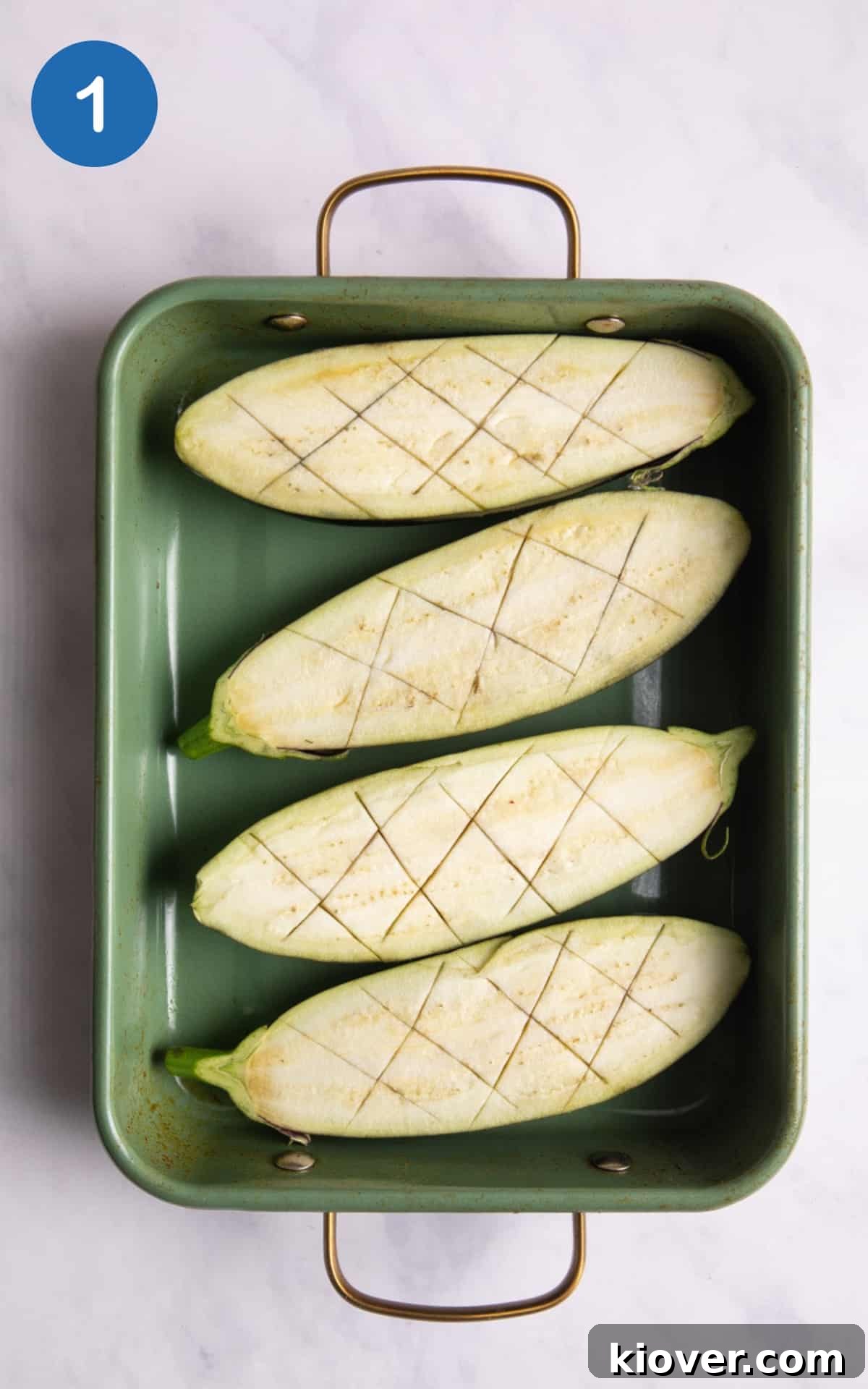
Step 1: Slice the aubergines lengthwise. Score the flesh in a criss-cross pattern, place on a baking tray and roast at 200°C (390°F) for 20 minutes.
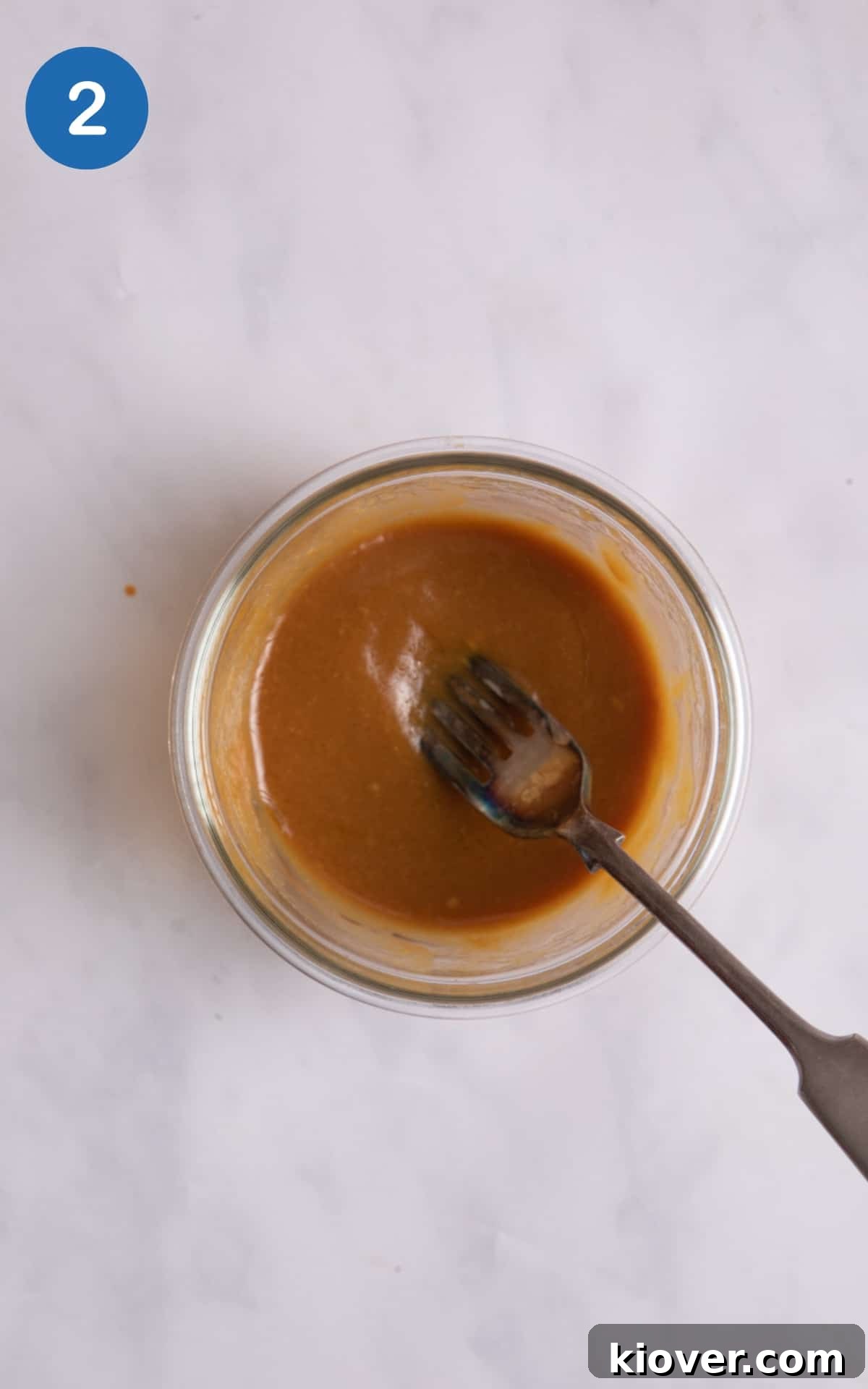
Step 2: While the aubergines roast, whisk together the miso paste, tamari, maple syrup and olive oil in a small bowl until smooth.
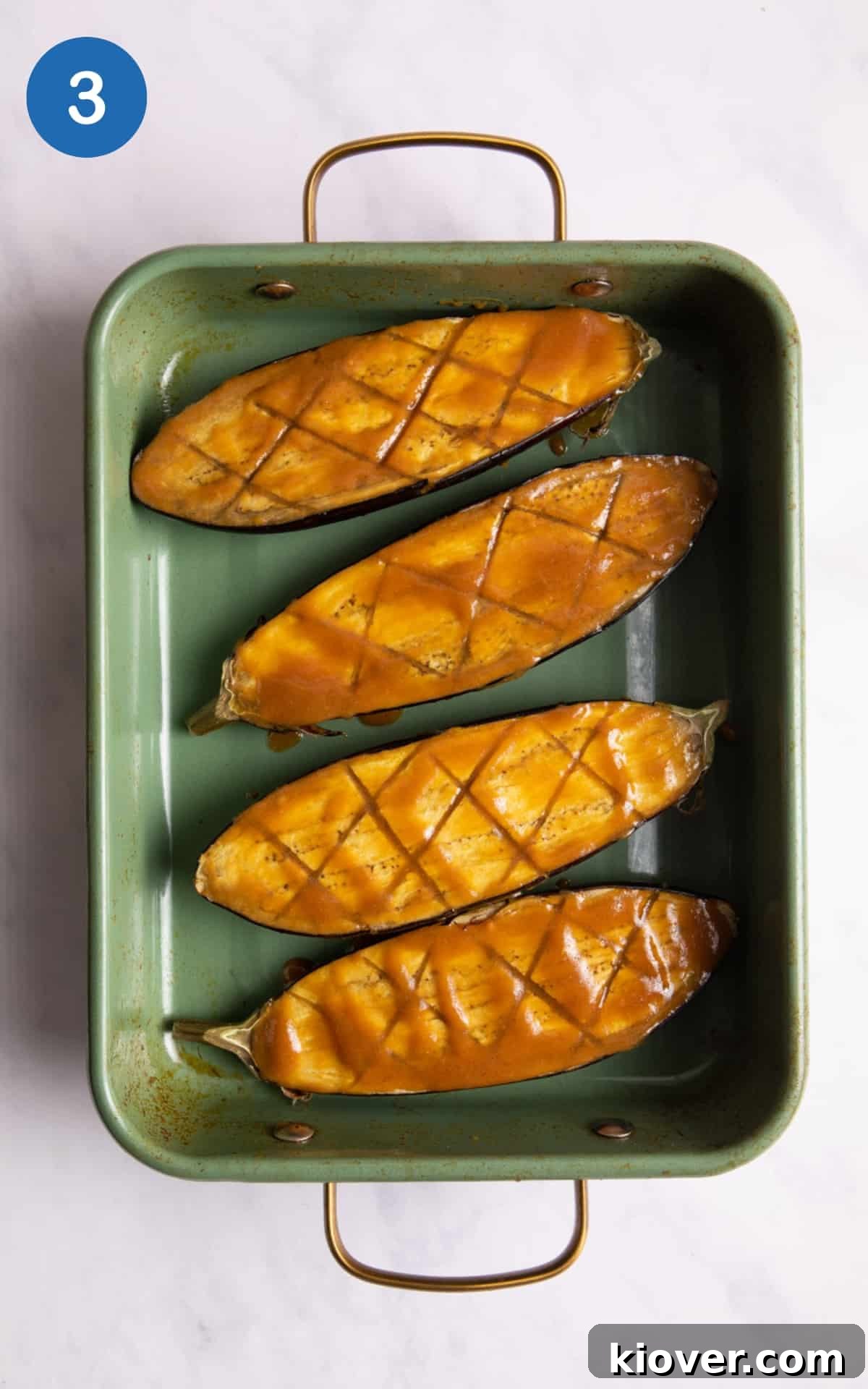
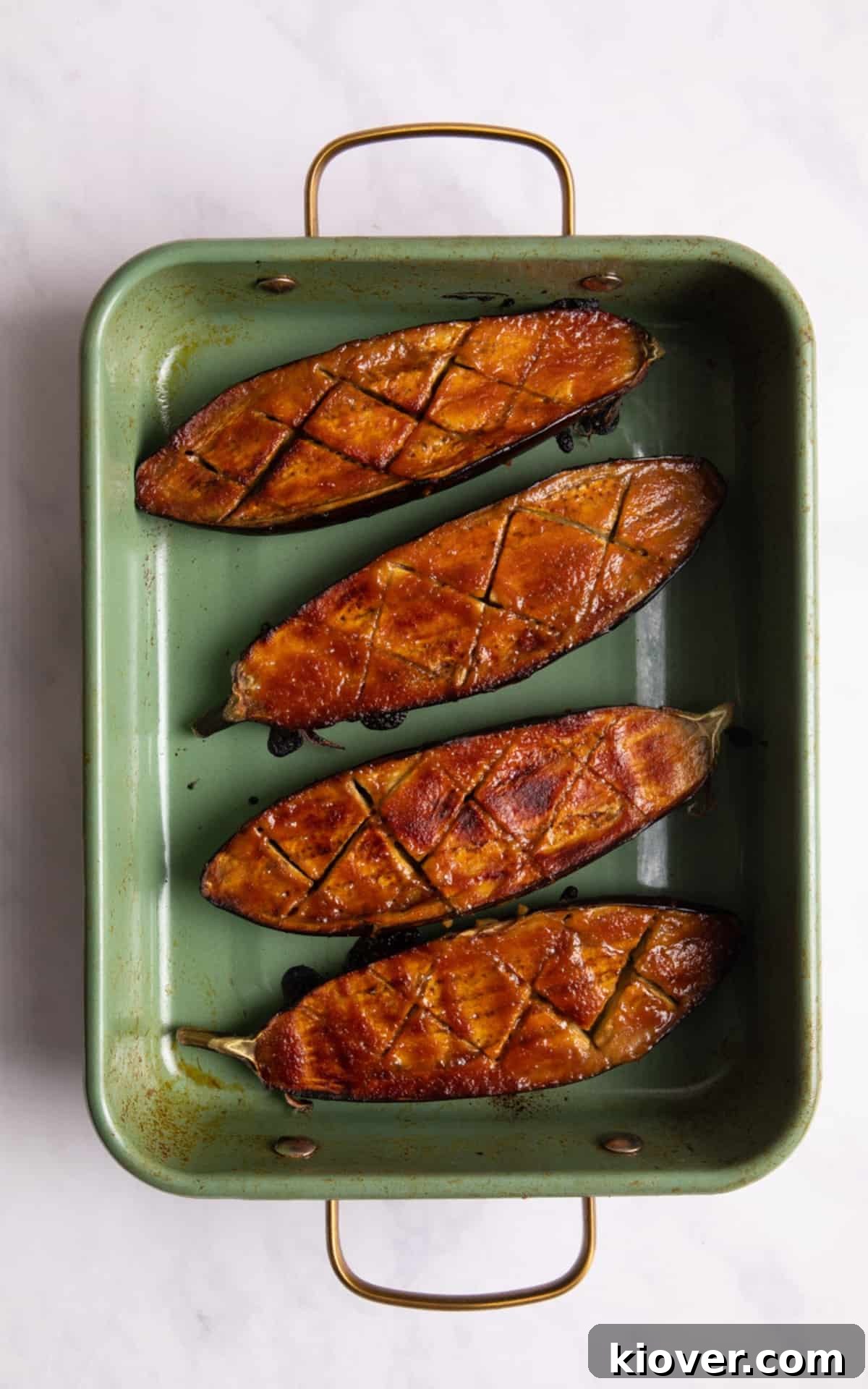
Step 3: Remove the aubergines from the oven and spread the miso mixture over the cut side. Return to the oven and bake for another 20–25 minutes until the glaze is deep brown and caramelised.
Hint: the glaze should be a deep brown and slightly sticky when finished.
Serving Suggestions
Some great ways to enjoy these miso-glazed aubergines:
- Serve over rice or rice noodles, sprinkled with chopped coriander and sesame seeds.
- Place on a bed of rice or quinoa with roasted vegetables or greens.
- Add as a topping to a mixed bean salad bowl, or serve alongside falafels and hummus for a Mediterranean-inspired meal.
- Serve as a side with homemade sushi or as part of a larger Japanese-style spread.
Leftovers
Store leftovers in an airtight container in the fridge for up to 3 days. The flavours develop further overnight, but freezing is not recommended as it can change the aubergine’s texture.
Recipe FAQs
Miso is a Japanese fermented paste made from soybeans and salt. It’s intensely savoury and adds deep umami flavour. You can find it in most supermarkets in the world food or spice aisle.
No. Modern varieties are less bitter, so pre-salting is usually unnecessary.
Yes. The skin softens during cooking and is perfectly edible; keeping it reduces waste and retains nutrients.
Store in the fridge in an airtight container for up to 3 days. Freezing is not recommended as it affects texture.
More Aubergine Recipes
- Aubergine Salad
- Aubergine Curry
- Roasted Aubergine
- Aubergine Bake
- Peanut Butter & Miso Roasted Aubergines
- Vegan Moussaka
- Vegetable Curry
- Mediterranean Vegetables
- Plant-based Sausage Tray Bake
- Air Fryer Aubergine
- Aubergine Parmigiana

YOU MIGHT ALSO LIKE…

Dinner
Vegan Moussaka
Sides
Peanut Butter & Miso Roasted Aubergines

Dinner
Awesome Aubergine Bake

Salads
Courgette Salad
Tried The BEST Aubergine Miso (Nasu Dengaku) recipe? Please leave a star rating and a comment to share how it went. I love hearing feedback and it helps others discover the recipe!

The BEST Aubergine Miso (Nasu Dengaku)
Equipment
- Chopping Board
- Knife
- Baking tray
- Small bowl
- Brush (optional)
Ingredients
- 2 tbsp miso paste (white miso recommended)
- 1 tbsp tamari (or soy sauce)
- 1 tbsp maple syrup
- 1 tbsp olive oil
- 2 aubergines
Instructions
- Slice the aubergines in half lengthwise, score the flesh in a criss-cross pattern, place on a baking tray and roast at 200°C for 20 minutes.
- Whisk together miso paste, tamari, maple syrup and olive oil in a small bowl until smooth.
- Spread the miso mixture over the roasted aubergines and return to the oven for 20–25 minutes until deeply browned and sticky.
Notes
Storage: Keep in the fridge up to 3 days.
Freezing: Not recommended; texture may suffer.
Tip 1: Choose firm, fresh aubergines for best results.
Tip 2: Miso is widely available in supermarkets in the world food or spice aisle.
Tip 3: Allow the aubergines to rest 5 minutes before serving for the best texture.
Nutrition