
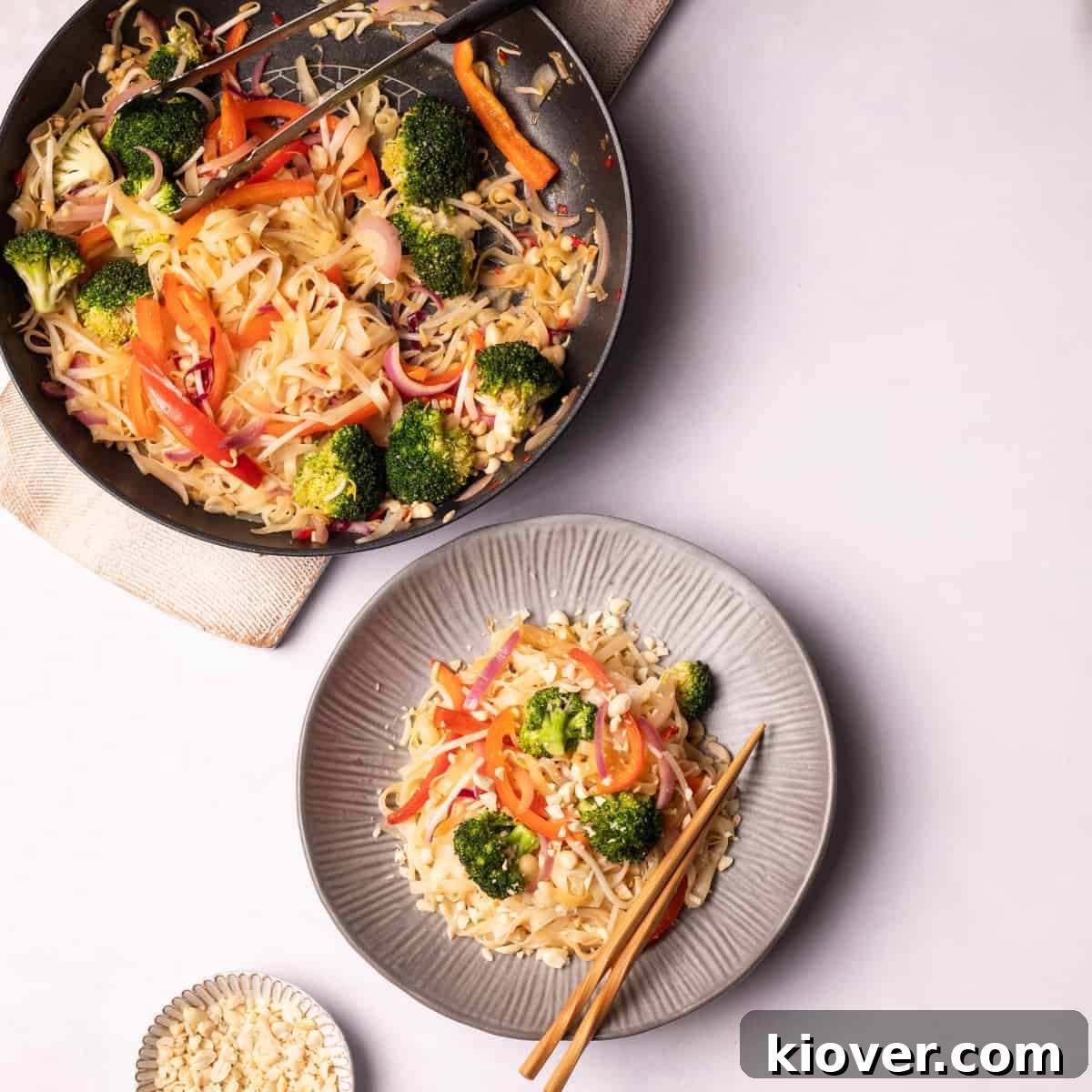
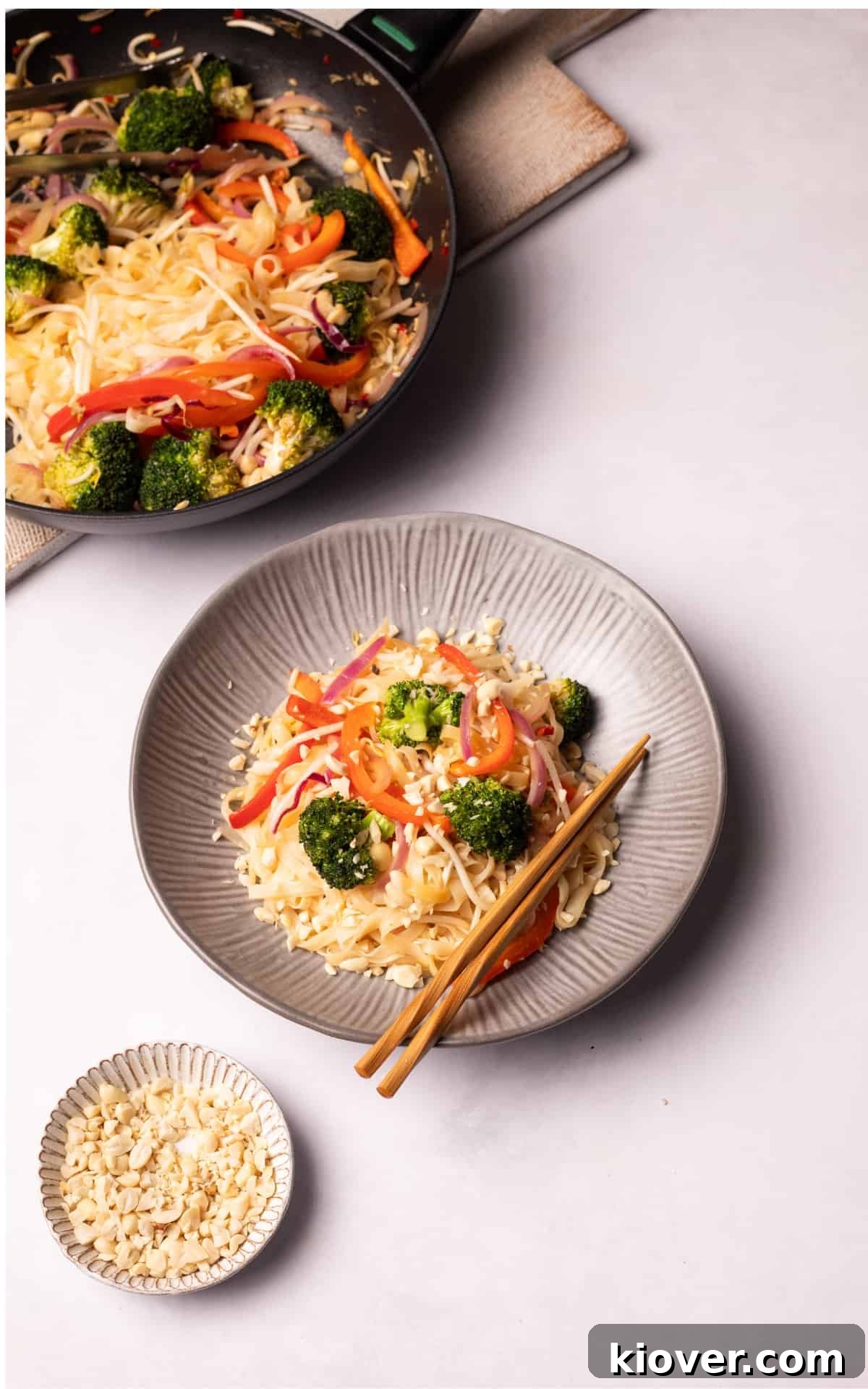
Discover the ultimate **15-Minute Vegan Pad Thai** recipe that promises an explosion of vibrant flavors and colors in every bite! This remarkably **easy Pad Thai** redefines fast, healthy meals, proving that quick cooking doesn’t compromise taste or nutritional value. Prepare to be amazed that this intensely flavorful dish is entirely **gluten-free, dairy-free, egg-free, and refined sugar-free**, making it a perfect choice for various dietary needs without sacrificing the authentic Thai experience.
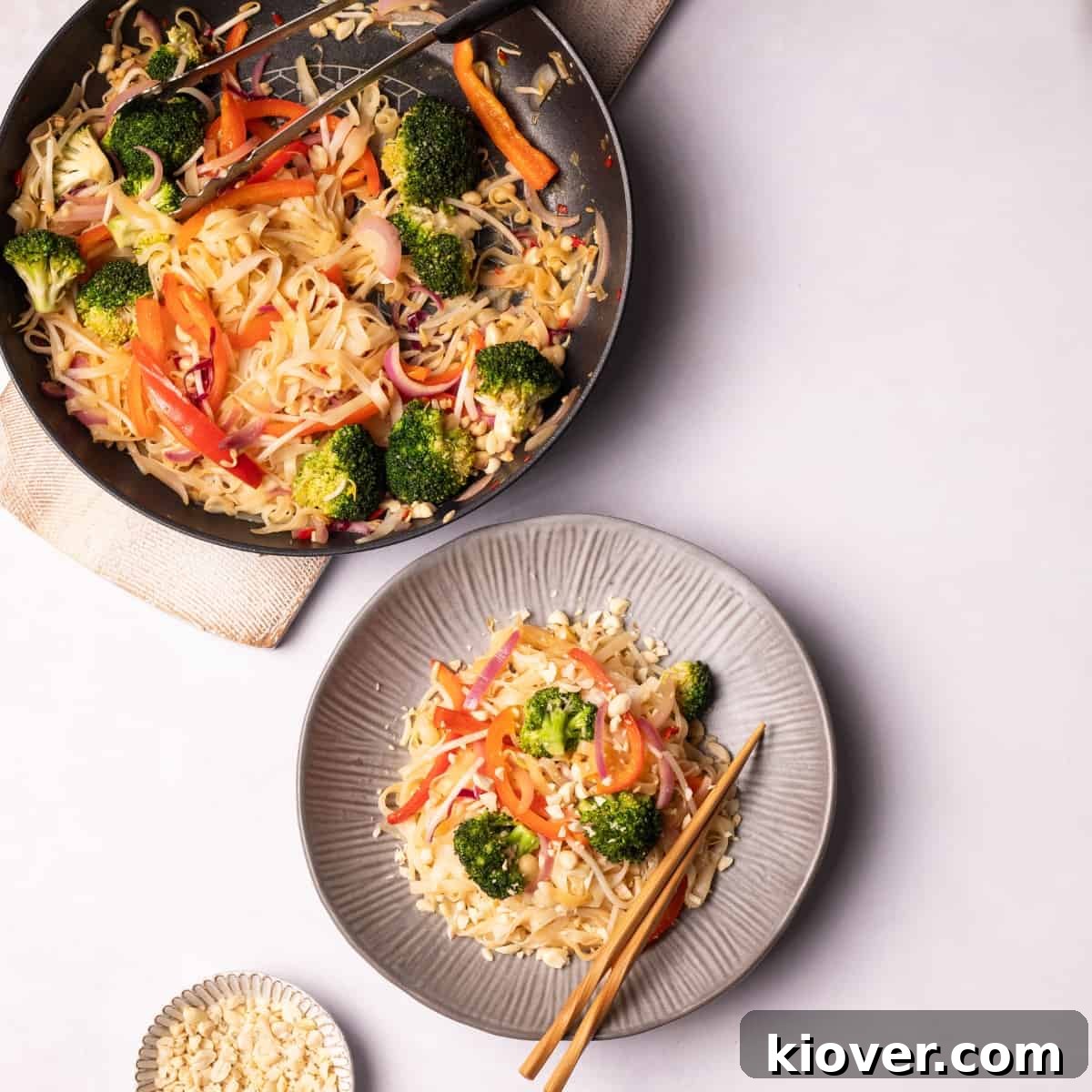
Recipe Difficulty – Very Easy
Table of Contents
- Why This Easy Vegan Pad Thai Works
- Essential Ingredients for Vegan Pad Thai
- Smart Substitutions for Your Pad Thai
- Delicious Variations to Customize Your Dish
- Step-by-Step: How to Make Vegan Pad Thai
- Storing and Reheating Leftover Pad Thai
- Vegan Pad Thai Recipe FAQs
- Vegan Pad Thai Recipe Card
Why This Easy Vegan Pad Thai Works
My passion for the complex and aromatic flavors of Thai cuisine runs deep, and for too long, a truly authentic yet accessible Pad Thai felt out of reach. That changed when I set out to craft a **vegan and gluten-free Pad Thai** recipe that captures the essence of this beloved dish, and the result was nothing short of extraordinary! If you, like me, adore Thai food, then you are going to fall head over heels for this recipe – even if you’re new to the vegan Pad Thai experience.
This recipe isn’t just delicious; it’s a game-changer for busy weeknights. Ready in approximately **15 minutes** and costing around £6 for two generous portions, it offers a significant saving in both time and money compared to ordering takeout or dining out. Forget lengthy cooking times or expensive restaurant bills; with this recipe, a vibrant and satisfying Thai meal is always within reach.
What makes this **gluten-free Pad Thai** truly stand out is its incredible balance of ease, vibrant aesthetics, nutritional value, and unbelievable taste. It’s packed with simple, wholesome ingredients that are readily available at most supermarkets. The depth of flavor achieved from such a minimal list of fresh vegetables and a perfectly balanced sauce is truly remarkable. This isn’t just a meal; it’s a celebration of plant-based cooking at its finest.
This **easy vegetarian Pad Thai** is guaranteed to be a crowd-pleaser, even for the most discerning palates. You can serve this up to avid fans of popular Thai restaurants, and I’m confident they will be pleasantly surprised by its authentic flavor profile. The biggest shock, however, will be discovering that this rich, savory, and slightly sweet dish is completely free from gluten, dairy, eggs, and refined sugar, making it an incredibly inclusive and healthy option for everyone at your table.
This recipe draws inspiration from my popular Peanut Butter Noodles and makes a fantastic pairing with my amazing Crispy Satay Tofu side dish. For those eager to explore more Thai-inspired creations, be sure to check out my Thai Tofu Curry, Thai Red Prawn Curry, or my comforting Vegan Laksa for more delightful culinary adventures.
Essential Ingredients for Vegan Pad Thai
Creating this flavorful **Vegan Pad Thai** starts with selecting fresh, quality ingredients. Here’s what you’ll need to gather:
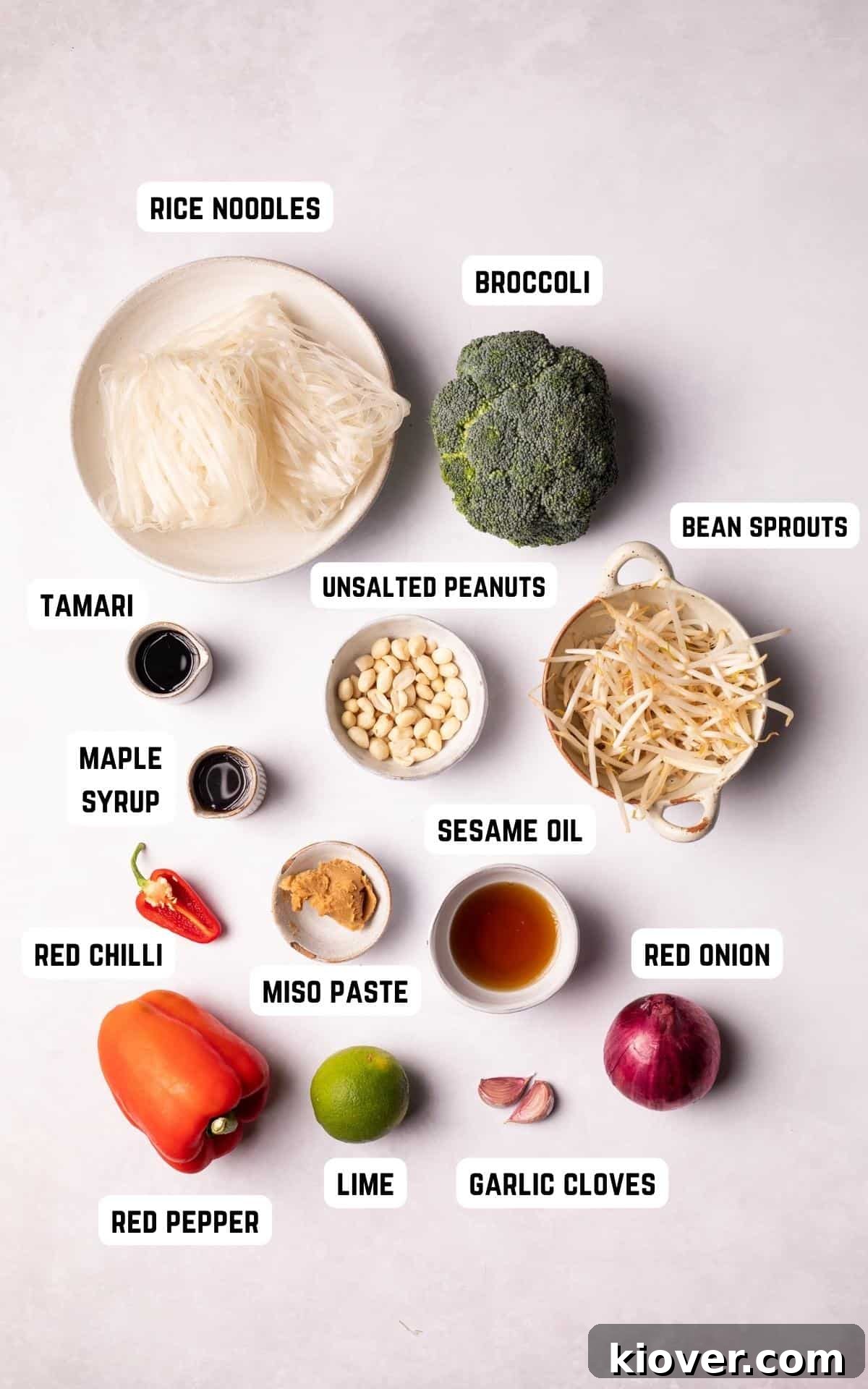
- Sesame Oil – Essential for its distinct nutty flavor, used to sauté the vegetables and infuse the dish with an authentic aroma.
- Garlic Cloves – Finely chopped or crushed, garlic provides a foundational aromatic base for the entire dish, deepening its flavor.
- Small Red Onion – Sliced thinly, red onion adds a mild sweetness and crisp texture, complementing the other vegetables.
- Red Chilli – Deseeded and sliced, it introduces a gentle warmth. For a spicier kick, you can leave some or all of the seeds in.
- Small Head of Broccoli – Cut into small florets, broccoli adds vibrant green color, a satisfying crunch, and a boost of nutrients.
- Red Pepper – Sliced into thin strips, red pepper contributes a beautiful bright color, natural sweetness, and a fresh, crisp element.
- Bean Sprouts – Added at the very end, bean sprouts provide a refreshing crunch and traditional Pad Thai texture.
- Unsalted Peanuts – Crushed and mixed into the dish, peanuts offer a delightful textural contrast and nutty flavor. Remember to reserve extra for garnishing!
- Rice Noodles – The star of any Pad Thai, these gluten-free and vegan-friendly noodles absorb the sauce beautifully. If you have any extra, try them in my Thai Curry Noodle Soup or a quick Vermicelli Soup.
For the Perfect Pad Thai Sauce:
The sauce is where the magic happens, balancing sweet, savory, and tangy notes without any animal products or refined sugar.
- Tamari – A gluten-free alternative to soy sauce, tamari provides the essential umami and savory depth. It’s incredibly versatile; try it in my Vegetable Thai Green Curry.
- Maple Syrup – My preferred natural sweetener, maple syrup balances the savory flavors and contributes to the characteristic Pad Thai sweetness.
- Miso Paste – A fermented soybean paste, miso adds a rich, complex umami flavor that is vital for replicating the traditional depth of Pad Thai without fish sauce. Use any spare miso in my Vermicelli Noodles or a comforting Cherry Tomato Pasta Sauce.
- Sesame Oil – A small amount in the sauce enhances the nutty profile and contributes to a smooth consistency.
- Lime Juice – Freshly squeezed lime juice is crucial for the tangy, bright finish that cuts through the richness and invigorates the palate.
Refer to the recipe card below for precise measurements and quantities of all ingredients.
Smart Substitutions for Your Pad Thai
- Sesame Oil – While sesame oil offers a unique flavor, you can use other high-heat cooking oils like avocado oil, grapeseed oil, or even a neutral vegetable oil if sesame oil is unavailable.
- Garlic Cloves – If fresh garlic is not on hand, ½ teaspoon of minced garlic or garlic powder can be used as a convenient alternative.
- Red Onion – Yellow or white onions are perfectly suitable replacements for red onions, offering a similar base flavor.
- Vegetables – This recipe is wonderfully versatile! Feel free to customize the vegetable selection based on what your family enjoys or what you have readily available. Carrots, snap peas, bell peppers of different colors, mushrooms, or thinly sliced cabbage all make excellent additions.
- Tamari – For those not strictly gluten-free, traditional soy sauce can be used. Alternatively, liquid amino acids or coconut aminos are great gluten-free, soy-free substitutes.
- Lime – Lemon juice can be used in place of lime for a similar tangy profile. Bottled lemon or lime juice can also work in a pinch, though fresh is always recommended for the best flavor.
Delicious Variations to Customize Your Dish
- Spicier Kick – To elevate the heat, simply leave the seeds in the red chili pepper. For an even bolder spice, consider adding a dash of sriracha or a pinch of red pepper flakes to the sauce.
- Deluxe Toppings – Elevate your **Vegan Pad Thai** with an array of fresh toppings. Garnish generously with extra crushed peanuts, thinly sliced green onions (scallions), fresh cilantro, and a wedge of lime for an added burst of freshness and texture.
- Kid-Friendly Version – For children or those sensitive to heat, omit the chili pepper entirely. You can also adjust the vegetables to their preferences, perhaps adding more mild options like carrots or corn.
- Protein Boost – While delicious as is, you can easily add protein. For a non-vegan version, consider stir-frying thinly sliced chicken, shrimp, or beef. For a vegan-friendly protein boost, pan-fried or baked tofu (extra firm, pressed and cubed) or tempeh would be excellent additions.
Step-by-Step: How to Make Vegan Pad Thai
This **15-minute Vegan Pad Thai** comes together quickly with just a few simple steps. Get ready to enjoy a vibrant and flavorful meal!
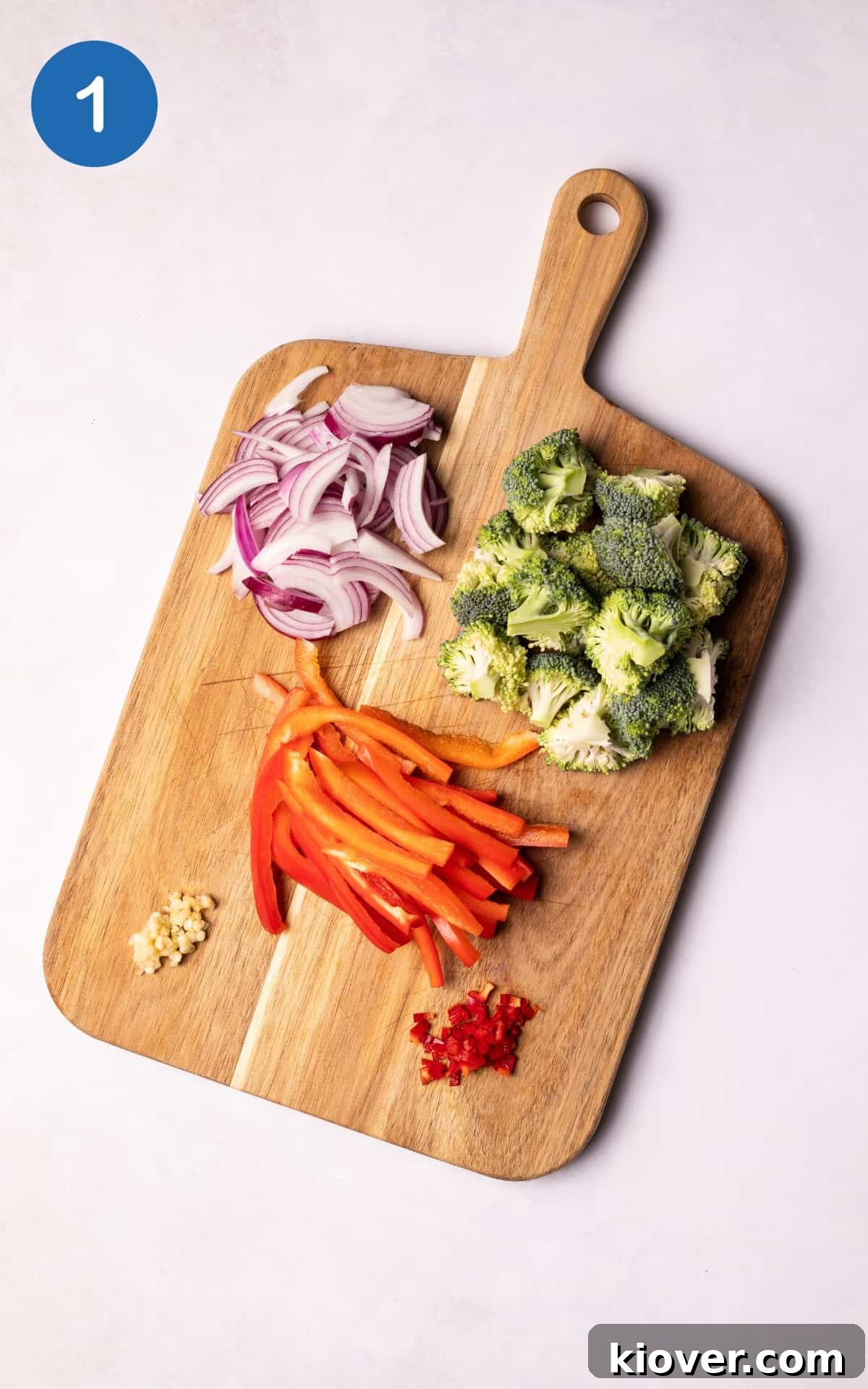
Step 1: Prepare Your Vegetables. Begin by finely chopping the garlic, thinly slicing the red onion, and deseeding and slicing the red chili. Next, finely slice the red pepper and chop the small head of broccoli into bite-sized florets. Having all your vegetables prepped beforehand is key to making this a truly **15-minute Pad Thai**!
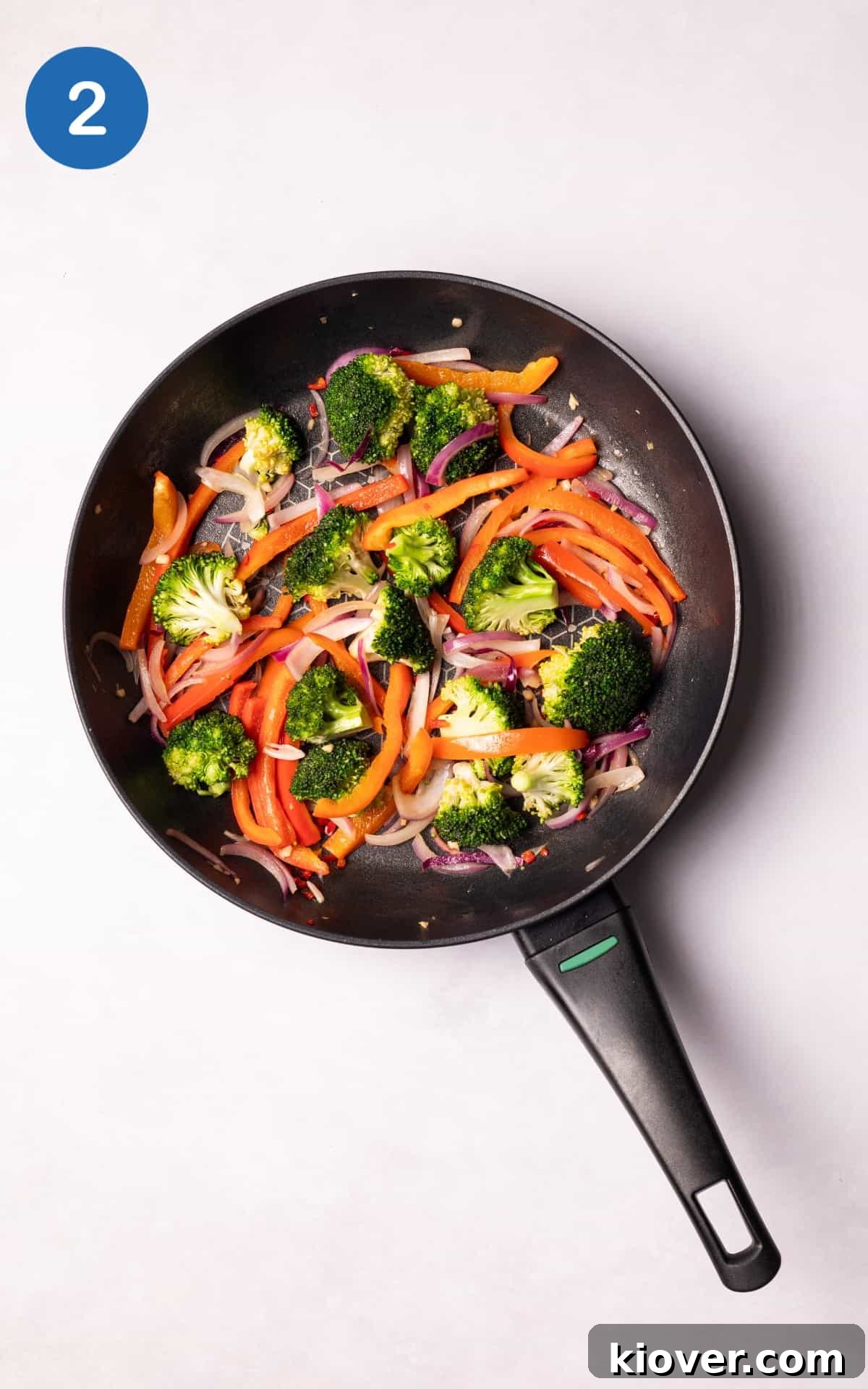
Step 2: Sauté the Aromatics and Vegetables. Heat a large nonstick pan or wok over medium-high heat, adding 2 tablespoons of sesame oil. Once hot, add your chopped garlic, sliced red onion, chili, red pepper, and broccoli florets. Stir-fry for about 5 minutes, or until the vegetables are tender-crisp and slightly softened but still retain some bite and vibrant color.
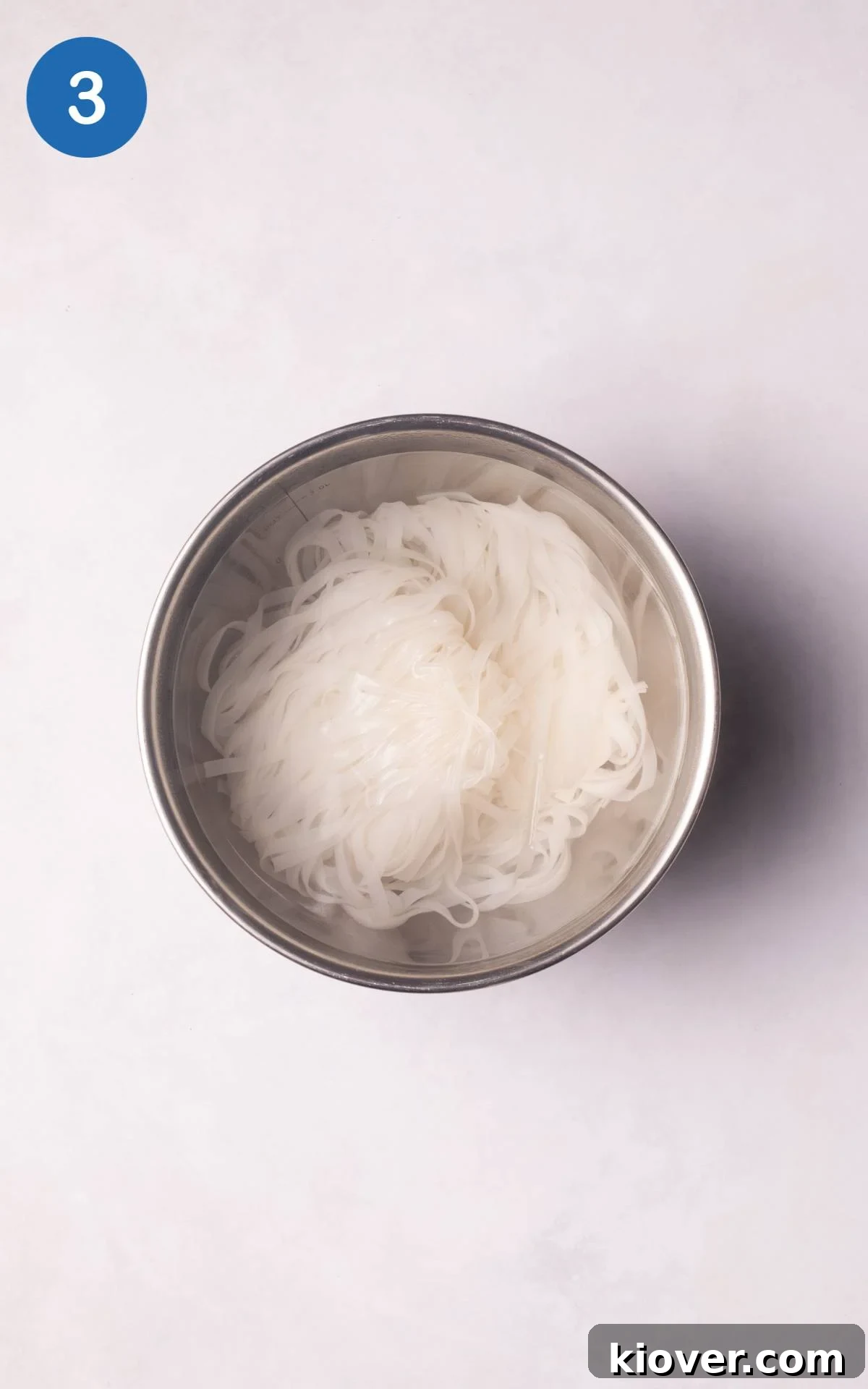
Step 3: Cook the Rice Noodles. While your vegetables are stir-frying, bring a pot of water to a boil. Add the rice noodles and cook according to the package instructions until they are al dente. Rice noodles cook very quickly, so keep an eye on them to prevent them from becoming overcooked and mushy. Drain them well once done.
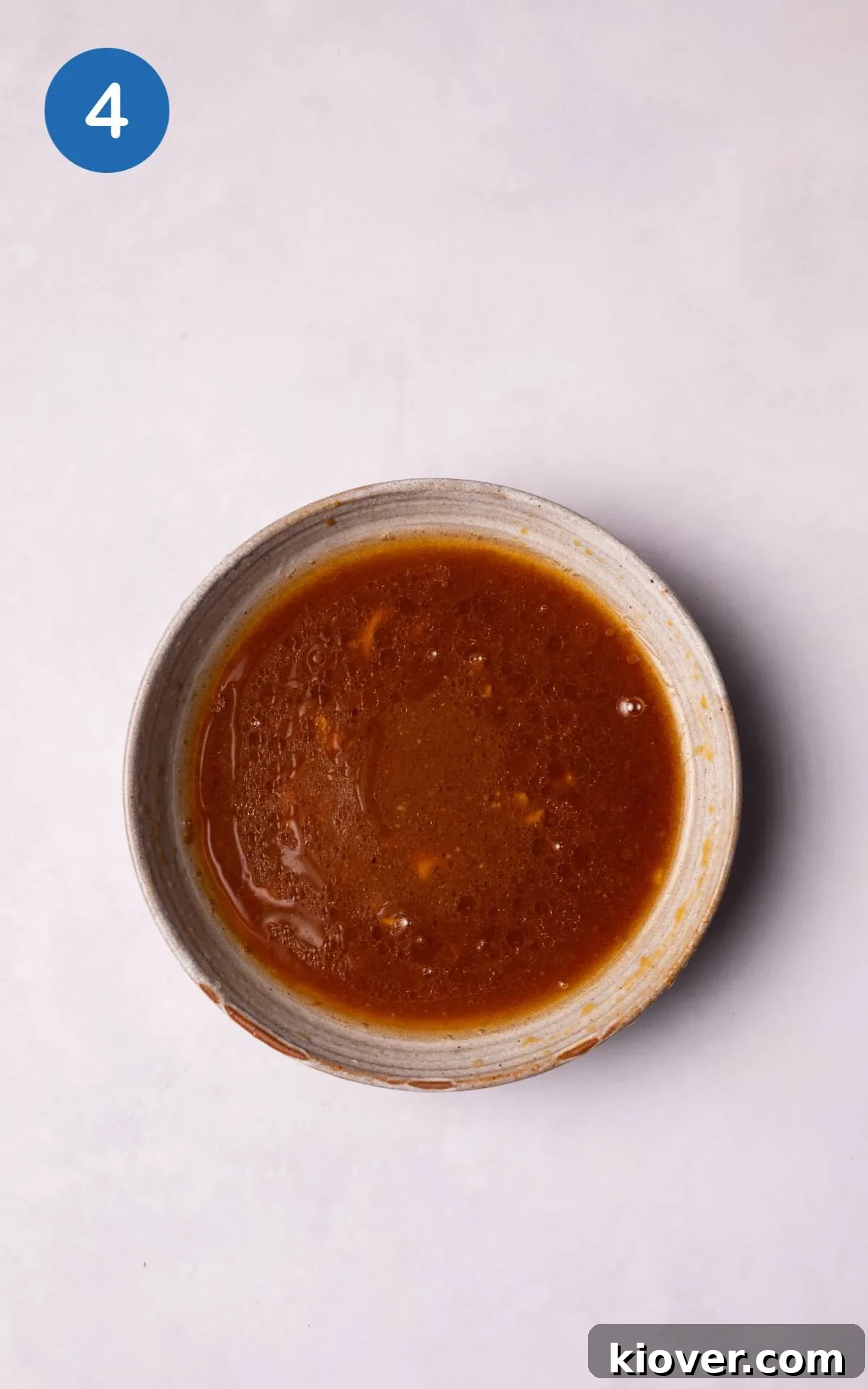
Step 4: Whisk Together the Pad Thai Sauce. In a small mixing bowl, combine all the ingredients for the Pad Thai sauce: tamari, maple syrup, miso paste, 1 teaspoon of sesame oil, and fresh lime juice. Whisk vigorously until the sauce is smooth and all ingredients are well combined. This ensures a uniform flavor profile for your **healthy Pad Thai**.
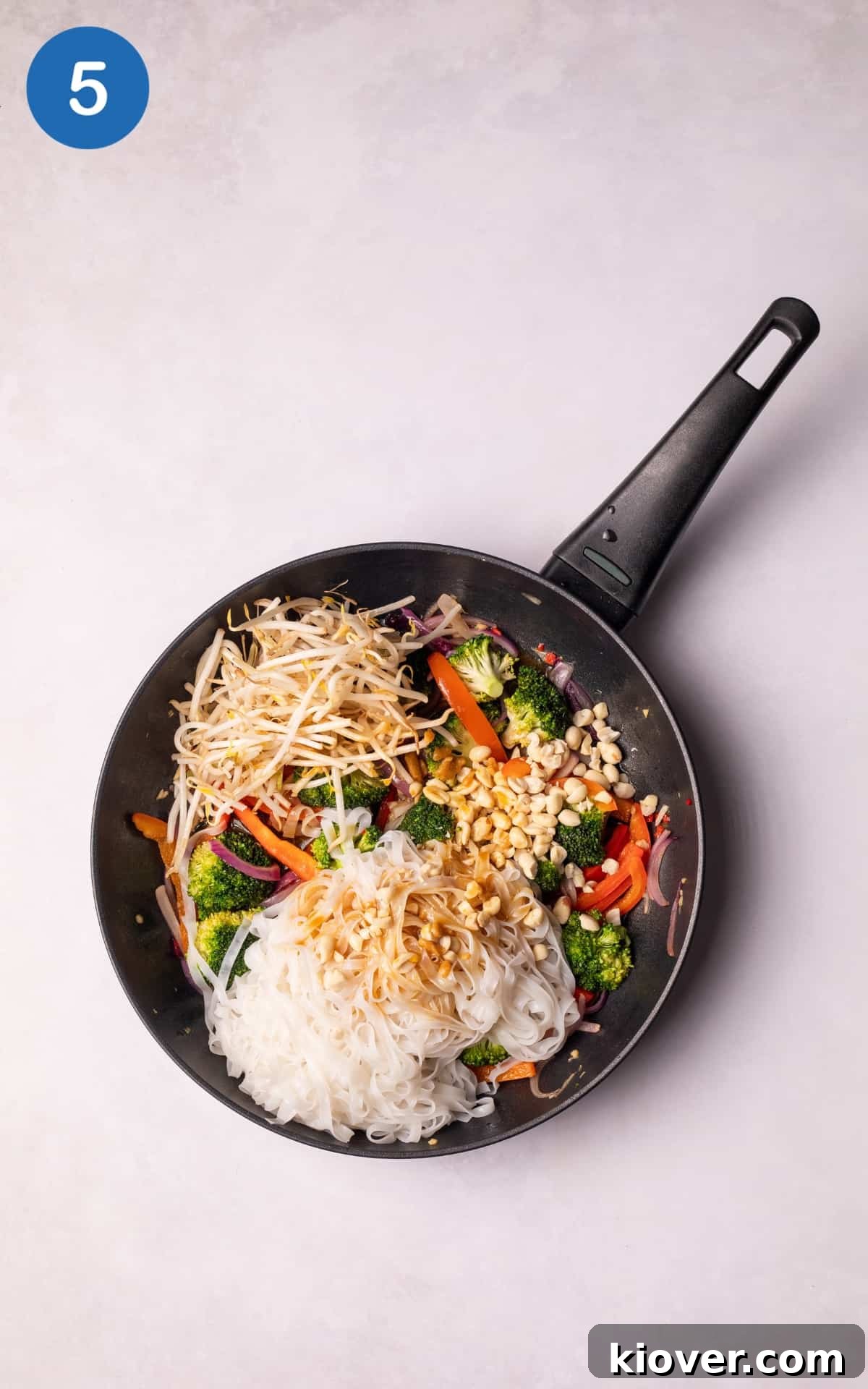
Step 5: Combine and Serve. Once the vegetables are cooked and the noodles are drained, add the cooked noodles, a large handful of fresh bean sprouts, and the crushed unsalted peanuts into the pan with the stir-fried vegetables. Pour the prepared Pad Thai sauce over everything. Toss vigorously to ensure all the noodles and vegetables are thoroughly coated in the delicious sauce. Serve immediately, garnished with extra crushed peanuts and a fresh lime wedge if desired. Enjoy your quick and **easy Vegan Pad Thai**!
Hint: This dish tastes fantastic warmed up for lunch the next day, making it perfect for meal prep if you’re cooking for one!
Storing and Reheating Leftover Pad Thai
Leftover **Vegan Pad Thai** can be a delicious and convenient meal for days to come. Store any leftovers in an airtight container in the refrigerator for up to 3-4 days. When you’re ready to enjoy it again, reheat the noodles in a pan over medium-low heat or in the microwave until thoroughly warmed through. If the noodles appear a little dry or sticky, simply add a splash of water or vegetable broth while reheating to help loosen the sauce and restore its creamy texture. This ensures your **easy Pad Thai** remains just as enjoyable the second time around.
Vegan Pad Thai Recipe FAQs
Absolutely! This recipe proves that you can achieve an incredibly delicious and authentic-tasting Pad Thai without any animal products. By simply swapping traditional ingredients like fish sauce and eggs for a rich blend of tamari, sweet maple syrup, savory miso paste, aromatic sesame oil, and bright lime juice, you’ll create a fantastic plant-based sauce that delivers all the complex flavors you love in a classic Pad Thai. The depth of umami from the miso paste, combined with the savory tamari, makes fish sauce completely unnecessary!
Indeed, my **Vegan Pad Thai** recipe is designed with health in mind! It’s generously packed with a colorful array of fresh vegetables, providing essential vitamins, minerals, and fiber. The sauce achieves its delightful balance of sweet and savory notes using natural sweeteners like maple syrup, completely avoiding refined sugars. Furthermore, by eliminating eggs and meat, this recipe naturally reduces saturated fat and cholesterol often found in traditional Pad Thai versions, making it a wholesome, nutrient-dense, and genuinely healthy choice for your diet.
For the perfect **Vegan Pad Thai**, long, flat, and thin rice noodles are ideal. These specific types of noodles are excellent at absorbing the rich flavors of the sauce and provide the signature chewy yet tender texture characteristic of authentic Pad Thai. When shopping, look for packages specifically labeled “Pad Thai noodles” or “rice stick noodles” that are flat and about ¼ to ⅜ inch wide. Avoid very thin vermicelli noodles or wide, lasagna-like rice sheets, as they won’t yield the desired result.
Yes, this particular **Vegan Pad Thai** recipe is completely **gluten-free**! As someone who adheres to a gluten-free diet, I’ve ensured that every ingredient is carefully selected. In conventional Pad Thai recipes, the primary ingredient that often contains gluten is traditional soy sauce. To make this recipe safely gluten-free without compromising on flavor, I use tamari, which is a gluten-free alternative to soy sauce. Combined with gluten-free rice noodles, this recipe is perfect for anyone seeking a delicious and safe gluten-free meal.
YOU MIGHT ALSO LIKE…
More Thai-Inspired Delights
Dinner
Vegetable Thai Green Curry
Dinner
The Best Thai Red Prawn Curry
15 Minute Dinners
Thai Curry Noodle Soup
Dinner
Vegan Thai Curry
Tried this **Vegan Pad Thai** recipe? Please leave a star rating ⭐️⭐️⭐️⭐️⭐️ below and let me know how you get on. Hearing positive feedback is one of the best parts of creating recipes so please review it below and leave a comment!
P.S Never miss a new recipe! Get more healthy recipes sent straight to your inbox weekly – Subscribe and receive a free recipe eBook!
Print Recipe
Vegan Pad Thai
Ingredients
- 2 tbsp sesame oil
- 2 garlic cloves, finely chopped or crushed
- 1 small red onion, sliced
- 1/2 red chilli, deseeded and sliced (more for extra spice)
- 1 small head of broccoli, sliced into smaller florets
- 1 red pepper, sliced
- 1 large handful bean sprouts
- 1 small handful unsalted peanuts, crushed (plus extra for serving)
- 150 g rice noodles
Pad Thai Sauce
- 3 tbsp tamari
- 3 tbsp maple syrup
- 1 heaped tsp miso paste
- 1 tsp sesame oil
- 1 juice of fresh lime
Instructions
-
Firstly, finely chop the garlic, thinly slice the red onion, deseed and slice the chilli, finely slice the red pepper, and prepare the broccoli into small florets.
-
Heat a non-stick pan or wok with 2 tbsp sesame oil. Add in all the chopped and sliced vegetables (garlic, red onion, chilli, pepper, and broccoli) and fry for 5 minutes until tender-crisp.
-
Meanwhile, cook the rice noodles according to their package instructions until al dente. Drain well.
-
Prepare the Pad Thai sauce by combining tamari, maple syrup, miso paste, 1 tsp sesame oil, and fresh lime juice in a small mixing bowl. Whisk until smooth.
-
Finally, add the cooked noodles, bean sprouts, and crushed peanuts into the pan with the vegetables. Pour the prepared sauce over everything and stir well until all ingredients are nicely coated. Serve immediately.
Notes
Substitutions & Variations: Detailed lists for these are included in the post above, offering creative ways to customize your Pad Thai to your taste and available ingredients.
To Store: Store leftover Vegan Pad Thai in an airtight container in the fridge for 3-4 days. Reheat gently in a pot or pan over low heat until piping hot, or use a microwave. You might need to add a little water or vegetable broth to loosen the sauce upon reheating.
To Freeze: I do not recommend freezing this recipe, as the noodles and vegetables can become mushy upon thawing and reheating, affecting the texture and overall quality of the dish.
Tip 1: Be creative with your vegetable choices! This recipe is incredibly adaptable. Use your favorite vegetables or whatever you have on hand to make each batch unique.
Tip 2: If you adore spicy dishes, feel free to leave the seeds in the chili peppers for an extra kick! You can also add more chili or a dash of sriracha to the sauce.
Tip 3: For those who are not vegan or vegetarian, this recipe is a fantastic base. You can easily add cooked beef, pork, chicken, or prawns to the pan along with the vegetables. If you prefer a plant-based protein boost, consider adding pan-fried tofu or tempeh.
Nutrition
Carbohydrates: 48g |
Protein: 13g |
Fat: 19g |
Saturated Fat: 3g |
Fiber: 9g |
Sugar: 29g
Did you make this recipe? Tag me Today!
Tag @HealthyLivingJames on Instagram and use #HealthyLivingJames!