
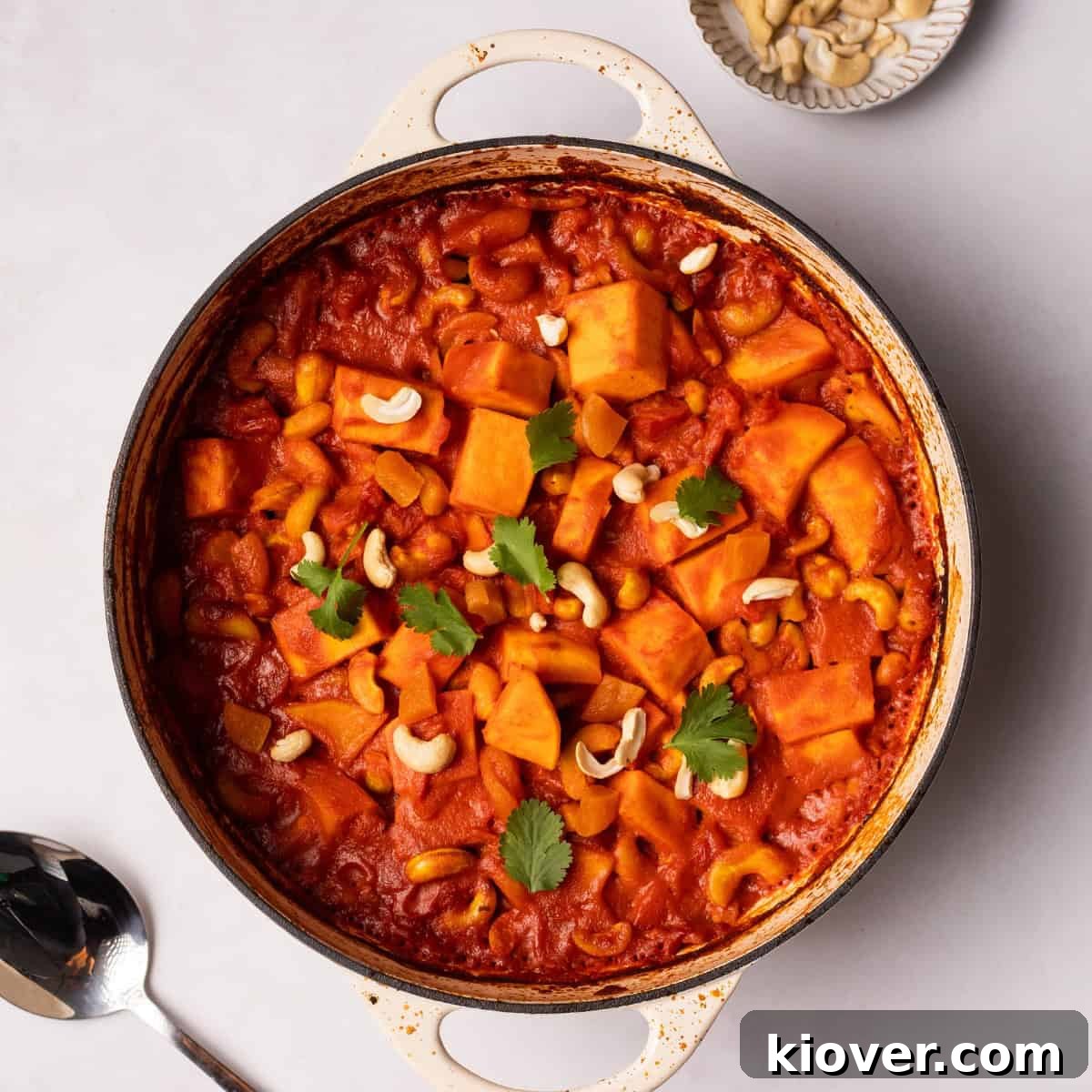
Are you ready for a delicious Butternut Squash Curry? This vegetarian curry is made in one pot with a balanced blend of spices. It’s very easy to make, family friendly, and one of my go-to comfort meals.
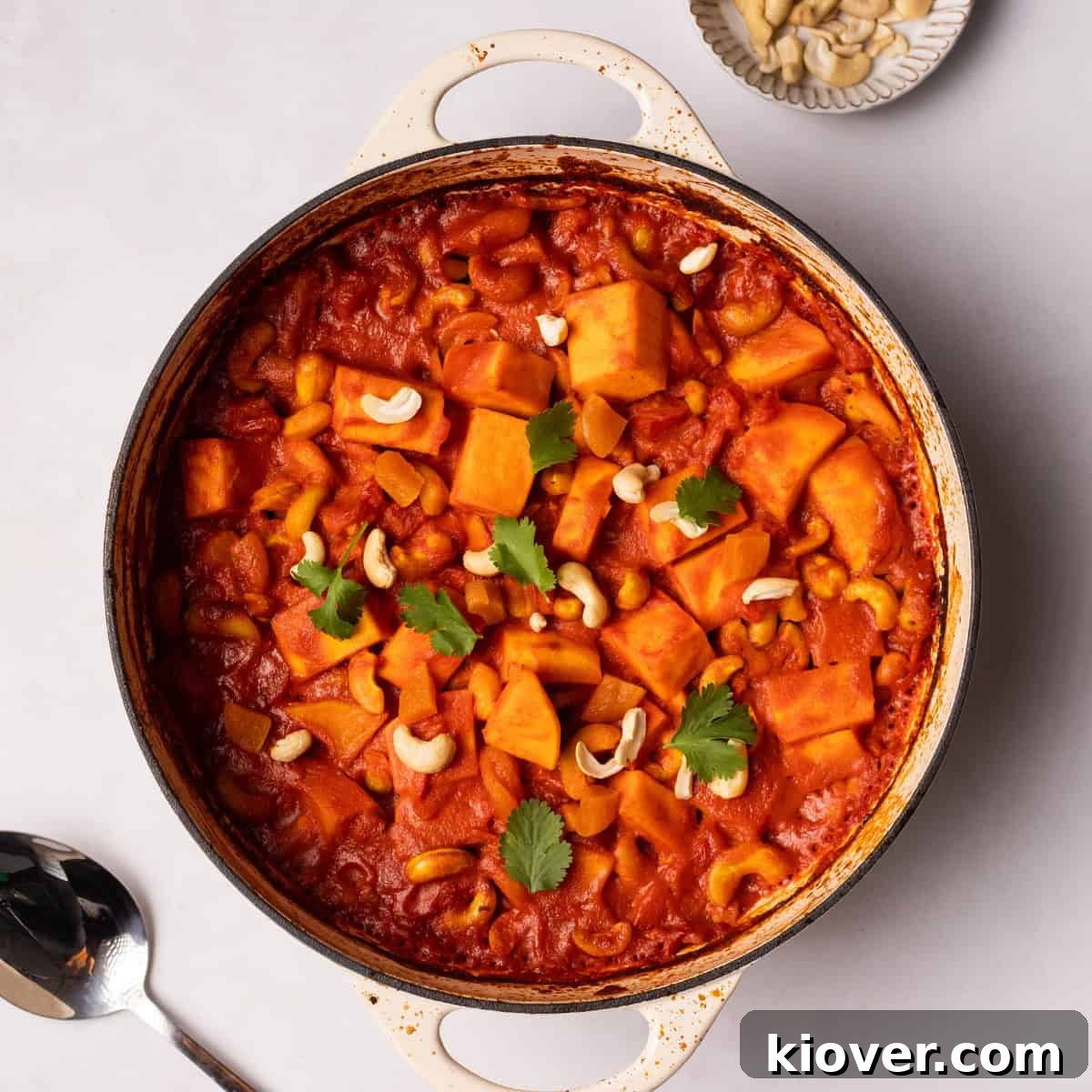
Recipe Difficulty – Very Easy
Table of Contents
- Why this recipe works
- Ingredients to make Butternut Squash Curry
- Substitutions
- Serving Suggestions
- How to make Butternut Squash Curry
- Leftovers
- Recipe FAQs
- More Butternut Squash Recipes
- Butternut Squash Curry Recipe
Why this recipe works
Homemade curries are warming, deeply flavorful and perfect for chilly evenings or casual dinner parties. This creamy butternut squash curry is rich, comforting and takes advantage of in-season squash.
The recipe uses pantry staples and just one pot, so prep and cleanup are minimal. Baking the curry in the oven concentrates the flavours and creates a thick, hearty sauce with very little hands-on time.
Ingredients to make Butternut Squash Curry
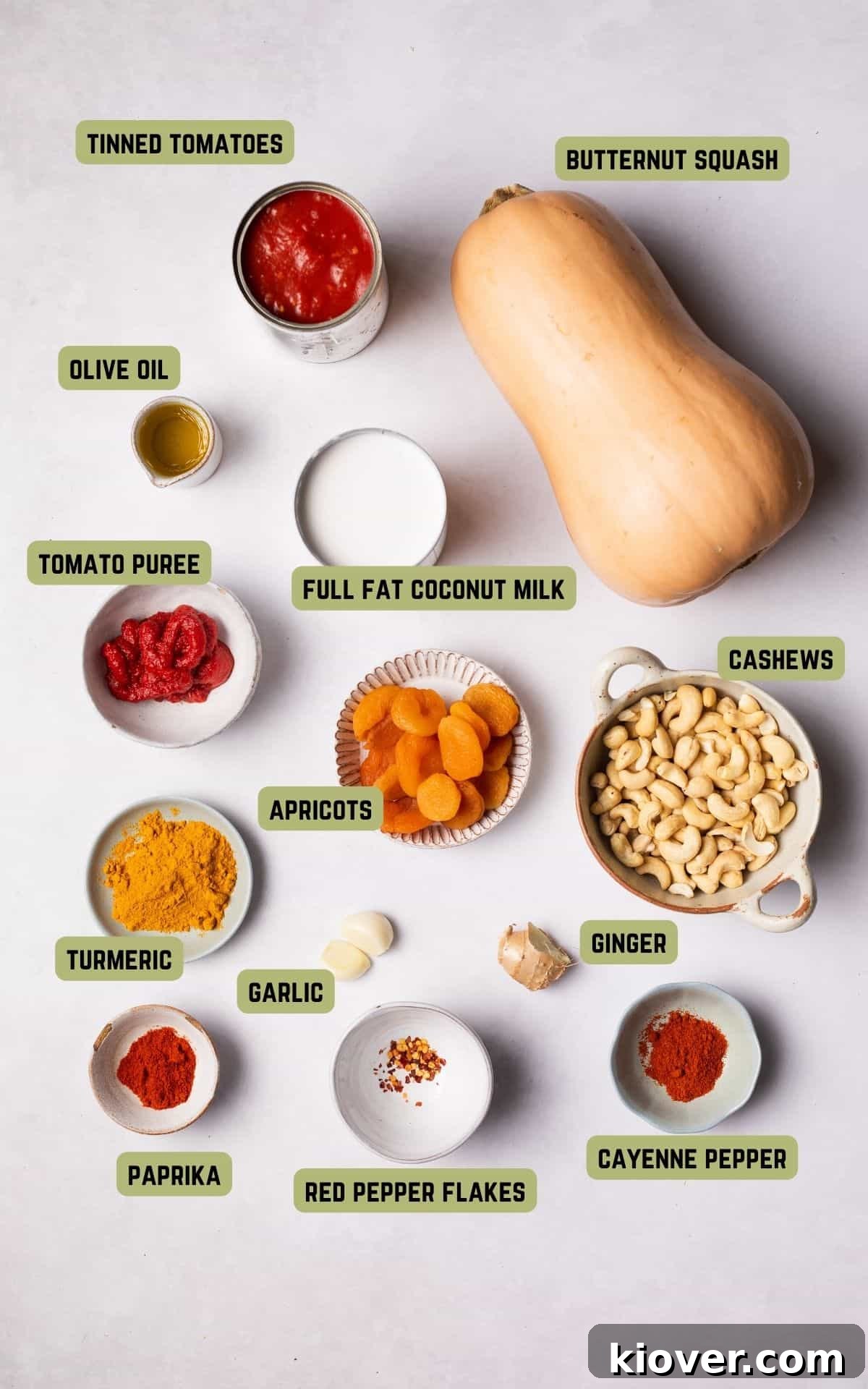
- Olive oil – for frying the aromatics.
- Garlic cloves – crushed, for depth of flavour.
- Fresh ginger – finely diced for warmth and bite.
- Tomato puree – adds body and umami.
- Turmeric – for gentle earthiness and colour.
- Cayenne pepper – optional, for heat.
- Paprika – for sweetness and colour.
- Red pepper flakes – a pinch to finish the spice mix.
- Tinned tomatoes – bring acidity and texture.
- Full-fat coconut milk – creates a rich, creamy sauce.
- Butternut squash – peeled and cubed, the main ingredient.
- Cashew nuts – optional, for crunch and richness.
- Apricots – dried or fresh, optional, to add sweet balance.
See the recipe card below for exact quantities.
Substitutions
- Olive oil – coconut oil or another neutral oil works well.
- Garlic – use minced garlic or garlic powder if needed.
- Ginger – ground ginger can be used in a pinch.
- Spices – garam masala or Thai red curry paste can be added for variation.
- Squash – swap in sweet potato for a similar texture and sweetness.
- Coconut milk – light coconut milk can be used but the curry will be less creamy.
- Cashews – omit for a nut-free version; add red lentils for extra protein.
- Apricots – optional; leave out if you prefer a purely savoury curry.
Serving Suggestions
- White rice – classic and simple with curry.
- Brown rice – a heartier, wholegrain option.
- Jasmine rice – fluffy and fragrant, pairs beautifully.
- Basmati rice – slightly nutty and aromatic.
- Quinoa – a lighter, higher-protein side.
- Naan bread – perfect for mopping up the sauce.
How to make Butternut Squash Curry
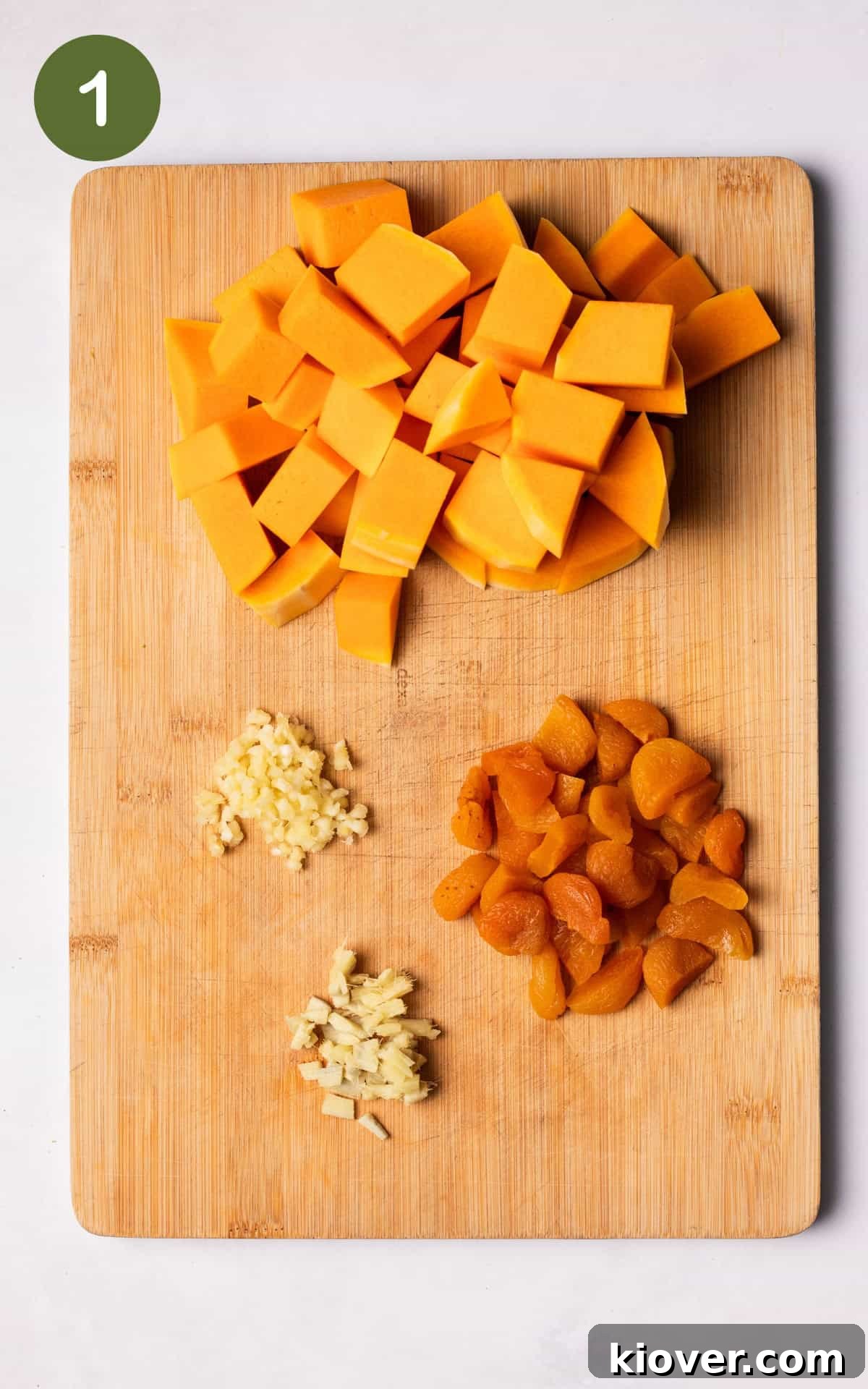
Step 1: Preheat the oven to 200°C (390°F). Crush the garlic, halve the apricots if using, dice the ginger, and peel and cube the butternut squash into roughly 1.5 cm pieces.
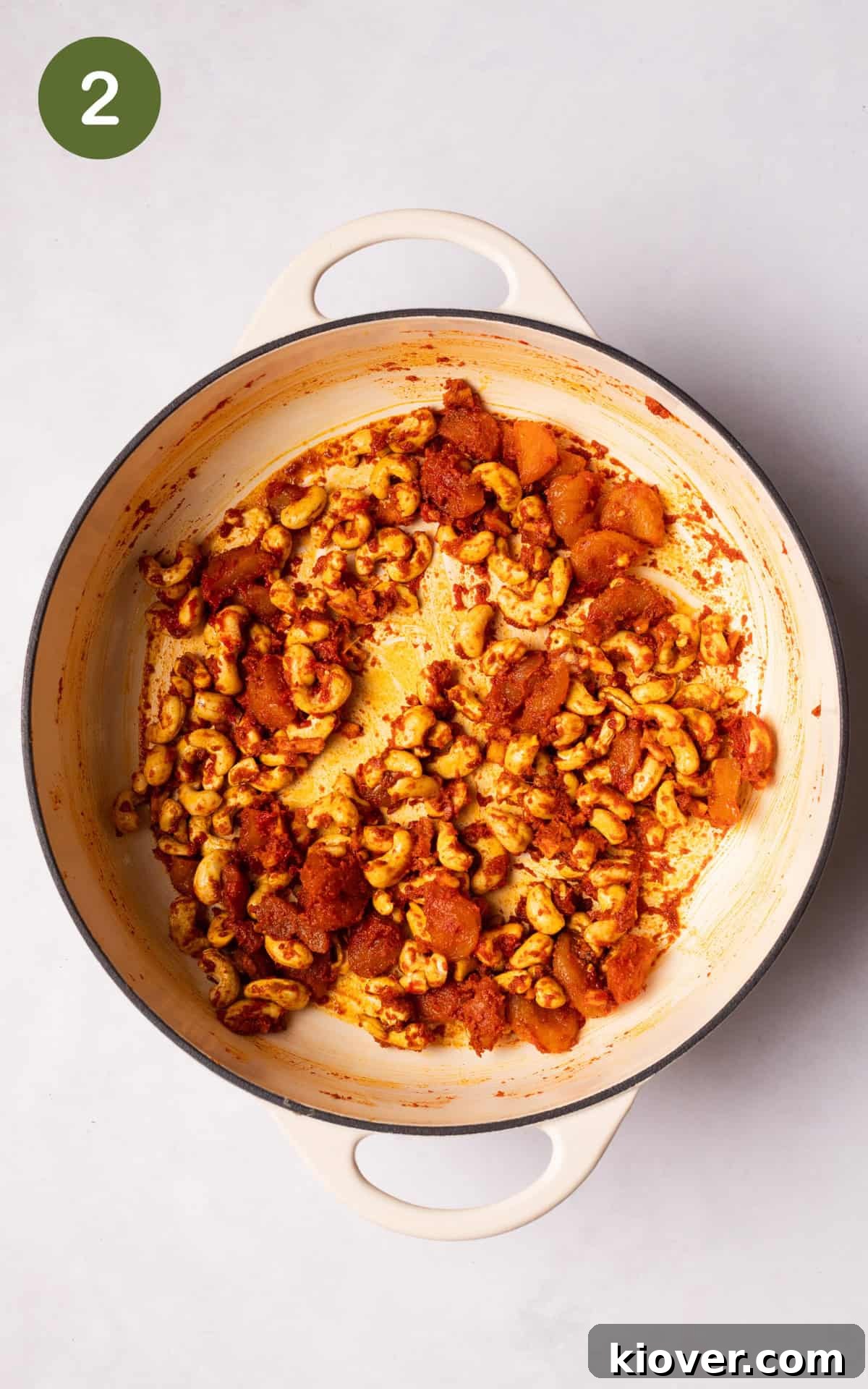
Step 2: In a large pot over medium heat, warm the olive oil and fry the garlic, apricots, cashews (if using), tomato puree and spices with a pinch of salt and pepper for a couple of minutes until fragrant.
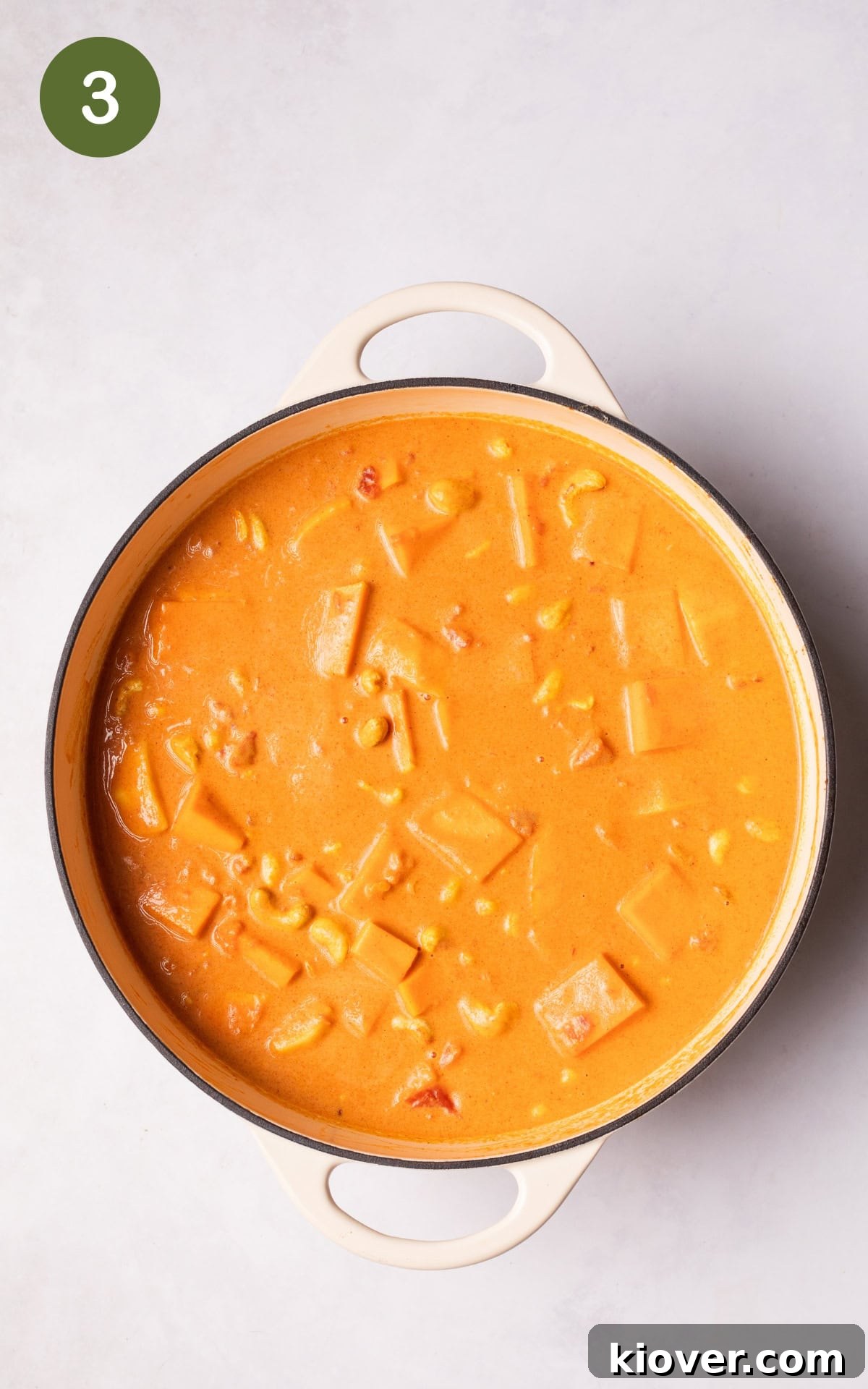
Step 3: Add the tinned tomatoes, coconut milk and cubed squash. Bring the mixture to a boil, then transfer the pot to the preheated oven for about 40 minutes. Alternatively, simmer on the hob with the lid on for a similar time until the squash is tender and the sauce has thickened.
Hint: If you like more texture, reserve some roasted squash cubes and stir them in at the end so they stay firmer.
Leftovers
Store leftovers in an airtight container in the fridge for up to two days. The flavours often improve overnight, making it great for meal prep. You can also freeze the curry for up to three months—defrost overnight and reheat gently on the hob or in the microwave until piping hot. Add a splash of water if the sauce has thickened too much.
Recipe FAQs
Cubed squash will cook through in about 40 minutes in a 200°C oven after the curry has been brought to a boil. You can also simmer on the hob for the same time with the lid on.
A mix of ginger, turmeric, cayenne pepper, paprika and chilli flakes works beautifully. You can also add garam masala or adjust heat to taste.
Butternut squash is typically harvested in late summer through autumn and stores well into winter.
More Butternut Squash Recipes
- Stuffed Butternut Squash
- Butternut Squash Soup
- Coconut Dhal
- Pumpkin and Butternut Soup
- Vegetable Tagine
YOU MIGHT ALSO LIKE…
Dinner
Butternut Squash and Chickpea Curry
Lunch
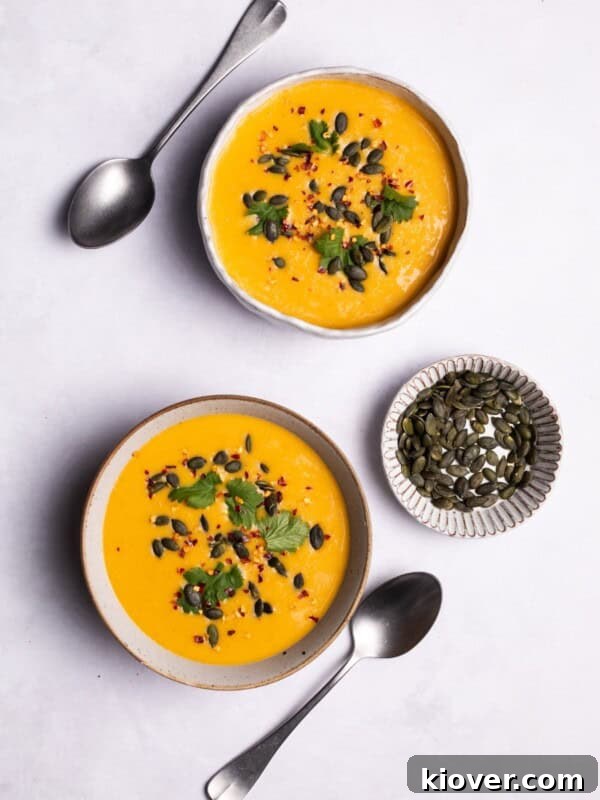
Pumpkin and Butternut Soup
Dinner
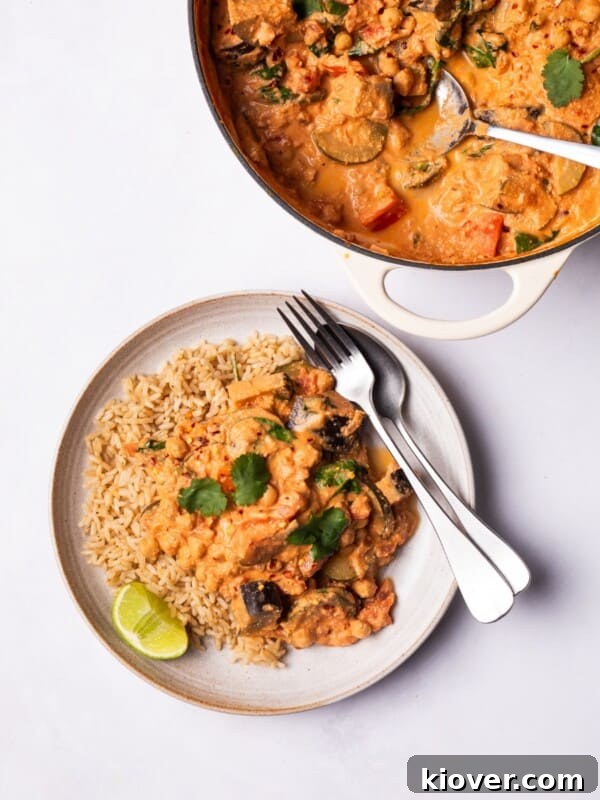
Vegetable Curry
Dinner
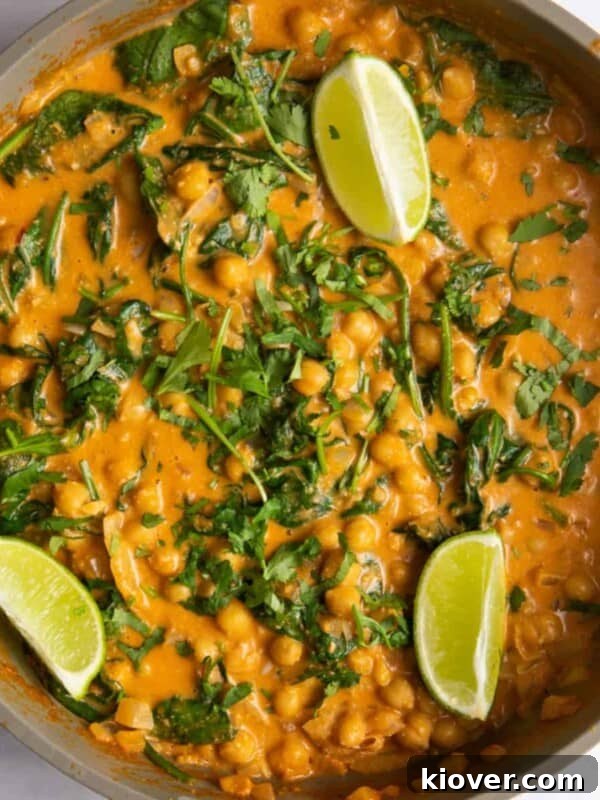
10 Minute Chickpea And Spinach Curry
Tried this Butternut Squash Curry recipe? Please leave a star rating below and let me know how you get on. Hearing feedback is one of the best parts of sharing recipes—leave a comment and rate it!
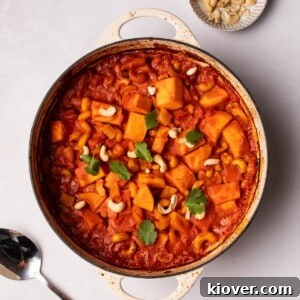
Butternut Squash Curry
Ingredients
- 2 tbsp olive oil
- 2 large garlic cloves, crushed
- 150 g cashews (optional)
- 100 g apricots, halved (optional)
- 1/2 thumb size piece fresh ginger, finely chopped
- 2 tbsp tomato puree
- 1 tbsp turmeric
- 1/2 tsp cayenne pepper
- 1/2 tsp paprika
- 1 pinch red pepper flakes
- 400 g tinned tomatoes
- 400 ml full-fat coconut milk
- 500 g butternut squash, chopped into small cubes
Instructions
-
Preheat the oven to 200°C (390°F). Crush the garlic, halve the apricots if using, dice the ginger, peel and chop the butternut squash into 1.5 cm cubes.
-
In a large pot over medium heat add the olive oil, garlic, apricots, cashews, tomato puree, spices and a pinch of salt and pepper. Fry together for a couple of minutes until fragrant.
-
Add the tinned tomatoes, coconut milk and butternut squash. Bring to a boil, then place the pot in the oven for 40 minutes, or simmer on the hob with the lid on for 40 minutes until the sauce thickens and the squash is tender.
Video
Notes
Substitutions & Variations: See the list in the post for suggestions like swapping sweet potato or adding lentils for protein.
To Store: Keep in an airtight container in the fridge for up to 2 days. Reheat gently and add water if the sauce is too thick.
To Freeze: Freeze for up to three months. Defrost in the fridge and reheat, adding water if needed.
Tip 1: Dried apricots work well, but fresh apricots are lovely when available.
Tip 2: Add more chilli or fresh chilli if you prefer a spicier curry.
Tip 3: This dish can be adapted with meat or prawns for non-vegetarians, or tofu for extra protein.
Nutrition
| Carbohydrates: 23 g
| Protein: 6 g
| Fat: 17 g
| Saturated Fat: 4 g
| Fiber: 4 g
| Sugar: 7 g
Did you make this recipe? Tag me Today!
Tag @HealthyLivingJames on Instagram and use #HealthyLivingJames when you share your photos.