
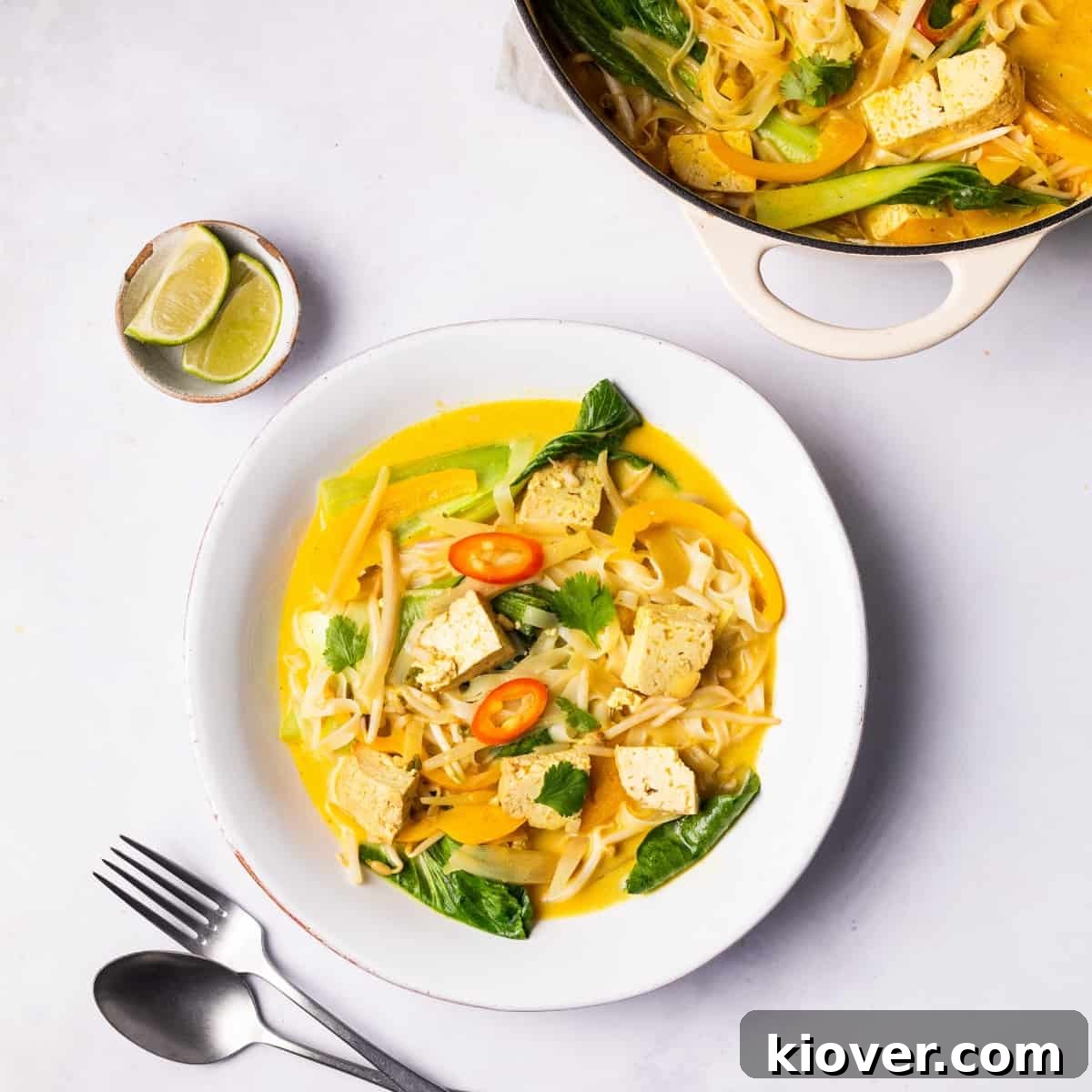
Indulge in the Ultimate One-Pot Vegan Laksa: Creamy, Flavorful & Gluten-Free
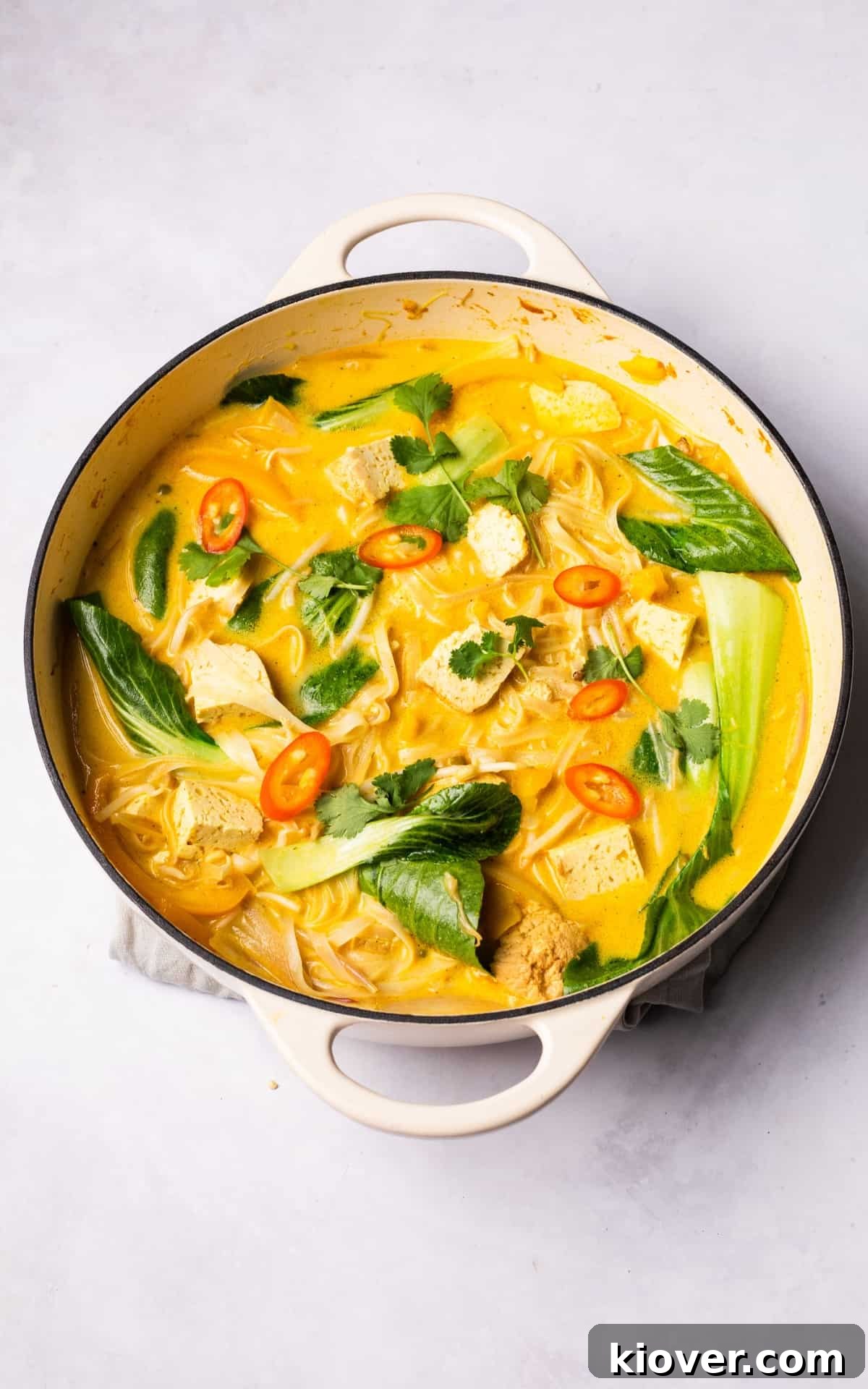
Get ready to savor my incredible Vegan Laksa! This plant-based twist on a classic Southeast Asian noodle soup is the epitome of comfort food – exquisitely creamy, bursting with vibrant flavors, and utterly satisfying. Far from a light broth, the rich coconut milk base combined with wholesome rice noodles makes it exceptionally filling, all while keeping it naturally gluten-free. The best part? It’s remarkably easy to prepare in a single pot, making it perfect for weeknight dinners or a cozy weekend meal.
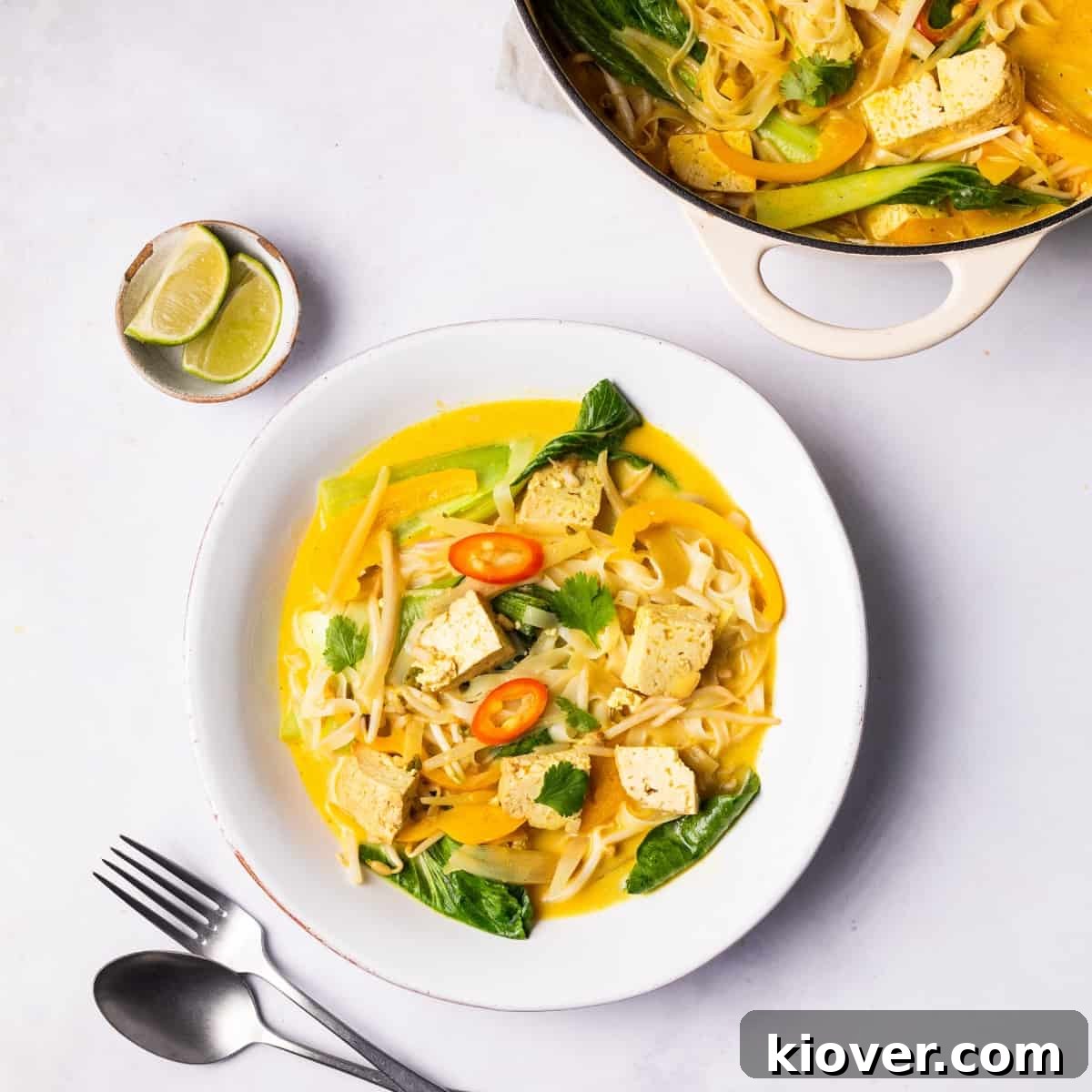
Recipe Difficulty – Easy
Table of Contents
- Why This Vegan Laksa Recipe Shines
- The Essence of Laksa: A Southeast Asian Gem
- Key Ingredients for Your Vegan Laksa
- Flexible Substitutions for Your Laksa
- Delicious Variations to Customize Your Laksa
- Step-by-Step Guide: How to Make Vegan Laksa
- Storing and Reheating Leftovers
- Frequently Asked Questions About Vegan Laksa
- Vegan Laksa Full Recipe
Why This Vegan Laksa Recipe Shines
This vegan laksa curry recipe is your ultimate culinary companion for those chilly, damp days when all you crave is a bowl of something profoundly warming and deeply satisfying. It delivers everything you could possibly desire in a rich laksa noodle soup and so much more! From its aromatic broth to its vibrant toppings, every element works in harmony to create an unforgettable meal. The inclusion of crisp, fresh vegetables not only adds a burst of natural flavor but also infuses this hearty soup with beautiful colors, making it a feast for the eyes as well as the palate.
What truly elevates this particular recipe is the combination of tender rice noodles and pan-fried extra-firm tofu, which transform it into an incredibly hearty and protein-rich meal. Unlike many soups that might leave you wanting, this laksa ensures you’re completely satisfied, providing sustained energy without feeling heavy. It’s a testament to how plant-based ingredients can create a dish that’s both comforting and substantial. The one-pot preparation method simplifies cooking and cleanup, making it ideal for busy individuals or families seeking a delicious, homemade meal with minimal fuss. Give this recipe a try, dish up a generous bowl, and prepare to be amazed – you certainly won’t regret it!
The Essence of Laksa: A Southeast Asian Gem
Laksa is a celebrated culinary tradition hailing from the vibrant kitchens of Southeast Asia. Often recognized as Malaysian Laksa Noodle Soup, its rich history and diverse variations also firmly root it in the culinary landscapes of Singapore and Indonesia. Across these regions, it’s also affectionately known as “curry mee,” highlighting its distinctive curry-like broth. Traditionally, laksa is a spicy noodle soup characterized by its creamy coconut milk base, robust spices, and usually features thick rice noodles alongside a medley of chicken, seafood, or eggs. However, the beauty of laksa lies in its adaptability, making it a perfect candidate for delicious plant-based interpretations.
This vegan rendition draws inspiration from classic flavors while embracing a modern, health-conscious approach. By swapping traditional meat and fish-based components for hearty tofu and an abundance of fresh vegetables, we create a delicious and ethical alternative that doesn’t compromise on the authentic taste experience. This recipe is particularly influenced by the aromatic complexity of a Thai Vegetarian Curry Noodle Soup and would pair wonderfully with my acclaimed Gluten-Free Naan Bread for dipping, or even a light and crispy Socca. It’s a versatile dish that offers a comforting warmth and an explosion of flavors in every spoonful.
Key Ingredients for Your Vegan Laksa
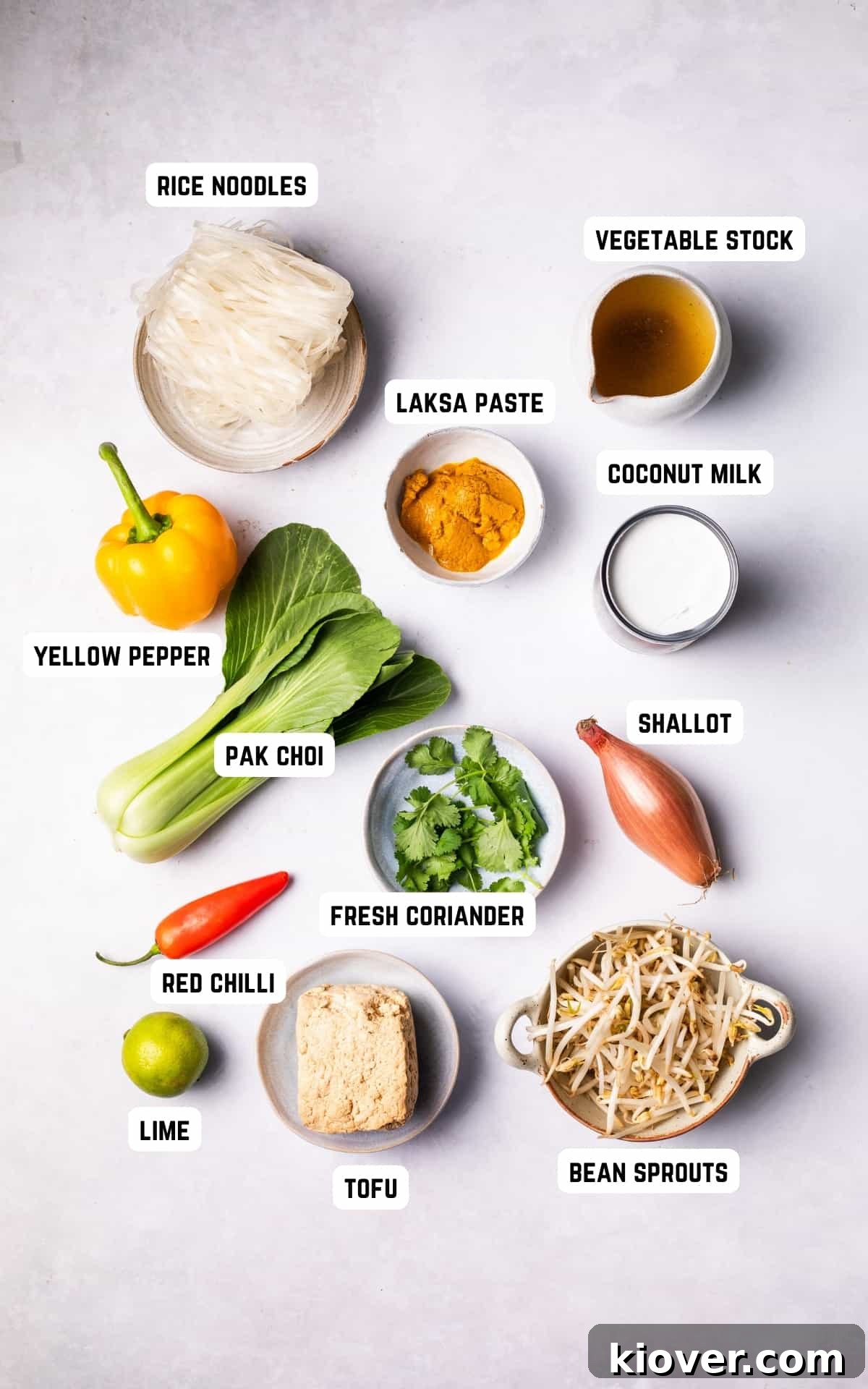
Crafting a truly authentic and flavorful vegan laksa starts with selecting the right ingredients. Each component plays a crucial role in building the layers of taste and texture that define this beloved dish:
- Shallot: These delicate members of the onion family are halved and thinly sliced. They provide a milder, sweeter, and more nuanced aromatic base compared to regular onions, perfectly setting the stage for the complex spices of the laksa paste. When sautéed, they release a beautiful fragrance that kickstarts the flavor profile.
- Orange or Yellow Bell Pepper: Thinly sliced, these peppers add a lovely sweetness, a subtle crunch, and a vibrant splash of color to your soup. They soften beautifully in the broth, integrating their flavor without becoming mushy, and offer a dose of vitamins.
- Vegan Laksa Paste: This is the heart and soul of the dish – a powerful, aromatic blend of spices like galangal, lemongrass, turmeric, and chili. It’s similar in complexity to Thai curry paste but with its own unique Malaysian/Singaporean profile, delivering an unparalleled depth of flavor. Always ensure your chosen paste is certified vegan, as some may contain shrimp paste.
- Extra Firm Tofu: Best suited for pan-frying due to its low water content, extra-firm tofu absorbs flavors wonderfully and holds its shape, providing a satisfying, protein-rich bite. When pressed and cubed, it develops a delightful golden crust that adds texture to the creamy soup. If you have extra, try it in my Vermicelli Noodles recipe!
- Full-Fat Coconut Milk: Essential for the signature creaminess and richness of laksa. Full-fat coconut milk creates a luxurious, velvety broth that beautifully balances the spicy and aromatic notes of the paste. Do not opt for light versions if you want that authentic texture and indulgent flavor experience.
- Vegetable Stock: This forms the liquid base of the soup, providing the necessary body and enhancing the savory notes of the dish. Opt for a good quality vegetable stock to ensure a deep, flavorful foundation for your vegetarian curry mee, making the broth truly shine.
- Bean Sprouts: Added at the end, these offer a delightful, fresh, and slightly crunchy texture, providing a welcome contrast to the soft noodles and creamy broth. They’re a classic laksa topping for a reason, adding a fresh dimension to each spoonful!
- Pak Choi (Bok Choy): Also known as bok choy, this leafy green is a staple in Asian cuisine. By chopping off the end to separate the leaves, they cook quickly, adding a tender, slightly bitter counterpoint to the rich soup and a boost of nutrients and vibrant color.
- Rice Noodles: A cornerstone of many Asian noodle dishes, these gluten-free noodles absorb the flavorful broth beautifully without becoming overly starchy. Their delicate texture makes them perfect for slurping and ensures a satisfying meal. Have some spare? My Peanut Butter Noodles are another fantastic use!
- Lime: A generous squeeze of fresh lime juice at the end brightens the entire dish, cutting through the richness of the coconut milk and enhancing all the other flavors with a zesty, aromatic finish. Always save some wedges for serving, allowing diners to add more tang to their liking!
- Red Chilli: Finely sliced, red chili serves as an elegant and fiery garnish. It provides a fresh heat and visual appeal, allowing each diner to customize their spice level, from a mild hint to a bold kick.
- Fresh Coriander (Cilantro): This aromatic herb is the perfect finishing touch, offering a burst of fresh, herbaceous flavor that complements the complex spices of the laksa, adding brightness and a classic Asian culinary note.
- Neutral Cooking Oil: A basic oil like vegetable, rapeseed, or sunflower oil is needed for sautéing the aromatics and tofu, providing the initial cooking medium without imparting unwanted flavors.
For precise measurements and detailed instructions, please refer to the comprehensive recipe card below.
Flexible Substitutions for Your Laksa
One of the joys of cooking is the ability to adapt recipes to your pantry, dietary needs, or simply your preferences. This vegan laksa is incredibly forgiving, allowing for a variety of substitutions without compromising its delicious essence:
- Shallot: If shallots aren’t available, a small yellow onion, finely diced, makes an excellent and readily available substitute. While slightly stronger, it will still provide a good aromatic base for the laksa paste.
- Other Vegetables: Feel free to get creative with your vegetable choices! If you have other crisp, quick-cooking vegetables in your fridge or pantry, such as sliced carrots, snow peas, mushrooms, broccoli florets, or even spinach (added at the very end), they can all be wonderful additions. This is a great way to use up whatever fresh produce you have on hand and boost the nutrient content.
- Vegan Laksa Paste: If authentic laksa paste is hard to find or if you prefer a different flavor profile, a good quality red Thai curry paste can be used as a close substitute. Both pastes share many similar aromatic ingredients and will still deliver a delicious, spicy, and fragrant broth, albeit with a slightly different regional nuance. Just be sure to check its vegan status.
- Extra Firm Tofu: For those who are not vegetarian or vegan, this recipe can easily be adapted to include other protein sources. Cubed chicken breast, succulent prawns, or firm white fish fillets (like cod or snapper) would all work beautifully. Simply cook them in the pan before adding the coconut milk and stock, ensuring they are cooked through. You might also enjoy my Thai Red Prawn Curry for a similar flavor profile!
- Rice Noodles: While rice noodles keep this dish gluten-free and have a delightful texture, you can certainly substitute them. Egg noodles or even wheat-based flour noodles (like ramen or udon) can be used, just be sure to adjust cooking times according to package instructions for the best texture.
- Fresh Coriander: If you’re not a fan of coriander, fresh basil, mint, or even chopped spring onions can offer a refreshing alternative as a garnish.
Delicious Variations to Customize Your Laksa
Elevate your vegan laksa experience by experimenting with these exciting variations to match your taste and occasion, transforming a delicious meal into a personalized culinary adventure:
- Spicy Kick: For those who love extra heat, there are several ways to intensify the spice. Beyond the sliced red chili garnish, try stirring in a teaspoon or two of sambal oelek (a potent Indonesian chili paste) directly into the laksa broth during cooking. Alternatively, a pinch of dried chili flakes added with the laksa paste can build a deeper heat from within. For a smokier heat, a dash of smoked paprika can also be a surprising addition. Always taste and adjust to your desired spice level!
- Deluxe Presentation: While this laksa is already a culinary delight, you can make it even more special for guests or a weekend treat. Serve it in elegant ceramic bowls, garnished generously with extra fresh coriander, a sprinkle of toasted sesame seeds, and a drizzle of high-quality chili oil. For an ultimate pairing, offer alongside slices of my homemade Gluten-Free Naan Bread or crispy Socca flatbread for dipping into the rich, creamy broth. These additions transform a simple meal into a gourmet experience.
- Kid-Friendly Adaptation: If you’re serving little ones or anyone sensitive to spice, it’s easy to dial down the heat. Simply omit the sliced red chili from their individual servings. You can even reduce the amount of laksa paste slightly for the entire pot, or incorporate a little extra coconut milk to mellow out the spice, ensuring everyone can enjoy this comforting dish without overwhelming their palate.
- Add More Greens: Boost the nutritional value and vibrant color by adding more leafy greens like spinach, kale, or even mustard greens during the last few minutes of cooking. They will wilt beautifully into the hot broth and absorb the wonderful flavors.
- Nutty Flavor: For an extra layer of richness and a subtle nutty undertone, stir in a tablespoon of smooth peanut butter with the coconut milk. This creates an even creamier, more indulgent broth, reminiscent of satay flavors, adding a delightful complexity.
- Citrus Boost: Besides lime, a touch of lemon zest or a small amount of tamarind paste can introduce another layer of tanginess, providing a brighter contrast to the richness of the coconut milk.
If you’re craving more delightful noodle soups, be sure to check out this quick and easy Vermicelli Noodle Soup on my website – another fantastic option for a warm, comforting meal!
Step-by-Step Guide: How to Make Vegan Laksa
Creating this flavorful vegan laksa is a straightforward process, especially since it all comes together in one pot, minimizing cleanup and maximizing enjoyment. Follow these simple steps for a delicious and satisfying meal that will quickly become a household favorite:
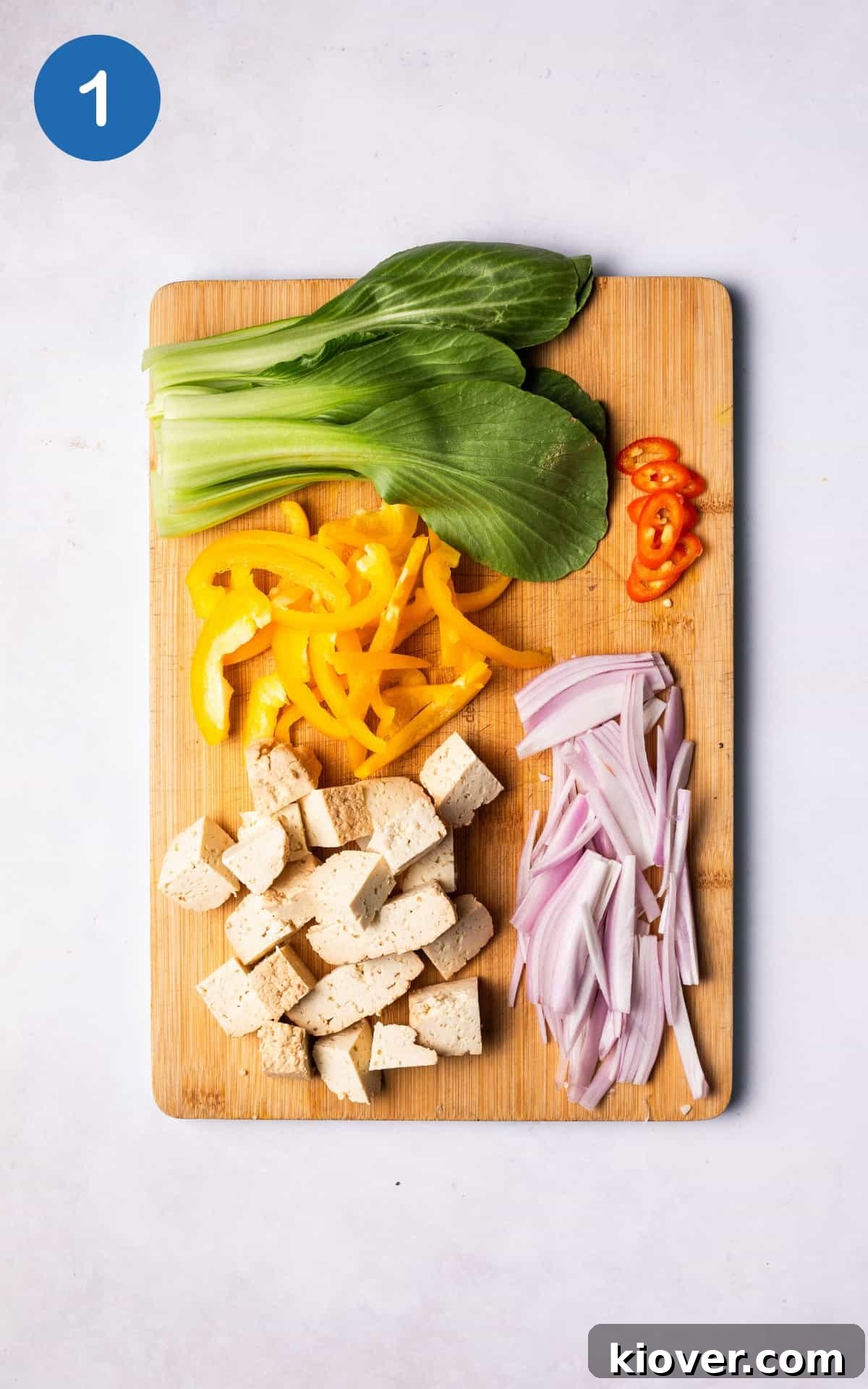
Step 1: Ingredient Preparation. Begin by thoroughly chopping all your vegetables and tofu. Halve and thinly slice the shallot for an aromatic base. Thinly slice the orange or yellow bell pepper for sweetness and color. Chop off the end of the pak choi to separate its vibrant green leaves. Cube the extra-firm tofu into bite-sized, even pieces. Finally, finely slice the red chili for garnish. Having all your ingredients prepped and ready (a technique known as ‘mise en place’) makes the cooking process smooth, efficient, and enjoyable.
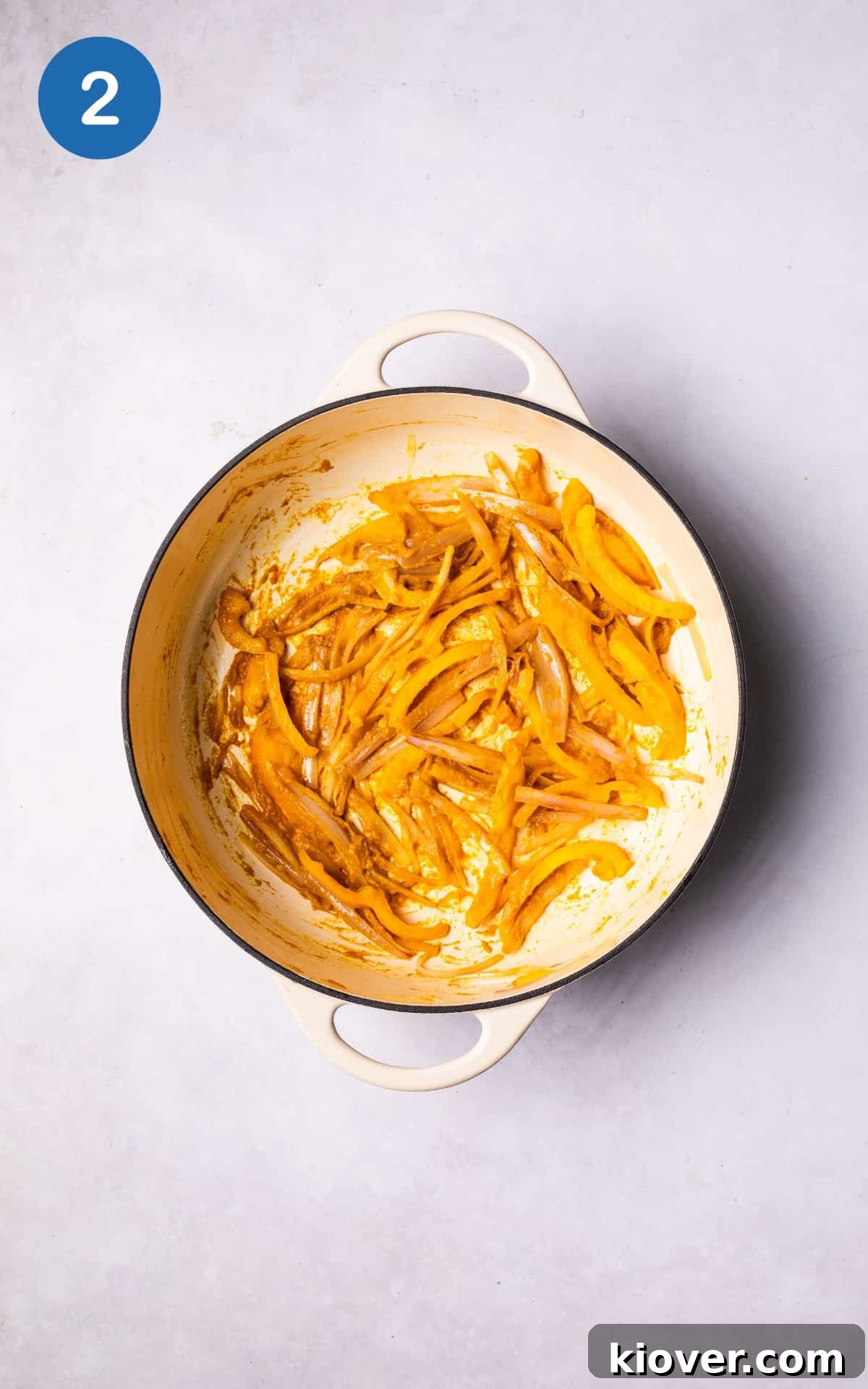
Step 2: Sauté the Aromatics. Heat a large, sturdy pan or pot over medium heat. Add a generous glug of neutral oil (such as vegetable, rapeseed, or sunflower oil). Once the oil is shimmering and hot, add the thinly sliced shallot and bell pepper. Sauté for a few minutes, stirring occasionally, until the shallots become translucent and wonderfully fragrant, and the bell peppers begin to soften around the edges. Next, add the vegan laksa paste to the pan and stir vigorously to combine it thoroughly with the sautéed shallots and peppers. Cook for another minute, allowing the paste’s complex aromas to bloom and deepen, becoming intensely fragrant.
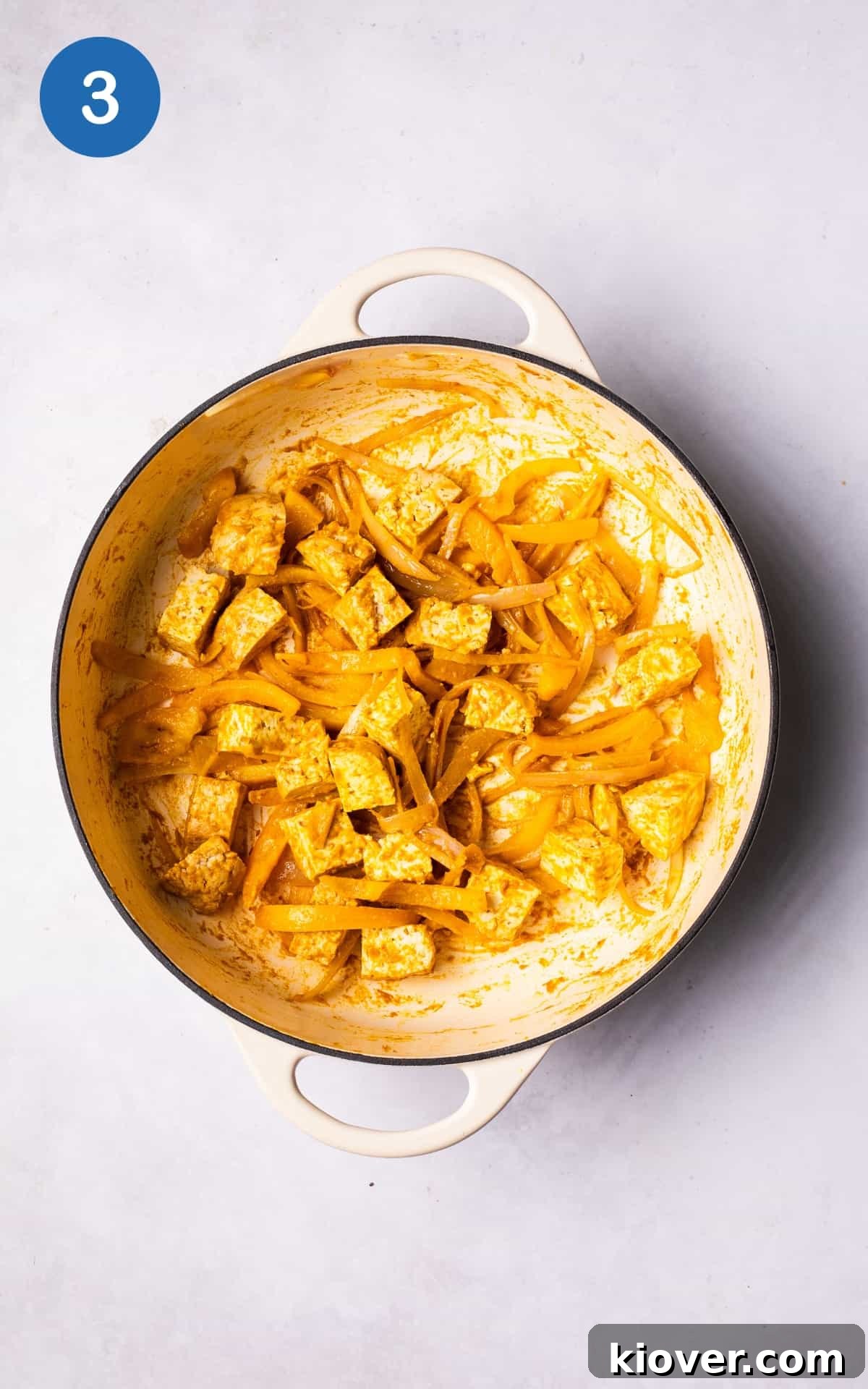
Step 3: Incorporate the Tofu. Allow the aromatic mixture to simmer gently for about a minute, letting the initial flavors marry and deepen. Then, carefully introduce the cubed extra-firm tofu into the pan. Stir everything together meticulously, using a spatula or spoon to ensure that each piece of tofu is thoroughly coated in the fragrant laksa paste. This crucial step allows the tofu to absorb all the delicious spices and aromatics, transforming it into a flavorful, protein-packed component of your soup that will hold its own beautifully in the creamy broth.
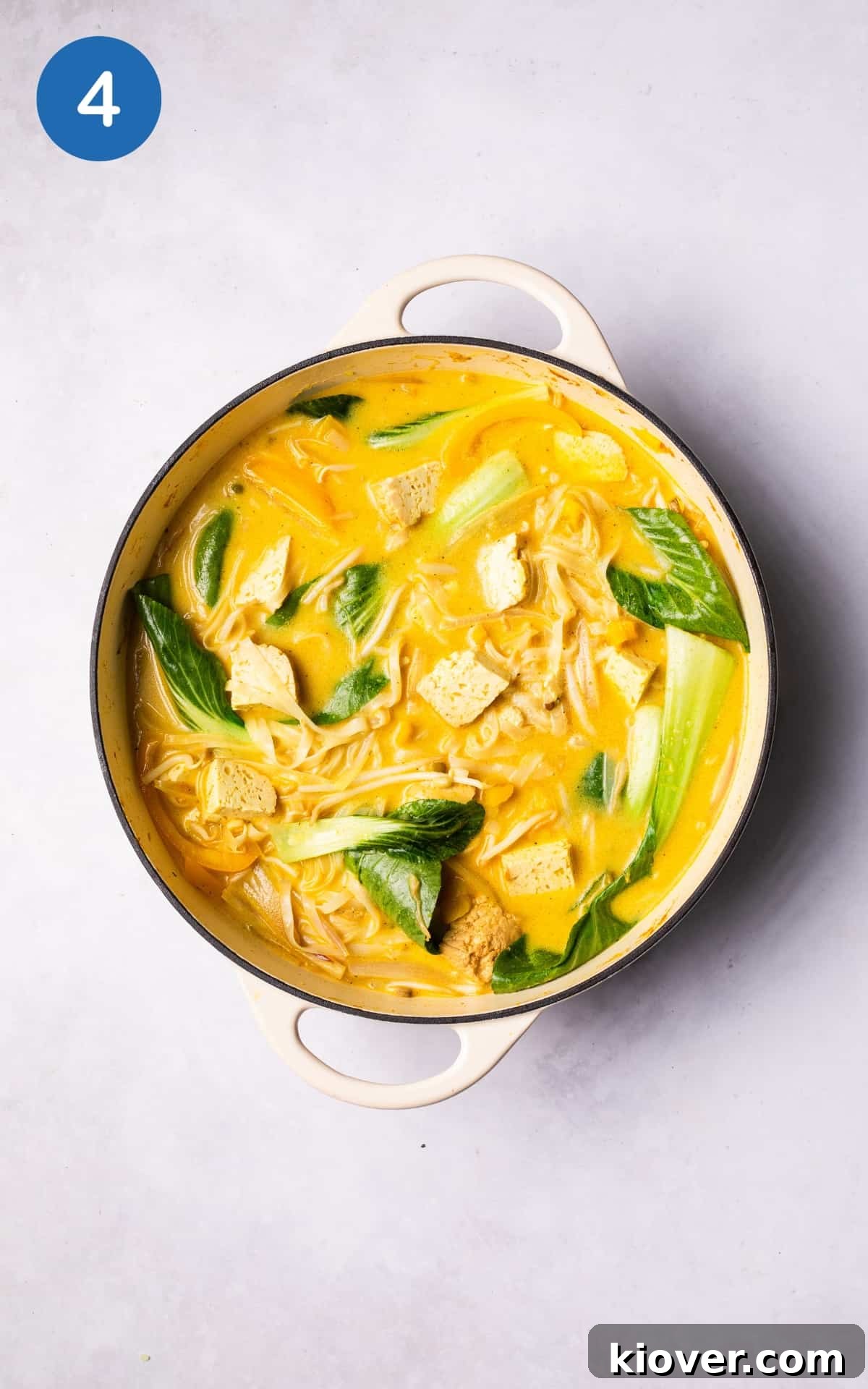
Step 4: Simmer the Soup. Now, it’s time to build the luscious soup base. Carefully pour in the full-fat coconut milk and the vegetable stock. Add the fresh bean sprouts, the separated pak choi leaves, and the rice noodles (ensure they are submerged in the liquid). Stir gently to combine all the ingredients without breaking the noodles. Bring the mixture to a gentle simmer and cook for approximately 6-8 minutes, or until the rice noodles are perfectly tender yet still al dente (cooked through but with a slight bite), and the pak choi has softened to your liking, vibrant green and slightly wilted into the broth.
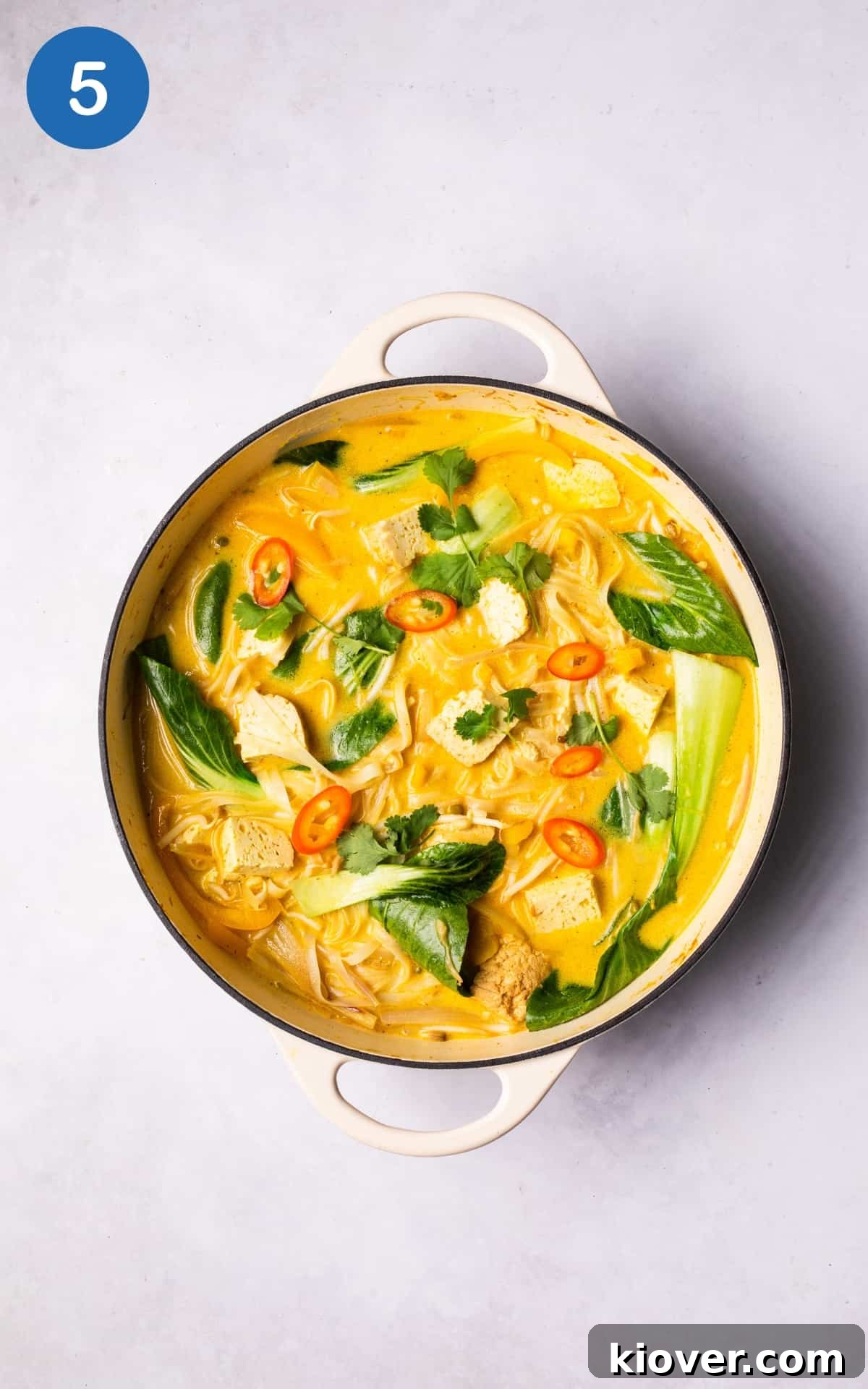
Step 5: Finish and Serve. To complete your vegan laksa, squeeze the fresh juice from half a lime directly into the pot and give it a good stir. The lime adds a crucial bright, zesty note that beautifully cuts through the richness of the coconut milk and enhances all the other complex flavors. Ladle the hot, aromatic laksa generously into individual serving bowls. Garnish each bowl artfully and generously with the finely sliced red chili and a scattering of fresh coriander leaves. For an extra flourish and to allow for individual preference, serve with the remaining lime wedges on the side. Enjoy your homemade, incredibly flavorful, and comforting vegan laksa immediately!
Hint: Remember, you’re the chef! Adjust the heat level of your laksa to suit your family’s preferences. For more spice, add extra sliced red chili or a dollop of sambal oelek during the cooking process or as a topping. To mellow out the heat, simply incorporate a bit more full-fat coconut milk, which will also add an extra layer of creaminess and richness to the broth.
Storing and Reheating Leftovers
Having leftover vegan laksa is a real treat, as the flavors often deepen and meld even further overnight! To ensure your delicious soup maintains its quality and flavor, proper storage is key. Leftover Vegan Laksa Curry will keep well for 3-4 days when stored correctly in the refrigerator. For the best results and to prevent the rice noodles from becoming too soft or mushy, it is highly recommended to store the soup (broth and vegetables) and the cooked rice noodles in separate airtight containers. This strategic separation allows the noodles to retain their desired texture, preventing them from absorbing too much liquid and becoming soggy.
When you’re ready to enjoy your delicious leftovers, gently reheat the soup (broth and vegetables) on the stove over medium-low heat until it is thoroughly warmed through, stirring occasionally to prevent sticking. You can also use a microwave for convenience, heating in 30-second intervals and stirring in between until piping hot. Once the soup is hot, add the separately stored noodles directly to your serving bowl, then ladle the hot laksa broth and vegetables generously over them. This method ensures your noodles are perfectly tender and not overcooked, mimicking the fresh experience of a newly made bowl. While the flavors often deepen overnight, freezing this recipe is not recommended as the delicate rice noodles and the creamy coconut milk base can undergo undesirable texture changes upon thawing, becoming grainy or overly soft.
Frequently Asked Questions About Vegan Laksa
Typically, traditional laksa is not vegan. Most authentic laksa recipes include a base made with chicken broth or fish stock, and often feature ingredients like shrimp, fish cakes, or hard-boiled eggs. However, with the rising popularity of plant-based diets, it’s easier than ever to find delicious vegan laksa pastes and adapt recipes, just like this one! My recipe creates a wonderfully flavorful veggie laksa that captures the essence of the classic dish so well, you won’t feel like you’re missing a thing, making it accessible to everyone.
Our vegan laksa is packed with wholesome vegetables and plant-based protein from tofu, making it a nutritious and satisfying meal. It’s a great source of vitamins, minerals, and dietary fiber. While it contains a lot of wonderful ingredients, it’s also quite rich due to the full-fat coconut milk and filling rice noodles, which contribute a significant amount of calories and healthy fats. It’s certainly a wholesome and satisfying meal, offering sustained energy. As with any rich dish, enjoy it as part of a balanced and varied diet.
Yes, absolutely! If authentic laksa paste isn’t readily available in your local grocery store, a good quality red Thai curry paste makes an excellent and highly recommended substitute. Laksa paste and red curry paste share many similar aromatic ingredients such as lemongrass, galangal, and chili, so using red curry paste will still yield a wonderfully fragrant, spicy, and flavorful soup. The exact flavor profile might be slightly different, with Thai curry paste often being a bit zestier, but it will still be incredibly delicious and satisfy your laksa craving effectively.
Laksa is a beloved, spicy noodle soup that originates from Southeast Asia, particularly popular in Malaysia, Singapore, and Indonesia. It’s renowned for its rich and complex broth, which can vary significantly by region. Generally, it features a creamy, coconut milk-based curry broth (like our recipe, often called Curry Laksa or Laksa Lemak) or a sour, tamarind-based broth (known as Asam Laksa). It’s typically served with thick rice noodles and a variety of fresh toppings, including seafood, chicken, tofu, bean sprouts, and fresh herbs. It’s a dish celebrated globally for its aromatic spices, comforting warmth, and harmonious blend of flavors.
Traditionally, thick rice noodles are preferred for laksa due to their satisfying chewiness and their excellent ability to absorb the rich, flavorful broth without becoming mushy or disintegrating. Vermicelli (thinner rice noodles) are also commonly used, sometimes even alongside thicker noodles for a varied textural experience. For a naturally gluten-free option, rice noodles are perfect. If you’re not restricted by gluten, egg noodles or even udon noodles can also be delicious and hearty alternatives, offering a different but equally enjoyable mouthfeel and making the dish very versatile.
You can certainly do some prep work in advance to make cooking laksa quicker on the day, which is excellent for meal prepping! Chop all your vegetables and tofu a day or two before and store them in separate airtight containers in the fridge. You can also prepare the broth base (sautéing aromatics and laksa paste, then adding coconut milk and stock) and store it separately. When ready to serve, simply reheat the broth, add the fresh greens and noodles, and simmer until cooked through. This method prevents the noodles from becoming soggy and ensures a fresh-ttasting meal every time.
YOU MIGHT ALSO LIKE…
More Delicious Plant-Based Recipes You’ll Love
15 Minute Dinners
Thai Curry Noodle Soup
Dinner
Vegan Thai Curry
Dinner
Peanut Butter Noodles
Dinner
Vermicelli Noodles
Tried this Vegan Laksa recipe? Please leave a star rating below and let me know how you get on. Hearing positive feedback is one of the best parts of creating recipes so please review it below and leave a comment!
P.S. Never miss a new recipe! Get more healthy recipes sent straight to your inbox weekly – Subscribe and receive a free recipe eBook!
Print Recipe
Vegan Laksa
James Wythe
8 minutes
12 minutes
20 minutes
2
Ingredients
- 1 large shallot, (halved and thinly sliced)
- 1 orange or yellow bell pepper, (thinly sliced)
- 60 g vegan laksa paste
- 1 block extra firm tofu, (pressed and cubed)
- 1 can full fat coconut milk
- 500 ml vegetable stock
- 100 g bean sprouts
- 1 pak choi (bok choy), (end chopped off to separate leaves)
- 2 nests rice noodles
- 1 lime, (half for juice, half for wedges)
- 1/2 red chilli, (finely sliced, for garnish)
- Fresh coriander (to garnish)
- Neutral cooking oil (for sautéing)
Instructions
-
1. Prepare Ingredients: Begin by prepping all your ingredients. Halve and thinly slice the shallot, thinly slice the orange or yellow bell pepper, and chop the end off the pak choi to separate its leaves. Cube the extra-firm tofu into even pieces, and finely slice the red chilli for garnish.
-
2. Sauté Aromatics: Heat a large pan or pot over medium heat. Add a glug of neutral oil. Once hot, add the sliced shallot and bell pepper. Sauté for a few minutes until the shallots are translucent and fragrant. Stir in the laksa paste and cook for another minute, allowing its aromas to develop.
-
3. Add Tofu: Let the mixture simmer for a minute. Then, add the cubed tofu to the pan. Stir well to ensure the tofu pieces are thoroughly coated in the flavorful laksa paste, infusing them with spice.
-
4. Simmer Soup: Pour in the full-fat coconut milk and vegetable stock. Add the bean sprouts, separated pak choi leaves, and rice noodles. Stir gently to combine. Bring to a gentle simmer and cook for 6-8 minutes, or until the rice noodles are cooked al dente and the pak choi has softened.
-
5. Garnish & Serve: Squeeze the juice from half a lime into the pot and stir. Ladle the hot laksa into bowls. Garnish generously with the sliced red chilli and fresh coriander leaves. Serve immediately with the remaining lime wedges on the side for an extra zesty kick.
Notes
Substitutions & Variations: Find a comprehensive list of suggested substitutions and exciting variations within the blog post above, allowing you to customize your laksa to your taste and pantry availability.
To Store: Store the soup (broth and vegetables) and cooked noodles in separate airtight containers in the fridge for up to 3-4 days to maintain optimal texture.
To Freeze: Freezing is not recommended for this recipe, as both the rice noodles and coconut milk can undergo undesirable texture changes upon thawing, impacting the dish’s quality.
Tip 1: Don’t be afraid to experiment with other vegetables you have on hand, such as sliced mushrooms, baby corn, or spinach, to add variety and nutrients to your laksa.
Tip 2: If you enjoy a spicier kick, increase the amount of freshly chopped red chili, add chili flakes, or stir in a teaspoon of sambal oelek into the broth during cooking.
Tip 3: For non-vegans/vegetarians, feel free to replace the tofu with cooked chicken, prawns, or thin slices of beef or pork for a different protein option. Adjust cooking times accordingly.
Nutrition
Calories: 695kcal
|
Carbohydrates: 32g
|
Protein: 23g
|
Fat: 46g
|
Saturated Fat: 37g
|
Fiber: 4g
|
Sugar: 10g
Did you make this recipe? Tag me Today!
Tag @HealthyLivingJames on Instagram and use #HealthyLivingJames!