
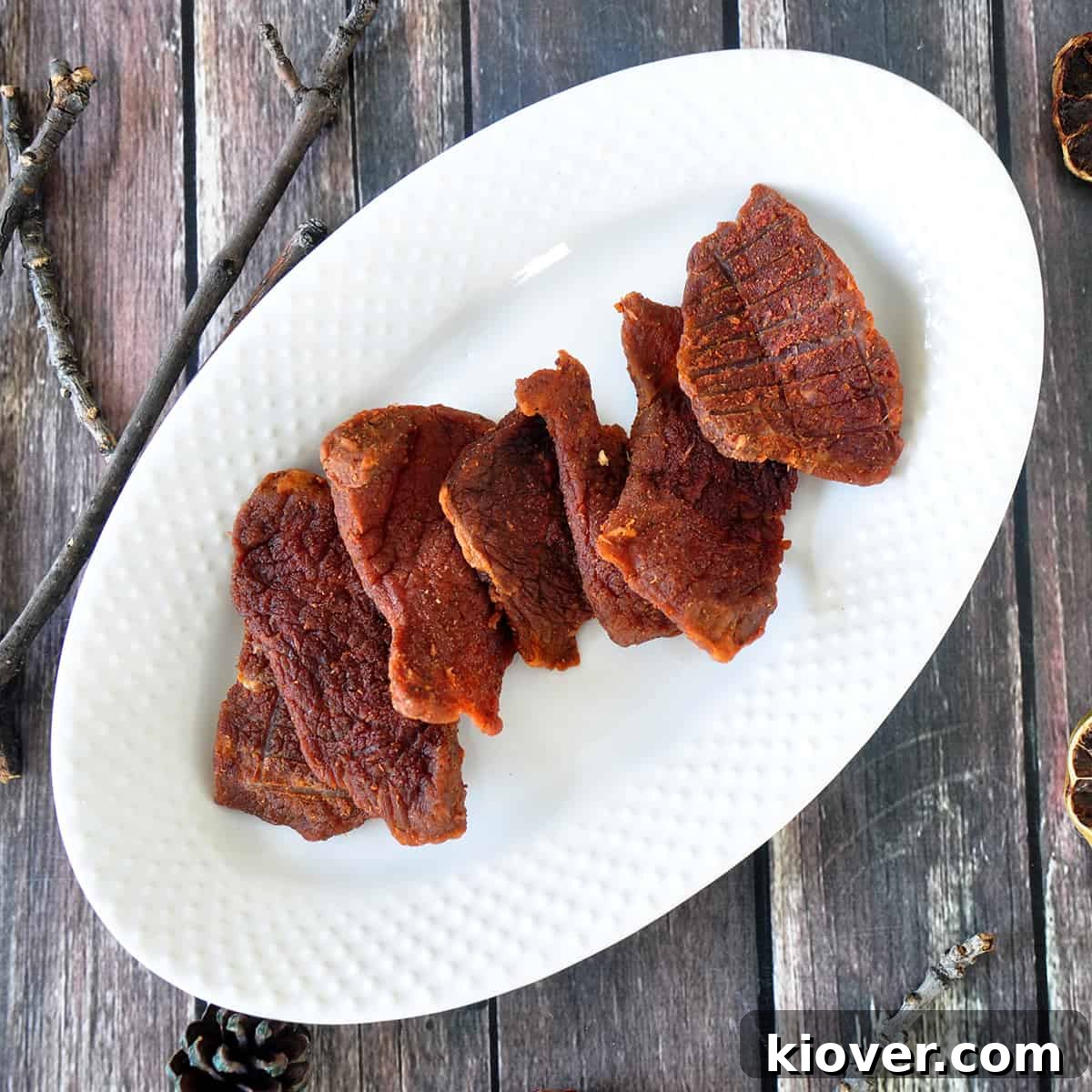
Experience the bold, savory, and spicy essence of a Bloody Mary in a portable, protein-packed snack! These flavor-packed beef jerky strips are incredibly tasty and surprisingly simple to craft right in your own kitchen by following this ultimate Bloody Mary Beef Jerky recipe.
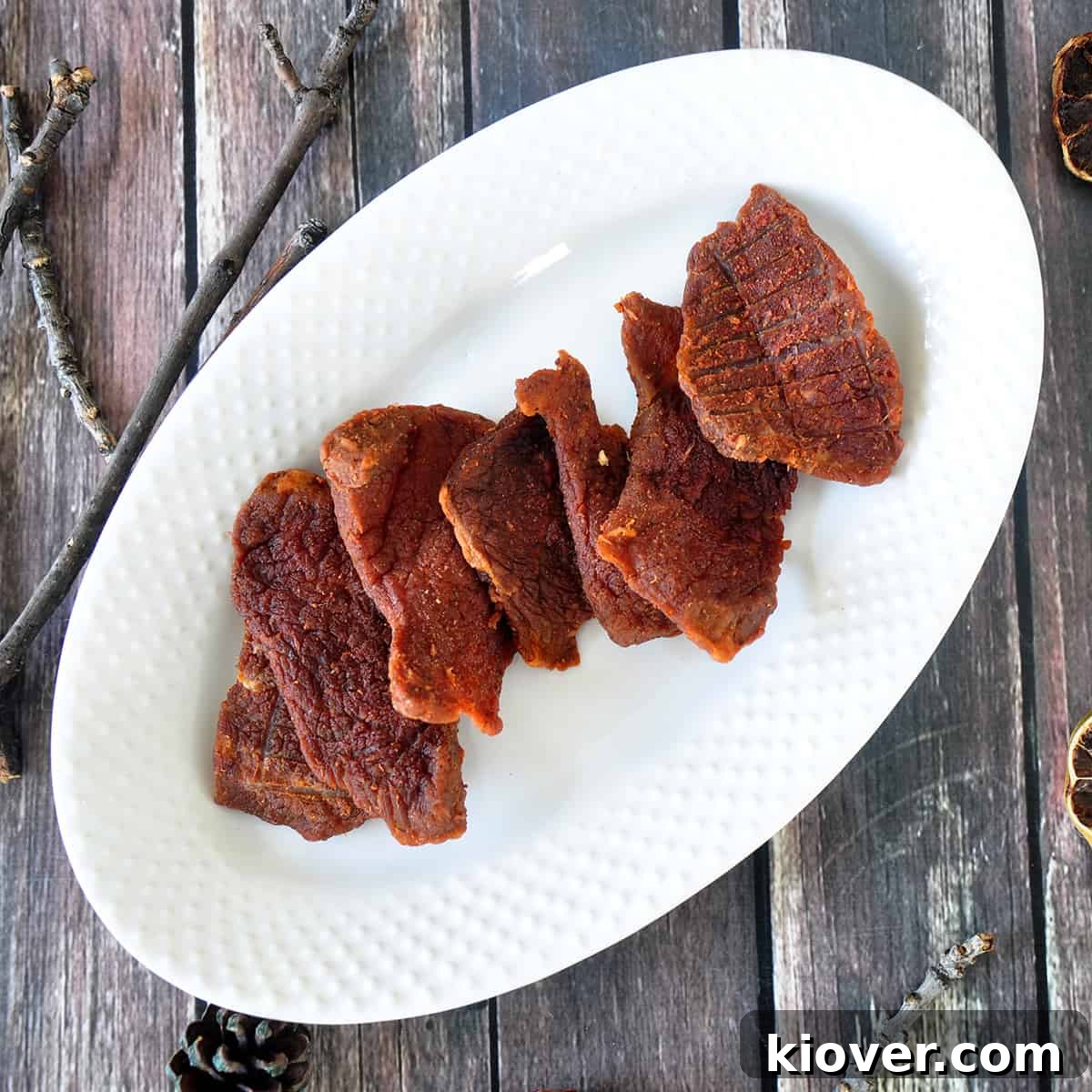
Welcome to the grand finale of our Bloody Mary series, where we transform the beloved cocktail into a uniquely satisfying beef jerky. This recipe isn’t just about making a snack; it’s about culinary innovation, blending the vibrant, zesty, and savory notes of a classic Bloody Mary with the chewy goodness of homemade beef jerky. Perfect as a standalone treat, a thoughtful gift for fellow foodies, or even an imaginative garnish for your next Bloody Mary cocktail, this jerky will ignite your taste buds and impress your friends.
The inspiration for this particular creation sprang from two core passions. Firstly, I’m captivated by the challenge and creativity involved in translating complex cocktail flavors into solid food recipes. It’s a delightful way to experiment with ingredients, pushing culinary boundaries and allowing for a playful approach to cooking. Secondly, beef snacks have always been a quintessential accompaniment to a Bloody Mary. We’ve previously explored how beef sticks enhance the cocktail experience, and I wanted to delve deeper into this classic pairing by offering a homemade jerky option. Crafting your own jerky provides unparalleled control over flavor and quality, promising a snack that’s far superior to store-bought alternatives. Plus, it’s a fantastic excuse to dust off that food dehydrator!
Beef Sticks vs. Beef Jerky: Understanding the Key Differences
While both beef sticks and beef jerky are popular dried meat snacks, they are distinct in their preparation methods and final characteristics. Understanding these differences is crucial for selecting the right approach to achieve that perfect Bloody Mary flavor infusion.
- Beef Sticks: Typically made from ground beef, which is then seasoned, mixed, and extruded into casings before being dried or smoked. This process results in a uniform, often softer and more sausage-like texture. The flavor is evenly distributed throughout the ground meat.
- Beef Jerky: Involves thinly slicing whole cuts of lean beef, marinating these slices in a flavorful mixture, and then drying them. This method allows the marinade to deeply penetrate the natural muscle fibers, creating a distinctively chewy texture and a concentrated flavor profile that directly reflects the marinade.
Through extensive experimentation, I found that the jerky style was significantly more effective at capturing and imparting the nuanced Bloody Mary flavors onto the beef. The sliced meat acts like a sponge, eagerly soaking up the tangy tomato, pungent horseradish, and spicy hot sauce. This ensures every bite delivers an authentic Bloody Mary experience. Furthermore, opting for jerky simplifies the overall process by eliminating the need for grinding meat, which, while enjoyable, adds an extra layer of time and equipment to the preparation. For robust flavor absorption and a truly satisfying chew, jerky is undoubtedly the superior choice for this recipe.
Choosing the Optimal Cut of Beef for Exceptional Jerky
The foundation of outstanding homemade beef jerky lies in selecting the right cut of meat. For this Bloody Mary Beef Jerky recipe, I highly recommend the **eye of round roast**. This particular cut is an excellent choice for several compelling reasons:
- Leanness is Paramount: Fat is the arch-nemesis of good jerky. It can turn rancid quickly, drastically reducing your jerky’s shelf life and compromising its flavor. The eye of round is exceptionally lean, ensuring that your jerky will be shelf-stable and delicious for longer. Other lean cuts suitable for jerky include top round, bottom round, and sirloin tip. Always prioritize the leanest cut you can find.
- Ideal Muscle Fiber Structure: The eye of round boasts long, consistent muscle fibers that run in a predictable direction. This structure makes it incredibly easy to slice uniformly, which is a critical step for even drying and consistent texture.
When planning your batch, consider that one pound of raw eye of round roast typically yields approximately half a pound of finished jerky. This reduction in weight occurs because the dehydration process removes a significant amount of moisture, concentrating the beef’s flavor and nutrients. This half-pound usually translates to about 8 satisfying servings, making it a perfect quantity for home production without overwhelming your dehydrator.
Mastering the Art of Slicing Beef for Perfect Jerky
Precision slicing is a cornerstone of homemade jerky. The way you cut your meat profoundly influences how well it absorbs the marinade, how evenly it dries, and its ultimate texture. For our Bloody Mary Beef Jerky, attention to detail here makes all the difference.
Cut Against the Grain for Tenderness
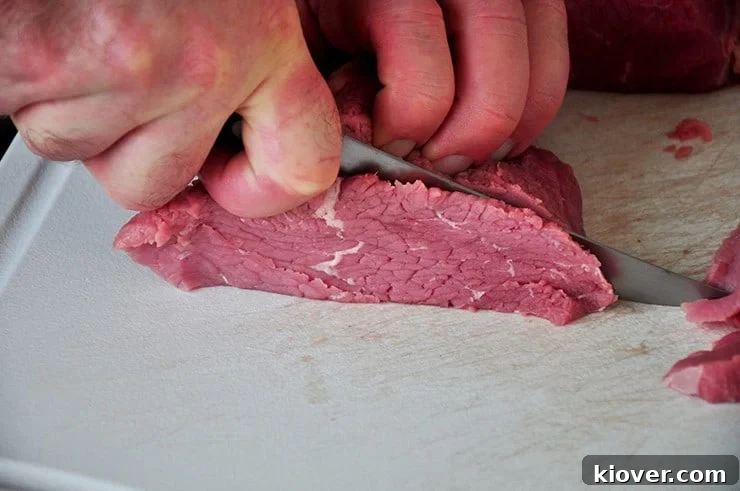
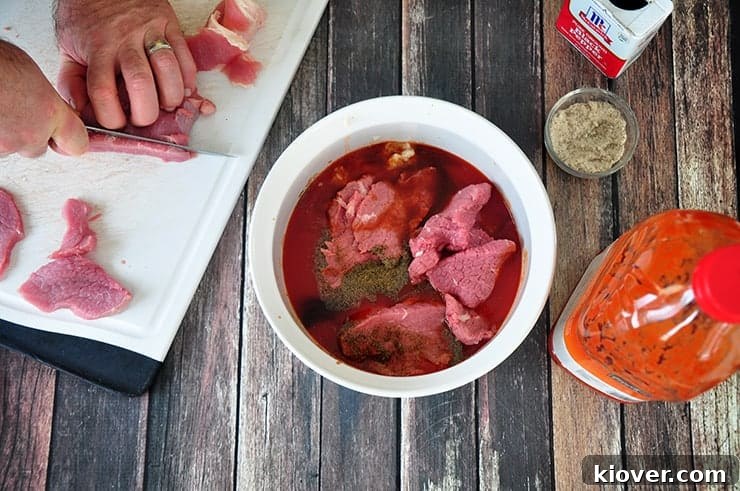
One of the most vital techniques is to slice the beef **against the grain**. The “grain” refers to the visible lines or fibers running through the meat. Cutting perpendicular to these fibers shortens them, resulting in jerky that is much more tender and easier to chew. If you were to cut with the grain, the jerky would be stringy and very tough. The eye of round roast, with its straightforward grain, simplifies this task. While you might cut a larger roast with the grain to separate it into more manageable sections for freezing or initial prep, always ensure your final cuts for the jerky strips are made across the grain. Look closely at the meat, identify the direction of the fibers, and orient your knife accordingly.
Uniform Thin Slices for Optimal Flavor and Drying
Aim for consistent, thin slices, approximately **¼ inch (about 6mm) thick**. The uniformity and thinness of your slices are critical for several reasons:
- Maximum Flavor Penetration: Thinner slices offer more surface area relative to their volume, allowing the rich Bloody Mary marinade to penetrate deeply and thoroughly into every part of the beef. This ensures an explosion of flavor in every bite.
- Even Dehydration: Consistent slice thickness guarantees that all pieces of jerky will dry at roughly the same rate. This prevents the frustrating scenario of some pieces becoming brittle and over-dried while others remain under-dried and potentially unsafe due to retained moisture.
To achieve these perfectly thin and uniform slices, a very sharp chef’s knife is indispensable. If you find raw beef too soft to slice with precision, a useful trick is to partially freeze the eye of round for about 30 to 60 minutes before slicing. This firms up the meat, making it much easier to achieve those consistent ¼-inch strips. Investing a little extra time in precise slicing will pay dividends in the quality and enjoyment of your finished Bloody Mary Beef Jerky.
Crafting the Ultimate Bloody Mary Jerky Marinade
The heart and soul of our Bloody Mary Beef Jerky reside in its vibrant and complex marinade. This is where the magic truly happens, transforming lean beef into a flavor bomb that evokes the classic cocktail. The balance of savory, spicy, tangy, and earthy notes creates an unforgettable snack.
Our marinade is designed to capture the quintessential Bloody Mary profile, featuring:
- Tomato Juice: The cornerstone, providing a rich, tangy, and slightly sweet base that’s instantly recognizable.
- Worcestershire Sauce: A powerhouse of umami, delivering deep savory notes and complexity crucial for that authentic Bloody Mary taste.
- Prepared Horseradish: Essential for that characteristic pungent kick and sharp, earthy zest. Adjust to your heat preference!
- Tabasco Sauce (or your favorite hot sauce): Adds the necessary fiery warmth. Feel free to use more or less depending on how spicy you like your jerky.
- Celery Salt: Provides an aromatic, slightly earthy, and savory depth, mirroring the celery stick often used as a garnish.
- Black Pepper: A foundational spice that contributes a subtle heat and rounds out the overall flavor profile.
- Liquid Smoke (Optional): For those who appreciate an extra layer of smoky flavor, enhancing the overall gourmet feel.
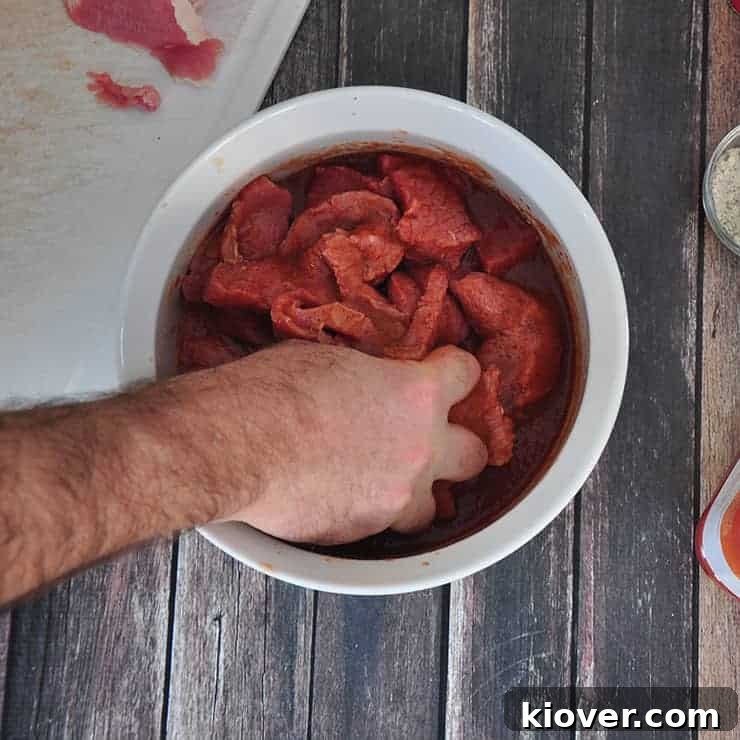
To prepare the marinade, simply combine all ingredients in a large mixing bowl and whisk thoroughly until everything is well integrated. Add your thinly sliced beef, ensuring each strip is fully submerged and coated. The longer the meat marinates, the more intense the flavor. For optimal results, cover the bowl and refrigerate the beef overnight, or for a minimum of 6 hours, up to a full 24 hours. This extended marination time is crucial for developing the deep, robust Bloody Mary character in every piece of jerky.
Safety First: Essential Food Safety for Homemade Jerky
When preparing homemade beef jerky, food safety is not just important—it is absolutely critical. Improper handling and drying can lead to foodborne illnesses. Therefore, it is essential to follow the USDA recommendations on temperatures diligently.
The most important rule is that all beef used for jerky must reach an internal temperature of **160 degrees Fahrenheit (71 degrees Celsius)** at some point during the preparation process. This temperature is necessary to destroy harmful bacteria, such as E. coli and Salmonella, which can be present in raw meat. Many home food dehydrators do not consistently reach or maintain this critical temperature, and some lack built-in thermometers to verify it.
If your dehydrator cannot reliably reach 160°F, or if you are unsure, there’s a simple and effective two-step process to ensure safety:
- Pre-Heat in the Oven: Preheat your oven to 300°F (150°C). Lay the marinated beef strips in a single layer on baking sheets or oven-safe racks, ensuring they do not overlap.
- Brief Baking: Bake the meat for approximately 10 minutes. For ¼-inch thick slices, this brief period should be sufficient to bring the internal temperature of the beef up to the safe 160°F mark.
- Verify Temperature with a Thermometer: This step is non-negotiable. Always use a reliable meat thermometer to confirm that a few pieces of beef, particularly the thickest ones, have reached 160°F. If not, continue baking for a few more minutes until the target temperature is met.
Once the beef has reached the safe temperature, you can then transfer it to your food dehydrator to complete the drying process. This pre-heating step ensures pathogen elimination, while the dehydrator finishes the job of removing moisture to achieve the desired jerky texture and shelf stability. Never skip verifying the internal temperature!
The Dehydration Process: Transforming Marinated Beef into Jerky
With your beef safely prepared and thoroughly infused with the Bloody Mary marinade, it’s time for the dehydration stage. This critical step removes moisture, concentrating the flavors and creating that signature chewy texture.
Setting Up Your Dehydrator for Success
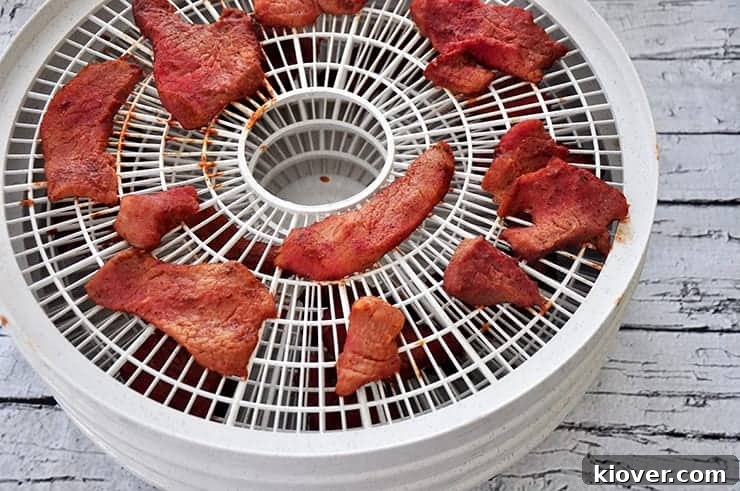
Carefully arrange the marinated beef strips evenly across your food dehydrator trays. It’s essential to ensure that no pieces overlap and that there is adequate space between them. Proper air circulation is paramount for uniform and efficient drying. If your dehydrator allows for temperature adjustment, set it to the highest temperature available, typically between 140°F and 160°F (60°C to 71°C). If you pre-baked the meat to 160°F for safety, you can then run your dehydrator at a consistent drying temperature, usually around 140°F.
Initial Drying Period
Begin by running your dehydrator for an initial period of **3 hours**. During this phase, a significant amount of moisture will be removed, and the beef will start to firm up. Resist the urge to frequently open the dehydrator, as this can interrupt the drying process and extend the overall time required.
Determining Doneness: When Is the Bloody Mary Beef Jerky Perfect?
Achieving the perfect jerky texture is a delicate balance. Under-dehydrated jerky retains too much moisture, making it prone to spoilage and providing a less-than-ideal texture. Conversely, over-dehydrated jerky becomes brittle, hard, and unpleasant to eat, resembling a dry twig rather than a satisfying snack.
After the initial 3 hours of dehydration, it’s time to start testing for doneness:
- Cool a Test Piece: Carefully remove one or two representative pieces of jerky from the dehydrator. Allow them to cool completely to room temperature for a few minutes. Jerky will feel softer when warm, so cooling provides an accurate assessment.
- Perform the Bend Test: Bend a cooled piece of jerky in half.
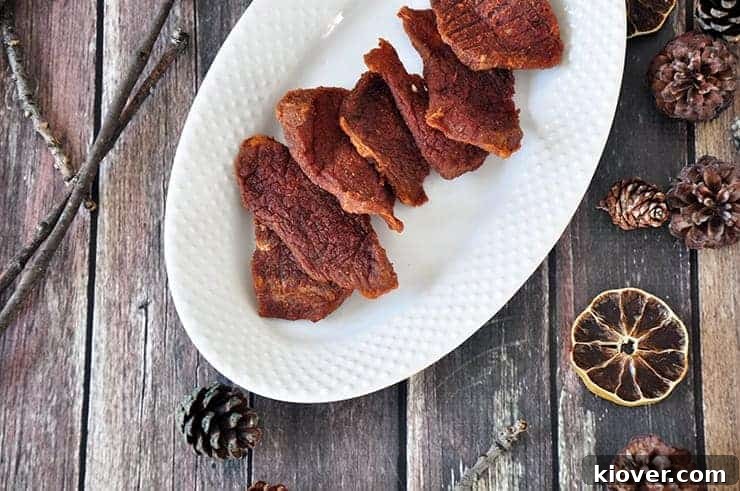
- Perfectly Done: The jerky should bend and crack, but not break completely in half. It should have a leathery, slightly pliable texture that offers resistance when chewed. There should be no visible moisture, and it should feel dry to the touch.
- Overdone: If the jerky snaps cleanly and crumbles easily like a dry twig, it is over-dehydrated. While still edible, it will be very tough and difficult to chew.
- Underdone: If the jerky simply bends without cracking and feels rubbery, soft, or pliable without resistance, it still contains too much moisture and needs additional drying time.
- Continue Dehydrating (If Necessary): If your jerky is underdone, return it to the dehydrator and continue drying in increments of **30 to 60 minutes**. After each additional drying period, remove another test piece, cool it, and repeat the bend test until the desired texture is achieved.
- Final Safety Check: Always confirm, once more, that the beef reached an internal temperature of 160°F (71°C) at some point during the preparation (either through pre-baking or within the dehydrator, if capable).
Storing Your Homemade Bloody Mary Beef Jerky
Once your Bloody Mary Beef Jerky has reached its ideal texture and cooled completely, proper storage is crucial for maintaining its freshness, flavor, and extending its shelf life. Always ensure the jerky is at room temperature before storing; packaging warm jerky can create condensation, which promotes mold growth and spoilage.
For optimal preservation, transfer the cooled jerky to an airtight container or a high-quality resealable bag. For even longer-term storage, consider using a vacuum sealer, which removes oxygen and significantly extends freshness.
- Room Temperature: Stored in an airtight container in a cool, dark place, homemade jerky typically maintains its quality for about 7-10 days.
- Refrigeration: For an extended shelf life, refrigerate your jerky in an airtight container for up to 3-4 weeks.
- Freezing: For maximum longevity, jerky can be frozen for several months (up to 6 months) without significant loss of flavor or texture. Thaw at room temperature before enjoying.
Always inspect your jerky for any signs of spoilage—such as an unusual smell, visible mold, or sliminess—before consuming, especially if it has been stored for an extended period.
Enjoying Your Flavorful Creation
This Bloody Mary Beef Jerky isn’t just a snack; it’s a gourmet experience designed to delight your senses. Its unique blend of savory, spicy, and tangy flavors makes it incredibly versatile. Here are a few ways to savor your homemade creation:
- On its Own: A fantastic high-protein, low-fat snack perfect for hikes, road trips, desk-side munching, or simply curbing those savory cravings.
- Elevate Your Cocktails: Take your next Bloody Mary to an entirely new level by using a strip of this flavorful jerky as an ultimate, edible garnish.
- Charcuterie Boards: Impress your guests by adding this unique jerky to your artisanal cheese and meat boards. Its distinctive flavor will be a delightful conversation starter.
- Unique Gift: Package it nicely, and you have a thoughtful, homemade gift for friends, family, or fellow food enthusiasts who appreciate quality and flavor.
We hope you thoroughly enjoy the process of making and the pleasure of savoring this exceptional Bloody Mary Beef Jerky. We love seeing your culinary adventures! If you enjoyed this recipe and want to stay updated on our latest creations, be sure to sign up for our email updates and share your jerky triumphs on Pinterest!
Print Recipe
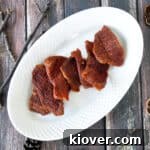
Bloody Mary Beef Jerky Recipe
Rated 4 out of 5 stars by 1 review
- Author: Ben Myhre
- Prep Time: 6 hours
- Cook Time: 3 hours
- Total Time: 9 hours
- Yield: 8 Ounces
- Category: Snacks
- Method: Dehydration
- Cuisine: Rustic
Description
This Bloody Mary Beef Jerky recipe is a fantastic way to infuse the bold, zesty, and savory flavors of the classic Bloody Mary cocktail into a high-protein, satisfying beef jerky. It’s a delicious and healthy snack, perfect for any occasion.
Ingredients
- 1 pound Eye of Round Beef Roast, thinly sliced
- 3 cups tomato juice
- 1 teaspoon pepper
- 1 teaspoon celery salt
- 1 tablespoon prepared horseradish
- 1 tablespoon Worcestershire Sauce
- 1 tablespoon Tabasco sauce (or your preferred hot sauce)
- 1 teaspoon liquid smoke (optional, for extra depth)
Instructions
- Prepare the Beef: Slice the eye of round roast into ¼-inch thick pieces, cutting against the grain for tenderness. For easier slicing, partially freeze the meat for 30-60 minutes beforehand.
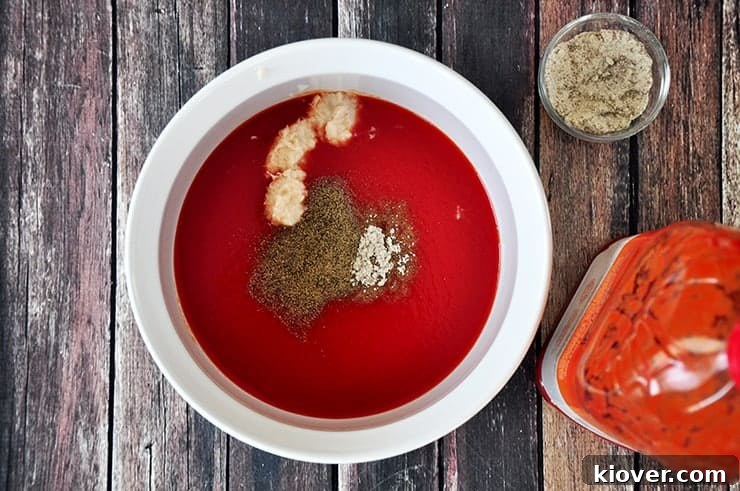
- Combine Marinade: In a large bowl, combine the tomato juice, pepper, celery salt, prepared horseradish, Worcestershire Sauce, Tabasco sauce, and optional liquid smoke. Mix well until all ingredients are thoroughly blended.
- Marinate the Meat: Add the sliced beef to the bowl, ensuring every piece is fully coated and submerged in the Bloody Mary marinade.
- Refrigerate: Cover the bowl and refrigerate for a minimum of 6 hours, or ideally overnight (up to 24 hours), to allow the flavors to deeply penetrate the beef.
- Pre-Heat for Safety (if necessary): If your dehydrator does not reach 160°F (71°C), preheat your oven to 300°F (150°C). Lay the marinated meat strips on baking sheets without overlapping and bake for approximately 10 minutes, or until the internal temperature of the beef reaches 160°F (71°C). Use a meat thermometer to confirm. Remove from oven.
- Dehydrate: Arrange the beef strips evenly on your dehydrator trays, ensuring good airflow. If you pre-heated in the oven, set your dehydrator to its highest setting (e.g., 140-160°F if capable). Run the dehydrator for an initial 3 hours.
- Test for Doneness (Initial Check): After 3 hours, remove a piece of jerky and let it cool. Bend it; if it bends and cracks but doesn’t break in half, and has reached 160°F during the process, it’s likely done. If it snaps like a twig, it’s overdone (remove all). If it’s still floppy, it needs more time.
- Continue Dehydrating (if needed): If not done, return the jerky to the dehydrator and continue drying for an additional 30-60 minutes. Repeat the bend test until the desired leathery, chewy texture is achieved.
- Cool and Store: Once done, allow all jerky to cool completely to room temperature before storing. Place in an airtight container or a resealable bag. Consume within 7-10 days at room temperature, or refrigerate for up to 3-4 weeks.