
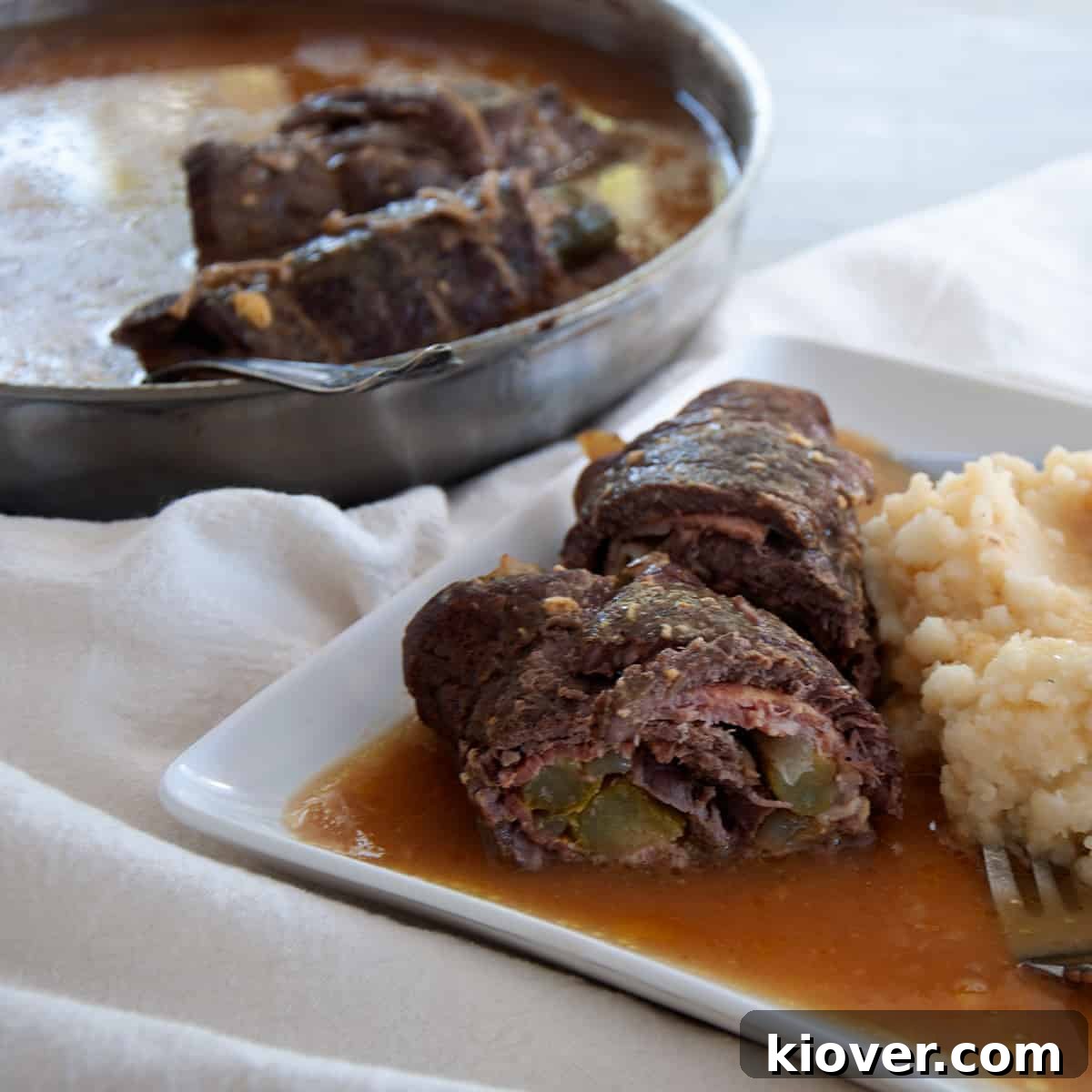
Welcome to the delightful world of Rouladen, a truly classic German comfort food that promises a hearty and immensely satisfying meal. If you’ve never experienced the magic of thinly sliced beef rolled with savory bacon, pungent mustard, sweet onions, and tangy pickles, then you’re in for a treat. This isn’t just a dish; it’s a culinary journey into the heart of German tradition, delivering a depth of flavor and tender texture that will captivate your palate.
Often perceived as a complex dish due to its intricate appearance, Rouladen is surprisingly straightforward to prepare. The beauty lies in its simplicity: quality ingredients brought together to create something truly extraordinary. Imagine rich, tender beef, bursting with a unique blend of flavors, all enveloped in a luscious, homemade gravy. Serve this German masterpiece alongside creamy mashed potatoes or traditional Spätzle, and you have a complete, authentic German bonanza ready to impress. Don’t let its humble origins fool you; this dish is packed with comforting warmth and irresistible taste. We invite you to explore this fantastic Rouladen recipe and discover your new favorite German classic today!
What is Rouladen? A German Culinary Gem
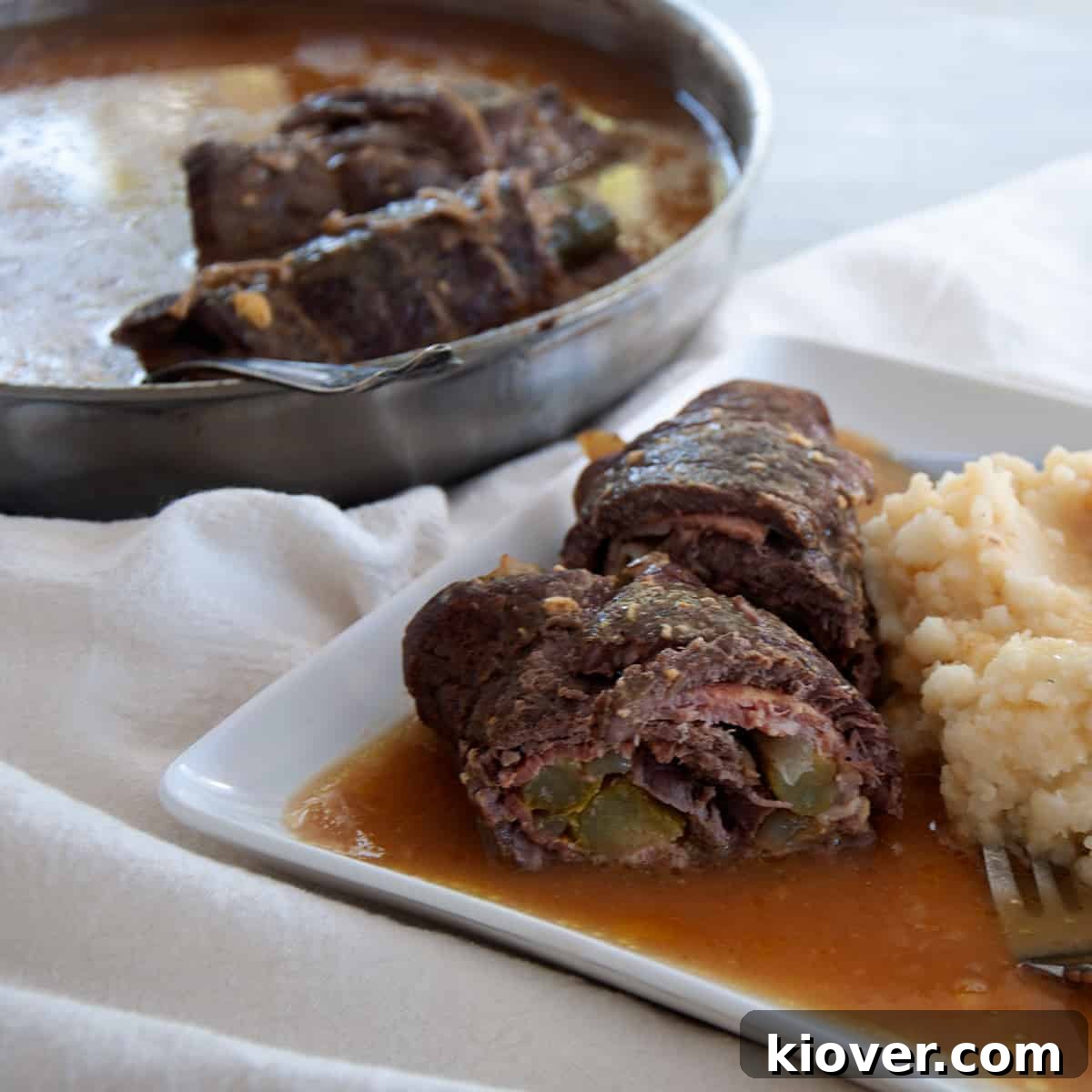
Rouladen is a traditional German dish consisting of thinly sliced meat, typically beef, which is rolled around a filling of bacon or ham, onions, mustard, and pickles. Once rolled and secured, these beef bundles are seared to achieve a beautiful golden-brown crust and then slowly simmered in a rich, savory gravy until fork-tender. The name “Rouladen” itself comes from the French word “rouler,” meaning “to roll,” highlighting the defining characteristic of this dish. It’s a testament to resourceful cooking, historically utilizing available ingredients to create a nourishing and flavorful meal.
This dish is a cornerstone of German cuisine, particularly popular during colder months and for festive occasions. Its comforting nature and robust flavors make it a favorite for family gatherings and Sunday dinners. The combination of salty bacon, sharp mustard, aromatic onion, and tart pickle provides a symphony of tastes that perfectly complements the rich beef, while the slow simmering process ensures every bite is infused with deep, satisfying flavor. Preparing Rouladen is not just cooking; it’s an act of crafting a time-honored tradition that brings warmth and joy to the table.
The Art of Choosing and Preparing the Perfect Beef for Rouladen
Selecting the right cut of beef is arguably the most crucial step in creating tender and flavorful Rouladen. The ideal choice is thinly sliced top round beef, cut against the grain. This specific preparation ensures the meat is tender enough to roll easily and will break down beautifully during the long simmering process, resulting in a melt-in-your-mouth texture.
Your local butcher is your best friend when it comes to Rouladen. Many experienced butchers are familiar with the term “Rouladen” and can prepare the meat precisely as needed. Don’t hesitate to ask if they know what Rouladen is; if so, they’ll likely know exactly how to cut three (or more, depending on your serving needs) thin, yet sufficiently long, slices of top round. If they’re unfamiliar, simply describe what you need: lean beef, sliced approximately one-quarter inch thick, large enough to wrap around a slice of bacon with room to spare, and cut against the grain for maximum tenderness.
While top round is the most common and recommended choice, some traditional recipes also call for veal. For a slightly different texture, you might find pre-sliced, vacuum-sealed Rouladen beef in the freezer section of larger grocery stores, though this isn’t universally available. If you absolutely must cut the beef yourself, purchase a top round roast and slice it carefully against the grain to the desired thickness. Remember, consistency in thickness is key for even cooking.
A common debate among Rouladen enthusiasts is whether to pound the beef slices. While some advocate for pounding the meat to further tenderize it, this step is generally unnecessary if you have a perfectly cut, high-quality top round. The slow simmering process will do most of the work, breaking down the connective tissues and rendering the beef incredibly tender. Trust your butcher, and let the long, gentle cook time work its magic.
The Flavor Foundation: Choosing the Right Mustard and Pickles
The distinctive taste of Rouladen is heavily influenced by two key ingredients: mustard and pickles. These seemingly simple components play a crucial role in balancing the richness of the beef and bacon, adding layers of tang, spice, and aromatic depth.
Selecting the Perfect Mustard
Given its German origins, opting for a German mustard is highly recommended. German mustards often have a robust flavor profile, ranging from mild and sweet to sharp and spicy, which complements the beef beautifully. A good quality, medium-hot German mustard provides a wonderful zing that cuts through the richness of the meat and forms a foundational flavor note for the entire dish. However, if German mustard isn’t readily available, a good Dijon mustard can be an excellent substitute, offering a similar sharp, tangy profile. Ultimately, the best mustard is the one you enjoy most, as its flavor will subtly permeate the beef as it simmers. Don’t be afraid to experiment with whole grain or even a sweeter Bavarian mustard if you prefer a milder taste.
Finding the Ideal Pickles
Just like mustard, your choice of pickles will significantly impact the final taste of your Rouladen. Classic dill pickles are the go-to choice, offering a crisp texture and a delightful tangy counterpoint to the savory fillings. For an extra layer of flavor, consider using homemade dill pickles, which often boast a fresher, more vibrant taste. We personally enjoy using our homemade, sometimes spicy, dill pickle spears for an added kick, especially in a dish that feels so perfect for cold weather.
When selecting pickles, consider using spears rather than slices. Pickle spears maintain their shape better during the rolling and simmering process, contributing to a more satisfying texture within the Rouladen. They are also easier to handle and roll neatly within the beef slices. Whether you choose classic dill, gherkins, or even a slightly sweeter variety, ensure they are firm and flavorful, as their essence will infuse into the gravy, creating a truly memorable dish.
Assembling Your Rouladen: Rolling and Securing
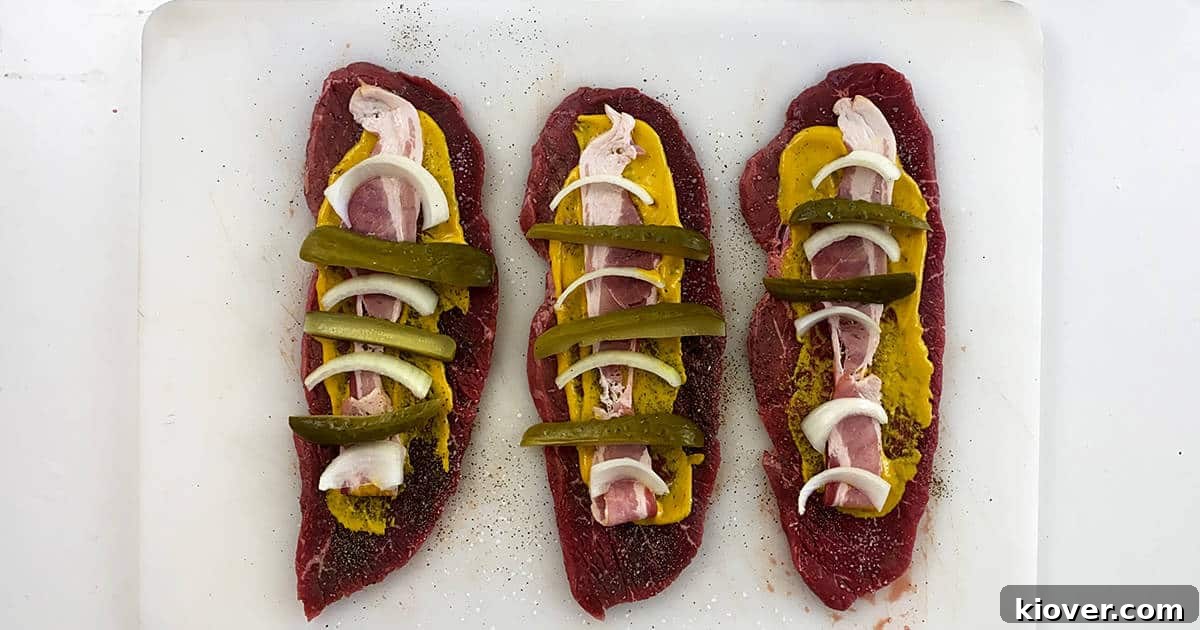
The assembly of Rouladen is where the magic truly begins. Once your beef slices are prepped and seasoned with a dash of salt and pepper, it’s time to layer on the core ingredients that give Rouladen its distinctive taste and texture: mustard, bacon, onions, and pickles. Spread a generous amount of mustard evenly over one side of each beef slice. This not only adds flavor but also helps to adhere the other ingredients.
Next, lay a slice of bacon over the mustard. For best results and a tidy roll, position the bacon so there are a few inches of beef extending beyond one end – this will be the flap you roll into, ensuring the bacon is fully enclosed. Distribute thinly sliced onions and a dill pickle spear (or two, depending on their size) over the bacon. The bacon provides a crucial savory element and moisture, while the onions add a sweet, aromatic note that mellows beautifully during cooking, and the pickles offer their signature tangy crunch.
Securing Your Rolls: Butcher’s Twine vs. Toothpicks
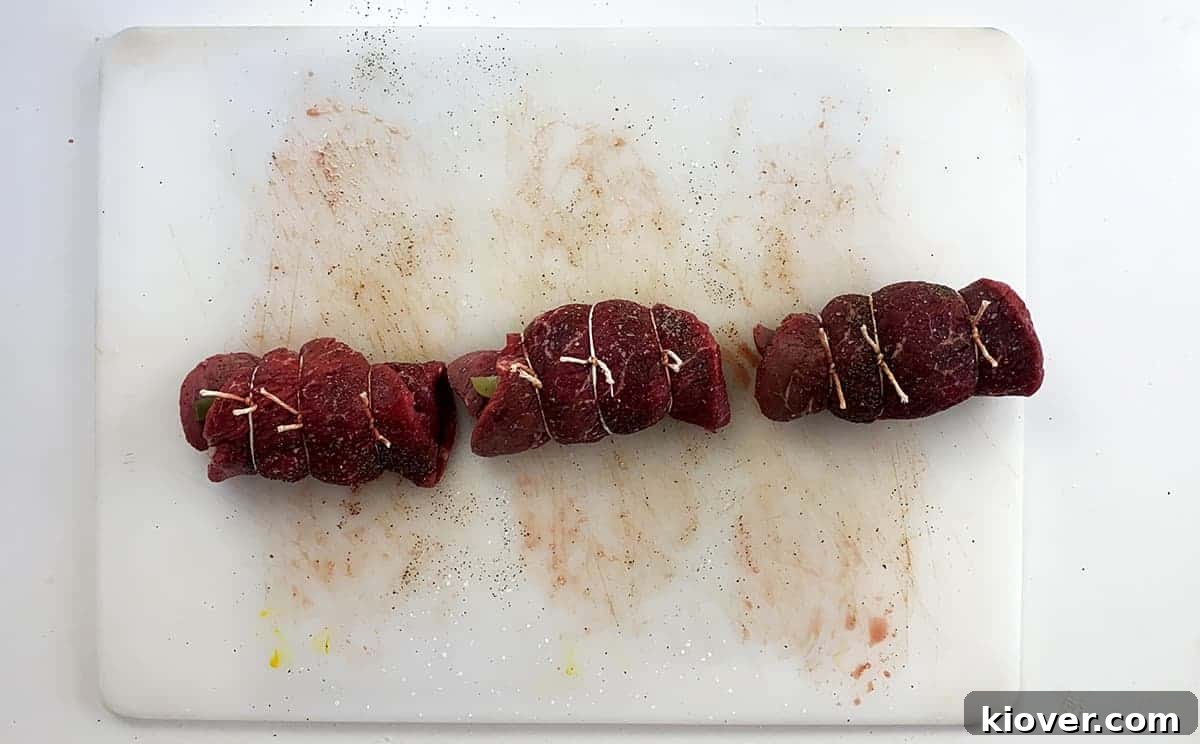
Once filled, carefully roll each beef slice tightly from one end to the other, creating a compact bundle. Securing these rolls is paramount to prevent them from unraveling during cooking, which would turn your elegant Rouladen into a less appealing beef and pickle stew. The most reliable method is using butcher’s twine.
Butcher’s twine is strong, food-safe, and provides a secure hold. Simply slide a piece of twine under each roll, wrap it around two or three times, and tie it off with a secure knot. You can use a basic square knot, or if you want to be extra fancy, learn a butcher’s knot for a professional finish. Trim any excess twine. Typically, three pieces of twine per roll are sufficient to keep everything snugly in place.
While some cooks opt for toothpicks to secure Rouladen, this method comes with a higher risk. Toothpicks can occasionally loosen or break, leading to your Rouladen falling apart in the pan. If you choose to use toothpicks, ensure they are sturdy and use several per roll for added security. However, for maximum peace of mind and structural integrity, butcher’s twine remains the superior choice, ensuring your Rouladen holds its beautiful shape and ingredients throughout the entire cooking process.
Crafting the Rich Gravy: Browning and Roux
The journey to perfect Rouladen continues with two essential steps that lay the foundation for an incredibly flavorful gravy: browning the beef rolls and creating a classic roux. These steps are not merely about cooking; they are about building layers of deep, complex flavor.
The Importance of Browning
The first step in the actual cooking process is to brown all sides of your neatly tied Rouladen. Place them in a hot skillet with a little oil and sear until each side develops a rich, golden-brown crust. This browning isn’t just for aesthetics; it’s a crucial technique known as the Maillard reaction. This chemical process creates hundreds of new flavor compounds, giving the beef a more intense, savory taste and a delightful outer texture. As the Rouladen browns, delicious little bits of caramelized beef will stick to the bottom of the pan – these are called “fond” and are packed with flavor. Once beautifully browned, remove the Rouladen from the pan and set aside, reserving the pan and its flavorful fond.
Building the Gravy with a Roux
Now, it’s time to transform that flavorful fond into a luscious gravy. Add butter to the same pan, allowing it to melt and mingle with the browned bits. Once the butter is melted and bubbling, sprinkle in the all-purpose flour. Stir continuously, creating a thick paste known as a roux. This roux is the essential thickening agent for your gravy and will also contribute a nutty flavor. Cook the roux for a minute or two, allowing the raw flour taste to cook out and the mixture to turn a light golden color (a blonde roux).
Gradually, and while whisking constantly, pour in the beef broth. The key here is to add the liquid slowly to prevent lumps and ensure a smooth, velvety gravy. As you incorporate the broth, the roux will dissolve, and the liquid will begin to thicken. Continue stirring until all the broth is fully integrated and the gravy starts to come together. Bring the gravy to a gentle simmer, allowing it to thicken further. If you prefer a thicker gravy, you can add a little more flour to your roux at the beginning or create a slurry (flour mixed with cold water) to stir in at this stage. Once the gravy has reached your desired consistency, it’s ready for the Rouladen to return.
The Slow Simmer: Unlocking Flavor and Tenderness
With your Rouladen beautifully browned and your rich gravy prepared, the final and perhaps most transformative phase of cooking begins: the slow simmer. This extended period of gentle cooking is where the magic truly happens, transforming tough cuts of beef into incredibly tender, flavorful rolls and allowing all the ingredients to meld into a harmonious symphony of taste.
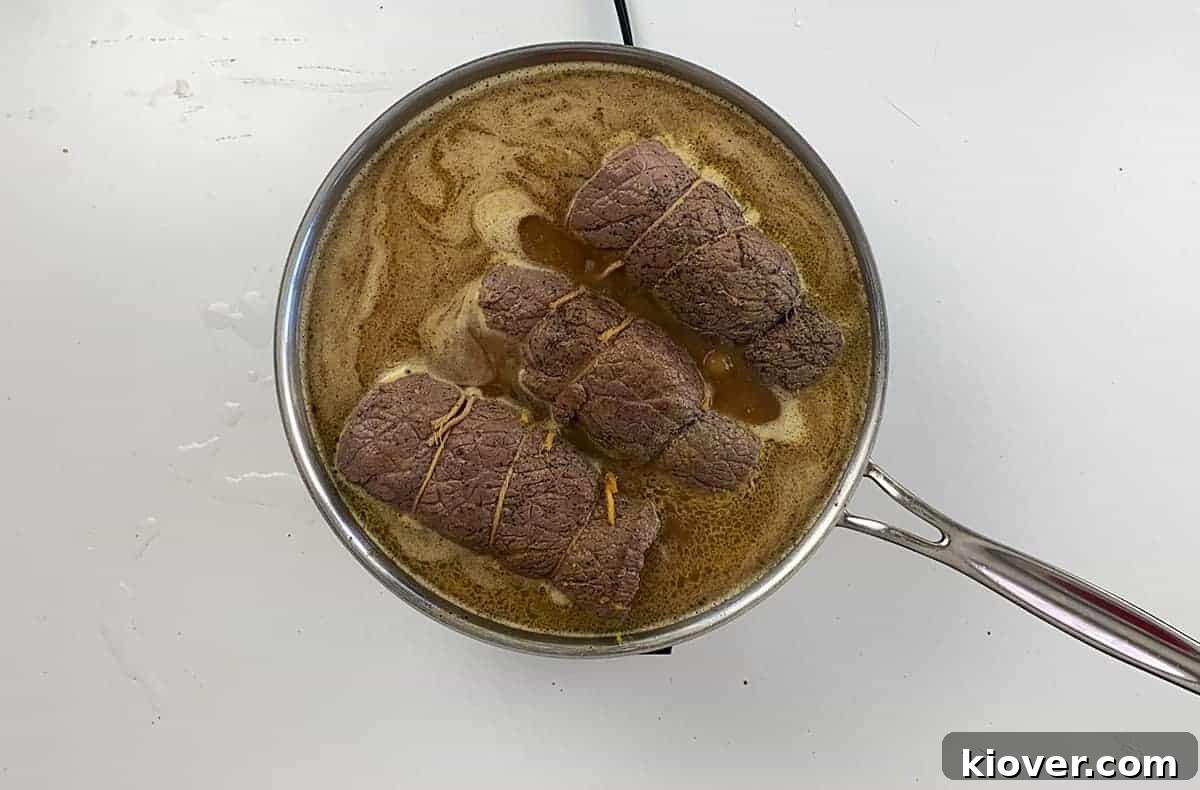
Carefully place the browned Rouladen back into the pan, nestling them into the simmering gravy. Ensure they are mostly submerged in the liquid. Once the Rouladen are in place, cover the pan tightly with a lid, creating a moist, steamy environment. Reduce the heat to a low-medium setting, maintaining a gentle simmer, not a vigorous boil. This slow, low-heat cooking is crucial for breaking down the tough connective tissues in the beef, rendering it exceptionally tender without drying it out.
Allow the Rouladen to simmer for a good hour and a half. This extended cooking time is essential for the beef to reach its peak tenderness and for all the flavors from the bacon, mustard, onions, and pickles to infuse into the gravy and the meat itself. About halfway through the simmering period, gently flip the Rouladen over. This ensures even cooking and allows both sides to absorb the rich flavors of the gravy equally, preventing one side from becoming too dry or less flavorful.
As the Rouladen slowly simmers, the kitchen will fill with an intoxicating aroma, a testament to the deliciousness unfolding within the pot. By the end of the hour and a half, the beef will be fork-tender, the filling perfectly cooked, and the gravy deeply flavorful and slightly thickened. Once the simmering is complete, your Rouladen is ready to be served. Carefully remove the butcher’s twine, and prepare to enjoy a truly remarkable and authentic German meal.
Serving Suggestions: What Pairs Best with Rouladen?
Rouladen is a rich and hearty dish, and selecting the right side dishes can elevate the meal to an unforgettable experience. The accompanying sides often serve to complement the robust flavors of the beef and gravy, providing textural contrast and a refreshing balance.
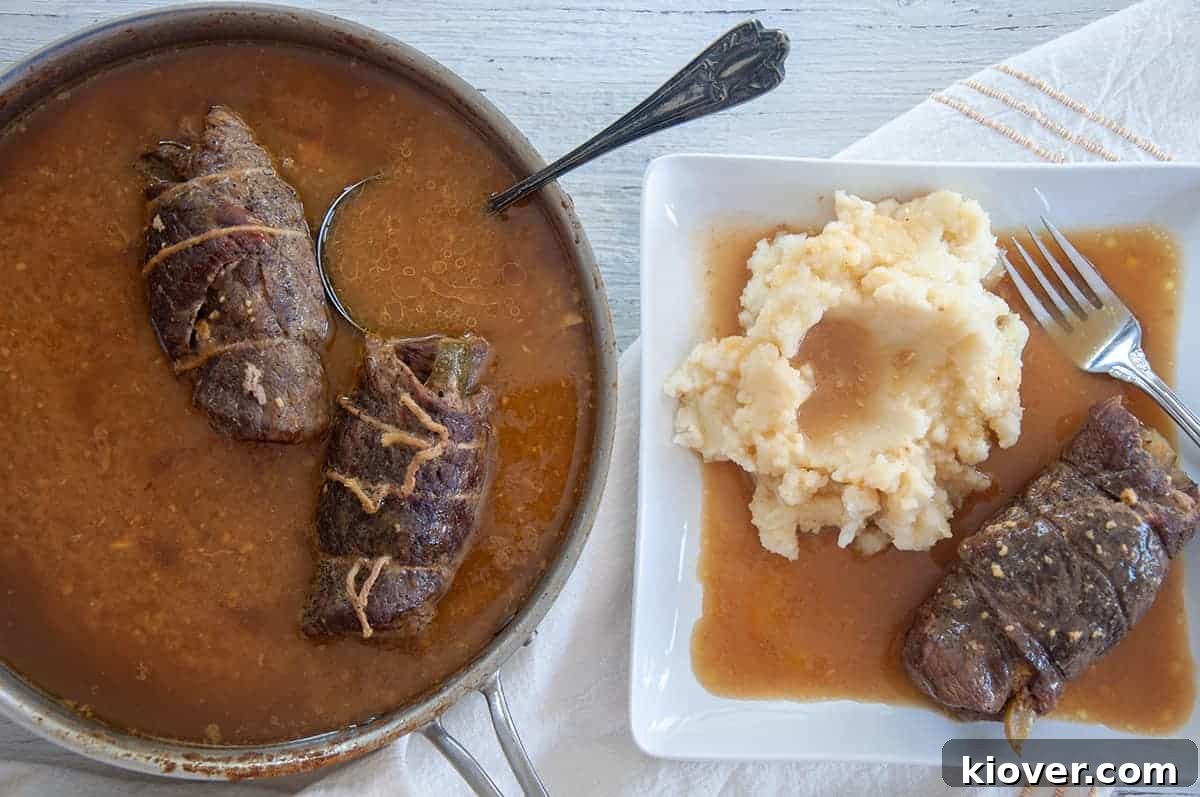
The most obvious and beloved choice to serve with Rouladen is a generous helping of creamy mashed potatoes. This classic pairing is simply perfect, as the mashed potatoes act as an ideal sponge for the abundant, savory gravy, ensuring not a single drop of its deliciousness goes to waste. The smooth texture of the potatoes also provides a comforting contrast to the tender beef.
Another excellent traditional German accompaniment is Spaetzle. These small, soft egg noodles are a staple in German cuisine and offer a delightful chewy texture that works wonderfully with the gravy. If you’re looking for something with a bit more tang to cut through the richness, a vibrant pickled German red cabbage dish or a crisp coleslaw would be fantastic choices. The acidity from these options provides a refreshing counterpoint, cleansing the palate between bites of the hearty Rouladen.
Don’t forget the importance of good bread! A warm bun or a slice of buttered bread is an absolute must. It’s perfect for soaking up any remaining gravy on your plate, ensuring you savor every last bit of this incredible meal. Essentially, anything that pairs well with a traditional beef roast would be a suitable accompaniment for Rouladen, allowing for versatility in your meal planning.
A Glimpse into History: The Enduring Origins of Rouladen
The history of Rouladen is as rich and comforting as the dish itself, though its precise origins are somewhat elusive. What is clear is that Rouladen, like many beloved comfort foods, evolved from a tradition of resourceful cooking, making the most of available ingredients. The name itself, “Rouladen,” is derived from the French word “rouler,” meaning “to roll,” indicating that the concept of rolling meat around a filling has a long culinary lineage across Europe.
Early Culinary Explorations: Recipes from the 1800s
While the rolling of meat has ancient roots, specific Rouladen recipes began appearing in cookbooks much later. Evidence of early variations can be traced back to the 1800s. For instance, a fascinating recipe from 1838, found in “Stettiner Koch-Buch – Instructions for Cooking, Baking, and Canning in a Fine and Tasty Way,” describes rolling a medley of ingredients such as tendons, lemon peels, shallots, bread, and eggs into thin slices of veal. This particular recipe, while vastly different from modern Rouladen, clearly illustrates the foundational concept of encasing diverse fillings within meat and then slow-cooking it.
Further demonstrating its early spread, a recipe appeared in “Practical Cookbook for Germans in America” around the turn of the 20th century. This German-language cookbook suggests that the Rouladen tradition migrated with German immigrants to the United States fairly early on. The presence of such recipes highlights the dish’s importance in German culinary heritage and its adaptation in new lands. In regions with significant German ancestry, like many parts of the US, it’s not uncommon for local butchers to be well-versed in preparing cuts specifically for Rouladen, a testament to its enduring cultural presence.
These older recipes, though not identical to the Rouladen we cherish today, share core commonalities: thinly sliced beef (or veal) rolled with various “goodies” and then subjected to a long, slow simmer. This method of cooking tough cuts of meat with flavorful fillings was a practical way to create nourishing and palatable meals.
The 20th Century: Standardization and Modern Rouladen
The Rouladen recipe as we largely know it today began to solidify around the mid-20th century, specifically by the 1960s. During this period, certain ingredients became standard. Pickles and mustard, which offer distinct flavor profiles that perfectly complement beef, emerged as staple components of the Rouladen filling. Similarly, some form of pork product, most commonly bacon or occasionally ham, became a consistent inclusion, adding savory depth and moisture.
This standardization reflects a common pattern in culinary history where generalized cooking concepts gradually refine into specific, well-defined recipes. What might have originally been a broader term for any rolled beef dish in the 1800s evolved into the distinct Rouladen recipe featuring mustard, pickles, and bacon by the mid-1900s. Like many traditional dishes, Rouladen was born out of a “waste not, want not” philosophy, designed to utilize small pieces and leftover tidbits to feed a family. Over time, it transcended its humble beginnings to become a celebrated, specific comfort food, beloved for its unique combination of flavors and its heartwarming appeal.
Essential Tips for Rouladen Success
Mastering Rouladen is simpler than you might think, especially with a few helpful tips:
- **Consult Your Butcher:** Always ask your butcher for thinly sliced top round beef, cut against the grain, specifically for Rouladen. Their expertise will save you time and ensure the best results.
- **Secure Properly:** For reliable results, use butcher’s twine to secure your Rouladen rolls. While toothpicks can work, they carry a higher risk of the rolls unraveling during cooking, which can impact the final dish.
- **Don’t Skip the Browning:** Always brown each side of your Rouladen before simmering. This crucial step develops rich flavor through the Maillard reaction and contributes to the depth of your gravy.
- **Adjust Gravy Thickness:** If you prefer a thicker gravy, feel free to use a little more all-purpose flour when making your roux. You can also make a flour or cornstarch slurry to stir in during simmering for a thicker consistency.
- **Personalize Flavors:** The type of pickles and mustard you choose will significantly influence the final flavor profile of your Rouladen. Experiment with different varieties to find what you like best – whether it’s spicy dill pickles or a sweet German mustard.
- **Freezing for Later:** Rouladen freezes exceptionally well! Once cooked, allow it to cool, then portion and freeze in airtight containers with plenty of gravy. It reheats beautifully, making it an excellent make-ahead meal.
- **Consider Serving Size:** Our recipe uses approximately 1.5 pounds of beef, typically yielding three Rouladen. While a single Rouladen might seem like one serving, it’s quite substantial. Consider half a Rouladen as a complete serving, especially when accompanied by hearty side dishes. Adjust according to your appetite.
- **Classic Pairings:** For the ultimate German comfort meal, serve your Rouladen with creamy mashed potatoes and a slice of buttered bread to soak up every last drop of that delicious gravy.
Rouladen Recipe – German Beef Rolls
Author: Ben Myhre
Prep Time: 20 minutes
Cook Time: 1 hour 45 minutes
Total Time: 2 hours 5 minutes
Yield: 3 Rouladen
Category: Dinner
Method: Stovetop
Cuisine: German
Description
Rouladen is a traditional German dish that is truly unique and you should give a try today. Beef rolled up with bacon, mustard, pickles, and then simmered in a delicious gravy. Serve this delightful comfort food with a side of mashed potatoes and you will be very happy you gave this a try.
Ingredients
- 1 ½ Pounds of thinly sliced top round beef roast
- Salt and pepper
- 6 Tablespoons mustard
- 3 slices of bacon, or more if needed
- ½ onion, sliced
- 6 Dill pickles spears
- 4 Tablespoons butter
- ¼ cup all-purpose flour
- 1 quart beef stock
Instructions
- Lay meat out. Salt and pepper both sides.
- Spread mustard over one side of laid out meat.
- Lay a strip of bacon for each slice, but leave 3 inches at the end of each slice.
- Add Onion evenly over the bacon.
- Add Pickle spears on top of the onion.
- Roll and Tie: Tightly roll each beef slice and secure with three threads of butcher’s twine per roll.
- Brown each side of the Rouladen in a large pan until golden. Remove Rouladen from pan.
- Make Roux: In the same pan, add butter and then flour, stirring to create a roux.
- Slowly add beef broth to the roux, whisking constantly to form the gravy.
- Bring to simmer to thicken the gravy.
- Turn to medium-low heat.
- Re-add the browned Rouladen to the gravy in the pan.
- Cover and simmer for 1.5 hours, flipping halfway through.
- Remove and serve. Remove twine and add gravy to taste.
Notes
- Talk to your butcher about cutting thin slices of top round beef for your Rouladen.
- Use butcher’s twine if at all possible, but some people use toothpicks to keep their rolls together. The risk of using toothpicks is that your rolls may fall apart if they don’t hold.
- Brown each side before simmering.
- You could use more all-purpose-flour if you prefer a thicker gravy.
- The kind of pickles and mustard you use will impact your final flavor. Use what you like.
- I have frozen this recipe for later use and it has worked out just fine.
- My recipe calls for about 1 ½ pounds of beef. While it seems natural for each roll to be one full serving, that is quite a bit of meat for a serving, so I chose to make ½ a roll a complete serving. Use your discretion.
- This recipe is great with a side of mashed potato and buttered bread.
Nutrition
- Serving Size: 1/2 Rouladen
- Calories: 289 Calories
- Sugar: 1 g
- Sodium: 1015 mg
- Fat: 17 g
- Saturated Fat: 8 g
- Unsaturated Fat: 9 g
- Carbohydrates: 5 g
- Fiber: 1 g
- Protein: 26 g
- Cholesterol: 95 mg
Recommended Tools & Products
- Large Skillet with Cover
- Butcher’s Twine
Share Your Rouladen Journey
We are so thrilled you decided to give this wonderful Rouladen recipe a try! This truly unique German classic offers an incredible blend of flavors and a deeply comforting experience. We believe it’s a dish that deserves a place in every home cook’s repertoire. If you ventured into making this delicious recipe, we would absolutely love to hear about your experience. Please feel free to leave a comment below, sharing how it went and any personal touches you added. Your feedback and ratings are incredibly valuable to us and to other aspiring Rouladen chefs!
Don’t forget to share your Rouladen creations with your friends and followers on Pinterest and Facebook. Spreading the word about such a fantastic dish helps others discover the joy of German cuisine. Most importantly, thank you so much for taking the time to visit our site and for trying this recipe. Your culinary adventures inspire us!