
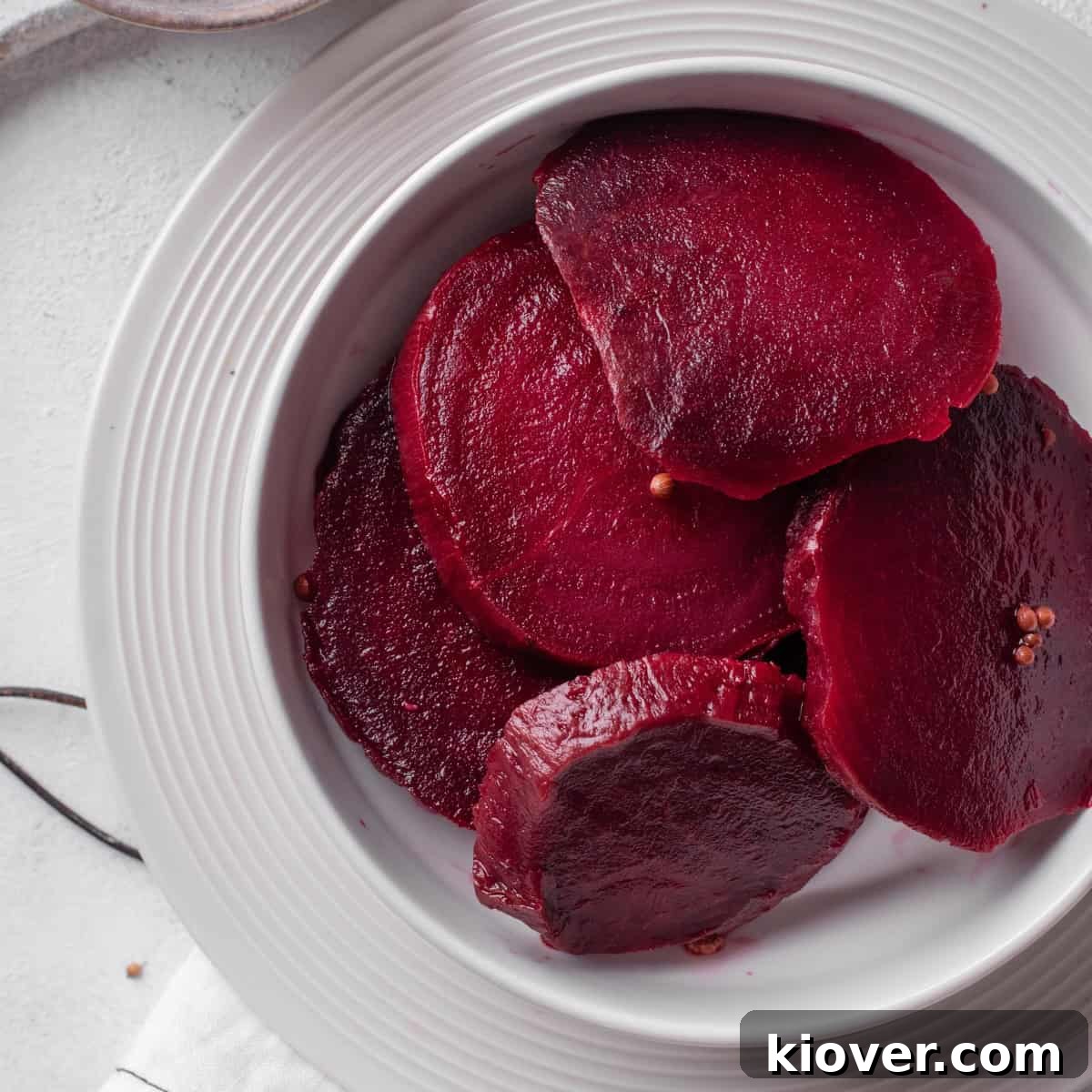
Mastering Homemade Pickled Beetroot: An Easy and Delicious Recipe Guide
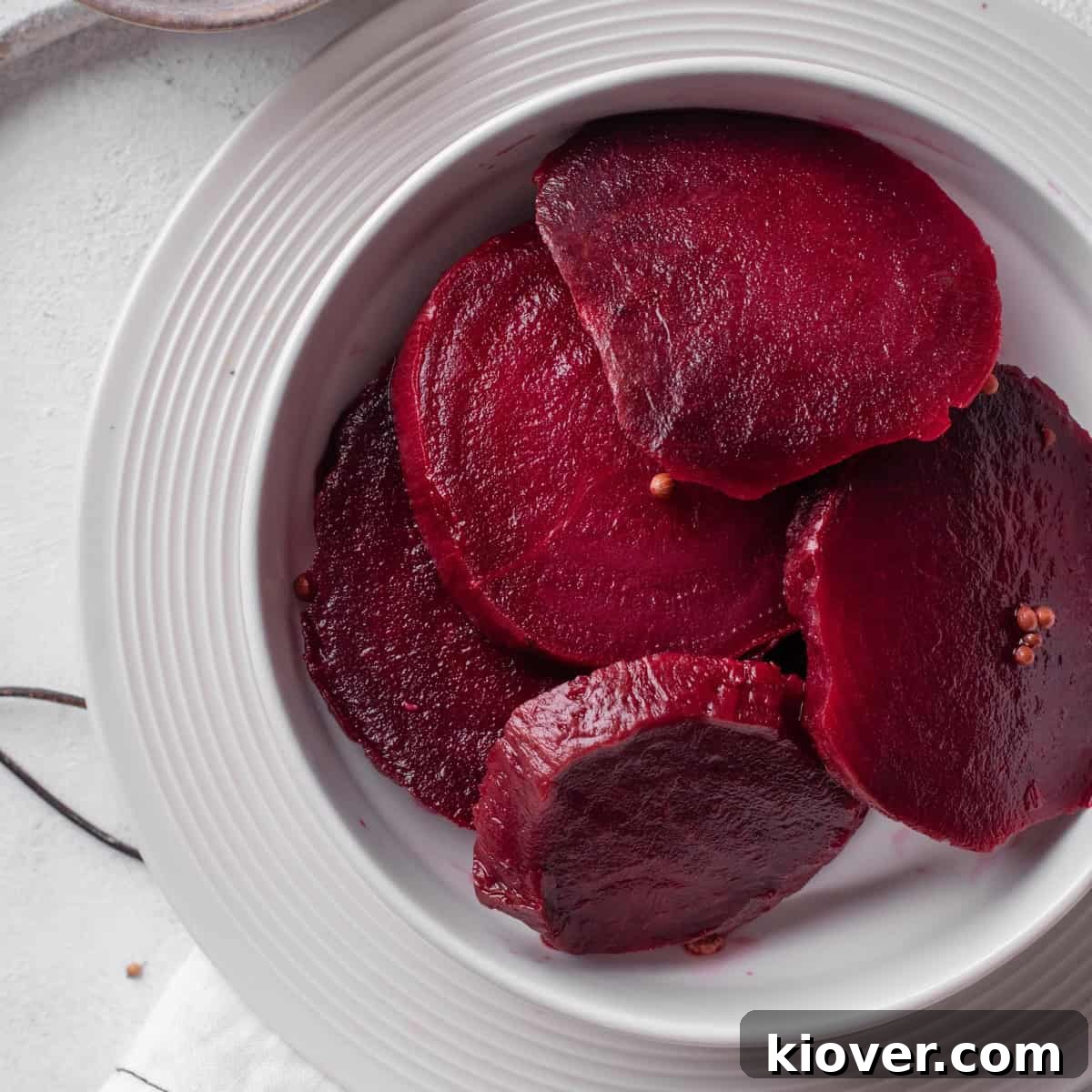
If you’re looking to add a vibrant, tangy, and incredibly versatile ingredient to your culinary repertoire, mastering the art of making homemade pickled beetroot is an absolute must. This straightforward recipe promises not just ease of preparation, but also yields truly delicious pickled beets that are far superior to their store-bought counterparts. Perfect for jazzing up salads, adding a zesty kick to sandwiches, or serving as a delightful side dish, these colorful pickled roots are a healthy and flavorful addition to any meal. Plus, with their impressive shelf life, you’ll have a batch of this ruby-red goodness on hand for weeks to come!
Recipe Difficulty – Easy
Table of Contents
- Why Choose Homemade Pickled Beetroot?
- The Health Benefits of Beetroot
- Essential Ingredients for Perfect Pickled Beets
- Smart Substitutions for Your Brine
- Creative Variations to Explore
- Step-by-Step Guide: How to Pickle Beetroot
- Storage Tips for Your Pickled Delights
- Common Questions About Pickled Beetroot (FAQs)
- More Delicious Beetroot Recipes
- You Might Also Enjoy
- Rate This Recipe
- Full Recipe Card: Easy Pickled Beetroot
Why Choose Homemade Pickled Beetroot?
There’s immense satisfaction in crafting a homemade version of something you typically buy from the store, and pickled beetroot is no exception. This recipe empowers you to take control of the ingredients, ensuring a healthier product free from unwanted additives or excessive sugars often found in commercial varieties. You can also fine-tune the flavors to perfectly match your palate – whether you prefer a sweeter, tangier, or spicier pickle. If you’ve ever wondered how to pickle beetroot, rest assured, this guide makes it incredibly simple.
One of the significant advantages of this “quick pickle” method is its simplicity. Unlike traditional canning, there’s no need for complex sealing processes, expensive rubber seals, or the anxiety of listening for that reassuring “pop” to confirm a proper seal. This significantly reduces the effort and time involved, making homemade pickled beets accessible even for novice cooks. The result is a vibrant, flavorful condiment that adds a gourmet touch to countless dishes.
The versatility of quick pickled beetroot is truly remarkable. These tangy slices can elevate a simple beet salad, add a bright counterpoint to hearty sandwiches or wraps, or complement a Sunday roast. They’re also fantastic when mixed with other fresh vegetables or enjoyed as a standalone snack. If you haven’t yet experienced the delightful sweet and sour crunch of pickled beets, now is the perfect time to discover this culinary gem!
The Health Benefits of Beetroot
Beyond their vibrant color and delicious taste, beetroots are a nutritional powerhouse. They are low in calories and packed with essential vitamins and minerals, including folate, manganese, potassium, iron, and vitamin C. Beetroots are also rich in dietary fiber, which aids digestion and promotes gut health. Their distinctive red hue comes from betalains, powerful antioxidants that possess anti-inflammatory properties and may help protect against chronic diseases.
Furthermore, beetroots are well-known for their high concentration of nitrates, which the body converts into nitric oxide. Nitric oxide helps relax and dilate blood vessels, potentially leading to lower blood pressure and improved blood flow. This makes pickled beetroot not just a tasty addition to your diet, but a beneficial one too, contributing to overall well-being. By making them at home, you maximize these benefits by controlling the amount and type of sugar added to the brine.
Essential Ingredients for Perfect Pickled Beets
Crafting exceptional pickled beetroot starts with a few simple, high-quality ingredients. Each component plays a crucial role in developing that signature tangy, sweet, and subtly spiced flavor profile.
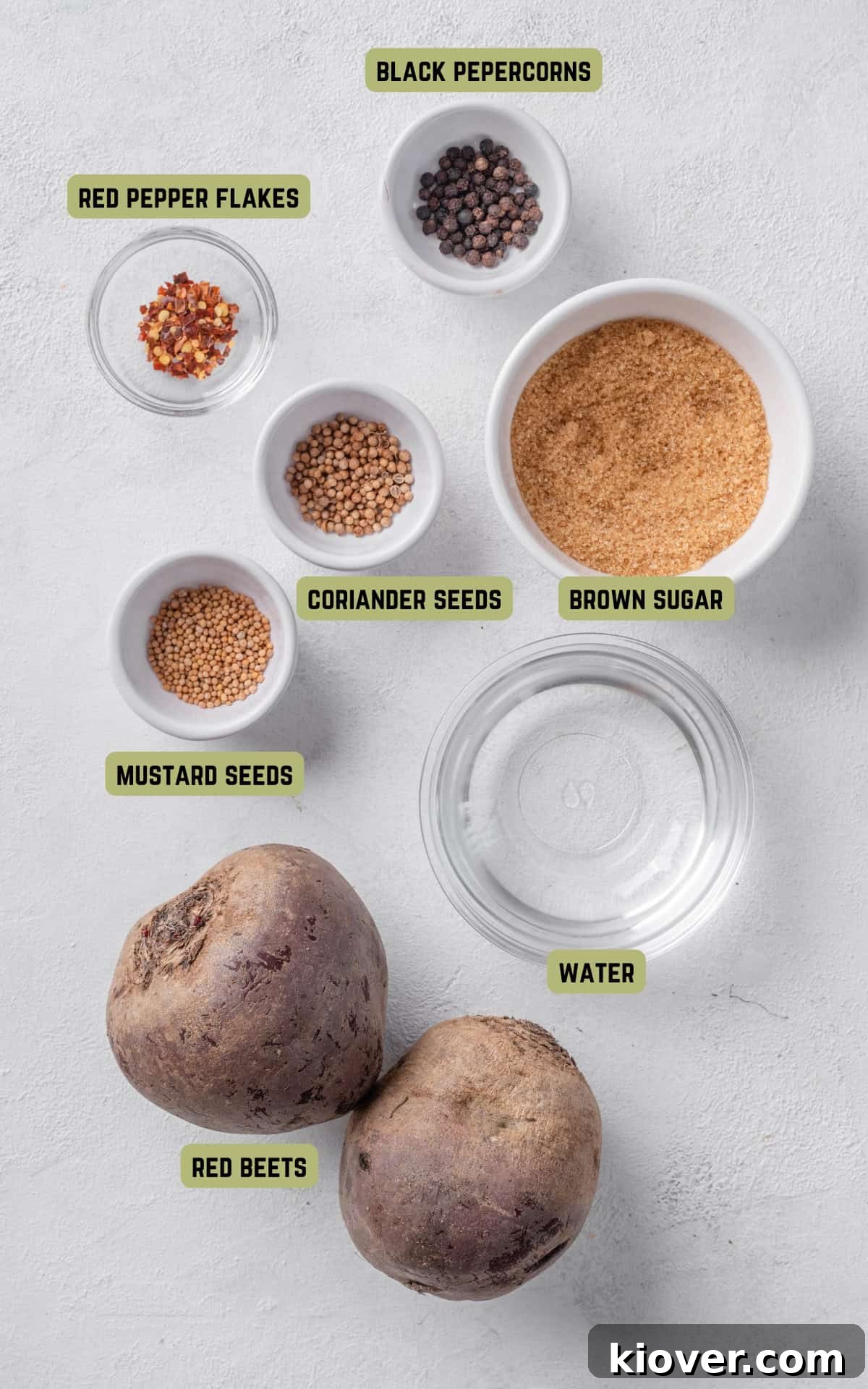
- Beets: The star of our show! While red beets are most commonly used and provide that beautiful, deep ruby color, golden beets are also an excellent choice if you prefer a less staining alternative or a milder flavor. Ensure they are fresh and firm.
- White Wine Vinegar: This is the primary pickling agent, providing the essential acidity that preserves the beets and gives them their characteristic tang. White wine vinegar offers a clean, crisp flavor that complements the sweetness of the beets without overpowering them.
- Water: Used to dilute the vinegar, creating a balanced brine that infuses flavor without being overly acidic.
- Brown Sugar: Adds a rich, caramel-like sweetness that beautifully balances the vinegar’s tang and enhances the natural sweetness of the beetroot. It’s crucial for achieving that delightful sweet-sour harmony.
- Coriander Seeds: These aromatic seeds impart a warm, slightly citrusy, and subtly floral note to the pickling liquid, elevating the overall flavor complexity.
- Mustard Seeds: Contributing a pungent, earthy, and slightly spicy depth, mustard seeds are a classic pickling spice that adds an exciting layer of flavor to the beets.
- Black Peppercorns: Offering a mild, woody spiciness and a subtle warmth, black peppercorns round out the spice blend, providing a pleasant aromatic complexity.
For precise measurements and quantities, please refer to the comprehensive recipe card at the end of this article.
Smart Substitutions for Your Brine
While the classic recipe delivers exceptional results, don’t hesitate to experiment with substitutions to tailor the flavors to your preference or to use ingredients you already have on hand. These thoughtful swaps can significantly alter the final taste profile of your pickled beetroot.
- White Wine Vinegar: If white wine vinegar isn’t available, or you’re seeking a different flavor nuance, apple cider vinegar is an excellent alternative. It offers a slightly fruitier tang. Distilled white vinegar can also be used for a sharper, more traditional pickle flavor.
- Brown Sugar: For those looking for different sweetness levels or profiles, honey or maple syrup can be wonderful natural sweeteners. Remember that these are often sweeter than sugar, so you might need to adjust the quantity slightly and potentially the vinegar ratio to maintain the desired consistency and acidity. A combination of white granulated sugar and a touch of molasses can also mimic the rich flavor of brown sugar.
- Seasonings: The beauty of homemade pickling lies in customization. Feel free to explore your favorite whole spices and herbs. Consider adding:
- Whole Cloves: For a warm, aromatic spice.
- Bay Leaves: To impart a subtle, herbaceous note.
- Cinnamon Sticks: For a sweet, woody aroma, especially delightful in a more autumnal pickle.
- Sea Salt: While not listed as a primary spice in the original, a pinch of sea salt can enhance all other flavors.
- Onion Powder or Garlic Powder: For a savory depth, though fresh sliced garlic or onion can also be used.
- Dill Seeds or Fresh Dill Sprigs: For a classic, slightly anisy flavor often associated with pickles.
Creative Variations to Explore
Once you’ve mastered the basic pickled beetroot recipe, the possibilities for customization are endless. Get creative and transform your pickled beets into exciting new flavors and presentations.
- Spicy Pickled Beets: For those who love a kick, infuse your brine with a dash of chili powder, a few red pepper flakes, or even a sliced fresh jalapeño or serrano pepper. This adds a fantastic fiery dimension, making them an invigorating snack or a bold addition to savory dishes.
- Deluxe Beetroot Salad: Elevate your pickled beets by serving them on a bed of fresh, crisp mixed greens. Crumble some creamy feta cheese or goat cheese over the top, sprinkle with toasted walnuts or pecans, and drizzle with a light vinaigrette. This transforms them into an elegant appetizer or a sophisticated side salad.
- Kid-Friendly Pickles: If you’re introducing this new taste to younger palates, you might consider slightly increasing the amount of brown sugar in the brine. The added sweetness can make the tangy flavor more approachable for children, easing them into the world of pickled vegetables.
- Herbaceous Infusion: Add fresh sprigs of rosemary, thyme, or a few bay leaves to the jar along with the beets and brine. These herbs will impart beautiful aromatic notes as the beets pickle.
- Ginger-Kissed Beets: For an exotic twist, add a few slices of fresh ginger root to the brine while it heats. This will give your pickled beets a warm, slightly pungent, and wonderfully fragrant character.
Step-by-Step Guide: How to Pickle Beetroot
Making homemade pickled beetroot is a rewarding process that’s much simpler than you might think. Follow these clear steps to achieve perfectly tender, tangy, and flavorful beets.
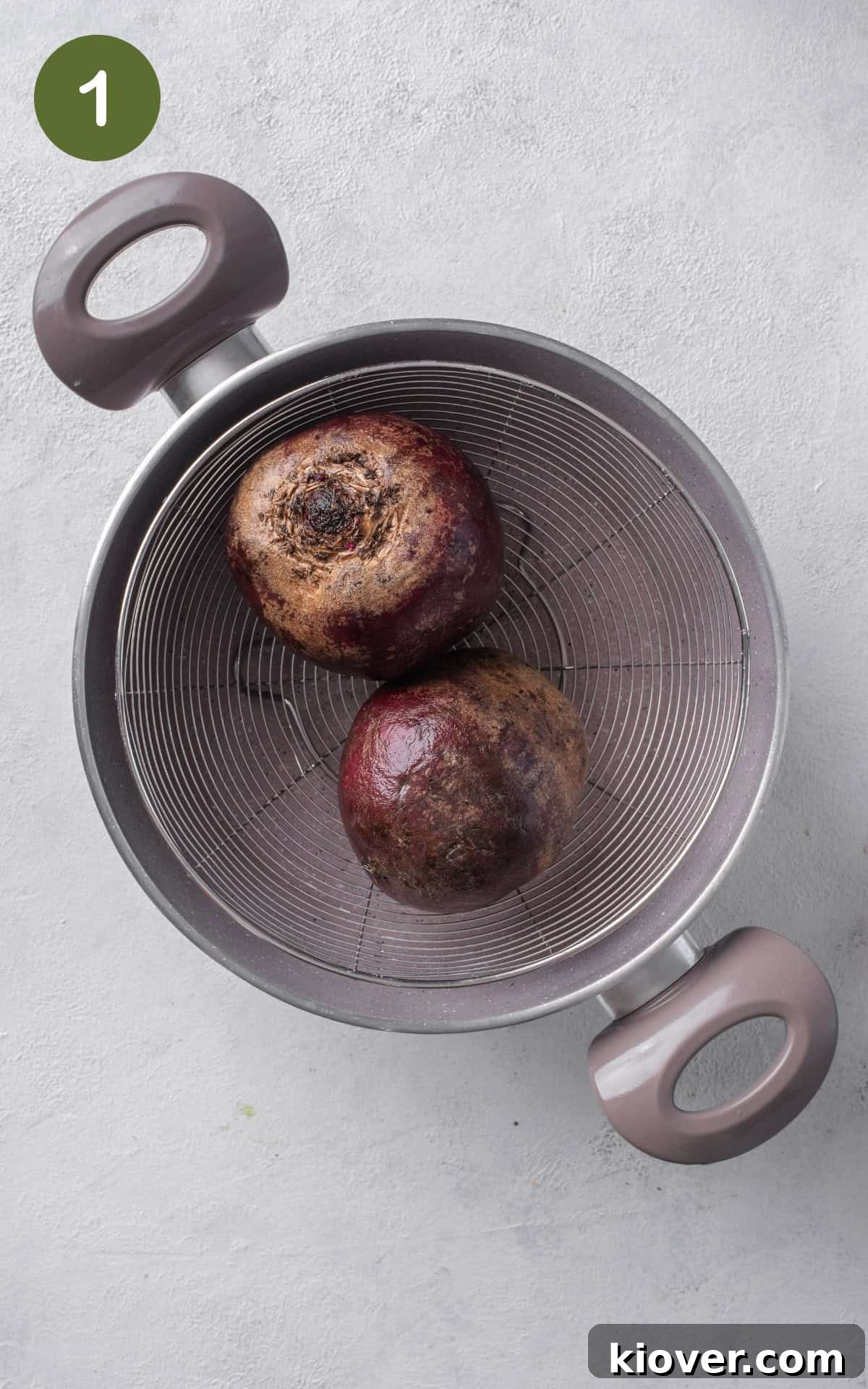
Step 1: Prepare the Beets. Begin by thoroughly scrubbing and washing your fresh beets under cold running water to remove any soil. There’s no need to peel them at this stage. Place the clean beets into a steaming basket. Fill a large pot with approximately 2 inches of water, then insert the steaming basket with the beets into the saucepan. Cover the pot with a tight-fitting lid and steam until the beets are fork-tender. This usually takes about 20-40 minutes, depending on their size. You want them cooked through but still slightly firm.
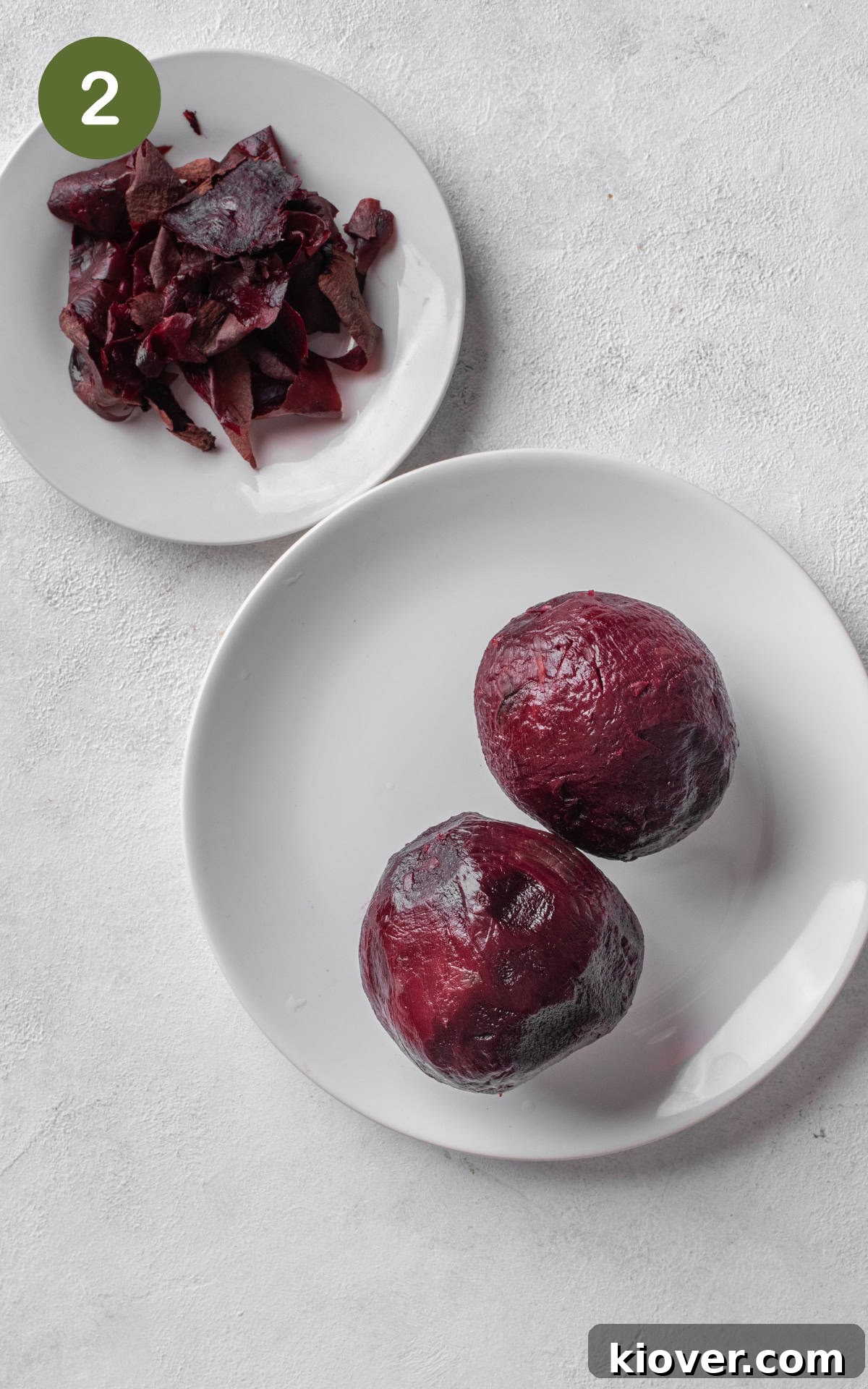
Step 2: Cool and Peel. Once the beets are tender, carefully remove them from the steaming basket and immerse them in a bowl of cold water (you can add ice cubes for quicker cooling). Allow them to cool sufficiently until they are comfortable to handle. The skins should then slip off very easily with gentle pressure using your fingers or a paring knife. This cooling process helps stop the cooking and makes peeling a breeze.
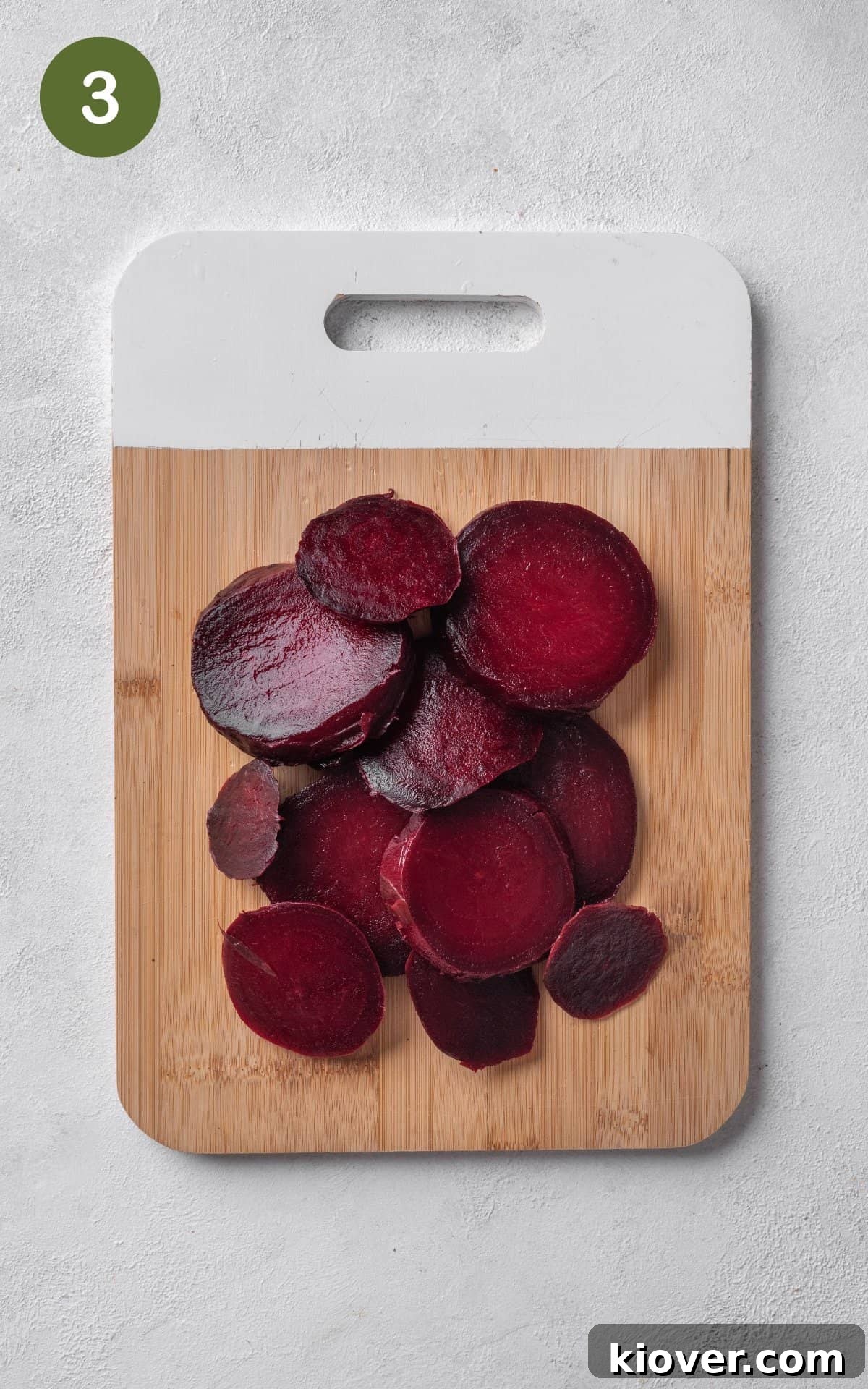
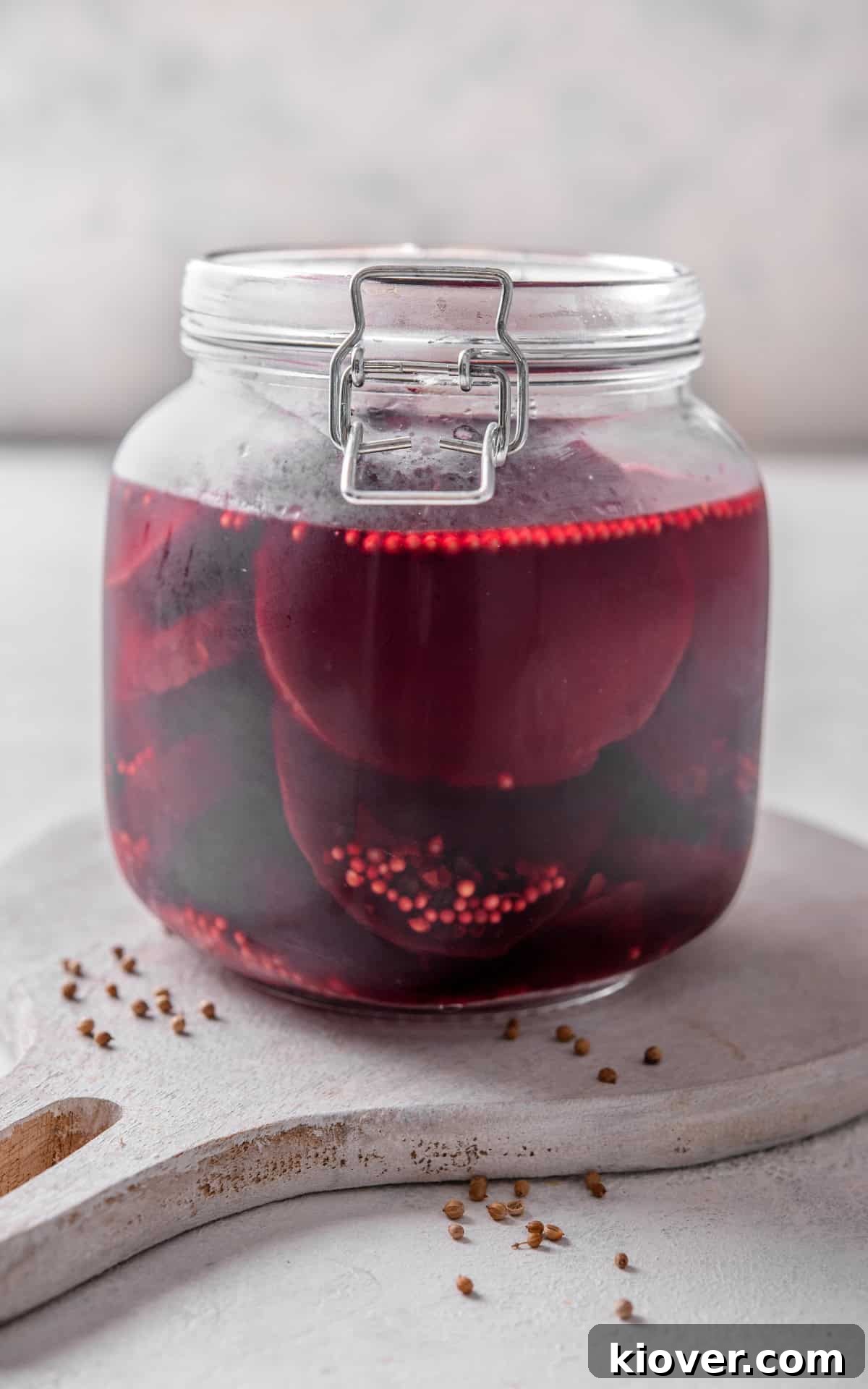
Step 3: Slice the Beets. On a clean cutting board, carefully slice the peeled beets into ¼-inch thick rounds or half-moons. You can also cube them if you prefer. Once sliced, neatly arrange them into a clean, sterilized glass jar. Pack them fairly tightly but ensure there’s enough room for the pickling liquid to circulate.
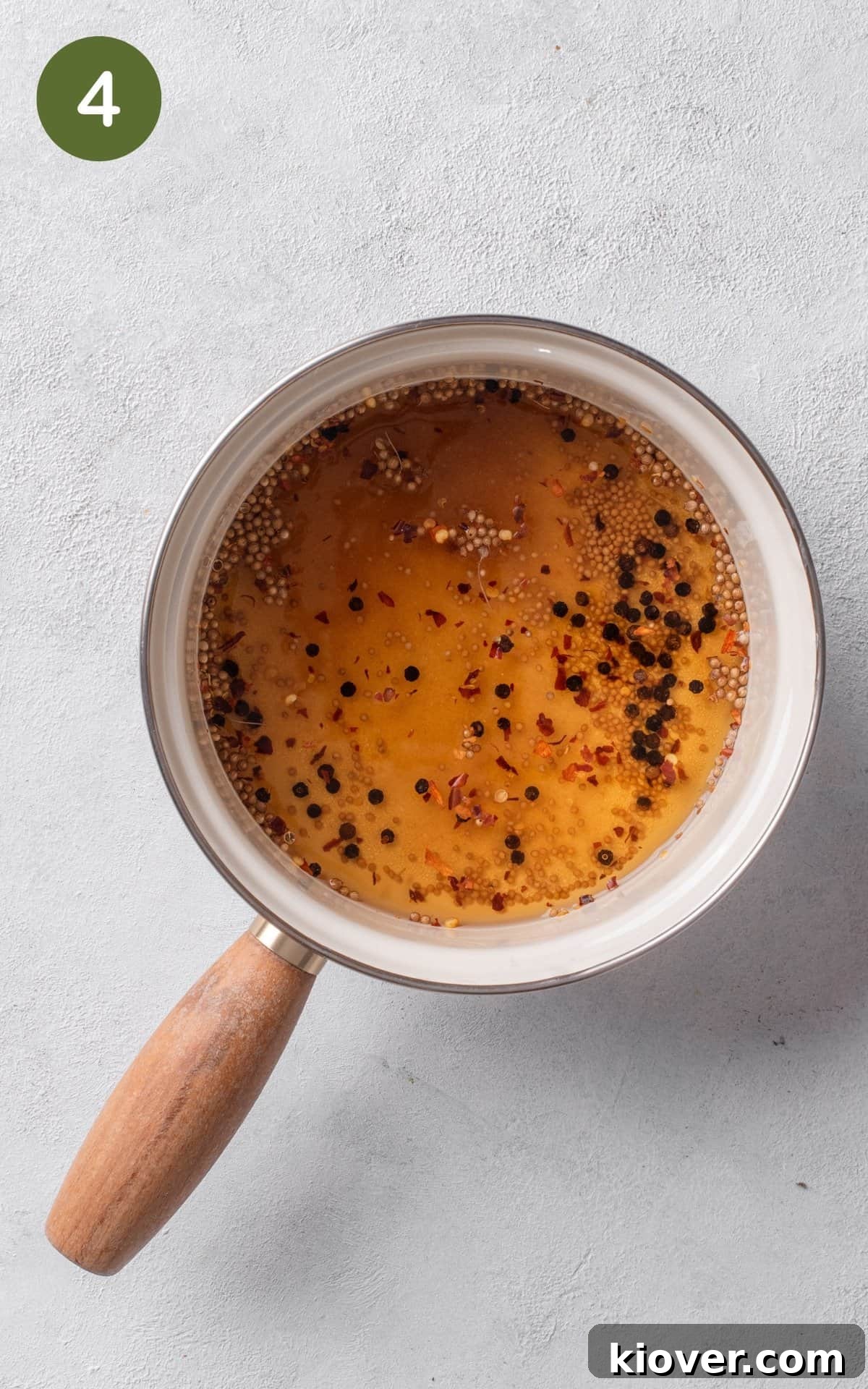
Step 4: Make the Brine. In a small saucepan, combine the white wine vinegar, water, brown sugar, coriander seeds, mustard seeds, and black peppercorns. Place the saucepan over medium heat and stir continuously until the brown sugar has completely dissolved. Do not boil vigorously, just heat until clear. As a helpful hint: Be mindful of the fumes when heating the brine, as the vinegar can be quite pungent and irritating to the nose and eyes. Ensure good ventilation in your kitchen.
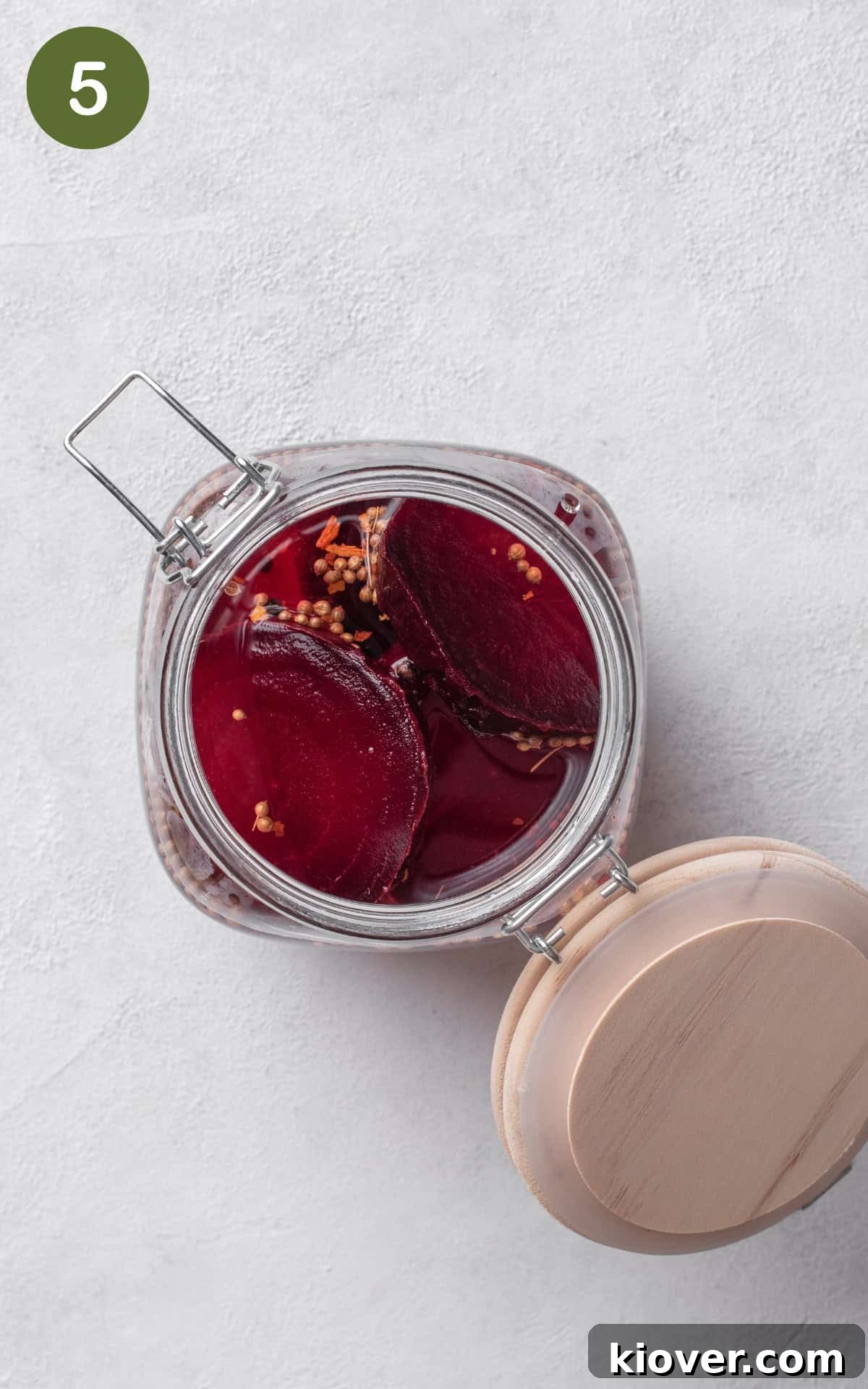
Step 5: Combine and Refrigerate. Carefully pour the hot brine mixture over the sliced beets in the jar, ensuring all the beets are submerged. Leave about ½-inch of space from the top of the jar. Securely seal the jar with a lid. Allow the jar to sit at room temperature for about 1 hour to begin the cooling process naturally, then transfer it to the refrigerator. For the best and most intense flavor, allow the pickled beetroot to marinate in the refrigerator for a minimum of 3 days before enjoying. While they will have a pleasant pickled taste sooner, the full depth of flavor develops over these few days.
Important Note: For maximum safety and shelf life, ensure your glass jars are thoroughly cleaned and sterilized before adding the beets and brine. You can sterilize jars by washing them in hot, soapy water, rinsing well, and then either boiling them in water for 10 minutes or heating them in an oven at 275°F (135°C) for 15-20 minutes. Always handle hot jars with care.
Storage Tips for Your Pickled Delights
One of the many benefits of making these delicious pickled beets is their excellent shelf life, allowing you to enjoy them over an extended period. Proper storage is key to maintaining their fresh taste and vibrant texture.
Once prepared and refrigerated for the recommended 3 days, these quick pickled beetroots will last wonderfully for up to 6 weeks in the refrigerator. Always keep them in a sealed, airtight jar to prevent contamination and maintain freshness. Make sure the beets remain submerged in the brine; if they rise above the liquid, gently press them down with a clean spoon or use a small weight (like a clean, flat stone or a smaller glass jar) to keep them under the surface. This prevents spoilage and maintains their appealing color and texture.
For even longer storage, pickled beetroot can be frozen. Transfer them, along with their brine, into freezer-safe containers or bags, leaving a little headspace for expansion. They can be safely stored in the freezer for up to 10 months. When you’re ready to enjoy them, simply thaw them in the refrigerator overnight. While the texture might be slightly softer after freezing and thawing, the flavor will remain fantastic.
Always inspect your pickled beets before consuming them. Discard any beets that show signs of spoilage, such as an off smell, mold, or an unusual texture.
Common Questions About Pickled Beetroot (FAQs)
Absolutely! Pickled beetroot can be a very healthy addition to your diet, especially when made at home. Beets themselves are incredibly nutritious, offering a wealth of vitamins, minerals, and potent antioxidants. They also contain nitrates, which can support cardiovascular health. The “good for you” aspect largely depends on the amount and type of sugar you add to your pickling brine. Since beets have a natural sweetness, you often don’t need excessive amounts of added sugar, making your homemade version a healthier choice than many store-bought options.
When stored correctly in an airtight jar in the refrigerator, homemade quick pickled beetroot can last for up to 6 weeks. For longer preservation, they can be frozen in suitable containers for up to 10 months. Always ensure they remain submerged in the brine for optimal freshness and safety.
While quick pickling doesn’t involve the same rigorous water bath canning process as traditional methods, it’s still highly recommended to use thoroughly cleaned and sterilized jars. This helps to prevent any unwanted bacteria from spoiling your pickled beets and extends their shelf life in the refrigerator. Simple methods include washing jars in hot soapy water and then boiling them for 10 minutes or running them through a hot dishwasher cycle.
While some quick pickle recipes might use very thinly sliced raw vegetables, for beetroot, it’s generally best to cook them first (steaming, boiling, or roasting) until fork-tender. This softens their texture, makes them easier to peel, and allows them to absorb the brine more effectively, resulting in a superior pickled product.
This versatile pickling brine recipe is fantastic for many other vegetables! You can experiment with thinly sliced cucumbers, red onions, carrots, green beans, or even cherry tomatoes. The sweet, tangy, and spiced flavor profile of this brine will beautifully complement a variety of produce.
More Delicious Beetroot Recipes
If you’ve enjoyed this pickled beetroot recipe and are eager to explore more ways to incorporate this nutritious root vegetable into your diet, here are some other fantastic beetroot-focused dishes you might love:
- Beetroot Salad
- Beetroot Soup
- Roasted Root Vegetables
You Might Also Enjoy
Healthy Soups
Beetroot Soup
Salads
Beetroot Salad
Sides
Roasted Root Vegetables
Healthy Soups
Parsnip Soup
Rate This Recipe
Tried this Pickled Beetroot recipe? We’d love to hear your thoughts! Please consider leaving a star rating ★★★★★ below and share how it turned out for you in the comments. Your positive feedback is incredibly valuable and helps other home cooks discover delicious new recipes!
P.S. Never miss a new recipe! Get more healthy, easy-to-follow recipes sent straight to your inbox weekly. Subscribe to our newsletter and receive a free recipe eBook as a thank you!
Pin
Pickled Beetroot Recipe
James Wythe
Pickled Beetroots are a tangy and flavorful addition to any meal, incredibly easy to make with minimal effort, and perfect for adding a vibrant touch to your dishes!
15 minutes
15 minutes
4
Ingredients
- 2 medium beets
- ½ cup white wine vinegar
- 1 cup water
- ¼ cup brown sugar
- 1 tsp coriander seeds
- ½ tsp mustard seeds
- ½ tsp black peppercorns
Instructions
- Prepare Beets: Scrub and wash the beets. Place them into a steaming basket. Fill your pot with 2 inches of water, insert the basket with beets, cover, and steam until fork-tender (20-40 minutes).
- Cool and Peel: Add the cooked beets to cold water to cool. Once they are cold enough to handle, peel off the skin, which should slip off easily.
- Slice and Jar: Cut the peeled beets into ¼-inch thick slices (rounds or half-moons) and tightly pack them into a clean, sterilized glass jar.
- Make the Brine: In a small saucepan, combine white wine vinegar, water, brown sugar, coriander seeds, mustard seeds, and black peppercorns. Heat over medium heat, stirring until the sugar completely dissolves. Be cautious of the pungent vinegar fumes; ensure good ventilation.
- Combine and Refrigerate: Pour the hot brine mixture over the beets in the jar, ensuring they are fully submerged. Leave about ½-inch headspace. Seal the jar, let it sit at room temperature for 1 hour, then refrigerate for at least 3 days for optimal flavor development before serving.
Notes
Step-by-Step Photos: For visual guidance, helpful step-by-step photos are included earlier in this blog post to guide you through the process.
Substitutions & Variations: A comprehensive list of ingredient substitutions and creative variations can be found in the dedicated sections above.
To Store: Store finished pickled beetroot in an airtight container in the refrigerator for up to 6 weeks. Ensure beets remain submerged in the brine.
To Freeze: For longer storage, freeze in an airtight, freezer-safe container for up to 10 months. Thaw in the fridge before enjoying.
Tip 1: Instead of steaming, you can also roast beetroot wrapped in foil on a baking tray or boil them in a large pot until tender.
Tip 2: While the best flavor develops after 3 days of refrigeration, these pickled beets will have a noticeable pickled taste within an hour or so if you need to use them sooner.
Tip 3: This versatile brine recipe can be used to pickle other vegetables like cucumbers, red onions, or carrots!
Nutrition
Calories: 80kcal | Carbohydrates: 18g | Protein: 1g | Fat: 0.3g | Saturated Fat: 0.03g | Fiber: 2g | Sugar: 16g
Did you make this recipe? Tag me Today!
Tag @HealthyLivingJames on Instagram and use #HealthyLivingJames!