
The Ultimate Guide to Elbow Macaroni: Choosing the Best Pasta for Your Mac and Cheese
Welcome to our in-depth exploration of the ingredients that make up the perfect macaroni and cheese. While many might instinctively focus on the cheese—and rightfully so, as it plays a starring role—the foundation of any truly exceptional mac and cheese dish lies in its pasta. Specifically, the humble elbow macaroni. In this comprehensive guide, we’re diving deep into the world of elbow macaroni, examining its characteristics, production methods, and even conducting a practical taste test to help you choose the best brand for your culinary creations. Prepare to unlock the secrets to a macaroni and cheese that transcends the ordinary, starting with the very first ingredient in your pot.
Why Elbow Macaroni is the Unsung Hero of Mac and Cheese
It’s easy to overlook the pasta when a rich, creamy, and flavorful cheese sauce is the main event. However, consider this: without the right vehicle, even the most exquisite sauce can fall short. Elbow macaroni isn’t just a filler; it’s a critical component that influences the texture, mouthfeel, and overall integrity of your mac and cheese. Its unique curved shape and hollow interior are perfectly designed to cradle generous amounts of sauce, ensuring every bite is a harmonious blend of pasta and cheese. A great pasta provides the necessary structural support, offers a satisfying chew, and prevents the dish from becoming a soggy disappointment. Investing a little thought into your macaroni choice isn’t just about being particular; it’s about elevating your comfort food to gourmet status.
The Essential Role of Pasta in Sauce Adhesion and Texture
The success of a macaroni and cheese dish hinges significantly on the pasta’s ability to interact with the sauce. Elbow macaroni, with its distinct curvature and somewhat rough exterior (especially from certain production methods), is an ideal candidate for sauce adhesion. Each little nook and cranny becomes a miniature reservoir for that luscious cheese sauce, ensuring a balanced flavor in every spoonful. Furthermore, the pasta’s texture is paramount. We’re looking for pasta that cooks to a perfect al dente – firm to the bite, yet tender throughout. This resilience is crucial, as the macaroni will continue to cook slightly when mixed with the hot cheese sauce, and potentially during a final bake. A pasta that maintains its structure under these conditions is key to avoiding a mushy or bland outcome.
Understanding Pasta Types: Extruded vs. Rolled, and Dried vs. Fresh
To truly appreciate elbow macaroni, it’s helpful to understand its place within the broader pasta family. Pasta can generally be categorized by its formation method and its state.
Extruded Pasta: The Foundation of Macaroni
Elbow macaroni, alongside popular shapes like spaghetti, rigatoni, and penne, belongs to the family of extruded pasta. This means the dough is forced through a die – essentially a metal plate with specific cutouts – to create its characteristic shape. Think of it like a sophisticated version of those Play-Doh machines many of us enjoyed as children. This process allows for the creation of intricate and consistent shapes that are difficult, if not impossible, to achieve through rolling and cutting. The extrusion process is what gives elbow macaroni its classic C-shape, which is so effective at capturing sauce.
The Contrast: Rolled Pasta
In opposition to extruded varieties, rolled pasta includes shapes like lasagna sheets, fettuccine, and pappardelle. These pastas are made by rolling dough into thin sheets, which are then cut into various widths and lengths. While exquisite for delicate sauces that cling to broad surfaces, rolled pastas typically lack the hollows and crevices that make extruded shapes, particularly elbow macaroni, so well-suited for the hearty, thick cheese sauce of a classic mac and cheese.
Dried Pasta: The Preferred Choice for Robust Sauces
Just because pasta is fresh doesn’t automatically make it superior to dried pasta. In fact, they are distinct products designed for different culinary purposes. Fresh pasta, often made with eggs, boasts a tender, delicate texture ideal for lighter, more refined sauces or simple preparations. Its quick cooking time and softer bite make it unsuitable for dishes requiring a robust pasta that can stand up to heavy sauces and extended cooking (like baking in a casserole).
Dried pasta, on the other hand, is the champion of hearty and thick sauces, including the decadent cheese sauce of macaroni and cheese. Made typically from durum wheat semolina and water, dried pasta undergoes a slow drying process that creates a firm, resilient structure. This allows it to absorb flavors without becoming mushy, providing the perfect al dente chew that is so sought after in dishes like mac and cheese. Its ability to maintain structural integrity makes it the unequivocal choice for a dish where the pasta must hold its own against a rich, robust, and sometimes baked, sauce. The unique shape of elbow macaroni is also far more feasible to produce and preserve in its dried form.
The Anatomy of Quality Macaroni: Ingredients and Production
When selecting your elbow macaroni, paying attention to the ingredients and the production process can make a significant difference in the final dish. Not all macaroni is created equal, and understanding these nuances will empower you to make an informed choice.
The Power of Semolina Flour
The primary ingredient in high-quality dried pasta, including elbow macaroni, should be durum wheat semolina flour. Semolina is a coarsely ground flour made from durum wheat, a hard wheat variety known for its high protein content and strong gluten structure. This unique composition is what gives dried pasta its signature firm texture and its ability to hold shape during cooking, preventing it from turning into a soggy mess.
While fresh pasta might be made with softer all-purpose flour and eggs, dried pasta relies almost exclusively on semolina and water. You might sometimes encounter brands that list “durum flour,” which is also from durum wheat but typically a finer grind than semolina. For elbow macaroni, the coarser semolina is generally preferred as it contributes to a superior texture and bite. A quality ingredient list for macaroni should ideally contain only durum wheat semolina and water, possibly with some added minerals (like iron and B vitamins for enrichment), but steer clear of brands that incorporate other types of flour or artificial additives.
The Art of Drying: Low and Slow vs. Fast and Industrial
Beyond the ingredients, the drying process is a critical factor influencing the quality of dried pasta. Artisan pasta makers often adhere to a “low and slow” philosophy – a mantra familiar to many BBQ enthusiasts. This method involves drying the pasta gradually at lower temperatures over an extended period, sometimes for days. Slow drying allows the pasta to retain its complex flavors, develop a robust structure, and maintain optimal porousness for sauce absorption. It strengthens the gluten network, resulting in pasta that cooks evenly, resists breakage, and achieves that coveted al dente texture.
In contrast, industrial production often favors faster drying at higher temperatures to maximize output and reduce costs. While modern techniques have improved, rapid drying can sometimes “shock” the pasta, compromising its structural integrity and flavor. This can lead to pasta that cooks unevenly, becomes overly soft, or loses some of its inherent wheat flavor. While not all fast-dried pasta is poor quality, truly exceptional macaroni often benefits from a more traditional, slow-drying approach.
The Influence of Extrusion Dies: Bronze vs. Teflon
An often-overlooked detail in pasta production is the material of the extrusion die. Historically, and still used by many premium brands, are bronze dies. As the pasta dough is forced through these bronze dies, it creates a slightly rough, porous surface on the pasta. This rough texture is highly desirable because it provides more surface area for the cheese sauce to cling to, enhancing flavor delivery and mouthfeel. In contrast, many modern industrial pasta manufacturers use Teflon-coated dies, which produce pasta with a smoother, shinier surface. While this might look appealing, the smoother surface means less grip for the sauce, potentially leading to a less satisfying culinary experience. If a brand mentions “bronze-cut” pasta, it’s a strong indicator of a commitment to traditional quality.
Navigating the Macaroni Aisle: Key Considerations for Your Choice
Armed with this knowledge, how do you make the best choice when staring at a wall of elbow macaroni boxes? Here’s a quick recap of what to look for:
- Ingredient List: Prioritize brands that list only “durum wheat semolina” and water. Enriched versions with added vitamins are fine, but avoid other flours.
- Drying Method: While not always explicitly stated on the front of the box, some premium brands will proudly highlight “slow-dried” or “traditionally dried.”
- Extrusion Die: Look for “bronze-cut” or “bronze die” on the packaging for a superior sauce-gripping texture.
- Brand Reputation: While not the sole factor, established Italian brands or those known for high-quality pasta often deliver.
- Price vs. Value: More expensive doesn’t always mean better, but extremely cheap pasta might cut corners on ingredients or drying.
The Great Macaroni Taste Test: An Unscientific but Practical Experiment
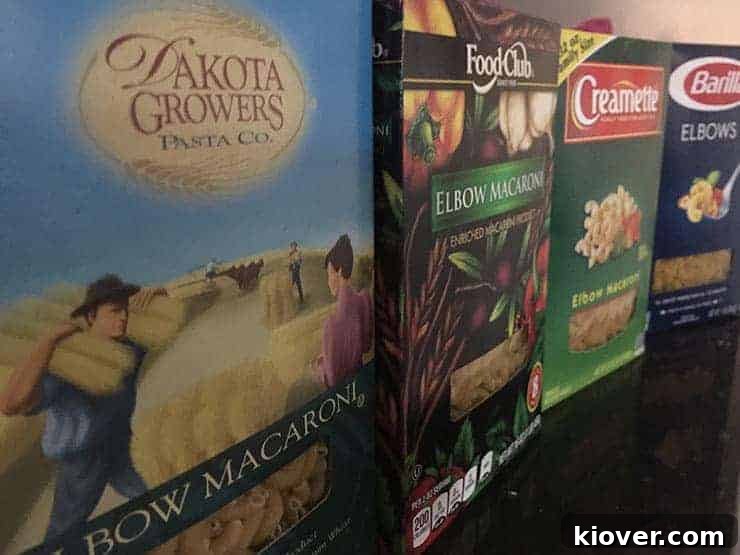
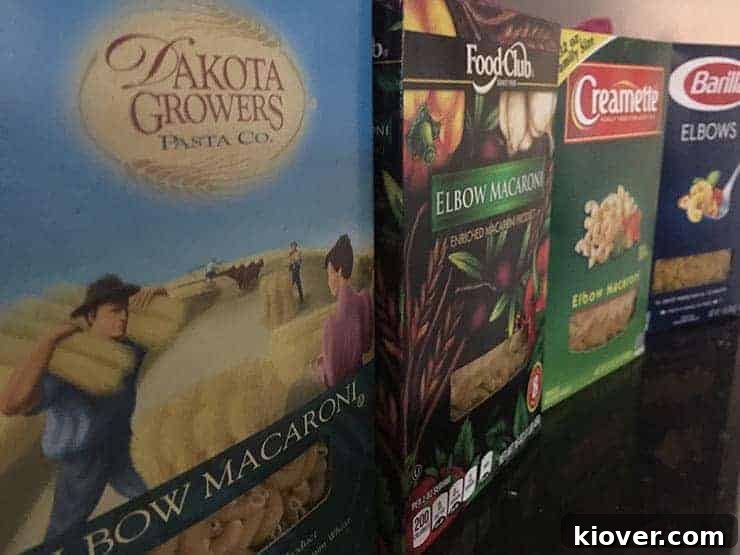
To put some of these theories into practice, I decided to conduct a personal, albeit unscientific, taste test of several readily available elbow macaroni brands. My goal was to assess differences in taste, texture, and structural integrity after cooking. While this isn’t a lab-controlled experiment, it offers practical insights for the home cook. The brands selected for this challenge were Food Club (a common store brand), Creamette, Dakota Growers, and Barilla. I had hoped to include De Cecco, a well-regarded Italian import known for its quality, but unfortunately, their elbow macaroni was unavailable at my local grocery store at the time of the test.
Methodology for the Macaroni Showdown
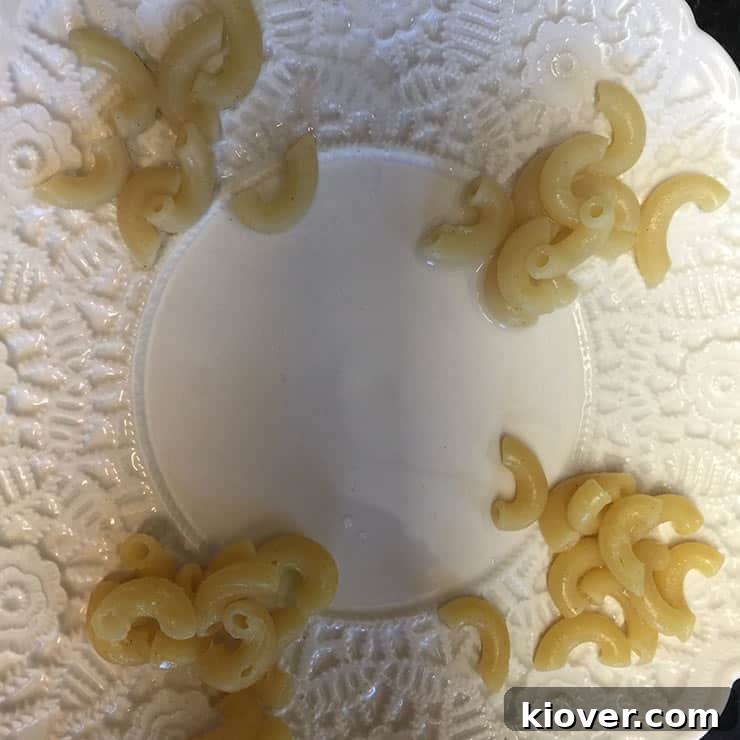
To ensure a fair comparison, I meticulously prepared each brand. Four small saucepans were filled with two cups of fresh, cold water. Once each pot reached a vigorous, rolling boil, I added approximately five to ten individual elbow macaroni pieces to each. The pasta was then cooked for precisely seven minutes—a duration chosen to target an al dente texture, allowing me to assess how each brand performed under identical conditions. After cooking, each batch was immediately drained separately, with no rinsing, and then tasted. My evaluation focused on three key criteria: inherent pasta taste, firmness (al dente quality), and how well the shape held up without becoming deformed or splitting.
The Results: Ranking the Elbow Macaroni
4th Place: Food Club (Generic Store Brand)
Coming in at fourth place was the Food Club generic brand. While certainly not inedible, it was noticeably the weakest performer. The pasta struggled to maintain its structure during boiling, showing signs of softening and a tendency towards mushiness more quickly than the other brands. This suggests it might be less forgiving of slight overcooking, a critical factor when aiming for that perfect al dente bite in a mac and cheese that might also undergo baking. Its texture lacked the resilience needed to truly shine.
3rd Place: Creamette
The competition tightened considerably from here on, with the top three brands being remarkably close in quality. Creamette’s elbow macaroni was perfectly acceptable and performed adequately. It cooked well and had a decent flavor profile. However, upon closer inspection and comparison, its texture didn’t quite hold up with the same structural integrity or satisfying chew as the top two contenders. While it’s a brand I’ve used frequently in the past, in this direct comparison, it felt just a shade less robust.
2nd Place: Barilla
Barilla, a widely recognized and respected pasta brand, delivered a strong performance, securing second place. Its taste and texture were nearly on par with our winner, exhibiting excellent firmness and a classic pasta flavor. What ultimately edged it into second place was a subtle difference in its physical shape. The Barilla elbow macaroni had a slightly less pronounced curve or a slightly different proportion than what I ideally envision for macaroni and cheese. While still a high-quality pasta, this minor deviation from my “ideal” macaroni shape, which I associate with optimal sauce-holding capabilities, influenced its final ranking.
Winner: Dakota Growers!
After a rigorous, albeit informal, evaluation, Dakota Growers emerged as the clear winner. This brand excelled across all criteria. It boasted an excellent, authentic pasta flavor, a consistently firm and satisfying al dente texture, and—crucially for mac and cheese—the exact classic elbow shape I associate with this beloved dish. Its robust structure and ideal form make it perfectly suited to capture and hold copious amounts of rich cheese sauce, promising a truly superior macaroni and cheese experience. Dakota Growers truly delivered on all fronts, demonstrating what thoughtful pasta production can achieve.
What Now? Applying Our Macaroni Insights
For the remainder of our ongoing macaroni and cheese series, Dakota Growers elbow macaroni will be our pasta of choice. Let me be unequivocally clear: this endorsement is purely based on performance in our taste test and is not a paid sponsorship. My intention here was simply to indulge in a bit of “pasta nerdery” and share practical insights. While Dakota Growers stood out today, I understand that availability and personal preference vary. Depending on sales and what’s accessible, I might certainly use any of the other brands tested—or even venture into new ones—in future culinary adventures. The core takeaway, however, remains: the choice of elbow macaroni genuinely matters, and a little attention to detail can transform a good mac and cheese into an extraordinary one. I encourage you to conduct your own taste tests and discover your personal favorite!
By understanding the nuances of ingredients, production methods, and how different brands perform, you’re now equipped to make informed decisions that will undoubtedly elevate your next batch of homemade macaroni and cheese. Happy cooking, and may your pasta always be perfectly al dente!