
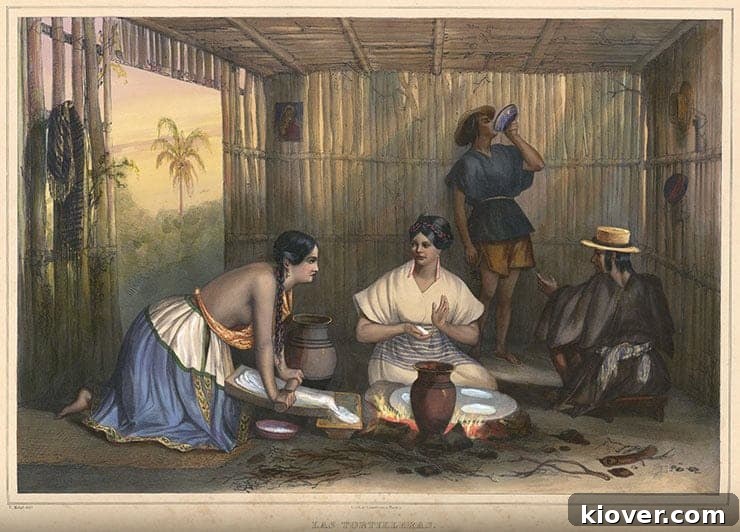
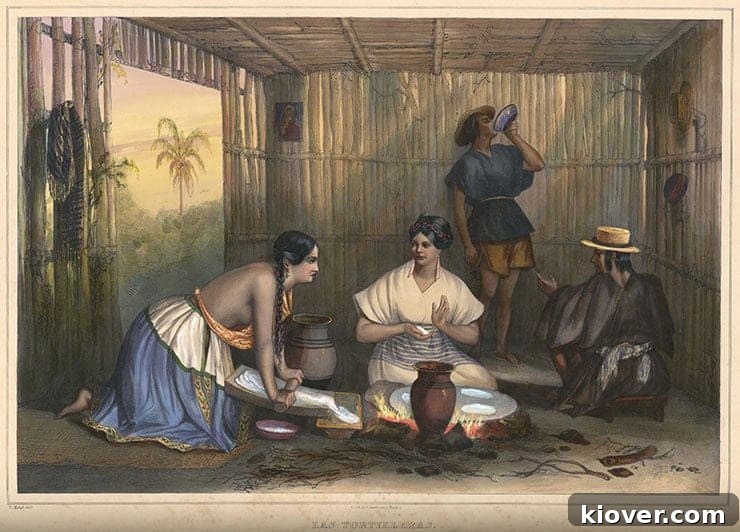
Embark on a captivating culinary journey as we delve deep into the rich and vibrant world of enchiladas. More than just a collection of recipes, this exploration uncovers the profound cultural roots and historical evolution of one of Mexico’s most iconic dishes. Today, we turn our focus to the fascinating origin story of enchiladas, a dish that has graced tables for millennia and continues to evolve.
The Enduring Legacy: Why Enchilada History Matters
The history of enchiladas is particularly compelling for several key reasons, highlighting its unique place in global gastronomy. Firstly, its origins stretch back into the mists of antiquity. The fundamental act of wrapping ingredients within a corn tortilla is an ancient practice, likely predating recorded history. It’s a testament to human ingenuity and the enduring appeal of simple, wholesome ingredients.
Secondly, the enchilada is not merely a regional delicacy but a globally recognized comfort food, deeply embedded in the daily lives and cultural fabric of countless households. Its journey from a Mesoamerican staple to an international favorite is a story of culinary adaptation and cross-cultural exchange. This dish, in its myriad forms, holds a special place in the hearts of many, representing tradition, community, and the comforting flavors of home. Its long and storied past has shaped it into a staple, reflecting a culinary heritage unlike any other.
To truly appreciate the enchilada, we must explore four foundational pillars that define its historical trajectory. We begin with the corn tortilla, the very essence that distinguishes an enchilada from other wrapped dishes like burritos. Following this, we investigate the pivotal role of chili peppers, an ingredient so central that the word “enchilada” itself derives from “enchilar,” meaning “to season with chili.” Next, we examine the evolution of fillings, which have transformed over centuries. Finally, we seek to pinpoint the “big bang” moment – the historical convergence of these elements into the recognizable dish we cherish today.
Corn Tortillas: The Ancient Foundation of Mesoamerican Cuisine
The history of the corn tortilla is intrinsically linked to the history of human civilization in Mesoamerica. Evidence suggests that corn, or maize, was first cultivated and consumed as a food product between 7,000 and 9,000 years ago in central Mexico. Archaeological findings indicate sophisticated processing techniques, including milling, were in use as far back as 9,000 years ago, suggesting the early development of corn flour and its derivatives.
Crucially, before the arrival of Europeans in the New World, wheat was not cultivated in the Americas. This meant that corn was the undisputed staple grain, serving as the foundation for countless dishes, much as wheat bread did in Europe. The indigenous peoples of what is now North and South America relied heavily on corn, not just for sustenance but also for its profound cultural and mythological significance. The invention of the corn tortilla – a flat, unleavened bread made from nixtamalized corn dough – was a revolutionary culinary advancement.
The process of nixtamalization, involving soaking and cooking corn in an alkaline solution (typically limewater), was a groundbreaking innovation. This technique not only made the corn easier to grind but also significantly enhanced its nutritional value, making essential amino acids and niacin more bioavailable. Nixtamalization transformed corn from a mere crop into a powerhouse of nutrition, enabling the flourishing of vast civilizations. Thus, corn tortillas have been an integral part of the human diet in the Americas for thousands of years, serving as the fundamental canvas upon which the enchilada, and many other dishes, were painted.
Chili Peppers: The Fiery Heart of the Enchilada
Just as corn formed the body of ancient Mesoamerican cuisine, chili peppers provided its soul. Chili seeds have been discovered as integral components of cultural deposits in Mexico dating back an astonishing 9,000 years, paralleling the timeline of corn cultivation. This remarkable synchronicity in time and place between corn tortillas and chili peppers suggests an ancient, perhaps even immediate, culinary relationship. It is hard to imagine that two such foundational food items, so perfectly complementary, would not have been combined early in their shared history.
When Europeans first arrived in the New World during the 16th century, they extensively documented the dietary habits of indigenous societies like the Mayans and Aztecs. Their records consistently highlight both corn tortillas and chili peppers as fundamental staples. These accounts strongly suggest that traditional meals featuring these ingredients, often combined, were already deeply entrenched in the culinary practices of the era. The sheer diversity of chili peppers, ranging from mild to intensely hot, provided a complex palette of flavors that was expertly utilized in ancient cooking.
The etymological connection further underscores the importance of chilies to the enchilada. The Spanish word “enchilar,” meaning “to season or adorn with chili,” is the direct ancestor of “enchilada.” This linguistic link emphasizes that the presence of chili, typically in a rich, savory sauce, is not merely an option but a defining characteristic of the dish. Chilies were more than just a spice; they were a primary flavoring agent, a source of nutrients, and an essential component of the daily diet. Indeed, the simple truth is that peppers and corn tortillas were indispensable elements of everyday life and culinary tradition in ancient Mesoamerica, forming the inseparable core of what would eventually become the enchilada.
The Evolution of Enchilada Fillings: From Ancient Staples to Modern Delights
While corn tortillas and chili sauces form the structural and flavorful bedrock of the enchilada, the fillings offer boundless possibilities, reflecting centuries of culinary innovation and cultural exchange. Early historical accounts provide tantalizing glimpses into these fillings. Bernal Díaz del Castillo, a Spanish conquistador, meticulously documented feasts hosted by Hernán Cortés in the 1500s, noting the serving of fish wrapped in corn tortillas. This direct documentation is significant, as it confirms the ancient practice of encasing various ingredients within a corn tortilla, laying the conceptual groundwork for the enchilada.
This early observation, though potentially describing what we might now call a taco, also speaks to the essence of the enchilada’s filling. The distinction between a taco and an enchilada, particularly in traditional Mexican cuisine, can be twofold and critical. Firstly, an authentic enchilada is typically baked or simmered in its sauce, allowing the tortilla and filling to meld into a cohesive, flavorful dish. In contrast, tacos generally feature individually cooked ingredients assembled fresh into a tortilla, which is usually served soft or lightly fried. Secondly, and perhaps most defining for the enchilada, is its indispensable requirement for a rich chili-based sauce, from which it derives its very name. Tacos, while often accompanied by salsa, do not inherently demand this chili-infused cooking method.
Therefore, while the conquistador’s descriptions might lean towards the history of the taco in its simplest form, they unequivocally document the foundational idea of a “filling” for what could become an enchilada. This period marks the Western world’s formal discovery and documentation of indigenous culinary practices that had existed for millennia. It is highly probable that the concept of a “baked” enchilada, where the filled tortillas are drenched in sauce and then cooked, predates these 16th-century observations by a significant margin, evolving from ancient methods of preparing and preserving food. Today, enchilada fillings span a vast spectrum, including seasoned meats (pork, beef, chicken), cheeses, beans, vegetables, and even regional specialties like seafood or squash blossoms, each adding a layer to its rich culinary tapestry.
The Enchilada’s “Big Bang”: Tracing its Deep Roots
Pinpointing the exact “big bang” moment for the enchilada—the precise instance when chili-laced, filled corn tortillas coalesced into the dish we recognize today—is an elusive quest, largely lost to time before written records were common. However, we can construct a compelling timeline based on the evidence we possess. We know with certainty that both corn and chili peppers boast a history in Mesoamerica stretching back an incredible 9,000 years, indicating that the core ingredients have coexisted for millennia.
By the time Spanish conquistadors encountered indigenous populations in the 1500s, their accounts confirm that native peoples were routinely consuming meats and other fillings wrapped in tortillas, and that chili peppers were an absolutely fundamental staple of their diet. This confluence of elements strongly suggests that a dish akin to the enchilada was not only present but deeply ingrained in the culinary landscape of ancient Mexico. Therefore, the creation of the enchilada, in some form, must date back at least to the 1500s, and far more likely, many thousands of years prior.
The first explicit written documentation of enchiladas appears much later, in the pages of Mexico’s very first cookbook: “El cocinero mexicano” (“The Mexican Chef”), published in 1831. This landmark publication provides specific recipes and descriptions, solidifying the enchilada’s place in formal Mexican cuisine. However, it’s crucial to understand that this cookbook did not invent the enchilada; rather, it codified and preserved culinary traditions that had been passed down orally and through practice for generations. The dish had evolved and diversified over centuries, with regional variations likely thriving long before any pen touched paper.
From its humble beginnings as an ancient, practical way to consume core staples, the enchilada has traversed epochs, adapted to new ingredients brought by conquest, and spread globally, giving rise to diverse culinary traditions like Tex-Mex and New Mexican enchiladas. Its true origin, the “big bang,” may forever remain a fascinating mystery hidden in the unwritten annals of ancient history. Yet, by meticulously examining the deep histories of its constituent parts—the resilient corn tortilla, the fiery chili pepper, and the endlessly adaptable filling—we gain a profound appreciation for the enduring legacy and cultural significance of this remarkable dish.