
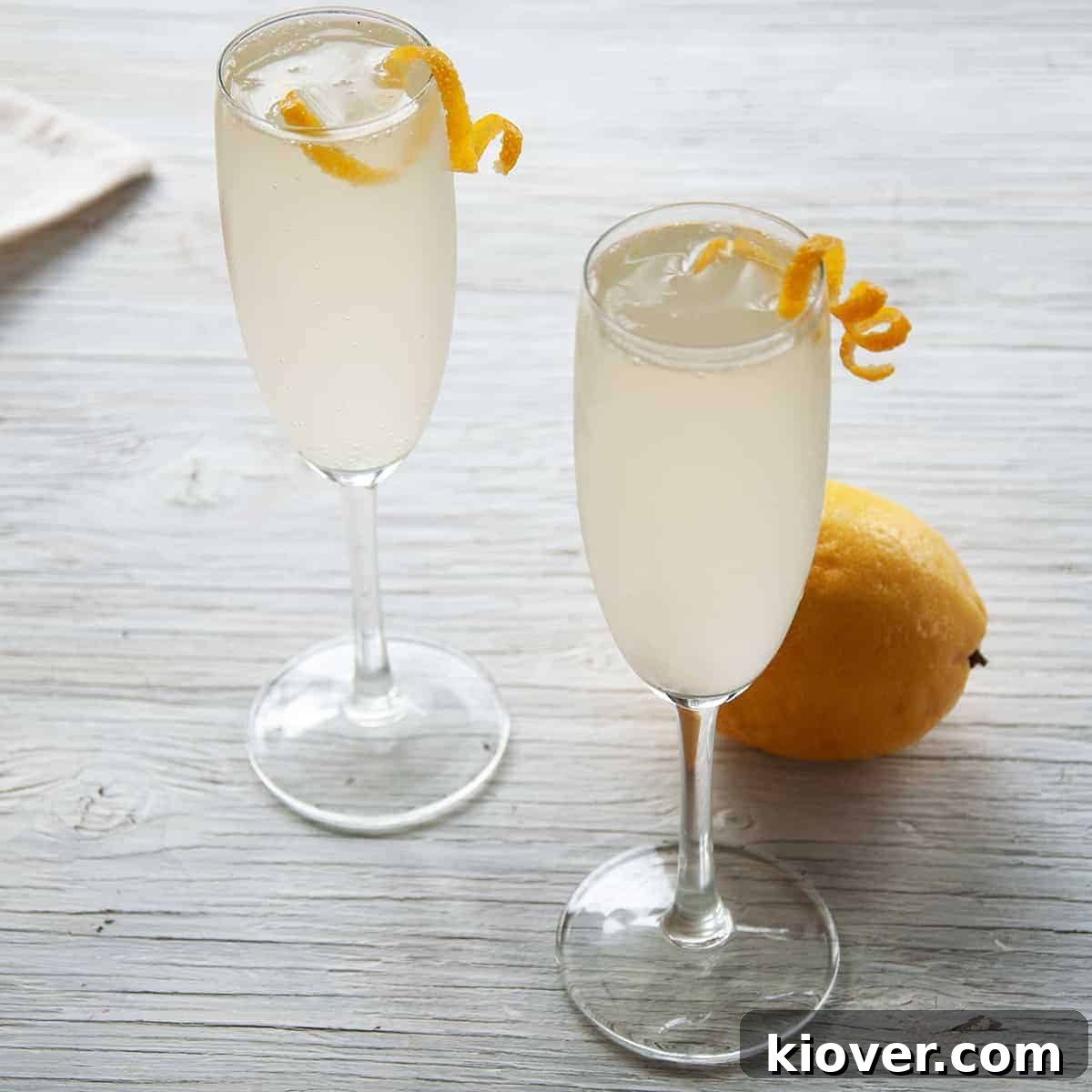
The French 76 cocktail, a captivating twist on the renowned French 75, stands as a testament to timeless elegance in mixology. This article delves into the art of crafting both these exquisite champagne-based drinks, offering a journey through their history, ingredients, and preparation. Each sip promises a delightful blend of sweetness, botanical notes, and a zesty lemon kick, making them ideal choices for an elevated happy hour, a celebratory brunch, or simply a moment of sophisticated self-indulgence. Mastering the French 76 and French 75 is an essential skill for any aspiring home bartender, adding a touch of classic charm to their repertoire.
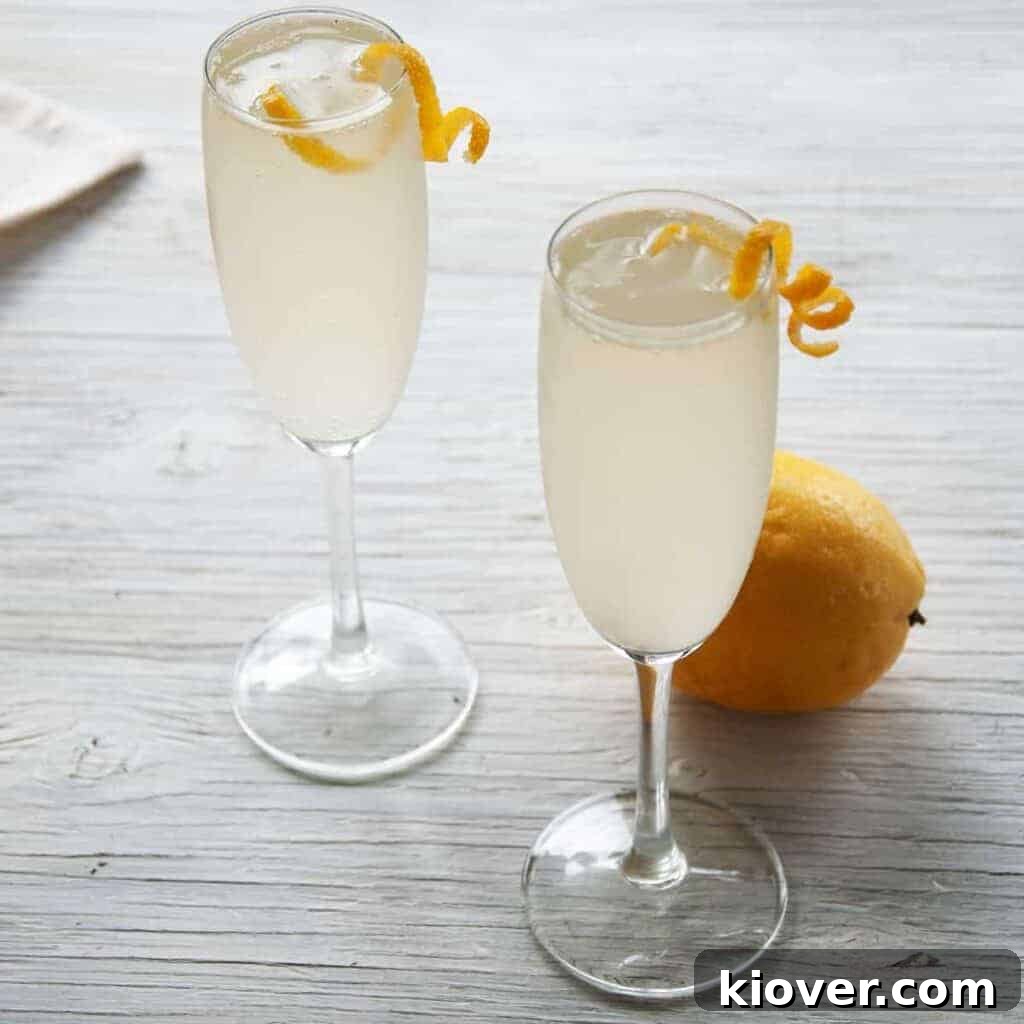
Understanding the French 76 and French 75: A Classic Comparison
At its heart, the primary distinction between the French 76 and the French 75 lies in the choice of spirit. The venerable French 75, often considered the original, traditionally calls for gin. In contrast, its more modern counterpart, the French 76, utilizes vodka. While we’ll largely focus on the refreshing French 76 today, we’ll explore the subtle yet significant differences these spirits impart, allowing you to choose the perfect rendition for your palate.
The core recipe for both cocktails remains beautifully straightforward: a harmonious blend of fresh lemon juice, homemade simple syrup, and your chosen spirit (vodka for the 76, gin for the 75). These ingredients are meticulously mixed, then elegantly poured into a chilled champagne flute. The concoction is then topped with sparkling champagne and often garnished with a delicate lemon peel, creating a visually stunning and undeniably delicious beverage. This simplicity belies a depth of flavor that has cemented these drinks as cocktail legends.
Selecting the Perfect Champagne for Your Cocktail
When preparing a French 76 or French 75, there’s no need to reach for your most expensive, vintage champagne. These cocktails are designed to be vibrant and celebratory, and the champagne acts as a crucial component that harmonizes with the other bold flavors. As such, a “good enough” sparkling wine will perfectly suffice. This means opting for a bottle you enjoy drinking on its own but perhaps wouldn’t reserve for the most extraordinary occasions.
What constitutes “good enough” champagne? Generally, a dry or Brut champagne is preferred, as its crispness complements the lemon and sweetness without making the drink overly sugary. Avoid anything too sweet like a Demi-Sec, as the simple syrup already provides ample sweetness. If true champagne isn’t readily available or you’re looking for a more budget-friendly option, a good quality Prosecco or Cava can serve as excellent substitutes. Prosecco, with its typically fruitier notes, or Cava, offering a slightly drier profile, can both result in a wonderfully beautiful and flavorful drink. Experimentation is key to discovering your personal preference.
Gin vs. Vodka: The Spirit of Choice
As established, the central differentiator between the French 76 and French 75 is the base spirit: vodka or gin. This choice profoundly impacts the flavor profile and overall character of your cocktail.
Vodka, often lauded for its neutral taste, is favored by many because it allows other ingredients to shine. When you craft a French 76 with vodka, the champagne and fresh lemon become the undisputed stars of the show, delivering a clean, bright, and effervescent experience. The vodka provides the alcoholic kick without introducing competing flavors, making it an approachable option for those who prefer their cocktails less complex.
Gin, on the other hand, introduces a fascinating layer of botanical complexity. The most iconic flavor in gin is juniper berry, which contributes a distinctive piney and slightly peppery note. Using gin in a French 75 adds this botanical essence, creating a more herbaceous and aromatic drink. Beyond juniper, different gins boast unique flavor profiles from a variety of botanicals. For example, a gin like Hendrick’s, known for its cucumber and rose essences, will infuse your French 75 with a delicate, refreshing, and floral twist. Exploring the vast world of gin and selecting your favorite can be an enjoyable part of the journey in mastering this classic cocktail.
Crafting the Perfect Simple Syrup at Home
While simple syrup is readily available for purchase, it’s incredibly easy and cost-effective to prepare at home. The standard recipe for simple syrup is a 1:1 ratio of sugar to water, creating a light syrup that seamlessly integrates into cold drinks.
To make it, combine equal parts granulated sugar and water in a saucepan. Heat the mixture over medium heat, stirring continuously until the sugar is completely dissolved. It’s important to heat the water until it’s hot but not quite simmering or boiling; you want to dissolve the sugar, not reduce the water. Once all sugar crystals have vanished, remove the pan from the heat and allow the syrup to cool completely to room temperature before using.
Once cooled, transfer your homemade simple syrup to an airtight container, such as a small mason jar, and store it in the refrigerator. Properly covered and refrigerated, simple syrup typically remains fresh for up to a month, making it a convenient staple for any home bar. For those looking to experiment, a “rich” simple syrup (2:1 sugar to water) offers a thicker consistency and sweeter profile, while infusing herbs like mint or lavender during the heating process can create flavored syrups for exciting cocktail variations.
The Intriguing History of the French 76 and French 75
The French 76, a delightful variation, naturally traces its lineage back to the more historically significant French 75. Like many classic cocktails, the exact origins of the French 75 are shrouded in a bit of mystery and legend, yet we can pinpoint some key moments in its evolution.
The most widely accepted account places the modern French 75 in the spotlight with its inclusion in Harry Craddock’s seminal 1930 publication, The Savoy Cocktail Book. Craddock, a legendary bartender at London’s Savoy Hotel, solidified countless recipes in cocktail lore, and the French 75 was among them. However, it’s known that versions of the drink were being served and documented even before this influential book. The cocktail, with its current ingredients, first appeared in print in a magazine in 1927. While this marks its earliest known published recipe, it’s highly probable that the drink was enjoyed in various bars and social circles for years prior, gradually gaining popularity and refining its form.
Inspired by Artillery: The French 75 Cannon
The captivating name “French 75” itself draws from a powerful piece of military history: the French 75mm field gun, formally known as the Matériel de 75mm Mle 1897. Adopted by the French army in 1897, this artillery piece quickly earned the nickname Soixante-Quinze, or simply “the French 75.” It became a pivotal weapon during World War I, renowned for its revolutionary hydro-pneumatic recoil mechanism. This innovation allowed the gun to fire rapidly without needing to be re-aimed after each shot, giving the French forces a significant advantage. The “75” in its name refers to the 75-millimeter shells it fired.
The French 75 gun achieved widespread fame, inspiring various cultural references, including cocktails. While several different drinks bearing the name “French 75” emerged, many with disparate ingredients, the version that combined gin, lemon, simple syrup, and champagne ultimately became the enduring classic we recognize today. The name evoked power, precision, and French sophistication, qualities that resonated with the cocktail’s potent and elegant character.
From Gin to Vodka: The Rise of the French 76
While the French 75’s history is well-documented, the exact origin of its vodka-based cousin, the French 76, is less clear-cut. Nevertheless, its emergence was arguably inevitable. The latter half of the 20th century witnessed a dramatic surge in vodka’s popularity, especially in the United States. Prior to World War II, vodka was a niche spirit in the US, but it steadily gained traction, becoming the country’s most popular alcoholic spirit by the 1980s and 90s. This rise created a natural inclination among bartenders and drinkers to experiment with vodka in established cocktail frameworks.
The classic cocktail resurgence of the 2000s further fueled this innovation. As drinkers rediscovered forgotten classics, they also sought modern interpretations. Replacing gin with vodka in the French 75 offered a cleaner, more spirit-forward champagne cocktail that appealed to a broader audience, particularly those who found gin’s botanical notes too assertive. This natural evolution gave birth to the French 76, cementing its place as a beloved and accessible twist on a historical icon.
A Different Presentation: The Tom Collins Variation
While serving these cocktails in a slender champagne flute without ice is the standard and most elegant presentation, there is historical precedent for a different approach. Some early versions of the French 75, and by extension the French 76, were served over ice in a tall Tom Collins or highball glass. This serving style highlights the cocktail’s kinship with the Tom Collins, which features gin, lemon juice, simple syrup, and soda water. Essentially, if you replace the champagne in a French 75 with club soda, you largely have a Tom Collins.
For a unique and refreshing twist, consider serving your French 76 or 75 over ice in a tall glass. This presentation is particularly delightful in warmer climates or for those who prefer a more diluted and slowly enjoyed drink. However, be mindful of the potency: combining a base spirit with champagne results in a cocktail with a significant alcohol content. Serving it in a larger glass, while refreshing, can lead to a surprisingly strong drink if not consumed responsibly.
Essential Tips for Crafting the Perfect French 76 or French 75
Achieving cocktail perfection is all about attention to detail. Here are some invaluable tips to ensure your French 76 or French 75 is consistently exceptional:
- Know Your Spirit: For a true French 76, always opt for vodka. For the classic French 75, gin is the spirit of choice. The distinction significantly alters the flavor profile.
- Fresh Lemon Juice is Non-Negotiable: The vibrancy of fresh lemon juice cannot be overstated. Bottled lemon juice pales in comparison and will detract from the cocktail’s brightness.
- Chill Your Ingredients: Ensure your champagne, spirits, and even your lemon juice are well-chilled before mixing. This helps create a colder, more refreshing drink without over-diluting it with ice.
- Shake Well: When combining the spirit, simple syrup, and lemon juice in a cocktail shaker, shake vigorously with ice for about 15-20 seconds. This chills and properly dilutes the mixture before topping with champagne.
- Serve in Chilled Glassware: Pre-chilling your champagne flutes will keep your cocktail colder for longer and enhance the overall drinking experience.
- Mind the Champagne: As discussed, unless it’s a truly special occasion, there’s no need to use expensive champagne. A good quality Brut sparkling wine, Prosecco, or Cava will work perfectly.
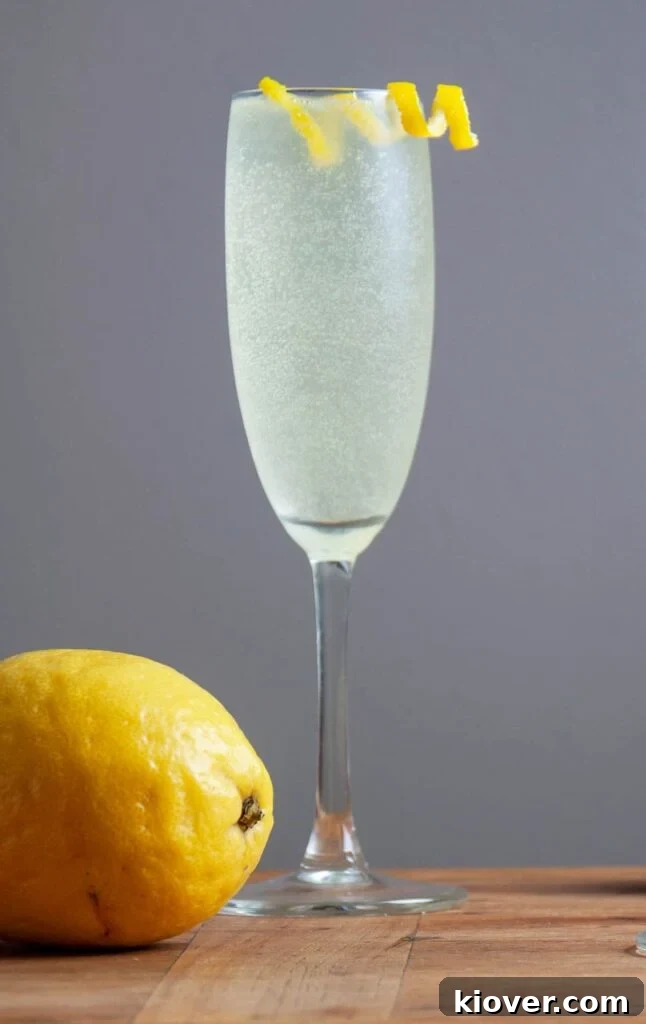
- Garnish Matters: A simple lemon peel or twist not only adds visual appeal but also contributes subtle aromatic oils that enhance the cocktail’s bouquet.
- Experiment with Variations: For something truly different, consider serving the cocktail over ice in a Tom Collins glass. You can also experiment with flavored simple syrups (e.g., raspberry or elderflower) for an exciting twist.
Recommended Bar Tools for the Perfect Cocktail
Having the right tools can make all the difference in your home bartending endeavors. For these champagne cocktails, a few key items are invaluable:
- Cocktail Shaker Kit: Essential for thoroughly mixing and chilling your base ingredients. A good kit will often include a jigger for precise measurements and a strainer.
- Champagne Flute Glasses: The iconic glassware for these drinks, designed to preserve carbonation and showcase the beautiful effervescence.
- Jigger: For accurate measurement of spirits, lemon juice, and simple syrup. Precision ensures consistent quality.
- Bar Spoon: Useful for gently stirring the champagne into the shaken mixture, helping to maintain its fizz.
- Citrus Juicer: To extract maximum fresh juice from your lemons.
French 76 and 75 Recipes
5 from 2 reviews
- Author: Ben Myhre
- Prep Time: 2 minutes
- Cook Time: 2 minutes
- Total Time: 4 minutes
- Yield: 1 Cocktail
- Category: Cocktail
- Method: Stir
- Cuisine: American
Description
The French 76 is a delicious cocktail that is a riff on the classic French 75. We share both today and want you to pick what is best for your taste buds. Try this tasty drink that has flair and kick.
Ingredients
- 1 1/2 Ounces Gin (French 75) or Vodka (French 76)
- 3/4 Ounces Simple Syrup
- 3/4 Ounces Fresh Lemon Juice
- 2-3 Ounces Champagne (approximate)
- Lemon peel for garnish (Optional)
Instructions
- Add Gin (or Vodka), simple syrup, and fresh lemon juice to a cocktail shaker filled with ice. Shake vigorously until well chilled.
- Strain the chilled mixture into a cold champagne flute.
- Carefully top off the cocktail with 2-3 ounces of chilled champagne.
- Garnish with a fresh lemon peel or twist (optional, but highly recommended for aroma and presentation).
Notes
- Remember: vodka is for a French 76, gin for a French 75.
- For a longer, more refreshing drink, serve over ice in a Tom Collins or highball glass.
- When selecting your sparkling wine, prioritize a dry, crisp profile over an expensive label. A good Prosecco or Cava also works beautifully.
- Always use freshly squeezed lemon juice for the best flavor.
Nutrition
- Serving Size: 1 glass
- Calories: 237 Calories
- Sugar: 15 g
- Sodium: 6 mg
- Fat: 3 g
- Carbohydrates: 21 g
- Fiber: 0g
- Protein: 0 g
- Cholesterol: 0 mg