
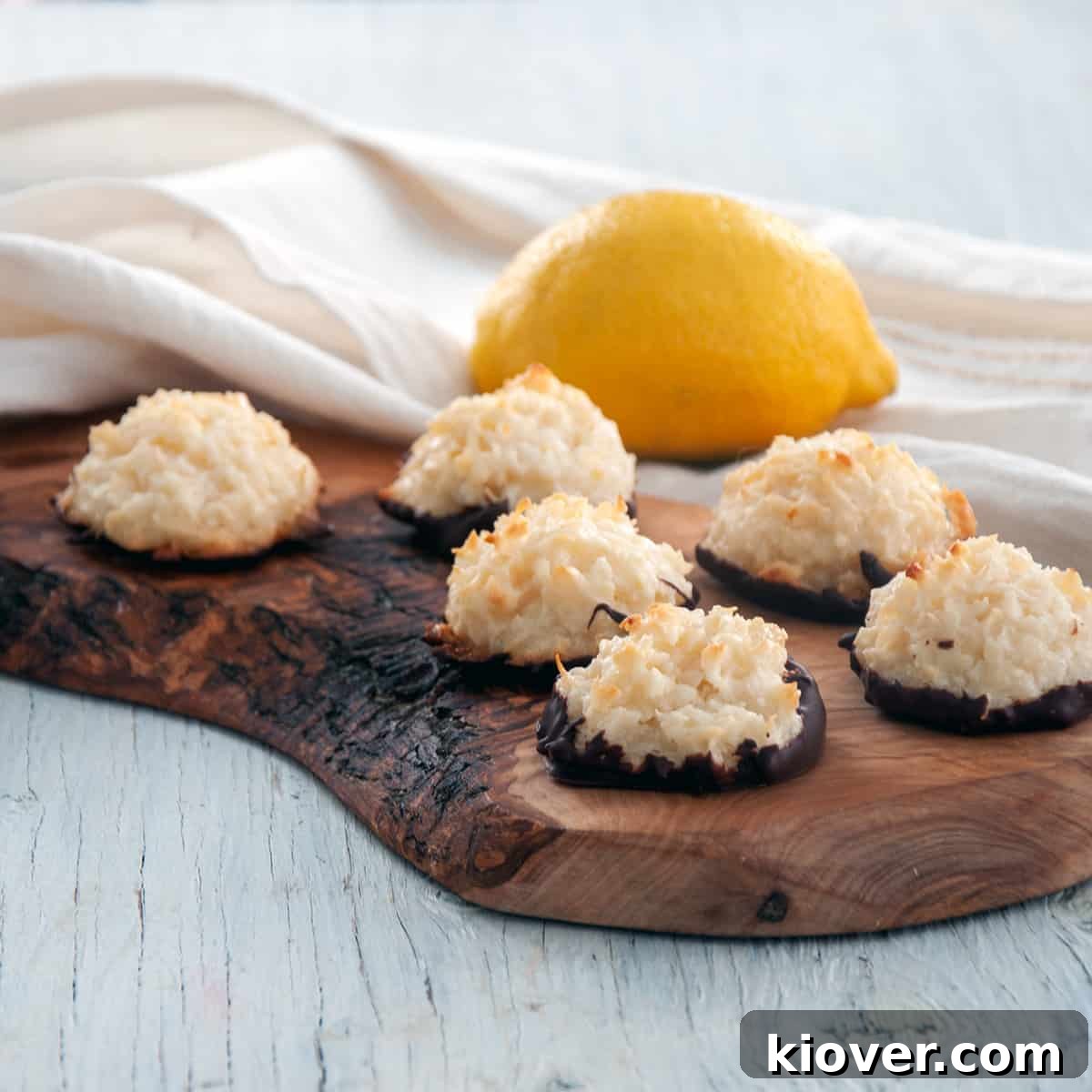
German Coconut Macaroons (Kokosmakronen): A Delectable Holiday Treat
Discover the delightful world of German Coconut Macaroons, known affectionately as Kokosmakronen. These sweet, soft, and delightfully chewy cookies are a cherished tradition in German baking, especially during the festive holiday season. Infused with a hint of bright lemon and elegantly dipped in rich chocolate, they offer a perfect balance of tropical flavor and classic indulgence. Whether you’re seeking a simple yet sophisticated dessert or a unique addition to your holiday cookie platter, these macaroons are an absolute must-try. Their ease of preparation and unforgettable taste make them a favorite for bakers of all skill levels.
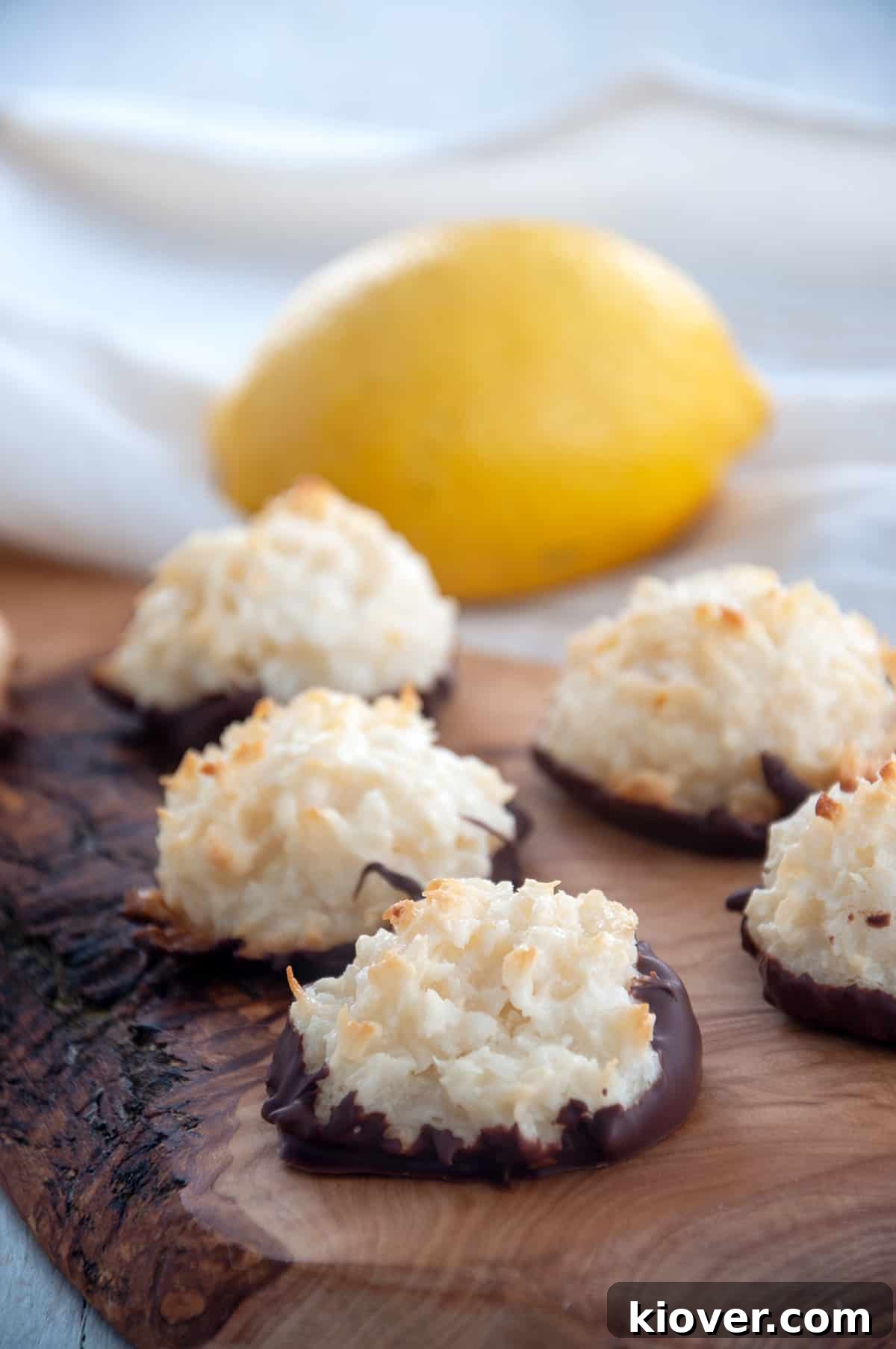
Once baked to golden perfection, each dainty mound is given a luxurious bath in melted chocolate, creating a striking contrast in both flavor and texture. The chocolate base not only enhances their rich taste but also adds a visually appealing touch that elevates these humble cookies to a gourmet experience. With minimal effort required, you can effortlessly create these exquisite coconut cookies that promise to be a crowd-pleaser. Get ready to embark on a culinary journey to Germany with this foolproof Kokosmakronen recipe, perfect for sharing with loved ones or enjoying as a personal treat.
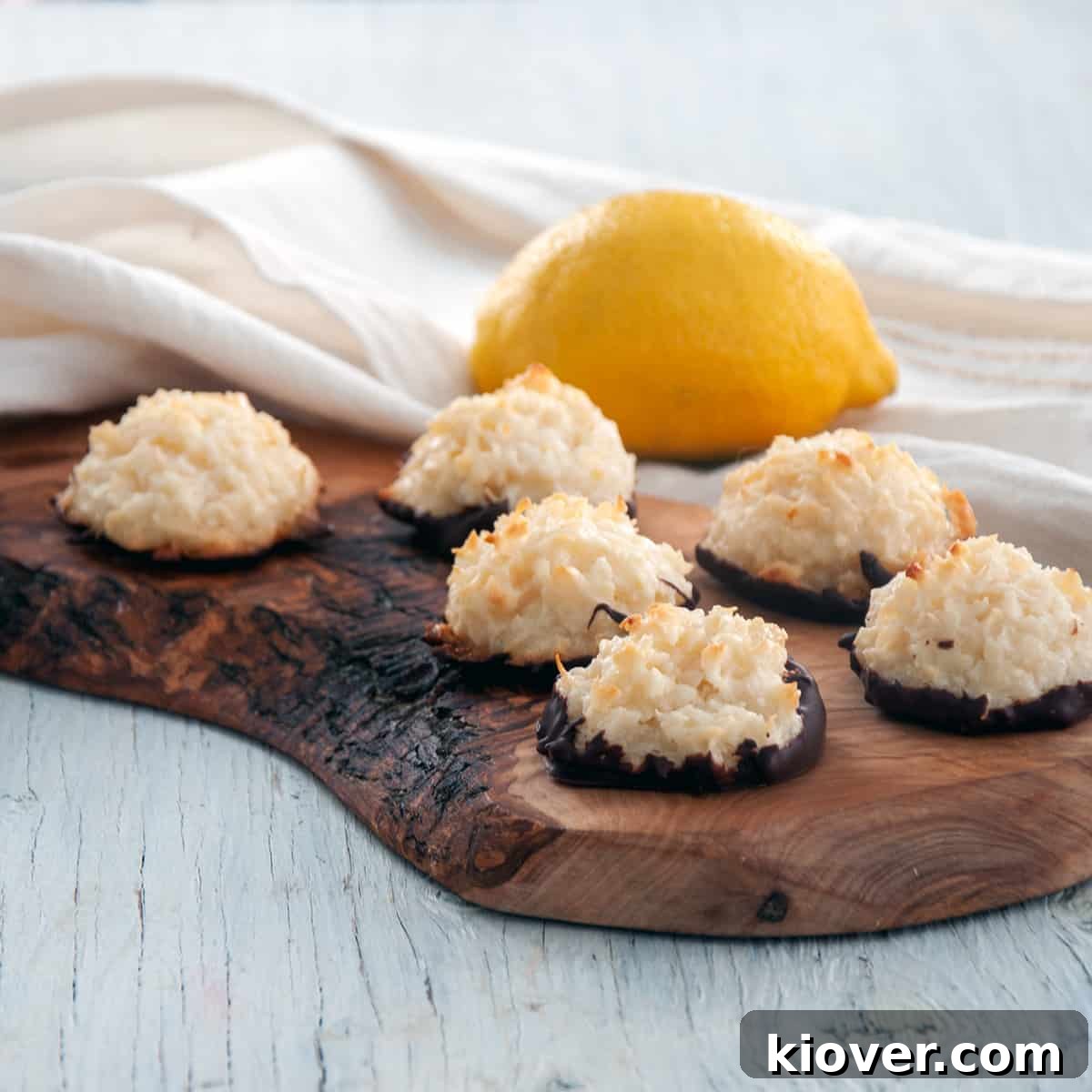
🥥 Why This Kokosmakronen Recipe Is Special
If the alluring aroma and taste of coconut captivate your senses, then this Kokosmakronen recipe is destined to become a firm favorite. It’s more than just a cookie; it’s an experience that marries the exotic allure of tropical coconut with a deeply satisfying sweetness. What truly sets these macaroons apart is the thoughtful addition of a delicate lemon kiss, which beautifully cuts through the richness, adding a refreshing zest that brightens every bite. Crowned with a sturdy cap of bittersweet chocolate, each macaroon offers a complex interplay of flavors and textures that is truly exceptional.
Beyond their gourmet appeal, these macaroons boast an incredible ease of preparation, making them a joyful endeavor even for novice bakers. One of their most significant advantages is the absence of flour in the recipe, which naturally makes them an excellent gluten-free coconut cookie option. This inclusivity ensures that everyone, including those with dietary restrictions, can savor these delectable treats without compromise. Their unique blend of chewy interior and slightly crisp exterior, combined with the harmonious flavors of coconut, lemon, and chocolate, creates a memorable confection that stands out among other holiday sweets.
For those who revel in the spirit of holiday baking, these Kokosmakronen offer a delightful alternative to traditional Christmas cookies. While you might enjoy other festive delights like No-Bake Holiday Rum Balls, Soft Ginger Cookies, or the intricate beauty of Scandinavian Rosette Cookies, German Coconut Macaroons carve out their own special place. Their distinct flavor profile and textural allure ensure they will be a cherished addition to any seasonal celebration.
Whether you’re baking for a special occasion, preparing a thoughtful gift, or simply treating yourself to a moment of sweet indulgence, this recipe guarantees a truly special outcome. Allow yourself the pleasure of creating and enjoying these delightful German Coconut Macaroons today!
Table of Contents
- 🥥 Why This Kokosmakronen Recipe Is Special
- 🍫 Essential Ingredients for Irresistible Kokosmakronen
- 🍲 Step-by-Step: Baking Perfect German Coconut Macaroons
- 🤷 Creative Substitutions and Variations
- 📦 Storage Tips to Keep Your Macaroons Fresh
- 🎓 A Sweet History: The Origins of Macaroons
- ❓ Frequently Asked Questions About Coconut Macaroons
- 📝 Expert Tips and Tricks for Kokosmakronen Perfection
- 🛠 Recommended Tools for Your Baking Adventure
- 😋 Share Your German Macaroon Masterpiece!
🍫 Essential Ingredients for Irresistible Kokosmakronen
One of the most appealing aspects of this German Coconut Macaroon recipe is its simplicity, relying on just a handful of core ingredients to create something truly extraordinary. With only five primary components plus the chocolate for dipping, you can embark on your baking adventure today with minimal fuss. Each ingredient plays a crucial role in achieving the perfect texture and flavor profile that these traditional Kokosmakronen are known for.
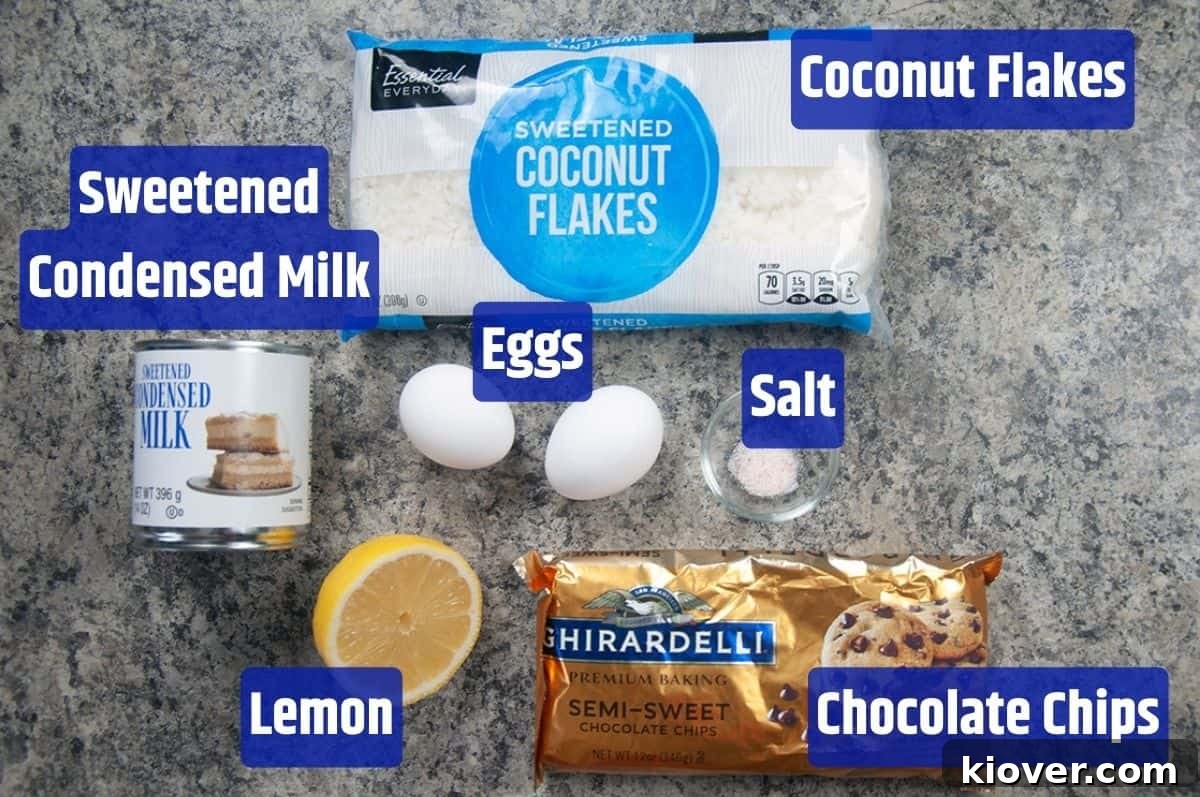
Here’s a closer look at the key players that transform into these soft, chewy pillows of sweetness:
- Egg Whites: These are the backbone of our macaroons, providing the essential structure and lightness. When whipped to stiff peaks, they create an airy base that encapsulates the other ingredients, leading to that characteristic chewy-soft texture.
- Sweetened Shredded Coconut: The star of the show! Sweetened coconut flakes not only impart the signature tropical flavor but also contribute significantly to the macaroon’s delightful chewiness and moist crumb. Ensure you use sweetened flakes for the intended flavor balance.
- Sweetened Condensed Milk: This magical ingredient serves multiple purposes. It acts as a primary sweetener, binds all the ingredients together, and contributes to the dense, moist, and tender interior of the macaroons. Its rich, creamy texture is indispensable.
- Fresh Lemon Zest and Juice: A burst of fresh lemon is what truly elevates these German macaroons. The zest provides aromatic oils and bright flavor, while the juice adds a subtle tang that wonderfully balances the sweetness of the coconut and condensed milk. It prevents the cookies from being overly sweet and adds a refreshing note.
- A Pinch of Salt: Don’t underestimate the power of a small amount of salt. It’s a fundamental flavor enhancer, bringing out the sweetness of the coconut and chocolate while also balancing all the other flavors.
- Semisweet Chocolate Chips: While optional, a luscious chocolate coating transforms these macaroons into an even more decadent treat. Semisweet chocolate offers a perfect counterpoint to the sweetness of the coconut, adding depth and a delightful snap.
Refer to the recipe card below for precise quantities and get ready to assemble these simple yet powerful ingredients into an irresistible dessert!
🍲 Step-by-Step: Baking Perfect German Coconut Macaroons
Creating these exquisite German Coconut Macaroons is a straightforward process, broken down into easy-to-follow steps. Precision and attention to detail, particularly in whipping the egg whites, will ensure your Kokosmakronen turn out beautifully light, chewy, and perfectly formed. Let’s walk through each stage of this rewarding baking journey.
Preparing the Base: Whipping Egg Whites
The foundation of a great macaroon lies in perfectly whipped egg whites. Begin by separating your egg whites carefully, ensuring no trace of yolk makes its way into the whites, as this can prevent them from whipping properly. Place the egg whites into the clean bowl of a stand mixer fitted with a whisk attachment (or use a hand mixer). Whip the egg whites on medium-high speed until they reach firm, glossy peaks. This crucial step typically takes about five minutes in a stand mixer. You’ll know they’re ready when they hold their shape firmly and have a marshmallow-like consistency. The stiff peaks will provide the necessary lift and structure for your macaroons.
Mixing the Macaroon Batter
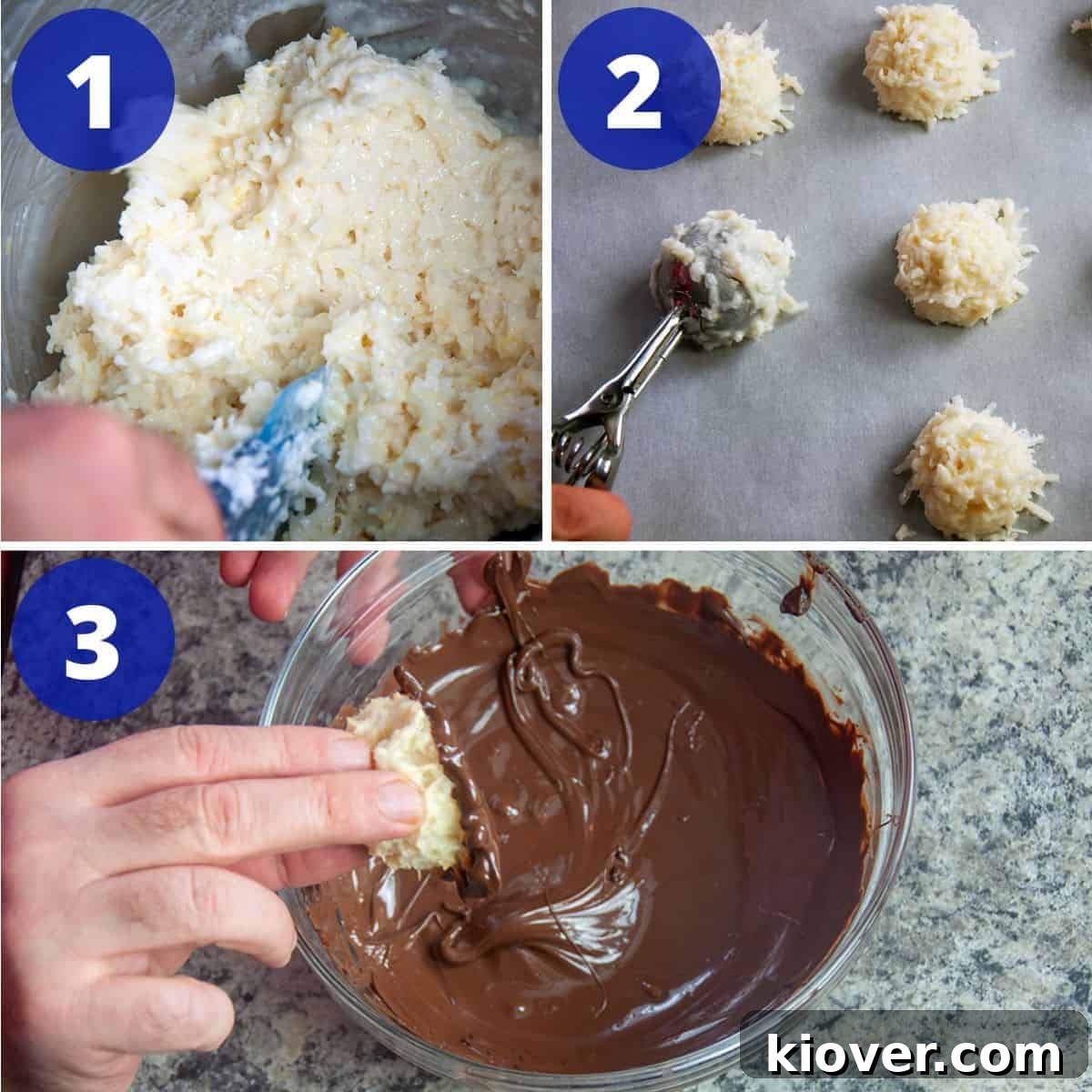
Once your egg whites are perfectly whipped, it’s time to gently incorporate the remaining ingredients, with the exception of the chocolate chips, which will be added later. Using a spatula, carefully fold in the sweetened shredded coconut, sweetened condensed milk, fresh lemon zest, fresh lemon juice, and the pinch of salt. The key here is to fold rather than stir vigorously, to maintain as much of the air in the egg whites as possible. Continue folding until all ingredients are just combined, creating a thick, sticky, and fragrant batter. Overmixing can deflate the egg whites, leading to a denser macaroon.
Shaping and Baking Your Macaroons
Now, prepare your baking sheets. Line one or two cookie sheets with parchment paper. This non-stick surface is essential to ensure your delicate macaroons don’t stick and are easy to remove once cooled. Using a small cookie scoop or two spoons, place approximately 1 ½ tablespoons of the coconut mixture onto the prepared baking sheets. Arrange them about 1 inch apart to allow for proper airflow and slight expansion during baking. This recipe should yield approximately two dozen beautifully portioned cookies.
For optimal baking, I recommend using a single large 15″ x 21″ cookie sheet, placed on the middle rack of your oven. This setup often results in more even cooking. However, if you’re using two standard 9″ x 13″ cookie sheets, you can bake them simultaneously on two middle racks, or one at a time. If baking two sheets at once, it’s wise to keep a closer eye on them, as oven hot spots can cause one batch to bake faster than the other. Rotating the sheets halfway through baking can help ensure uniform golden-brown tops.
Preheat your oven to 325°F (160°C). Bake the macaroons for approximately 25 minutes, or until the tops acquire a lovely, subtle golden-brown hue. The edges should be set, and the centers should feel soft and slightly springy. Be careful not to overbake, as this can result in dry macaroons. Once baked, remove the cookie sheets from the oven and allow the macaroons to cool completely on the parchment paper. This cooling period is crucial, typically taking around 30 minutes, as it allows the cookies to firm up and makes them much easier to remove without breaking. Once cool, they should detach effortlessly from the parchment. Now, they are perfectly ready for their decadent chocolate finish!
Adding the Chocolate to Your Macaroons
The final touch that transforms these delightful coconut mounds into truly irresistible treats is the addition of a rich chocolate base. This step not only adds a layer of flavor complexity but also enhances the texture and visual appeal of your Kokosmakronen.
To melt the chocolate, place your semisweet chocolate chips into a heat-safe glass or ceramic bowl. Microwave the chocolate in short intervals, starting with 30 seconds. After the first interval, stir the chocolate thoroughly, even if it doesn’t appear fully melted. The residual heat will continue to melt the chips. Repeat this process, heating for 20-second intervals and stirring after each, until the chocolate is completely smooth and lusciously melted. Be mindful not to overheat the chocolate, as this can cause it to seize or burn. Stirring frequently ensures even melting and a silky consistency.
Once your chocolate is perfectly melted and glossy, it’s time to dip the macaroons. Gently take each cooled macaroon and dip its flat bottom into the melted chocolate. You can dip as little or as much as you prefer, creating a thin, elegant layer or a more substantial chocolate base. After dipping, carefully place each chocolate-bottomed macaroon back onto the parchment paper-lined baking sheet. Allow them to cool and the chocolate to set completely. You can speed up this process by placing the tray in the refrigerator for about 15-20 minutes, or simply let them sit at room temperature for an hour or until the chocolate is firm. Once the chocolate is set, your homemade German Coconut Macaroons are ready to be savored!
🤷 Creative Substitutions and Variations
While the classic German Coconut Macaroon recipe is perfect as is, there’s always room for culinary creativity and personal preferences. These simple cookies lend themselves beautifully to various substitutions and variations, allowing you to customize them to your taste or adapt to available ingredients.
- Citrus Zest and Juice: The original recipe calls for lemon, which adds a fantastic bright note. However, if you’re looking for a slightly different flavor profile, lime zest and juice would work just as wonderfully, imparting a more distinct tropical tang. Orange zest could also be a delightful alternative, offering a sweeter, more aromatic citrus essence. Experiment with your favorite citrus to find your perfect match!
- Chocolate Choices: The semisweet chocolate base is a classic, but don’t limit yourself!
- Dark Chocolate: For a more intense, less sweet experience, opt for dark chocolate with a higher cocoa percentage. This creates a sophisticated contrast with the sweet coconut.
- Milk Chocolate: If you prefer a milder, creamier, and sweeter chocolate flavor, milk chocolate chips would be a fantastic choice, especially appealing to those with a sweet tooth.
- White Chocolate: For a visually stunning and creamy variation, dip your macaroons in melted white chocolate. You can even tint white chocolate with food coloring for festive occasions.
- Chocolate Drizzle: Instead of dipping the entire bottom, you could drizzle melted chocolate over the tops of the macaroons for a more artistic presentation.
- Flavor Extracts: Introduce other flavor profiles into your macaroon mixture. A tiny splash of vanilla extract (pure vanilla, please!), almond extract, or even a hint of rum extract can add delightful complexity and a different dimension to the coconut flavor. Add these sparingly, usually ½ teaspoon or less, when folding in the condensed milk.
- Nutty Additions: For an added layer of texture and flavor, finely chop a small amount of nuts like almonds, pecans, or walnuts and fold them into the coconut mixture. Ensure they are finely chopped to maintain the macaroon’s delicate structure.
- Toppings and Garnishes: Before the chocolate sets, consider sprinkling some decorative elements for extra flair:
- Sea Salt: A tiny sprinkle of flaky sea salt on the wet chocolate enhances the flavor profile beautifully, creating a popular sweet and salty combination.
- Colored Sprinkles: Perfect for holidays or celebrations, add festive sprinkles for a pop of color.
- More Lemon Zest: A delicate grating of fresh lemon zest over the chocolate before it sets can amplify the citrus notes.
- Coconut Type: While sweetened shredded coconut is standard, you could experiment with unsweetened shredded coconut for less sweetness, though you might need to adjust the amount of sweetened condensed milk slightly to maintain the texture and desired sweetness level.
These variations offer endless possibilities to make these German Coconut Macaroons truly your own. Don’t hesitate to experiment and discover your favorite combination!
📦 Storage Tips to Keep Your Macaroons Fresh
Once you’ve baked a batch of these exquisite German Coconut Macaroons, proper storage is key to preserving their delicious texture and flavor. These cookies are best enjoyed fresh, but they also store remarkably well, allowing you to enjoy them over several days or even months.
Refrigerated Storage (Up to One Week)
After your Kokosmakronen have completely cooled and the chocolate has fully set, transfer them to an airtight container. Store this container in the refrigerator. The cool environment helps maintain their freshness, preventing them from drying out and keeping the chocolate firm. When stored correctly in the fridge, your coconut macaroons will remain delightfully moist and flavorful for up to one week. It’s important to use an airtight container to protect them from absorbing odors from other foods in the refrigerator and to prevent them from becoming stale.
Freezer Storage (Up to Three Months)
For longer-term storage, coconut macaroons freeze exceptionally well, making them perfect for preparing ahead of time for future events or for simply having a sweet treat on hand. To freeze them, first ensure they are completely cooled and the chocolate is fully set. Arrange them in a single layer on a baking sheet and flash freeze them for about 30 minutes to an hour, or until they are solid. This step prevents them from sticking together. Once firm, transfer the frozen macaroons to an airtight freezer-safe container or a heavy-duty plastic freezer bag. Layer them with parchment paper between layers if stacking to prevent sticking. They can be stored in the freezer for up to three months without compromising their quality.
Thawing Frozen Macaroons
When you’re ready to enjoy your frozen Kokosmakronen, simply remove the desired number of cookies from the freezer. You can thaw them at room temperature for about an hour, or transfer them to the refrigerator to thaw slowly over a few hours. Once thawed, they will regain their original soft, chewy texture and delicious flavor, tasting almost as good as freshly baked. Avoid microwaving to thaw, as this can alter their texture and melt the chocolate unevenly.
With these storage methods, you can ensure a consistent supply of these delightful German Coconut Macaroons, ready to brighten any moment.
🎓 A Sweet History: The Origins of Macaroons
The history of the macaroon is as rich and delightful as the cookie itself, tracing its origins back through centuries and across continents. While German Coconut Macaroons are a specific beloved variation, the humble macaroon boasts a fascinating lineage that begins much further south.
The legend often points to the 8th or 9th century in an Italian monastery as the birthplace of the macaroon. These early versions were quite different from the coconut-laden treats we know today. They were likely almond-based cookies, derived from an Arabic sweet, and made from almond paste, egg whites, and sugar. The name “macaroon” itself is believed to come from the Italian word “maccarone” or “maccherone,” referring to a fine paste, which is also the root for “macaroni.”
From Italy, these almond cookies traveled to France during the Renaissance, famously introduced by Catherine de’ Medici’s chefs in the 16th century. They evolved in French monasteries, particularly in Nancy, where two Carmelite nuns, Sister Marguerite and Sister Marie-Elisabeth, baked and sold them to support themselves during the French Revolution, giving rise to the “Nancy Macarons.” These were still simple, crisp almond meringue cookies without fillings.
The true transformation into the coconut macaroon we widely recognize occurred much later. When coconuts became more accessible and popular in Western cuisine, particularly in the late 19th and early 20th centuries, bakers began substituting or adding shredded coconut to the traditional almond macaroon recipe. The distinct absence of flour and leavening agents in these recipes made them a particularly important confection for Jewish communities. Because they contain no leavening and often no grains (if made with coconut and not almond flour), macaroons became an especially cherished and acceptable treat for Passover, aligning with dietary laws during the holiday. This connection cemented the coconut macaroon’s place in many Jewish households, particularly in America.
German Kokosmakronen, while sharing a common ancestry with other macaroons, have evolved into their own distinct specialty. They typically feature a soft, chewy, and slightly moist interior, often enhanced with citrus and dipped in chocolate, distinguishing them from their drier almond cousins or the delicate French macaron sandwiches. This historical journey from simple almond paste to a globally adored coconut confection highlights the adaptability and enduring appeal of this delightful sweet treat.
❓ Frequently Asked Questions About Coconut Macaroons
Here are some common questions about coconut macaroons and their delightful characteristics, offering deeper insights into this beloved cookie.
What is a coconut macaroon?
A coconut macaroon is a wonderfully simple yet satisfying cookie primarily made from shredded coconut, whisked egg whites, and sugar (often in the form of sweetened condensed milk). These small, often irregularly shaped mounds are typically characterized by a slightly crisp or golden exterior and a distinctively chewy, moist, and tender interior. Their texture is a hallmark – dense, yet yielding, with the pleasant chewiness of the coconut flakes. While delicious on their own, they are frequently enhanced by dipping their bases in melted chocolate, which adds another layer of flavor and a pleasing textural contrast.
Are Coconut Macaroons Gluten-Free?
Yes, traditional coconut macaroons, including these German Kokosmakronen, are inherently gluten-free. The core ingredients – shredded coconut, egg whites, and sweetened condensed milk – do not contain gluten. This makes them an excellent choice for individuals following a gluten-free diet or those with gluten sensitivities and celiac disease. However, it is always crucial to carefully check the labels of all ingredients you use, especially sweetened condensed milk and chocolate chips, to ensure they are certified gluten-free if cross-contamination is a concern. Some brands may process their ingredients on shared equipment, which could introduce trace amounts of gluten. For strict dietary needs, always verify ingredient certifications.
What is the difference between a macaroon and a macaron?
Despite their similar-sounding names, macaroons and macarons are two distinctly different types of cookies, each with its unique characteristics, ingredients, and textures. The confusion is understandable, but understanding their differences opens up a world of baking diversity:
- Macaroon (Coconut Macaroon): This is the cookie discussed in this recipe. It is a rustic, often mounded cookie primarily made with shredded coconut, egg whites, and a sweetener (like granulated sugar or sweetened condensed milk). Macaroons have a chewy, dense, and moist interior with a slightly crisp, sometimes browned exterior. They are relatively easy to make and often have a more “homemade” appearance.
- Macaron (French Macaron): This is a delicate, elegant sandwich cookie originating from France. It is made from almond flour, egg whites, and granulated sugar, forming two smooth, meringue-based cookie shells (often brightly colored) that are joined together by a creamy filling like ganache, buttercream, or jam. French macarons are known for their distinct “feet” (a ruffled edge at the bottom of the shell), a crisp outer shell, and a soft, slightly chewy interior. They are considerably more challenging to bake and require precise techniques.
In essence, the main distinctions lie in their primary ingredients (coconut vs. almond flour), their structure (mound vs. sandwich), and their texture (chewy coconut vs. delicate meringue). Both are delicious in their own right, but they offer vastly different culinary experiences.
Why are my macaroons dry or too crumbly?
Dry or crumbly macaroons are often a sign of overbaking. Keep a close eye on them in the oven and remove them as soon as the tops are lightly golden. Another factor can be not enough moisture, possibly from using unsweetened coconut without adjusting the condensed milk, or insufficient sweetened condensed milk. Ensure accurate measurements for the best results.
Can I use unsweetened coconut flakes?
While sweetened coconut flakes are recommended for this recipe to achieve the desired sweetness and moisture balance, you can use unsweetened coconut. However, you will likely need to increase the amount of sweetened condensed milk or add a bit of granulated sugar to compensate for the lack of sweetness and ensure the proper texture. Experiment with small adjustments.
📝 Expert Tips and Tricks for Kokosmakronen Perfection
Achieving perfectly soft, chewy, and beautifully golden German Coconut Macaroons is simple when you keep a few key tips in mind. These insights will help ensure your baking experience is smooth and the results are consistently delightful.
- Whip Egg Whites to Stiff Peaks: This is arguably the most critical step. Ensure your egg whites are free of any yolk and whipped until they hold firm, glossy peaks. This incorporates enough air to give the macaroons their characteristic light, chewy texture. Under-whipped whites will result in flatter, denser cookies.
- Gentle Folding is Key: When combining the whipped egg whites with the coconut mixture, use a gentle folding motion. Avoid vigorous stirring, which can deflate the air from the egg whites and lead to a less airy and chewy macaroon.
- Optimal Baking Sheet Usage: While a standard 9″x13″ cookie sheet works fine, using a single large 15″x21″ cookie sheet often yields more consistent baking results. Placing it on the middle rack ensures even heat distribution, preventing one side from browning too quickly. If using two smaller sheets, rotate them halfway through baking for uniformity.
- Watch for the Golden Hue: The macaroons are done when their tops and edges begin to turn a light golden brown. This usually takes about 25 minutes at 325°F (160°C). Resist the urge to overbake, as this can dry out the macaroons, making them crumbly instead of chewy.
- Parchment Paper is a Must: Always line your baking sheets with parchment paper. This prevents sticking, ensures easy removal, and keeps the bottom of your macaroons from getting too dark.
- Consistent Scooping for Uniformity: For uniform cookies that bake evenly and look professional, use a 1 ½ tablespoon ice cream-style mechanical scoop. If you don’t have one, a heaping tablespoon measured with care works well too. Consistency in size means consistency in baking.
- Cool Completely Before Dipping: Allow your macaroons to cool entirely on the parchment paper before attempting to move them or dip them in chocolate. They are delicate when warm and firm up as they cool, making them easier to handle.
- Proper Chocolate Melting: When melting chocolate, do so gently in short bursts in the microwave, stirring well between each interval. This prevents the chocolate from seizing or burning, ensuring a smooth, dippable consistency.
By following these tips, you’ll be well on your way to baking a batch of perfect German Coconut Macaroons that are sure to impress!
🛠 Recommended Tools for Your Baking Adventure
Having the right tools can make your baking experience smoother and more enjoyable, especially when creating delicate treats like German Coconut Macaroons. While many items are common kitchen staples, a few specialized tools can significantly improve your efficiency and the quality of your results.
- Lemon Juicer: A simple citrus juicer makes extracting fresh lemon juice quick and mess-free, ensuring you get the most flavor from your lemons.
- Lemon Zester: A microplane zester is invaluable for finely grating lemon zest, releasing maximum aromatic oils without including the bitter white pith.
- Large 15″ x 21″ Cookie Sheet: A larger baking sheet allows you to bake more cookies at once and often promotes more even baking by providing ample space for heat circulation.
- 1 ½ Tablespoon Scoop: An ice cream or cookie scoop of this size is perfect for portioning out consistent amounts of macaroon mixture, ensuring uniform cookies that bake evenly.
- Stand Mixer (e.g., KitchenAid Mixer): While a hand mixer works, a stand mixer is ideal for whipping egg whites to stiff peaks effortlessly, freeing your hands for other prep tasks.
- Parchment Paper: An essential for non-stick baking and easy cleanup. While not linked, it’s a must-have for this recipe.
- Heat-Safe Glass or Ceramic Bowl: Necessary for safely melting chocolate in the microwave.
- Rubber Spatula: Crucial for gently folding ingredients and scraping bowls clean without deflating egg whites.
Equipping your kitchen with these tools will make your German Coconut Macaroon baking experience efficient and enjoyable, leading to consistently excellent results.
😋 Share Your German Macaroon Masterpiece!
We absolutely love seeing your culinary creations! If you’ve taken the plunge and made this German Coconut Macaroon (Kokosmakronen) recipe, we’d be thrilled to hear about your experience. Your feedback is invaluable, helping us understand what works best and inspiring others to try their hand at these delightful cookies.
If you enjoyed making and tasting these traditional German treats, please consider leaving a rating and comment in the section below. Your ratings not only let us know how we’re doing but also help other aspiring bakers decide if this recipe is perfect for their next baking adventure. It’s a fantastic way to contribute to our vibrant baking community!
And if you captured some beautiful photos of your homemade Kokosmakronen, don’t forget to share them on social media! Tag us and spread the joy of German baking. Most of all, thank you for visiting Ramshackle Pantry and being a part of our culinary journey. Happy baking, and we can’t wait to see your delicious results!
German Coconut Macaroons (Kokosmakronen)
5 from 1 review
-
Author:
Ben -
Prep Time:
25 minutes -
Cooling Time:
1 hour -
Cook Time:
30 minutes -
Total Time:
1 hour 55 minutes -
Yield:
24 cookies -
Category:
Dessert -
Method:
Bake -
Cuisine:
German
Description
If you want a tasty cookie without flour, give these German Coconut Macaroons a try! Called Kokosmakronen in German, they are good no matter where they are from. Also, they are easy to make. There is a lot to like about these Holiday treats.
Ingredients
- 2 egg whites whipped stiff
- 14 ounces sweetened coconut flakes
- 14 ounces sweetened condensed milk
- 1/2 Tablespoon lemon zest (about 1/2 lemon)
- 1 1/2 Tablespoon lemon juice (about 1/2 lemon)
- 1/4 teaspoon salt
- 12 ounces semisweet chocolate chips
Instructions
- Preheat oven to 325° Farhenheit with two racks on the middle most placements.
- In mixer, whisk egg whites until stiff (about five minutes).
- Fold in coconut flakes, milk, lemon zest, lemon juice, and salt.
- Add parchment paper to two cookie sheets.
- Scoop about 1 ½ tablespoons of mixture and place on parchment paper.
- Space about 1 inch apart. Should make about 24 cookies.
- Bake for 25 minutes or until top of cookies start to get a bit of golden brown.
- Remove and allow to fully cool. The cookies should be easily separable and will be about 30 minutes.
- In microwave, heat chocolate chips for 30 seconds and stir.
- Heat for 20 seconds and stir. Repeat until chocolate chips are fully melted.
- Dip bottom of each cookie into chocolate and put back on parchment.
- Allow to cool and eat. They should be ready with 30 minutes of cooling.
Notes
- Using a large 15″ by 21″ cookie sheet is preferable, but a normal 9 by 13 cookie sheet works great as well.
- The cookies will be done when the top starts to get a touch of golden brown.
- Using a 1 ½ Tablespoon ice cream style mechanical scoop is best, but a heaping Tablespoon works well.