
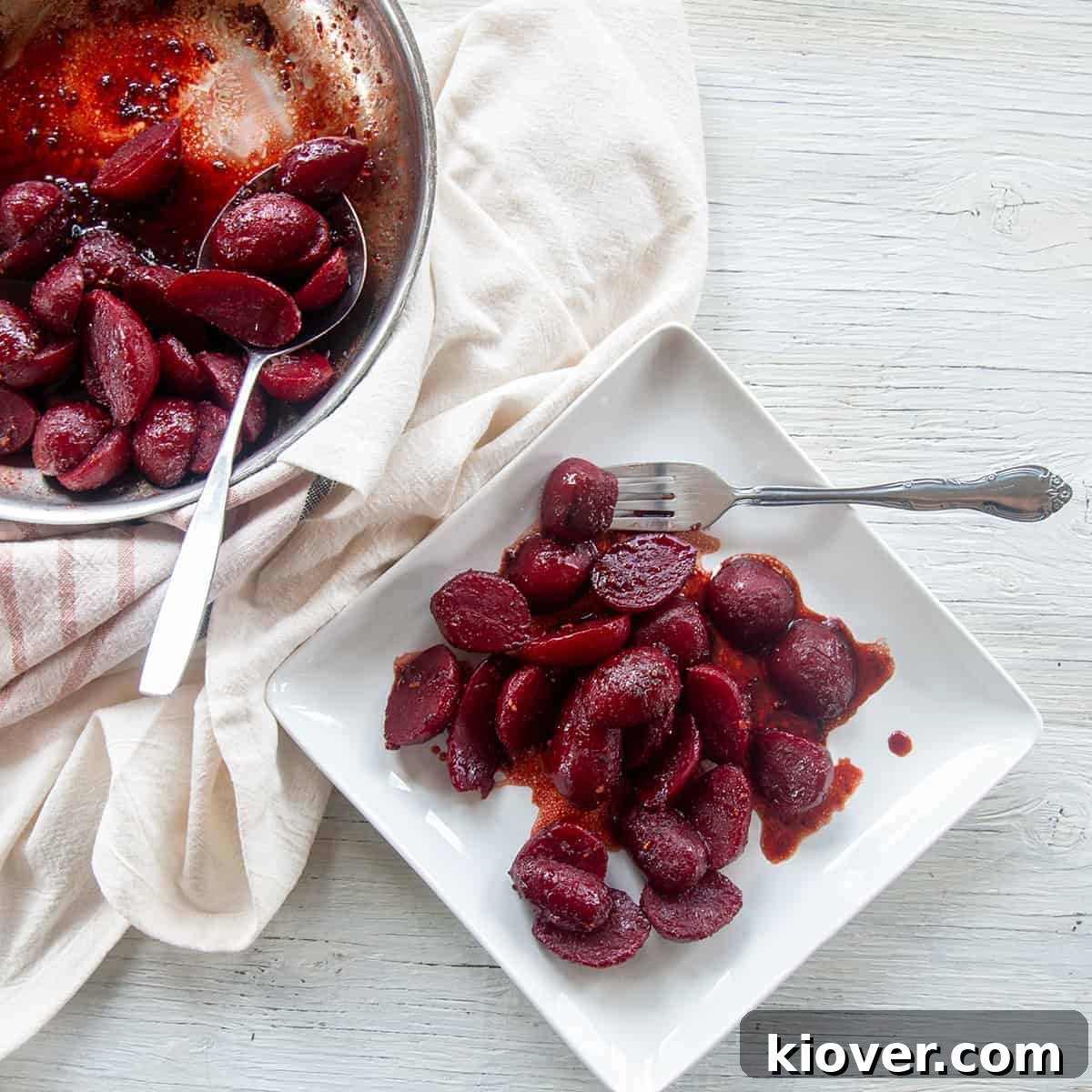
In the culinary world, some vegetables truly stand out for their vibrant color, unique flavor, and exceptional nutritional value. Beets, often overlooked, are precisely one such gem. With their earthy sweetness and striking ruby hue, beets are incredibly versatile and can transform an ordinary meal into a delightful experience. If you’ve ever wondered how to unlock the full potential of this magnificent root vegetable, look no further. Our signature Pan-Fried Beets with Balsamic Glaze recipe offers an effortlessly elegant and profoundly flavorful approach to cooking beets that will captivate your taste buds and earn a permanent spot in your recipe collection.
This recipe isn’t just easy to make and quick to prepare; it’s a celebration of simple ingredients elevated to gourmet status. Marrying the natural sweetness of beets with a rich, tangy balsamic glaze infused with fresh ginger and a touch of honey, this dish promises a symphony of flavors that is both comforting and sophisticated. It serves as a perfect side dish for any occasion, from a casual weeknight dinner to a festive holiday gathering. Get ready to rediscover beets in a way you never thought possible and impress your family and friends with this understated yet utterly delicious creation.
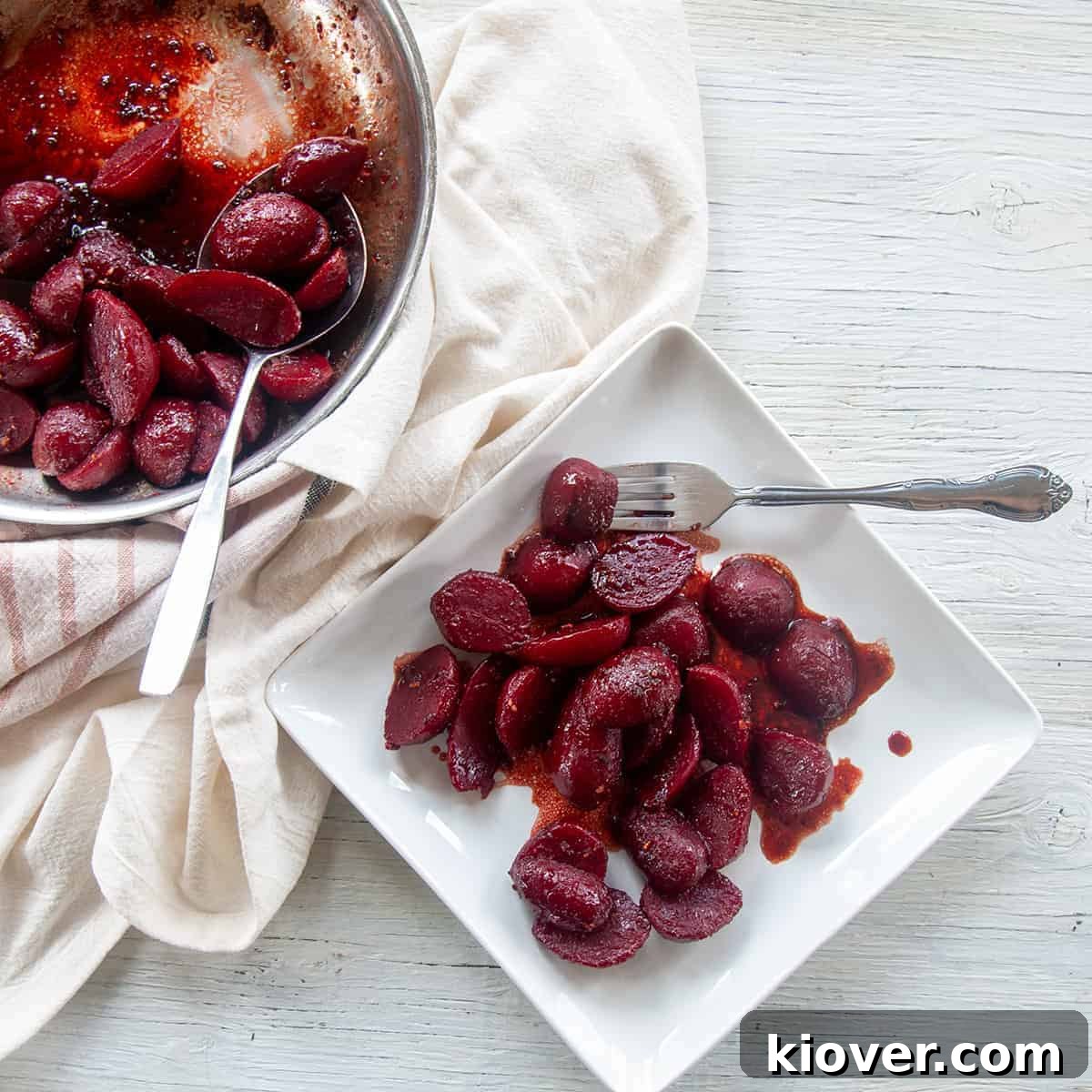
The Magic of Pan-Fried Beets with Balsamic Glaze
This recipe excels in its simplicity and the depth of flavor it achieves with minimal effort. The core of this dish involves two main components: perfectly cooked beets and a luscious balsamic glaze. We begin by preparing our exceptional ginger-infused balsamic glaze, allowing it to gently reduce over medium heat for approximately 10-15 minutes. The reduction process concentrates the flavors of the balsamic vinegar, creating a thick, syrupy consistency that will beautifully coat our beets. Freshly grated ginger is added right at the start, allowing its warm, aromatic spice to meld seamlessly with the vinegar as it reduces. Towards the end of the reduction, once the glaze has about halved in volume and reached a rich texture, a swirl of honey is introduced. This not only balances the tartness of the balsamic vinegar but also adds a lovely sweetness and further enhances the glaze’s luxurious texture.
While the glaze is slowly simmering to perfection, our attention turns to the beets. Whether you choose fresh or canned beets, the preparation for pan-frying is straightforward. If you’re working with fresh beets, a crucial pre-cooking step is necessary to ensure they are tender enough for frying and absorb the glaze wonderfully. They should be softened before they even touch the frying pan. Canned beets, on the other hand, offer a convenient shortcut, coming pre-cooked and ready for frying, making this recipe even quicker for busy evenings.
Once both components are ready – the beets nicely fried to a tender crisp and the balsamic glaze reduced to a syrupy sheen – they are combined in the frying pan. A quick toss ensures every piece of beet is thoroughly coated in the fragrant, sweet, and tangy glaze. The heat allows the flavors to meld and deepen, creating an irresistible side dish. The best part, of course, is indulging in this delightful creation. These pan-fried beets make an excellent accompaniment to a perfectly grilled steak or alongside a refreshing Rancharoni Macaroni Salad, adding a burst of color and flavor to your meal.
All About Beets: Fresh vs. Canned & Preparation Tips
Beets are nutritional powerhouses, packed with vitamins, minerals, and antioxidants. While using fresh beets often yields the most vibrant flavor and texture, this recipe is designed to be incredibly flexible, allowing you to achieve fantastic results with canned beets as well. Don’t let the availability of fresh beets deter you from trying this recipe; canned beetroots are a perfectly acceptable and highly convenient alternative, significantly cutting down on preparation time.
Working with Fresh Beets
When opting for fresh beets, proper preparation is key to achieving that tender, slightly crisp texture. Start by selecting firm, blemish-free beets with healthy greens attached (if buying them with greens). First, thoroughly wash the beets and trim off the greens and the root end. For medium to large beets, peeling is recommended, followed by quartering or cutting them into roughly golf-ball-sized pieces to ensure even cooking. Smaller beets can often be halved. The next crucial step is pre-boiling. Place the prepared beets in a large pot of medium-high boiling water and cook for about 10-15 minutes, or until you can easily pierce them with a fork, encountering just a slight resistance. This pre-boiling softens the beets, allowing them to cook faster and achieve a more desirable texture during the pan-frying stage. The final pan-fry primarily serves to heat the beets through, impart a lovely caramelization, and add a delicate crispiness to their exterior, enhancing their natural sweetness.
Embracing Canned Beets for Convenience
Canned beets are a fantastic time-saver, as they come pre-cooked, peeled, and often cut. When using canned beets, simply drain them thoroughly before adding them to your frying pan. It’s important to rinse them under cold water after draining to remove excess sodium and any canning liquid, which can sometimes impart an undesirable metallic taste. Pat them dry with a paper towel to prevent splattering and ensure better browning during frying. While fresh beets offer a slightly firmer bite, canned beets provide a wonderfully tender texture that readily absorbs the rich balsamic glaze, making them an excellent choice for a quick and easy side dish.
Crafting the Perfect Balsamic Glaze: A Sweet and Tangy Symphony
The balsamic glaze is the heart and soul of this dish, providing a complex counterpoint to the earthy sweetness of the beets. Making this glaze is surprisingly simple, yet it yields a result that tastes incredibly sophisticated. The foundation is, of course, balsamic vinegar, which, through reduction, transforms into a thick, syrupy concentrate bursting with flavor. To enhance this natural richness, we introduce fresh ginger and honey, creating a multi-layered profile of sweet, tangy, and subtly spicy notes.
The process begins by combining balsamic vinegar and freshly grated ginger in a saucepan. The mixture is then simmered over low to medium-low heat, allowing the vinegar to slowly reduce by half. This gentle simmering concentrates its sugars and acids, deepening its color and thickening its consistency. The ginger infuses the glaze with a warm, zesty aroma, adding a delightful complexity. It’s essential to monitor the reduction, stirring occasionally to prevent sticking. Once the glaze has achieved a syrupy texture, similar to maple syrup or thin honey, it’s removed from the heat. At this stage, the honey is stirred in. Adding honey at the end helps preserve its delicate flavor and ensures it doesn’t caramelize too quickly or burn during the reduction process. The honey not only sweetens the glaze but also adds another layer of depth and a beautiful sheen, making it utterly irresistible when drizzled over the pan-fried beets.
Choosing Your Balsamic Vinegar: Quality and Economy
When it comes to selecting balsamic vinegar for this recipe, remember that the quality of your vinegar will certainly impact the final flavor of the glaze. However, you don’t necessarily need to reach for the most expensive, aged varieties. I’m a strong advocate for using what you already have and what you genuinely enjoy! The market offers a wide spectrum of balsamic vinegars, ranging from economical everyday options to intensely flavorful, traditional artisan vinegars that can be quite pricey.
For a recipe like pan-fried beets where the vinegar is reduced and combined with other strong flavors like ginger and honey, a moderately priced, good-quality commercial balsamic vinegar is perfectly appropriate and will yield excellent results. These typically have a good balance of sweetness and acidity that reduces beautifully. Save your more expensive, aged balsamic vinegars (often labeled “Traditional Balsamic Vinegar” from Modena or Reggio Emilia) for drizzling over salads, cheeses, or fresh fruit, where their nuanced flavors can truly shine without being cooked down. For this dish, an everyday balsamic that you enjoy the taste of will be more than sufficient. To learn more about navigating the world of balsamic vinegar, consider exploring resources like “How to Buy Balsamic Vinegar” from reputable food publications.
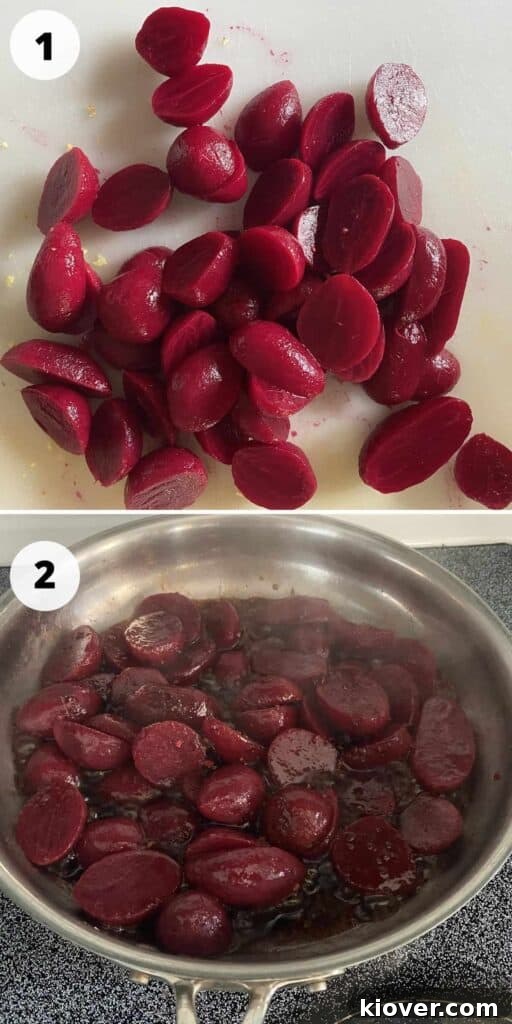
- Pre-boiled Beets Ready for Action: This image showcases our prepared beets on a cutting board, having been boiled and thoroughly drained. Notice their size – roughly golf ball dimensions. If you’re using larger beets, ensure they are quartered for even cooking.
- The Glaze Embrace: Here, the beets have been pan-fried to perfection, and we’ve just introduced the exquisite balsamic glaze. A few more minutes of gentle stirring and simmering will ensure every single beet is beautifully coated, bringing this sensational dish to its flavorful conclusion.
Tips for Success with Your Pan-Fried Beets and Balsamic Glaze
To ensure your pan-fried beets turn out absolutely perfect every time, keep these practical tips in mind:
- Beet Selection: While fresh beets offer a slightly superior texture and flavor, don’t hesitate to use canned beets for convenience. Just make sure to drain and rinse them well.
- Glaze Sweetness: Always add honey or any other sweetener to your balsamic glaze after the vinegar has significantly reduced. This prevents the sugars from burning and helps maintain the honey’s delicate flavor profile.
- Flavor & Richness: Don’t be shy with butter! For an even richer flavor and a slightly higher calorie count (if desired), increase the amount of butter used for frying the beets. Butter truly is good and contributes immensely to the dish’s overall deliciousness.
- Vinegar Choice: An economical balsamic vinegar is perfectly suitable for this recipe, as the reduction and added flavors will create a wonderful glaze. However, feel free to use your preferred brand; the most important thing is that you enjoy its taste.
- Even Cooking: Ensure your beets are cut into uniform pieces to promote even cooking and browning. This applies whether you’re boiling fresh beets or frying canned ones.
- Don’t Over-reduce the Glaze: Keep a close eye on your balsamic glaze. You want it to be syrupy, not a thick paste. It will thicken further as it cools.
- Seasoning: Don’t forget to season your beets with salt and pepper to taste before and after adding the glaze. This simple step can elevate the overall flavor significantly.
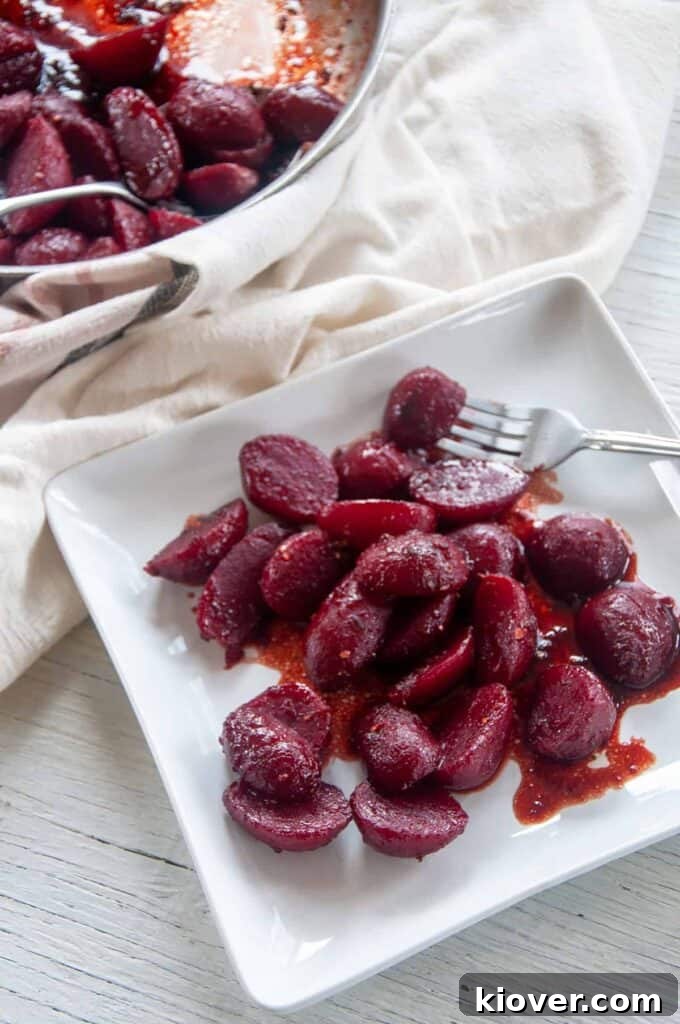
Serving Suggestions and Creative Variations
These pan-fried beets with ginger balsamic glaze are incredibly versatile and can complement a wide array of dishes. They are robust enough to stand on their own as a flavorful vegetarian main or a stellar side. Consider serving them alongside:
- Roasted Meats: They pair wonderfully with roasted chicken, pork tenderloin, or a juicy beef roast, where their tangy sweetness cuts through the richness of the meat.
- Grilled Dishes: The caramelized notes of the beets are a fantastic match for anything hot off the grill, be it steak, lamb chops, or grilled halloumi cheese.
- Seafood: For a lighter meal, these beets can be an unexpected but delicious accompaniment to pan-seared scallops or grilled salmon.
- Grain Bowls: Add them to a hearty quinoa or farro bowl with some greens and a protein for a wholesome and nutritious lunch or dinner.
- Cheese Platters: A small bowl of these glazed beets can be an intriguing addition to a cheese board, offering a sweet and tangy element.
Don’t be afraid to experiment with variations:
- Herb Infusion: Add a sprig of fresh thyme or rosemary to the balsamic reduction for an earthy herbal note.
- Spicy Kick: A pinch of red pepper flakes or a small amount of finely minced chili can add a subtle heat to the glaze.
- Citrus Brightness: A squeeze of fresh orange juice or a bit of orange zest added with the honey can brighten the flavor profile.
- Nutty Crunch: Finish the dish with a sprinkle of toasted walnuts or pecans for added texture and a nutty flavor.
- Different Sweeteners: While honey is recommended, maple syrup or brown sugar can also be used in the glaze for a slightly different sweetness.
Frequently Asked Questions & Troubleshooting
Even simple recipes can sometimes present questions. Here are some common inquiries and tips to troubleshoot your pan-fried beets:
- My glaze is too thin/thick: If your glaze is too thin after reducing, simply return it to low heat and simmer for a few more minutes, stirring constantly, until it reaches the desired consistency. If it’s too thick, you can thin it out by stirring in a tiny bit of water, vegetable broth, or even a splash more balsamic vinegar until it’s pourable.
- My fresh beets aren’t tender: This usually means they weren’t boiled long enough. Ensure they are easily pierced with a fork before frying. If they’re still firm after frying, you can add a tablespoon or two of water to the pan, cover it, and steam them gently for a few minutes until tender, then uncover and let any excess liquid evaporate.
- How to store leftovers: Leftover pan-fried beets can be stored in an airtight container in the refrigerator for up to 3-4 days.
- How to reheat: Gently reheat them in a pan over medium-low heat until warmed through, or microwave them in short bursts. Be careful not to overcook, as they can become mushy.
- Can I make this dish ahead of time? You can prepare the balsamic glaze up to a day in advance and store it in an airtight container in the refrigerator. The beets are best enjoyed fresh, but you can pre-boil fresh beets a day ahead and store them.
Essential Tools and Products for This Recipe
While you might already have most of what you need, here are a few key items that can make preparing this dish even easier:
- Saucepan: For reducing the balsamic glaze. A heavy-bottomed pan ensures even heating.
- Frying Pan: A good quality frying pan (cast iron or non-stick) is essential for pan-frying the beets to perfection.
- Balsamic Vinegar: A key ingredient for the glaze.
- Grater: For fresh ginger. A microplane grater works best for fine ginger pulp.
- Whisk or Spoon: For stirring the glaze and combining the beets.
Recipe Card: Fried Beets with Ginger Balsamic Glaze
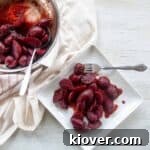
Fried Beets with Ginger Balsamic Glaze
- Author: Ben Myhre
- Prep Time: 15 minutes
- Cook Time: 25 minutes
- Total Time: 40 minutes
- Yield: 4 servings
- Category: Side Dish
- Method: Fry
- Cuisine: American
- Diet: Vegetarian
Description
A simple, healthy, and delicious side dish. If you like beets or want to give them a try, this is a perfect starting dish to learn about just how good these vegetables can be.
Ingredients
- ½ cup balsamic vinegar
- 1 Tablespoon grated ginger
- 2 Tablespoon Honey
- 2 dozen small beets, boiled and halved or a dozen medium beets quartered
- 3 Tablespoon Butter
- Salt, pepper to taste
Instructions
- Add vinegar and ginger to a saucepan and cook on low until reduced by 1/2, about 10-15 minutes.
- Stir in honey and set sauce aside.
- Melt butter in a frying pan at medium-high heat.
- Add beets and fry for approximately 5 minutes, stirring occasionally, until slightly caramelized and heated through.
- Add sauce to the frying pan with the beets and mix well, ensuring all beets are coated. Cook for 1-2 minutes until sauce is heated and clings to the beets.
- Remove from heat and serve immediately.
Notes
- Use fresh beets if you can, but canned beets work well too; just drain and rinse thoroughly.
- Only add honey at the end of reducing your balsamic vinegar to prevent burning and preserve flavor.
- For more calories and richer flavor, consider using a bit more butter during frying.
- An economical balsamic vinegar is perfectly suitable for this dish, but always use what you like best!
Nutrition
- Serving Size: 1/4 full recipe
- Calories: 233
- Sugar: 30 g
- Sodium: 652 mg
- Fat: 9 g
- Saturated Fat: 5 g
- Unsaturated Fat: 4 g
- Trans Fat: 0 g
- Carbohydrates: 36 g
- Fiber: 3 g
- Protein: 0 g
- Cholesterol: 23 mg
Share Your Culinary Creations!
We absolutely love seeing what you create in your kitchen! If you’ve given our Pan-Fried Beets with Ginger Balsamic Glaze a try, we’d be thrilled to hear about your experience. Your feedback helps us grow and inspires other home cooks.
Please take a moment to share your thoughts and rate this recipe in the comment section below. Did you make any exciting variations? How did your family enjoy it? We’re eager to know!
Don’t forget to spread the word! Share this delicious recipe with your friends and family on Facebook and Pinterest. Not only does this help others discover a wonderful new side dish, but it also allows you to save it for future use. And if you want to stay up-to-date with all our latest recipes and culinary adventures, consider subscribing to our email newsletter. We send out updates whenever a new post is published, ensuring you never miss out on fresh inspiration.