
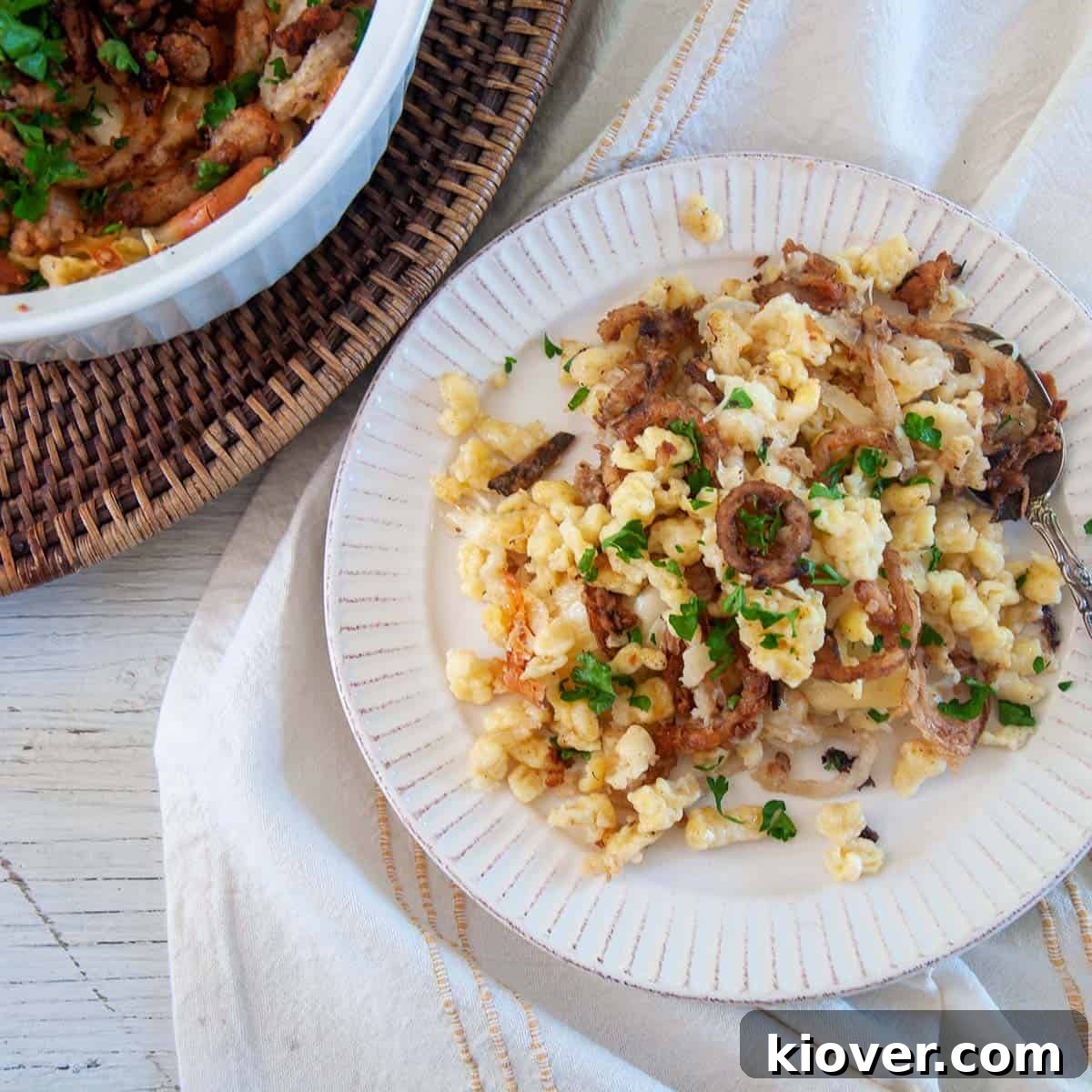
Ever found yourself craving a dish that’s more than just food – something that feels like a warm embrace from a bygone era? Look no further than Käsespätzle, Germany’s beloved answer to comfort food. This iconic dish masterfully combines soft, chewy spaetzle dumplings with a luscious blend of melted cheeses and a generous topping of golden, crispy fried onions, creating an unforgettable culinary experience that truly warms the soul.
Whether it graces your holiday table as a hearty centerpiece or elevates a simple weeknight dinner, this German Cheesy Spaetzle promises to delight every palate. Prepare to dive into a symphony of textures and flavors, and let’s embark on this delicious journey together with my authentic Käsespätzle recipe. It’s not just a meal; it’s a taste of tradition, a celebration of simple ingredients transformed into something extraordinary.
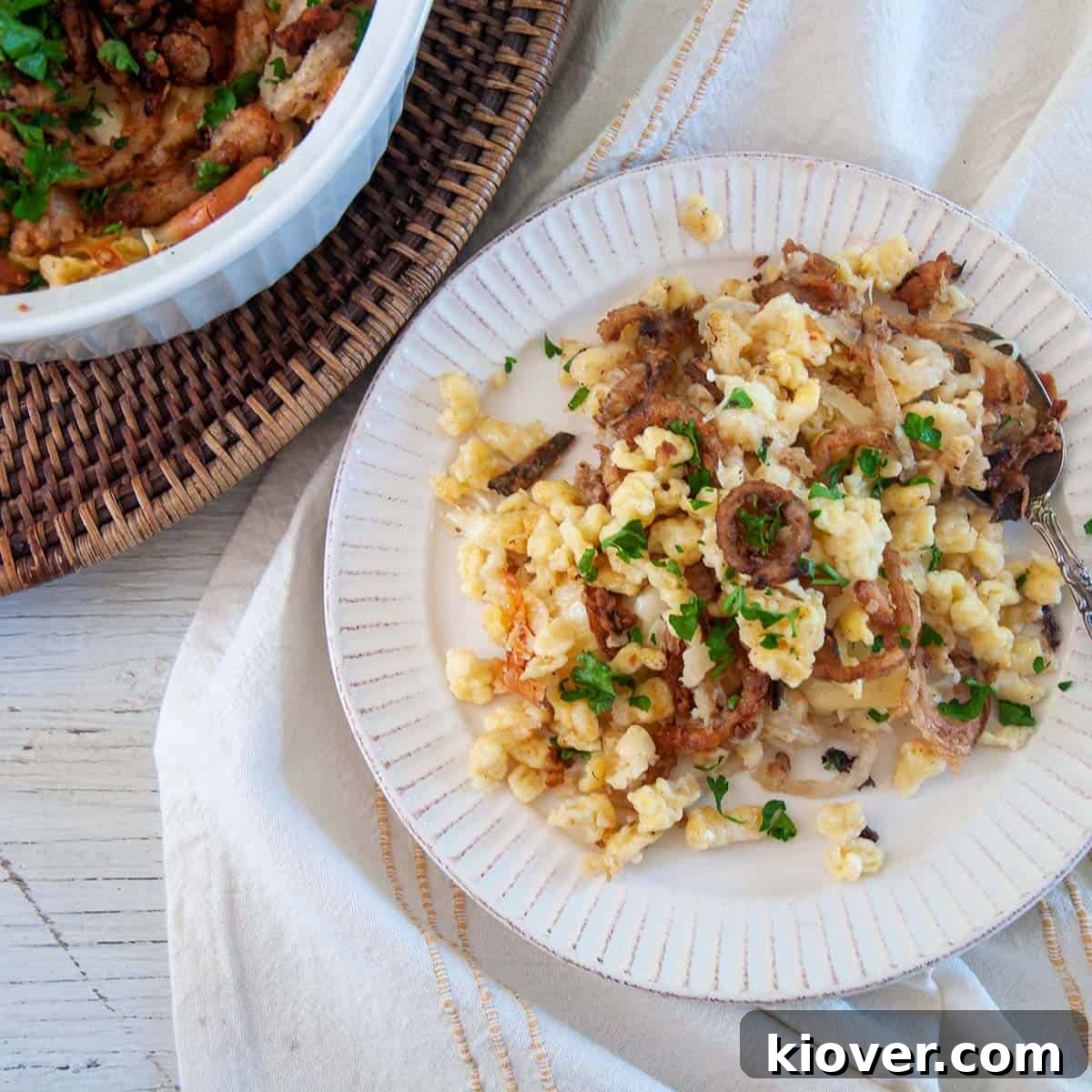
🧀 The Unmistakable Charm of This Käsespätzle Recipe
In a world brimming with diverse culinary options, you might wonder, “Why Käsespätzle?” The enduring appeal of this dish lies not only in its delightful taste but also in its deep-rooted authenticity and the joy it brings. When you prepare this recipe, you’re not just cooking; you’re engaging in a time-honored tradition, recreating a dish cherished through generations.
The heart of our Käsespätzle is the homemade spaetzle. Unlike mass-produced pasta, our traditional German spaetzle recipe yields fresh, tender dumplings with a rustic charm reminiscent of the loving care our grandmothers poured into their cooking. Each bite of these irregularly shaped, yet perfectly textured, dumplings offers a comforting chewiness that forms the ideal foundation for the layers of flavor to come. While making spaetzle from scratch does involve a few extra steps, the unparalleled freshness and superior texture make every effort worthwhile, transforming a simple meal into an artisanal delight.
Then, there’s the cheese – oh, the cheese! We elevate this classic with a carefully chosen duo: Swiss and Smoked Gouda. This combination is nothing short of a culinary symphony. Swiss cheese brings a nutty, mild creaminess that melts beautifully, creating those irresistible gooey strands. Smoked Gouda, on the other hand, introduces a complex, subtly smoky depth that adds sophistication and a delightful counterpoint to the Swiss. Together, they create a rich, velvety cheese sauce that clings perfectly to every spaetzle dumpling, offering a flavor profile that is both familiar and excitingly unique.
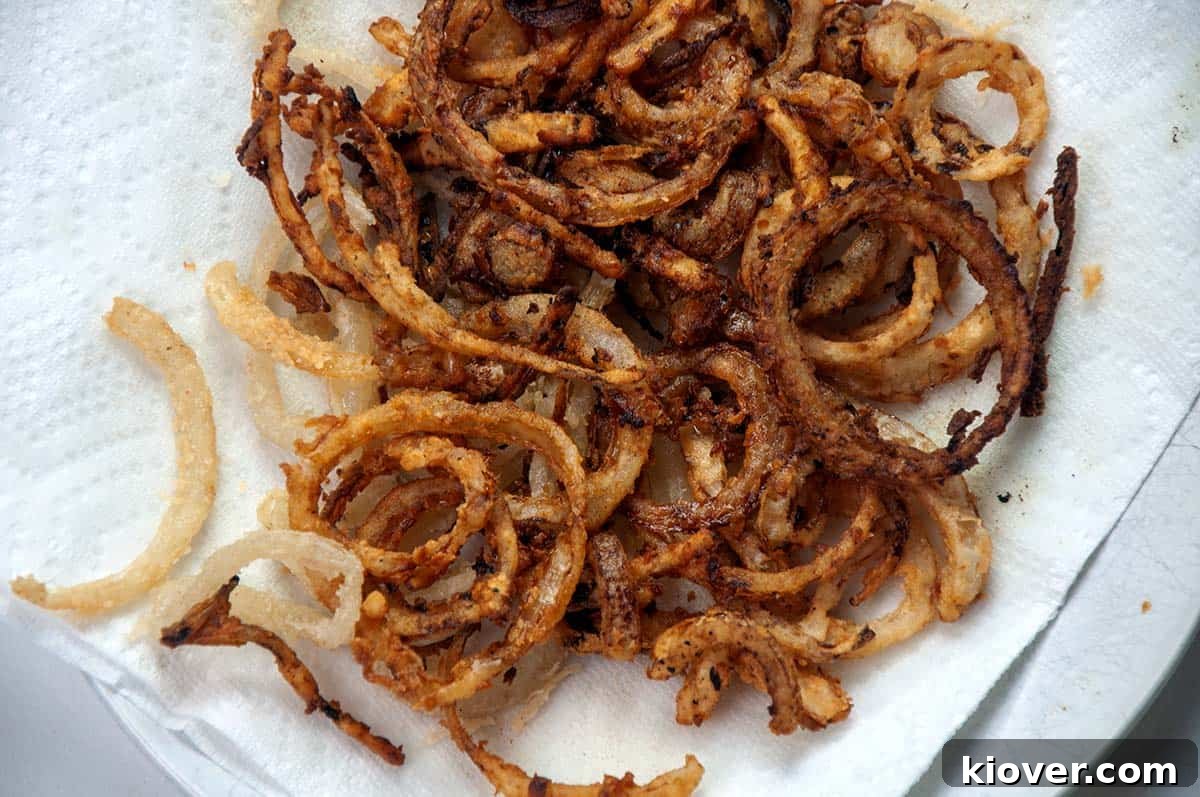
And let’s not overlook the star of the topping: the crispy fried onions. These aren’t merely a garnish; they are the essential crowning glory, the crispy, golden layer that provides a crucial textural contrast and a sweet, savory bite. Their slight crunch against the soft spaetzle and gooey cheese is what truly completes the Käsespätzle experience, adding an element of delight that ties all the components together. It’s this meticulous combination of fresh, homemade dumplings, a rich, flavorful cheese blend, and perfectly crispy onions that transcends the ordinary, making this recipe truly magical.
My German heritage inspires many of my favorite dishes. If you enjoy the comforting flavors of Käsespätzle, I invite you to explore other traditional recipes. For instance, my Knoephla soup, featuring a dumpling closely related to spaetzle, offers another heartwarming experience. Käsespätzle also makes an exquisite side dish, pairing wonderfully with robust main courses such as this savory Rouladen recipe or an Easy Pork Schnitzel recipe. We truly love German cuisine for its hearty, flavorful, and deeply satisfying dishes.
Table of Contents
- 🧀 The Unmistakable Charm of This Käsespätzle Recipe
- 🧅 Essential Ingredients for Authentic Käsespätzle
- 🍲 Step-by-Step Instructions for Perfect Käsespätzle
- 🤷 Creative Substitutions and Flavor Variations
- 📦 Storing and Reheating Your Käsespätzle
- 🎓 A Brief History of Käsespätzle
- ❓ Frequently Asked Questions About Käsespätzle
- 📝 Pro Tips and Tricks for Käsespätzle Success
- 🛠 Recommended Products for This Recipe
- 😋 Share Your Käsespätzle Creation!
- Käsespätzle – German Cheesy Spaetzle Recipe
🧅 Essential Ingredients for Authentic Käsespätzle
While spaetzle forms the very foundation of this heartwarming dish, the magic truly comes alive with a careful selection of accompanying ingredients. Each component plays a vital role in building the robust, comforting flavors that Käsespätzle is celebrated for. Here’s what you’ll need to gather:
- Spaetzle: The star of the show. We highly recommend using homemade spaetzle for the best texture and flavor. You can find our detailed Spaetzle recipe here. If time is a constraint, good quality store-bought spaetzle can be used, but homemade truly elevates the dish.
- Salt: Essential for seasoning both the spaetzle and the fried onions, enhancing all the flavors.
- Black Pepper: Adds a subtle warmth and depth to the cheesy dumplings.
- Cayenne Pepper: A small pinch provides a delightful, barely-there kick, balancing the richness of the cheese without making the dish overtly spicy.
- Swiss Cheese: Chosen for its nutty, mild flavor and excellent melting properties, creating a gooey, satisfying cheese layer.
- Smoked Gouda Cheese: Adds a distinctive smoky aroma and a deeper, more complex flavor profile that beautifully complements the Swiss.
- Fresh Parsley: (Optional, for garnish) A sprinkle of fresh, chopped parsley adds a touch of color and a fresh, herbaceous note.
- Medium Onion: Thinly sliced, these onions will be transformed into the irresistible crispy topping that defines Käsespätzle.
- All-purpose Flour: Used to lightly coat the onions before frying, ensuring they achieve that perfect golden crispness.
- Oil for Frying: A neutral-flavored oil with a high smoke point, such as vegetable, canola, or grapeseed oil, is needed to fry the onions to perfection.
Refer to the recipe card below for precise quantities and measurements to ensure your Käsespätzle is perfectly balanced and delicious.
🍲 Step-by-Step Instructions for Perfect Käsespätzle
Creating this delightful German comfort food is a rewarding experience, blending simple steps into a rich, satisfying dish. We’ll start by preparing the essential crispy fried onions, then move on to assembling and baking our cheesy spaetzle masterpiece.
Part 1: Crafting the Crispy Fried Onions
The fried onions are a critical component, providing that essential textural contrast and savory sweetness. They can also be prepared in advance, making meal prep a breeze.
- Prepare the Flour Mixture: Begin by combining 1/2 cup of all-purpose flour and 1/2 teaspoon of salt in a large bowl. For convenience, you can also use a sealable plastic bag for easy coating.
- Rinse and Coat Onions: Take your thinly sliced medium onion and give it a quick rinse under cold water in a strainer. This helps to separate the rings and removes excess starch. Once rinsed, transfer the damp onion slices into your flour mixture. Cover the bowl (or seal the bag) and shake vigorously to ensure every slice is evenly coated with the flour and salt mixture. This light coating is key to achieving their signature crispiness.
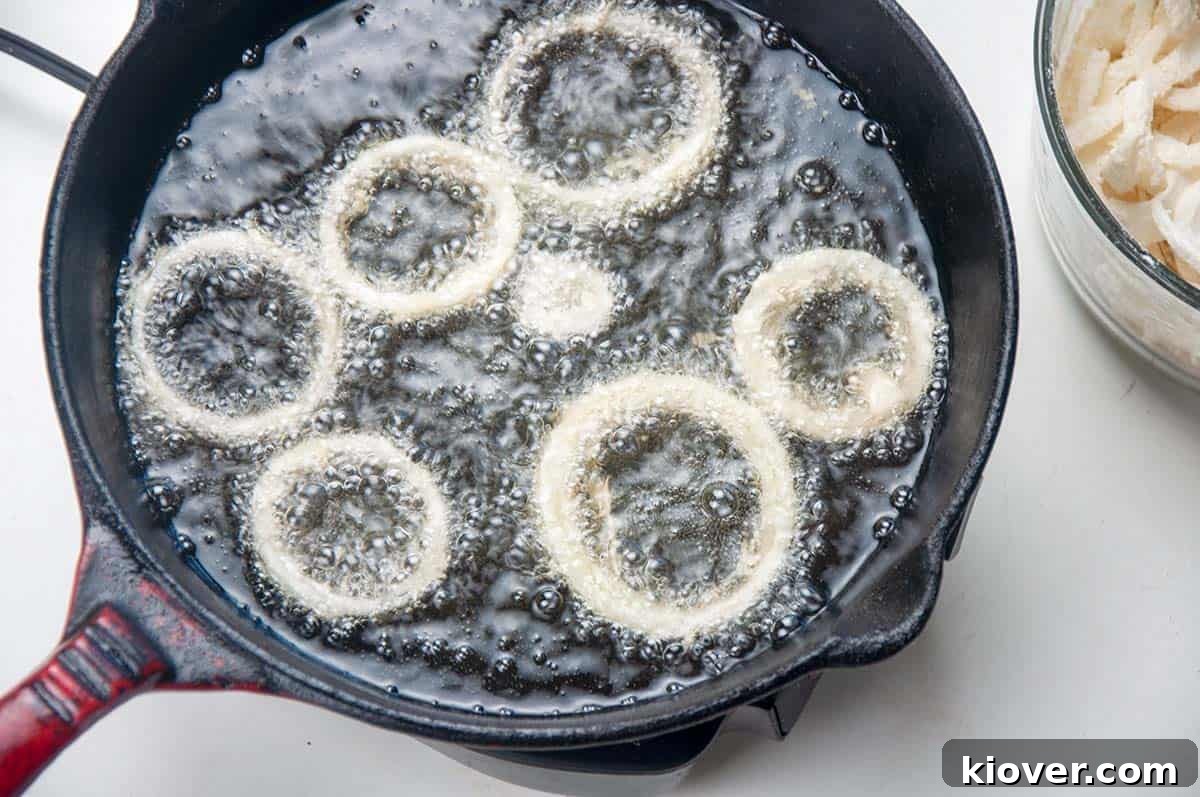
- Heat the Frying Oil: Pour about 1 cup of oil into a sturdy pan or skillet. A cast iron skillet is highly recommended for its even heat distribution, which is ideal for frying. Heat the oil over medium-high heat until it reaches approximately 350-375°F (175-190°C). If you don’t have a thermometer, you can test a small piece of onion; it should sizzle immediately.
- Fry the Onions in Batches: Carefully add the flour-coated onions to the hot oil in small batches. Avoid overcrowding the pan, as this can lower the oil temperature and result in soggy, rather than crispy, onions. Fry for about 45 seconds per side, watching closely for a beautiful golden-brown color. Use metal tongs to flip them gently.
- Drain and Store: Once crispy and golden, remove the fried onions with a slotted spoon and place them on a plate lined with paper towels to drain any excess oil. If you’re not using them immediately, allow them to cool completely, then transfer them to an airtight container and store in the refrigerator. They’ll maintain their crispness and flavor, ready for their grand entrance later.
Part 2: Assembling and Baking Your Käsespätzle
Now, for the main event – transforming your homemade spaetzle, creamy cheese, and crispy onions into a baked delight!
- Preheat Oven: Begin by preheating your oven to 375°F (190°C). This ensures the dish bakes evenly and the cheese melts perfectly.
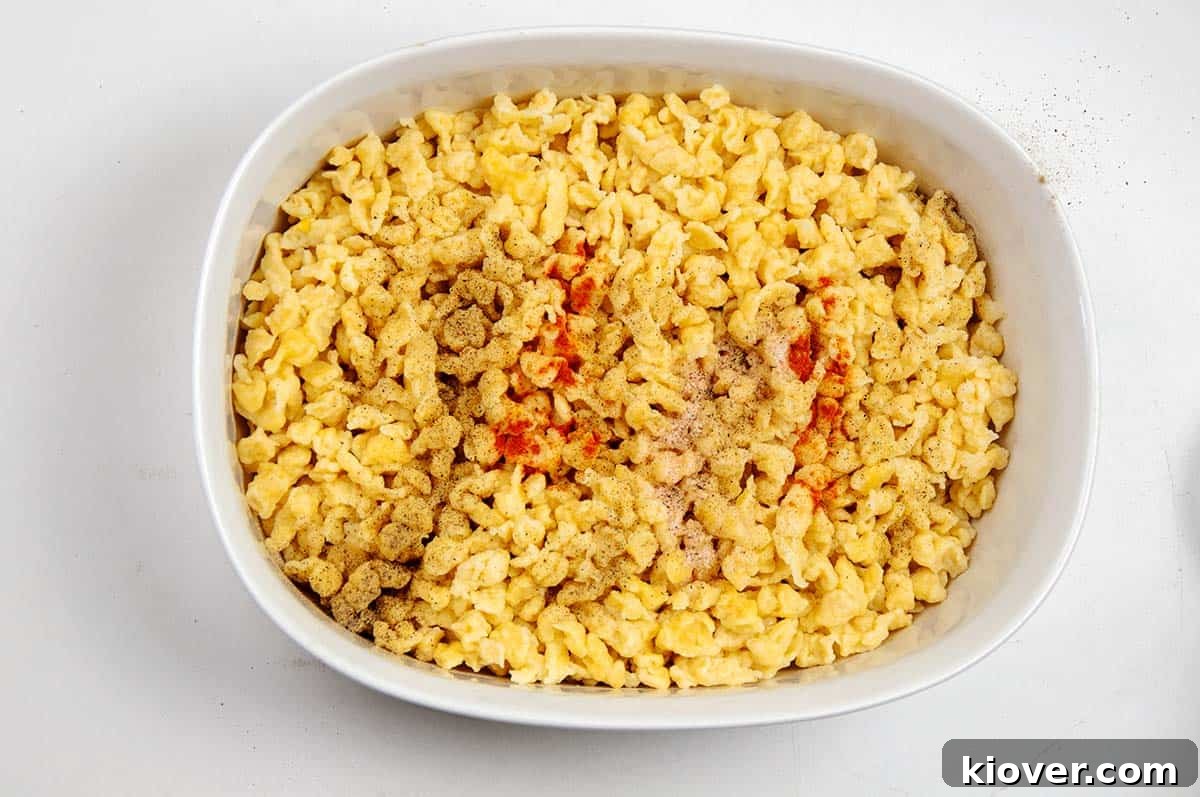
- Season the Spaetzle: In a large mixing bowl, gently toss your cooked spaetzle with ½ teaspoon of salt, ¼ teaspoon of black pepper, and a subtle ⅛ teaspoon of cayenne pepper. This seasoning provides a foundational flavor that complements the richness of the cheese.
- Prepare the Cheese Blend: In a separate bowl, combine your grated 4 ounces of Swiss Cheese and 4 ounces of Smoked Gouda Cheese. Mix them thoroughly to ensure an even distribution in your dish.
- First Layer of Spaetzle: Take half of your seasoned spaetzle and spread it evenly across the bottom of a large, oven-safe casserole dish. Think of this as the comforting base of your cheesy creation.
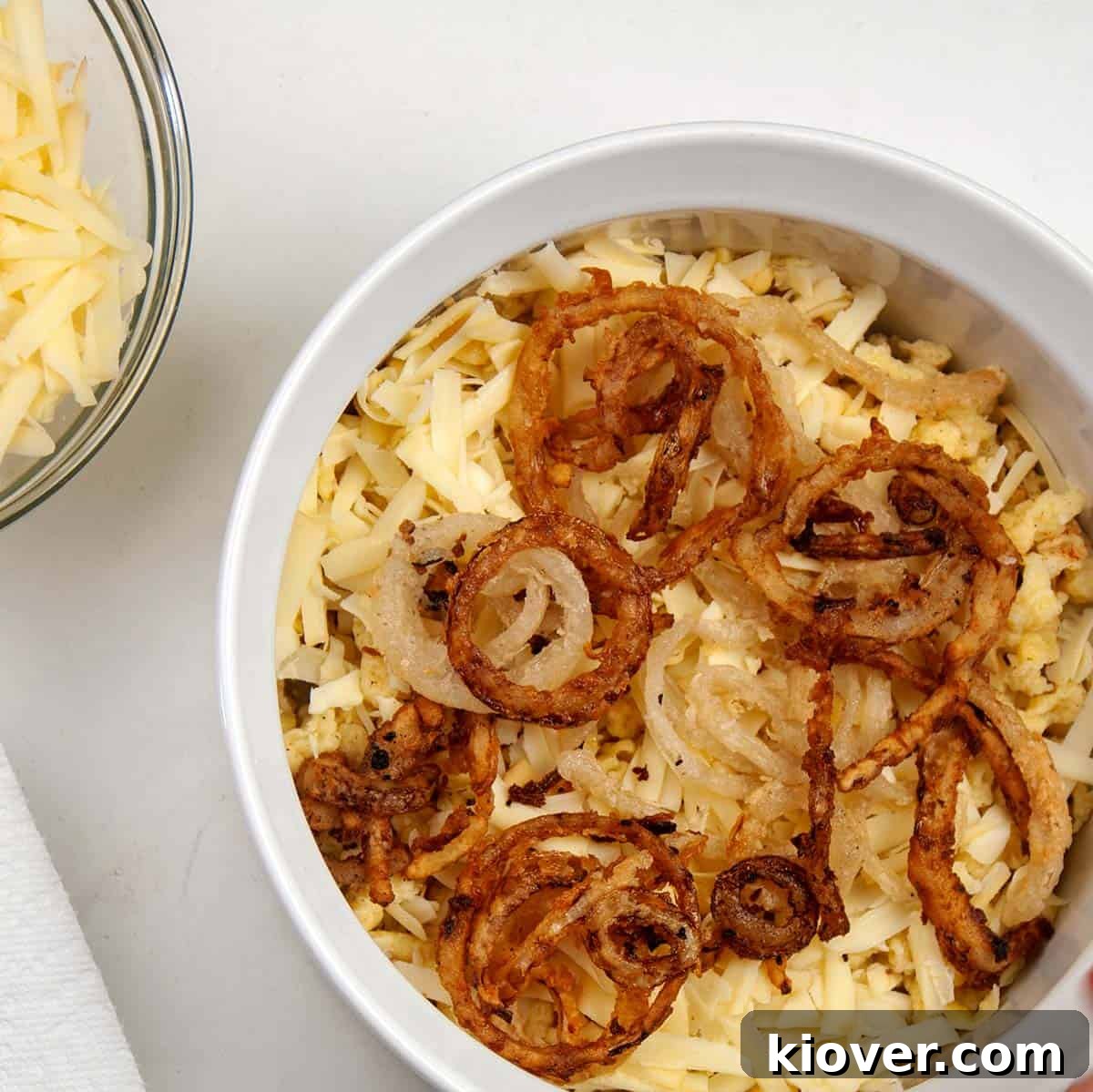
- Add First Cheese Layer: Sprinkle half of your mixed Swiss and Smoked Gouda cheese blend generously over the spaetzle layer.
- Introduce Fried Onions: Next, distribute half of your perfectly crispy fried onions over the cheese. This layer is crucial for both flavor and texture.
- Repeat Layers: Place the remaining seasoned spaetzle over the onion layer. Follow this with the rest of the cheese blend, ensuring every dumpling is covered. Finally, top with the remaining crispy fried onions, creating a beautiful golden crown.
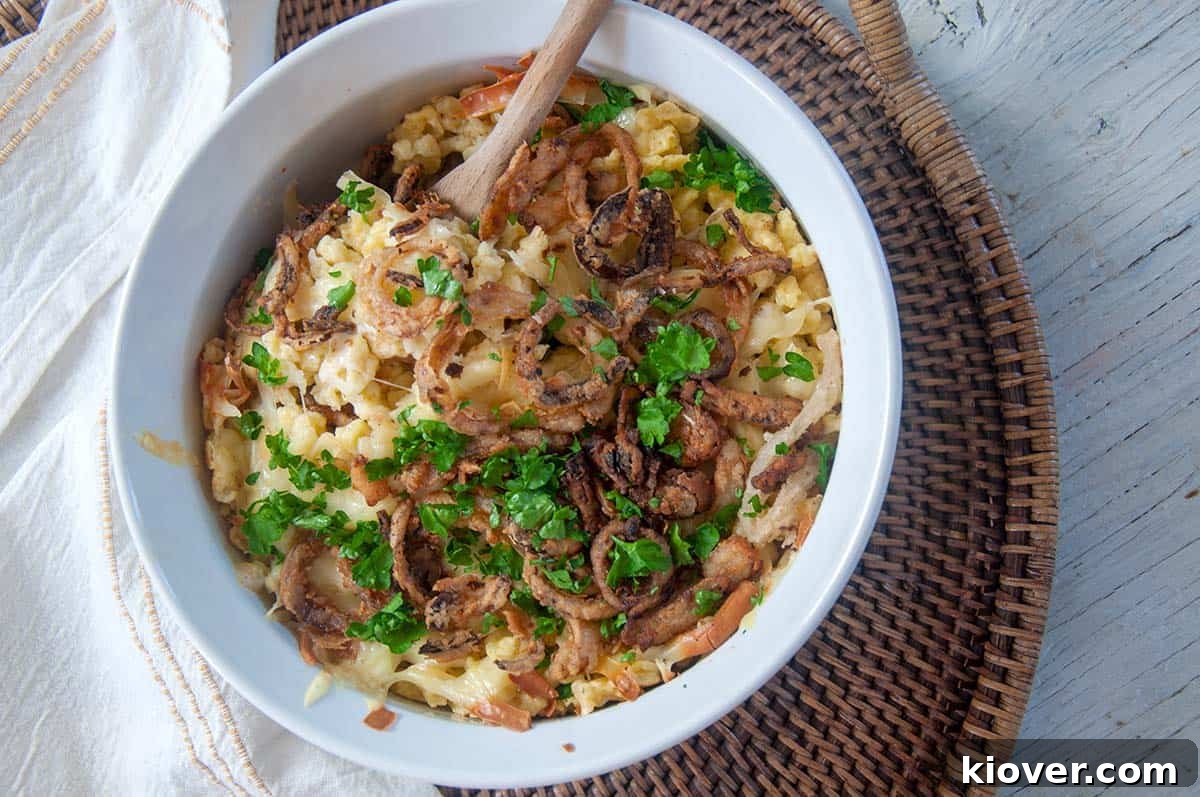
- Bake to Perfection: Carefully place your assembled Käsespätzle into the preheated oven. Bake for approximately 30 minutes, or until the cheese is bubbling, melted, and beautifully golden brown, and the dish is heated through.
- Serve Immediately: Once baked, remove the dish from the oven. Allow it to cool for a few minutes before serving. Garnish with fresh parsley if desired. Serve warm and watch the magic unfold as everyone savors this comforting German classic!
🤷 Creative Substitutions and Flavor Variations for Käsespätzle
While our traditional Käsespätzle recipe is a timeless classic, the beauty of cooking lies in personalization. Feel free to unleash your culinary creativity and adapt this comforting dish to your taste preferences. After all, food is a shared experience, but how we customize it is where the real fun begins!
1. Add a Touch of Savory Crunch with Bacon
For those who adore a meaty, salty kick, crispy bacon bits are an absolute game-changer. Simply cook a few slices of bacon until perfectly crisp, crumble them, and sprinkle them over the top alongside the fried onions, or even between the layers of spaetzle and cheese. The smoky, savory crunch of bacon introduces an unbeatable umami depth that perfectly complements the rich cheese and tender dumplings.
2. Explore a World of Cheesy Delights
While our blend of Swiss and Smoked Gouda is divine, the realm of cheese offers endless possibilities. Don’t hesitate to experiment to find your personal “cheese soulmate” for Käsespätzle:
- For a Spicy Kick: Introduce a shredded pepper jack cheese for a vibrant, piquant flavor that adds a pleasant warmth.
- For Ultimate Creaminess: Cheddar cheese, especially a sharp or extra-sharp variety, melts into a wonderfully rich and creamy texture that’s universally loved.
- For Traditional Authenticity: Emmental (the classic Swiss cheese often used in German cooking) or Gruyère (a firm, salty, and nutty Swiss cheese) are excellent choices for a more traditional Swabian flavor profile.
- For a Tangy Note: Provolone or Fontina can offer a milder, slightly tangy creaminess.
Mixing and matching different cheeses allows you to create your own unique cheesy symphony, adjusting the flavor intensity and melt factor to your liking.
3. Infuse Herbal Magic
For those with a penchant for fresh herbs, or simply a desire to add an aromatic dimension, herbs can elevate your Käsespätzle to new heights. While I’m partial to the earthy notes of thyme, consider these fragrant additions:
- Rosemary: A robust herb that pairs wonderfully with savory dishes, offering a piney, slightly peppery aroma.
- Oregano: Provides a classic, pungent Mediterranean flavor that can add an interesting twist.
- Chives: For a milder, oniony freshness, chives can be sprinkled on top as a garnish or mixed into the spaetzle.
- Nutmeg: A pinch of freshly grated nutmeg, especially when mixed with the cheese, is a traditional German secret for enhancing creamy, cheesy dishes.
Each herb adds its unique whisper of flavor, transforming the dish with minimal effort. Experiment with a small amount first to discover your favorite herbal enhancement.
4. Add Vegetables for Extra Nutrition and Flavor
To make Käsespätzle even heartier or to sneak in some extra vegetables, consider sautéing some thinly sliced mushrooms, spinach, or caramelized onions (in addition to the crispy ones) and mixing them into the spaetzle layers. This adds both flavor and nutritional value.
These variations demonstrate how versatile Käsespätzle can be, allowing you to tailor this German classic to your individual tastes and dietary preferences while maintaining its comforting essence.
📦 Storing and Reheating Your Käsespätzle
So, you’ve indulged in this incredible Käsespätzle, and by some stroke of luck, there are leftovers! The good news is that storing and reheating this dish is straightforward, ensuring you can enjoy its comforting flavors again.
Storing Leftovers
To keep your leftover Käsespätzle fresh and delicious, allow the dish to cool down to room temperature completely before storing. This is important to prevent condensation, which can make the dish soggy. Once cooled, transfer the Käsespätzle into an airtight container. Properly stored, it will remain fresh and tasty in the refrigerator for approximately 1-2 days.
Pro Tip for Onions: If you made extra crispy fried onions and didn’t use them all, or if you anticipate having leftovers, it’s best to store any remaining crispy onions separately in their own airtight container. This helps them maintain their crunch. If stored with the cheesy spaetzle, they tend to lose their crispness and become soft.
Reheating Käsespätzle
When you’re ready to savor your Käsespätzle again, there are a couple of excellent reheating methods:
- Microwave: For a quick reheat, place a single serving in a microwave-safe dish. Heat on medium power for 1-2 minutes, stirring halfway through, until thoroughly warmed. Be careful not to overheat, as this can make the spaetzle tough.
- Oven: For the best results, especially if you want to restore some crispness to the dish and the onions (if stored separately and added back on top), reheat in the oven. Preheat your oven to 300°F (150°C). Transfer the Käsespätzle to an oven-safe dish, cover loosely with foil to prevent drying out, and bake for 15-20 minutes. Remove the foil for the last 5 minutes if you wish for a slightly crispier top. If you have reserved crispy onions, sprinkle them on top during the last few minutes of reheating for maximum crunch.
While reheated Käsespätzle is still wonderfully comforting, remember that it generally tastes best when freshly made. Aim to enjoy your leftovers within the recommended timeframe for the best quality and flavor. Happy eating!
🎓 A Brief History of Käsespätzle: A German Culinary Journey
Käsespätzle, a dish often affectionately referred to as the German equivalent of macaroni and cheese, carries with it a rich history rooted in the humble kitchens of Southern Germany, particularly the Swabian region. Its origins are a testament to resourcefulness and the timeless human desire for warm, satisfying sustenance.
Imagine old-time Germany, where daily life was often demanding, and folks needed hearty, energy-rich meals to sustain them after long days of labor. In this environment, simple, readily available ingredients were king. Farmers and villagers combined flour, eggs, and water to create tiny, irregular dumplings – the earliest form of spaetzle. The name “spaetzle” itself is thought to derive from “Spatz,” the German word for sparrow, perhaps due to the dumplings’ small, irregular shape resembling little birds or bird’s nests.
The addition of cheese to these dumplings was a natural evolution. Cheese was a common and valuable foodstuff, providing protein and fat. The combination of freshly made spaetzle with melted cheese quickly became a local favorite, known as “Käsespätzle” (literally “cheese spaetzle”). This dish became a staple because it was not only incredibly delicious but also remarkably filling and affordable, utilizing ingredients that were almost always on hand.
Over time, the recipe evolved, with regional variations emerging. The iconic crispy fried onions, for example, became a popular and defining addition, providing a crucial textural contrast and a layer of sweet, savory depth that elevated the dish beyond simple noodles and cheese. These fried onions are particularly characteristic of the Swabian style of Käsespätzle, cementing its reputation as a true comfort food masterpiece.
Today, Käsespätzle is more than just a dish; it’s a culinary symbol of home, tradition, and shared joy. It reminds us of the power of simple ingredients to create profound comfort and the enduring legacy of food that transcends generations and borders. From the rustic farmhouses of Swabia to tables around the world, Käsespätzle continues to be cherished, connecting people through its warm embrace and rich history.
❓ Frequently Asked Questions About Käsespätzle
Käsespätzle is a quintessential traditional German dish, often likened to Germany’s very own version of macaroni and cheese. It features deliciously soft, irregular spaetzle dumplings, lovingly layered and baked with melted cheese, and characteristically topped with crispy, golden-fried onions. It’s a hearty, comforting, and deeply satisfying meal.
For non-German speakers, it might seem like a bit of a linguistic puzzle, but it’s pronounced “KAY-zuh-SPAYT-zluh.” Practice it a few times, and you’ll get the hang of it!
Traditionally, especially in the Swabian region where it originates, a German cheese like Emmental (a type of Swiss cheese) is favored. However, many modern recipes, including ours, use a delightful blend like Swiss and Smoked Gouda to introduce more complex flavors. Feel absolutely free to get creative with your cheese choices – Gruyère, cheddar, or even a blend of several kinds can work wonderfully!
Absolutely! While homemade spaetzle offers a unique freshness and superior texture that truly elevates the dish, good quality store-bought versions are a fantastic time-saver. They work perfectly well in a pinch and still yield a delicious Käsespätzle.
Käsespätzle is incredibly versatile and can be enjoyed both ways! It’s hearty enough to serve as a satisfying main course on its own, perhaps with a simple green salad. Alternatively, it makes a rich and flavorful side dish, pairing exceptionally well with traditional German meats like schnitzel, bratwurst, or roasted pork.
Yes, generally, Käsespätzle is a vegetarian-friendly dish. Its core ingredients—spaetzle (flour, eggs, water), cheese, and onions—are all vegetarian. However, it’s always wise to double-check if any specific toppings or variations are added (such as bacon, which is a popular addition) to ensure it aligns with vegetarian dietary requirements.
The most common mistakes include overcooking the spaetzle (making them gummy), overcrowding the pan when frying onions (leading to soggy results), or not using enough cheese. Follow the recipe steps carefully for best results!
You can certainly prepare components ahead! The spaetzle can be cooked and kept in the fridge (tossed with a little olive oil to prevent sticking), and the crispy fried onions can be made days in advance. You can even assemble the entire dish a few hours before baking and keep it covered in the refrigerator, then bake just before serving. However, for the freshest taste and best texture, final baking close to serving time is recommended.
📝 Pro Tips and Tricks for Käsespätzle Success
Achieving the perfect Käsespätzle is easier than you think, especially with a few insider tips and tricks. These pointers will help you master this comforting German classic, ensuring delicious results every time:
- Homemade Spaetzle is King: While store-bought spaetzle is convenient, for the absolute best taste and texture, try my detailed Spaetzle recipe. The fresh, slightly chewy dumplings truly elevate the dish. You might find quality store-bought spaetzle at larger grocers or specialty German food stores if you’re short on time.
- Prevent Sticky Spaetzle: If you plan to make your spaetzle ahead of time, a great trick to prevent it from clumping together is to toss the freshly cooked and drained spaetzle with about a teaspoon of olive oil. This light coating helps keep the individual dumplings separate and ready for layering.
- Embrace Crispy Onions (Homemade or Store-Bought): The crispy fried onions are a signature component, offering a crucial textural contrast. While frying your own onions provides superior flavor and crispness, good quality store-bought fried onions (like French’s brand) can be a fantastic shortcut, especially on busy days.
- Prep Onions in Advance: For ultimate convenience, prepare your crispy fried onions a day or two beforehand. Once fried and cooled, store them in a covered, airtight container in the refrigerator. This allows you to quickly assemble the Käsespätzle when you’re ready to bake.
- Experiment with Cheese: Don’t be afraid to customize your cheese blend! While Swiss and Smoked Gouda offer a wonderful balance, consider adding different cheeses for unique flavor profiles. Gruyère provides a rich nuttiness, sharp cheddar adds tang, or even a touch of Emmental for a truly traditional Swabian twist.
- Flavor Boosters: Elevate your Käsespätzle with additional ingredients. Crispy bacon bits can add a savory, smoky dimension. Fresh herbs like thyme, rosemary, or chives can introduce aromatic freshness. A pinch of freshly grated nutmeg stirred into the cheese mixture is also a traditional German secret that enhances the creamy flavors.
- Optimal Reheating: Käsespätzle makes delicious leftovers! It keeps well in an airtight container in the refrigerator for about a day. For reheating, the oven is best for restoring texture. Cover with foil to heat through, then remove the foil for the last few minutes to crisp up the top layer and any added fresh crispy onions.
- Avoid Overcrowding the Pan: When frying onions, always work in batches. Overcrowding cools the oil, leading to soggy, greasy onions rather than light, crispy ones. Patience here pays off!
- Grating Cheese Fresh: Whenever possible, grate your cheese fresh from the block. Pre-shredded cheeses often contain anti-caking agents that can affect how smoothly they melt and the overall creaminess of your dish.
By keeping these tips in mind, you’ll be well on your way to creating a Käsespätzle that is not only authentically delicious but also perfectly tailored to your liking.
🛠 Recommended Products for This Recipe
To help you create the most authentic and delicious Käsespätzle, here are some products that can aid in your cooking process, whether you’re making everything from scratch or looking for convenient shortcuts:
- Spaetzle Maker: For those who wish to make fresh spaetzle, a dedicated spaetzle maker or press will make the process much easier and yield perfectly shaped dumplings. However, you can also use a colander with large holes or a cutting board with a knife.
- Store-Bought Spaetzle: If you’re opting for convenience, look for high-quality store-bought spaetzle. Many brands offer dry or fresh options that work well.
- Cast Iron Skillet: Essential for frying the onions evenly and achieving that perfect golden crisp. A good cast iron skillet is a versatile tool for any kitchen.
- Store-Bought Fried Onions: As an alternative to frying your own, French’s Crispy Fried Onions are a popular and readily available option that provides a similar crunch.
- Casserole Dish: A sturdy and attractive casserole dish is needed for baking your Käsespätzle. A 2 ½ quart Corningware casserole dish is an ideal size for this recipe, perfect for presenting your finished dish at the table.
- Box Grater: For grating the Swiss and Smoked Gouda cheese, a box grater makes the job quick and easy, ensuring the cheese melts smoothly.
😋 Share Your Käsespätzle Creation!
That is absolutely wonderful! Thank you so much for choosing to give this Käsespätzle recipe a try. It brings me immense joy to know that you’re experiencing a taste of German tradition in your own kitchen.
If you enjoyed making and tasting this comforting dish, please consider leaving a rating and comment in the section below. Your feedback is incredibly valuable – it helps me understand what works best and guides other home cooks in their decision to try this recipe. Your insights contribute to a vibrant community of food lovers!
And don’t forget to share your culinary success! Snap a photo of your beautiful Käsespätzle and share it on Pinterest. You can also sign up for my newsletter to receive regular updates, new recipes, and more cooking tips straight to your inbox.
Most of all, thank you for visiting Ramshackle Pantry. I hope this Käsespätzle brings as much warmth and comfort to your table as it does to mine!
Print

Käsespätzle – German Cheesy Spaetzle
5 Stars 4 Stars 3 Stars 2 Stars 1 Star
5 from 1 review
Author: Ben
Prep Time: 20 minutes
Cook Time: 30 minutes
Total Time: 50 minutes
Yield: 4 Servings
Category: Dinner
Method: Bake
Cuisine: German
Description
Käsespätzle is a delightful German rendition of macaroni and cheese, offering a unique and comforting culinary experience. This classic dish features tender, bite-sized spaetzle dumplings meticulously layered with a rich blend of melted cheeses and generously topped with perfectly golden, crispy fried onions. The entire masterpiece is then baked until the cheese is wonderfully gooey and bubbling, creating a harmonious combination of soft dumplings, creamy cheese, and a satisfying crunch from the fried onions.
Ingredients
Units
Scale
- 1 batch spaetzle (see Spaetzle recipe here)
- 1/2 teaspoon salt
- 1/4 teaspoon pepper
- 1/8 teaspoon cayenne pepper
- 4 ounces Swiss Cheese, grated
- 4 ounces Smoked Gouda Cheese, grated
- Parsley for garnish (optional)
- 1 Medium Onion, thinly sliced
- 1/2 cup all purpose flour
- 1/2 teaspoon salt
- 1 cup oil for frying
Instructions
- Prepare Crispy Onions: Follow the detailed instructions for frying onions below. This step can be completed in advance to save time on the day of serving.
- Preheat Oven: Set your oven to preheat at 375°F (190°C).
- Season Spaetzle: In a large bowl, gently mix your cooked spaetzle with ½ teaspoon of salt, ¼ teaspoon of black pepper, and ⅛ teaspoon of cayenne pepper until evenly coated.
- Combine Cheeses: In a separate bowl, thoroughly combine the grated Swiss cheese and Smoked Gouda cheese.
- First Spaetzle Layer: Spread half of the seasoned spaetzle evenly across the bottom of your chosen oven-safe casserole dish.
- First Cheese Layer: Sprinkle half of your mixed cheese blend over the first layer of spaetzle.
- First Onion Layer: Distribute a layer of half of your crispy fried onions over the cheese.
- Second Spaetzle Layer: Add the remaining seasoned spaetzle to form the second layer.
- Final Cheese and Onion Layers: Top with the rest of the cheese, followed by the remaining crispy fried onions.
- Bake: Place the casserole dish in the preheated oven and bake for 30 minutes, or until the cheese is melted, bubbly, and golden.
- Serve Warm: Carefully remove from the oven, allow to cool for a few minutes, and serve your delicious Käsespätzle immediately.
Detailed Instructions for Crispy Fried Onions:
- Prepare Coating Mixture: Add ½ cup all-purpose flour and ½ teaspoon salt to a large bowl with a cover, or a sealable plastic bag.
- Rinse Onions: Rinse the thinly sliced medium onion in a strainer under cold water to separate the rings and remove excess starch.
- Coat Onions: Add the damp onions to the bowl with the flour mixture. Cover the bowl (or seal the bag) and shake well to ensure the onions are thoroughly coated.
- Heat Oil: Pour about 1 cup of frying oil into an appropriate pan (a cast iron skillet works exceptionally well) and heat to medium-high. Aim for approximately 350-375°F (175-190°C).
- Fry in Batches: Once the oil is heated, add the coated onions in small batches, ensuring not to overcrowd the pan. Fry until both sides are golden brown and crispy—typically about 45 seconds per side. Use metal tongs to flip them carefully.
- Drain Excess Oil: Remove the fried onions from the oil and place them on a plate lined with paper towels to absorb any excess oil.
- Store (If Not Immediate Use): If you are not using the fried onions immediately, allow them to cool completely, then transfer them to an airtight container, cover, and store in the refrigerator until ready to use.
Notes
- For the most authentic and delicious results, use my homemade Spaetzle Recipe. However, high-quality store-bought spaetzle can be a convenient alternative found at your local grocer or German specialty store.
- If preparing Spaetzle in advance, toss it with a teaspoon of olive oil after cooking and draining to prevent the dumplings from sticking together.
- While frying your own onions yields the best flavor and crispness, store-bought crispy fried onions, such as French’s, can be used as a time-saving substitute.
- Crispy fried onions can be made ahead of time. Store them in a covered, airtight container in the refrigerator to maintain their crunch until ready to use.
- Feel free to experiment with different cheeses, add cooked bacon bits for a savory kick, or incorporate fresh herbs like thyme or rosemary to customize the flavor profile of this recipe.
- Leftover Käsespätzle reheats well. Store it in an airtight container in the refrigerator and consume within one day for optimal taste and texture.
Nutrition
- Serving Size: ¼ total dish
- Calories: 735 calories
- Sugar: 4 g
- Sodium: 1519 mg
- Fat: 39 g
- Saturated Fat: 12 g
- Unsaturated Fat: 27 g
- Carbohydrates: 62 g
- Fiber: 3 g
- Protein: 30 g
- Cholesterol: 245 mg