
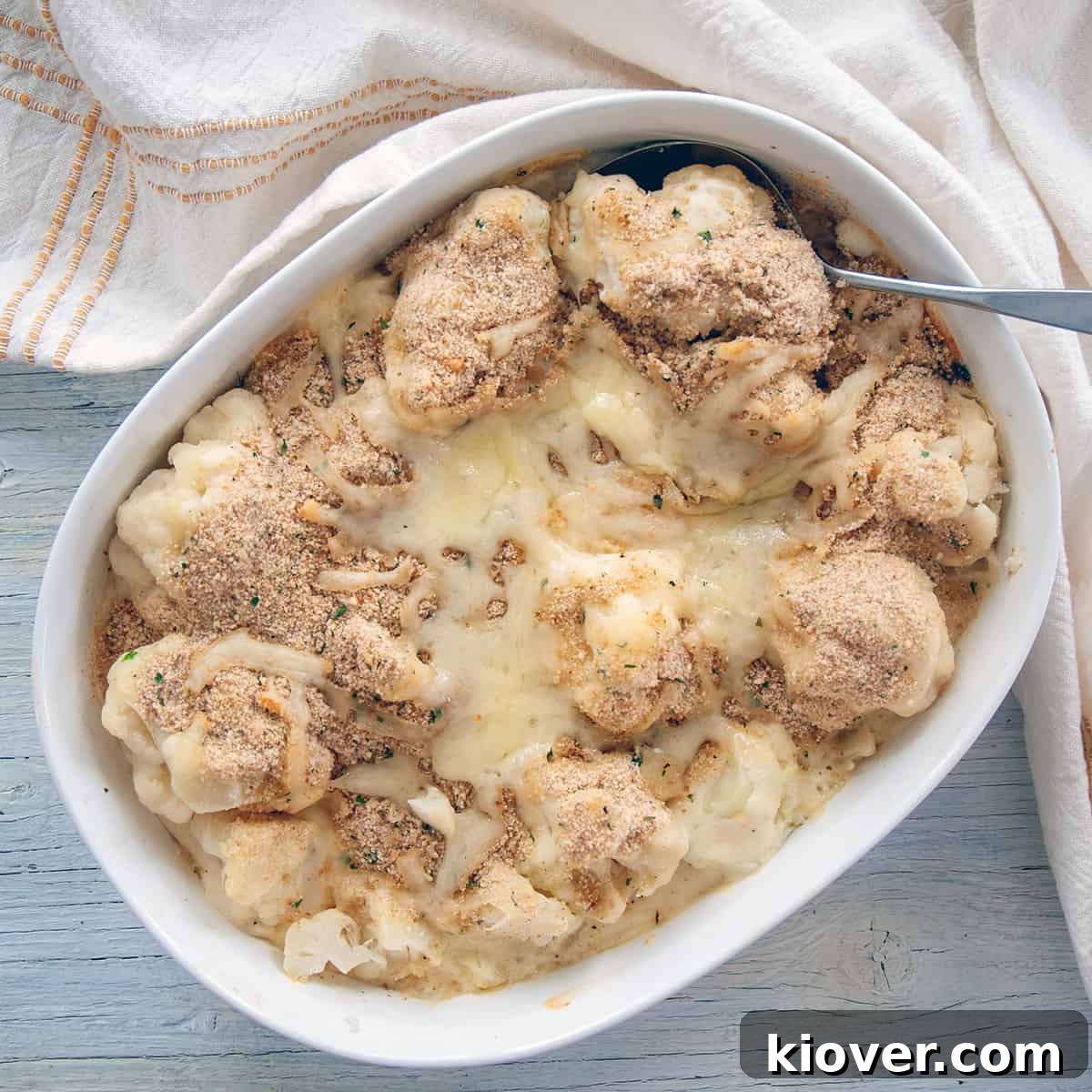
Classic Cauliflower Au Gratin: A Cheesy, Comforting Side Dish
Indulge in the creamy, cheesy goodness of this Classic Cauliflower Au Gratin. More than just a simple side, this dish transforms humble cauliflower into a luxurious, flavorful casserole using a traditional French Mornay sauce. It’s an essential skill for any home cook, one that will elevate your culinary repertoire and open doors to countless delicious possibilities. If you’re looking for a rich, comforting dish that can grace any table, from a casual weeknight dinner to a festive holiday feast, this recipe is a must-try. Prepare to impress with its elegant simplicity and irresistible taste!
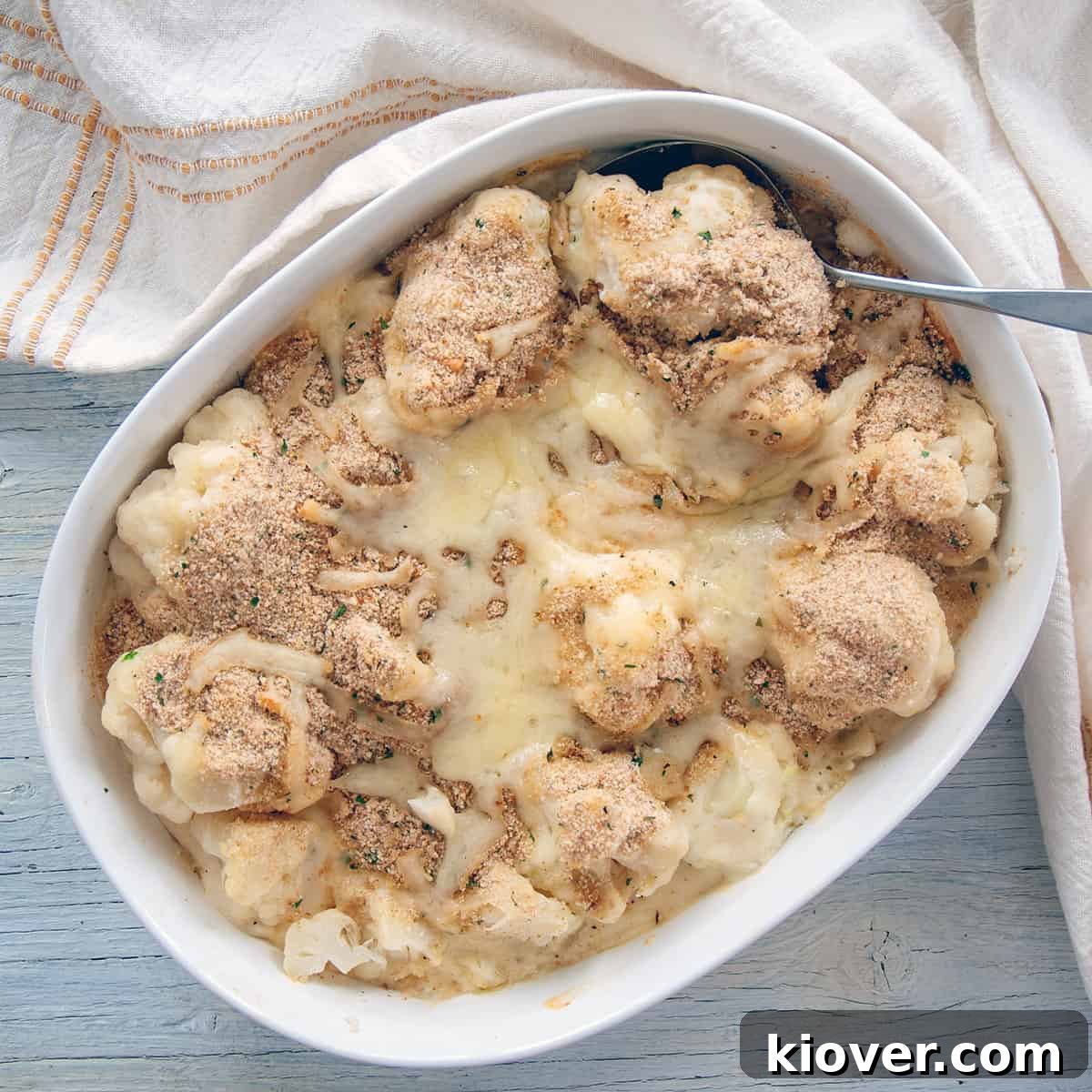
Why This Cauliflower Au Gratin Recipe is Special
Don’t let the “fancy French” label of Au Gratin intimidate you. At its heart, this is a comforting dish of cheesy vegetables that delivers incredible flavor and satisfaction. What truly sets this recipe apart is the masterful use of a homemade Mornay sauce—a rich, velvety béchamel base infused with delectable cheese—which coats the tender cauliflower, creating an unparalleled depth of taste and luxurious texture. This elegant side dish is versatile enough to be the star at the most ornate dinner party yet remains perfectly fitting for a cozy, average weeknight meal. Its universal appeal makes it a go-to for any occasion where you desire a touch of sophistication and warmth.
Beyond its incredible taste, this Cauliflower Au Gratin recipe is special because it empowers you with fundamental cooking skills. Learning to craft a perfect Mornay sauce is a game-changer, providing a foundation for many other gratin dishes and creamy sauces. This recipe meticulously guides you through each step, ensuring even novice cooks can achieve a restaurant-quality result. It’s a side dish that’s guaranteed to be a crowd-pleaser, whether you’re seeking an impressive addition to your holiday spread or simply a comforting vegetable dish to complete your dinner.
This dish pairs wonderfully with a variety of main courses. Imagine serving it alongside a succulent Sous Vide Prime Rib, where its creaminess perfectly complements the rich meat. It’s also an excellent accompaniment to lighter fare, such as Grilled Chicken Legs with a refreshing Yogurt Mint Marinade. For a complete meal, consider pairing it with other delicious sides like a vibrant Crab Pasta Salad or a tangy German Potato Salad. No matter your choice, this Cauliflower Au Gratin elevates the entire dining experience. Treat yourself and your loved ones to this culinary delight!
Table of Contents
- Why This Cauliflower Au Gratin Recipe is Special
- Essential Ingredients
- Understanding Cauliflower Casseroles
- Step-by-Step Instructions
- Perfecting Your Mornay Sauce
- Substitutions and Variations
- Storage and Reheating Tips
- The History of Au Gratin
- Frequently Asked Questions
- Pro Tips and Tricks
- Recommended Products
- Share Your Creation!
Essential Ingredients
While the full list of ingredients can be found in the recipe card below, let’s highlight some key components and how to choose the best ones for this recipe. Quality ingredients are the foundation of any exceptional dish, and this Cauliflower Au Gratin is no exception.
When selecting your cauliflower, prioritize freshness and quality. Look for a head that is firm and tightly packed, with florets that are creamy white and free from any dark spots or discoloration. Avoid cauliflower that feels soft, mushy, or rubbery, as these are signs of spoilage. The outer leaves should be vibrant green and crisp, indicating that the cauliflower was recently harvested. While smaller heads tend to be slightly more tender, any fresh, healthy cauliflower will yield beautiful results in this rich casserole. A fresh head of cauliflower provides the best texture and flavor, absorbing the creamy Mornay sauce perfectly.
For the cheese, we primarily use Swiss cheese, which provides a nutty, slightly sweet flavor and melts wonderfully into the sauce. However, exploring other meltable cheeses like Gruyere or a sharp cheddar can significantly alter the flavor profile, offering delightful variations. Freshly grated cheese is always recommended over pre-shredded varieties, as it melts more smoothly and incorporates better into the sauce, preventing a grainy texture. Finally, quality breadcrumbs are crucial for that perfect golden, crispy topping that defines an “au gratin” dish. Italian breadcrumbs add an extra layer of seasoned flavor, but plain breadcrumbs also work beautifully.
Understanding Cauliflower Casseroles
This dish is, at its core, a delicious cauliflower casserole. Casseroles and “hotdishes” have a long and storied history, particularly in certain culinary regions. As a Midwesterner, I can attest to the cultural significance of hotdishes—they are synonymous with community gatherings, potlucks, and comforting family meals. While often used interchangeably, there can be subtle distinctions between a “casserole” and a “hotdish.”
Generally, a casserole implies a dish baked in an oven, typically in a large, deep dish, combining various ingredients such as meat, vegetables, and a binding sauce. It’s often topped with cheese, breadcrumbs, or crispy fried onions. Hotdishes, prominent in the Upper Midwest of the United States, usually feature a starchy component (like pasta or potatoes), a canned soup for a creamy base, a protein (often ground beef), and a crunchy topping. This Cauliflower Au Gratin aligns more closely with the classic definition of a sophisticated casserole, focusing on fresh ingredients and a homemade sauce, offering a more refined yet equally comforting experience. The beauty of the casserole format lies in its ability to combine simple ingredients into a cohesive, flavorful, and easy-to-serve meal, making it a beloved staple across many cultures.
Step-by-Step Instructions
Despite its elegant presentation and “fancy French” name, this Cauliflower Au Gratin is remarkably easy to prepare. The entire process can be broken down into four straightforward steps, making it accessible for cooks of all skill levels. Let’s walk through the simplicity that brings this exquisite dish to life:
First, we prepare the star of our dish: the cauliflower. This involves a simple boiling process to ensure the florets are perfectly tender. You can boil the head whole or cut it into florets beforehand, whichever you prefer. This step is quick and can often be done concurrently with the next. Second, while the cauliflower is cooking, we master the Mornay sauce. This creamy, cheesy sauce, derived from the classic Béchamel, might sound intimidating, but it’s incredibly simple to execute and will become a fundamental skill in your kitchen repertoire. It’s the secret to the dish’s rich, velvety texture.
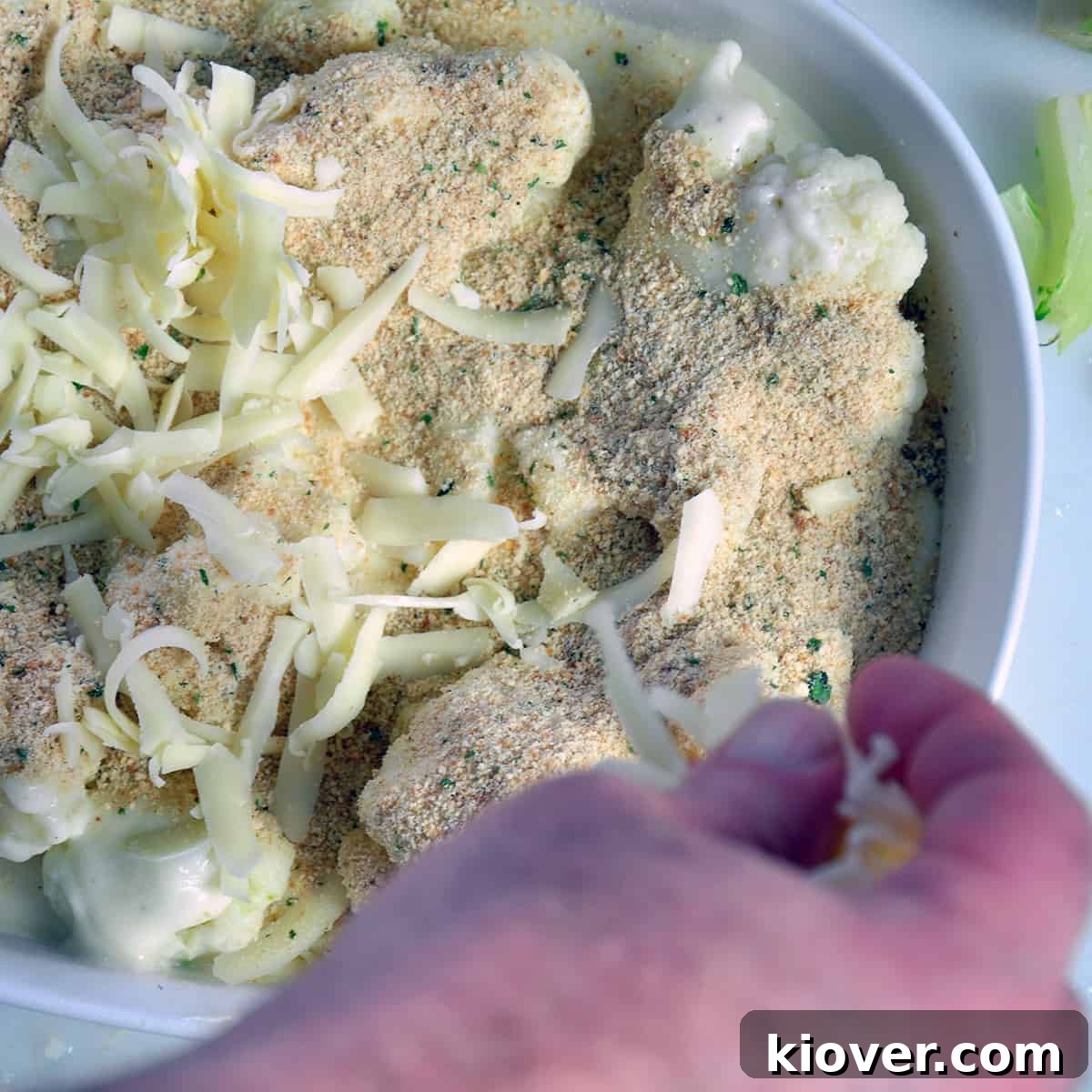
Third, once the cauliflower is tender and the Mornay sauce is ready, we move on to assembly. This involves gently cutting the cooked cauliflower into bite-sized pieces and then combining it with the creamy, cheesy Mornay sauce in a casserole dish. The layers are topped with a generous sprinkle of more cheese and some crunchy breadcrumbs, ensuring a golden, irresistible crust. Finally, the assembled dish is baked in the oven until it’s bubbly, golden, and perfectly warmed through. It’s a truly simple and rewarding culinary journey that culminates in a spectacular side dish.
Boiling the Cauliflower to Perfection
Achieving perfectly tender cauliflower is crucial for this au gratin. While you can certainly cut the cauliflower into florets before boiling, I often find it simpler and equally effective to boil the whole head, with just a bit of preliminary preparation. Begin by carefully removing all the tough green leaves from the cauliflower head. These leaves can either be composted or, as a fun tidbit, saved as a treat for your dog—many dogs absolutely love them!
Select a large pot that is spacious enough to comfortably submerge the entire cauliflower head without it overflowing once the water is boiling. Fill the pot with water and bring it to a gentle, soft boil. Once the water is bubbling gently, carefully add the prepped cauliflower head. Allow it to cook for approximately 15 to 20 minutes, or until it reaches a tender consistency. You can easily test its doneness by gently poking it with a fork; if the fork slides through with minimal resistance, it’s ready. Overcooked cauliflower can become mushy, so keep a close eye on it.
Once tender, carefully remove the cauliflower from the hot water. It will be extremely hot, so allow it to cool for about five to ten minutes until it can be safely handled. Alternatively, you can run it under cold water for a minute or two to speed up the cooling process. Once cool enough, cut the cauliflower into bite-sized florets, ready to be enveloped in the luxurious Mornay sauce. This careful cooking ensures the cauliflower maintains its texture and sweet flavor, providing the perfect counterpoint to the rich cheese sauce.
Perfecting Your Mornay Sauce: The Heart of the Dish
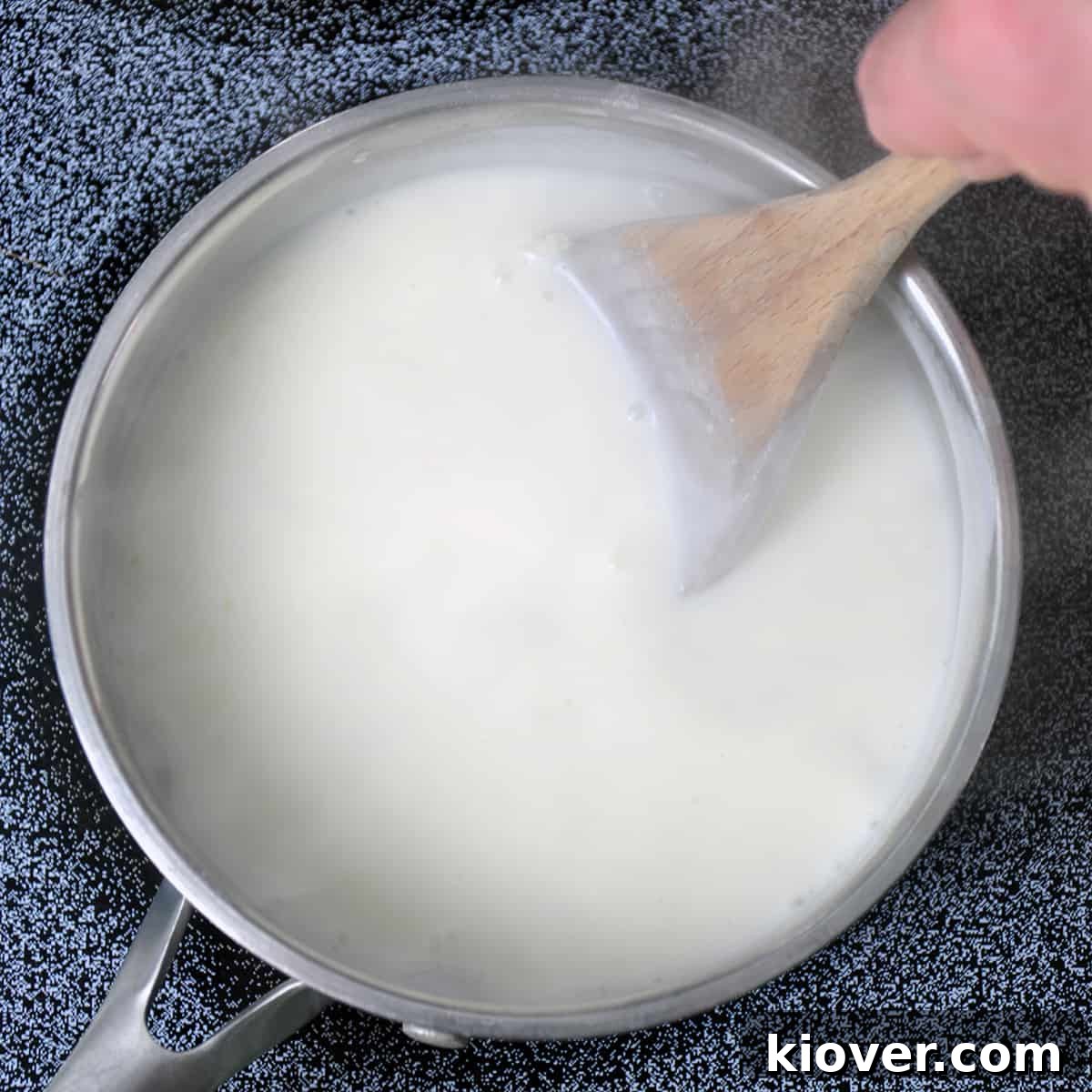
Mornay sauce is a classic French culinary masterpiece, forming the creamy, cheesy foundation of our au gratin. Its creation begins with a béchamel sauce, one of the five foundational “mother sauces” of French cuisine. A béchamel is a simple yet elegant white sauce made from a roux (butter and flour) cooked with milk. Learning to make a béchamel is a gateway skill that unlocks countless recipes and enhances your culinary confidence.
To transform a béchamel into a Mornay, we incorporate cheese. Traditionally, Mornay sauce includes Swiss cheese, often combined with Gruyère and/or Parmesan for a complex flavor profile. For this recipe, we focus on Swiss cheese for its excellent melting properties and nutty notes, complemented by a pinch of black pepper and a touch of cayenne for a subtle warmth and “pop.” The cayenne is optional, but it adds a delightful, almost imperceptible kick that balances the richness of the cheese.
The true magic of mastering sauces like Mornay extends far beyond a single dish. This very Mornay sauce can be adapted for a multitude of other “au gratin” recipes. Imagine it coating tender broccoli, sliced potatoes, or even delicate asparagus. The possibilities are limited only by your imagination! This versatile, homemade cheese sauce is far superior to any store-bought alternative and can elevate simple vegetables or pasta dishes into extraordinary meals. Experiment with different cheeses to customize the flavor: sharp cheddar for a bolder taste, pepper jack for a spicy kick, or even a blend of your favorite meltable cheeses. Once you understand the fundamentals of béchamel and its transformation into Mornay, you’ll find yourself looking at boxed dinners like Hamburger Helper or macaroni and cheese with newfound disdain, realizing just how easy and rewarding it is to create such rich, flavorful sauces from scratch.
Substitutions and Variations to Customize Your Gratin
One of the beauties of a classic dish like Cauliflower Au Gratin is its adaptability. Feel free to experiment with these substitutions and variations to tailor the recipe to your taste preferences or what you have on hand:
- Milk: While whole milk is recommended for the richest, creamiest Mornay sauce, you can certainly use 2% or even skim milk. Keep in mind that lighter milks will result in a slightly thinner sauce and a less indulgent finish. For an even more luxurious, decadent sauce, heavy cream can be used, producing an incredibly rich gratin.
- Spices: The cayenne pepper adds a subtle, warm undertone. If you prefer more heat, increase the amount of cayenne to a half teaspoon or even a full teaspoon for a spicier kick. For different flavor profiles, consider adding a pinch of nutmeg, a classic pairing with béchamel-based sauces, or a dash of smoked paprika for a smoky depth. Garlic powder or onion powder can also be added to the sauce for an extra layer of savory flavor.
- Add Other Vegetables: While cauliflower is the star, it plays well with others! You can easily add other cooked vegetables to the mix. Steamed broccoli florets, sautéed mushrooms, or even thinly sliced cooked carrots can be folded into the sauce along with the cauliflower. For a heartier dish, consider adding sliced, par-boiled potatoes for a truly robust gratin, similar to Potatoes au Gratin.
- Baked Ham or Bacon: To transform this side dish into a more substantial meal, consider adding cooked and diced baked ham or crispy crumbled bacon. The salty, savory notes of the meat beautifully complement the creamy cauliflower and cheese, creating a complete and satisfying casserole that’s perfect for a main course or a festive brunch.
- Cheese Blends: Don’t limit yourself to just Swiss cheese. A blend of Gruyère and Parmesan is a traditional and exquisite choice for Mornay sauce. Sharp cheddar, Monterey Jack, or even a smoked gouda can introduce exciting new flavors. Feel free to use a combination of two or three of your favorite meltable cheeses for a unique and personalized au gratin.
- Topping Options: Beyond Italian breadcrumbs, consider a topping of crushed Ritz crackers mixed with melted butter for an extra buttery crunch, or a mix of Panko breadcrumbs for a lighter, crispier texture. For a gluten-free option, use gluten-free breadcrumbs or simply rely on a generous layer of cheese for the crust.
Storage and Reheating Tips
Proper storage ensures you can enjoy your delicious Cauliflower Au Gratin leftovers without compromising its flavor or texture. If you find yourself with extra au gratin, allow it to cool completely to room temperature before transferring it to an airtight container. Stored this way, it will remain fresh and delicious in the refrigerator for up to 3-4 days.
For longer storage, Cauliflower Au Gratin freezes exceptionally well. After allowing the dish to cool thoroughly, transfer it to a freezer-safe airtight container or a heavy-duty freezer bag. Be sure to remove as much air as possible from the bag to prevent freezer burn. Label the container with the date, and it can be stored in the freezer for up to 3 months. For best results, consider freezing individual portions for easy reheating.
When you’re ready to enjoy your stored au gratin, the best method for reheating is in the oven. If frozen, thaw it overnight in the refrigerator first. Place the thawed au gratin in an oven-safe dish, cover it loosely with foil to prevent the topping from over-browning, and bake at 350° Fahrenheit (175°C) for 15-25 minutes, or until heated through and bubbly. Remove the foil for the last 5-10 minutes if you want to re-crisp the topping. While the microwave can be used for convenience, it may affect the texture, making the sauce slightly less creamy. If microwaving, reheat in short intervals, stirring occasionally to ensure even heating and prevent the sauce from separating.
The History of Au Gratin: From Luxury to Everyday Delight
The term “au gratin” is a fascinating part of culinary history, originating from the French verb “gratiner,” meaning “to brown” or “to crust.” It refers to a classic cooking technique where a dish is topped with a layer of breadcrumbs, cheese, or both, and then baked or broiled until a golden-brown, crispy crust forms. This crust is not merely for aesthetics; it locks in moisture, concentrates flavors, and provides a delightful textural contrast to the soft ingredients beneath.
The roots of “au gratin” can be traced back centuries within French cuisine. Early references to dishes prepared in this manner appear in French cookbooks from as far back as the early 17th century, though the specific term “au gratin” didn’t become widely standardized until the 18th century. In those nascent days, “au gratin” preparations were considered a luxury, often reserved for the affluent. Cheese, a primary component of many gratins, was an expensive commodity, not readily available to the common populace. Its production was often localized, making it a precious ingredient for special occasions.
As the 19th century progressed, advancements in agriculture and dairy farming led to cheese becoming more accessible and affordable. This democratization of cheese allowed “au gratin” dishes to transcend their aristocratic origins and become increasingly popular among ordinary people. They began appearing on restaurant menus across France and eventually, around the world, making their way into home kitchens. The enduring appeal of au gratin lies in its ability to transform simple ingredients, like our humble cauliflower, into a comforting, sophisticated, and undeniably delicious meal, all thanks to that irresistible golden crust and creamy interior. It’s a testament to the timeless elegance and ingenuity of French culinary tradition.
Frequently Asked Questions
Cauliflower au gratin is a delectable side dish made from tender, cooked cauliflower florets that are enveloped in a rich and creamy cheese sauce, typically a Mornay sauce. The dish is then topped with breadcrumbs and often more cheese, baked until it forms a golden, bubbly, and crispy crust.
While the recipe specifically uses Swiss cheese for its excellent melting properties and mild, nutty flavor, traditional Mornay sauce often features Gruyere. Other popular choices include sharp cheddar, Parmesan cheese, or a combination of various meltable cheeses like Monterey Jack or fontina, allowing for diverse flavor profiles.
Yes, you can absolutely prepare most of the dish ahead! You can cook the cauliflower and make the Mornay sauce a day or two in advance. Store them separately in airtight containers in the refrigerator. When ready to bake, assemble the gratin in your casserole dish, add the topping, and then bake as instructed. If baking from cold, you might need to add an extra 10-15 minutes to the baking time.
The key to a smooth Mornay sauce is a well-made roux and gradual incorporation of milk. Ensure your butter and flour are cooked thoroughly to form a paste (the roux) before slowly whisking in cold milk. Whisk continuously and vigorously as you add the milk to prevent lumps. If lumps do form, a quick pass through a fine-mesh sieve can smooth out the sauce.
Cauliflower au gratin is an incredibly versatile side dish. It pairs beautifully with roasted meats like prime rib, chicken, or ham. It also complements fish dishes, grilled vegetables, or even a simple green salad for a lighter meal. Its richness makes it ideal for holiday meals and celebratory dinners.
Pro Tips and Tricks for the Best Au Gratin
Elevate your Cauliflower Au Gratin from good to extraordinary with these helpful tips and tricks:
- Proper Cauliflower Prep: Always remove the tough outer leaves and stem before boiling the cauliflower. As a fun bonus, some dogs enjoy cauliflower leaves as a healthy treat!
- Don’t Overcook Cauliflower: Boil the cauliflower until it’s just tender-crisp. It will continue to cook in the oven, and you want it to hold its shape and have a slight bite, not turn mushy.
- Quality Breadcrumbs Matter: For the most desirable crispy, golden topping, invest in good quality breadcrumbs. Italian breadcrumbs offer added flavor, but Panko breadcrumbs provide an exceptionally light and crunchy crust. You can even make your own from stale bread.
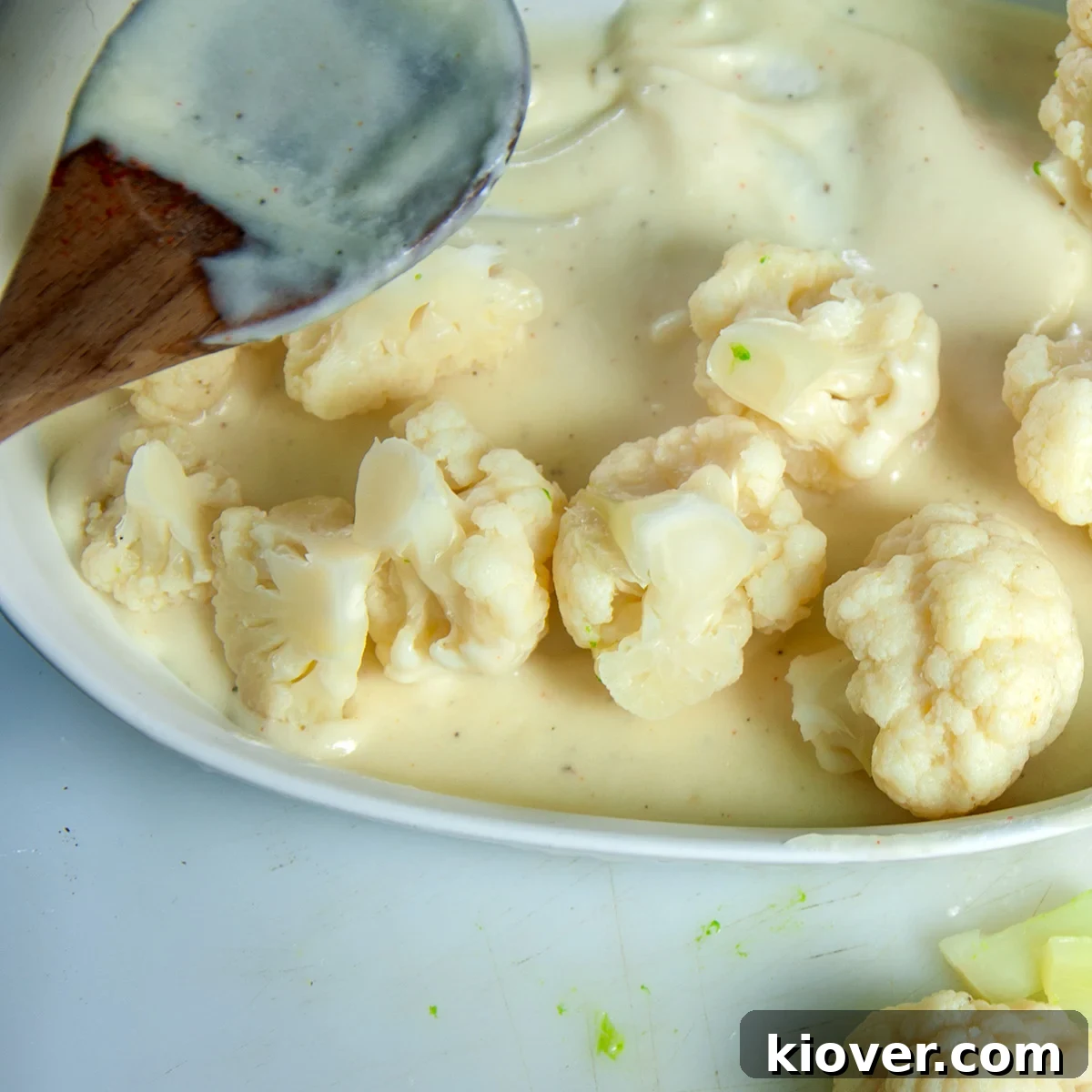
- Layering for Success: For optimal flavor distribution and an appealing presentation, layer your ingredients in the casserole dish. Start with a thin layer of Mornay sauce, then add the cooked cauliflower, and finally cover generously with the remaining Mornay sauce, ensuring all florets are coated. This layering prevents dry spots and ensures every bite is creamy and delicious.
- Achieving the Perfect Golden Crust: Bake the gratin until it’s heated through, bubbly around the edges, and the cheese on top is beautifully melted and golden brown. If the topping isn’t browning enough, you can briefly place it under the broiler for 1-2 minutes, watching it very carefully to prevent burning.
- Freshly Grated Cheese: While pre-shredded cheese is convenient, it often contains anti-caking agents that can affect the texture of your sauce. For the smoothest, creamiest Mornay sauce and best melting, grate your own cheese from a block.
- Use the Right Dish: A proper casserole dish, ideally ceramic or glass, will distribute heat evenly and allow for a perfect golden crust without burning the bottom.
- Rest Before Serving: After removing the gratin from the oven, allow it to rest for 5-10 minutes. This allows the sauce to set slightly, making it easier to serve and preventing it from being too runny.
Recommended Products for This Recipe
Having the right tools can make all the difference in the kitchen. Here are a few products that will help you prepare this Classic Cauliflower Au Gratin with ease and precision:
- Large Stock Pot: Essential for boiling your whole head of cauliflower evenly.
- Casserole Dish: A sturdy, oven-safe casserole dish is crucial for baking your au gratin to golden perfection.
- Whisk: A good quality whisk is indispensable for creating a smooth, lump-free Mornay sauce.
- Box Grater or Food Processor with Grating Attachment: For freshly grating cheese, which melts much better than pre-shredded varieties.
Share Your Creation!
We are thrilled that you decided to give this Classic Cauliflower Au Gratin recipe a try! Your culinary adventure brings joy to our kitchen. If you enjoyed preparing and tasting this delightful dish, please consider leaving a rating and comment below. Your feedback helps us grow and assists other home cooks in discovering new favorite recipes. It lets us know how we’re doing and encourages others to embark on their own delicious journeys. Thank you so much for visiting Ramshackle Pantry and for being a part of our culinary community!

Classic Cauliflower Au Gratin Recipe
★★★★★
5 from 1 review
- Author: Ben Myhre
- Prep Time: 10 minutes
- Cook Time: 1 hour
- Total Time: 1 hour 10 minutes
- Yield: 4 Servings
- Category: Casserole
- Method: Baking
- Cuisine: French
Description
This Classic Cauliflower Au Gratin is a rich, creamy, and undeniably comforting casserole dish. It’s perfect for enhancing any holiday meal or serving as a special side dish for a memorable dinner.
Ingredients
- 1 whole cauliflower, cleaned and green leaves removed
- 2 tablespoon butter
- 3 tablespoon all-purpose flour
- 2 cups whole milk (or 2% milk)
- 3 ounces (about 1.5 cups) Shredded Swiss cheese
- 1/2 teaspoon salt
- 1/4 teaspoon black pepper
- 1/4 teaspoon cayenne pepper (optional, for a subtle kick)
- 1/2 cup Italian breadcrumbs
Instructions
- Preheat oven to 375° Fahrenheit (190°C).
- Prepare Cauliflower: Fill a large pot with water and bring it to a soft boil.
- Cook Cauliflower: Carefully add the whole cauliflower head to the boiling water and cook for 15-20 minutes, or until it is tender when pierced with a fork.
- Cut Cauliflower: Remove the cauliflower from the hot water. Once cool enough to handle, cut the florets into bite-sized pieces. Set aside.
- Make Mornay Sauce (Roux): In a saucepan, melt the butter over medium heat.
- Add Flour: Whisk in the flour and cook for 1-2 minutes, stirring constantly, to create a thick paste (roux). Do not let it brown.
- Slowly Add Milk: Gradually whisk in the milk, a little at a time, ensuring each addition is fully incorporated before adding more. This prevents lumps. Turn heat up to medium-high.
- Thicken Sauce: Continue to cook and stir until the sauce thickens to your desired consistency, coating the back of a spoon.
- Add Cheese: Remove the sauce from the heat. Stir in half of the shredded Swiss cheese until completely melted and smooth. Continue mixing for a minute to ensure the dairy doesn’t scald.
- Season Sauce: Add salt, black pepper, and cayenne pepper (if using) to the sauce. Taste and adjust seasoning as needed.
- Assemble Casserole: In a casserole dish, pour about ⅓ of the Mornay sauce, then arrange the cooked cauliflower florets over it. Pour the remaining sauce over the cauliflower, ensuring all florets are well coated.
- Add Topping: Evenly sprinkle the Italian breadcrumbs over the top of the sauced cauliflower.
- Add Remaining Cheese: Spread the remaining shredded Swiss cheese evenly over the breadcrumbs.
- Bake: Bake in the preheated oven for 40 minutes, or until the gratin is bubbly and the topping is golden brown and crispy.
- Serve: Remove from the oven and let it rest for a few minutes before serving warm.
Notes
- Remove the leaves before you boil the cauliflower. Your dog might like them as a treat. 🙂
- Use quality breadcrumbs for the best result.
- Layer your sauce in the casserole dish: Mornay sauce, then cauliflower, then more Mornay sauce.
- Bake until heated through and the cheese on top looks nice and melted and golden. About 25-40 minutes, depending on your oven.