
The Mojito, a vibrant symphony of fresh mint, zesty lime, sweet sugar, potent rum, and sparkling soda, stands as a titan among classic cocktails. Its invigorating and refreshing profile has captivated palates worldwide, cementing its status as a timeless beverage. But beyond its undisputed deliciousness lies a rich and often debated history, a tapestry woven with threads of piracy, slavery, and literary legends. Like many iconic concoctions, the story of the Mojito is shrouded in mystery, with multiple theories vying for the coveted title of its true origin. Today, we embark on a fascinating journey to explore these competing narratives, delving into the colorful past of this beloved Cuban cocktail.
Unraveling the Mojito’s Cuban Roots: A Geographical and Historical Inquiry
It is almost universally accepted that the Mojito emerged from the sun-drenched shores of Cuba, an island renowned for its vibrant culture, exquisite rum, and revolutionary spirit. While this consensus holds strong, a deeper dive into the timeline of its key ingredients reveals fascinating nuances that challenge simplistic notions of its birthplace. To truly understand the Mojito’s genesis, we must first trace the intricate history of sugarcane cultivation and rum production in the Caribbean.
The journey of sugarcane to the Americas began with Christopher Columbus, who introduced the plant on his second voyage between 1493 and 1496, initially planting it in what is now Haiti and the Dominican Republic. This introduction marked a pivotal moment, as sugarcane would fundamentally reshape the economic and social landscape of the New World. While sugarcane plantations were already a well-established economic model in the Canary Islands, large-scale production in the Caribbean took some time to materialize. The mid-16th century saw the rise of significant sugarcane cultivation, particularly in Brazil. Cuba, despite its eventual prominence in sugar production, did not see its first sugar mills until around 1576, with livestock farming dominating its early colonial economy.
This timeline is crucial. Sugarcane arrived in the late 1400s, but large-scale processing, essential for sugar and subsequently rum, lagged. Brazil, for instance, had a considerable head start in the sugarcane industry. This raises a pertinent question: did rum follow this exact trajectory? The first recorded instance of rum production, according to historical accounts, dates back to Brazil in the 1620s. However, it is important to remember that documentation often trails behind practice. Fermented sugarcane juice, a precursor to modern rum, could have been produced much earlier and in various locations across the Caribbean, wherever sugarcane was cultivated.
When considering the Mojito, we must also examine its other core ingredients: lime, mint, and sugar. Sugar, being a direct derivative of sugarcane, naturally follows its historical path. Lime and mint, however, were widely available throughout this tropical region, growing natively or easily cultivated. This broad availability means these ingredients alone do not significantly narrow down the Mojito’s precise point of origin within Cuba or the wider Caribbean. Thus, while Cuba remains the spiritual home of the Mojito, the exact circumstances of its invention invite further exploration through compelling historical theories.
The Sir Francis Drake Theory: A Pirate’s Prescription?
One of the most captivating theories surrounding the Mojito’s origin ties it to the legendary exploits of Sir Francis Drake, a notorious English privateer, slave trader, and naval hero of the Elizabethan era. In 1586, Drake led the infamous Battle of Cartagena de Indias, achieving a significant victory against the Spanish. However, the arduous journey and the aftermath of battle took a heavy toll on his crew, many of whom succumbed to scurvy and dysentery.
Desperate for remedies, Drake’s fleet reportedly made a stop in Havana, Cuba, known for its rich flora and the local knowledge of indigenous medicines. During this crucial stop, local remedies were sought to combat the pervasive illnesses. Lime, a well-known preventative for scurvy due to its high Vitamin C content, would have been invaluable. Mint, revered for its digestive properties and its ability to alleviate motion sickness, also served a practical medicinal purpose. These ingredients, combined with what could have been an early form of fermented sugarcane juice – a precursor to rum – are believed to have formed the rudimentary Mojito. This potent concoction, designed as much for medicine as for pleasure, was reportedly not called a Mojito initially but was instead known as “El Draque,” in honor of Sir Francis Drake himself. Over time, as its popularity grew and its formulation evolved, the name likely transformed into what we know today.
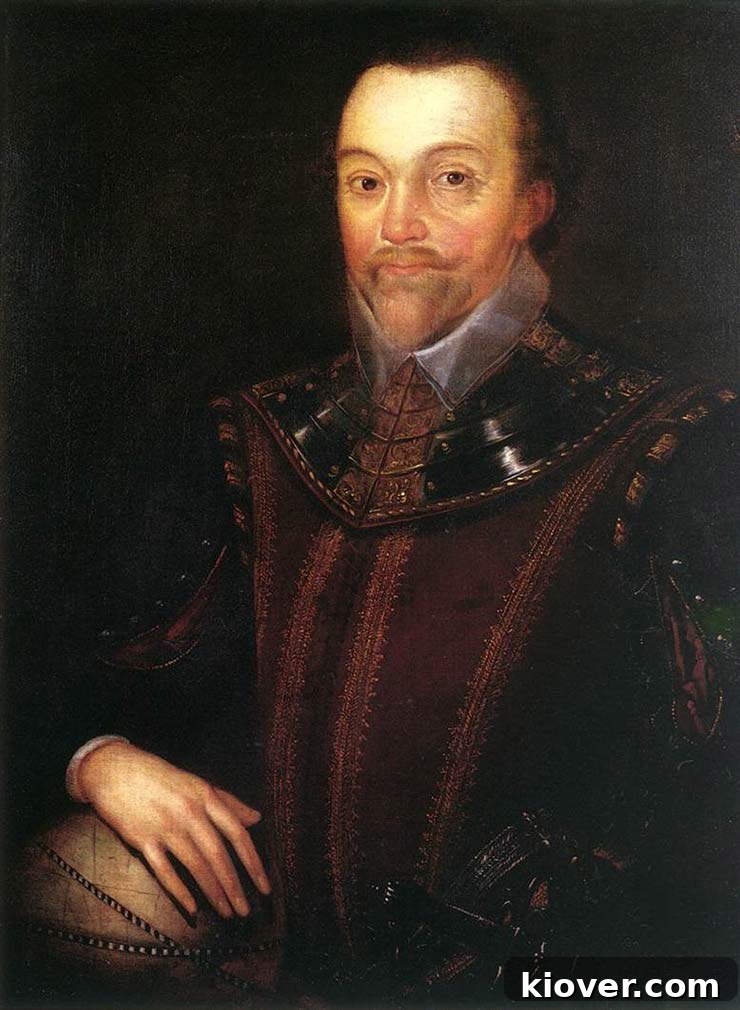
While intriguing, this theory faces some chronological hurdles. The primary contention lies with the availability of rum in Cuba during Drake’s visit. As previously noted, documented rum production in Brazil only began in the 1620s, and Cuba’s sugar industry was still nascent in 1586. This doesn’t entirely discount the theory, as rudimentary forms of fermented sugarcane juice could certainly have existed locally, perhaps not yet refined into what we recognize as rum today. However, it does place the “rum” component of “El Draque” in a somewhat ambiguous historical position. Despite these timeline considerations, the narrative of a drink born out of necessity and named after a legendary figure adds a romantic allure to the Mojito’s origins, firmly rooting its creation in the vibrant, historical context of Havana.
The Slave Theory: A Testament to Ingenuity and Resourcefulness
Beyond the swashbuckling tales of privateers, another compelling theory suggests a more humble, yet profoundly significant, origin for the Mojito: its birth among the enslaved populations working on the vast sugarcane plantations of the Caribbean. This perspective grounds the cocktail’s history in the harsh realities of colonial life and highlights the incredible ingenuity of those who endured it.
As we discussed in the broader history of rum, molasses, a dark, viscous byproduct of sugar refining, was often considered industrial waste in its early days. However, for enslaved people, these byproducts were vital resources. Faced with limited provisions and harsh conditions, they would have utilized whatever was available to them. Sugarcane juice, either freshly pressed or in its fermented form, would have been a readily accessible source of sustenance and, when fermented, an alcoholic spirit. This early, crude alcohol, often referred to as “aguardiente” (firewater) or “tafia,” was the true ancestor of modern rum.
The slave theory posits that it was these communities, working intimately with the source ingredients, who first combined fermented sugarcane juice with other locally available elements. Lime and mint, abundant in the tropical climate, would have been used not only for their refreshing qualities but also for their perceived medicinal benefits – masking the harshness of the crude alcohol and aiding digestion. This practical and necessity-driven approach to mixology feels profoundly authentic. While the men of Francis Drake’s envoy might have had access to European spirits like ales, wine, and brandy, the enslaved populations relied on what could be “scraped together” from their immediate environment. Much like how lobster was once considered food for the poor or enslaved, the Mojito’s origins could very well lie in the resourcefulness of those who lived closest to the source of its ingredients, transforming simple elements into something both palatable and invigorating.
Although this theory may lack the formal documentation of other historical accounts, its socio-economic context provides a powerful argument. It speaks to a common historical pattern where foundational aspects of culture, including culinary and beverage traditions, often emerge from the grassroots, from the necessities and innovations of everyday people. The Mojito, in this light, becomes a testament to human resilience and the enduring power of local traditions.
The Enigmatic Origins of the Name: “Mojito”
As with its origins, the exact etymology of the name “Mojito” is equally steeped in fascinating speculation. Several theories attempt to explain how this iconic cocktail acquired its memorable moniker, each offering a glimpse into the linguistic and cultural landscape of Cuba.
One popular belief links “Mojito” to a distinctive Cuban seasoning known as “mojo.” Mojo is a flavorful sauce, typically made with garlic, olive oil, and citrus juice, most commonly lime. Given the prominent role of lime in the cocktail, it is plausible that the drink, perhaps for its tangy citrus kick, became associated with this popular condiment. The suffix “-ito” in Spanish often denotes a diminutive or endearment, so “little mojo” or “mojo-like” could be a playful reference.
Another theory suggests a derivation from the Spanish word “mojado,” which literally translates to “wet.” While seemingly straightforward, this explanation could refer to the drink’s refreshing, thirst-quenching quality, or perhaps to the dampened mint leaves muddled in the bottom of the glass. The transformation from “mojado” to “mojito” could be a phonetic evolution, lending a more melodic quality to the name.
A third, more mystical interpretation, connects the name to the word “mojo” in a spiritual or magical sense. In some cultures, “mojo” refers to a charm, spell, or a general sense of good luck or personal magnetism. This evocative connection implies that the Mojito might have been perceived as a drink with a certain “magic” or “charm,” perhaps due to its uplifting and invigorating effects. This brings to mind famous cultural references like “Mr. Mojo Risin’,” a playful anagram for Jim Morrison from The Doors’ song “L.A. Woman,” hinting at a broader cultural resonance of the word “mojo” beyond its culinary or literal meanings.
Regardless of its precise linguistic lineage, the name “Mojito” has become synonymous with refreshment, Cuban heritage, and effortless elegance, rolling off the tongue as smoothly as the drink itself.
Ernest Hemingway and the Mojito: A Tale of Forgery and Fame
No discussion of the Mojito’s history would be complete without acknowledging the towering figure of Ernest Hemingway, the iconic American novelist and Nobel Prize winner. Often portrayed as a quintessential Mojito drinker, Hemingway is widely credited with propelling the cocktail into international stardom. Yet, the true extent of his relationship with the Mojito, and specifically with La Bodeguita del Medio – the Havana bar most associated with him and the drink – is a fascinating tale of myth-making and marketing prowess.
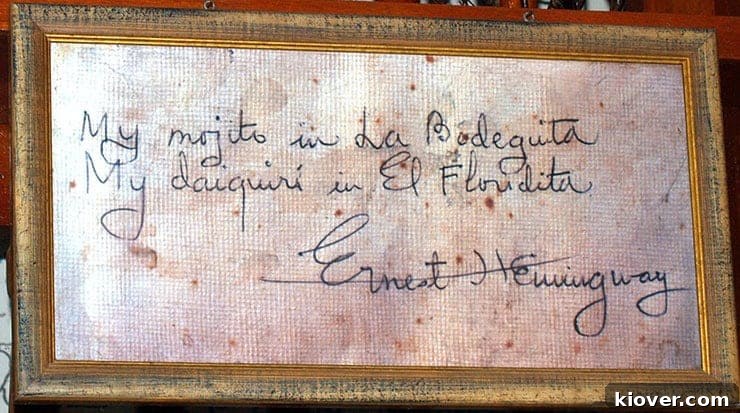
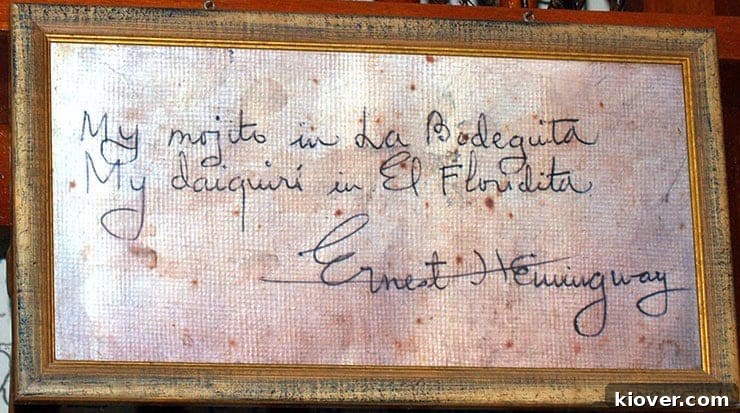
The enduring legend stems from a famous quote, purportedly penned by Hemingway himself, displayed prominently at La Bodeguita del Medio: “My mojito in La Bodeguita, My daiquiri in El Floridita.” This simple declaration has adorned countless postcards, travel guides, and bar walls, solidifying the image of Hemingway as a Mojito enthusiast and La Bodeguita as his favored haunt for the drink. However, renowned cocktail historian Philip Greene, a Hemingway biographer and author of “A Hemingway Cocktail Companion,” offers a compelling counter-narrative.
Greene’s meticulous research suggests that this iconic inscription is, in fact, a forgery – a brilliant marketing ploy rather than an authentic declaration from the literary giant. According to Greene, Hemingway was not a regular at La Bodeguita del Medio, and crucially, he never mentioned the bar or the Mojito in any of his extensive writings, despite his penchant for detailing the places he drank and the specific cocktails he enjoyed. Hemingway’s preferred drink was overwhelmingly the Daiquiri, often consumed at El Floridita, another legendary Havana establishment.
The “Hemingway quote” thus emerged as an incredibly successful piece of advertising. Displayed prominently in a bar that was already gaining popularity, it instantly conferred a sense of authenticity and historical weight to the Mojito, elevating its status and drawing countless tourists eager to sip a drink “like Hemingway.” This strategic association, even if forged, played an undeniable role in the Mojito’s post-mid-20th-century surge in popularity. It provided a romantic, adventurous narrative that resonated with the cocktail-loving public, cementing the Mojito’s image as a sophisticated yet refreshing emblem of Cuban culture.
Ultimately, whether Hemingway truly adored Mojitos or if the famous quote was a clever marketing tactic, one thing remains certain: the Mojito is a magnificent drink in its own right. Like many classic cocktails, its history is delightfully mired in a blend of fact, folklore, and spirited speculation. No matter the precise origins or the truth behind its most famous advocate, the Mojito continues to charm with its vibrant flavors and refreshing character, inviting all who partake to simply enjoy its timeless allure.