

Get ready to discover your new favorite dish: the Ultimate Miso Glazed Aubergine, famously known as Nasu Dengaku! This incredible Japanese-inspired recipe has quickly become one of our most beloved culinary creations. What makes it so special? It’s remarkably simple, requiring just five core ingredients, and demands very minimal preparation time. The result is a show-stopping dish that will impress your dinner guests and become a cherished staple in your weekly meal rotation. We guarantee you’ll be making this flavorful aubergine dish again and again!

Recipe Difficulty – Very Easy
Table of Contents
- Why This Miso Aubergine Recipe Works
- What is Nasu Dengaku? The Story Behind Miso Aubergine
- Essential Ingredients for Miso Glazed Aubergine (Nasu Dengaku)
- Ingredient Substitutions and Alternatives
- Delicious Variations to Try
- Step-by-Step Guide: How to Make Miso Glazed Aubergine (Nasu Dengaku)
- Creative Serving Suggestions
- Storing and Reheating Leftovers
- Miso Aubergine Recipe FAQs
- Discover More Aubergine Recipes
- Printable Recipe Card: The BEST Aubergine Miso (Nasu Dengaku)
Why This Miso Aubergine Recipe Works
This Miso Glazed Aubergine recipe, commonly known in Japan as Nasu Dengaku, is an absolute triumph of flavor and simplicity. It’s not just a dish; it’s an experience, delivering an explosion of umami-rich taste that is both deeply satisfying and incredibly addictive. The magic lies in the miso glaze, which strikes a perfect balance between savory saltiness and delicate sweetness, creating a truly mouth-watering marinade. The sticky, caramelized exterior of the aubergine, combined with its tender, almost creamy interior after baking, makes for an unforgettable texture contrast.
Aubergines, often underestimated, are a wonderfully versatile, healthy, and nutrient-dense vegetable. When transformed with this simple miso glaze, they become something truly extraordinary – a dish that stands out on any table. This recipe works because it capitalizes on the natural qualities of the aubergine and enhances them with a powerfully flavorful, yet easy-to-make, glaze. It’s a testament to how a few quality ingredients can create culinary perfection, effortlessly fitting into a healthy lifestyle and becoming a highlight on your weekly meal plan.
What is Nasu Dengaku? The Story Behind Miso Aubergine
Nasu Dengaku is a classic Japanese dish that translates literally to “aubergine dengaku.” The term “dengaku” refers to a cooking style where ingredients, traditionally tofu or vegetables, are skewered, grilled, and then brushed with a miso glaze, reminiscent of ancient rice planting ceremonies where performers balanced on stilts. This method creates a beautifully charred exterior and a rich, savory coating that makes the simple aubergine truly shine.
Our Miso Glazed Aubergine brings this traditional dish into your home with a simplified oven-baked approach, maintaining all the authentic flavors without the need for traditional grilling. It’s a fantastic example of Shojin Ryori, traditional Japanese Buddhist vegetarian cuisine, making it naturally plant-based and incredibly wholesome. The deep, complex flavor profile of Nasu Dengaku, with its prominent umami, sweetness, and hint of savory goodness, makes it a beloved side dish or main course across Japan and increasingly, around the world. It’s a dish that embodies both culinary heritage and modern healthy eating.
Essential Ingredients for Miso Glazed Aubergine (Nasu Dengaku)
Achieving the perfect Miso Glazed Aubergine requires just a handful of quality ingredients, each playing a crucial role in developing its signature flavor and texture. Here’s a closer look at what you’ll need:
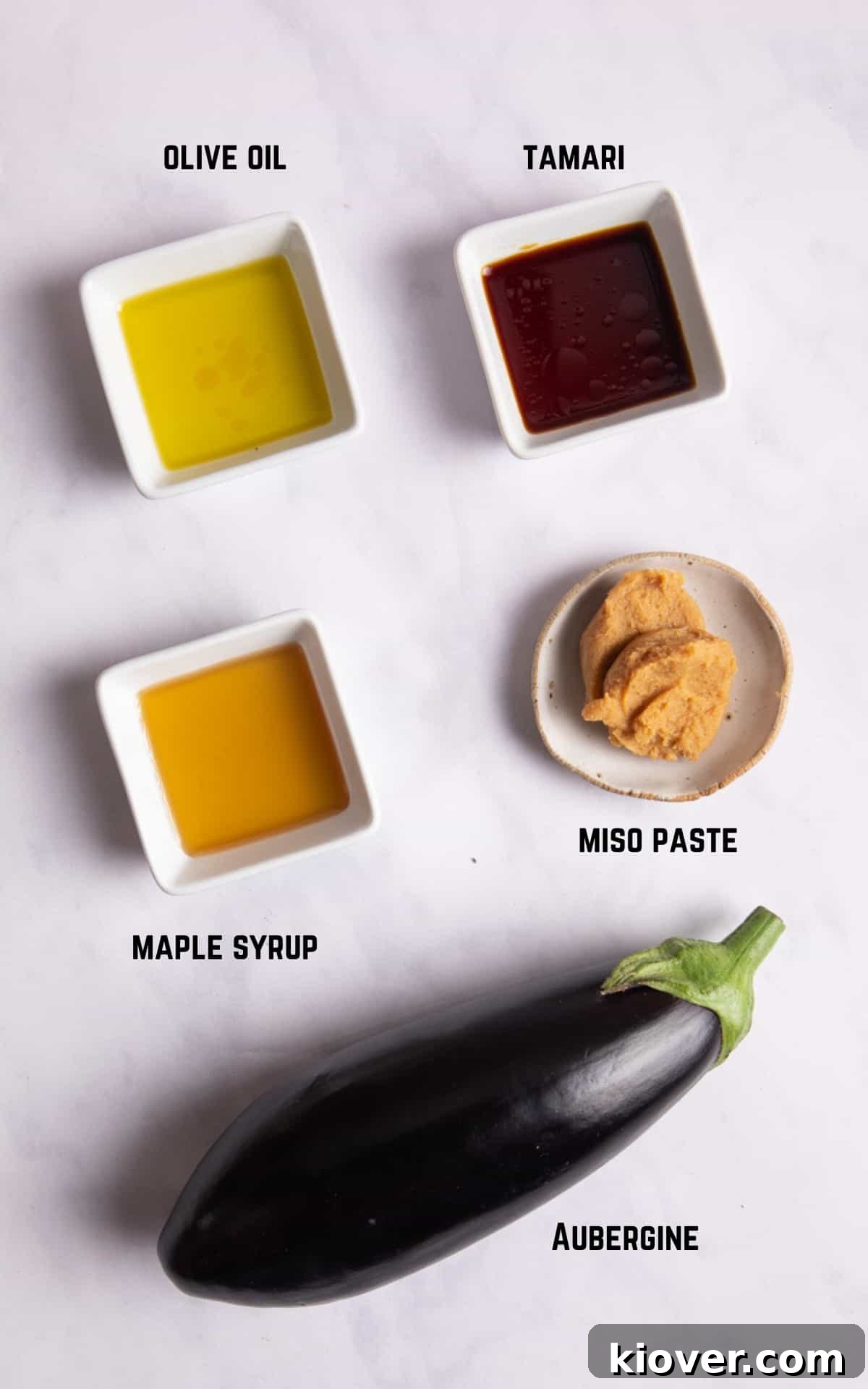
- Aubergines (Eggplants): These are the star of our dish. When oven-baked, their flesh becomes wonderfully tender and creamy, providing the perfect canvas for the rich miso glaze. Look for firm, shiny aubergines that feel heavy for their size, free from blemishes. While any aubergine works, Japanese aubergines are often preferred for their elongated shape and delicate skin.
- Miso Paste: We specifically recommend using white miso (shiro miso) for this recipe. White miso is fermented for a shorter period, resulting in a lighter color and a milder, sweeter, and more subtly umami flavor compared to red miso. It truly enhances the depth of this dish. Miso, meaning ‘fermented beans’ in Japanese, is a paste made from fermented soybeans, often with rice or barley, and salt. It’s a powerhouse of savory, salty, and slightly sweet flavor. Don’t let any leftover miso go to waste; try it in recipes like our Vermicelli Noodles or our Cherry Tomato Pasta Sauce.
- Tamari: For a gluten-free option, tamari is an excellent choice. It’s a type of soy sauce, but unlike conventional soy sauce, it’s typically made without wheat, offering a richer, less salty, and more balanced flavor. It adds a deep, savory complexity to the miso glaze that perfectly complements the aubergine. If gluten isn’t a concern, regular soy sauce can be used as a substitute.
- Maple Syrup: This natural sweetener plays a dual role: it provides a beautiful sweetness that balances the savory miso and creates the characteristic sticky, caramelized texture that makes these miso-glazed aubergines so irresistible. Its subtle earthy notes also pair wonderfully with the other ingredients.
- Olive Oil: A kitchen staple, olive oil helps the aubergines cook evenly and develop a lovely golden-brown crust. It also adds a smooth richness and helps emulsify the miso glaze, ensuring it coats the aubergines beautifully. We use extra virgin olive oil for its quality and flavor, but any good quality cooking oil will work.
For precise measurements and detailed instructions, please refer to the complete recipe card at the bottom of this article.
Ingredient Substitutions and Alternatives
While this recipe is perfect as written, it’s also flexible! Here are some common substitutions you can make without compromising too much on flavor:
- Aubergine Alternatives: If traditional Japanese aubergines are hard to find, or if you simply fancy a change, this recipe works beautifully with other firm vegetables. Sliced courgettes (zucchini) make an excellent vegan alternative, offering a slightly different texture but still absorbing the miso glaze wonderfully. Thick slices of firm tofu or tempeh could also be adapted for a protein-rich variation.
- Maple Syrup Swaps: If you don’t have maple syrup on hand, several sweeteners can step in. Honey can be used as a direct substitute, though it will impart a slightly different flavor profile. Agave syrup is another great vegan alternative that offers a similar sticky consistency and sweetness. Brown rice syrup could also work, providing a less intense sweetness.
- Tamari for Soy Sauce: For those who do not require a gluten-free diet, regular soy sauce can be used in place of tamari. Keep in mind that soy sauce can be saltier, so you might want to start with a little less and adjust to taste. Make sure to choose a high-quality soy sauce for the best flavor.
- Miso Paste Varieties: While white miso is recommended for its mild sweetness, yellow miso (shinshu miso) can also be used. Yellow miso is fermented longer than white and has a slightly stronger, earthier flavor. Red miso (aka miso) is the most robust and salty, and while it could be used, it might overpower the delicate aubergine flavor; use it sparingly and consider adding a touch more sweetener if opting for red miso.
Delicious Variations to Try
This Miso Glazed Aubergine recipe is incredibly versatile, allowing for delightful variations to suit different tastes and occasions. Don’t be afraid to experiment!
- Spice It Up: This is a mild recipe designed for broad appeal, but if you love a kick, it’s easy to add some heat. Incorporate 1/2 to 1 teaspoon of cayenne pepper or red chili flakes directly into the miso glaze mixture. For a fresh burst of heat and color, top the finished aubergines with freshly chopped red chillies or a drizzle of chili oil just before serving. If spicy dishes are your jam, you absolutely must try our Thai Curry Noodle Soup recipe!
- Deluxe Presentation: For a truly elegant and impressive dish, perfect for dinner parties, elevate your Miso Dengaku. The umami-packed flavors are already a show-stopper. Serve them on a bed of perfectly cooked jasmine rice, brown rice, or fluffy quinoa. Enhance the meal with a side of vibrant steamed or air-fried vegetables like our Air Fryer Tenderstem Broccoli. For a heartier meal, top a generous portion of our 15-Minute Peanut Butter Noodles with the glazed aubergines. To add an extra “wow” factor, garnish generously with toasted sesame seeds (black and white for contrast), finely chopped scallions, and fresh coriander. Don’t forget the essential lime wedges for a refreshing squeeze!
- Kid-Friendly Adaptation: This recipe is a fantastic way to introduce children to new flavors and vegetables, offering a boost of nutrients. Miso paste can be quite salty, so when preparing for younger palates, we recommend reducing the amount of miso paste slightly (e.g., use 1.5 tbsp instead of 2 tbsp) or adding a touch more maple syrup to soften the savory edge. To get kids involved in the kitchen, let them help whisk the glaze ingredients or brush the miso onto the pre-baked aubergines. For a sweet treat they can help make themselves, try our 3-Ingredient Oat Cookie recipe or these delightful 5-Ingredient Chocolate Flapjacks for a healthy dessert option.
Step-by-Step Guide: How to Make Miso Glazed Aubergine (Nasu Dengaku)
Creating this delicious Miso Glazed Aubergine is surprisingly straightforward. Follow these simple steps for perfect results every time:
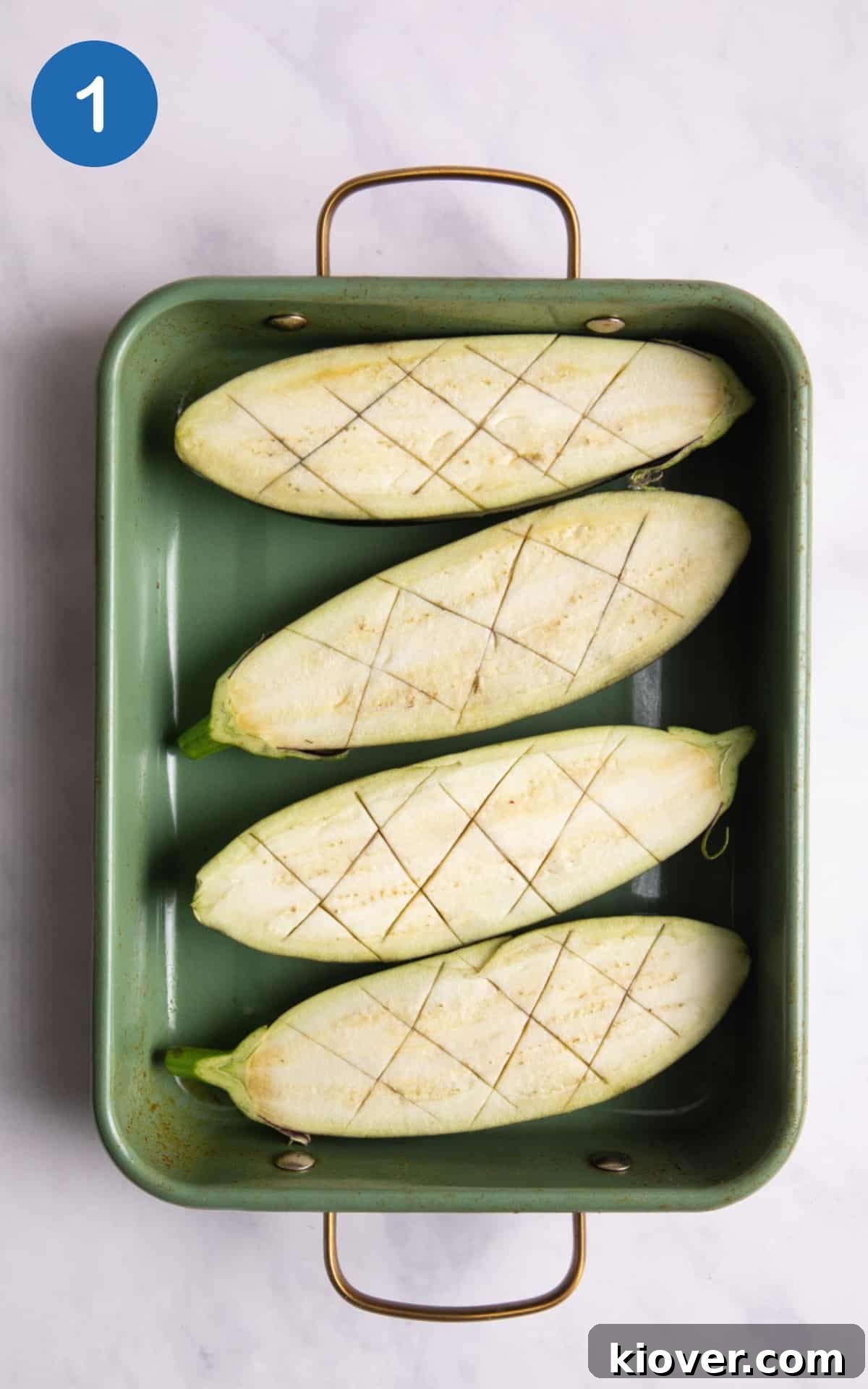
Step 1: Prepare the Aubergines for Roasting. Begin by preheating your oven to 200°C (390°F). Take your aubergines and carefully slice them in half lengthwise, from top to bottom. Place the cut halves, flesh-side up, onto a baking tray. Using a sharp knife, score deep criss-cross slits into the flesh of each aubergine half, being careful not to cut through the skin. These slits are crucial as they allow the aubergine to cook more evenly and, most importantly, absorb the flavorful miso glaze much better. Roast the aubergines in the preheated oven for 20 minutes to soften them before glazing.
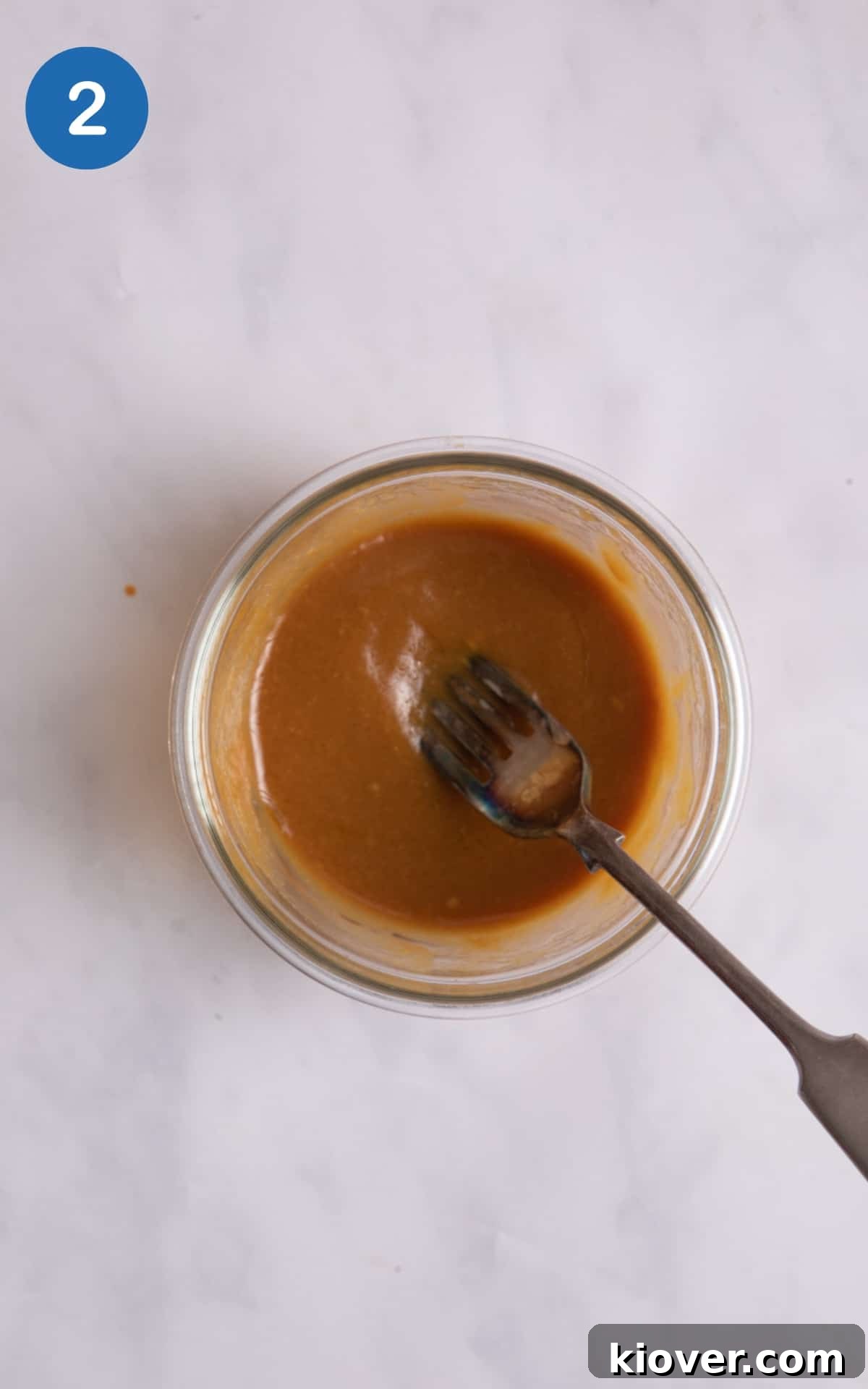
Step 2: Whisk Together the Irresistible Miso Glaze. While the aubergines are roasting, prepare your exquisite miso glaze. In a small mixing bowl, combine the miso paste, tamari, maple syrup, and olive oil. Whisk all the ingredients together vigorously until you achieve a smooth, well-combined, and glossy marinade. This ensures that all the flavors are perfectly integrated and ready to coat your aubergines. The texture should be thick enough to cling to the aubergine flesh.
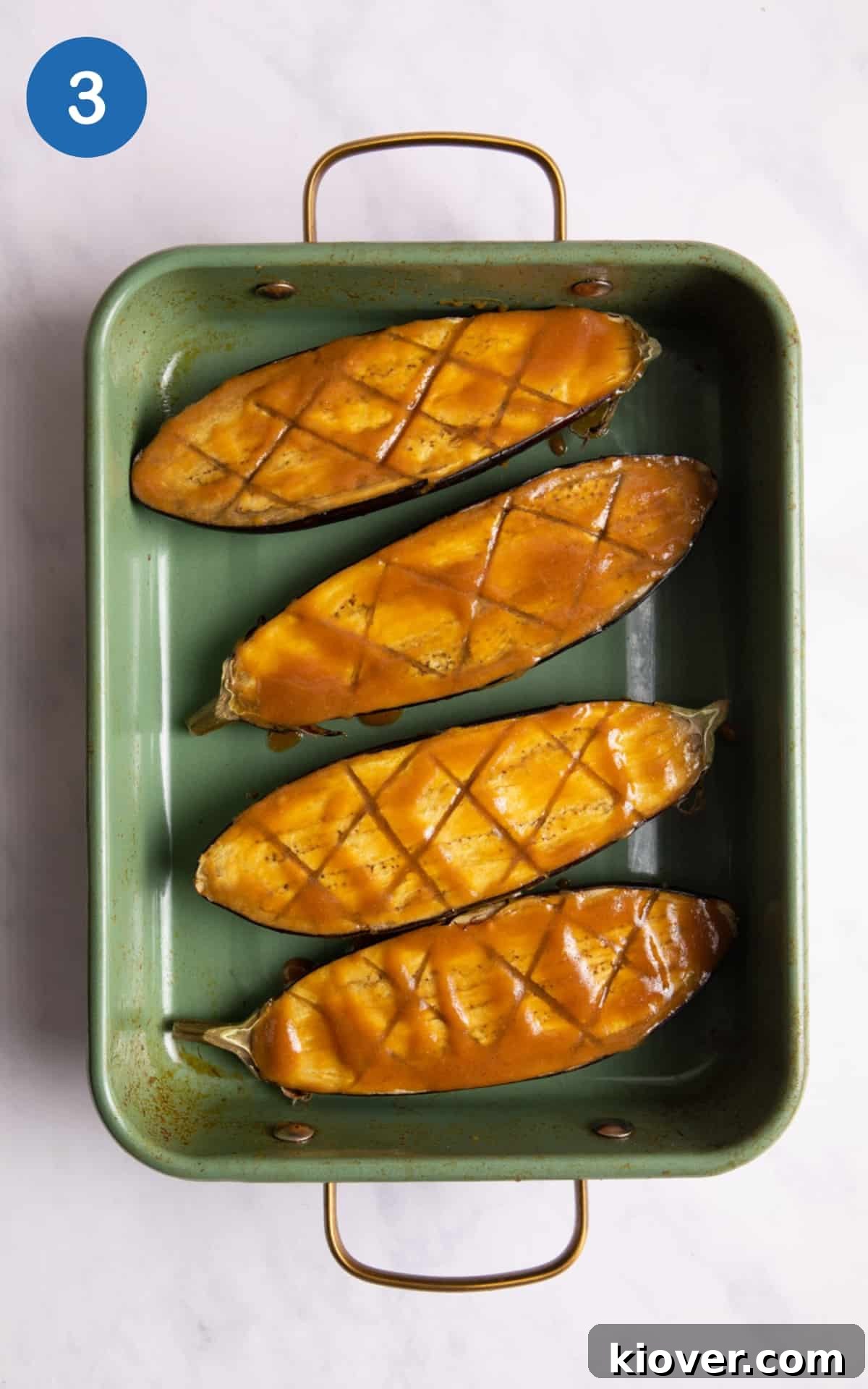
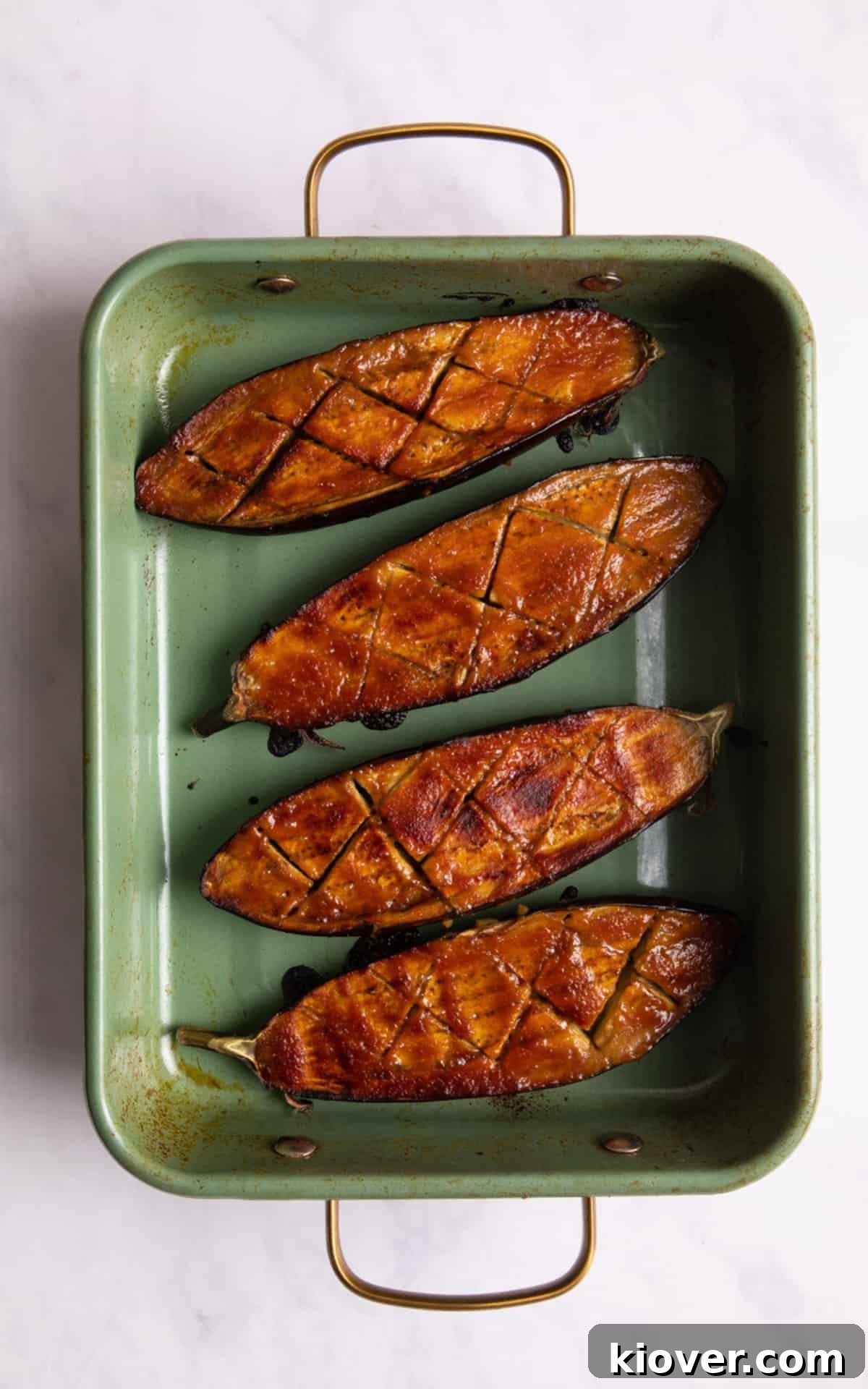
Step 3: Glaze and Finish Baking to Perfection. After the initial 20 minutes of baking, carefully remove the aubergines from the oven. Using a pastry brush or the back of a spoon, generously spread the prepared miso glaze evenly over the scored flesh of each aubergine half, ensuring it seeps into the slits. Return the glazed aubergines to the oven and continue baking for another 20-25 minutes. During this second baking phase, the glaze will caramelize, creating a beautiful deep brown, slightly sticky, and intensely flavorful crust. Keep an eye on them to prevent burning.
Hint: You’ll know your miso-glazed aubergine is perfectly cooked when the top turns a rich, deep brown color, and the flesh is fork-tender. Allow it to cool for 5 minutes before serving for the best flavor and texture.
Creative Serving Suggestions
Once your oven-baked miso aubergines are perfectly cooked, the culinary possibilities are endless! Here are some of my favorite ways to enjoy this versatile and delicious dish:
- Asian Noodle Bowl: Serve the warm miso aubergines over a bed of delicate rice noodles. Garnish generously with freshly chopped coriander, a sprinkle of toasted sesame seeds, and a drizzle of chili oil for an extra layer of flavor and texture.
- Hearty Grain Bowl: Create a wholesome and satisfying meal by placing the miso aubergines on a base of fluffy steamed rice (white or brown) or protein-rich quinoa. Add a vibrant side of our Colourful Roasted Root Vegetables for a complete and balanced plate.
- Mediterranean-Inspired Salad: For a lighter, fresher meal, chop the miso aubergine into bite-sized pieces and add it to a robust mixed bean salad bowl. Pair it with a crisp Rocket Salad, alongside homemade gluten-free falafels and a dollop of creamy Smoky Homemade Hummus for a fusion feast.
- Elegant Side Dish: Miso aubergine makes an exquisite side dish to homemade sushi, adding a warm, umami contrast to the cool, fresh flavors of raw fish or vegetable rolls. It also pairs wonderfully with grilled fish or chicken, offering a sophisticated flavor profile.
- Stir-Fry Addition: Cut the cooked aubergine into cubes and toss it into your favorite vegetable stir-fry during the last few minutes of cooking for an instant flavor upgrade.
- Taco or Wrap Filler: Break up the tender aubergine and use it as a flavorful plant-based filling for tacos, lettuce wraps, or pitta bread, topped with fresh salsa and avocado.
Storing and Reheating Leftovers
One of the many benefits of this Miso Glazed Aubergine recipe is how well it lends itself to meal prepping and batch cooking. These aubergines are just as delicious, if not more so, the day after they are made, as the flavors have more time to meld and deepen.
To Store: Allow any leftover miso aubergines to cool completely to room temperature. Transfer them to an airtight container and store them in the refrigerator for up to 3 days. This makes them perfect for quick lunches or easy dinners throughout the week.
To Reheat: You can gently reheat the aubergines in a microwave for a quick warm-up, but for the best texture, we recommend reheating them in a preheated oven at 180°C (350°F) for about 10-15 minutes, or until warmed through and the glaze is slightly sticky again. This method helps maintain their texture and prevents them from becoming soggy.
To Freeze: We generally do not recommend freezing this recipe. Aubergines have a high water content, and freezing can significantly alter their texture, making them mushy upon thawing. For the best culinary experience, enjoy them fresh or within the recommended refrigeration period.
Miso Aubergine Recipe FAQs
Here are some frequently asked questions about making Miso Glazed Aubergine to help you perfect this delightful dish:
Miso paste is a traditional Japanese condiment produced by fermenting soybeans with salt and a koji starter (a type of fungus) and often with rice, barley, or other grains. It comes in various types, including white (shiro), yellow (shinshu), and red (aka), each with different fermentation times and flavor profiles. White miso, used in this recipe, is lighter, sweeter, and less salty, offering a delicate umami flavor. It’s ultra-savory and packed with depth, available in most major supermarkets, typically found in the world food or Asian ingredients aisle.
No, there is generally no need to salt aubergines or eggplants anymore before cooking. This practice was traditionally used to draw out bitterness and excess water from older, more bitter varieties. However, modern aubergine varieties have been cultivated to be much less bitter, rendering the salting step largely unnecessary for most recipes, including this one. You can save time and still achieve delicious results without it.
Yes, absolutely! The skin of an aubergine is not only edible but also contains beneficial nutrients and fiber. Once the aubergines are cooked, the skin softens beautifully and becomes tender, adding to the overall texture and flavor of the dish. Eating the skin is a great way to reduce food waste and maximize the nutritional benefits of the vegetable.
Leftover miso aubergines can be stored in an airtight container in the fridge for up to 3 days. They are fantastic for meal prep as the flavors can deepen over time. However, we do not recommend freezing this recipe. Freezing and thawing can significantly impact the texture of the aubergines, causing them to become watery and mushy due to their high water content. It’s best enjoyed fresh or from the refrigerator.
Yes, this recipe is naturally vegan! All ingredients (aubergine, miso paste, tamari, maple syrup, olive oil) are plant-based. To ensure it’s gluten-free, simply use tamari instead of regular soy sauce, as tamari is specifically a gluten-free alternative. Most white miso pastes are also gluten-free, but it’s always wise to check the label if you have a severe allergy.
While any large aubergine will work, Japanese aubergines are often preferred for Nasu Dengaku due to their slender shape, thinner skin, and fewer seeds, which results in a more delicate texture. If you can’t find Japanese aubergines, regular globe aubergines are perfectly fine. Just ensure they are firm, heavy, and have shiny, unblemished skin for the best quality.
Discover More Aubergine Recipes
If you’ve fallen in love with the versatility and deliciousness of aubergine through this Miso Glazed recipe, you’re in luck! This fantastic vegetable can be transformed into countless mouth-watering dishes. Explore some of our other favorite aubergine-centric recipes to inspire your next meal:
- Fresh Aubergine Salad
- Spicy Aubergine Curry
- Simple Roasted Aubergine
- Awesome Aubergine Bake
- Peanut Butter Miso Roasted Aubergines
- Ultimate Vegan Moussaka
- Speedy 15-Minute Vegetable Curry
- Hearty Mediterranean Vegetables
- Plant-Based Sausage Traybake
- Quick Air Fryer Aubergine
- Classic Aubergine Parmigiana

YOU MIGHT ALSO LIKE…
Dinner
Vegan Moussaka
Sides
Peanut Butter & Miso Roasted Aubergines
Dinner
Awesome Aubergine Bake
Salads
Courgette Salad
Enjoyed this The BEST Aubergine Miso (Nasu Dengaku) recipe? We’d love to hear from you! Please consider leaving a star rating ⭐️⭐️⭐️⭐️⭐️ below and share your experience in the comments. Your positive feedback is incredibly motivating and helps our community grow.
P.S. Never miss out on delicious new recipes! Get more healthy and exciting recipes sent straight to your inbox weekly – Subscribe Here and receive a free exclusive recipe eBook!

The BEST Aubergine Miso (Nasu Dengaku)
Equipment
-
Chopping Board
-
Knife
-
Baking tray
-
Small Bowl
-
Pastry Brush (optional, but helpful)
Ingredients
- 2 tbsp white miso paste
- 1 tbsp tamari, or soy sauce if not gluten-free
- 1 tbsp maple syrup
- 1 tbsp olive oil
- 2 aubergines
Instructions
-
Firstly, preheat your oven to 200°C (390°F). Slice the aubergines in half lengthwise from top to bottom. Place them on a baking tray, flesh-side up, and score deep criss-cross slits into the flesh, being careful not to cut through the skin. Bake in the oven for 20 minutes to soften.
-
Meanwhile, in a small bowl, whisk together the miso paste, tamari, maple syrup, and olive oil until well combined and smooth, creating your flavorful glaze.
-
Remove the softened aubergines from the oven. Generously spread the prepared miso glaze over the scored flesh of each aubergine half. Return them to the oven and bake for an additional 20-25 minutes, or until the glaze is deeply caramelized and the aubergines are fork-tender.
Notes
Substitutions & Variations: Detailed lists of these options have been provided in the sections above to help you customize your dish.
To Store: Store any leftovers in an airtight container in the refrigerator for up to 3 days. The flavors often deepen overnight, making them even more delicious.
To Freeze: Freezing this recipe is not recommended, as the aubergines’ texture can become watery and mushy upon thawing.
Tip 1: When selecting aubergines, choose ones that feel firm, have a smooth, shiny skin, and are heavy for their size. Avoid soft or squishy aubergines.
Tip 2: Miso paste is a Japanese fermented paste made from soybeans and salt, renowned for its umami richness. White miso, used here, is mild and slightly sweet. You can typically find it in the international foods aisle of most supermarkets.
Tip 3: For the best and most intense flavor, allow the finished miso-glazed aubergines to cool for about 5 minutes before serving. This brief resting period allows the flavors to settle and the glaze to become perfectly sticky.