
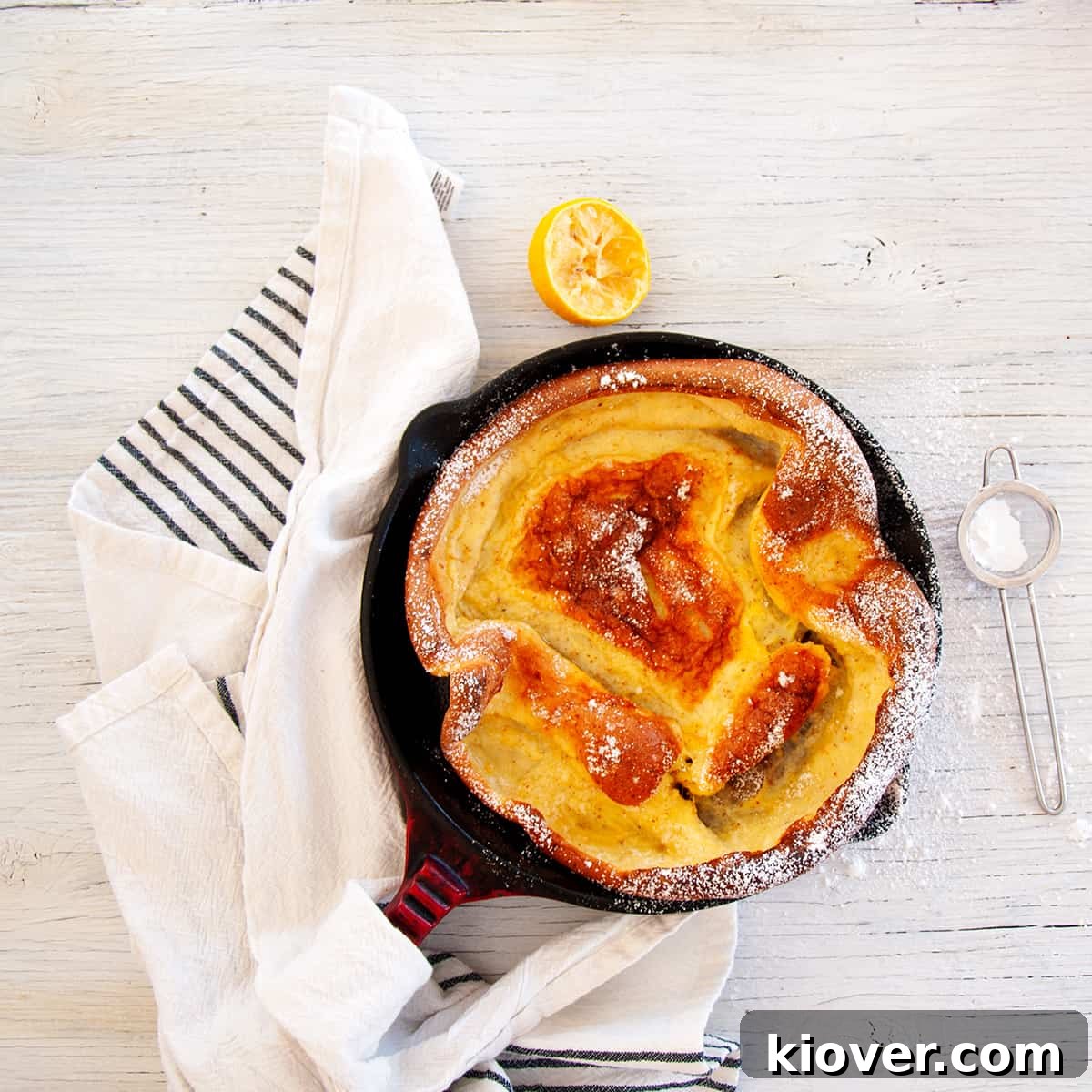
Welcome to the delightful world of the Dutch Baby Pancake! This intriguing culinary creation might look a bit whimsical, but behind its fascinating, puffed appearance lies a truly sweet, rich, and eggy breakfast sensation. Renowned for its remarkable simplicity and impressive presentation, the Dutch Baby is the perfect choice for those mornings when you crave a filling yet effortlessly elegant treat. This particular recipe is designed to be top-notch, ensuring a perfect rise and an exquisite flavor profile that will quickly make it a family favorite. Get ready to discover the magic of this unique pancake and elevate your breakfast game!
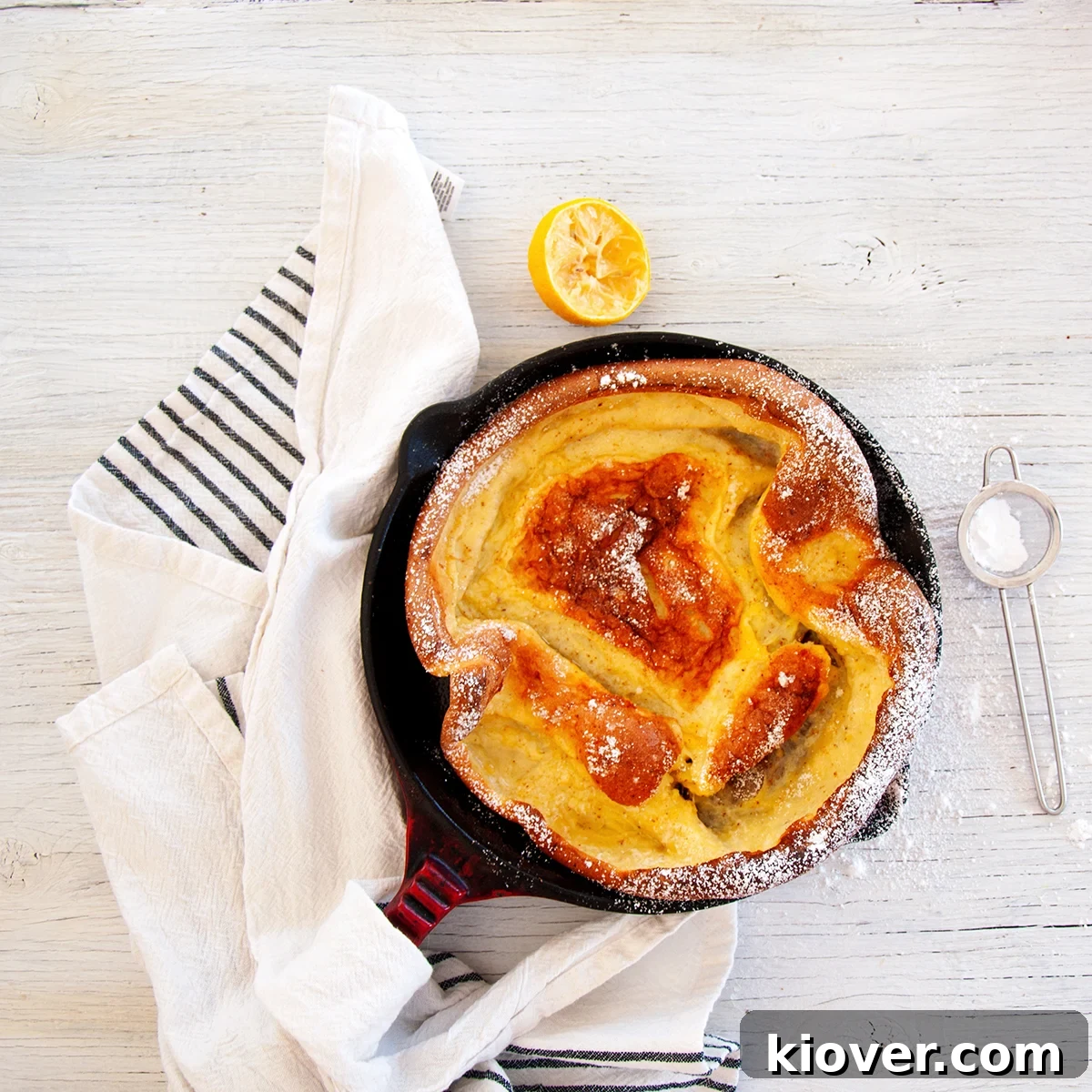
Unveiling the Dutch Baby Pancake: A Culinary Delight
Imagine a breakfast dish that’s as simple to prepare as it is impressive to serve. The Dutch Baby Pancake fits this description perfectly. At its core, this recipe involves little more than melting a generous knob of butter in a screaming hot cast-iron skillet, then pouring in a straightforward, eggy batter. The real magic happens once it enters the oven. If you peek through the oven door, you’ll witness a spectacular transformation: a thin, buttery liquid rapidly expanding and climbing the sides of the skillet, creating an incredibly interesting and wonderfully odd, poofy shape. It’s truly a culinary spectacle, evolving from a humble eggy mixture into a golden, puffed-up, cake-like marvel.
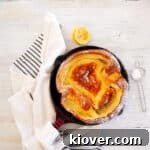
Once this gorgeous puffy pancake emerges from the oven, its delicate structure is ready to embrace your favorite toppings. While many traditions call for a simple dusting of powdered sugar and a bright squeeze of fresh lemon juice – a combination that I personally adore for its tangy-sweet balance – the possibilities are truly endless. Think warm maple syrup cascading over its golden surface, a medley of fresh berries, or even a dollop of whipped cream. Much like a classic pancake or French toast, almost any topping you can imagine will complement the rich, custardy interior and crispy edges of a freshly baked Dutch Baby.
The Indispensable Role of the Cast-Iron Skillet
When it comes to achieving the perfect Dutch Baby Pancake, the choice of cookware is paramount, and a good quality 10-inch cast-iron skillet stands out as the undisputed champion. My personal experience, and the success of this recipe, has been exclusively with a well-seasoned cast-iron skillet. Its superior heat retention and even heat distribution are crucial for the pancake’s dramatic rise and perfectly golden crust.
While theoretically, any oven-safe vessel of similar dimensions *could* work, I haven’t personally tested alternatives. If you venture beyond cast iron, be aware that results may vary in terms of rise, texture, and browning. For instance, glass baking dishes or lighter metal pans might not achieve the intense, consistent heat necessary to trigger the impressive puff that defines a Dutch Baby. Therefore, if you’re serious about creating an authentic and show-stopping Dutch Baby Pancake, investing in a cast-iron skillet is highly recommended. Not only is it perfect for this recipe, but it’s also a versatile kitchen workhorse for everything from searing steaks to baking cornbread. You can easily find one at your local kitchen supply store or online, such as this reliable cast-iron skillet [Affiliate Link].
A Canvas for Creativity: Elevating Your Dutch Baby with Toppings
The beauty of the Dutch Baby Pancake lies not only in its ease of preparation but also in its incredible versatility when it comes to toppings. Truly, the sky is the limit, allowing you to customize each serving to suit individual tastes and occasions. While I’m partial to the classic combination of a tart squeeze of lemon juice and a delicate sprinkle of powdered sugar – a pairing that beautifully cuts through the richness of the pancake – don’t hesitate to let your culinary imagination soar.
Consider a lavish drizzle of pure maple syrup or a generous dollop of fruit preserves for a traditional sweet treat. For a burst of freshness, vibrant seasonal berries like blueberries, raspberries, or sliced strawberries are excellent choices. You could even go a step further and create a warm berry compote for an extra layer of flavor and texture. Beyond the sweet, some adventurous foodies enjoy savory Dutch Babies, topped with cheese, herbs, or even a fried egg. While less common, it’s a testament to the pancake’s foundational versatility.
A fun experiment, and one I encourage, is to incorporate fruits directly into the batter before baking. Imagine thinly sliced apples or pears nestled at the bottom of the skillet, caramelizing as the pancake puffs around them. This method might even harken back to the original German pancake recipes (Apfelpfannkuchen) which frequently featured apples or other fruits baked directly into the batter, offering a delightful twist on a classic. The presentation can also elevate the experience; a beautifully arranged array of fruits or a dusting of cocoa powder can turn a simple breakfast into a gourmet experience.
The Marvel of the Rise: Understanding Dutch Baby Science
One of the most captivating aspects of the Dutch Baby Pancake is its dramatic puff and rise without the aid of traditional leavening agents like yeast or baking powder. So, what exactly is happening in your oven? The answer lies in a fascinating interplay of heat, steam, and physics, my friends.
Our pancake batter begins as a simple liquid, primarily composed of eggs, milk, and flour. When this liquid batter is poured into a preheated, hot cast-iron skillet and placed into an even hotter oven (typically around 425°F or 220°C), several key processes occur simultaneously. The intense heat causes the liquid components of the batter, particularly the moisture from the milk and eggs, to rapidly convert into steam. At the same time, the egg proteins in the batter begin to coagulate and solidify, creating a structure that can trap these expanding steam bubbles. As the steam expands within this developing structure, it forces the batter upwards and outwards, creating those signature high walls and a dramatically puffed center.
This process is very similar to what happens when you make popovers or Yorkshire puddings, which also rely on a high-temperature oven and steam to create their hollow, airy structures. The fundamental principle is the same: a high-liquid batter hits extreme heat, generating steam that inflates the batter before the structure sets. The Dutch Baby, however, differentiates itself from Yorkshire pudding primarily by its sweet profile and lack of savory ingredients like beef drippings, instead embracing sweet toppings for a delightful breakfast or dessert. The result is a beautifully golden-brown, crispy exterior and a soft, custardy interior that collapses slightly upon cooling, leaving a wonderfully tender and flavorful base.
A Glimpse into the History of the Dutch Baby Pancake
The intriguing narrative of the Dutch Baby Pancake traces its roots back to the bustling city of Seattle, Washington, specifically to a beloved local establishment known as Manca’s Cafe. Owned by the entrepreneurial Victor Manca, the cafe is credited with popularizing this specific pancake variation. It’s believed that Manca’s Cafe may have been serving a version of the traditional German pancake, often referred to as Apfelpfannkuchen, which literally translates to “apple pancake.” Remove the apples, and you’re left with ‘Pfannkuchen’ – essentially, a pancake.
Victor Manca, however, began serving a particular adaptation that would eventually become known worldwide as the Dutch Baby Pancake. What truly distinguishes the Dutch Baby from its broader German pancake relatives is its unique preparation method: it is exclusively baked in the oven and, crucially, contains no chemical leavening agent. While German pancakes encompass a wide spectrum of cooking methods and may or may not include leavening, the Dutch Baby adheres strictly to its oven-baked, leavening-free identity. This specific combination results in the dramatic, airy puff that has captivated diners for generations. It caught on rapidly, and the Dutch Baby became a staple.
It’s worth noting, as a disclaimer, that the precise origins of culinary items can often be shrouded in the mists of history. The information regarding Manca’s Cafe and Victor Manca’s role is largely derived from the blog of a Manca family ancestor, which provides valuable insights into this delicious legacy.
The Origin of the Name ‘Dutch Baby’
The charmingly peculiar name “Dutch Baby” has an equally charming origin story. Lore has it that one of Victor Manca’s children, when very young, affectionately named the pancake. It is speculated that she may have struggled to properly pronounce “Deutsch” (the German word for German), inadvertently saying “Dutch” instead. As for the “Baby” part, who can say for sure? Perhaps it was due to its relatively smaller size compared to traditional large German pancakes, or simply the endearing nature of children’s unique expressions. As the saying goes, kids say the darndest things, and sometimes, those things stick!
Pancakes Through the Ages: A Brief History
While we’ve explored the specific lineage of the Dutch Baby, it’s fascinating to consider the broader history of pancakes, which extends back through millennia. The Dutch Baby, in essence, is a modern derivation or a particular reflection of traditional German pancakes. German culinary traditions boast a rich variety of Pfannkuchen recipes, each with distinct baking methods and varying uses of leavening agents, showcasing the diverse evolution of flat, griddled, or baked cakes.
Delving even further into antiquity, the concept of a “pancake” in some form has been a part of the human diet for an astonishingly long time, with evidence suggesting humans have been making flatbread-like items as far back as 30,000 years ago. More recognizable versions began to appear in ancient Greece, with recipes dating back to 5 BC. It’s a fair assessment that for as long as grains have been cultivated and ground, and as long as humanity has harnessed fire for cooking, some iteration of a flat cake – akin to what we now call a pancake – has been a dietary staple. This culinary lineage intertwines deeply with the history of bread, particularly flatbreads that often forgo rising agents, highlighting the ancient and enduring appeal of simple, grain-based cooked dishes.
Dutch Baby Pancake: Step-by-Step Visual Guide
To help you visualize the straightforward process of creating a magnificent Dutch Baby Pancake, here are a few key stages. While the full recipe card below provides detailed instructions, these images offer a quick overview of the essential steps that lead to that incredible puffed result.
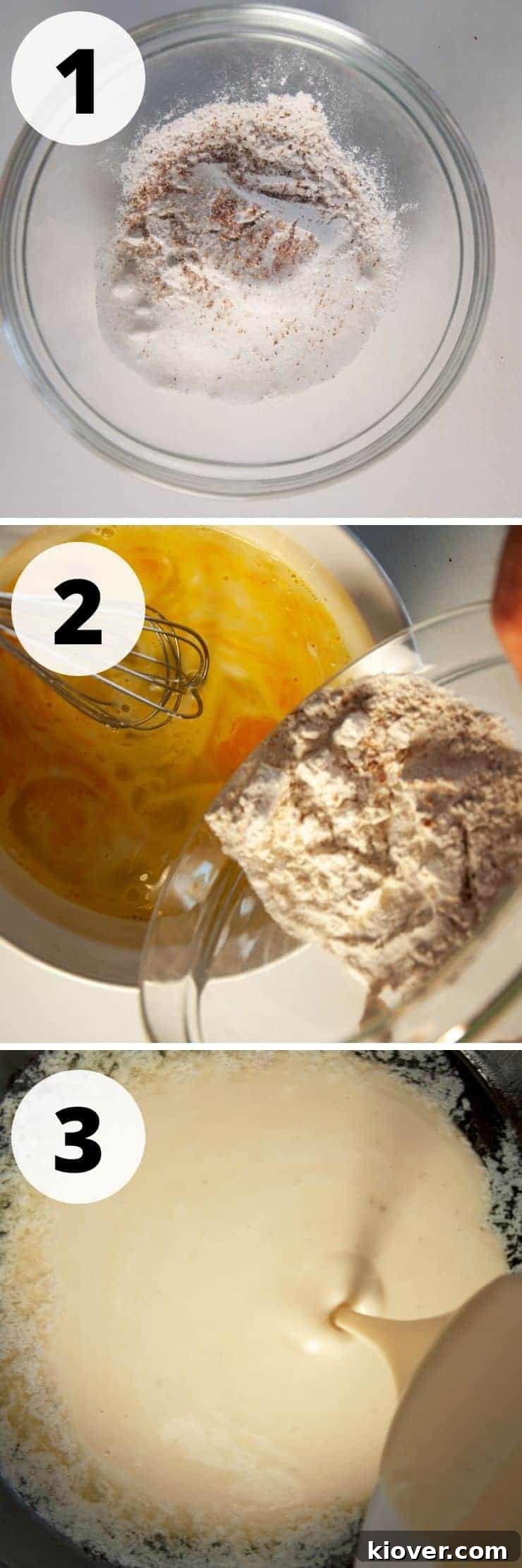
2. Wet ingredients (milk, eggs, vanilla) are mixed, then slowly combined with the dry ingredients to form a smooth batter.
3. The perfectly mixed batter is carefully poured into a preheated cast-iron skillet, which already holds melted, sizzling butter, ready for its dramatic transformation in the oven.
Expert Tips for Your Best Dutch Baby Pancake
Creating a truly spectacular Dutch Baby Pancake is wonderfully simple, but a few expert tips can ensure your success and make the process even more enjoyable. Follow these guidelines for a perfect, consistently puffed, and delicious result every time:
- Invest in Quality Cookware: If you don’t already own one, seriously consider acquiring a 10-inch cast-iron skillet. Its unparalleled heat retention and even cooking surface are absolutely vital for the Dutch Baby’s characteristic high rise and crispy edges. It’s a foundational tool for this recipe.
- Preheating is Key: Ensure your oven and your cast-iron skillet are both thoroughly preheated to the specified temperature (425°F or 220°C). The intense initial heat is what jump-starts the dramatic puff. Don’t rush this step!
- Handle with Care: Always use sturdy pot holders or oven mitts when handling your hot cast-iron skillet. It retains heat exceptionally well, so caution is paramount, both in and out of the oven.
- Proper Batter Consistency: While the batter is simple, ensure it’s well-whisked and smooth, without lumps. This allows for an even rise and texture. Don’t overmix, though, as that can develop gluten too much.
- Effortless Removal: Once baked, use a reliable, thin metal spatula to gently slide underneath the edges of the pancake to free it from the skillet. A well-seasoned cast iron should make this relatively easy, with minimal sticking.
- Embrace Topping Creativity: While lemon juice and powdered sugar offer a classic and delightful balance, feel free to experiment. Maple syrup, fresh berries, fruit compotes, or even a sprinkle of cinnamon sugar are all fantastic.
- Serve Immediately: For the best experience, serve your Dutch Baby Pancake hot from the oven. It will deflate slightly as it cools, but its flavor remains wonderful. The initial impressive puff is best enjoyed fresh.
Essential Tools and Ingredients for Your Dutch Baby Journey
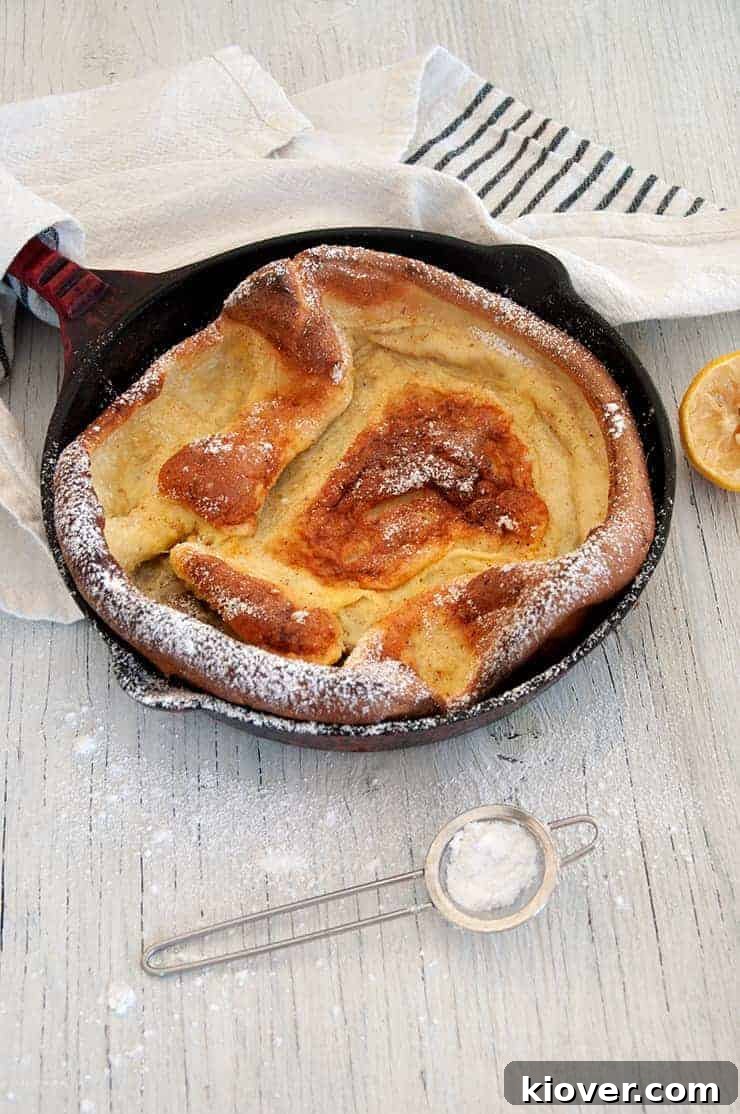
To make your Dutch Baby Pancake experience as smooth and successful as possible, having the right equipment and ingredients on hand is crucial. Here are some of the key items I recommend for this recipe:
- A reliable 10-inch Cast-iron skillet: The cornerstone of this recipe, ensuring even heating and a perfect puff.
- A sturdy Metal spatula: Essential for gently freeing the pancake from the skillet without damaging its delicate structure.
- A fine Sifter for powdered sugar: For that elegant, even dusting of powdered sugar, adding both beauty and a touch of sweetness.
- Fresh, Quality Ingredients: Ensure your eggs are fresh, your milk is whole for richness, and your vanilla extract is of good quality for the best flavor.
Share Your Dutch Baby Success!
We absolutely love hearing from you! If you embarked on this delicious Dutch Baby Pancake adventure, we hope you adored the results. Please share your experience and let us know how it went by leaving a comment and a rating in the section below. Your feedback helps fellow home cooks and inspires new culinary creations.
If you’re feeling extra generous and want to support our passion for sharing amazing recipes, please consider sharing this Dutch Baby Pancake recipe with your friends and family! You can easily post it on your favorite social media platforms like Facebook or Pinterest, or even email it directly to your meemaw (or anyone who loves a good breakfast!). And, of course, for more delicious recipes and updates, we’d be thrilled if you signed up for our email newsletter, which you can typically find linked on this page.
Print Recipe Card
Dutch Baby Pancake Recipe
5 from 3 reviews
Author: Ben Myhre
Prep Time: 5 minutes
Cook Time: 25 minutes
Total Time: 30 minutes
Yield: 4 servings
Category: Breakfast
Method: Baking
Cuisine: German
Description
The Dutch Baby Pancake is a delightful, easy-to-make breakfast or brunch dish, baked to golden perfection in your oven. It offers a rich, custardy interior reminiscent of French Toast, combined with the impressive, airy puff of a popover. This unique breakfast classic is not only a joy to prepare but also a guaranteed crowd-pleaser, making it an instant favorite in any household.
Ingredients
- 3 large eggs (at room temperature)
- ½ cup whole milk
- 1 teaspoon vanilla extract
- ½ cup all-purpose flour
- 2 tablespoons granulated sugar
- Pinch of ground nutmeg
- 4 tablespoons unsalted butter
- 1 tablespoon fresh lemon juice, for topping
- 2 teaspoons powdered sugar, for topping (or more, to taste)
Instructions
- Prepare Your Oven: Preheat your oven to a high temperature of 425° Fahrenheit (220°C). Ensuring the oven is fully preheated is crucial for the dramatic puff of the Dutch Baby.
- Combine Wet Ingredients: In a medium mixing bowl, add the whole milk, eggs (preferably at room temperature for better incorporation), and vanilla extract. Whisk vigorously until the egg yolks are completely broken and all ingredients are thoroughly combined and slightly frothy.
- Combine Dry Ingredients: In a separate, smaller bowl, whisk together the all-purpose flour, granulated sugar, and a pinch of ground nutmeg until well mixed.
- Create the Batter: Gradually add the dry ingredient mixture into the wet ingredients, whisking continuously. Continue to whisk until the batter is smooth, lump-free, and all ingredients are fully incorporated. Set the batter aside.
- Preheat the Skillet with Butter: Once your oven is fully preheated, carefully add the 4 tablespoons of butter to your 10-inch cast-iron skillet. Place the skillet with butter onto the middle rack of the preheated oven.
- Melt the Butter: Allow the skillet to remain in the oven just until the butter is completely melted and slightly browned, glistening, and sizzling. This typically takes 2-3 minutes.
- Add the Batter: Carefully remove the hot skillet from the oven (using oven mitts!). Pour the prepared batter directly into the center of the sizzling, melted butter in the skillet.
- Bake for the Rise: Immediately return the skillet to the middle rack of the oven. Bake for approximately 20 minutes. During this time, resist the urge to open the oven door, as this can cause the pancake to deflate.
- Rest and Set: After 20 minutes, turn the oven off, but allow the Dutch Baby Pancake to remain in the closed oven for an additional 5 minutes. This crucial step helps the pancake to set its structure and maintain its impressive puff as it begins to cool slightly.
- Remove and Serve: Carefully remove the skillet from the oven. Use a good, thin metal spatula to gently slide underneath the edges and bottom of the pancake to ensure it releases cleanly from the skillet. A slight stick at the bottom is normal and can be gently freed.
- Garnish and Enjoy: Liberally sprinkle with fresh lemon juice and powdered sugar to your taste. Serve immediately while warm and puffed for the best experience.
Chef’s Notes & Tips
- If you don’t have one, consider getting a cast-iron skillet [Amazon Affiliate Link] – it’s truly the secret weapon for this recipe!
- The order of adding wet to dry ingredients, or vice-versa, won’t drastically alter the outcome for this simple batter, so feel free to use your preferred method.
- Always exercise caution and use reliable oven mitts or pot holders when handling your intensely hot cast-iron skillet.
- When removing the pancake from the skillet, a thin, sharp metal spatula works best to ensure a clean release from the bottom and sides.
- While a dusting of powdered sugar and a squeeze of fresh lemon juice is classic, don’t limit yourself! Maple syrup, fresh berries, fruit compotes, or even a sprinkle of cinnamon sugar are fantastic alternatives.
- For optimal puff, ensure your eggs and milk are at room temperature. This helps them combine more smoothly and expand more readily in the hot oven.
- Avoid opening the oven door during the main baking period. The sudden drop in temperature can cause the Dutch Baby to deflate prematurely.
Nutrition Information
(Nutritional values are approximate and may vary based on specific ingredients and preparation methods.)
- Serving Size: 1/4 Skillet
- Calories: 260
- Sugar: 9 g
- Sodium: 54 mg
- Fat: 16 g
- Saturated Fat: 9 g
- Unsaturated Fat: 7 g
- Carbohydrates: 21 g
- Fiber: 1 g
- Protein: 7 g
- Cholesterol: 169 mg