
In the vibrant tapestry of global beverages, few drinks capture the essence of festivity and relaxation quite like Sangria. This beloved wine-based cocktail, renowned for its fruity charm and refreshing taste, has a lineage as rich and intricate as the history of wine itself. From ancient civilizations enjoying spiced concoctions to the modern-day pitcher gracing tables worldwide, Sangria’s journey is a fascinating tale of cultural exchange, evolving tastes, and the delightful convergence of simple ingredients. This article delves deep into the captivating history of Sangria, tracing its roots from millennia-old winemaking traditions to its current status as a global favorite.
What is Sangria? A Taste of Tradition
For those unfamiliar with its allure, Sangria is an experience waiting to happen. At its core, it’s a refreshing concoction typically made with wine, enhanced with various fruits, and often fortified with a spirit like brandy or triple sec. Sugar or other sweeteners are also common additions, balancing the flavors and creating a harmonious blend. While its identity is deeply intertwined with Spanish culture and cuisine, where it’s a staple in restaurants and homes, its popularity has transcended borders, becoming a go-to summer drink for many.
The European Union, recognizing Sangria’s distinct character and heritage, has established legal standards for its production and labeling. This regulation ensures authenticity and protects consumers, particularly highlighting its Spanish and Portuguese origins. The official EU definition provides a clear framework:
a drink obtained from wine, aromatized with the addition of natural citrus-fruit extracts or essences, with or without the juice of such fruit and with the possible addition of spices, sweetened and with CO2 added, having an acquired alcoholic strength by volume of less than 12 % vol. The drink may contain solid particles of citrus-fruit pulp or peel and its colour must come exclusively from the raw materials used. The description ‘Sangria’ must be accompanied by the words ‘produced in . . .’ followed by the name of the Member State of production or of a more restricted region except where the product is produced in Spain or Portugal. The description ‘Sangria’ may replace the description ‘aromatized wine-based drink’ only where the drink is manufactured in Spain or Portugal. Council Regulation (EEC) No 1601/91 of 10 June 1991.
While often associated with red wine, ‘Sangria Roja,’ delicious variations are also crafted with white wine, known as ‘Sangria Blanca,’ or even sparkling wine. The beauty of Sangria lies in its adaptability; a myriad of fruits can be incorporated, from classic oranges and lemons to berries, apples, and peaches, allowing for endless customization. During my travels through Spain, I was struck by the ubiquitous presence of Sangria, with each establishment proudly presenting its unique, often secret, recipe – a testament to its cultural significance and personal touch.
The journey from simple wine to the complex and celebrated drink we know as Sangria is rooted in the individual histories of its three fundamental components: wine, sugar, and fruit. Understanding these elements is key to appreciating the full narrative of Sangria’s evolution.
The Cornerstone: A Deep Dive into Wine’s Legacy
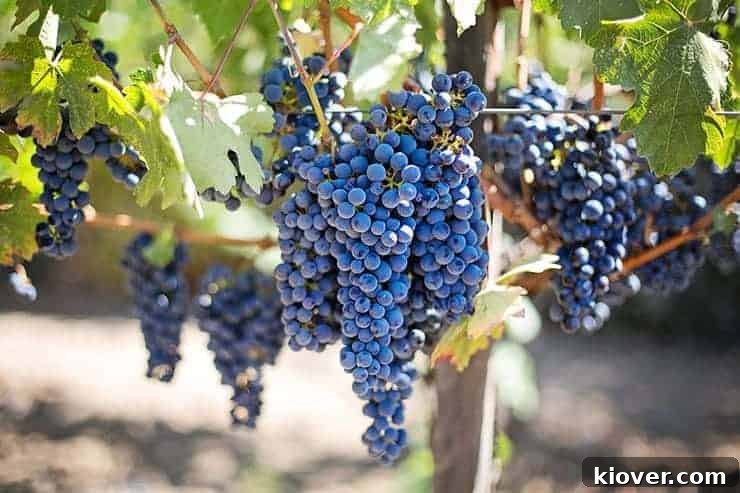
Undoubtedly, wine forms the very bedrock of Sangria. Without it, there is no Sangria. Its rich, aromatic presence provides the foundation upon which all other flavors are built. Consequently, the history of Sangria is inextricably linked to the extensive and storied history of wine itself, a beverage that has accompanied humanity for millennia.
The origins of wine stretch back to the dawn of agriculture. Archaeological evidence suggests that humans were producing a form of fermented grape beverage as early as 7000 BC in China, where pottery jars contained residues of a mixed fermented drink of rice, honey, and fruit, including grapes. Further compelling evidence points to the earliest known winery, complete with a wine press and fermentation vats, dating back to 4100 BC in Armenia. This discovery underscores wine’s deep roots in human civilization and its early role in cultural and social practices.
As civilizations rose and fell, wine traveled and transformed. It was cherished by the ancient Egyptians, vital to Greek symposia, and extensively cultivated across the Roman Empire, which spread viticulture throughout Europe. By medieval times, wine was widely available across the continent. It played a significant role in daily life, not just as a drink, but also in religious ceremonies and as a source of calories and perceived medicinal benefits.
A common misconception is that medieval people drank wine and beer solely because water was unsafe. While cleanliness standards were certainly different, historians now suggest that the primary reasons were more nuanced. Wine and beer were often consumed for their caloric value, their intoxicating effects, and the belief that they were healthier than water, which could sometimes be stagnant or unappealing. As this article debunks, it wasn’t a universal avoidance of water due to pervasive danger, but rather a preference driven by taste, perceived health benefits, and simply, availability. Wine was an integral part of their diet and culture, making it an obvious base for future beverage innovations like Sangria.
The Sweet Touch: Unraveling the History of Sugar
The history of Sangria cannot be fully appreciated without acknowledging the pivotal role of sugar. Today, sugar is an inexpensive and readily available commodity, found in virtually every household. However, this accessibility is a relatively modern phenomenon. For much of human history, sweetness was a luxury, primarily derived from honey.
Before the widespread processing of sugarcane, honey served as mankind’s principal sweetener. Our affinity for honey is ancient, predating human evolution, as evidenced by observations of our primate relatives, like chimpanzees, foraging for it today. The shift to processed sugar marked a significant turning point in global gastronomy and trade.
Sugarcane, native to Southeast Asia and New Guinea, was first domesticated and processed into granular sugar in India around 500 BC. From India, sugar cultivation and processing spread to Persia, then to the Arab world. It was through Arab expansion into the Mediterranean, particularly Spain, that sugarcane was introduced to Europe during the Middle Ages. However, for centuries, sugar remained an exotic and incredibly expensive spice, accessible only to the wealthy elite. It was transported along arduous trade routes, making it a precious commodity.
The true revolution in sugar’s availability began with the Age of Exploration and the establishment of vast sugar plantations in the Caribbean and the Americas. European colonial powers, particularly Spain, Portugal, Britain, and France, exploited the ideal growing conditions in the New World. This led to an explosion in production, facilitated by the horrific transatlantic slave trade, transforming sugar from a luxury item into a major commodity. By the 17th and 18th centuries, the increased supply dramatically lowered prices, making sugar accessible to the burgeoning middle classes across Europe. This democratization of sweetness was crucial for the development of many sweet drinks and desserts, including Sangria, allowing its rich, fruity flavors to be properly balanced and enhanced.
Fruity Fusion: The Evolution of Fruit in Beverages
The incorporation of fruit is arguably the most vibrant and variable component of Sangria. While the choice of fruit can be quite forgiving in a modern recipe, its historical availability played a crucial role in the drink’s development. The evolution of fruit cultivation and global trade networks directly influenced what was available to infuse into wine.
Many of the fruits we associate with Sangria today, particularly citrus, have fascinating histories of their own. Sweet oranges, a common and beloved ingredient in Sangria, were not widely available in Europe until the 15th century. Earlier citrus varieties, such as the bitter orange (Seville orange), were introduced to Europe much earlier, primarily through the Moorish conquest of Spain, prized for their medicinal qualities and zest rather than their sweet juice. The sweet orange, originating in China, made its way to Europe via trade routes, significantly impacting culinary traditions, especially in Spain and Portugal, where it found a hospitable climate for cultivation.
Beyond oranges, other fruits like lemons, limes, apples, and various berries also became more accessible over time. The ability to preserve fruits, either through sugaring, drying, or later canning, also influenced year-round availability. However, the true essence of Sangria often comes from fresh, seasonal fruits, reflecting local harvests. The diverse agricultural bounty, particularly in a region like Spain, which boasted a rich array of fruits due to its varied climate and historical trade connections, provided the perfect palette for crafting fruit-infused wines.
Ancestral Sips: Tracing Sangria’s Predecessors
While Sangria evolved from wine, its path was not a direct one. Instead, it emerged from a long tradition of flavoring and doctoring wine, leading to several historical predecessors that paved the way for the modern drink.
Hippocras: The Medieval Elixir
Long before Sangria, Europeans were already enhancing their wine. One of the most notable predecessors was Hippocras, a spiced and sweetened wine popular throughout medieval and Renaissance Europe. Named after the “sleeve of Hippocrates,” a conical cloth filter used to strain the drink, Hippocras could be served warm or cold and was infused with a variety of spices such as ginger, cinnamon, cloves, and nutmeg, along with honey or sugar. It was revered for its perceived medicinal properties as well as its delightful taste. Hippocras can be seen as the venerable grandfather, laying the groundwork for both Sangria and its festive cousin, mulled wine, by establishing the practice of infusing wine with flavor and sweetness.
Sangaree: The Caribbean Connection
An even closer relative to Sangria is Sangaree, which appears to be an evolution of Hippocras but a direct precursor to Sangria. Historical mentions of Sangaree date back as far as 1731. What is particularly intriguing about Sangaree is its strong association with the West Indies or Caribbean. This connection is significant because it highlights the burgeoning availability of sugar from the New World, reinforcing the “sugar connection” we discussed earlier. Sangaree typically featured wine (often Madeira or Port), water, sugar, and nutmeg, sometimes with a dash of citrus. Its origins in the Caribbean suggest a vital trading path that could have brought this version of the drink, or similar concepts, back to Spain and Portugal.
Interestingly, if we consult historical literary references, the term “Sangria” barely registers until the early 1800s. Even then, its initial appearances were often linked to the Spanish word for “bloodletting” (referring to the color) rather than a popular beverage. It wasn’t until much later that “Sangria” as a drink began to emerge distinctly. The journey of these terms, as tracked by historical data, paints a vivid picture:
The Google Ngram Viewer chart clearly illustrates the trajectory: Hippocras enjoyed significant popularity for centuries, eventually being surpassed by Sangaree. However, a dramatic shift occurs in the mid-20th century. While Sangria shows legitimate, albeit small, mentions in the early 1900s, its popularity takes a remarkable leap around 1964. By 1970, references to Sangria in literature significantly outstrip both Hippocras and Sangaree, marking its definitive rise to prominence.
The Iberian Connection: Spain’s Pivotal Role
The question of why Spain is so central to Sangria’s identity is answered by its unique historical and geographical confluence. As we’ve explored, Spain was not only a major gateway for sugar trade from the New World but also a significant producer of wine and, crucially, citrus fruits. The warm Mediterranean climate of Spain is ideal for cultivating wine grapes and oranges, which were introduced and perfected over centuries, partly due to the sophisticated agricultural techniques brought by the Moors.
This perfect alignment—plentiful wine, affordable sugar, and abundant citrus fruits—created the ideal conditions for Sangria’s birth. It’s highly probable that the drink, in a form recognizable today, originated in Spain (and likely Portugal) during the 18th or 19th century, evolving from earlier wine-based punches and the Sangaree tradition. This is where the elements truly crystallized into the vibrant, fruity wine punch we celebrate.
The Global Stage: Sangria’s Modern Ascendance at the 1964 World’s Fair
While Sangria had been enjoyed locally in Spain and Portugal for generations, its global meteoric rise can largely be attributed to a single event: the 1964 World’s Fair in New York City. As the Ngram chart vividly shows, this year marks a dramatic inflection point in Sangria’s recognition. At this monumental event, Sangria was prominently featured and served at the Spanish pavilion, captivating American visitors with its exotic yet approachable charm.
The fair introduced Sangria to a vast new audience, sparking immediate interest and widespread media coverage. Americans, eager for new culinary and beverage experiences, quickly embraced this refreshing, communal drink. The exposure at such a high-profile international event propelled Sangria from a regional specialty to an international sensation. From that moment forward, its popularity steadily climbed, solidifying its place in global cocktail culture.
The Enduring Appeal of Sangria
Today, Sangria stands as a testament to the power of simple ingredients beautifully combined. It embodies a spirit of conviviality and enjoyment, making it a perfect choice for gatherings, celebrations, or a quiet moment of personal indulgence. As I savor a delightful glass of white Sangria, I’m reminded of its accessibility and lack of pretension. Unlike some other wine-based drinks that might invite intricate tasting rituals, Sangria invites pure, unadulterated enjoyment. There are countless variations, and very few “wrong” ways to make it, encouraging creativity and personal preference. The joy of discovering each restaurant’s unique take on Sangria in Spain is a cherished memory, highlighting its versatility and enduring cultural significance.
This journey through Sangria’s rich history reveals more than just the evolution of a drink; it tells a story of human ingenuity, global trade, and the delightful fusion of flavors across centuries. From ancient vineyards to modern-day pitchers, Sangria remains a cherished emblem of hospitality and a vibrant connection to a storied past. May your next glass of Sangria be as inspiring as its history. If you enjoyed this exploration, consider signing up for email updates to delve into more fascinating culinary and beverage histories.