
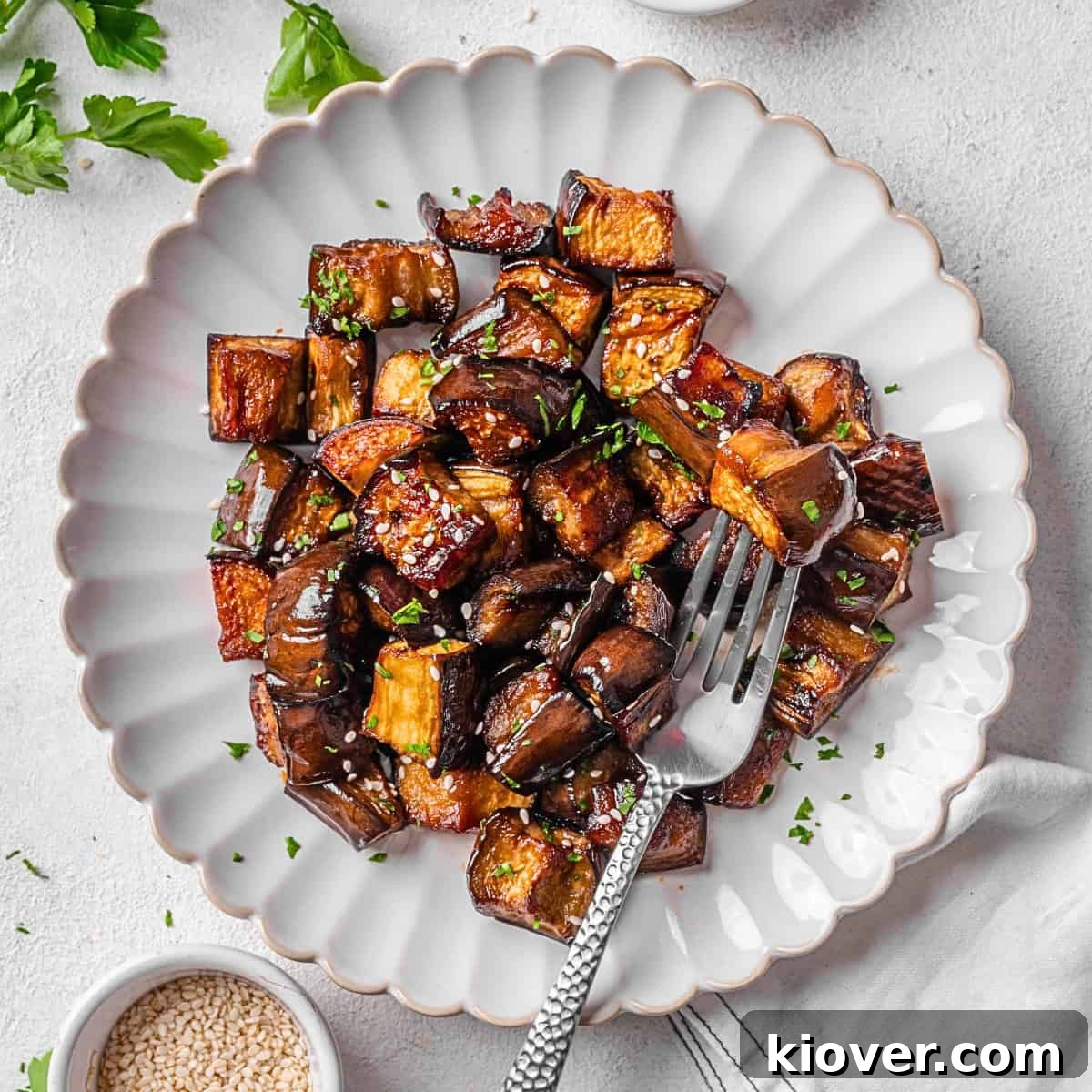
Flavorful Roasted Aubergine with an Asian Twist: Your New Favorite Side Dish
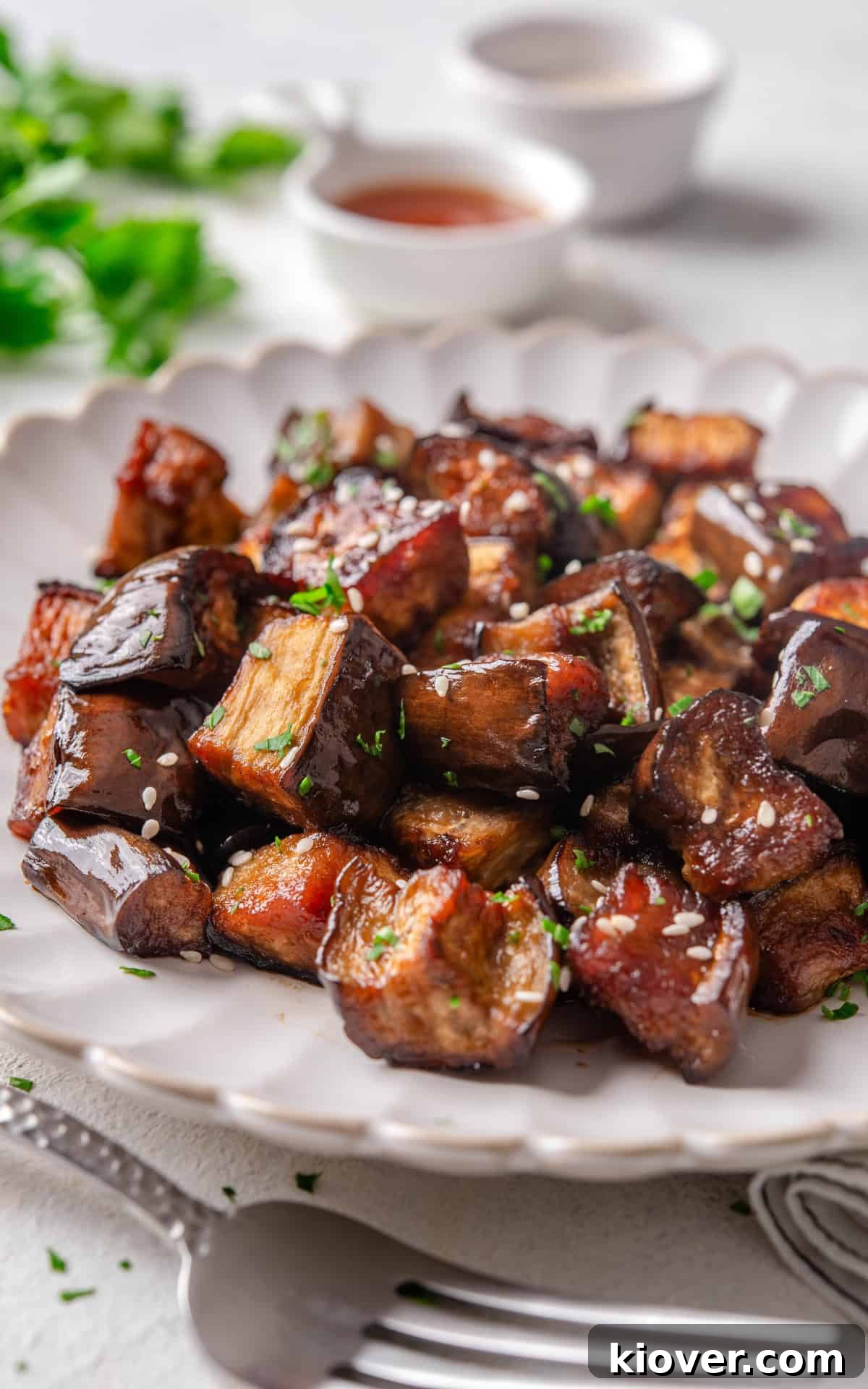
Discover the irresistible taste of perfectly roasted aubergine, featuring a delightful caramelization and infused with authentic Asian flavors. This easy-to-make roasted eggplant recipe is seasoned with a savory blend of soy sauce and aromatic toasted sesame seed oil, creating a dish so captivating you won’t be able to put it down. Ideal as a versatile side dish or a delightful appetizer, this recipe is sure to become a family favorite.
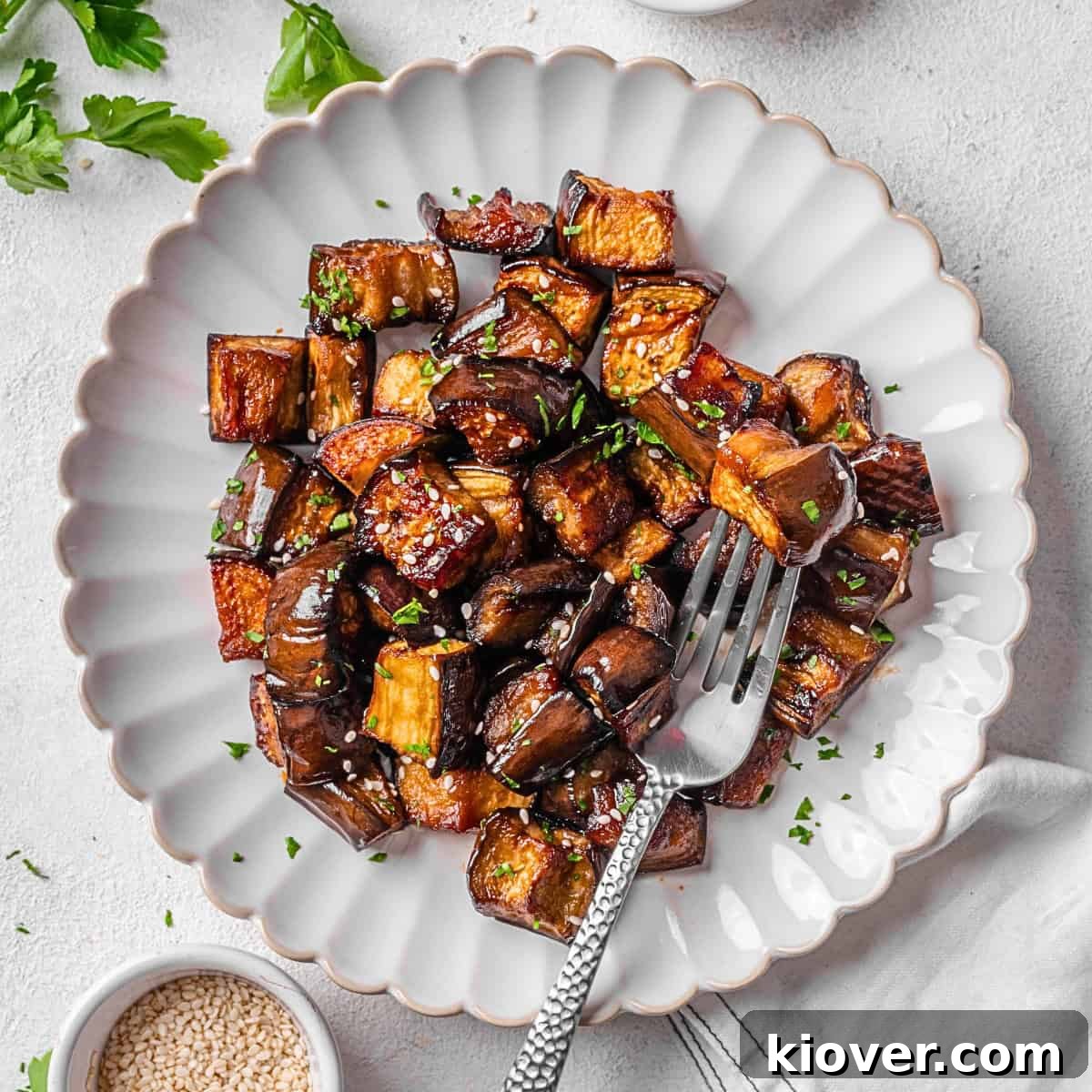
Recipe Difficulty – Very Easy
Why This Roasted Aubergine Recipe Works
If you’re yet to experience the culinary delight of roasted aubergine, prepare for a revelation! Roasting eggplant transforms its texture, making it wonderfully tender and incredibly flavorful, much like roasted zucchini. However, this isn’t just another basic vegetable recipe. Our Asian-inspired roasted aubergine elevates the humble eggplant to new heights, offering a distinctive flavor profile that sets it apart from traditional dishes like eggplant parmesan or simple pasta additions.
The magic lies in the caramelization process, where the natural sugars in the aubergine develop a beautiful sweetness, creating a slightly crispy exterior and a melt-in-your-mouth interior. When combined with the umami-rich notes of soy sauce and the nutty, aromatic essence of toasted sesame seed oil, each bite is a symphony of flavors. This recipe works because it balances sweetness, saltiness, and a subtle nuttiness, making it an incredibly addictive and deeply satisfying dish. It’s a quick and effortless way to add a gourmet touch to any meal, proving that healthy eating can be both easy and exciting.
Key Ingredients for Roasted Aubergine
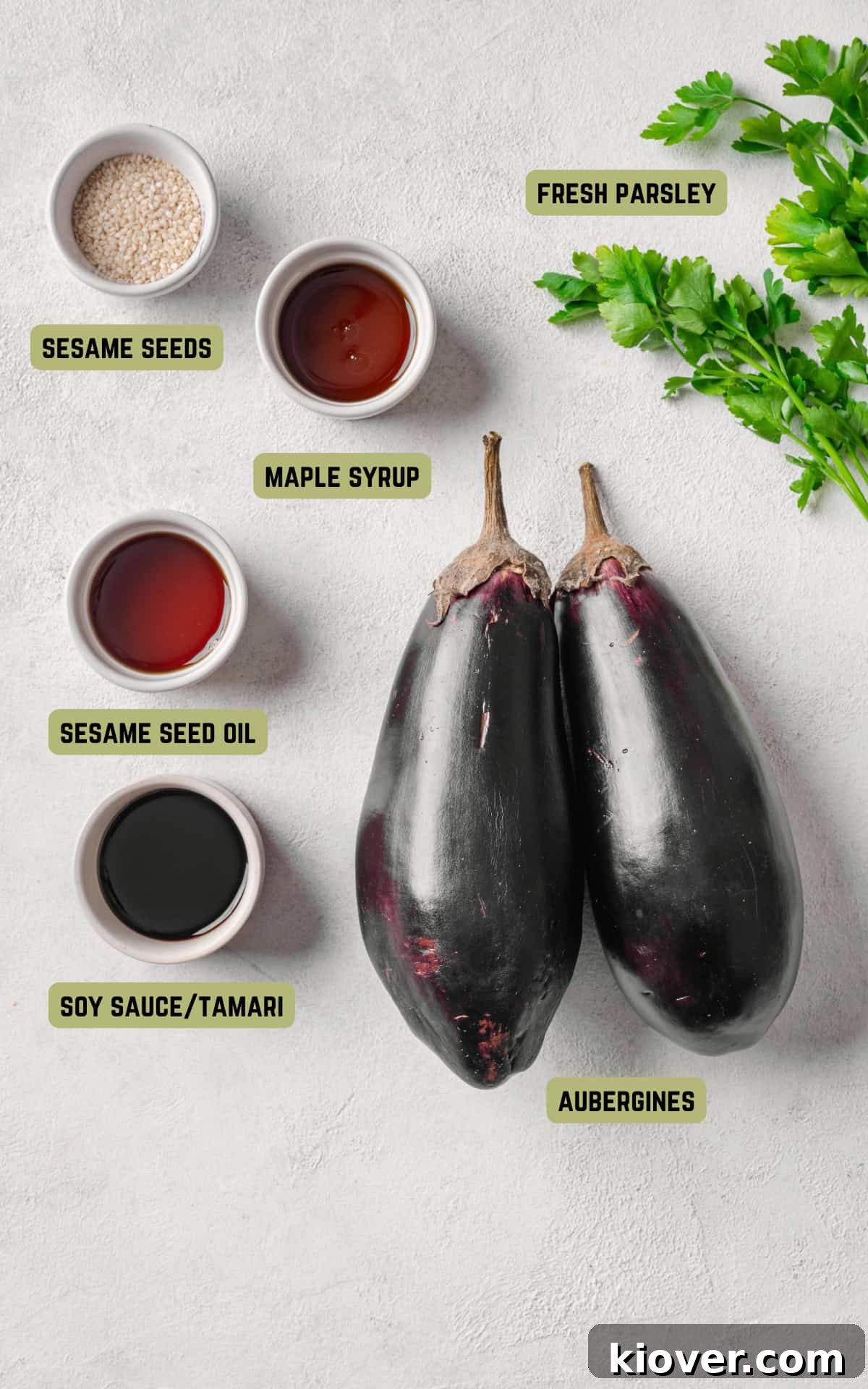
Creating this flavorful roasted aubergine only requires a few simple ingredients, each playing a crucial role in developing its unique taste:
- Aubergines (Eggplants): The star of our dish, also known as eggplant in many regions. When roasted, their flesh becomes wonderfully soft and absorbs flavors beautifully. Opt for firm, glossy aubergines without blemishes for the best results.
- Soy Sauce or Tamari: This provides a rich, savory umami depth, forming the backbone of our Asian-inspired marinade. Tamari is an excellent gluten-free alternative that offers a similar robust flavor.
- Maple Syrup: A touch of natural sweetness from maple syrup is essential. It balances the saltiness of the soy sauce and, crucially, aids in the magnificent caramelization of the aubergine, creating those irresistible crispy edges.
- Toasted Sesame Seed Oil: This ingredient is a flavor powerhouse, imparting a distinctive sweet and nutty aroma that is characteristic of many Asian cuisines. It’s not just for cooking; a drizzle at the end can truly enhance the dish.
- Sesame Seeds: Used primarily as a garnish, sesame seeds add a pleasant textural contrast and a subtle nutty crunch, enhancing the aesthetic appeal and overall taste of the finished dish.
- Chopped Parsley: Another garnish, fresh chopped parsley adds a burst of fresh, herbaceous flavor and a vibrant green color, brightening the presentation.
For precise measurements and detailed instructions, please refer to the complete recipe card below.
Substitutions to Adapt Your Recipe
This roasted aubergine recipe is quite flexible, allowing for various substitutions to suit your preferences or what you have on hand:
- Aubergine Alternatives: While aubergine is fantastic, feel free to experiment with other vegetables. This marinade works wonderfully with zucchini, bell peppers, broccoli florets, carrots, or even cherry tomatoes. Simply adjust roasting times as needed for different vegetables.
- Maple Syrup Swap: If maple syrup isn’t available, honey is an excellent natural sweetener that can be used as a direct replacement, providing similar sweetness and aiding caramelization. Agave nectar also works well for a vegan option.
- Toasted Sesame Seed Oil Substitute: Toasted sesame oil offers a very distinct flavor. If you don’t have it, a neutral oil like olive oil or avocado oil can be used for roasting. While it won’t replicate the specific nutty flavor, it will still ensure proper cooking and texture. You might consider adding a pinch of sesame seeds to the marinade if omitting the oil.
- Additional Seasonings: The soy sauce provides ample saltiness. However, if you’re looking to explore different flavor profiles, consider a classic herb and garlic blend. Mix olive oil with minced garlic, black pepper, a squeeze of fresh lemon juice, and your favorite dried herbs like oregano or thyme for a Mediterranean twist. For a cheesy delight, you could even top the roasted aubergine with some shredded mozzarella or grated Parmesan during the last few minutes of baking.
Creative Variations for Your Roasted Eggplant
Once you’ve mastered the basic recipe, get creative with these delicious variations:
- Spicy Kick: For those who love a bit of heat, easily transform this into a spicy roasted aubergine. Simply sprinkle some red pepper flakes or a pinch of ground cumin into the marinade along with the other ingredients before tossing the aubergine. A dash of sriracha or chili garlic sauce can also be added for an extra fiery dimension.
- Deluxe Presentation: Elevate the dish to a more gourmet experience. After roasting, drizzle the warm aubergine with a creamy tahini sauce (made with tahini, lemon juice, water, and a touch of garlic). Garnish with a mix of fresh herbs like cilantro, mint, or green onions for an enhanced flavor pairing and vibrant presentation.
- Kid-Friendly Serving: Introduce this delicious vegetable to younger palates by serving it alongside familiar and comforting staples. Pair it with fluffy steamed rice or a mild stir-fry noodle dish. The slightly sweet and savory notes are often appealing to children, making it a great way to encourage vegetable consumption.
Step-by-Step: How to Make Roasted Aubergine
Creating this flavorful roasted aubergine is incredibly straightforward. Follow these simple steps for perfect results:
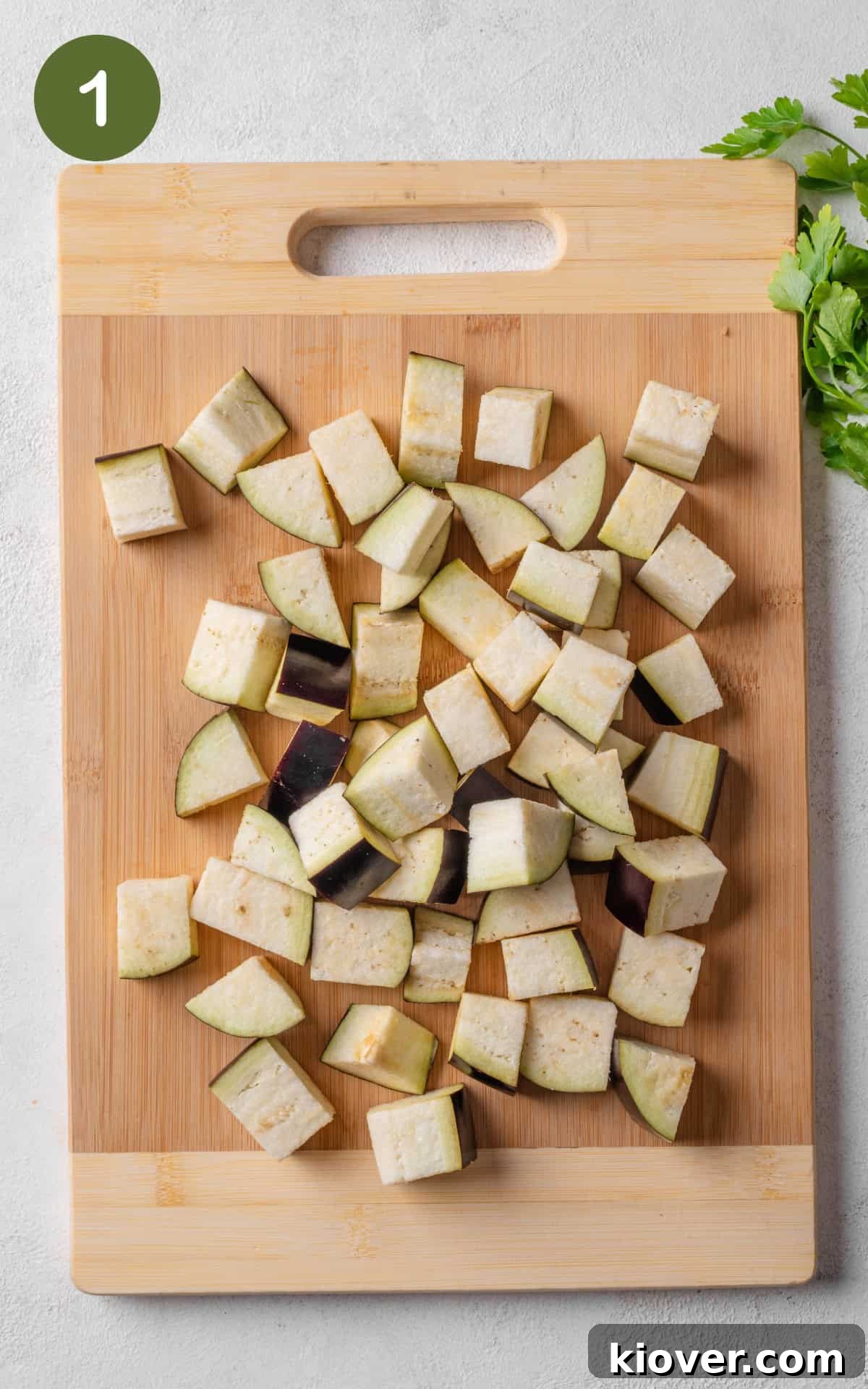
Step 1: Preparation. Preheat your oven to a high temperature of 240°C (450°F). Line a rimmed baking sheet with parchment paper to prevent sticking and make cleanup a breeze. Carefully cut the aubergine into uniform large cubes, approximately 3cm (1.2 inches) in size. Consistent sizing ensures even cooking.
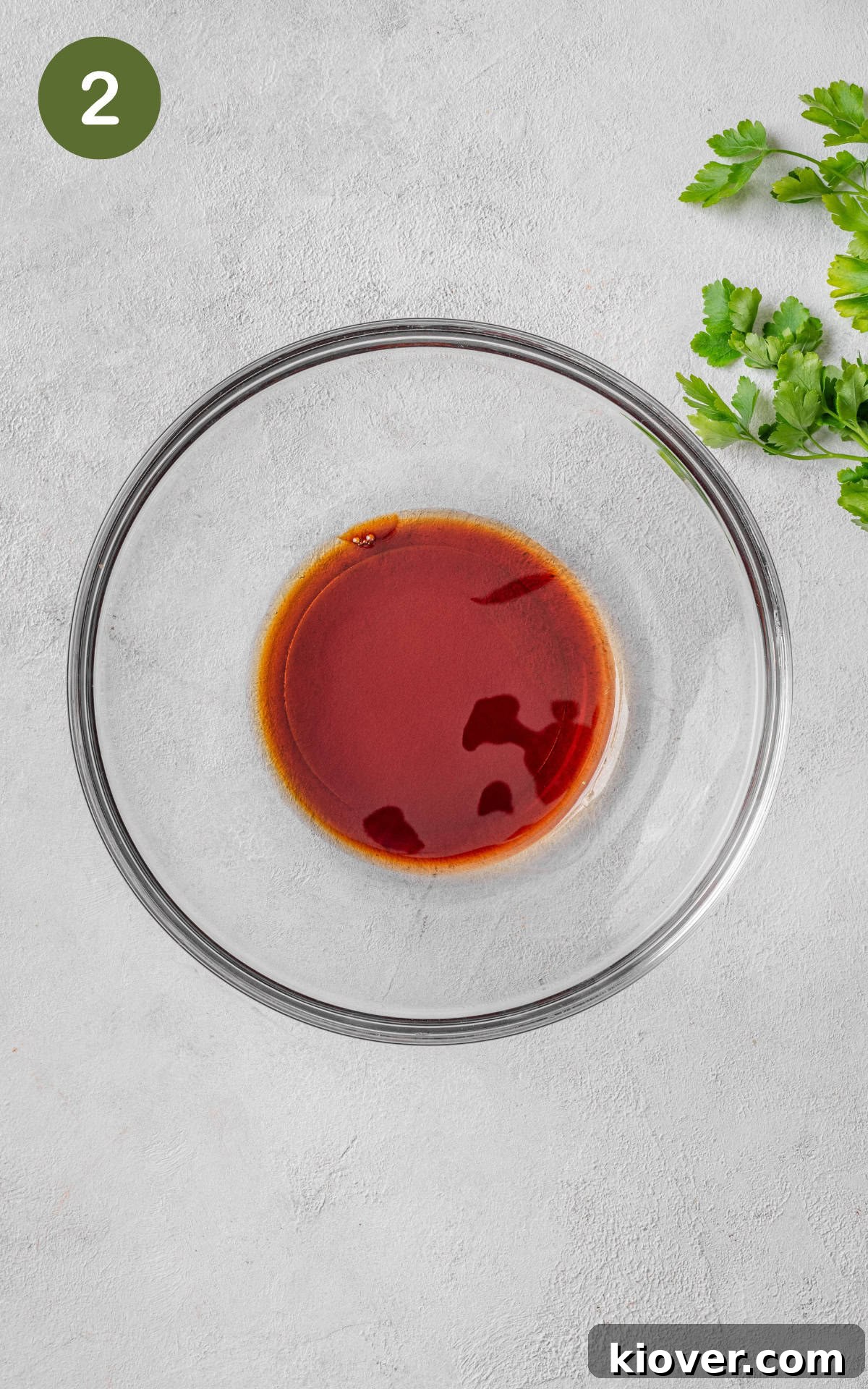
Step 2: Create the Marinade. In a medium bowl, combine the soy sauce (or tamari for a gluten-free option), maple syrup, and toasted sesame seed oil. Whisk these ingredients together until they are well combined, creating a harmonious savory-sweet marinade that will coat the aubergine beautifully.
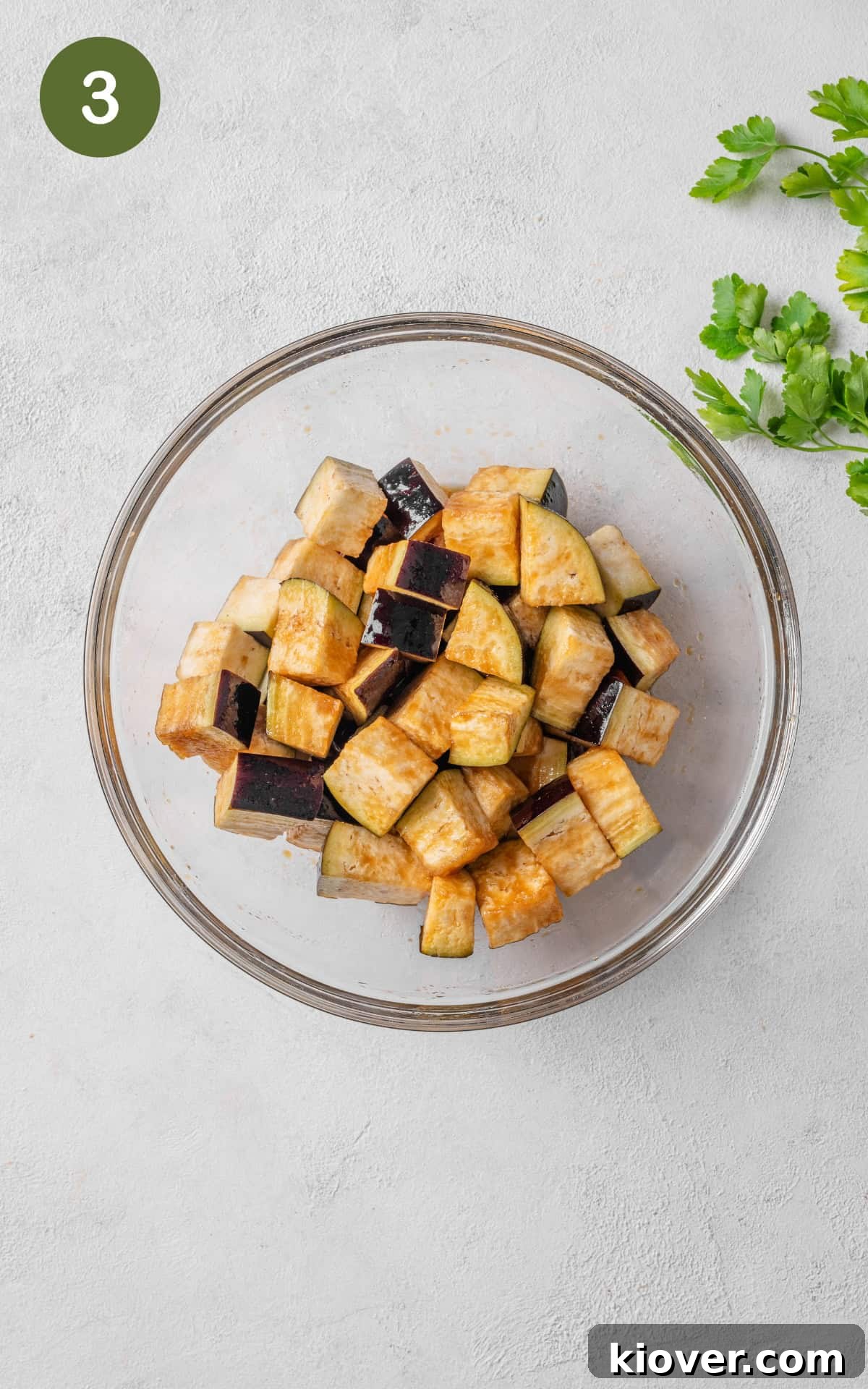
Step 3: Coat the Aubergine. Add the prepared aubergine cubes to the bowl with the marinade. Toss everything thoroughly, ensuring that each piece of aubergine is evenly coated with the flavorful sauce. This step is crucial for the aubergine to absorb all the delicious Asian flavors.
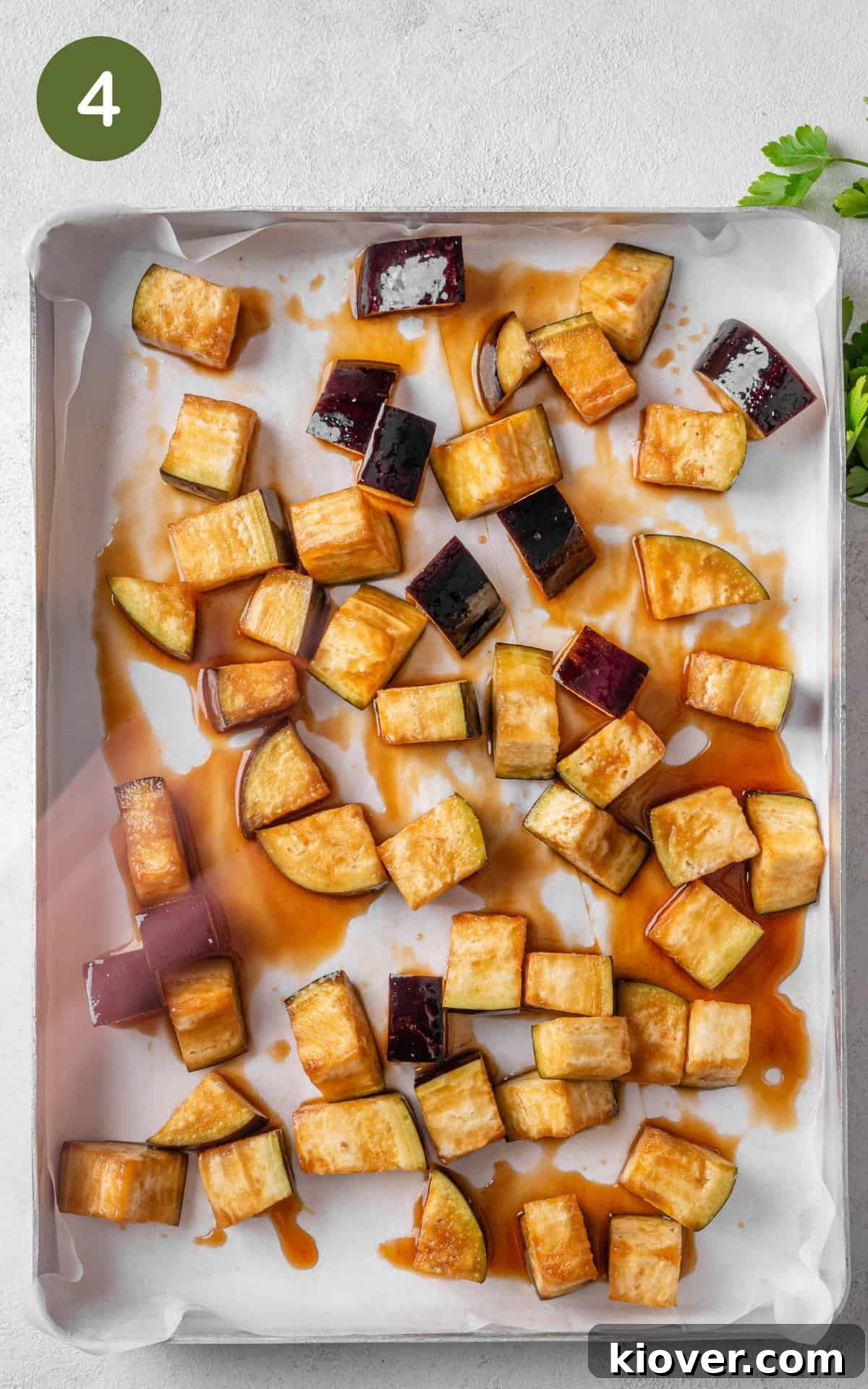
Step 4: First Roast. Arrange the coated aubergine on the prepared baking sheet in a single layer. Make sure not to overcrowd the tray, as this can steam the aubergine instead of roasting it, preventing proper caramelization. Roast in the preheated oven for 20 minutes. At this stage, the aubergine will start to soften and develop some color.
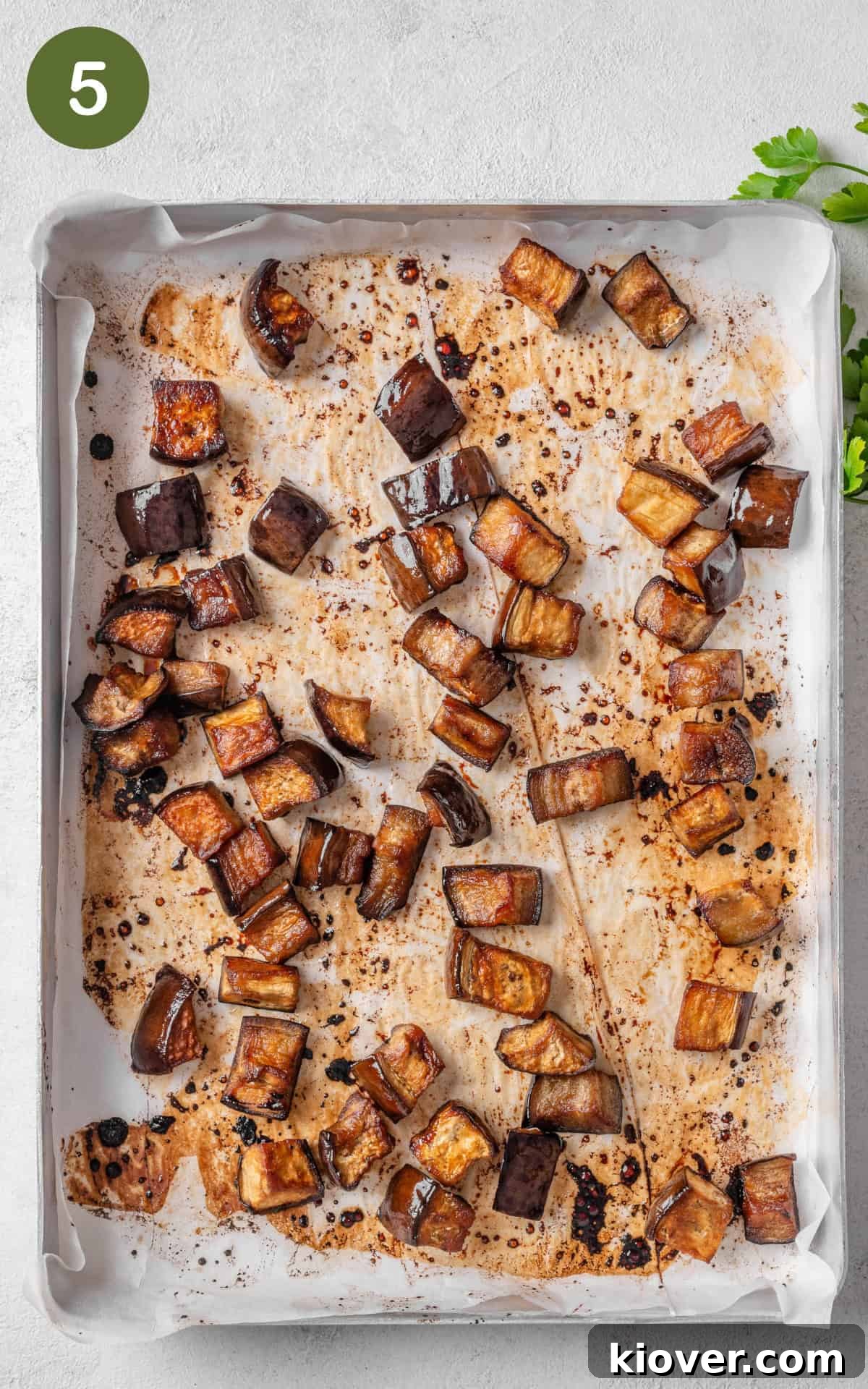
Step 5: Finish Roasting and Serve. After the initial 20 minutes, carefully flip the aubergine cubes to ensure even cooking and caramelization on all sides. Return the tray to the oven and bake for another 10 minutes, or until the aubergine is tender, beautifully caramelized, and has a slightly browned, crispy exterior. Serve the roasted aubergine warm, generously garnished with fresh chopped parsley and a sprinkle of toasted sesame seeds for added flavor and visual appeal.
Hint: If you prefer larger roasted aubergine slices over cubes, simply slice your aubergine into rounds or half-moons and follow the remaining instructions precisely. The cooking time will remain similar for evenly cut pieces.
What to Serve with Roasted Aubergine
This versatile roasted aubergine with Asian flavors makes an excellent accompaniment to a wide variety of meals. Its sweet and savory profile pairs wonderfully with both hearty and lighter dishes. Here are some suggestions to inspire your next meal:
- Crispy Courgette Fritters: The light crunch and fresh flavor of zucchini fritters provide a lovely contrast to the tender, caramelized aubergine.
- Herb-Salted Hasselback Potatoes: The rich, buttery texture of Hasselback potatoes complements the savory aubergine, making for a hearty and satisfying plate.
- Tangy Pickled Beetroot: The vibrant, slightly acidic notes of pickled beetroot can cut through the richness of the aubergine, offering a refreshing palate cleanser.
- Creamy Garlic Hummus: For a Mediterranean twist, serve the roasted aubergine alongside a generous dollop of garlic hummus. It’s perfect for dipping and adds a creamy element.
- Fluffy Quinoa: A healthy and protein-rich grain like quinoa makes a fantastic base for the aubergine, soaking up all the delicious pan juices and creating a complete meal.
- Grilled Chicken or Fish: The Asian marinade on the aubergine pairs beautifully with simply grilled chicken breasts, salmon fillets, or cod, adding an extra layer of flavor to your protein.
- Stir-Fried Noodles or Rice: For a full Asian-inspired meal, toss the roasted aubergine with your favorite stir-fried noodles or serve it over a bed of jasmine rice.
- In Wraps or Pitta Bread: For a quick and easy lunch, stuff the warm roasted aubergine into pitta bread or tortillas with some fresh greens and a drizzle of yogurt sauce.
Storing and Reheating Leftovers
This roasted aubergine is delightful fresh, but leftovers are just as tasty! Here’s how to properly store and reheat them:
Storage: Allow the roasted aubergine to cool completely to room temperature before storing. Transfer it to an airtight container and refrigerate for up to 3-4 days. Proper cooling and sealing prevent moisture buildup and maintain freshness.
Reheating:
- Oven: For best results and to regain some crispiness, preheat your oven to 180°C (350°F). Spread the aubergine on a baking sheet and heat for 10-15 minutes, or until warmed through.
- Air Fryer: An air fryer is excellent for reheating, as it helps restore a crisp texture. Place the aubergine in a single layer in the air fryer basket and cook at 180°C (350°F) for 5-8 minutes, shaking the basket halfway.
- Frying Pan: Heat a small amount of oil in a non-stick frying pan over medium heat. Add the aubergine and stir-fry for 5-7 minutes, until heated through and slightly caramelized again.
- Microwave: While the quickest method, the microwave may result in a softer texture. Place the aubergine in a microwave-safe dish, cover loosely, and heat for 1-2 minutes, stirring halfway, until warm.
Freezing: You can also freeze roasted aubergine! Spread the cooled aubergine in a single layer on a parchment-lined baking sheet and freeze until solid. Then, transfer the frozen pieces to a freezer-safe bag or airtight container. It can be stored in the freezer for up to 3 months. Thaw in the refrigerator overnight before reheating using one of the methods above.
Roasted Aubergine Recipe FAQs
Here are some frequently asked questions about roasting aubergine:
How long does it take to roast aubergine?
The cooking time for roasted aubergine can vary based on several factors: your oven’s calibration, the size and thickness of your aubergine pieces, and how spaced out they are on the baking sheet. For the 3cm cubes specified in this recipe, I typically roast them for an initial 20 minutes before flipping, followed by another 10 minutes, for a total of approximately 30 minutes. Always check for tenderness and desired caramelization.
Do you need to soak or salt aubergine before roasting?
Salting aubergine to draw out bitterness used to be a very common practice, particularly with older varieties. However, modern aubergine varieties have been bred to be much less bitter, making this step largely unnecessary for most recipes, especially when roasting. While it’s still beneficial before frying, as aubergine tends to absorb a lot of oil, you can confidently skip the salting step for roasting and still achieve delicious results.
How do you cut an aubergine for roasting?
The most important aspect when cutting aubergine for roasting is to ensure that all pieces are cut to a similar, uniform size. This consistency is key to ensuring that every piece cooks evenly, preventing some from being undercooked while others are burnt. Whether you choose elegant wedges, practical cubes (as in this recipe), or classic slices, aim for uniformity to achieve the best texture and flavor throughout your dish.
Can I roast other vegetables with aubergine?
Absolutely! This recipe’s marinade is incredibly versatile and pairs well with many vegetables. Bell peppers, zucchini, onions, mushrooms, and cherry tomatoes are excellent choices to roast alongside aubergine. Just ensure they are cut into similar-sized pieces for even cooking, or add them to the baking sheet at appropriate times based on their density.
Is roasted aubergine healthy?
Yes, roasted aubergine is a very healthy addition to your diet. Aubergine is low in calories and fat, yet rich in fiber, vitamins (like B6, C, K), and minerals (like potassium, magnesium). It also contains antioxidants, which are beneficial for overall health. Roasting is a healthy cooking method that minimizes added fats, especially when using parchment paper and healthy oils like sesame oil.
More Delicious Aubergine Recipes
If you’ve fallen in love with aubergine, explore these other fantastic recipes:
- Air Fryer Aubergine
- Aubergine Bake
- Aubergine Curry
- Aubergine Miso (Nasu Dengaku)
- Aubergine Parmigiana
- Aubergine Salad
You Might Also Like These Recipes
Sides
Roast Parsnips
Sides
Roasted Root Vegetables
Lunch
Roasted Pumpkin Salad
Sides
Rosemary Roast Potatoes
Rate This Recipe
Tried this Roasted Aubergine recipe? We’d love to hear from you! Please consider leaving a star rating ★★★★★ below and share your experience in the comments. Your positive feedback is incredibly valuable and one of the most rewarding parts of creating recipes. Don’t forget to review it below!
P.S. Never miss out on new culinary inspiration! Get more healthy, delicious recipes sent straight to your inbox weekly – Subscribe here and receive a free recipe eBook as a welcome gift!
★★★★★ (5 from 1 vote)
Roasted Aubergine
By: James Wythe
Elevate your meals with beautifully roasted aubergine – crispy on the outside, tender on the inside. Perfect for salads, or as a tasty side dish!
Print Recipe
Ingredients
- 2 aubergines (eggplants)
- 2 tbsp soy sauce (or tamari for gluten-free)
- 2 tbsp maple syrup
- 1 tbsp toasted sesame seed oil
- Sesame seeds, for garnish
- Chopped parsley, for garnish
Instructions
- Preheat oven to 240°C (450°F). Line a rimmed baking sheet with parchment paper. Cut the aubergine into large cubes, approximately 3cm (1.2 inches).
- In a bowl, combine soy sauce/tamari, maple syrup, and sesame seed oil. Whisk well.
- Add the aubergine cubes to the bowl and toss thoroughly to ensure they are well coated with the marinade.
- Arrange the coated aubergine on the prepared baking sheet in a single layer, ensuring not to overcrowd. Roast for 20 minutes.
- Flip the aubergine cubes and continue to bake for another 10 minutes, or until they are tender and beautifully caramelized. Serve warm, garnished with chopped parsley and sesame seeds.
Notes
- Step-by-Step Photos: This blog post includes helpful step-by-step photos to guide you through making this recipe.
- Substitutions & Variations: Refer to the sections above for a comprehensive list of suggested substitutions and creative variations.
- To Store: Store any leftover roasted aubergine in an airtight container in the fridge for up to 4 days. Reheat using an air fryer, oven, microwave, or frying pan for best results.
- To Freeze: To freeze, arrange cooled aubergine in a single layer on a baking sheet and freeze until solid. Transfer to an airtight freezer-safe container or bag for up to 3 months. Defrost in the fridge before reheating.
- Tip 1 (Crispier Eggplant): For a slightly crispier result, you can salt your aubergine before cooking. Sprinkle some salt evenly over the aubergine cubes and let them drain in a colander for 20-30 minutes. Rinse thoroughly to remove excess salt, pat dry, and then proceed with the recipe. This draws out excess moisture.
- Tip 2 (Adding Protein): To make this a more substantial meal, serve the roasted aubergine with your choice of protein, such as grilled chicken, pan-fried beef strips, a fried egg, or baked tofu.
- Tip 3 (Meal Ideas): Serve alongside steamed rice, stir-fried noodles, or incorporate it into a fresh green salad or a wrap for a delicious and healthy meal.
Nutrition
Calories: 121kcal | Carbohydrates: 21g | Protein: 3g | Fat: 4g | Saturated Fat: 1g | Fiber: 7g | Sugar: 14g
*Nutritional information is an estimate and may vary based on specific ingredients and preparation methods.
Did you make this recipe? Tag me Today!
Tag @HealthyLivingJames on Instagram and use #HealthyLivingJames!