
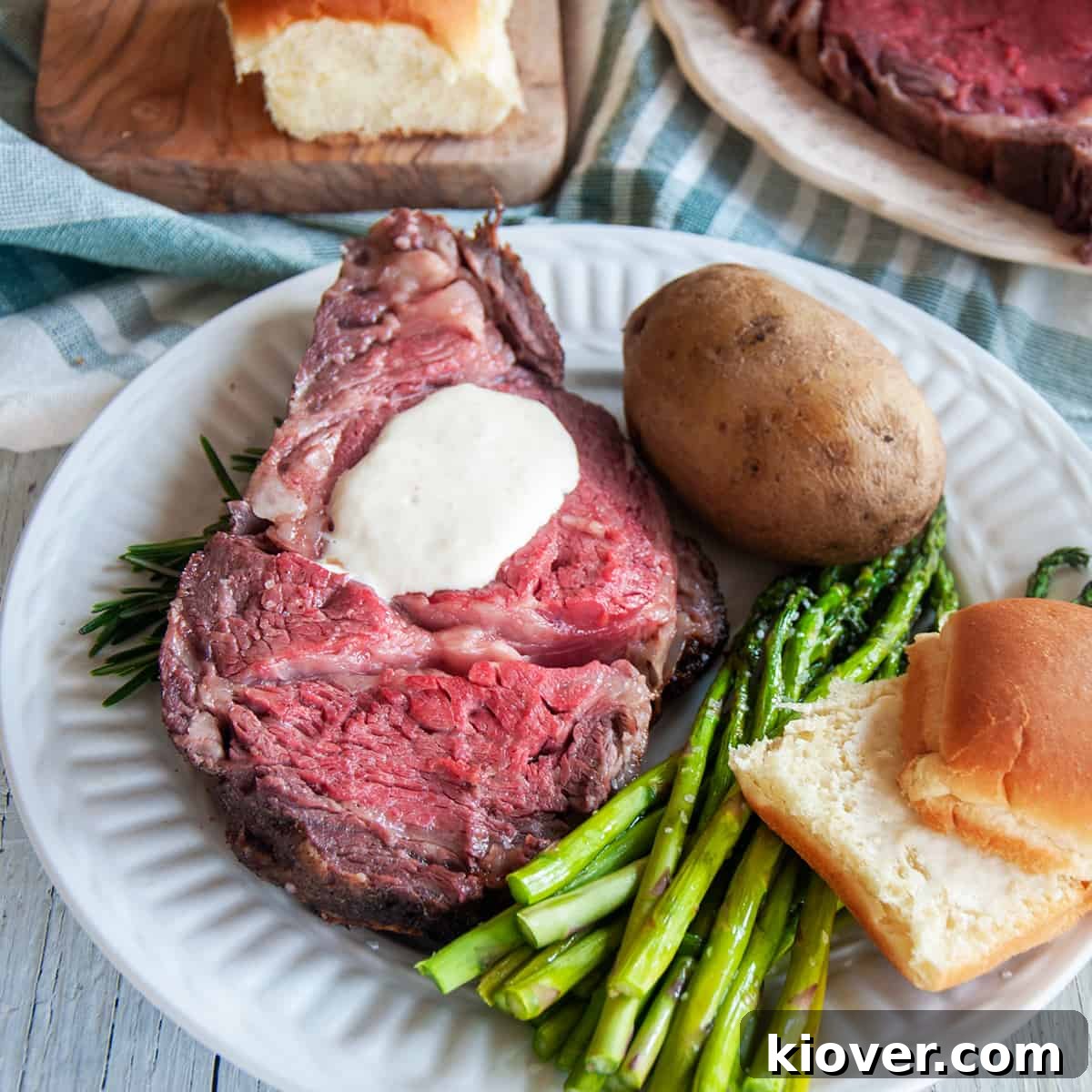
Sous Vide Prime Rib: The Ultimate Guide to a Perfectly Tender Roast
Prepare to impress your guests with this extraordinary Sous Vide Prime Rib. This culinary masterpiece is cooked to temperature-controlled perfection, delivering an unparalleled level of juiciness and flavor. Ideal for any grand celebration – be it Christmas, Thanksgiving, Easter, or simply a cherished family gathering – a magnificent prime rib effortlessly unites friends and family around an unforgettable meal.
Accompanying this star of the show, our Sous Vide Prime Rib, is a delectable, homemade horseradish sauce. This vibrant, creamy sauce adds a zesty kick that perfectly complements the rich, savory beef. Embark on a culinary journey and try this sensational beef roast today, guaranteeing a memorable dining experience!
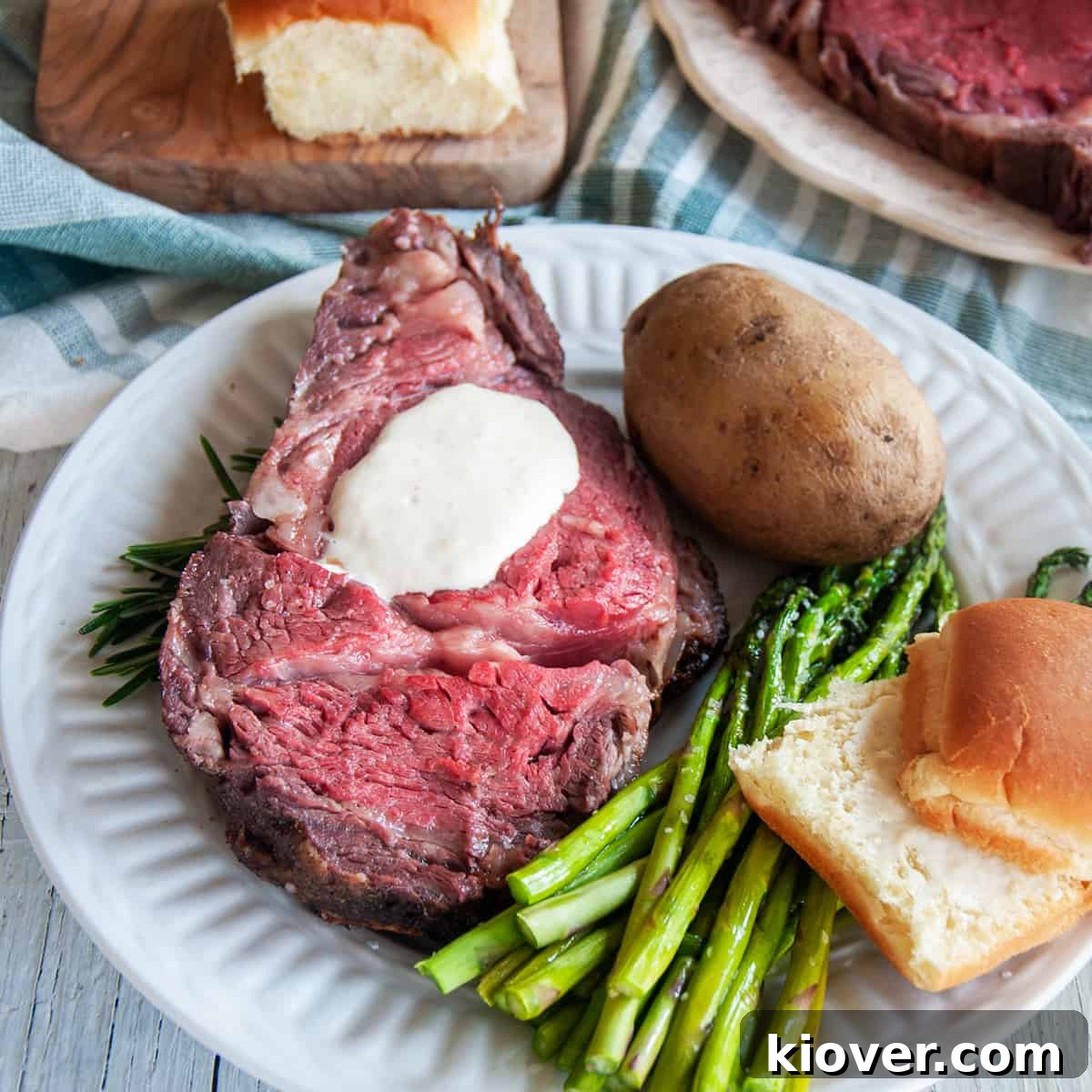
🥩 Why Sous Vide Prime Rib is Uniquely Special and Worth Every Moment
This recipe for prime rib transcends traditional cooking methods by leveraging the transformative power of sous vide, resulting in a roast that is consistently tender, incredibly juicy, and uniformly cooked from edge to edge. The magic begins with precise temperature control in a water bath, where the meat is gently cooked at a low, consistent temperature for an extended period. This meticulous process ensures that every fiber of the prime rib reaches and maintains your desired doneness, eliminating the common challenge of overcooked exteriors and undercooked centers often faced with conventional oven roasting.
Unlike high-heat methods that can dry out the outer layers of meat, sous vide locks in natural moisture and flavor, creating an astonishingly succulent interior. Following this gentle cook, a crucial final step involves a quick, high-temperature sear in the oven. This two-phase approach is essential: the sous vide process guarantees ideal internal texture and doneness, while the intense oven sear develops that irresistible, deeply flavorful crust that provides a perfect textural contrast. The outcome is a prime rib that boasts a beautiful, even rosy pink throughout, free from any unappetizing gray bands, delivering a consistent and delicious experience with every slice.
Adding to the allure of this dish is the accompanying homemade horseradish sauce. This vibrant condiment is far more than a simple extra; its zesty, tangy, and subtly spicy profile cuts beautifully through the rich, savory notes of the prime rib. This exquisite combination of perfectly cooked beef and a robust, complementary sauce makes this recipe an undisputed standout, ideal for creating truly memorable meals for holidays, special celebrations, or any sophisticated dinner party.
To craft a complete and unforgettable feast, consider pairing your magnificent Sous Vide Prime Rib with an array of complementary side dishes. Our acclaimed Best Mashed Potatoes recipe offers a creamy, lump-free delight that’s sure to please. For a refreshing crunch and a hint of smoky flavor, try the Amish Broccoli Salad recipe. Alternatively, for a unique and comforting touch, our Traditional German Spaetzle recipe makes an excellent choice. And, of course, no special meal is truly complete without a delightful dessert; our classic American Apple Pie recipe provides the perfect sweet ending. Whatever accompaniments you choose, remember to treat yourself and your loved ones to this exceptional culinary experience!
Table of Contents
- 🥩 Why Sous Vide Prime Rib is Uniquely Special and Worth Every Moment
- 🧂 Essential Ingredients for Your Sous Vide Prime Rib
- What is a Prime Rib Roast?
- 🍲 Step-by-Step Sous Vide Prime Rib Instructions
- What is Sous Vide Cooking? Unlocking Culinary Precision
- Water Displacement Method vs. Vacuum Sealer: Sealing Your Sous Vide Roast
- Crafting the Perfect Prime Rib Rub: Simple Elegance
- How Long to Sous Vide Prime Rib for Ideal Tenderness?
- Why 131°F (55°C) is Ideal for Medium-Rare Prime Rib Perfection
- Achieving That Irresistible Outer Sear for Sous Vide Prime Rib
- Let Your Roast Rest: The Final Touch for Optimal Juiciness
- 🤷♂️ Substitutions and Variations for Your Sous Vide Prime Rib
- 📦 Storage Tips for Leftover Prime Rib and Horseradish Sauce
- ❓ Frequently Asked Questions (FAQ) About Sous Vide Prime Rib
- 📝 Expert Tips and Tricks for Your Perfect Sous Vide Prime Rib
- 🛠 Recommended Products for this Sous Vide Prime Rib Recipe
- 😋 Did You Make This Sous Vide Prime Rib Recipe? Share Your Experience!
- Sous Vide Prime Rib with Horseradish Sauce Recipe
🧂 Essential Ingredients for Your Sous Vide Prime Rib
While the prime rib itself is undoubtedly the star of this magnificent dish, a few carefully selected additional ingredients truly bring it all together, enhancing its natural richness and preparing it for perfection. Here’s a breakdown of what you’ll need to create this unforgettable meal:
- Boneless Prime Rib Roast: Aim for a cut of approximately 6 pounds. Choosing boneless simplifies the vacuum sealing process for sous vide and ensures a more consistent cook. This is crucial for uniform heat transfer.
- Kosher Salt: Essential for seasoning the roast. Its larger crystals adhere well and provide excellent flavor penetration. Don’t be shy with the application; a generous coating is key to a well-seasoned crust.
- Freshly Ground Black Pepper: Provides a subtle spice and aromatic complexity that beautifully complements the rich beef flavors. Freshly ground pepper offers the best aroma.
- Mayonnaise: Forms the creamy base of our exquisite homemade horseradish sauce, providing a smooth and rich texture.
- Granulated Sugar: A touch of sweetness in the sauce to balance the tang and potent spice of the horseradish, creating a more harmonious flavor profile.
- White Vinegar: Adds a bright, acidic note to the horseradish sauce. This acidity cuts through the richness of both the sauce and the prime rib, offering a refreshing contrast.
- Prepared Horseradish: The indispensable ingredient for our zesty sauce. Its pungent, spicy kick is the classic accompaniment to prime rib, awakening the palate.
For precise quantities and detailed preparation steps, please refer to the comprehensive recipe card located at the bottom of this article.
What is a Prime Rib Roast? Understanding this Premium Beef Cut
Often considered the crown jewel of beef roasts, the prime rib is a cut that commands attention and admiration. For those familiar with the popular ribeye steak, thinking of prime rib as a larger, roast version of the same cut is a helpful, albeit slightly simplified, comparison. Both originate from the primal rib section of the cow, an area renowned for its exceptional marbling – the intramuscular fat that renders during cooking, imparting incredible tenderness, juiciness, and a depth of flavor that is truly distinctive. This abundant marbling is what gives prime rib its luxurious texture and rich taste, making it a highly sought-after choice for special occasions.
The primary difference, beyond size, often lies in the presence of the bone. A traditional prime rib typically includes several ribs, forming a rack that not only contributes to flavor during cooking but also provides structure, which some argue helps in even heat distribution. A ribeye steak, while sometimes bone-in, is generally a single, smaller slice from this section. For this particular sous vide recipe, we highly recommend a boneless prime rib. The absence of bones allows for a much tighter, more effective vacuum seal in your sous vide bag, which is critical for achieving consistent cooking and ensuring optimal heat transfer. While cooking a bone-in roast sous vide is certainly possible, boneless offers a more reliable and consistent result, especially for those new to the method or looking for simplified carving. When speaking with your butcher, discuss whether you prefer bone-in or boneless and the ideal weight for your gathering – typically, you can estimate that one rib serves about two people, providing a hearty portion for each.
🍲 Step-by-Step Sous Vide Prime Rib Instructions for a Flawless Roast
One of the true beauties of sous vide cooking, especially for a magnificent cut like prime rib, is that much of the process involves patient waiting, allowing the precision technology to do the hard work. Here’s how to prepare and cook your roast to absolute perfection, ensuring a succulent, flavorful result every time:
- Prepare the Seasoning Rub: In a small, clean bowl, thoroughly combine your kosher salt and freshly ground black pepper. This simple yet powerful seasoning blend is expertly designed to enhance the natural, rich flavors of the beef without overpowering them. Ensure the mixture is even.
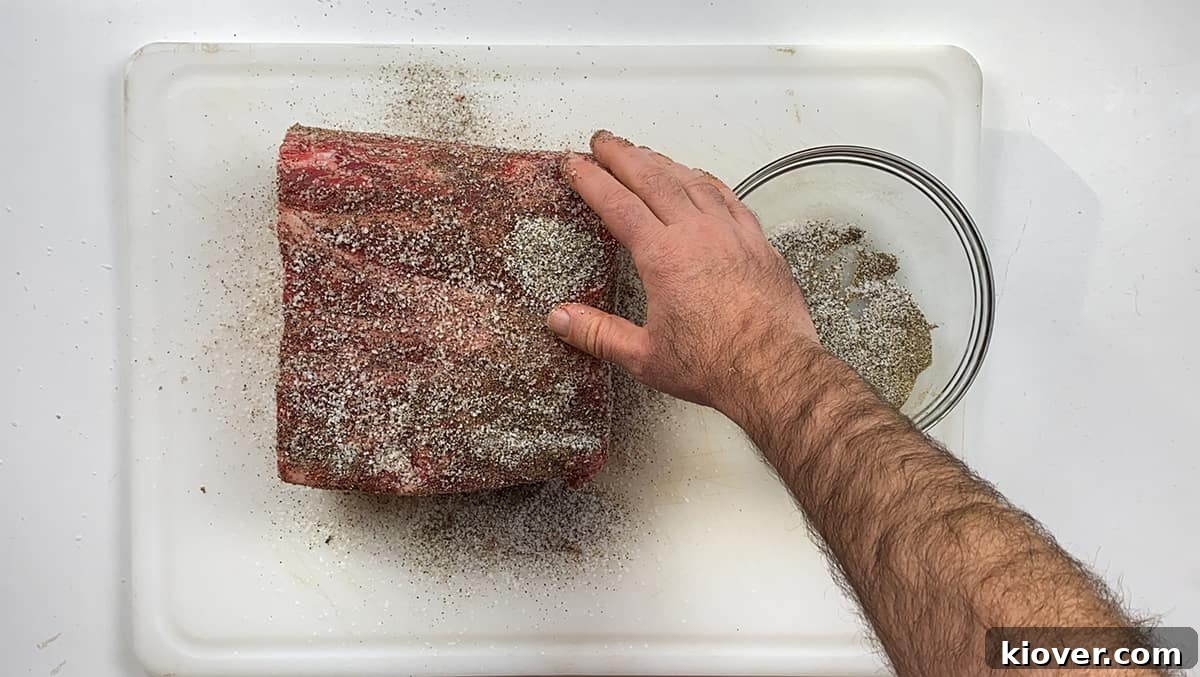
- Liberally Season the Prime Rib: Place your prime rib roast on a clean cutting board. Generously coat all surfaces of the roast with the prepared salt and pepper mixture. Don’t be afraid to press the seasoning firmly into the meat; a robust, flavorful crust begins with thorough seasoning. This step is crucial for overall flavor.
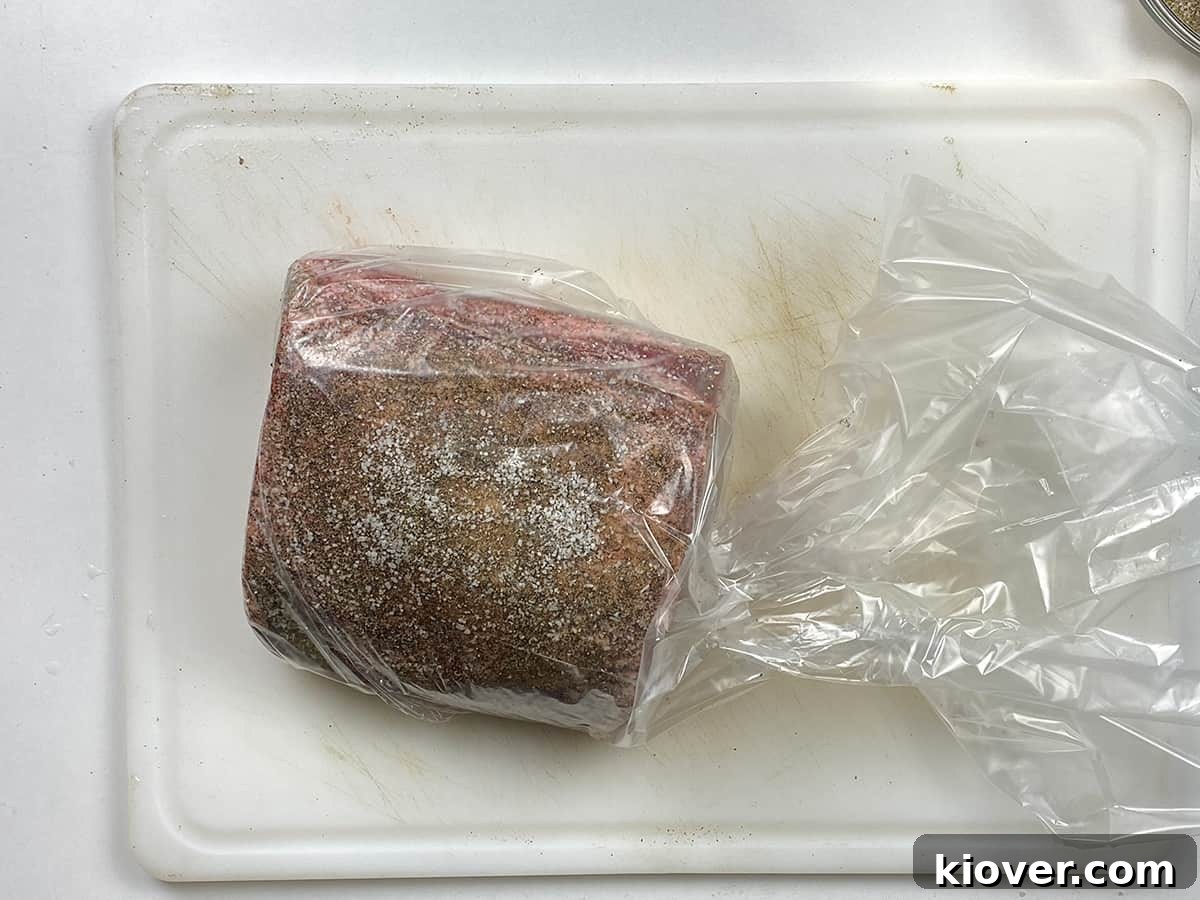
- Prepare for Sous Vide Bagging: Carefully place the thoroughly seasoned prime rib into a sous vide-safe bag. This can be a specialized vacuum sealer bag, a sturdy heavy-duty freezer bag, or even a turkey-sized Reynolds Oven Bag, which works remarkably well for larger roasts. Always ensure the bag material is suitable for prolonged exposure to warm water temperatures.
- Create a Secure Vacuum Seal: Seal the bag, ensuring as much air as possible is removed. You can achieve this using a dedicated vacuum sealing machine for the tightest seal, or by employing the clever water displacement method (detailed in a section below) if you don’t possess a vacuum sealer. A proper, airtight seal is paramount for effective and safe sous vide cooking, as it ensures optimal heat transfer.
- Sous Vide Cook to Perfection: Submerge the sealed bag containing the prime rib into a large water bath that has been preheated and maintained by your sous vide immersion circulator. Set the temperature precisely to 131°F (55°C) to achieve a flawless medium-rare doneness. Allow the prime rib to cook undisturbed for an optimal duration of 8 hours.
- Prepare the Horseradish Sauce (Optional but Recommended): While your prime rib is gently transforming in the sous vide bath, take this opportune moment to prepare the delightful horseradish sauce. In a separate bowl, mix all the sauce ingredients until well combined. For the best flavor development, prepare this in advance and refrigerate it for at least 4 hours, allowing the tastes to meld beautifully.
- Preheat Oven for Searing: As the sous vide cooking time draws to a close, preheat your oven to a blazing hot 500°F (260°C). This extremely high temperature is essential for creating a quick, intense sear that develops a savory crust without overcooking the interior of your perfectly sous vide roast.
- Remove and Dry the Roast: Once the 8-hour sous vide cook is complete, carefully remove the prime rib from the water bath and then from its bag. It is absolutely critical to pat the entire surface of the roast thoroughly dry with paper towels; any residual moisture will steam rather than sear, hindering the development of that coveted crust.
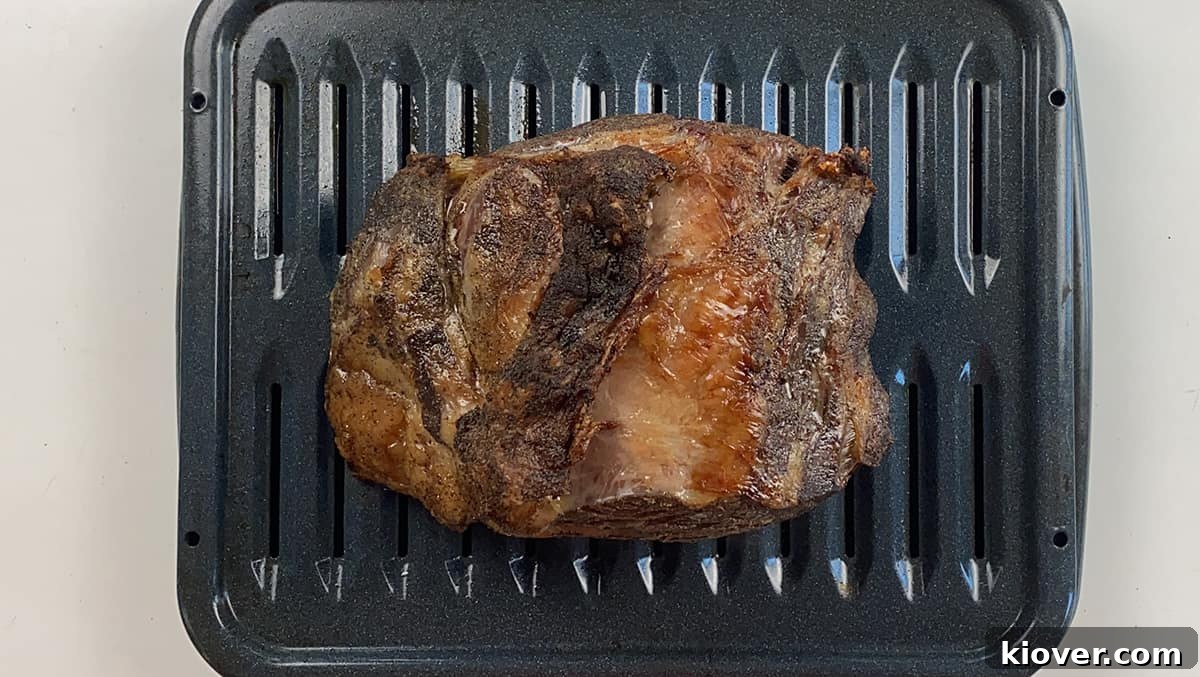
- Achieve the Golden Outer Sear: Place the now-dry prime rib on a sturdy roasting pan. Transfer it to your preheated 500°F (260°C) oven and cook for approximately 15 to 20 minutes, or until a magnificent, deep golden-brown crust has formed on the exterior. Keep a close eye on it to prevent burning.
- Allow the Roast to Rest: After its intense oven sear, remove the prime rib from the oven and transfer it to a clean cutting board. Let it rest, uncovered, for a minimum of 15 minutes. This crucial resting period allows the internal juices to redistribute evenly throughout the meat, ensuring every slice is incredibly tender, moist, and flavorful.
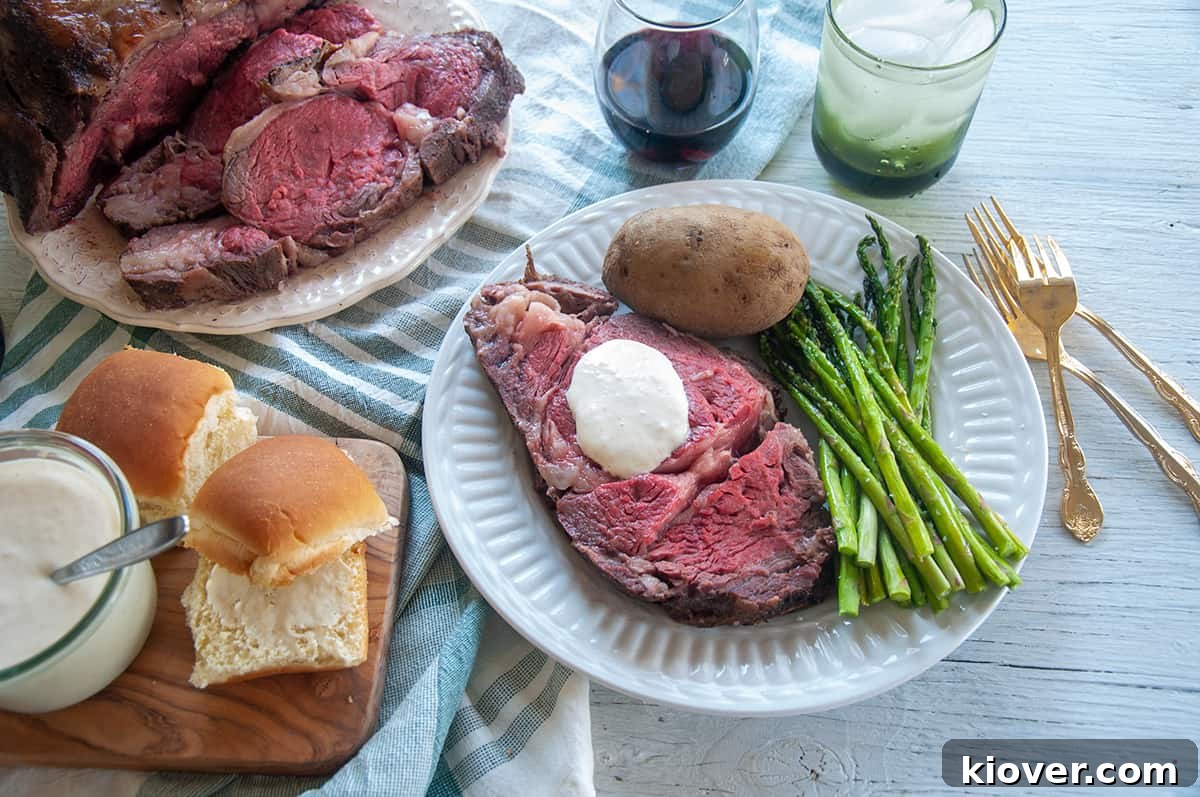
- Slice, Serve, and Savor: Finally, slice your perfectly cooked Sous Vide Prime Rib against the grain into desired portions. Serve immediately with the chilled, zesty homemade horseradish sauce on the side. Prepare for an outpouring of compliments and enjoy this truly exceptional meal!
For the Horseradish Sauce:
- Combine All Ingredients: In a medium-sized mixing bowl, combine the mayonnaise, granulated sugar, white vinegar, and prepared horseradish.
- Mix Thoroughly: Using a whisk or spoon, mix all the ingredients together until they are completely well combined and the sauce has a smooth, creamy consistency.
- Chill for Flavor Development: Transfer the prepared sauce to a covered container and refrigerate it for a minimum of 4 hours before serving. This chilling time is vital as it allows all the distinct flavors to meld and deepen, resulting in a more complex and satisfying condiment that beautifully complements the prime rib.
What is Sous Vide Cooking? Unlocking Culinary Precision and Perfection
Sous vide, a French term gracefully translating to “under vacuum,” represents a revolutionary cooking method that offers unparalleled precision and consistency, particularly when applied to premium meats like prime rib. The core principle involves cooking food that has been hermetically sealed in a bag, gently submerged in a precisely temperature-controlled water bath for an extended period. This method utilizes an immersion circulator, a specialized device that meticulously maintains the water at a constant, exact temperature, ensuring your food cooks uniformly from the very edge to the deepest center.
The profound benefits of this meticulous process are most evident in challenging culinary tasks, such as preparing large, expensive cuts of meat. Consider the common struggle of trying to achieve a perfect medium-rare doneness throughout a traditional oven roast – it often involves a constant battle against overcooked exteriors and undercooked centers. With sous vide, this challenge simply vanishes. If your goal is a specific doneness, for instance, a consistently vibrant medium-rare (typically between 130°F – 135°F or 54°C – 57°C), you merely set your immersion circulator to that precise temperature. The water bath then gently and gradually brings the entire piece of meat to this exact internal temperature, holding it there without any risk of overcooking or drying out.
Traditional cooking methods are frequently prone to temperature fluctuations within the oven cavity or inconsistent cooking due to irregular meat shapes and varying heat distribution. The sous vide method ingeniously eliminates these variables. Water acts as an incredibly efficient and stable heat conductor, guaranteeing uniform heat transfer to every single part of the prime rib roast. This results in an incredibly consistent texture and doneness from the outermost surface to the deep, succulent core – you’ll never again encounter dry edges or disappointingly raw spots.
Beyond its remarkable precision, the extended cooking time at these carefully selected lower temperatures serves two critical functions: firstly, it ensures that the entire cut of meat reaches and holds the target temperature perfectly, guaranteeing ideal doneness throughout. Secondly, and perhaps even more importantly for a prime rib, it tenderizes the meat to an astonishing degree. The vacuum-sealed environment allows the meat to cook slowly in its own savory juices, effectively creating a constant, gentle braise. This prolonged process breaks down tough connective tissues, renders the intramuscular fats beautifully, and distributes moisture and flavor evenly throughout the roast, culminating in an incredibly juicy, remarkably flavorful, and truly fork-tender final product. It is, without exaggeration, a culinary game-changer for anyone who cherishes perfectly cooked meat.
Fortunately, sous vide cookers have become significantly more accessible and affordable in recent years, transforming them into a fantastic and valuable investment for any enthusiastic home cook. If you appreciate the art of perfectly cooked meals and desire consistent, restaurant-quality results, consider adding a Sous Vide Machine (Affiliate Link) to your kitchen arsenal. They excel not only with recipes like this magnificent Prime Rib but also for crafting killer steaks, making perfectly poached eggs, or even preparing innovative dishes like my Make-Ahead Sous Vide Mashed Potatoes recipe. For a delightful Southern-inspired side dish to complement your roast, you might also enjoy this delicious Southern-Style Collard Greens recipe from my friend Kari over at Southern Bytes.
Water Displacement Method vs. Vacuum Sealer: Sealing Your Sous Vide Roast Effectively
When embarking on your sous vide cooking adventure, you’ll discover two primary and highly effective methods for sealing your food within a bag: utilizing a specialized vacuum sealer machine or employing the ingenious water displacement method. While many online culinary resources often showcase elaborate sous vide setups complete with dedicated BPA-free plastic vats and professional vacuum sealer bags, it is entirely possible to achieve excellent results without needing all the specialized equipment, staying true to a resourceful and practical approach.
The **machine method** involves a dedicated vacuum sealing appliance that physically extracts virtually all the air from your specialized bag before hermetically sealing it. This creates an incredibly tight, consistent vacuum seal, which is considered ideal for sous vide cooking. The benefit of this method is its reliability in ensuring maximum contact between the food item and the temperature-controlled water, leading to the most efficient and uniformly distributed heat transfer possible. These sophisticated systems are a fantastic investment for frequent sous vide users and consistently provide the most reliable and airtight seals.
However, if you don’t currently own a vacuum sealer, the **water displacement method** offers a brilliant and accessible alternative. This clever technique leverages the natural pressure of water to effectively remove air from a resealable bag (such as a sturdy, heavy-duty freezer bag). To execute this method, simply place your seasoned prime rib into the bag, making sure to leave the top edge of the bag open. Slowly and gradually submerge the bag into a large pot or container of water. As you submerge it, the external water pressure will naturally push the air out from around the food within the bag. As the air escapes and the water level rises around the bag, carefully seal the bag just above the waterline. You might need to gently manipulate the bag to encourage any stubborn air bubbles to escape, but for a well-shaped roast, gravity often performs most of the work quite effectively. This ingenious method creates a sufficient “vacuum” for most home sous vide applications, allowing you to fully enjoy the precision and benefits of this cooking technique without needing additional, specialized gadgets.
Crafting the Perfect Prime Rib Rub: Embracing Simple Elegance for Rich Flavor
Sometimes, the simplest approach yields the most extraordinary results, particularly when working with a cut of meat as inherently flavorful and magnificent as prime rib. My philosophy for seasoning this premium roast is minimal yet exceptionally impactful: just kosher salt and freshly ground black pepper. I firmly believe that truly great flavors don’t necessarily correlate with an extensive list of ingredients or complex spice blends. For a prime rib, the goal is to allow the rich, deep, beefy notes to shine through, unmasked and unadulterated by an overly complex array of spices. Much like my favorite steak recipe, a generous application of these two fundamental seasonings is truly all that’s needed to elevate this dish to absolute perfection, highlighting the meat’s natural characteristics.
However, while the ingredients are few, the application should be anything but sparse. Do not, under any circumstances, skimp on your rub. It’s vital to remember that when your prime rib is finally sliced for serving, only the outermost surface of each individual slice will have direct contact with the seasoning. Therefore, ensuring a thick, comprehensive, and even coating across the entire exterior of the roast is absolutely crucial. This liberal application guarantees that every single bite, from the crispy, flavorful crust to the tender, juicy center, is seasoned to perfection, providing a consistent burst of savory flavor that beautifully complements the beef’s natural richness and elevates the entire dining experience.
How Long to Sous Vide Prime Rib for Ideal Tenderness and Flavor?
For this exceptional Sous Vide Prime Rib recipe, we highly recommend a cooking time of approximately eight hours in the precisely controlled water bath. This duration represents a “sweet spot,” providing ample time for the gentle heat to penetrate the thick roast evenly, and for the extended, low-temperature cooking process to work its magic in tenderizing the meat to an exquisite degree. However, one of the most significant advantages of sous vide is its inherent flexibility; it is quite forgiving within a certain time window, meaning you don’t need to adhere to the exact minute to achieve outstanding results.
You certainly have the option to leave your prime rib in the water bath for as little as six hours, especially if your roast is on the smaller side. The extended cook time, beyond the minimum required for the meat to simply reach its target internal temperature, primarily contributes to further tenderization. This prolonged gentle heating effectively breaks down tough connective tissues, significantly enhancing the overall texture and making the roast incredibly tender. For this reason, you can comfortably extend the cooking time even further, up to about 12 hours, to achieve even greater tenderness. However, it is important to exercise caution beyond this upper limit. Overly prolonged sous vide cooking, particularly for already tender cuts of beef, can lead to a texture that becomes too soft, almost mushy, which detracts from the satisfying bite of a perfectly cooked prime rib. The ultimate goal is to achieve melt-in-your-mouth tenderness without compromising the meat’s structural integrity. Therefore, staying within the recommended 6 to 12-hour range, with 8 hours being our consistently favored recommendation, will yield the absolute best results for a tender, juicy, and perfectly textured prime rib that is guaranteed to impress.
Why 131°F (55°C) is Ideal for Medium-Rare Prime Rib Perfection
When it comes to preparing prime rib, achieving that coveted medium-rare doneness is often the ultimate goal for many discerning connoisseurs. Setting your sous vide temperature to a precise 131°F (55°C) is the most accurate and reliable way to attain this perfect state. This specific temperature falls ideally within the optimal range for a succulent medium-rare beef roast, characterized by its vibrant pink center, incredible juiciness, and exceptionally tender texture. The profound beauty of sous vide is its ability to guarantee this exact doneness uniformly throughout the entire roast, effectively eliminating the guesswork and frustrating uneven cooking often associated with traditional methods.
The science behind this precision lies in how heat affects muscle fibers and fats. At 131°F, the proteins in the meat gently coagulate without seizing up, while the intramuscular fat renders slowly, contributing to an incredibly moist and flavorful result. If your personal preference leans towards a medium roast, you could adjust the sous vide temperature slightly higher, to approximately 136°F (58°C). However, we generally advise against venturing into the medium-well or well-done range (anything consistently over 141°F or 61°C) for prime rib. Higher temperatures can cause the delicate intramuscular fats to render out excessively and the muscle fibers to tighten too much, resulting in a significantly drier, tougher, and less enjoyable texture that unfortunately diminishes the inherent quality and luxuriousness of this premium cut.
Following your eight hours of meticulous sous vide cooking at 131°F (55°C), your prime rib roast will have reached an exact internal temperature of 131°F (55°C) from edge to edge. This remarkable consistency is the defining hallmark and ultimate advantage of the sous vide method. But remember, while the roast is perfectly cooked through, we’re not quite finished yet – the next crucial step is to develop that irresistible, deeply flavorful outer crust that provides a delightful textural contrast.
Achieving That Irresistible Outer Sear for Sous Vide Prime Rib
After hours of meticulous, gentle cooking in the sous vide water bath, your prime rib will emerge perfectly tender and cooked precisely to your desired doneness. However, at this stage, it will lack that enticing, crispy, and deeply flavorful crust that truly defines a magnificent roast. This is where the crucial step of searing comes into play. While the sous vide process masterfully ensures interior perfection, a quick, high-heat finish is absolutely essential to develop the Maillard reaction – the complex chemical process responsible for creating those rich, savory, and caramelized flavors, alongside a beautiful golden-brown exterior.
To achieve this desirable crust, we transfer the prime rib to a preheated oven set to a searingly hot 500°F (260°C). The key here is speed combined with intense heat. Because the roast is already cooked through to its ideal internal temperature, you only need to expose it to this high-temperature environment for approximately 15 to 20 minutes. This short, powerful burst of extreme heat allows the surface of the meat to caramelize and crisp up beautifully without significantly altering the internal temperature of the roast. You can remain confident that the succulent core of your prime rib will steadfastly remain within that ideal 130°F – 135°F (54°C – 57°C) medium-rare range, while the exterior develops an irresistible crunch and an additional layer of profound flavor. This perfect contrast of a tender, incredibly juicy interior with a savory, crispy crust is what makes sous vide prime rib truly exceptional and a culinary triumph.
Let Your Roast Rest: The Final Touch for Optimal Juiciness and Tenderness
Just as critical as cooking the prime rib perfectly is allowing it adequate time to rest after it comes out of the oven. This seemingly simple, often overlooked step is absolutely crucial for ensuring maximum juiciness and tenderness in every single slice. While a traditional oven-roasted prime rib typically demands a longer resting period (sometimes extending up to 30-45 minutes to allow juices to redistribute effectively), the sous vide method, owing to its incredibly even cooking, significantly reduces the necessary resting time.
With sous vide, the muscle fibers throughout the roast have already relaxed significantly, and the internal juices are much more evenly distributed by the time it finishes its long, gentle cook in the water bath. The subsequent high-heat sear, though quick, does cause some muscle contraction at the surface, which can momentarily push some of these precious juices towards the center. Therefore, a brief rest is still profoundly beneficial. We recommend allowing your sous vide prime rib to rest, uncovered, for about 15 minutes after its oven sear. This brief but vital period grants any juices that may have migrated during searing the opportunity to redistribute evenly back throughout the entire roast. When you finally slice into it, you’ll be rewarded with a prime rib that’s incredibly moist, tender, and intensely flavorful from edge to edge, with minimal precious juices spilling onto your cutting board. This final act of patience ensures a truly sublime dining experience.
🤷♂️ Substitutions and Variations for Your Sous Vide Prime Rib
While this recipe provides a foolproof path to an exquisite Sous Vide Prime Rib, there’s always room for personalization and adaptation to perfectly suit your individual taste preferences, dietary needs, or ingredients on hand. Here are a few thoughtful ways you can customize and enhance this sensational dish:
- Adjusting Doneness for Personal Preference: The unparalleled precision of sous vide is its greatest asset, allowing you to achieve exact levels of doneness.
- For a universally beloved **medium-rare** roast, consistently stick to the recommended 131°F (55°C) in your water bath. This yields a vibrant pink center and ultimate juiciness.
- If your preference leans towards a **medium** roast, simply adjust your sous vide bath temperature slightly higher to 136°F (58°C).
- For **medium-well** (though generally not recommended for prime rib as it can compromise tenderness), aim for 141°F (61°C). It is important to note that anything consistently higher than this temperature tends to diminish the inherent quality, tenderness, and juiciness of this premium cut, which is why we advise against it for optimal results.
- Horseradish Sauce – Optional Customization: The creamy, zesty horseradish sauce is a classic and highly recommended pairing for prime rib, as its tangy kick beautifully complements the rich beef. However, it is entirely optional. If you prefer your prime rib unadorned to fully appreciate its natural flavors, or perhaps with a different complementary sauce (such as a rich au jus, a red wine reduction, or even a simple herb butter), feel free to omit our horseradish sauce. Nevertheless, we highly encourage giving this vibrant and tangy condiment a try, as it truly elevates the entire meal!
- Infusing Extra Flavors with Aromatics: While a simple salt and pepper rub eloquently allows the prime rib’s natural, robust flavor to shine, you can certainly introduce additional aromatic notes by adding fresh herbs or garlic directly into the sous vide bag with your roast.
- A few sprigs of **fresh rosemary** will impart a wonderfully fragrant, piney, and slightly peppery note.
- Several **garlic cloves**, lightly smashed to release their oils, will infuse a subtle, sweet, and mellow garlic essence throughout the meat.
- A sprig or two of **fresh thyme** offers an earthy, herbaceous, and slightly peppery undertone that pairs beautifully with beef.
Place these chosen aromatics directly into the bag with the seasoned roast before you create your vacuum seal. The gentle, prolonged cooking in the sealed environment allows these additional flavors to deeply penetrate the meat, creating a more complex and aromatic profile.
📦 Storage Tips for Leftover Sous Vide Prime Rib and Horseradish Sauce
Should you be fortunate enough to have any leftovers from your glorious Sous Vide Prime Rib – a testament to its generous size and rich flavor – proper storage is absolutely key to preserving its incredible taste and tender texture for future enjoyment. Both the prime rib and its accompanying horseradish sauce can be stored safely in the refrigerator and the prime rib can even be frozen for longer-term indulgence.
Refrigerating Cooked Prime Rib:
Cooked sous vide prime rib can be safely stored in the refrigerator for up to four days. To ensure optimal freshness, prevent drying, and avoid flavor absorption from other foods, it is crucial to store the slices or larger roast pieces in an airtight container or wrap them tightly and thoroughly in several layers of plastic wrap or heavy-duty aluminum foil. When it comes time to reheat, the best method is to use a low oven temperature, typically around 200°F (93°C), until the meat is gently warmed through. Be extremely cautious not to overcook during reheating, as this can lead to dryness and toughening, which would undermine all your careful sous vide efforts. Gentle warming will help maintain its tender, juicy quality.
Refrigerating Horseradish Sauce:
The homemade horseradish sauce will maintain its excellent quality and flavor when stored in an airtight container in the refrigerator for up to one week. Before serving any refrigerated sauce, it’s a good practice to give it a good stir or whisk, as some natural separation or slight thickening may occur during storage. If you find the sauce has become too thick for your liking, you can easily thin it out by gradually adding a small amount of water, milk, or cream, stirring until it reaches your desired creamy consistency.
Freezing Cooked Prime Rib:
Yes, your sous vide prime rib can absolutely be frozen after it has been cooked and allowed to cool completely. For the best freezing results, ensure the prime rib has reached room temperature after cooking. Then, wrap individual slices or larger portions tightly in plastic wrap, followed by an additional layer of aluminum foil, or place them into a freezer-safe container or specialized freezer bag. This double-layer protection is vital as it helps to prevent freezer burn, which can degrade texture and flavor. For optimal flavor and texture quality, it is generally recommended to consume frozen prime rib within 2-3 months of freezing.
When you’re ready to enjoy your frozen prime rib, transfer it to the refrigerator and allow it to thaw completely overnight. Once fully thawed, it can be gently reheated in a low oven (again, around 200°F / 93°C) until it is warm throughout. While it’s important to note that the texture and flavor of the prime rib may have a slight variation compared to when it was freshly cooked, it will still be wonderfully delicious and provides a fantastic and convenient way to extend the enjoyment of this special meal long after the original occasion.
❓ Frequently Asked Questions (FAQ) About Sous Vide Prime Rib
Leftover sous vide prime rib, when properly stored in an airtight container or tightly wrapped in plastic wrap, can be safely kept in the refrigerator for 3 to 4 days. To ensure it retains its tenderness and juiciness upon reheating, it’s best to use a low oven temperature to gently warm it through.
Prime rib is a specific, highly prized cut of beef sourced from the primal rib section of the cow. It is celebrated for its significant intramuscular marbling, which is fat distributed within the muscle. This marbling contributes profoundly to its exceptional tenderness, rich flavor, and incredibly juicy texture, distinguishing it from leaner or less marbled cuts of beef.
The “fat cap” refers to a substantial and distinct layer of fat that naturally covers one side of the prime rib roast. This fat layer plays a crucial role during the cooking process, as it slowly renders, basting the meat from above and helping to keep it incredibly moist and tender. Some cooks prefer to trim part of this fat cap before cooking for aesthetic reasons or to reduce overall fat content, while others choose to leave it largely intact, allowing it to render and infuse even more flavor and moisture into the meat during the cook.
This is a common point of confusion for many! A “prime rib” specifically refers to a particular cut of beef – it’s the section taken from the rib area of the cow. “Prime grade beef,” on the other hand, is a distinct quality classification assigned by the USDA (United States Department of Agriculture). USDA Prime is the highest grade of beef, indicating excellent marbling and exceptional tenderness across *any* cut, not exclusively the rib. Therefore, you could purchase a “Choice” grade prime rib or a highly sought-after “Prime” grade prime rib, but it’s important to understand that not all “Prime” grade beef necessarily comes from the “prime rib” cut.
No, a dedicated vacuum sealer machine is not strictly necessary to achieve excellent sous vide results for your prime rib. While it offers the tightest and most consistent seal, you can effectively use the water displacement method with heavy-duty freezer bags. This involves slowly submerging the bag containing your seasoned roast into water, allowing the external water pressure to naturally force the air out before you seal the bag securely.
While it is possible to sous vide a bone-in prime rib, a boneless roast is generally recommended for this recipe. Boneless cuts allow for a much tighter and more effective vacuum seal, which is critical for consistent heat transfer and even cooking throughout the entire piece of meat. Bones can make it challenging to achieve a perfect seal, potentially leading to air pockets and uneven cooking. For optimal results, especially if you’re new to sous vide, boneless is the preferred choice.
📝 Expert Tips and Tricks for Your Perfect Sous Vide Prime Rib
- Precise Portioning Guidance: A helpful general rule of thumb is to estimate that each rib bone in a prime rib roast will generously feed approximately two people. However, cuts can vary slightly, so it’s always an excellent idea to consult directly with your butcher to determine the most appropriate size for your specific guest count and desired serving portions. The 6-pound boneless prime rib utilized in this particular recipe, for instance, generously served 6 people with satisfying portions.
- Opt for Boneless for Superior Results: For this sous vide prime rib recipe, we strongly advise choosing a boneless prime rib roast. This specific choice significantly simplifies the crucial process of achieving a tight, highly effective vacuum seal around the meat. A superior seal is paramount for uniform heat transfer and even cooking, particularly if you are utilizing the simple yet effective water displacement method for sealing your bag.
- Embrace Creative Kitchen Gear: Do not feel limited by the notion of needing highly specialized or expensive equipment. While dedicated sous vide containers and vacuum sealers exist, you can improvise quite effectively with common kitchen items. For bagging your roast, a robust Reynolds Turkey Baking Bag works exceptionally well for larger cuts. For the actual cooking vessel, any large, heat-safe pot or kettle you might already own (such as one typically used for brewing) can serve as an excellent, stable water bath for your immersion circulator.
- Understanding Flexible Cooking Duration: While our recipe recommends an 8-hour cook time for optimal tenderness and flavor, the beauty of sous vide lies in its forgiving nature. Your prime rib can be safely and effectively cooked for anywhere between a minimum of 6 hours and a maximum of 12 hours. The longer end of this spectrum primarily contributes to further tenderization, breaking down connective tissues. However, it’s wise to avoid exceeding 12 hours to prevent the meat from becoming overly soft or developing a mushy texture.
- Mastering Medium-Rare Perfection: The target final internal temperature of 130°F – 135°F (54°C – 57°C), achieved after the sous vide bath and subsequent high-heat sear, is the undisputed hallmark of a perfectly executed medium-rare prime rib. This precise temperature range guarantees a beautiful rosy pink from edge to edge and an incredibly succulent, juicy texture that is highly prized.
- Generous Seasoning is Non-Negotiable: Do not, under any circumstances, be shy with your salt and pepper rub. Remember that once the magnificent roast is sliced for serving, only the outer crust of each individual piece will have direct contact with the seasoning. A liberal and thorough application on the exterior of the roast is therefore essential to guarantee that every single bite is robustly seasoned and bursting with flavor.
- Crucial Step: Pat Dry for a Superior Sear: Before transferring your perfectly sous vide prime rib to the intensely hot oven for searing, it is absolutely critical to pat the entire surface of the roast thoroughly dry with paper towels. Any residual moisture on the surface will cause the meat to steam rather than sear, significantly hindering the development of that coveted, crispy, and deeply flavorful crust. A dry surface ensures the Maillard reaction can occur efficiently.
🛠 Recommended Products for this Sous Vide Prime Rib Recipe
To help you achieve the best possible results and ensure a smooth cooking process for your exquisite Sous Vide Prime Rib, here are some recommended products that can enhance your culinary journey and make preparation more enjoyable:
- Sous Vide Machine (Immersion Circulator): This is the indispensable heart of the sous vide cooking method. An immersion circulator ensures precise and consistent temperature control throughout the water bath, which is absolutely critical for achieving perfect, edge-to-edge doneness and unparalleled tenderness in your prime rib every single time.
- Sous Vide Cooking Container: While a large stockpot can certainly suffice, a dedicated sous vide cooking container, often equipped with a custom-fit lid, offers distinct advantages. It helps to significantly minimize water evaporation over the long cooking periods required for prime rib and maintains the water bath temperature more consistently and efficiently, leading to better results and less monitoring.
- Reynolds Turkey Oven Bag: This product offers a resourceful and surprisingly effective alternative for bagging larger roasts like prime rib if you do not possess specialized vacuum sealer bags. These heavy-duty oven bags are particularly useful and convenient when utilizing the water displacement method for creating a vacuum seal, providing a sturdy and reliable enclosure for your meat during the sous vide process.
😋 Did You Make This Sous Vide Prime Rib Recipe? Share Your Experience!
We are absolutely thrilled to hear if you’ve tried your hand at this exquisite Sous Vide Prime Rib recipe! Your valuable feedback is incredibly important to us, as well as to the broader community of aspiring home chefs. If you found success and thoroughly enjoyed this magnificent roast, we would be immensely grateful if you could take a moment to leave a rating and share your thoughts and experiences in the comment section below.
Your thoughtful reviews not only provide us with invaluable insights into how we’re doing and areas where we might improve, but they also serve as a wonderful guide for other individuals who are contemplating making this recipe. Hearing about your culinary successes and experiences encourages others to embark on their own sous vide prime rib adventure. Thank you so much for visiting Ramshackle Pantry and for giving this truly special occasion recipe a try!
Sous Vide Prime Rib with Horseradish Sauce Recipe
Average Rating: 5 from 1 review
- Author: Ben Myhre
-
Prep Time: 15 minutes -
Cook Time: 8 hours -
Total Time: 8 hours 30 minutes -
Yield: 6 Servings -
Category: Main Course -
Method: Sous Vide -
Cuisine: American
Description
This Sous Vide Prime Rib recipe is a perfect holiday main course or a great dish for any special occasion. Making this in your Sous Vide guarantees temperature perfection and a delicious, juicy prime rib roast!
Ingredients
- 3-4 rib boneless prime rib (about a 6 pound roast)
- 1/2 cup kosher salt
- 1/4 cup black pepper
For Horseradish Sauce
- 1 cup mayonnaise
- 1 tablespoon sugar
- 1 tablespoon white vinegar
- 1/4 cup prepared horseradish
Instructions
- Mix salt and pepper.
- Generously cover roast with the salt and pepper mixture.
- Place the seasoned roast into a sous vide-safe bag.
- Seal the bag using a vacuum sealer or the water displacement method.
- Sous vide in a large water bath for 8 hours at 131°F (55°C).
- While sous vide cooking, prepare the Horseradish Sauce (optional).
- Near the end of cooking time, preheat oven to 500°F (260°C).
- Remove roast from sous vide and pat dry. Place on a roasting pan.
- Cook in the preheated oven for 15-20 minutes until a crust forms.
- Remove from oven and allow to rest for 15 minutes before slicing.
- Cut against the grain and serve immediately.
For Horseradish Sauce:
- Mix all ingredients well in a bowl.
- Transfer to a covered container and refrigerate for at least 4 hours or until ready to use.
Notes
- Every rib will feed approximately two people, but talk to your butcher about the appropriate size for you. The Prime Rib in this post was 6 lbs (no bone) and fed 6 people well.
- Use a boneless prime rib roast for this recipe. It allows for a better vacuum seal, particularly if you are using the displacement method.
- You can be creative with what you use for both your roast and your cooking vessel. A Reynolds Turkey Baking Bag works for the roast, and a large kettle can serve as your water bath.
- This recipe calls for 8 hours of cooking. It can be cooked for anywhere between 6 and 12 hours.
- A final temperature of 130°F – 135°F (54°C – 57°C) is perfect for medium-rare.
- Be generous with your salt rub. Remember, every slice will only get a small bit of the outer crust.
Nutrition
- Serving Size: 1/2 lb
- Calories: 296 calories
- Sodium: 4554 mg
- Fat: 17 g
- Saturated Fat: 3 g
- Unsaturated Fat: 14 g
- Carbohydrates: 3 g
- Fiber: 1 g
- Protein: 31 g
- Cholesterol: 88 mg