
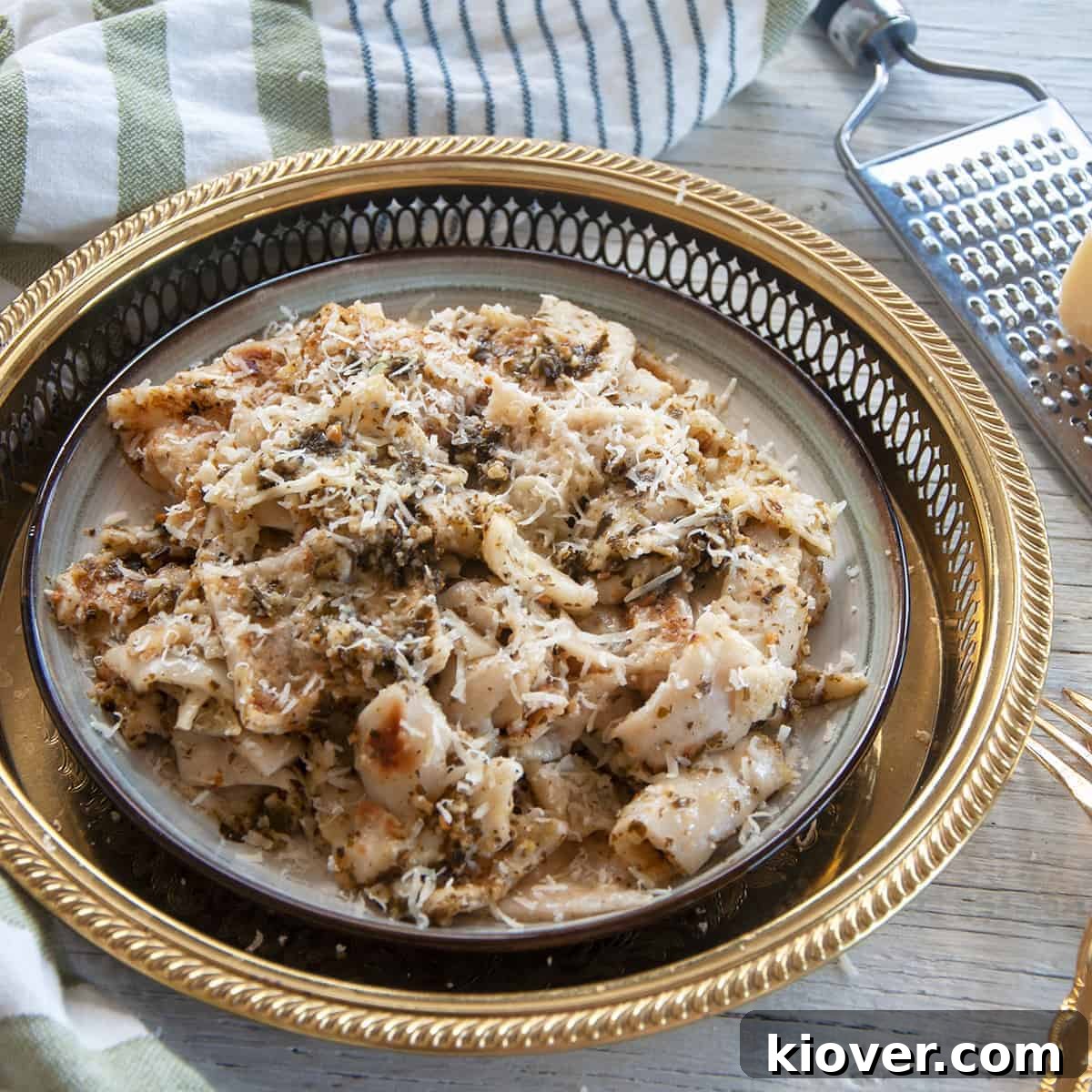
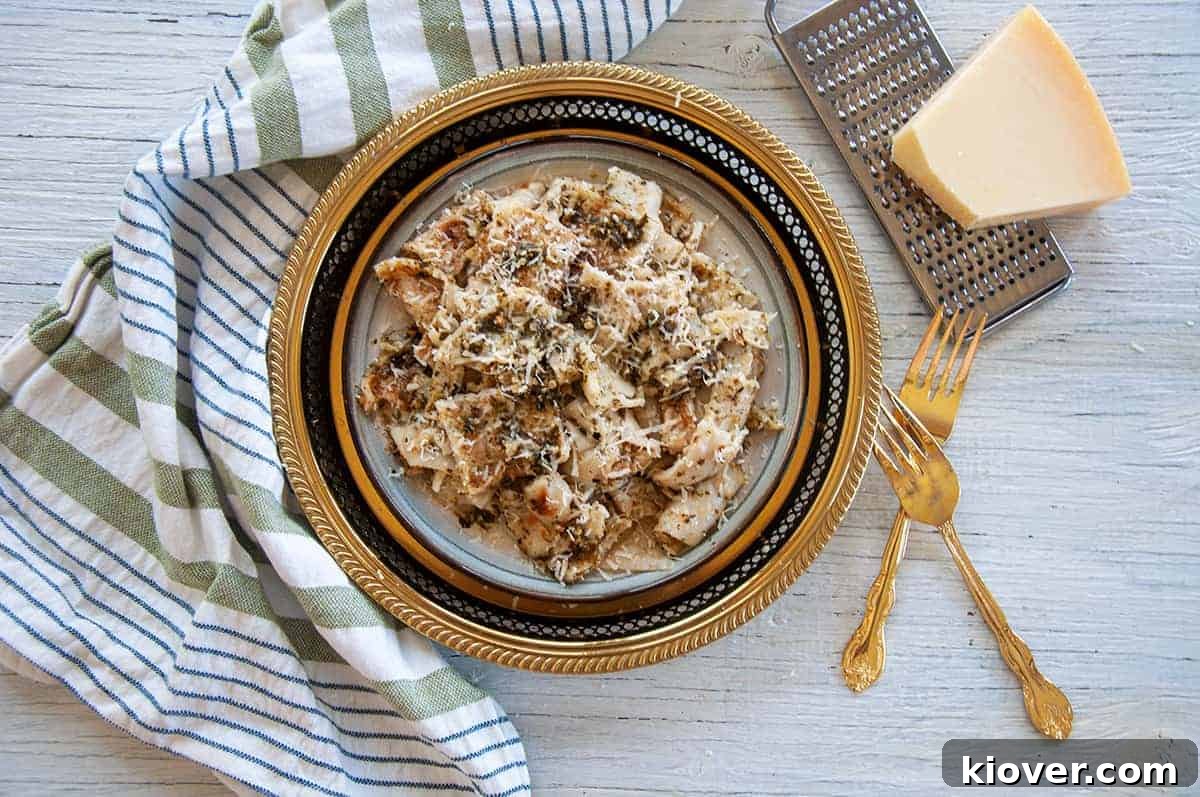
In the vast and wondrous world of Italian cuisine, where countless pasta shapes delight the palate, there exists an extraordinary gem that stands apart: Testaroli pasta. This ancient and truly unique Italian specialty often surprises even the most seasoned pasta lovers. Imagine a culinary fusion, a delicate balance between a savory crepe or pancake and a traditional pasta. That’s precisely what we’re exploring today – the authentic and irresistible Tuscan Testaroli, traditionally served with vibrant Pesto Sauce.
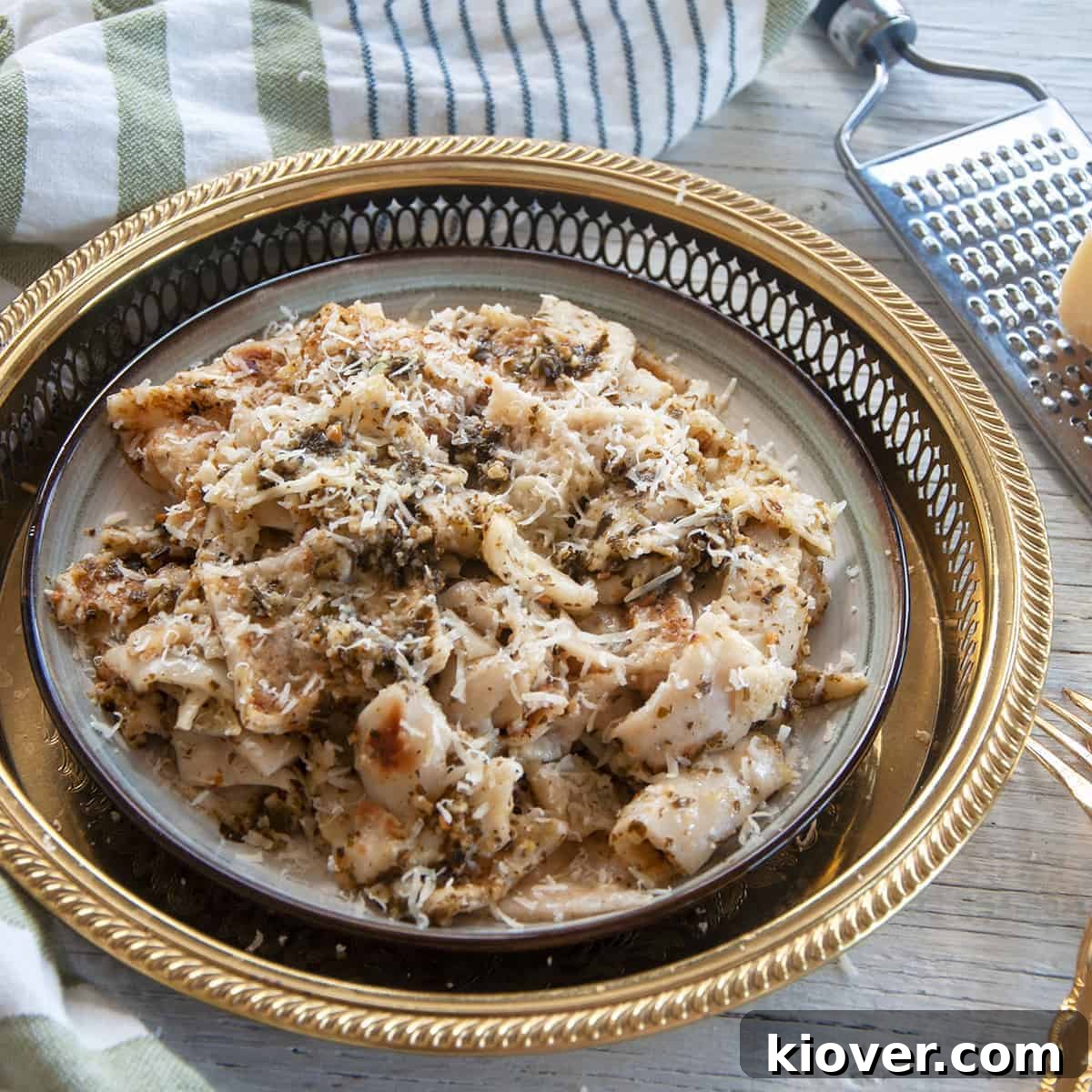
Unveiling Testaroli: An Ancient Italian Pasta Unlike Any Other
Prepare to have your culinary perceptions transformed. Testaroli pasta is not extruded, rolled, or kneaded like most familiar pastas. Instead, it begins its journey as a thin, simple batter, akin to a delicate crepe or pancake. This batter is cooked on a hot surface, forming large, thin discs. Once these “crepes” are perfectly cooked, they are cut into distinctive diamond shapes and briefly immersed in hot water. This quick dip transforms their texture, making them tender and ready to absorb the rich flavors of a classic Italian pesto, the traditional accompaniment that truly elevates this dish.
While you might be familiar with delightful pasta dishes such as our Traditional Spaghetti with a Robust Sauce, the Creamy Lemon Butter Sauce over Farfalle Pasta, or the comforting Pasta Al Forno – Baked Penne Delight, Testaroli offers an entirely different, yet equally rewarding, experience. Its unique preparation method and distinct texture make it an absolute must-try for anyone seeking to explore the diverse heritage of Italian pasta.
The Storied History and Unique Origins of Testaroli
Many culinary historians consider Testaroli to be one of the earliest recorded forms of pasta, a claim that, while difficult to definitively prove, certainly holds logical weight. Its foundational ingredients—flour, water, and salt—are incredibly basic and would have been readily available to ancient communities, making its early creation highly plausible. This simplicity speaks to a time before complex machinery or extensive culinary techniques, pointing to a true culinary heritage rooted in ingenuity and necessity.
Regardless of its precise origin date, Testaroli is deeply embedded in the culinary traditions of two beautiful Italian regions: Tuscany and Liguria. These areas proudly claim Testaroli as their own, celebrating its rustic charm and distinct flavor profile. Traditionally, the creation of Testaroli involved a specialized terracotta cooking surface known as a ‘testo’. These heavy, round plates would be heated over a wood fire, providing the perfect non-stick surface to cook the thin batter. This ancient method imparts a subtle smokiness and a unique texture that modern cooking methods strive to emulate. It’s a fascinating process to witness, and this YouTube video, though in Italian, wonderfully illustrates the traditional preparation of Testaroli, showcasing the artistry involved.
Crafting Testaroli at Home: Batter and Cooking Techniques
While most home kitchens don’t come equipped with a traditional ‘testo’ and wood-fired oven, replicating the magic of Testaroli is entirely achievable with modern equipment. A well-seasoned cast iron skillet is an excellent substitute, offering superb heat retention and a naturally non-stick surface that mimics the properties of a ‘testo’. Alternatively, a high-quality flat skillet or even a dedicated crepe maker can yield fantastic results.
The Art of Mixing the Testaroli Batter
The secret to perfect Testaroli begins with its unique batter. My preferred ratio is two parts all-purpose flour to three parts water, with a pinch of salt to enhance the flavor. The resulting consistency is surprisingly light and fluid – much thinner than a typical pancake or even a Swedish pancake batter, and notably more viscous than a standard crepe batter. It should pour and spread easily, almost like a thick water, yet still possess enough body to cling together when cooked. This specific lightness is crucial; it prevents the Testaroli from becoming heavy or gummy and allows it to achieve its characteristic tender texture after its brief hot water bath.
When mixing, whisk the ingredients thoroughly to ensure a smooth, lump-free batter. Allowing the batter to rest for 10-15 minutes after mixing can also help the flour fully hydrate, leading to an even better texture. This simple batter, with its humble ingredients, is the foundation for an extraordinary culinary experience.
The Frying Process: From Batter to Disc
Once your batter is ready, it’s time to cook. I recommend heating an 11-inch cast iron skillet over medium heat for a good 10 minutes. This extended preheating ensures an even and consistent temperature across the cooking surface, which is vital for uniformly cooked Testaroli. A thin layer of olive oil should be added to the hot pan and evenly distributed before each disc is cooked, further enhancing the non-stick quality and contributing to a beautiful golden crust.
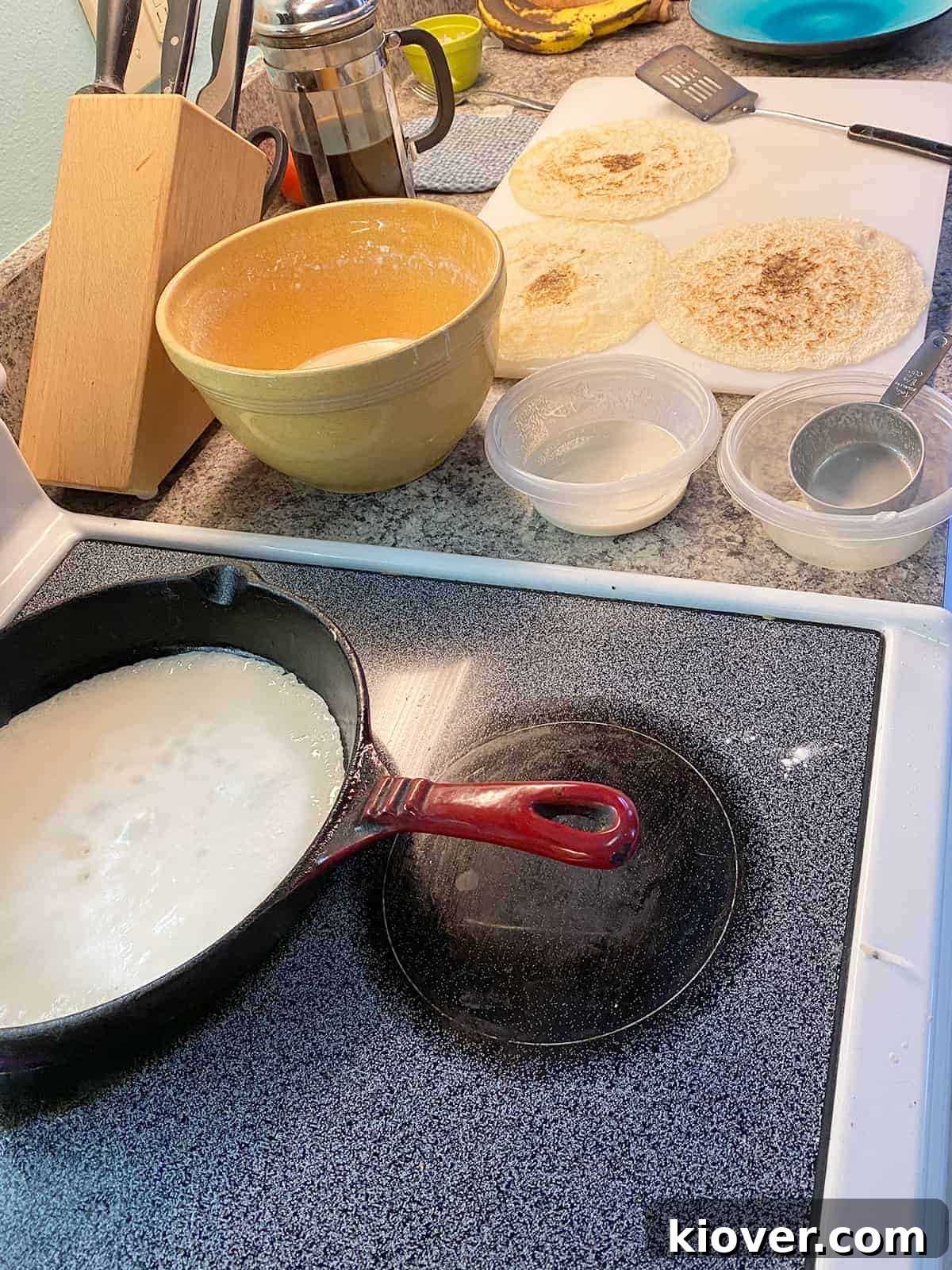
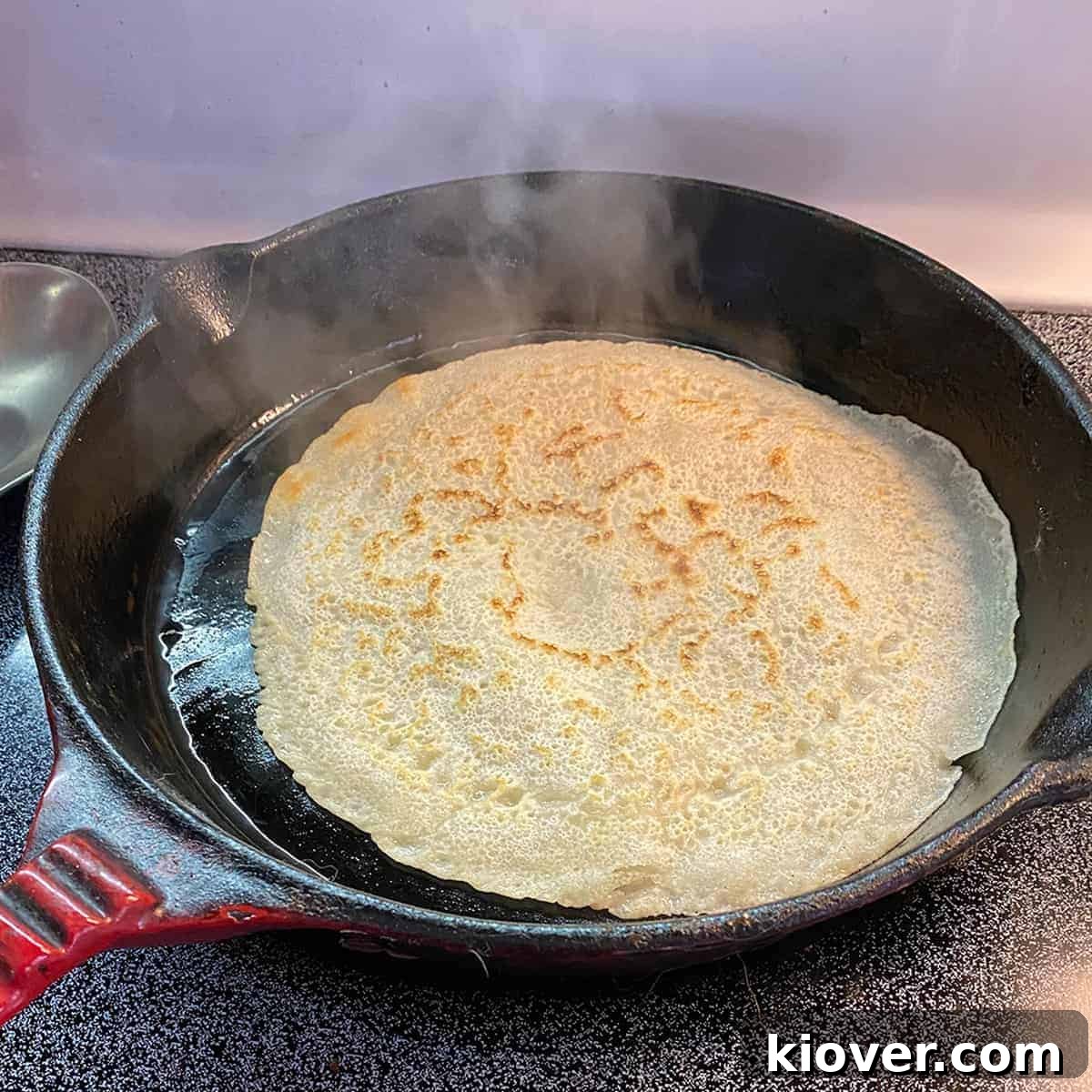
Pour approximately ½ cup of batter directly into the center of your well-oiled and heated skillet. Immediately pick up the pan and gently swirl the batter to coat the entire bottom surface. Don’t worry if it doesn’t spread perfectly to the edges; the goal is a thin, even layer. Cook the Testaroli for about four minutes on the first side. You’ll know it’s ready to flip when the edges begin to crisp slightly and the surface appears set and less glossy. A thin metal spatula is your best friend here, allowing you to easily slip underneath the delicate crepe without tearing it. After flipping, cook for just one more minute on the second side. Each Testaroli disc should have a distinct appearance: one side might exhibit a slightly cratered, unique texture from direct contact with the hot pan, while the other will likely be flatter and smoother, almost like a thin tortilla.
As each disc is cooked, carefully remove it from the skillet and place it on a clean surface, unstacked, to cool. This prevents moisture from building up and keeps them from sticking together. Following this method, our recipe typically yields about seven discs. Allow these cooked discs to rest for approximately 20 minutes before proceeding to the cutting and steeping stages. This resting period is important as it allows the structure to set further, making them easier to handle.
Precision Cutting: Shaping the Testaroli Diamonds
The traditional and most common way to serve Testaroli is in elegant, medium-sized diamond shapes. After the cooked discs have rested, lay them flat and use a knife or, for an easier and more enjoyable experience, a pizza cutter to slice them. Aim to cut each disc to maximize the number of uniform diamond-shaped pieces. Perfection isn’t the goal; even irregularly shaped pieces will taste just as delicious and contribute to the rustic charm of the dish. The diamond shape isn’t just aesthetic; it provides ample surface area for the pesto to cling to, ensuring every bite is bursting with flavor.
The Delicate Art of Steeping Testaroli
One of the most defining and delicate characteristics of Testaroli pasta is its texture after the final preparation step. Initially, after frying, the discs are relatively sturdy, resembling a thick crepe or pancake. However, it’s the subsequent brief immersion in hot water that truly transforms them, making them exquisitely tender and, yes, quite fragile. This is a critical step where technique matters significantly.
Through extensive experimentation, I’ve discovered that boiling Testaroli vigorously causes them to fall apart and become mushy due to over-hydration and the rapid agitation. The ideal method is steeping, not boiling. Bring a large pot of water to a rolling boil, then immediately remove it from the heat. Allow the vigorous bubbling to subside for a moment, then gently add all of your cut Testaroli pieces to the hot, but no longer aggressively boiling, water. They only need a very brief visit – a quick dip is enough to soften them without compromising their structure. Immediately after immersion, drain the Testaroli using a strainer. At this precise moment, your Testaroli is ready to be gently tossed with your chosen sauce, typically pesto, and adorned with freshly grated Parmesan cheese before serving. Remember, these delicate pasta diamonds are still fragile, so handle them with utmost care during the final toss to prevent breakage and ensure a beautiful presentation.
The Perfect Pairing: Pesto with Testaroli
The traditional and most beloved accompaniment for Testaroli is a vibrant pesto sauce. The fresh, aromatic herbs and rich olive oil of pesto beautifully complement the mild, delicate flavor and tender texture of the pasta. While a quality jarred pesto can certainly be used for convenience, this is truly a special dish that deserves the unparalleled freshness of homemade. I highly recommend trying a traditional pesto recipe, like the one from my friends at Berly’s Kitchen. It’s surprisingly quick to make, often ready in just about 10 minutes, which is perfect for preparing while your Testaroli discs are resting and awaiting their hot water bath. The combination of fresh Testaroli and homemade pesto creates an authentic Italian experience that is both simple and profoundly satisfying.
Visual Guide and Essential Tips for Testaroli Preparation
To help you perfect your Testaroli, here are some visual aids and key tips to keep in mind throughout the process:

Expert Tips for Mastering Testaroli
- For the most authentic and vibrant flavor, always opt for freshly made pesto. However, a good quality jarred pesto is a perfectly acceptable alternative if time is short.
- Remember, Testaroli is a uniquely fragile pasta, especially after its brief hot water treatment. Exercise gentle handling during all stages, particularly when tossing with sauce.
- A pizza cutter can make quick and precise work of slicing the cooked Testaroli discs into their characteristic diamond shapes.
- Ensure your cast iron skillet is thoroughly preheated and properly oiled before adding the batter to prevent sticking and ensure even cooking.
- The batter consistency is key: it should be thin enough to swirl easily but not watery. If it’s too thick, add a tiny bit more water; if too thin, a touch more flour.
- Do not stack the cooked Testaroli discs while they cool; this can create steam and make them soggy or stick together.
Recommended Kitchen Tools for Testaroli Preparation
- Pizza Cutter: Ideal for quickly and efficiently cutting the Testaroli discs.
- Strainer: Essential for the swift and gentle draining of the steeped Testaroli.
- Large Pot: Needed for boiling water for the steeping process.
- 11” Cast Iron Skillet: The perfect vessel for frying the Testaroli batter evenly.
- Thin Metal Spatula: Crucial for easily flipping the delicate Testaroli discs.
Share Your Testaroli Culinary Journey!
Embarking on the creation of Testaroli is a true mark of an adventurous home cook! We are incredibly eager to hear about your experience. Did you enjoy this ancient Italian delight? Share your thoughts, successes, and any tips you discovered in the comments section below. If you loved the recipe, we would be incredibly grateful if you could leave a rating and share this unique pasta dish with your friends and family on Facebook or Pinterest. Your support helps us spread the word about Ramshackle Pantry and connect more food enthusiasts with authentic, delicious recipes. Happy cooking!
Classic Testaroli Pasta Recipe
5 Stars
4 Stars
3 Stars
2 Stars
1 Star
5 from 3 reviews
- Author: Ben Myhre
- Prep Time: 15 minutes
- Cook Time: 1 hour
- Total Time: 1 hour 15 minutes
- Yield: 4 servings
- Category: Traditional
- Method: Fry
- Cuisine: Italian
Description
Testaroli are a unique, tender, and ancient Italian pasta, revered for their delicate crepe-like texture. Serve this heritage pasta with a simple yet flavorful pesto, and you’ll create a memorable dinner that beautifully celebrates Italian culinary tradition and regional flavors.
Ingredients
- 2 cups all purpose flour
- 3 cups water
- 1 teaspoon salt
- ½ cup pesto
- Parmesan cheese to top
- 1 Tablespoon olive oil for cast iron
Instructions
- Whisk the flour, water, and salt together vigorously in a large bowl. Ensure the mixture is well-aerated and completely smooth, without any lumps.
- Heat a well-seasoned cast iron or an 11-inch non-stick fry pan over medium heat for at least 10 minutes to ensure an even cooking surface.
- Add approximately ½ teaspoon of olive oil to the hot pan before cooking each disc, spreading it evenly across the surface.
- Ladle or use a measuring cup to pour about ½ cup of the prepared batter directly into the center of the hot skillet.
- Immediately swirl the skillet to spread the batter as thinly and evenly as possible across the bottom, aiming for a consistent round disc.
- Cook for approximately 4 minutes, or until the edges begin to crisp and the surface looks set.
- Use a thin metal spatula to carefully slide under the disc and gently flip it to the other side.
- Continue to cook for just one more minute on the second side to achieve a light golden color and set texture.
- Remove the cooked Testaroli disc from the pan and set it aside on a clean surface, ensuring not to stack them to prevent steaming and sticking.
- Repeat steps 4-9 for the remaining batter until all discs are cooked.
- Allow the cooked Testaroli discs to rest for at least 20 minutes. Around the 10-minute mark of this resting period, begin bringing a large pot of water to a rolling boil.
- While the water is heating, carefully cut the rested Testaroli discs into small, uniform diamond shapes, adhering to traditional presentation. A pizza cutter works excellently for this task.
- Once the water reaches a full boil, promptly remove the pot from the heat source.
- As soon as the vigorous boiling subsides (but the water is still very hot), gently drop all of the cut Testaroli pieces into the water. Immediately after immersion, drain them thoroughly using a strainer.
- Gently toss the drained Testaroli with your pesto sauce, being mindful of their delicate nature. Serve immediately, topped with a generous sprinkle of Parmesan cheese, or offer a dollop of pesto on top of each serving.
Notes
- For the most authentic flavor, consider using freshly made Pesto, though a good quality jarred version is also acceptable.
- Due to its unique preparation, Testaroli is a delicate pasta. Handle it with care, especially after steeping.
- A pizza cutter can greatly simplify the process of cutting the cooked Testaroli discs into their characteristic diamond shapes.
- The exact calorie count will vary depending on the specific pesto sauce and Parmesan cheese used.
Nutrition
- Serving Size: 1/4 Amount
- Calories: 410 kcal
- Sugar: 0 g
- Sodium: 791 mg
- Fat: 19 g
- Saturated Fat: 0 g
- Unsaturated Fat: 4 g
- Trans Fat: 0 g
- Carbohydrates: 46 g
- Fiber: 2 g
- Protein: 11 g
- Cholesterol: 12 mg