
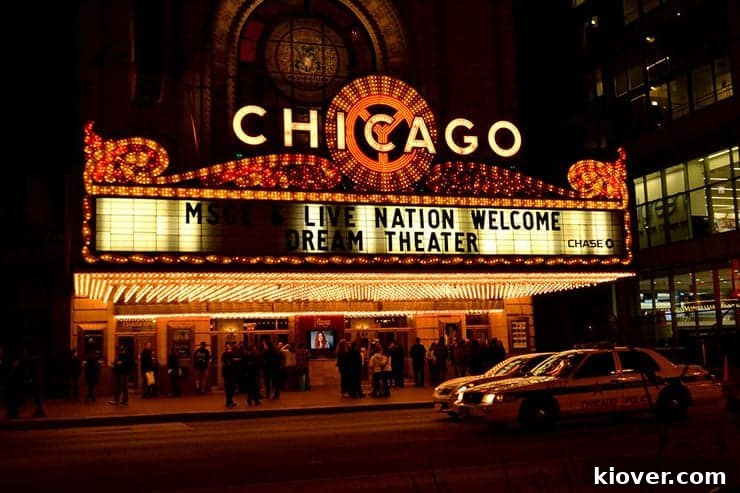
Chicago deep dish pizza. The name itself offers a tantalizing hint about its origin, yet it barely scratches the surface of a rich, contested history. This iconic dish, with its towering crust, generous layers of cheese, and robust tomato sauce, stands as a culinary monument, deeply ingrained in the Windy City’s identity. But how did this unique “pizza pie” come into existence? Like many legendary foods, its beginnings are shrouded in mystery, spirited debates, and unanswered questions. Join us as we embark on a delectable journey to uncover the captivating history behind the infamous Chicago deep dish pizza.
The Evolution of Pizza: From Humble Origins to Global Phenomenon
While the concept of flatbread adorned with various toppings dates back to ancient civilizations, the pizza we recognize and crave today is a relatively recent innovation. Think of it: a typically round (or sometimes rectangular) dough base, crowned with vibrant tomatoes, melted cheese, and an array of other delectable ingredients. As we’ve explored in our comprehensive list of pizza styles, the Neapolitan pizza is widely revered as the progenitor of modern pizza, laying the groundwork for countless variations worldwide.
Surprisingly, the pizza as we know it is not an ancient dish. It’s a culinary marvel that emerged in a relatively short span of history. A significant factor in its development was the tomato, a fruit native to South America. It wasn’t until the 16th century that tomatoes were introduced to Europe, and even then, they were initially viewed with suspicion, often believed to be poisonous. However, they soon found their way into the kitchens of the poor, who dared to experiment with this new, abundant ingredient. It’s a fascinating testament to human ingenuity how many of our now-cherished culinary staples – from luxurious lobster to the complex flavors of molasses and rum, and indeed, the humble tomato – began their journey as sustenance for the impoverished or enslaved.
Thus, flatbread, an economical and readily available staple, combined with the newly embraced tomato, became a common meal among the working classes of Naples, Italy. Pizza quickly gained popularity due to its many practical advantages. It cooks remarkably fast, with traditional Neapolitan pizzas requiring only a minute or two in a scorching hot oven. The dough itself consists of just a few basic ingredients – flour, water, salt, and yeast – all widely accessible even to those with limited means. Its versatility was another key appeal, allowing people to top it with whatever ingredients were seasonally available or affordable. Furthermore, its portable nature meant it could be eaten on the go, a convenient option for busy laborers.
Most historical accounts pinpoint Naples as the “big bang” for modern pizza. Within the bustling streets of Naples, this simple, nourishing dish flourished among the common people. The esteemed Antica Pizzeria Port’Alba in Naples, established in 1830, holds the distinguished title of being the world’s first pizzeria and continues to serve its authentic creations to this day, a living monument to pizza’s enduring legacy.
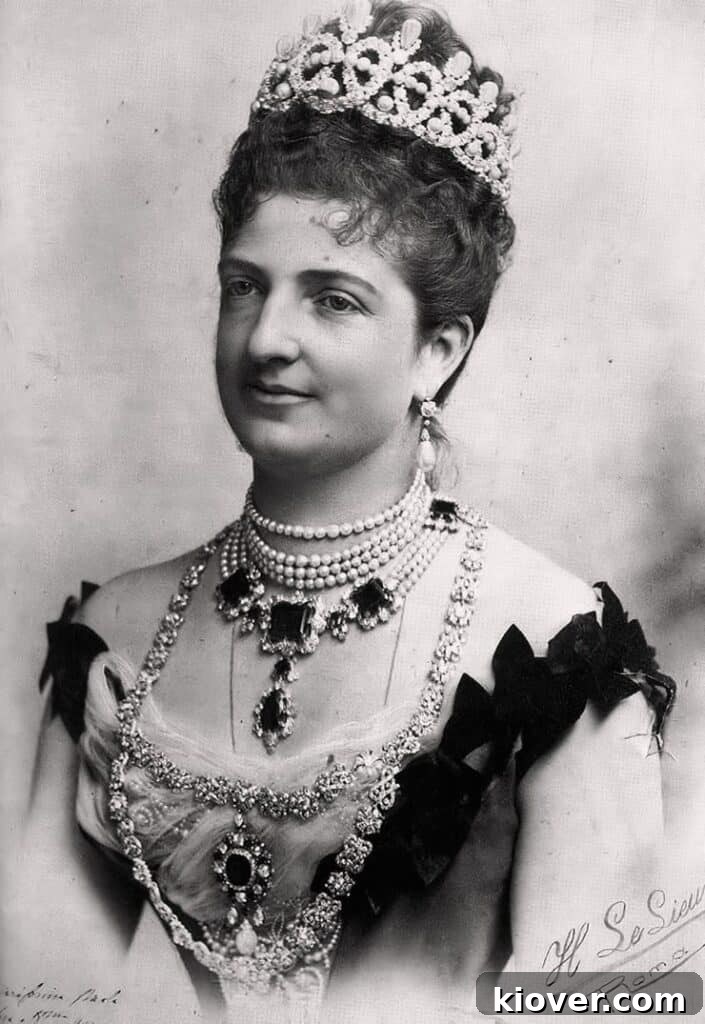
Pizza’s social status received a monumental boost in 1889 when King Umberto I and Queen Margherita visited Naples. Legend has it that during their visit, they were served a pizza prepared by chef Raffaele Esposito. To honor the Queen, Esposito crafted a special pizza featuring tomatoes, basil, and mozzarella cheese – ingredients that serendipitously mirrored the vibrant red, green, and white colors of the Italian flag. This patriotic creation was aptly named the Margherita Pizza, forever cementing pizza’s place in both culinary history and royal favor.
The Journey of Pizza to the American Heartland: Chicago’s Embrace
The arrival of pizza on American shores is a straightforward narrative, deeply intertwined with the waves of Italian immigration in the late 19th and early 20th centuries. As Italian families sought new opportunities in the United States, they brought with them their rich cultural heritage, including their cherished culinary traditions. From the bustling streets of New York to the vibrant communities of Chicago and Philadelphia, Italian immigrants introduced their native dishes, and among them, pizza quickly found a new home.
The first documented pizzeria in America, Lombardi’s in NYC, opened its doors in 1905. Following its success, pizzerias began to sprout up in Italian enclaves across the country, transforming pizza from an ethnic novelty into a burgeoning mainstream food. Chicago, with its significant Italian immigrant population, was no exception to this trend. Numerous pizzerias emerged, serving traditional Neapolitan and New York-style pizzas – thin-crusted, often simple, and designed for quick consumption. However, the unique, robust Chicago-style deep dish pizza was yet to make its grand appearance. The question remained: how did Chicago develop its own distinctive “pizza pie,” a radical departure from its Italian ancestors?
Pizzeria Uno: The Birthplace of a Culinary Legend
The genesis of the Chicago deep dish pizza is most famously attributed to Pizzeria Uno. Opened in 1943, though initially under a different name, this establishment became the stage for a revolutionary culinary innovation. The venture was spearheaded by Ike Sewell, a former college football player and shrewd businessman, in partnership with Ric Riccardo, an already successful restaurateur. Sewell, known more for his business acumen and his career ascent at Standard Brands until his retirement in 1965, seemed an unlikely candidate to invent a complex culinary dish. This observation raises intriguing questions about the true origins of the deep dish recipe, which we will explore further.
According to Chicago Eater, Riccardo already owned the successful Riccardo’s Restaurant and Gallery. The two entrepreneurs embarked on a joint business venture, with early rumors suggesting they initially considered opening a Mexican restaurant, a plan reportedly abandoned after Riccardo was unimpressed with the food. Their pivot towards pizza, however, would prove to be monumental.
In 1943, the pizzeria opened its doors, introducing the public to what would become the Chicago-style deep dish. It was initially known simply as “The Pizzeria,” later becoming “Pizzeria Riccardo.” Its immediate success led to the opening of a second location nearby, named Pizzeria Due (Italian for “two”). In 1955, to distinguish the original from its new sibling, “The Pizzeria” was officially renamed Pizzeria Uno. While it’s plausible that similar thick-crust, casserole-like pizzas were being made in Chicago households, Pizzeria Uno is widely credited with popularizing and commercializing the unique style that defines Chicago deep dish.
So, did Ike Sewell and Ric Riccardo, the visionary businessmen, personally concoct this iconic dish? The narrative, as it often does in culinary history, becomes more intricate and contested at this point.
The Great Deep Dish Debate: Who Really Invented It?
The question of who precisely invented the Chicago deep dish pizza is a subject of passionate debate, reminiscent of academic disputes where the work of graduate students sometimes overshadows the professors. Both Sewell and Riccardo were undeniable innovators and successful entrepreneurs. However, their primary roles were more akin to business leaders than hands-on chefs. Sewell, with his full-time corporate job and financial background, seems an unlikely candidate to have spent hours perfecting a pizza recipe in a kitchen. Was the man who once contemplated a Mexican restaurant truly a hidden pizza savant?
Riccardo, already immersed in the restaurant business, was perhaps a more plausible inventor. Yet, even his involvement in the day-to-day culinary creation is questioned by many. This widespread doubt has led to speculation that the true genius behind the deep dish recipe might have resided with one of their employees. Or perhaps, it was a collaborative evolution, a combination of ideas and experimentation that blossomed into the distinctive Chicago deep dish.
Two key figures have emerged in the historical debate, each with strong claims or significant contributions attributed to them: Rudy Malnati and Alice Mae Redmond.
Rudy Malnati: The Unsung Hero?
Adolpho “Rudy” Malnati Sr. is a central figure in the deep dish origin story. As highlighted again by the Chicago Eater article, Malnati was an employee of Riccardo and Sewell at Pizzeria Uno. His role, however, may have been far more significant than that of a mere employee. Some argue he was an unacknowledged partner or, at the very least, the true architect of the deep dish recipe. Reports from the BBC suggest Malnati was integral to the Pizzeria Uno concept even before Sewell entered the picture, claiming Rudy and Riccardo were already selling slices on the street corner.
These reports often assert that Malnati single-handedly developed the unique recipe that characterized Pizzeria Uno’s offering. Further supporting his prominence, The Chicago Tribune reported that Malnati was listed as the tenant of the building and also as a co-owner and operator, suggesting a much deeper involvement than just an employee. His legacy continued through his family: his son, also Rudy Malnati Jr., worked at Uno’s as co-manager before eventually opening his own hugely successful pizzeria, Lou Malnati’s. Additionally, Lou’s half-brother and another Malnati son, Rich, went on to establish Pizano’s. Interestingly, Pizano’s history page explicitly states that Rudy Malnati established Pizzeria Uno in 1943. This claim, if accurate, paints a picture of Malnati not just as a recipe developer, but as a foundational figure in the restaurant itself.
There’s little doubt that Rudy Malnati played a pivotal role in the early days of the Chicago deep dish. Whether he was the sole inventor or a crucial collaborator, his influence is undeniable. The persistent claims from his family suggest a possible historical injustice, where a key contributor may have been overlooked in the official narrative of ownership and creation.
Alice Mae Redmond: The Dough Whisperer
Another compelling figure in the deep dish saga is Alice Mae Redmond, a chef who worked at Pizzeria Uno. Some sources credit her with developing the signature dough recipe for Uno’s and even consider her a potential inventor of the deep dish itself. Redmond’s professional journey took her from Pizzeria Uno to Gino’s East when it opened in 1966, a testament to her culinary skill and demand in the competitive Chicago pizza scene (Gino’s East, by the way, ships its famous pizzas nationwide).
Several reports indicate that she worked at Uno’s for 17 years prior to Gino’s East’s 1966 opening, which would place her start date around 1949. This presents a minor discrepancy, given Pizzeria Uno opened in 1943, especially if the deep dish was part of the original menu from day one. However, an enlightening quote from a 1989 Chicago Tribune article sheds light on her specific contribution:
“When Alice Mae started in the Pizzeria Uno kitchen, she didn’t like the crust. `It was too hard to push,` she says, slowly shaking her head. `I had to make that crust better.`”
This statement strongly suggests that while Redmond may not have invented the concept of the deep dish pizza, she was instrumental in refining and perfecting its crust – a critical component that distinguishes Chicago deep dish. Her expertise in dough mechanics transformed a potentially challenging crust into the beloved, flaky, and buttery foundation that patrons came to adore. Regardless of whether she was the sole inventor of the entire dish, Redmond’s role in shaping the sensory experience of the Pizzeria Uno deep dish was undeniably significant and foundational to its enduring success.
Enduring Mysteries and the Legacy of Deep Dish
The history of the Chicago deep dish pizza, much like a perfectly baked pie, is layered with intriguing questions. While it is almost universally accepted that Pizzeria Uno was the cradle of this culinary marvel, the precise identity of its “inventor” remains elusive. Where is the original 1943 menu, perhaps with the first deep dish recipe scribbled upon it? What was the true nature of the arrangement between Rudy Malnati and the founders of Pizzeria Uno? How did Alice Mae Redmond’s modifications transform the original dough recipe, and what was the crust like before her involvement?
Ultimately, does it truly matter which individual holds the sole claim to invention? Perhaps the Chicago deep dish pizza wasn’t the brainchild of a single person but rather the serendipitous confluence of a particular time, place, and group of talented individuals. Had all these elements not converged in Pizzeria Uno’s kitchen in the 1940s, perhaps the Chicago deep dish as we know it would never have existed. Alice Mae Redmond, for instance, may have taken an already good concept and, through her unparalleled skill, elevated it to a higher plane of pizza nirvana. The collective efforts within Pizzeria Uno’s kitchen fostered an environment of culinary innovation that resulted in a dish unlike any other.
It’s likely that some of these historical questions will forever remain unanswered, adding to the mystique of this iconic food. Yet, the enduring mystery doesn’t diminish the incredible taste or cultural significance of a Chicago-style deep dish pizza. Nor does it alter the almost universal acknowledgment that this distinct pizza style originated within the walls of Pizzeria Uno, regardless of which individual hands shaped its initial form or perfected its subsequent iterations.
The history of the Chicago deep dish pizza is a testament to culinary evolution, filled with rich flavors and fascinating debates. What is certain is that exploring this history ignites a craving to experience these legendary pizza places firsthand. Perhaps the true answers, or at least a deeper appreciation, can be found at the bottom of a piping hot pizza pan in Chicago. Or, failing that, perhaps at the bottom of a tall, refreshing beer? While the latter might not yield historical revelations, it certainly offers a delightful way to ponder the legacy of Chicago’s most famous pizza.