
The story of macaroni and cheese is more than just a culinary journey; it’s a fascinating narrative woven through centuries of gastronomic evolution, cultural exchange, and innovation. From humble beginnings to becoming a beloved staple in countless American homes, this iconic dish has a rich and often surprising past. Why does Kraft Macaroni and Cheese hold such a revered place in the hearts of many, and how did the simple combination of macaroni noodles and cheddar cheese transform into the comforting masterpiece we cherish today? Let’s embark on an insightful exploration into the deep and savory history of macaroni and cheese, uncovering the pivotal moments and figures that shaped its enduring legacy.
To truly understand the origins of macaroni and cheese, we must first acknowledge the ancient lineages of its individual components. Pasta, in various forms, boasts a history stretching back millennia, with intriguing precursors appearing even before the Common Era. The first definitive evidence of pasta as we recognize it today emerges in historical records from the 1200s or 1300s. Similarly, cheese, a product of human ingenuity and agricultural advancement, has an equally long and storied past, dating back thousands of years across different civilizations. While the individual histories of pasta and cheese are captivating in their own right, our focus here is on the magnificent synergy that occurs when these two ingredients unite. For the purpose of this historical dive, we will assume that macaroni-style pasta was already in existence and that various forms of cheddar cheese had already been developed, allowing us to concentrate specifically on the enchanting history of macaroni and cheese as a combined entity.
Ancient Origins and Early Culinary Combinations
Many culinary historians trace the earliest precursor to modern macaroni and cheese back to a 13th or 14th-century cookbook titled Liber de Coquina. Authored by individuals hailing from France and Italy, this manuscript is recognized not as the very first cookbook, but certainly one of the earliest and most significant surviving culinary texts from the medieval period. Within its pages lies a recipe known as “de lasanis,” which offers a glimpse into an early form of pasta and cheese amalgamation. Translated into English, the recipe provides detailed instructions:
On lasagna: for lasagna, spread fermented pasta as thin as you can. Then divide it in square parts at the width of three fingers. Then put the mentioned lasagna in boiling salted water to cook it. When properly cooked, add grated cheese. If you want, you can put some good powdered spices while that, pulverize them over a trencher). Then, put over another layer of lasagna and powder[ed spices]; and keep doing that until the trencher or bowl is full. Then eat it with a small pointy wooden stick.
While this recipe undeniably bears a strong resemblance to lasagna—a layered dish of pasta, cheese, and sometimes meat or sauce—it represents a momentous culinary milestone. This medieval instruction is arguably the first documented instance where pasta and cheese are explicitly combined to form a prepared dish. It’s a beautifully simple concept, yet profoundly significant in the lineage of macaroni and cheese. However, despite mentioning both pasta and cheese, this “de lasanis” recipe isn’t quite the creamy, baked dish we’ve come to associate with modern macaroni and cheese. The true uniqueness of our beloved comfort food lies in its specific ingredients and preparation methods. To follow its evolutionary path more closely, we need to track the emergence of macaroni itself as a distinct pasta form and its eventual pairing with a particular type of cheese.
The British Influence: Macaroni’s Culinary Debut
The journey towards modern macaroni and cheese takes a significant turn in 18th-century England. The first recorded recipe to explicitly feature macaroni as an ingredient alongside cheese appears in a highly influential cookbook titled The Experienced English Housekeeper. Penned by Elizabeth Raffald, this series, first published in 1769, became an immediate sensation and offered a comprehensive guide to 18th-century domestic culinary practices. Within its pages, Raffald presents a recipe for “Maccaroni” that includes cheese:
Boil four ounces of maccaroni til it be quite tender, and lay it on a fieve to drain, then put it in a toffing pan, with about a gill of good cream, a lump of butter rolled in flour, boil it five minutes, pour it on a plate, lay all over it Parmefan cheefe toafted; fend it to table on a water plate for it foon goes cold.
Readers might notice some archaic spellings in this transcription, particularly the repeated use of ‘f’ where an ‘s’ would typically appear today. This intriguing linguistic quirk is due to the “long s,” a historical variant of the lowercase letter ‘s’ that was commonly used in typography up until the early 19th century. While not directly related to the culinary history of the dish, it’s a fascinating detail that offers a glimpse into the printing conventions of the era. More pertinent to our study, however, is the cheese specified in Raffald’s recipe: Parmesan. Many online sources incorrectly assert that this cookbook marks the first use of cheddar cheese with macaroni. However, a direct examination of the text reveals Parmesan as the cheese of choice. While Parmesan certainly offers a delicious flavor profile, it’s not the iconic cheddar that defines the modern dish. Nonetheless, this recipe is a crucial stepping stone, showcasing macaroni pasta being combined with a rich, creamy sauce and grated cheese, very much setting the stage for the cheddar-infused versions that would follow. The combination of macaroni and cheese, though not yet with cheddar, began to appear with increasing frequency in 19th-century cookbooks. Yet, consistent mentions of cheddar cheese specifically paired with macaroni remained elusive until a later date. In fact, one of the earliest explicit references to cheddar as an addition to macaroni and cheese can be found in an 1893 edition ofGood Housekeepingmagazine, a prominent American publication, suggesting that the cheddar connection solidified later, possibly even across the Atlantic.
The Cheddar Story: A Quintessentially English Cheese
Before we fully traverse the Atlantic to America, let’s briefly delve into the rich heritage of cheddar cheese and consider why England might have been the crucible for its eventual marriage with macaroni. The name “Cheddar” is intrinsically linked to its geographical origin: a picturesque village in Somerset, England. The distinctive process known as “cheddaring”—where curds are stacked, turned, and pressed to drain whey, resulting in a firm, dense texture—gives the cheese its characteristic crumbly yet smooth consistency and rich flavor. The specific environmental conditions found in the caves of Cheddar Gorge, near the village, with their ideal humidity and stable temperatures, provided the perfect natural environment for aging this magnificent cheese. It is hardly surprising, then, that cheddar cheese became, and remains, immensely popular throughout the United Kingdom.
Cheddar cheese has been produced since at least the 12th century, demonstrating a long and celebrated history within English culinary traditions. Today, it stands as the most widely consumed cheese in the UK, a testament to its versatility and beloved taste. Given that the macaroni and cheese dish, in its nascent form, seems to have migrated from the France/Italy region to England, and considering the widespread popularity and availability of cheddar cheese in England, it is a highly plausible theory that the two were first combined there. While definitive historical proof of this exact moment remains elusive, the circumstantial evidence strongly points to England as the likely birthplace of the cheddar macaroni and cheese we recognize. Furthermore, the strong historical, cultural, and colonial ties between England and the United States meant that many British culinary traditions, including the preference for cheddar cheese, would naturally have made their way across the Atlantic. This cultural migration set the stage for macaroni and cheese to make its significant leap to American shores, where it would eventually find its enduring identity.
Crossing the Pond: Thomas Jefferson and American Popularization
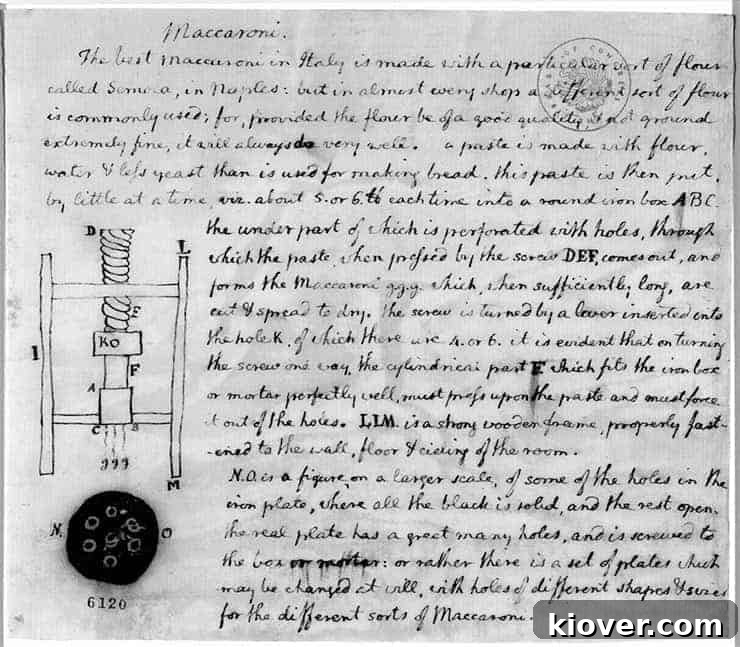
The story of how macaroni and cheese gained widespread recognition and popularity in America is often attributed to one of its most distinguished founding fathers: Thomas Jefferson. While it is certainly conceivable that various forms of pasta and cheese dishes were being prepared in American homes prior to his involvement, Jefferson’s influence was undeniably monumental. During his time in Europe, particularly as Minister to France from 1784 to 1789, Jefferson was profoundly influenced by European culture, architecture, and, crucially, its sophisticated culinary traditions. He likely encountered and developed a taste for macaroni and cheese, or similar pasta and cheese dishes, during his travels and diplomatic engagements overseas. Not only did he import a pasta machine (or a design for one) to his estate at Monticello, but he also famously served macaroni and cheese at a state dinner in 1802. This pivotal event, hosted at the President’s House, introduced the aristocratic dish to American society’s upper echelons, lending it an air of sophistication and prestige.
The impact of a President serving such a dish at a state dinner cannot be overstated. It effectively elevated macaroni and cheese from a potential novelty to a dish worthy of the nation’s highest tables. Although historical records from this period do not explicitly confirm that Jefferson used cheddar cheese in his preparation, it is highly probable that by the mid-19th century, cheddar had begun to solidify its position as the preferred cheese for macaroni and cheese in America, largely due to its increasing availability, affordability, and the robust flavor profile that complemented the pasta so well. Jefferson’s patronage certainly laid the groundwork for the dish’s eventual widespread acceptance and integration into the American culinary landscape, preparing it for the transformative century that lay ahead.
The Twentieth Century: Kraft and the Rise of an American Icon
The 20th century witnessed the unparalleled ascent of macaroni and cheese, transforming it from a homemade specialty into a ubiquitous symbol of American comfort food, largely thanks to a groundbreaking innovation. The year 1937 marked a turning point when Kraft Foods introduced its revolutionary boxed macaroni and cheese dinner. This product was an instant sensation, perfectly timed to meet the needs of a nation still grappling with the economic hardships of the Great Depression. The Kraft dinner offered a complete, affordable meal solution: one box could feed a family of four at a price that was incredibly reasonable for the average American household. Its convenience and cost-effectiveness made it an indispensable pantry item during a period of widespread financial struggle, offering a moment of simple comfort amidst pervasive difficulty. The appeal of Kraft Macaroni and Cheese only intensified during World War II. With stringent food rationing policies in effect, many essential food items became scarce. In this climate, Kraft Macaroni and Cheese became an even more valuable commodity. Shoppers discovered they could purchase two boxes of the dinner for just one food stamp, making it an incredibly accessible and satisfying meal option when other choices were limited. This period undeniably cemented macaroni and cheese’s status as an enduring American icon. It was during these challenging times that the dish forged an unbreakable bond with the American public, becoming synonymous with resilience, resourcefulness, and the simple joy of a comforting meal.
Beyond the Box: Modern Legacy and Enduring Appeal
In the aftermath of World War II, the rise of post-war consumerism and corporate commercialization further solidified macaroni and cheese’s place in American culture. For many, the bright blue Kraft box became more recognizable than any homemade rendition of the dish. The history of macaroni and cheese, in its most accessible form, became indelibly etched into the annals of American culinary heritage. While the simplicity and nostalgia of the boxed version hold a special place for many—including those who might add a hot dog or two for an extra touch of childhood comfort—it’s important to acknowledge that it coexists with a rich tradition of homemade, gourmet, and regional variations. The enduring appeal of macaroni and cheese lies in its versatility and its ability to evoke feelings of warmth, family, and tradition. It is a dish that transcends social and economic divides, beloved by all ages and tastes.
This journey through the centuries of macaroni and cheese reveals a captivating narrative of culinary evolution, from ancient pasta and cheese pairings to refined European recipes, presidential endorsements, and eventual mass-market convenience. It highlights how two seemingly simple ingredients—macaroni and cheddar cheese—came together through a series of historical events and cultural shifts to form the powerhouse of flavor and comfort that it is today. We hope this exploration has been as enlightening and enjoyable for you as it has been for us, offering a deeper appreciation for this timeless and universally loved dish.