

How to Make Fresh, Healthy Homemade Tomato Juice: A Comprehensive Guide
Are you staring at a bounty of ripe tomatoes from your garden or farmer’s market, wondering how to best preserve their peak flavor? Or perhaps you’re simply seeking a wonderfully healthy drink that’s bursting with natural goodness? Look no further! This comprehensive guide will walk you through the simple, yet rewarding, process of making homemade tomato juice that is both incredibly flavorful and packed with nutritional benefits.

While many recipes focus on basic culinary techniques, we often like to elevate our dishes by taking a “from-scratch” approach. Today, our journey leads us to the heart of fresh flavors as we craft our very own tomato juice. This isn’t just about making a drink; it’s about unlocking a world of fresh taste and controlling exactly what goes into your body. This ‘how to make tomato juice’ tutorial is incredibly straightforward and offers dual benefits: it can be a fantastic, healthy beverage all on its own, or it can be the secret ingredient to significantly elevate your Bloody Mary game. If you’re ready to master the art of homemade tomato juice, let’s dive in.
Some culinary endeavors can seem daunting, but making tomato juice is surprisingly simple. At its core, the most basic tomato juice requires just two ingredients: fresh tomatoes and a touch of salt. You could even omit the salt if dietary restrictions demand it, though a little seasoning undeniably enhances the flavor profile. There are only a few subtle nuances that transform a good tomato juice into a truly great one. Follow this easy, step-by-step recipe, and you’ll transform garden-fresh tomatoes into a delicious, vibrant juice for your fridge in no time.
Why Make Your Own Tomato Juice? Unlocking Unmatched Flavor and Health Benefits
The allure of homemade tomato juice extends far beyond its delicious taste. There are compelling reasons why investing a little time in making your own is a superior choice to store-bought varieties:
- Unparalleled Freshness and Flavor: Store-bought tomato juices, even premium ones, often contain preservatives, added sugars, and concentrates that diminish the vibrant, natural taste of fresh tomatoes. Homemade juice captures the essence of ripe tomatoes at their peak, offering a flavor that is bright, complex, and incomparably fresh.
- Complete Control Over Ingredients: This is perhaps the biggest advantage. Commercial tomato juices are notorious for their high sodium content. By making your own, you dictate the amount of salt, or choose to omit it entirely. This is crucial for those managing blood pressure or simply seeking a healthier beverage. You also avoid artificial colors, flavors, and unwanted additives.
- Nutrient Density: Freshly made tomato juice retains more of the beneficial vitamins, minerals, and antioxidants (like lycopene) found in raw tomatoes. Cooking them briefly, as we do in this recipe, actually enhances the bioavailability of lycopene, making it even more beneficial for your body.
- Cost-Effectiveness: Especially if you have a garden overflowing with tomatoes or find them on sale, making your own juice can be significantly more economical than continuously purchasing bottled versions.
- Versatility: Homemade tomato juice is incredibly versatile. Beyond being a refreshing drink, it serves as an excellent base for cocktails like Bloody Marys, a flavorful addition to soups and sauces, or even a healthy ingredient in marinades.
Choosing the Perfect Tomatoes for Your Juice
The type of tomato you select significantly impacts the flavor and consistency of your homemade juice. When making rich sauces, I often lean towards meaty varieties like Roma or San Marzano, known for their low water content and robust flavor. However, for tomato juice, our goal is different: we want a generous amount of liquid and a balanced taste.
For this reason, I prefer using large, juicy “honker” tomatoes. Varieties like Beefsteak or Big Boy are excellent choices due to their substantial size and high moisture content, which translates directly into more juice. Their balanced sweetness and acidity also contribute to a well-rounded flavor. However, don’t feel limited – any large, ripe tomato will work well. Smaller varieties, such as cherry or grape tomatoes, can also be used, but be aware that they will require more effort in terms of blanching and peeling due to their smaller size, and might yield a slightly thicker consistency due to a higher skin-to-flesh ratio. Ultimately, the best tomatoes are those that are ripe, flavorful, and readily available to you.
The Essential Prep: Blanching, Peeling, and Seeding Tomatoes
The most distinctive step in crafting superior homemade tomato juice, compared to simply blending raw tomatoes, is the meticulous removal of skins and seeds. While some people prefer a rustic, seed-filled juice, removing these elements results in a smoother, more refined texture that is truly delightful. If you have a fine-mesh strainer, this process is surprisingly simple.
Blanching for Easy Peeling
First, we blanch the tomatoes. This brief dip in boiling water is a game-changer for skin removal. To prepare, bring a large pot of water to a rolling boil. While the water heats, set up an ice bath in a large bowl – a mixture of ice and cold water – which will be crucial for stopping the cooking process. Carefully immerse the tomatoes into the boiling water for just 15-30 seconds. You’ll notice their skins begin to crack slightly. Using a slotted metal spoon, quickly transfer the blanched tomatoes directly into the ice bath. The cold shock immediately stops them from cooking further and rapidly cools them, making them easy to handle.
Peeling and Coring
Once cooled, the skins should either be visibly cracked or easily peel away with your fingers. For any stubborn spots, a small paring knife can help gently break the skin, allowing it to slip off effortlessly. After peeling, core each tomato to remove the tough stem end and any surrounding fibrous material.
Removing the Seeds and Gelatinous Pulp
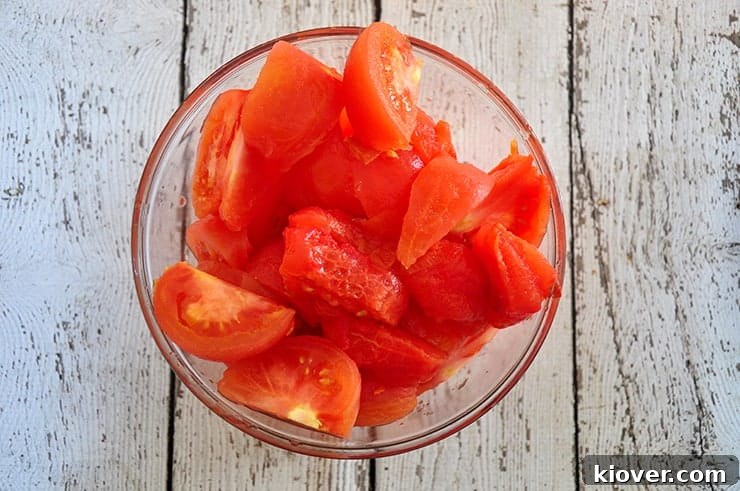
This is where our fine strainer comes into play. Cut each peeled and cored tomato into six wedges. This exposes the inner chambers, granting easy access to the seeds and the surrounding gelatinous pulp. Set up two empty bowls: one with your fine-mesh strainer placed securely on top, and another for collecting the thick, seedless tomato flesh.
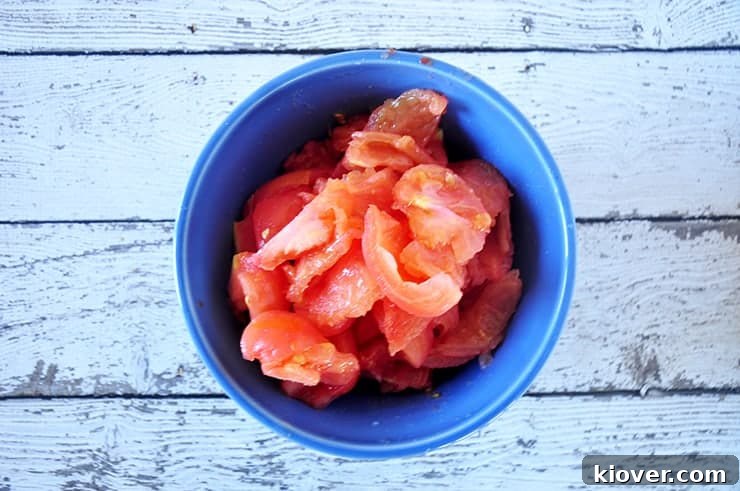
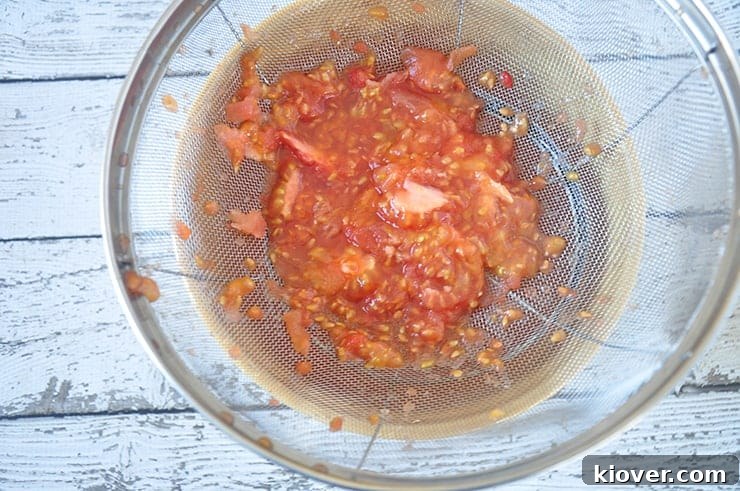
Carefully scoop the jelly-like insides, rich with seeds, from each tomato wedge and place them into the strainer. The thick, meaty flesh of the tomato wedges goes into the separate empty bowl. Continue this process until all your tomatoes are processed. Once the strainer holds all the seeds and pulp, use a larger spoon or a flexible spatula to gently press down on the gelatinous mixture. This action forces the liquid, which is full of flavor, through the fine mesh into the bowl below, while retaining the unwanted seeds in the strainer. Continue pressing until only the bare seeds remain. Discard the seeds.
Simmering for Superior Flavor and Texture
One might assume that the freshest tomato juice comes from raw, uncooked tomatoes. However, through experimentation, I’ve found that a brief simmer significantly elevates the quality of homemade tomato juice. I tested both methods extensively – raw blending versus a gentle simmer – and the cooked version consistently delivered a superior flavor and texture.
Cooking the tomatoes gently breaks down their cellular structure. This process releases more of their natural sweetness and deepens their savory umami notes. It transforms what could be a sharp, purely acidic drink into a more mellow, well-rounded, and complex beverage. Furthermore, simmering slightly reduces the water content, concentrating the flavors and resulting in a richer, more satisfying texture. This brief cooking period is not about making a sauce; it’s about developing a profound, sophisticated tomato flavor that is both refreshing and comforting.
Once the seeds are removed, add the strained liquid and the thick tomato flesh from both bowls into a medium saucepan. Bring this mixture to a gentle simmer and let it cook for about 15 minutes, stirring occasionally. This simmering time is crucial for flavor development. After simmering, remove it from the heat and allow it to cool for about 15 minutes before blending.
Mastering the Seasoning: Salt and Beyond
If you’ve ever read the nutritional label on store-bought tomato juice, you’ve likely noticed its incredibly high sodium content. Commercial brands often pack their juice with salt, not only for flavor but also as a preservative. This excessive sodium can be a significant health concern, particularly for individuals monitoring their blood pressure or those with specific dietary needs.
This is where making your own tomato juice truly shines: you gain complete control over the amount of salt. Naturally, fresh tomatoes contain very little sodium. You get to decide how much, if any, to add. The recipe calls for two teaspoons of salt per three pounds of tomatoes as a general guideline, which creates a beautifully balanced flavor for many. However, your palate is unique! You might prefer less salt for a lighter taste, or perhaps a bit more to really make the flavors pop. This ability to customize is one of the greatest joys of homemade cooking.
Don’t be afraid to experiment! Beyond basic salt, consider a pinch of freshly ground black pepper for a subtle kick, or a dash of celery salt for an earthy note. A touch of hot sauce can introduce a delightful warmth, or a sprinkle of dried herbs like oregano or basil could add an aromatic layer. Start with the suggested amount and adjust to your taste preferences until you achieve your perfect blend.
Beyond the Glass: Culinary Uses for Your Homemade Tomato Juice
While a fresh glass of homemade tomato juice is incredibly satisfying on its own, its versatility extends far beyond a simple beverage. This vibrant liquid is a fantastic culinary base, ready to elevate a multitude of dishes in your kitchen.
The Ultimate Bloody Mary is Looking SPECTACULAR
For us, this homemade tomato juice is a cornerstone of our legendary, from-scratch Bloody Mary. We’ve already documented how to make our own celery salt and our incredibly flavorful hot sauce. Crafting a Bloody Mary entirely from scratch, using homemade components like this fresh tomato juice, is a truly unique accomplishment. Very few people can claim such a feat, and I’m genuinely proud of composing a Bloody Mary that is as authentic and distinctive as ours. Who else blends their own celery salt and makes fresh tomato juice specifically for their cocktail? This guy, I guess! Who knows… perhaps I’ll try my hand at distilling next to make my own vodka. 😉 The depth of flavor and freshness that homemade juice brings to a Bloody Mary is simply unparalleled, transforming it from a mere drink into an experience.
Make Some Simple Tomato Soup, Too.
During the development of this recipe, I often found myself with a generous amount of this incredible tomato juice. And I won’t lie, it made for some truly spectacular meals! The beauty of this juice is how easily it transitions into other culinary delights. It’s not drastically different from the rustic tomato soup I love to pair with grilled cheese sandwiches. With a few additional aromatics like onion, garlic, and herbs, your fresh juice can become the base for a comforting, hearty tomato soup. You can also experiment with it to create a fantastic taco sauce, adding spices like cumin and chili powder. Heck, if you simmered it long enough, allowing it to reduce and concentrate, I imagine this could even be transformed into a rich, homemade tomato paste, perfect for intensifying the flavor of stews and casseroles.
Beyond these, consider using your homemade tomato juice in:
- Marinades: Its acidity and flavor can tenderize meats and infuse them with a lovely tomato essence.
- Chilis and Stews: As a liquid base, it adds depth and a fresh tomato kick.
- Gazpacho: The ultimate refreshing cold soup, where fresh tomato juice is key.
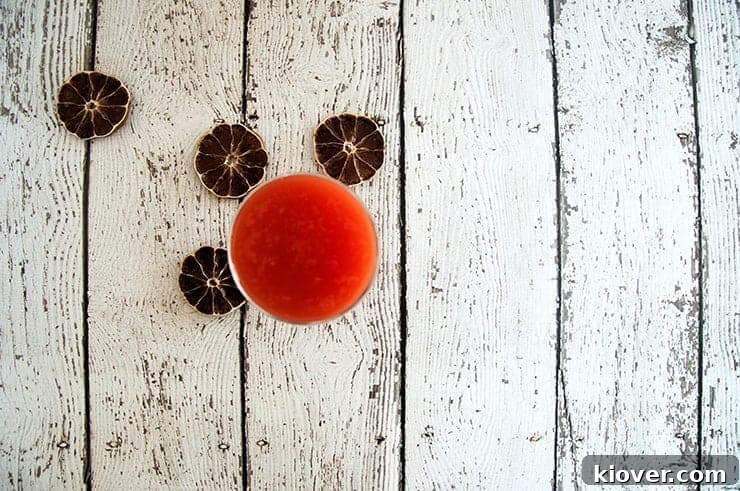
Homemade Tomato Juice Recipe Card
How to Make Homemade Tomato Juice

Author: Ben Myhre
Prep Time: 30 minutes
Cook Time: 30 minutes
Total Time: 1 hour
Yield: Approximately 5 cups
Category: Beverage, Vegetable
Method: Blanch, Simmer, Blend
Cuisine: Fresh Juice
Description
Learn how to make vibrant, healthy homemade tomato juice from scratch. This simple recipe offers superior flavor and allows you to control the salt content, perfect as a refreshing drink or the base for a stellar Bloody Mary. It’s an easy way to enjoy the peak freshness of tomatoes.
Ingredients
- 3 Pounds fresh tomatoes (beefsteak, Big Boy, or other large, juicy varieties recommended for best yield)
- 2 teaspoons salt (adjust to your personal taste)
- Optional: A pinch of black pepper, dash of hot sauce, or a few celery stalks for added flavor complexity
Instructions
- Prepare for Blanching: Fill a large pot with water and bring it to a rolling boil. Simultaneously, prepare a large bowl with an ice bath (ice and cold water) next to your stovetop.
- Set up Processing Bowls: Arrange two additional empty bowls. Place a fine-mesh strainer over one of these bowls; this will be for straining seeds and gelatinous pulp. The other bowl will collect the peeled tomato flesh.
- Blanch the Tomatoes: Carefully place the whole, washed tomatoes into the boiling water for approximately 15-30 seconds. Watch for their skins to just begin cracking.
- Chill Immediately: Using a slotted spoon, quickly transfer the blanched tomatoes from the boiling water directly into the ice bath. This halts the cooking process and cools them rapidly, making them easy to handle.
- Peel and Core: Once cooled, easily peel and discard the skins from the tomatoes. Then, core each tomato to remove the tough stem end.
- Wedge and Seed: Cut each peeled and cored tomato into 6 wedges. From each wedge, scoop out the seeds and the surrounding jelly-like pulp, placing them into the fine-mesh strainer. Place the remaining thick, seedless tomato flesh into the second empty bowl.
- Extract Liquid: Once all seeds and pulp are in the strainer, use a large spoon or spatula to gently press down on the contents. This will extract as much flavorful liquid as possible through the strainer into the bowl below, leaving the seeds behind. Discard the strained seeds.
- Simmer for Flavor: Combine all the liquid (from the strained seeds) and the thick tomato flesh (from the second bowl), along with the salt, into a medium saucepan. Bring the mixture to a gentle simmer over medium heat.
- Cook and Cool: Let the mixture simmer for 15 minutes, stirring occasionally, to deepen the flavor and slightly reduce the liquid. Remove the saucepan from the heat and allow the tomato mixture to cool for about 15 minutes.
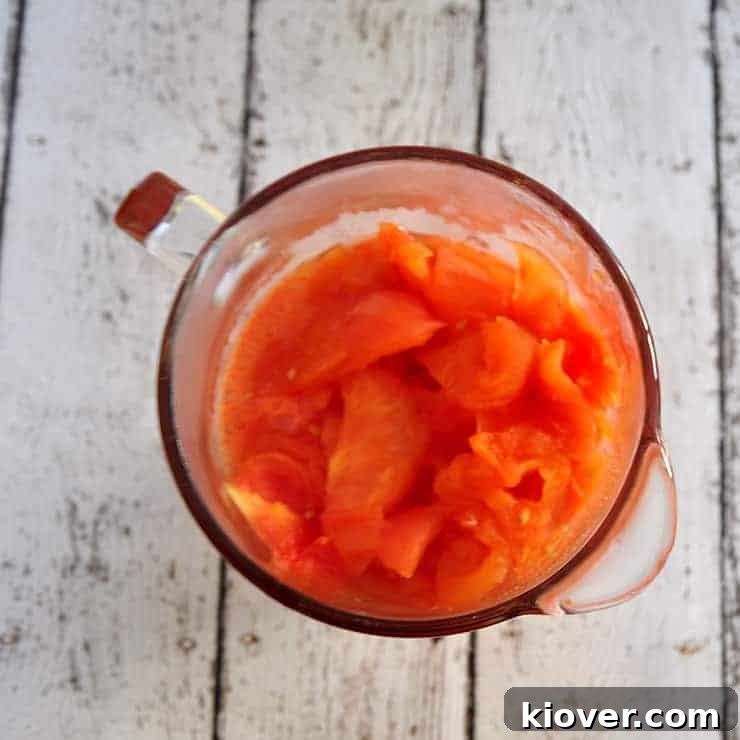
- Blend to Smoothness: Carefully transfer the cooled tomato mixture to a blender. Blend on a high setting until it is completely liquified and smooth, with no remaining chunks.
- Store: Pour the fresh tomato juice into a clean, airtight container. Store it in the refrigerator for up to one week. For longer preservation, it can be frozen in freezer-safe containers or bags for several months, or canned using proper canning techniques.
Notes
- Seasoning Customization: The salt measurement is a guideline. Taste your juice before and after blending and adjust salt to your preference.
- Texture Preference: For an even smoother juice, you can pass the blended juice through the fine-mesh strainer one last time, though it’s usually not necessary after thorough blending.
- Yield Variation: The yield of 5 cups is an estimate and can vary slightly based on the juiciness of your tomatoes.
Recommended Kitchen Tools for Perfect Tomato Juice
Having the right tools can make the tomato juice-making process even smoother. Here are some essential items that proved invaluable during the development of this recipe:
- Metal Slotted Spoon: Ideal for safely transferring tomatoes from boiling water to the ice bath.
- Fine Mesh Strainer: Crucial for separating seeds and pulp, ensuring a smooth, refined juice.
- High-Quality Blender: Essential for achieving a perfectly smooth and liquified juice after simmering.
- Quart Jars (or other airtight containers): Perfect for storing your fresh homemade tomato juice in the refrigerator.
Final Thoughts: Savoring Your Homemade Creation
Making your own tomato juice is a deeply satisfying culinary experience. I genuinely had a blast developing this recipe, and I’m absolutely loving the resulting tomato juice—not just for my legendary Bloody Mary cocktails, but also as a refreshing, healthy drink on its own. It’s incredibly tasty, bursting with natural flavors, and offers a level of freshness that simply can’t be matched by store-bought alternatives.
By following these steps, you’ve not only created a delicious beverage but also gained invaluable control over the ingredients, ensuring a healthier option for you and your family. We encourage you to try this recipe, experiment with seasonings, and discover the joy of truly homemade flavors. If you appreciate the kind of culinary adventures we share here, please consider subscribing to our email updates to receive more delicious recipes and kitchen tips directly in your inbox. And don’t forget to follow us on Instagram and Pinterest for daily inspiration and updates. Happy juicing!