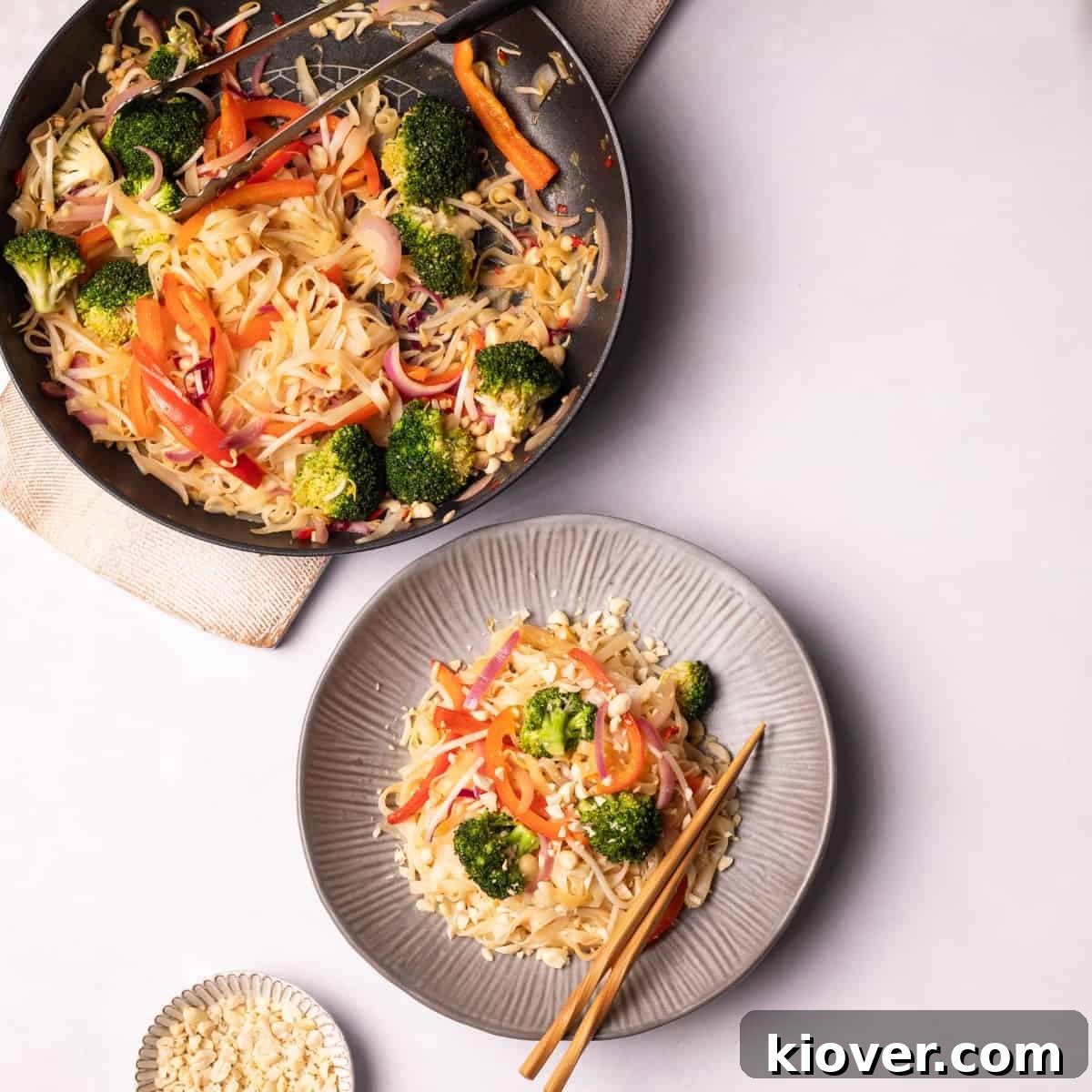
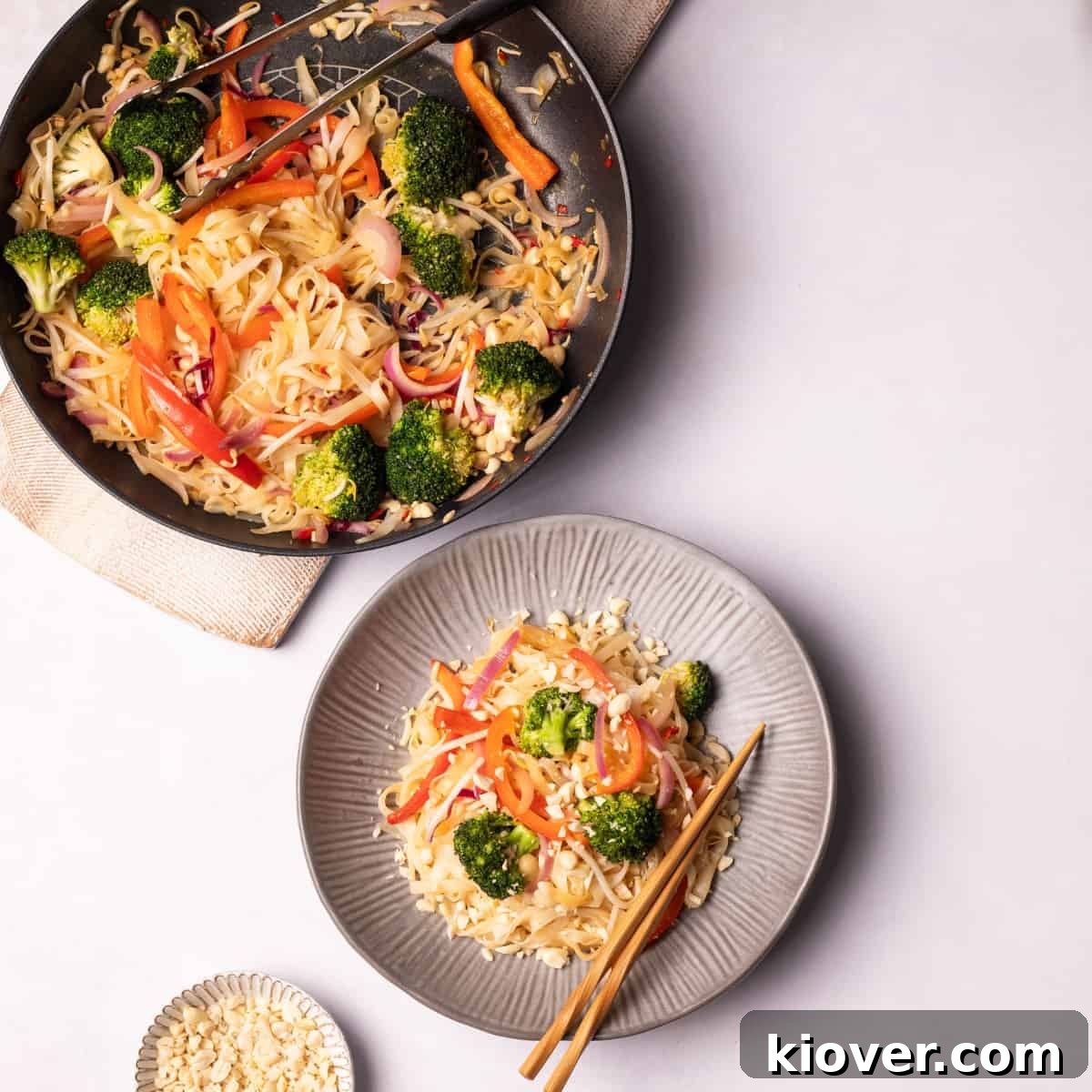
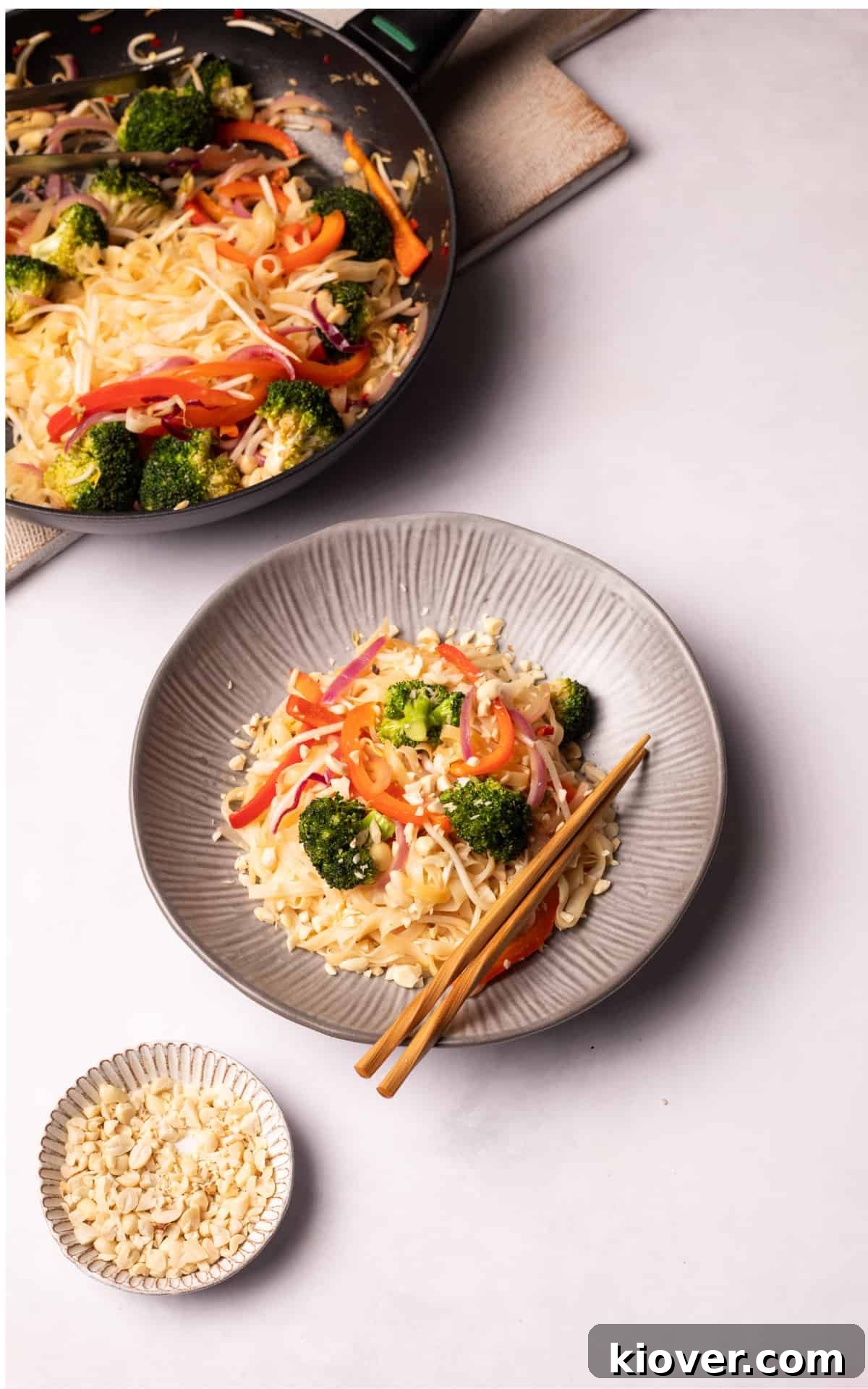
Introducing the best 15-minute Vegan Pad Thai you’ll taste — a quick, easy, and vibrant dish packed with flavour. This recipe is naturally gluten-free, dairy-free, egg-free and free from refined sugar, yet delivers the authentic sweet, salty and tangy balance of a classic Pad Thai.
Recipe Difficulty – Very Easy
Table of Contents
- Why this recipe works
- Ingredients to make Vegan Pad Thai
- Substitutions
- Variations
- How to make Vegan Pad Thai
- Leftovers
- Recipe FAQs
- Vegan Pad Thai Recipe
Why this recipe works
Thai flavours are bold and bright, and this recipe captures that profile with simple pantry ingredients. With a quick sauce made from tamari, maple syrup, miso, sesame oil and lime, the dish balances salty, sweet, umami and citrus notes. It cooks in around 15 minutes, making it perfect for busy weeknights or a speedy, satisfying meal for two.
The ingredients are easy to source from most supermarkets, and the recipe is flexible — you can swap vegetables, add protein if you like, or adjust the spice level. Despite being free from common allergens like gluten, dairy and eggs, the result is colourful, fresh and deeply flavorful.
Ingredients to make Vegan Pad Thai
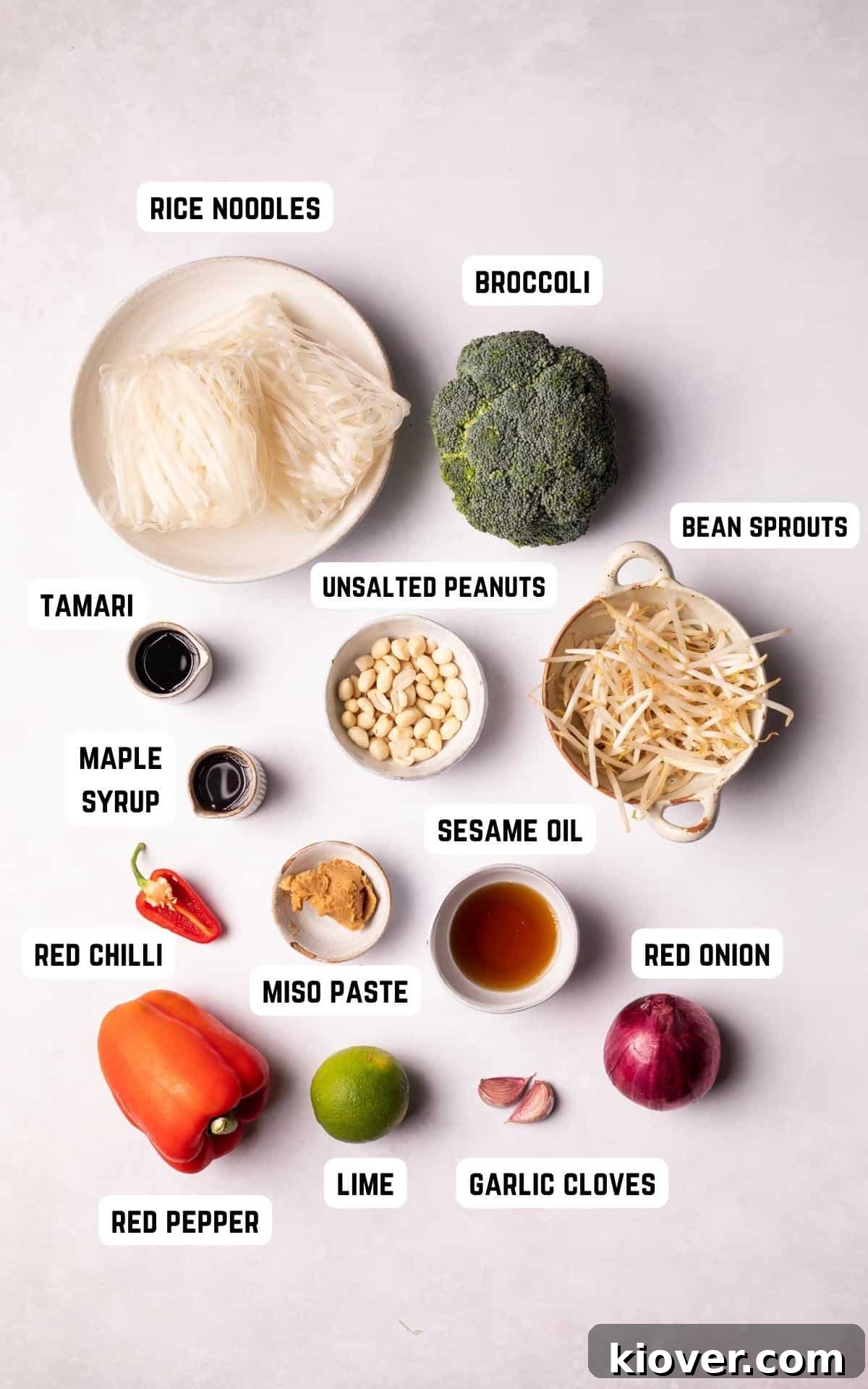
- Sesame oil – for frying the vegetables and adding to the sauce.
- Garlic – 2 cloves, finely chopped or crushed.
- Small red onion – sliced.
- Red chilli – deseeded and sliced to reduce heat, or leave seeds in for spice.
- Small head of broccoli – separated into small florets.
- Red pepper – sliced for colour and crunch.
- Bean sprouts – stirred in at the end for freshness.
- Unsalted peanuts – crushed, with extra for serving.
- Rice noodles – 150 g, long flat rice noodles work best for Pad Thai and keep the dish gluten-free.
Pad Thai Sauce
- Tamari – a gluten-free soy sauce alternative.
- Maple syrup – a natural sweetener to balance the tamari.
- Miso paste – adds umami depth.
- Sesame oil – a small amount for toasty aroma in the sauce.
- Lime juice – freshly squeezed for bright acidity.
See the recipe card below for exact quantities and full details.
Substitutions
- Oil: Use vegetable or sunflower oil if you don’t have sesame oil, although sesame oil gives the best flavour.
- Garlic: Minced jarred garlic works in a pinch.
- Onion: Yellow or white onion can replace red onion.
- Vegetables: Swap in carrots, sugar snap peas, mushrooms or courgette depending on preference.
- Tamari: Soy sauce, amino liquid, or coconut aminos can be used if preferred (note gluten content).
- Lime: Lemon juice or bottled citrus juice will work if fresh limes aren’t available.
Variations
- Spicy: Keep the chilli seeds or add a pinch of chilli flakes for more heat.
- Deluxe: Finish with extra crushed peanuts, sliced green onions and fresh herbs like coriander.
- Kid friendly: Omit the chilli and use milder vegetables to suit younger palates.
How to make Vegan Pad Thai
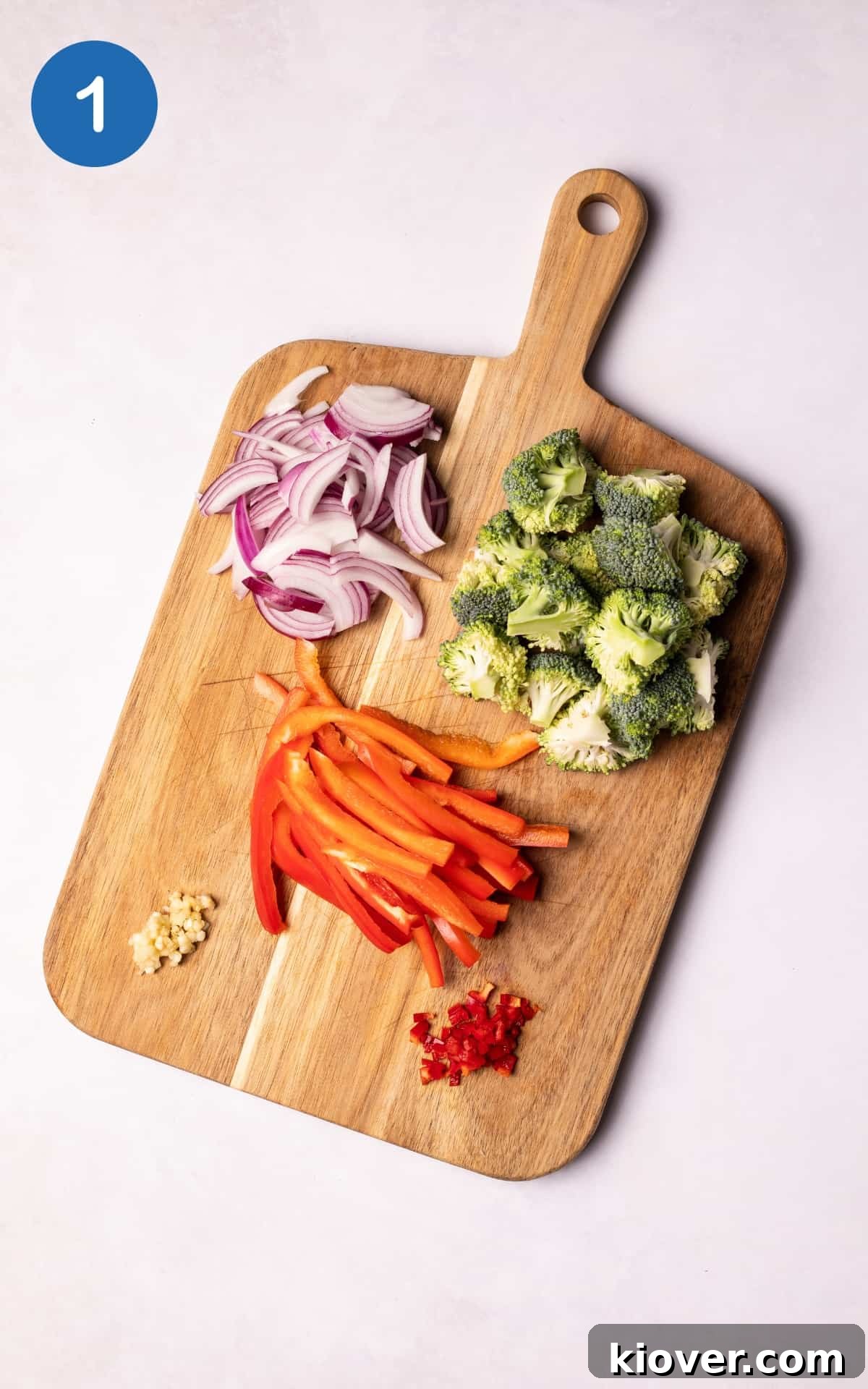
Step 1: Finely chop the garlic, slice the red onion and red pepper, deseed and slice the chilli, and cut the broccoli into small florets.
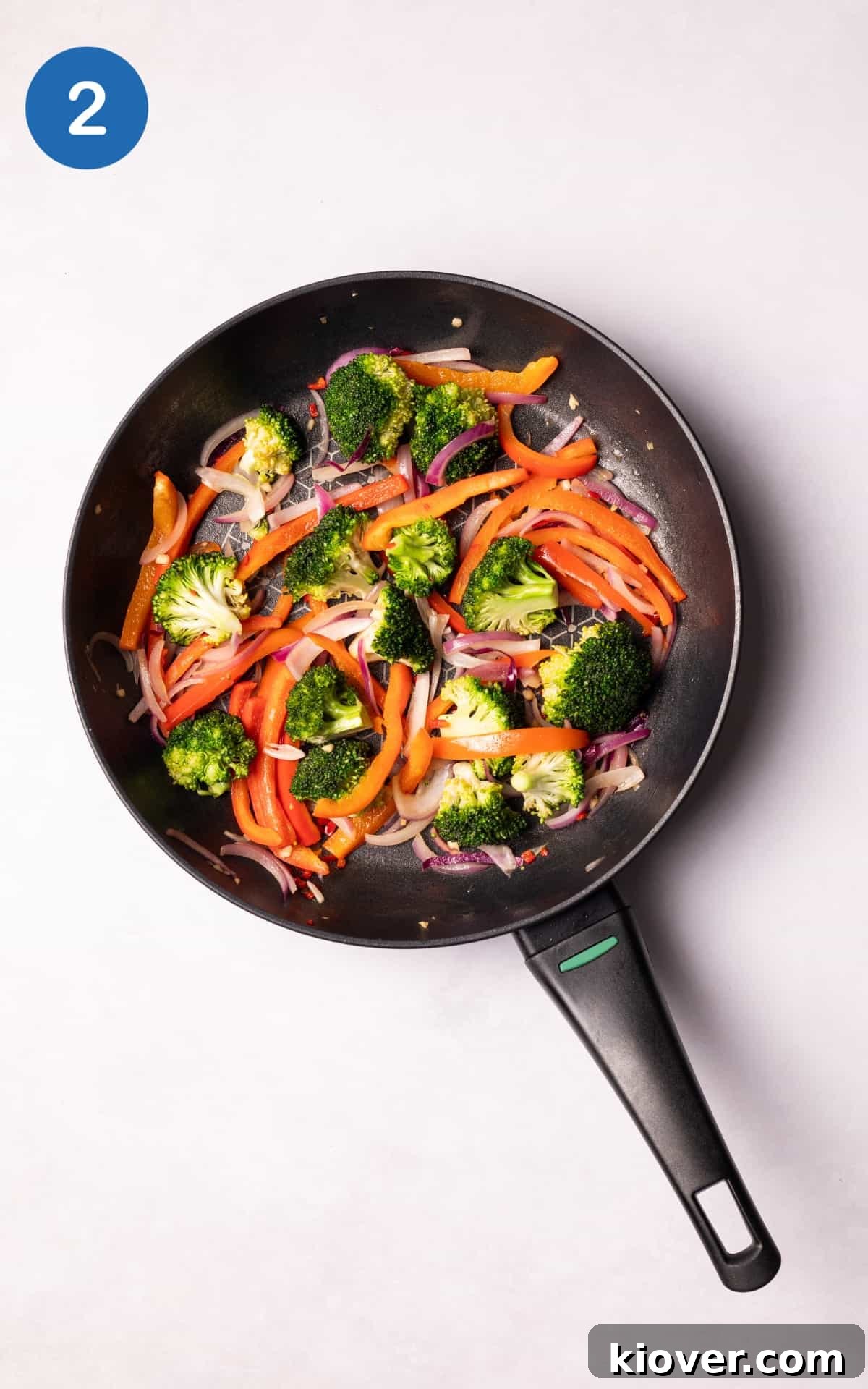
Step 2: Heat a non-stick pan with 2 tbsp sesame oil. Add the chopped vegetables and fry for about 5 minutes until tender-crisp.
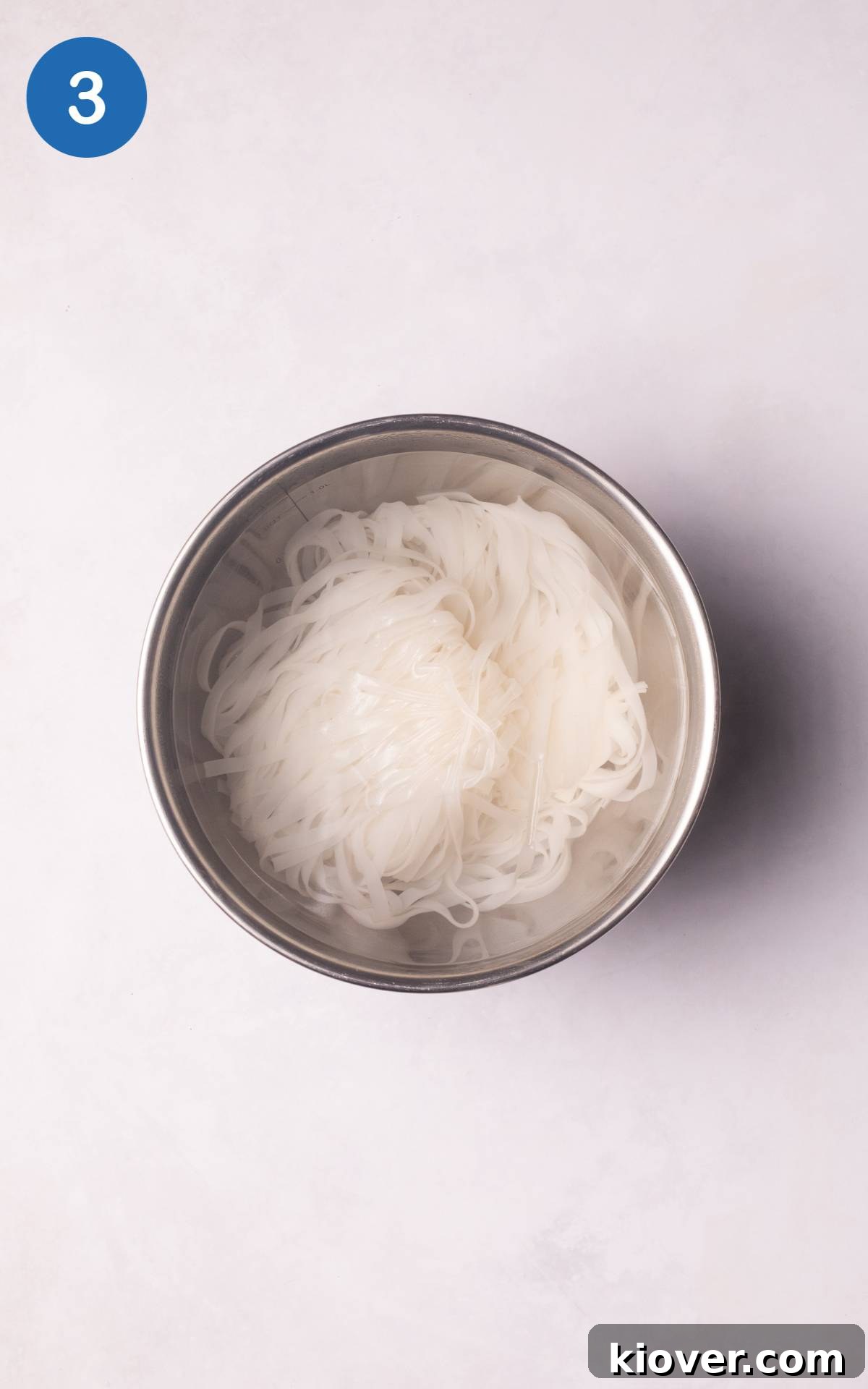
Step 3: Meanwhile, cook the rice noodles according to the packet instructions, then drain and set aside.
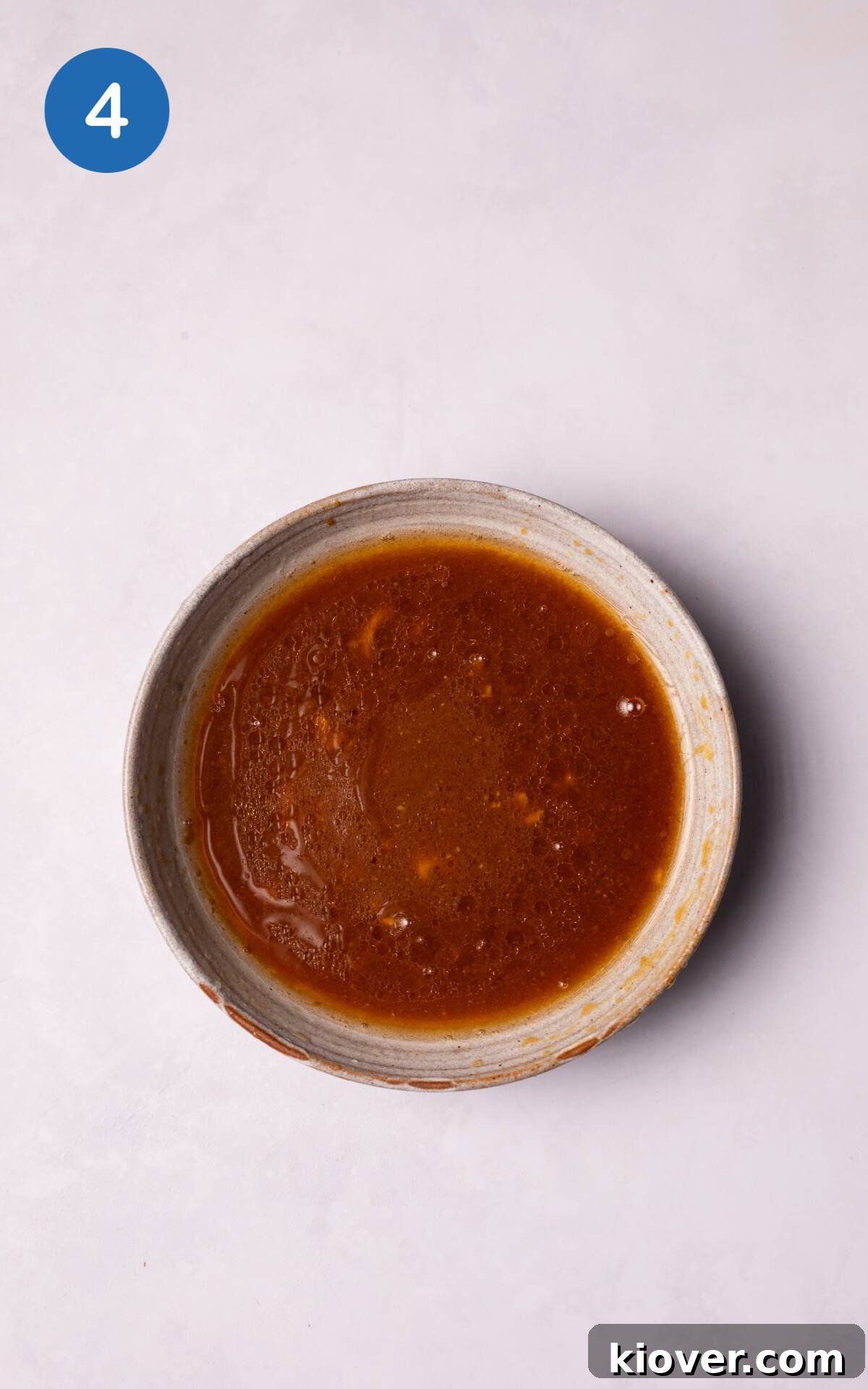
Step 4: Whisk the sauce ingredients — tamari, maple syrup, miso paste, a teaspoon of sesame oil and the juice of one lime — in a small bowl until smooth.
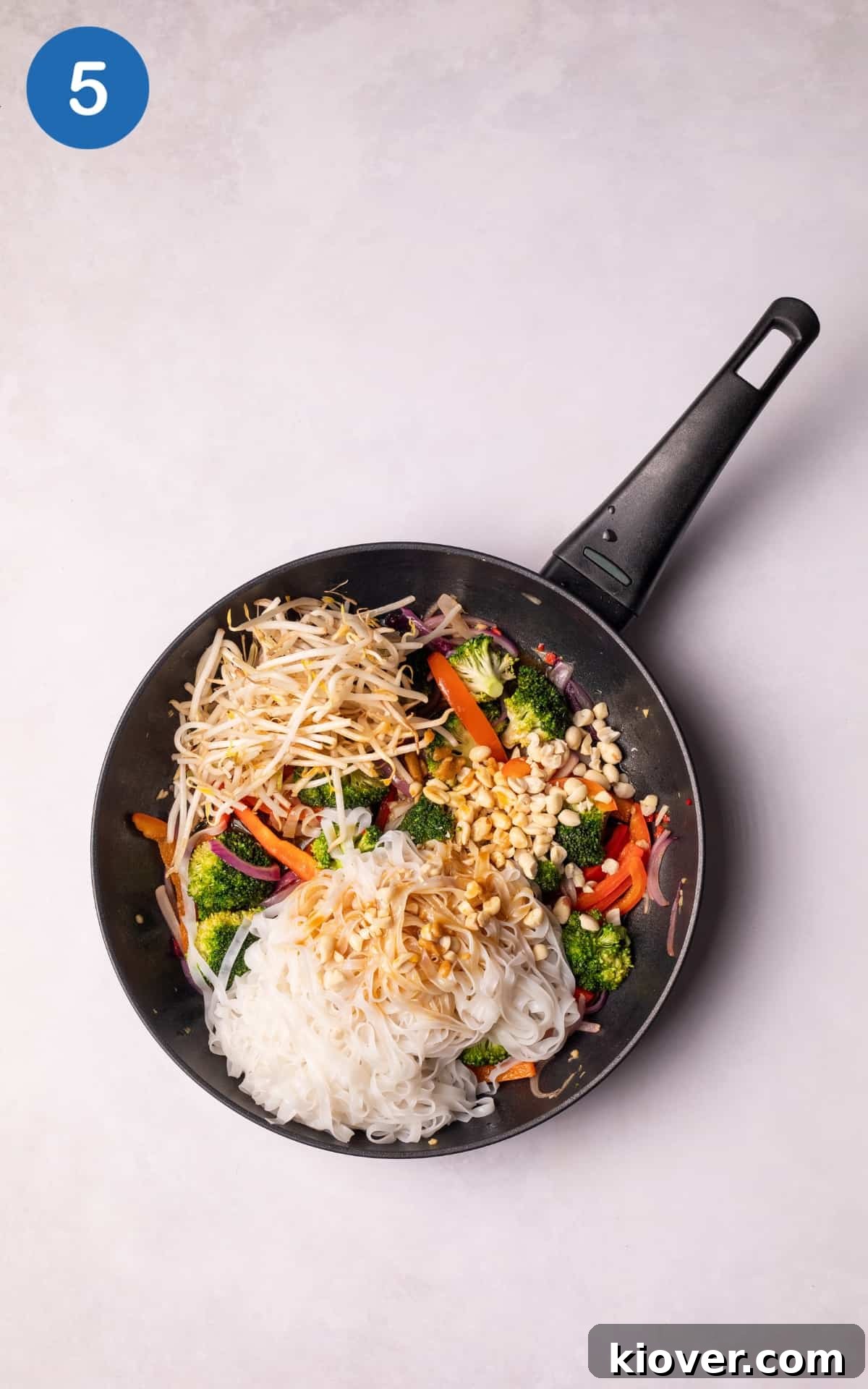
Step 5: Add the cooked noodles, bean sprouts, crushed peanuts and the sauce to the pan. Toss everything together until the noodles are evenly coated and heated through. Serve immediately with extra peanuts and lime wedges if desired.
Hint: This keeps well for lunch the next day — store in the fridge and refresh before serving.
Leftovers
Store leftover Pad Thai in an airtight container for 3–4 days. Reheat gently in a pan or microwave, adding a splash of water to loosen the sauce if needed.
Recipe FAQs
Yes. By replacing fish sauce with tamari and using miso, maple syrup and lime, you get the savoury-sweet-tangy profile without animal ingredients.
This version is vegetable-rich and uses natural sweeteners, making it a lighter alternative to traditional recipes that include eggs and meat.
Long, flat rice noodles are ideal for this dish; they hold the sauce well and provide the classic texture.
This recipe is gluten-free when you use tamari or a gluten-free soy alternative. Check labels to be sure.
YOU MIGHT ALSO LIKE…
Dinner
Vegetable Thai Green Curry
Dinner
The Best Thai Red Prawn Curry
15 Minute Dinners
Thai Curry Noodle Soup
Dinner
Vegan Thai Curry
Tried this Vegan Pad Thai recipe? Please leave a star rating and a comment to let me know how it turned out. P.S. Never miss a recipe — subscribe to the newsletter for weekly healthy recipes and a free recipe eBook!
Vegan Pad Thai
Ingredients
- 2 tbsp sesame oil
- 2 garlic cloves, finely chopped/crushed
- 1 small red onion, sliced
- 1/2 red chilli, deseeded and sliced
- 1 small head of broccoli, sliced into smaller florets
- 1 red pepper, sliced
- 1 large handful bean sprouts
- 1 small handful unsalted peanuts, crushed (more for serving)
- 150 g rice noodles
Pad Thai Sauce
- 3 tbsp tamari
- 3 tbsp maple syrup
- 1 heaped tsp miso paste
- 1 tsp sesame oil
- 1 juice of lime
Instructions
-
Firstly, finely chop the garlic, red onion, chilli, and slice the pepper; cut the broccoli into small florets.
-
Heat a non-stick pan with 2 tbsp sesame oil and fry the chopped vegetables for about 5 minutes until tender-crisp.
-
Meanwhile, cook the rice noodles following the packet instructions and drain.
-
Prepare the sauce by mixing tamari, maple syrup, miso paste, sesame oil and lime juice in a small bowl until smooth.
-
Add the cooked noodles, bean sprouts, crushed peanuts and the sauce to the pan. Toss until the noodles are well coated and heated through, then serve.
Notes
Substitutions & Variations: A selection is listed in the post above.
To Store: Refrigerate in an airtight container for 3–4 days. Reheat over low heat or in the microwave, adding water if the sauce thickens.
To Freeze: Freezing is not recommended for best texture.
Tip 1: Be flexible with veg choices — use what you have.
Tip 2: For more heat, leave the chilli seeds in or add chilli flakes.
Tip 3: If not vegan, you can add chicken, prawns or other proteins; tofu works well for a vegetarian option.
Nutrition