
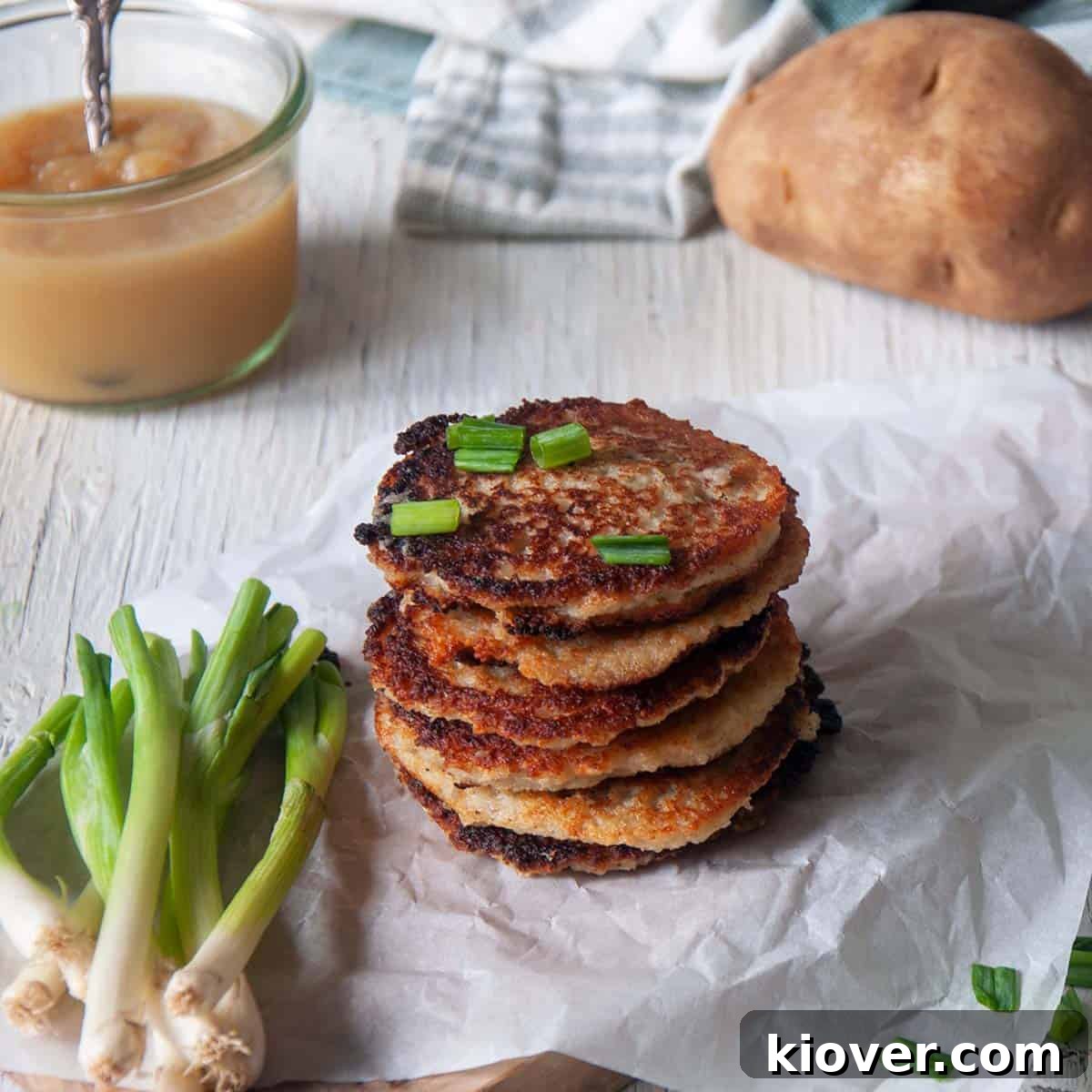
Crispy Classic German Potato Pancakes (Kartoffelpuffer)
Delight in the rustic charm of homemade German Potato Pancakes, a timeless recipe known as Kartoffelpuffer. These crispy, golden-brown delights are incredibly versatile, serving as a comforting light dinner, a savory side dish, or a hearty breakfast. Whether you prefer them with a dollop of cool sour cream and a sprinkle of fresh green onions, or as a sweet treat paired with warm applesauce or a spoonful of your favorite jam, this traditional German dish is universally loved and surprisingly easy to prepare. Embark on a culinary journey to the heart of Germany with this accessible and utterly delicious recipe – you won’t regret it!
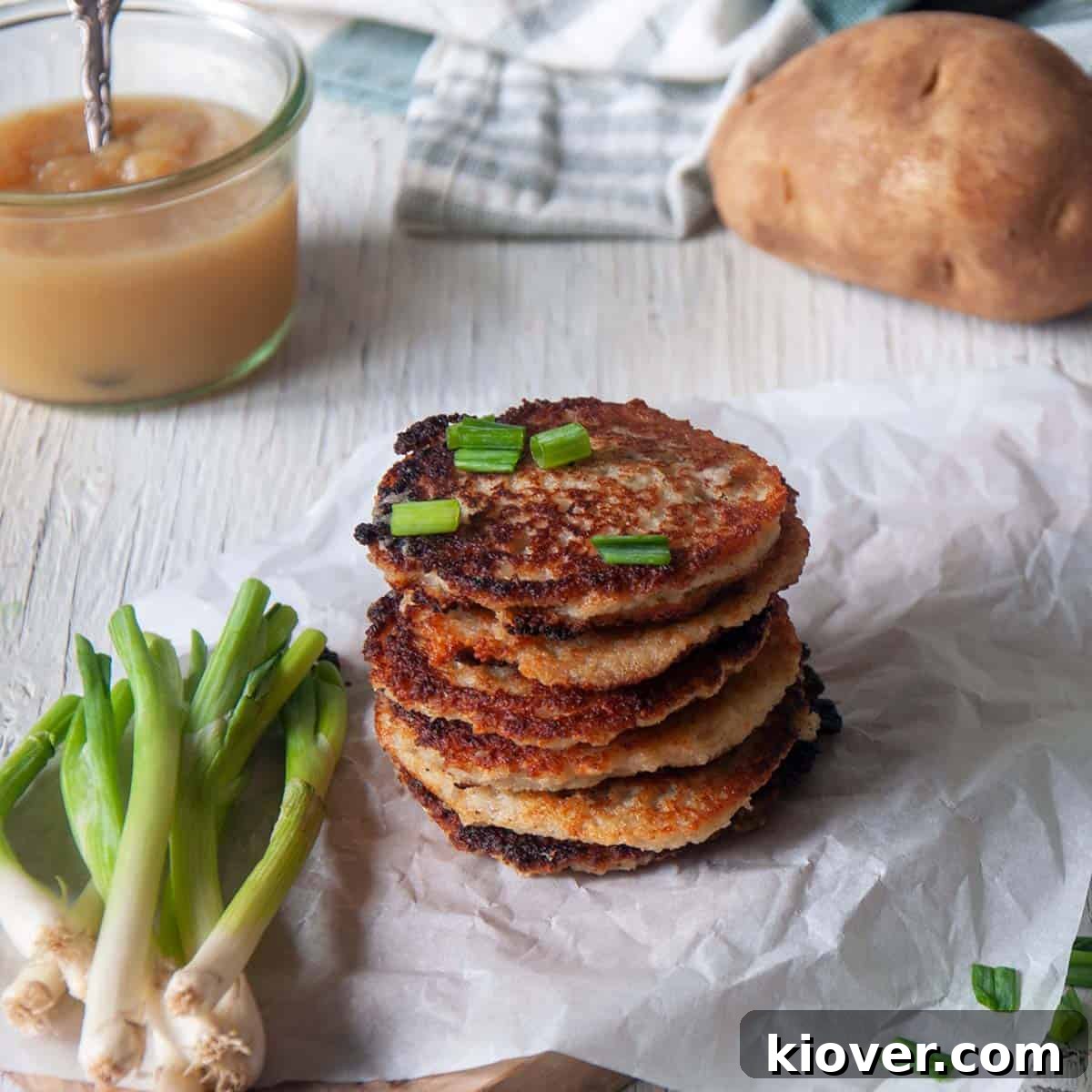
🇩🇪🥞 What Makes These German Potato Pancakes Special?
What truly elevates these classic German Potato Pancakes from good to extraordinary lies in a few carefully chosen details and techniques. It’s the thoughtful approach to ingredients and preparation that transforms a simple potato dish into a culinary masterpiece, celebrated for its perfect balance of flavor and texture.
The foundation of any exceptional potato pancake begins with the right potato. For this recipe, Russet potatoes are the undisputed champion. Their high starch content is the secret weapon, guaranteeing that coveted golden-brown, irresistibly crispy exterior while maintaining a wonderfully soft, fluffy interior. It’s a textural symphony that’s hard to beat. Beyond the potatoes, the treatment of the onions plays a pivotal role. We don’t merely chop them; we process them until they are incredibly smooth. This subtle refinement ensures that every bite is infused with a rich, yet delicate, onion essence, preventing any harsh raw onion flavor and blending seamlessly into the batter.
Precision in technique is another hallmark of this recipe. A critical step often overlooked is the meticulous removal of moisture from the grated potatoes. Using a cheesecloth – and a fine-mesh strainer for those who seek perfection – we wring out excess liquid. This isn’t just a minor detail; it’s fundamental to achieving the ultimate crispiness. Too much moisture means soggy pancakes, a fate we aim to avoid at all costs. This careful preparation ensures the pancakes cook evenly and develop that delightful crunch.
In essence, the magic of these German Potato Pancakes comes from this attention to detail – the perfect potato variety, the finely processed onion, and the crucial moisture removal. These elements combine to create a dish that’s not just food, but an experience. It’s a testament to the joy of traditional cooking and the profound satisfaction found in a perfectly crafted, simple recipe.
If your culinary curiosity extends beyond this delectable German fare, we invite you to explore other delightful pancake recipes, such as our unique Swedish Pancakes recipe. For those who can’t get enough of German cuisine, be sure to try our Easy Pork Schnitzel recipe or the comforting German Spaetzle. No matter what you choose to whip up, remember to savor every moment and treat yourself to something truly delicious!
Table of Contents
- 🇩🇪🥞 What Makes These German Potato Pancakes Special?
- 🥔 Ingredients for Authentic Kartoffelpuffer
- 🍲 Step-by-Step Instructions: Mastering Potato Pancakes
- Extracting Water from Potatoes: The Secret to Crispiness
- Frying The Potato Pancakes to Golden Perfection
- Avoid Crowding Your Pan: A Frying Essential
- Achieving the Perfect Golden Brown Hue
- 🤷 Substitutions and Variations: Customizing Your Pancakes
- 📦 Storage Solutions: Keeping Your Pancakes Fresh
- 🎓 A Delicious History: The Global Journey of Potato Pancakes
- ❓ Frequently Asked Questions About Potato Pancakes
- 📝 Essential Tips and Tricks for Success
- 🛠 Recommended Products for This Recipe
- 😋 Share Your Culinary Creation!
- German Potato Pancakes Recipe
🥔 Ingredients for Authentic Kartoffelpuffer
While the name “potato pancakes” suggests potatoes are the star (and they certainly are!), a few other humble ingredients come together to create this incredible dish. Here’s a detailed look at what you’ll need to prepare these classic German potato fritters:
- Russet Potatoes: Approximately 2 pounds, peeled and chopped. These are crucial for their high starch content, which helps create that desirable crispy texture. Their mild flavor allows the other ingredients to shine.
- Onion: 1 large, peeled and chopped. When finely processed, the onion adds a depth of savory flavor that complements the potatoes perfectly without overpowering them.
- Salt & Pepper: To taste, but typically 2 teaspoons of salt and 1/2 teaspoon of black pepper. Seasoning is key to bringing out the natural flavors of the potatoes and onions.
- Eggs: 2 large eggs. Eggs act as a binder, helping to hold the potato mixture together during frying and contributing to a richer flavor and slightly softer interior.
- All-Purpose Flour: 1/4 cup. Just a small amount of flour is needed to further bind the ingredients and absorb any residual moisture, ensuring the pancakes hold their shape and crisp up beautifully.
- Green Onions (optional, for garnish): Freshly chopped green onions add a vibrant touch of color and a mild, fresh onion flavor when sprinkled over the finished pancakes.
- Sour Cream (optional, for serving): A classic accompaniment, the cool tanginess of sour cream provides a delightful contrast to the warm, crispy pancakes.
- Apple Sauce (optional, for serving): For those who enjoy a sweet and savory combination, applesauce is another traditional topping that pairs wonderfully with German potato pancakes.
Be sure to consult the recipe card below for exact quantities and any additional notes on preparation. Gathering all your ingredients beforehand will make the cooking process smooth and enjoyable!
🍲 Step-by-Step Instructions: Mastering Potato Pancakes
Creating perfect German Potato Pancakes is a straightforward process, especially with these detailed instructions. Follow each step carefully to achieve that coveted crispy exterior and tender interior.
Begin your journey by preparing the main ingredient: the potatoes. If you’re fortunate enough to own a food processor, this step becomes incredibly quick and effortless. Simply add your peeled and chopped russet potatoes to the processor and pulse until they are finely grated. The goal is a uniform, small shred that’s almost like a coarse paste. If a food processor isn’t available, don’t fret! The traditional method of using a fine grater or shredding box works just as well, though it requires a bit more elbow grease. Repeat this process for the onion, aiming for an equally fine consistency to ensure its flavor is evenly distributed without large chunks.
Once your potatoes and onions are finely processed, the critical step of moisture removal begins. This is paramount for crispy pancakes. Strain the excess liquid from the grated potatoes using a cheesecloth or a fine-mesh strainer. Combine the well-drained potatoes and finely processed onion with the eggs, flour, salt, and pepper in a large bowl. Mix these ingredients thoroughly until you have a cohesive batter. The consistency should resemble a thick, traditional pancake batter.
Now, it’s time to cook! Heat a non-stick skillet or frying pan over medium-high heat, adding a generous amount of frying oil. Once the oil is shimmering and hot, carefully drop about ¼ cup of the potato batter per pancake into the pan, gently shaping it into a round fritter. Be mindful not to overcrowd the pan; cook in batches to ensure even browning and crispiness. Fry each side until it achieves a beautiful golden-brown color, typically 1 ½ to 3 minutes per side. As each batch finishes, transfer them to a paper towel-lined plate to drain any excess oil. Once all your pancakes are cooked, serve them immediately, either plain or with your preferred accompaniments like sour cream, green onions, or applesauce. With the help of a food processor, this entire process can be surprisingly quick, making these delicious German potato pancakes an easy weeknight meal or a delightful weekend treat.
Extracting Water from Potatoes: The Secret to Crispiness
Achieving perfectly crispy potato pancakes hinges on one crucial step: efficiently removing as much moisture as possible from the grated potatoes. Skipping this step is the fastest route to soggy, limp pancakes. Here’s how to master this essential technique:
My go-to method involves a combination of a cheesecloth and a fine wire strainer. After I’ve processed the russet potatoes into fine shreds using a food processor, I transfer them into a double-layered cheesecloth placed inside a fine wire strainer. This setup provides double protection against potato bits escaping while allowing maximum liquid drainage.
Once the potatoes are in the cheesecloth, I gather the edges to form a ball, effectively wrapping the potatoes tightly. Then, gently but firmly, I begin to squeeze. You’ll be amazed at how much liquid comes out! It takes a few minutes of consistent pressure and a little patience, but this simple action is what makes all the difference in the final texture of your pancakes. The more water you remove, the crispier your Kartoffelpuffer will be.
If you don’t have cheesecloth on hand, you can still achieve good results by using your hands in conjunction with a fine wire mesh strainer. Simply cup a handful of grated potatoes like a baseball and squeeze tightly over the strainer. Repeat this process with the remaining potatoes until you’ve extracted as much liquid as possible. While it might be a bit messier, it’s an effective alternative to ensure your potato pancakes reach their peak crispiness.
Frying The Potato Pancakes to Golden Perfection
Once your potato batter is perfectly mixed and ready, the next step is to fry these delightful pancakes to a golden, crispy finish. While frying seems simple, a few considerations can significantly impact the outcome, ensuring your potato pancakes are nothing short of perfect.
Firstly, the choice of frying oil is more important than you might think. You need an oil with a high smoke point to prevent it from burning and imparting off-flavors to your pancakes. My personal preference is sunflower oil, not just for its high smoke point but also because I find it significantly reduces the lingering “fry smell” in my kitchen. However, excellent alternatives include vegetable oil, canola oil, or avocado oil – all of which perform admirably for this type of frying. Avoid olive oil, especially extra virgin, as its lower smoke point makes it unsuitable for the higher temperatures required.
Ensure your oil is sufficiently hot before adding the batter. A good test is to drop a tiny bit of batter into the pan; if it sizzles gently, the oil is ready. Overly hot oil will burn the exterior before the interior cooks, while oil that isn’t hot enough will lead to greasy, soggy pancakes. Aim for a medium-high heat setting, adjusting as needed to maintain a consistent sizzle without excessive smoke.
Avoid Crowding Your Pan: A Frying Essential
One of the most common pitfalls when frying anything, especially something like potato pancakes, is overcrowding the pan. The batter, being somewhat soft and moist, tends to spread. If your pancakes are too close together, they might merge into one large, unmanageable potato mass rather than individual, perfectly formed fritters.
To prevent this, it’s crucial to leave ample space between each pancake in your pan or skillet. This ensures they cook evenly, achieve maximum crispiness on all sides, and are easy to flip without tearing. In my 10 ¼-inch cast iron pan, I find that cooking only three potato pancakes at a time yields the best results. While I could probably squeeze in four, three feels just right for optimal cooking and handling. This allows enough room for the hot oil to circulate around each pancake, ensuring even cooking and a beautiful golden crust.
Beyond preventing crowding, exercising common sense with cooking times is also key. Don’t rush the process, and allow each pancake enough space and time to develop its perfect texture and color.
Achieving the Perfect Golden Brown Hue
The ultimate goal for your German potato pancakes is a gorgeous, appetizing golden-brown color on each side, indicative of a crispy and thoroughly cooked fritter. This isn’t just about aesthetics; it’s a sign of ideal texture and flavor development.
The exact cooking time to reach this perfect hue can vary based on several factors: the type and thickness of your pan (cast iron retains heat differently than non-stick), the precise amount of oil you’re using, and even the subtle differences in stovetop burners. For my setup, I typically find that 1 ½ to 2 minutes on each side is sufficient to achieve that beautiful golden crispness. However, your best tool here is your eye.
Watch for visual cues: the edges should look crisp and slightly darker, and the surface that’s cooking face-down should develop a rich, appealing brown. Don’t be afraid to gently lift a pancake with a spatula to peek underneath and check its color. Once one side is perfectly golden, flip it over and repeat the process for the other side. Cook until both sides are uniformly golden brown and the pancake feels firm to the touch.
🤷 Substitutions and Variations: Customizing Your Pancakes
While the classic German potato pancake recipe is fantastic as is, there are many ways to customize it to suit your taste preferences or dietary needs. Here are some ideas for substitutions and variations:
Potato Preparation Methods:
The easiest method for preparing the potatoes is undoubtedly using a food processor. It takes mere seconds (10-20 seconds to be precise) to produce a uniformly finely shredded batch of potatoes that are perfectly ready for straining. This ensures a consistent texture throughout your pancakes.
An excellent alternative, if you don’t have a food processor, is to use a shredding box or a very fine cheese grater. I’ve used this method myself, and while the potatoes might not be as finely grated and it certainly requires more effort, the end product is still delicious. However, for sheer convenience and consistency, I highly recommend using a food processor if you have one.
Different Potato Types:
While Russet potatoes are ideal for their starch content, which yields the crispiest results, you can experiment with other varieties. Yukon Gold potatoes, for example, have a creamier texture and a slightly sweeter flavor, resulting in a less crispy but equally delicious pancake. A mix of different potatoes can also offer a unique taste and textural profile. Avoid very waxy potatoes as they might not bind as well.
Gluten-Free Option:
For those with gluten sensitivities, all-purpose flour can easily be substituted with a 1:1 gluten-free flour blend. Ensure the blend you choose is suitable for baking to maintain the correct consistency of the batter.
Flavor Enhancements:
- Herbs and Spices: Incorporate finely chopped fresh chives, parsley, or dill into the batter for an added layer of flavor. A pinch of nutmeg is also a traditional German addition that pairs beautifully with potatoes.
- Cheese: For a richer, savory pancake, fold in some shredded cheese like sharp cheddar, Gruyere, or Parmesan into the batter. This adds a delicious cheesy crispness.
- Garlic: Mince a clove or two of garlic and add it to the onion before processing for a more robust savory profile.
- Spicy Kick: A tiny pinch of cayenne pepper or finely diced jalapeños can give your pancakes a pleasant warmth.
Alternative Cooking Methods:
- Baking: While frying yields the best crispiness, for a slightly healthier option, you can bake potato pancakes. Brush each side liberally with oil and bake them on a parchment-lined baking sheet in a preheated oven (around 400°F / 200°C) until golden and crisp, flipping halfway through. The texture will be different – usually less uniformly crisp – but still delicious.
- Air Fryer: An air fryer can also produce relatively crispy results with less oil. Preheat your air fryer, lightly brush the pancakes with oil, and cook until golden brown and cooked through, flipping once.
Feel free to get creative and tailor this recipe to your own culinary preferences. The versatility of potato pancakes makes them a joy to experiment with!
📦 Storage Solutions: Keeping Your Pancakes Fresh
Having leftover German Potato Pancakes is a delightful predicament, and fortunately, they store and reheat beautifully! With a little planning, you can enjoy these crispy treats for days to come. Here’s how to properly store them to maintain their deliciousness:
Cooling Down is Key:
Before storing, it is absolutely essential to let the potato pancakes cool down completely to room temperature. Stacking warm pancakes in an airtight container will create condensation, making them soggy and losing that desirable crisp texture.
Short-Term Storage (Refrigeration):
Once cooled, you can stack the pancakes with a small piece of parchment paper or wax paper between each one. This simple trick prevents them from sticking together and makes them easier to separate for reheating. Place the stacked pancakes in an airtight container and store them in the refrigerator. They will remain fresh and delicious for approximately 3 to 4 days.
Long-Term Storage (Freezing):
If you’re looking to extend their shelf life, the freezer is your best friend. Follow the same cooling and parchment paper separation steps. For best results, arrange the pancakes in a single layer on a baking sheet and flash freeze them for about an hour until solid. This prevents them from clumping together. Once solid, transfer them to a freezer-safe bag or an airtight container, ensuring they are sealed tightly to fend off freezer burn. Properly wrapped, they can be stored in the freezer for up to a month.
Reheating for Optimal Crispness:
When you’re ready to enjoy your stored potato pancakes again, avoid the microwave, as it will make them soft and chewy. The best methods for reheating are:
- Oven: Preheat your oven to 375°F (190°C). Arrange the pancakes in a single layer on a baking sheet and bake for 8-15 minutes, or until they are heated through and have regained their crispiness.
- Stovetop: Heat a lightly oiled skillet over medium heat. Place the pancakes in the skillet and cook for 2-4 minutes per side, or until hot and crispy. This method is great for smaller batches.
With these storage tips, you can always have a batch of delightful German Potato Pancakes ready to enjoy, almost as good as when they were first made!
🎓 A Delicious History: The Global Journey of Potato Pancakes
The story of potato pancakes is a fascinating journey that spans continents and centuries, deeply intertwined with the history of agriculture and human resourcefulness. As previously mentioned, these humble yet satisfying fritters boast origins across the globe, transcending geographical and cultural boundaries. At its core, the potato pancake is a quintessential “peasant food,” a testament to ingenuity born out of necessity, with roots in almost every region where potatoes have been domesticated and cultivated.
Potatoes were a revolutionary crop, easily stored for extended periods in root cellars, making them a lifeline during harsh winters when other food sources were scarce or inaccessible. This exceptional storability made them an invaluable staple, particularly in colder climates. It’s no surprise, then, that potato pancake recipes are most commonly found in Northern European countries, where potatoes could be readily grown and preserved to sustain communities through the long, cold seasons.
While often associated with German cuisine (where they are known as Kartoffelpuffer or Reibekuchen), variations of the potato pancake appear in numerous cultures: the Jewish Latke, traditionally served during Hanukkah; the Swiss Rösti, a larger, pan-fried potato cake; the Irish Boxty, made with both raw and cooked potatoes; and even the American hash brown. Eastern European countries, such as Poland (placki ziemniaczane) and Belarus (draniki), also boast their own beloved versions. These diverse recipes, though distinct in their specific preparations and seasonings, all share the fundamental concept of grated or mashed potatoes, often bound with egg and flour, and fried until golden.
The simplicity of the dish – requiring minimal, inexpensive ingredients – contributed greatly to its widespread adoption. This accessibility meant that people from all walks of life, regardless of their economic status, could prepare and enjoy a hearty, comforting meal. The potato pancake, therefore, is more than just a dish; it’s a culinary artifact that tells a story of survival, cultural adaptation, and the universal appeal of comfort food, stretching back as far as the domestic cultivation of potatoes itself.
❓ Frequently Asked Questions About Potato Pancakes
While often used interchangeably, there is a subtle distinction. Latkes, typically associated with Jewish cuisine, generally feature larger, coarser potato shreds, giving them a more rustic and distinctly textured appearance. Potato pancakes, particularly the German variety, are often made with finely shredded or even grated potatoes, resulting in a batter-like consistency that fries up to be very crispy and uniform. Both are delicious fried potato fritters, but their textural profiles can differ based on the shred size.
For me, these crispy treats embody German culinary tradition, but potato pancakes are far from exclusive to German heritage. Their widespread popularity stems from their simplicity and the affordability of ingredients. Essentially, anywhere potatoes are cultivated and have become a staple, you are likely to find a version of the potato pancake. This simple, hearty dish boasts a global heritage, appearing in various forms across England, Ireland, Iran, Korea, and countless other regions. It is a truly global recipe that stretches back to the very beginnings of domestic potato farming.
Yes, you absolutely can! Using leftover mashed potatoes is a fantastic way to minimize waste and create delicious potato pancakes. However, you’ll need to be particularly diligent about straining any excess liquid from the mashed potatoes, as additional liquids like milk and butter are often incorporated during the mashing process, increasing their moisture content. Squeeze them well to ensure your pancakes crisp up nicely. If you’re looking for great mashed potato recipes, consider trying our Sous Vide Mashed Potatoes recipe or our Cheesy Mashed Potatoes recipe.
Absolutely! While russet potatoes are highly recommended for their high starch content, which is key to achieving that perfectly crispy texture, you are welcome to experiment. Varieties like Yukon Gold or even a blend of different potatoes can be used. Yukon Golds tend to yield a slightly creamier interior, while waxy potatoes might make the pancakes less crispy. Feel free to explore and find your favorite combination!
Yes, definitely! You can easily substitute the all-purpose flour with a gluten-free flour blend. When making the substitution, ensure it’s a 1:1 replacement to maintain the desired consistency and binding properties of the batter. Many good quality gluten-free all-purpose blends are available that work wonderfully in recipes like this.
Certainly! Potato pancakes are an excellent make-ahead option. You can prepare and cook them fully in advance. Once cooled, store them as directed (refrigerated or frozen). When it’s time for your event, simply reheat them in a preheated oven at a moderate temperature (around 350°F or 175°C) until warm and crispy. This ensures they maintain their delicious texture for serving.
Traditional German toppings include classic pairings like cool, tangy sour cream and sweet, comforting applesauce. However, don’t hesitate to get creative! Many enjoy a savory twist with toppings such as smoked salmon and cream cheese, a fried egg, a sprinkle of fresh herbs like chives, or even a side of crisp green salad. The versatility of potato pancakes makes them a perfect canvas for both sweet and savory accompaniments.
While frying yields the most authentic crispy texture, baking is a healthier alternative. To bake, simply brush each side of the formed pancakes with oil and arrange them on a baking sheet lined with parchment paper. Bake in a preheated oven (around 400°F or 200°C) until they are golden brown and crisp, flipping them halfway through. The texture might be slightly softer than fried versions, but they will still be very flavorful.
The most critical step for crispiness is to remove as much moisture as possible from the grated potatoes before mixing the batter. Use a cheesecloth or a fine mesh strainer and squeeze firmly. Additionally, ensure your frying oil is hot enough before adding the batter, and avoid overcrowding the pan. Giving each pancake adequate space allows for even browning and crisping.
📝 Essential Tips and Tricks for Success
To ensure your German Potato Pancakes turn out perfectly every time, keep these invaluable tips and tricks in mind. They are the keys to achieving that irresistible golden crispness and savory flavor:
- Thorough Moisture Removal: This cannot be stressed enough. Always use a cheesecloth or a clean kitchen towel to meticulously squeeze out as much water as possible from your grated potatoes. This is the single most important factor for achieving a truly crispy pancake. The drier your potato shreds, the crisper your Kartoffelpuffer will be.
- Choose the Right Oil: Opt for a high smoke point oil such as sunflower oil, canola oil, vegetable oil, or avocado oil. I personally favor sunflower oil as it tends to produce less of that lingering frying smell in the house. Ensure the oil is hot enough (medium-high heat) before adding the batter; if it’s not hot enough, the pancakes will absorb too much oil and become greasy.
- Never Crowd Your Skillet: Frying in batches is crucial. Overcrowding the pan lowers the oil temperature and steams the pancakes instead of frying them, resulting in soggy results. Stick to cooking only three or four pancakes at a time in a standard-sized skillet to allow for even cooking and browning.
- Don’t Skimp on Oil (but don’t drown them either!): Use a sufficient amount of oil to cover the bottom of your pan generously, ensuring good contact for frying. While you don’t need to deep-fry, a shallow layer of hot oil is essential for crispiness. As you cook successive batches, the oil will be absorbed by the pancakes and evaporate. Add more oil as needed, typically about a tablespoon after every batch, and allow it a moment to reheat before adding new batter.
- Cook to Golden Brown: The goal is a rich, golden-brown color on both sides. This indicates the pancakes are perfectly cooked through and crispy. Don’t rush them; visual inspection is your best guide.
- Evenly Shredded Potatoes: Whether using a food processor or a manual grater, aim for uniformly shredded potatoes. This ensures consistent cooking and texture across all your pancakes.
- Season Generously: Don’t forget to season your batter well with salt and pepper. Potatoes need a good amount of seasoning to bring out their best flavor. Taste a tiny bit of the raw batter (if comfortable with raw egg) to adjust seasoning if needed.
🛠 Recommended Products for This Recipe
Having the right tools can make all the difference in preparing these delicious potato pancakes efficiently and effectively. Here are some products that are particularly helpful for this recipe:
- Fine Wire Strainer: Essential for efficiently draining liquid from grated potatoes.
- Food Processor: Greatly speeds up the grating process for both potatoes and onions.
- Metal Spatula: Ideal for easily flipping the pancakes without breaking them.
- Cast Iron Skillet: Provides excellent heat retention and even cooking for perfectly crispy results.
- Cheesecloth: Indispensable for squeezing out excess moisture from the grated potatoes.
😋 Share Your Culinary Creation!
We absolutely love hearing from you! If you’ve taken the plunge and tried your hand at this classic German Potato Pancakes recipe, we’d be thrilled to know about your experience. Your feedback is incredibly valuable, helping us to improve and guiding other home cooks in their culinary adventures.
Please consider leaving a rating and sharing your thoughts in the comment section below. Did you enjoy the crispy texture? What toppings did you choose? Your insights mean the world to us. Most importantly, thank you for visiting Ramshackle Pantry and bringing a piece of German tradition into your kitchen!
Print Recipe
German Potato Pancakes
- Author: Ben
- Prep Time: 15 minutes
- Cook Time: 30 minutes
- Total Time: 45 minutes
- Yield: 4 Servings
- Category: Breakfast
- Method: Frying
- Cuisine: German
Description
German Potato Pancakes are a versatile dish, perfect as a delicious side, a hearty breakfast, or a light meal. Grab your potatoes and follow this classic German recipe to make these incredibly tasty and crispy potato fritters.
Ingredients
- 2 pounds russet potatoes, peeled and chopped
- 1 large onion, peeled and chopped
- 2 teaspoons salt
- 1/2 teaspoon pepper
- 2 eggs
- 1/4 cup all purpose flour
- Green onions (optional)
- Sour cream (optional)
- Apple sauce (optional)
Instructions
- Prepare Potatoes: Add peeled and chopped russet potatoes to a food processor and process until finely shredded.
- Remove Moisture: Transfer processed potatoes to a cheesecloth and squeeze out as much moisture as possible. You can also use a fine metal strainer beneath the cheesecloth for extra efficiency.
- Prepare Onion: While potatoes drain, add the peeled and chopped onion to the food processor and process until smooth.
- Combine Ingredients: In a large bowl, combine the drained potatoes, processed onion (including its juices), salt, pepper, flour, and eggs.
- Mix Batter: Mix all ingredients thoroughly until a uniform batter forms.
- Heat Oil: Add two tablespoons of high smoke point oil (like sunflower, canola, or vegetable oil) to a nonstick skillet or pan and heat to medium-high.
- Form Pancakes: Drop approximately ¼ cup of batter per pancake into the hot oil, gently shaping it into a round. Ensure you do not overcrowd the pan; I recommend cooking three at a time.
- Fry to Golden Brown: Cook for 1 ½ – 3 minutes on each side, or until each pancake is beautifully golden brown and crispy.
- Repeat: Continue frying in batches until all the batter is used, adding more oil as needed (approximately one tablespoon after each batch, allowing it to reheat).
- Drain and Serve: Transfer cooked pancakes to a plate lined with paper towels to absorb excess oil, or serve immediately while hot.
- Serve with Toppings: Serve your delicious potato pancakes with classic accompaniments like sour cream and green onions, or sweet applesauce.
Notes
- For maximum crispiness, always use cheesecloth to strain your potatoes thoroughly.
- Sunflower oil is a great choice as it minimizes frying smell, but any high smoke point oil will work well.
- To ensure even cooking and crispness, avoid crowding your skillet.
- Don’t hesitate to add more oil as needed. I typically add about a tablespoon after every batch and allow it to reheat for a moment.
Nutrition
- Serving Size: 3 Pancakes
- Calories: 264 calories
- Sugar: 3 g
- Sodium: 1200 mg
- Fat: 3 g
- Saturated Fat: 1 g
- Unsaturated Fat: 2 g
- Carbohydrates: 49 g
- Fiber: 4 g
- Protein: 9 g
- Cholesterol: 93 mg