
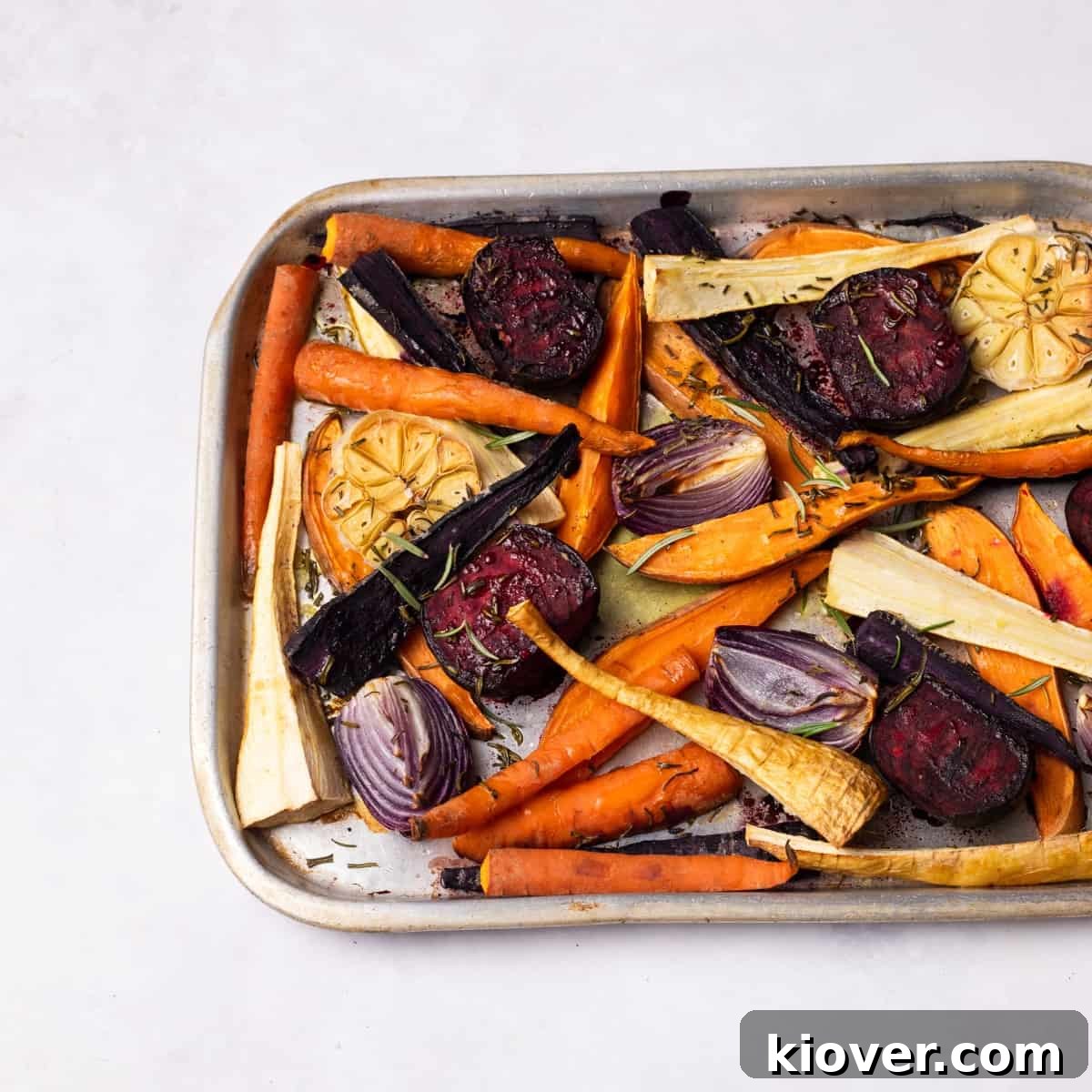
Flavorful & Healthy Roasted Root Vegetables: Your Ultimate Guide
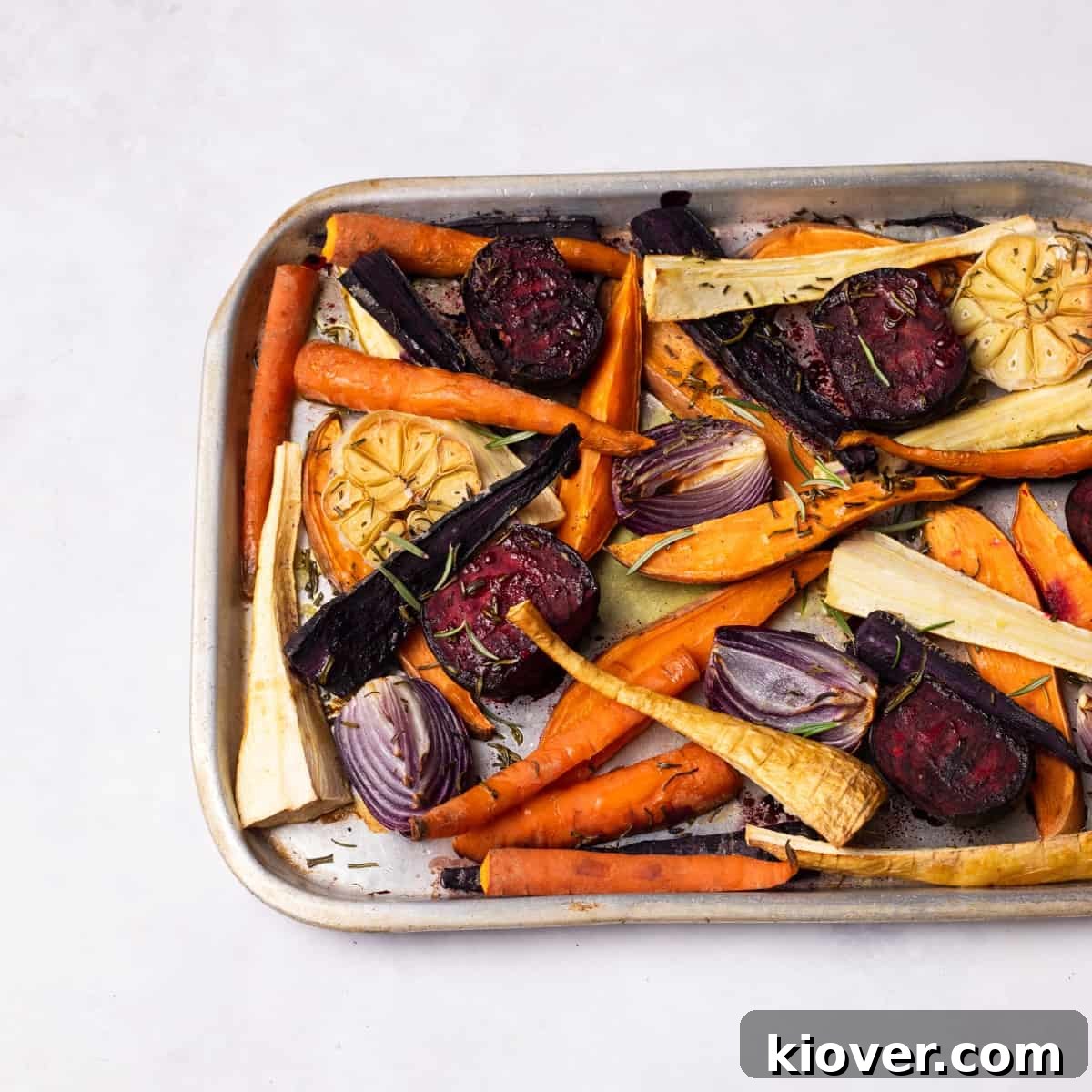
Discover the delightful simplicity of this **Roasted Root Vegetables** recipe – a wholesome, vibrantly colored dish that promises both incredible flavor and outstanding nutritional benefits. Naturally **gluten-free and vegan**, this recipe is remarkably **easy to prepare**, making it a perfect addition to any meal, especially during the festive holiday season when its rich hues bring a celebratory touch to your dinner table.
Recipe Difficulty – Very Easy
Table of Contents
- Why This Roasted Root Vegetable Recipe Works
- Key Ingredients for Perfect Roasted Root Vegetables
- Creative Substitutions for Your Roasted Veggies
- Exciting Variations to Elevate Your Roast
- How to Make the Best Roasted Root Vegetables
- Leftovers and Storage Tips
- Frequently Asked Questions About Roasting Vegetables
- Roasted Root Vegetables Recipe Card
Why This Roasted Root Vegetable Recipe Works
Autumn and winter bring an abundance of incredible produce, and for me, root vegetables are the undeniable stars of the season! This recipe truly shines because it celebrates these seasonal treasures, transforming them into a show-stopping side dish. Not only are these baked root vegetables incredibly simple to prepare, but they are also packed with nutrients, making them a fantastic healthy choice for any day of the week. Their natural sweetness, when caramelized through roasting, creates an irresistible depth of flavor that appeals to everyone. This dish isn’t just a meal; it’s an experience, especially when served as vibrant Christmas roast vegetables, adding serious color and nutrition to your festive spread.
The beauty of this roasted vegetable medley lies in its adaptability. It’s a forgiving recipe that encourages creativity in the kitchen. Feel free to adjust the ingredients based on what you have on hand or what’s in season at your local market. It’s an excellent way to use up leftover vegetables, minimize food waste, and enjoy a comforting, wholesome meal. The blend of flavors and textures, from the tender carrots to the earthy beetroot and creamy sweet potato, makes every bite a delight.
This recipe was inspired by the crispiness of my Smashed Brussels Sprouts and perfectly complements a savory main like this amazing Baked Christmas Salmon. If you’re looking for different flavor profiles, explore my Mediterranean Vegetables for a sunnier take. For another easy roasted veggie option, you might also love my Sausage Tray Bake, which incorporates delicious plant-based sausages with roasted vegetables.
Key Ingredients for Perfect Roasted Root Vegetables
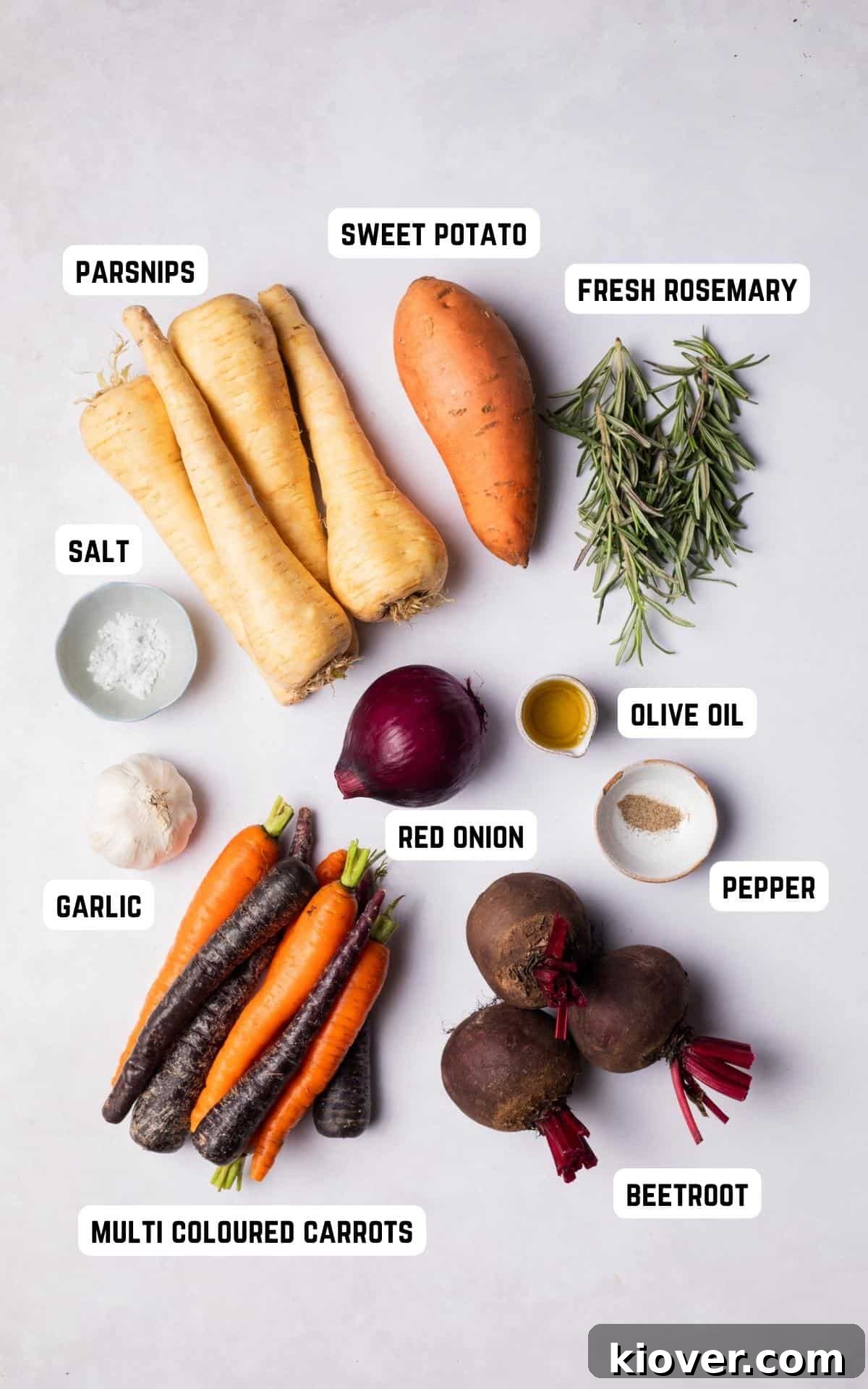
The magic of roasted root vegetables begins with high-quality, fresh ingredients. Here’s a detailed look at what makes this recipe truly special:
- Multi-Colored Carrots: Beyond their aesthetic appeal, different colored carrots (purple, yellow, white) offer a slightly varied sweetness and unique phytonutrients. If using thinner carrots, they can be kept whole or halved lengthwise. For thicker varieties, slice them into quarters to ensure even cooking and a tender bite.
- Parsnips: These subtly sweet and earthy root vegetables roast beautifully, developing a nutty flavor. Always quarter them lengthwise for consistent size and texture with the other vegetables. If you find yourself with extra parsnips, don’t miss out on my comforting Parsnip Soup.
- Sweet Potato: A staple for many, sweet potatoes lend a creamy texture and naturally sweet flavor that caramelizes beautifully. Cutting them into wedges ensures they cook thoroughly and become delightfully tender on the inside, with slightly crispy edges.
- Beetroot: Adding a vibrant pop of color and an earthy-sweet note, beetroot is fantastic when roasted. Remember to wash them thoroughly to remove any soil before slicing them into halves. For surplus beetroot, consider making my refreshing Beetroot Soup or a summery Beetroot Salad.
- Large Red Onion: Onions become wonderfully sweet and tender when roasted, providing a foundational flavor. Quartering them allows them to hold their shape and integrate well with the other root vegetables.
- Garlic: Roasting a whole bulb of garlic, sliced down the middle, infuses the entire dish with a mellow, sweet, and aromatic flavor. The cloves become soft and spreadable, a true culinary treat.
- Fresh Rosemary: This aromatic herb is the perfect companion to root vegetables, lending a fragrant, piney note. Chop it finely to distribute its flavor evenly over the vegetables. Fresh herbs always impart a superior taste compared to dried, elevating the overall dish.
- Olive Oil: Essential for achieving that perfect golden-brown crispness and enhancing the vegetables’ natural flavors. Use a good quality extra virgin olive oil for the best results. It also helps to distribute the seasonings evenly.
- Salt and Pepper: These kitchen staples are more than just seasonings; they are flavor enhancers. A generous amount of salt draws out moisture and intensifies sweetness, while freshly ground black pepper adds a subtle warmth and aromatic kick, perfectly balancing the dish.
Refer to the recipe card below for precise quantities and additional details.
Creative Substitutions for Your Roasted Veggies
One of the best aspects of this roasted root vegetable recipe is its incredible flexibility. Don’t be afraid to experiment and tailor it to your preferences or what you have available. Here are some smart substitutions to keep your roast exciting:
- Vegetables: This recipe is a blank canvas! Feel free to swap out any of the listed root vegetables for others you love or have on hand. Excellent alternatives include butternut squash (peeled and cubed), regular potatoes (cut into chunks), celeriac (peeled and diced), turnips, or even chunks of bell peppers for added color and flavor. Just ensure all vegetables are cut into roughly similar sizes to promote even roasting.
- Fresh Rosemary: While rosemary is classic, you can easily switch up the herb profile. Thyme, sage, or oregano would all make wonderful additions, each bringing a distinct aroma. For a Mediterranean twist, consider a mix of dried herbs like Herbes de Provence. If fresh herbs aren’t available, use dried herbs, but remember that dried herbs are more concentrated, so use about one-third of the amount of fresh.
- Olive Oil: Any good quality cooking oil with a relatively high smoke point will work well. Avocado oil, grapeseed oil, or even melted coconut oil can be used, each imparting a slightly different nuance to the final flavor. Ensure the oil coats the vegetables thoroughly for optimal caramelization.
- Seasonings: Beyond salt and pepper, consider a sprinkle of onion powder, garlic powder, or a dash of smoked paprika for an extra layer of flavor. A pinch of chili flakes can add a subtle kick without making it overtly spicy.
Exciting Variations to Elevate Your Roast
Once you’ve mastered the basic roasted root vegetable recipe, the possibilities for variations are endless. Here are a few ideas to customize your dish and keep things fresh:
- Spicy Kick: If you enjoy a bit of heat, transform your roasted vegetables into a spicy side. Before roasting, toss the vegetables with the olive oil, a generous pinch of cumin, a smoky dash of paprika, and a sprinkle of chili powder or red pepper flakes. This adds a warming depth of flavor that’s especially comforting on a cold day.
- Gourmet Gratin Platter (Deluxe): For an indulgent and impressive presentation, turn your roasted roots into a gratin-style dish. After baking, transfer the vegetables to an oven-safe serving platter, top generously with your favorite vegan cheese shreds (or regular cheese if not vegan), and broil for the final couple of minutes until the cheese is melted and bubbly, and the edges are slightly golden. Serve this deluxe gratin alongside a crisp, fresh green salad or my mouth-watering Hasselback Potatoes for an unforgettable meal.
- Kid-Friendly & Sweet: Make this dish appealing to younger palates by adjusting the flavors. Omit the rosemary and replace the salt with a drizzle of maple syrup or a touch of brown sugar. Mix it with the olive oil and toss the vegetables in this sweet glaze before roasting. This brings out the natural sweetness of the root vegetables even further, making them an instant hit with children. You can also tailor the vegetable selection to their favorites, adding more carrots or sweet potatoes.
- Herbaceous Twist: Beyond rosemary, consider adding fresh thyme, oregano, or a mix of Italian herbs for a different aromatic profile.
- Citrus Brightness: Squeeze fresh lemon or orange juice over the vegetables after roasting for a burst of refreshing flavor. Lemon zest can also be added before roasting.
- Nutty Crunch: Sprinkle toasted walnuts, pecans, or pumpkin seeds over the roasted vegetables just before serving for an added layer of texture and healthy fats.
For another hearty and seasonal twist on roasted vegetables, check out my Stuffed Butternut Squash version on my website!
How to Make the Best Roasted Root Vegetables
Achieving perfectly roasted root vegetables is straightforward with these simple steps. The key is proper preparation and attention to detail:
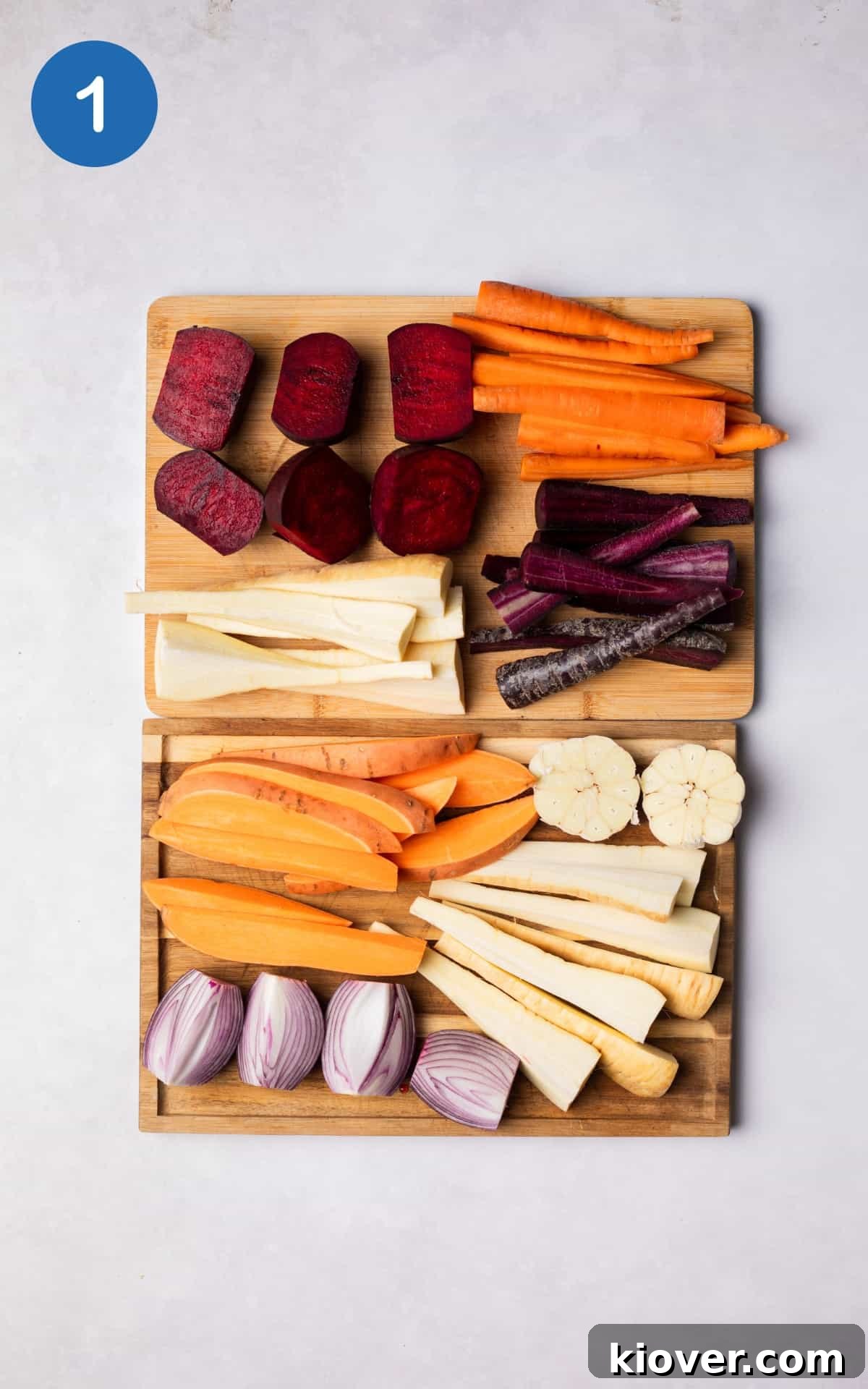
Step 1: Preheat and Prepare. Begin by preheating your oven to 200°C (390°F). While the oven heats, meticulously prepare all your root vegetables as instructed in the ingredients list. Ensure they are washed, peeled if necessary, and cut into roughly uniform pieces. Consistent sizing is crucial for even cooking.
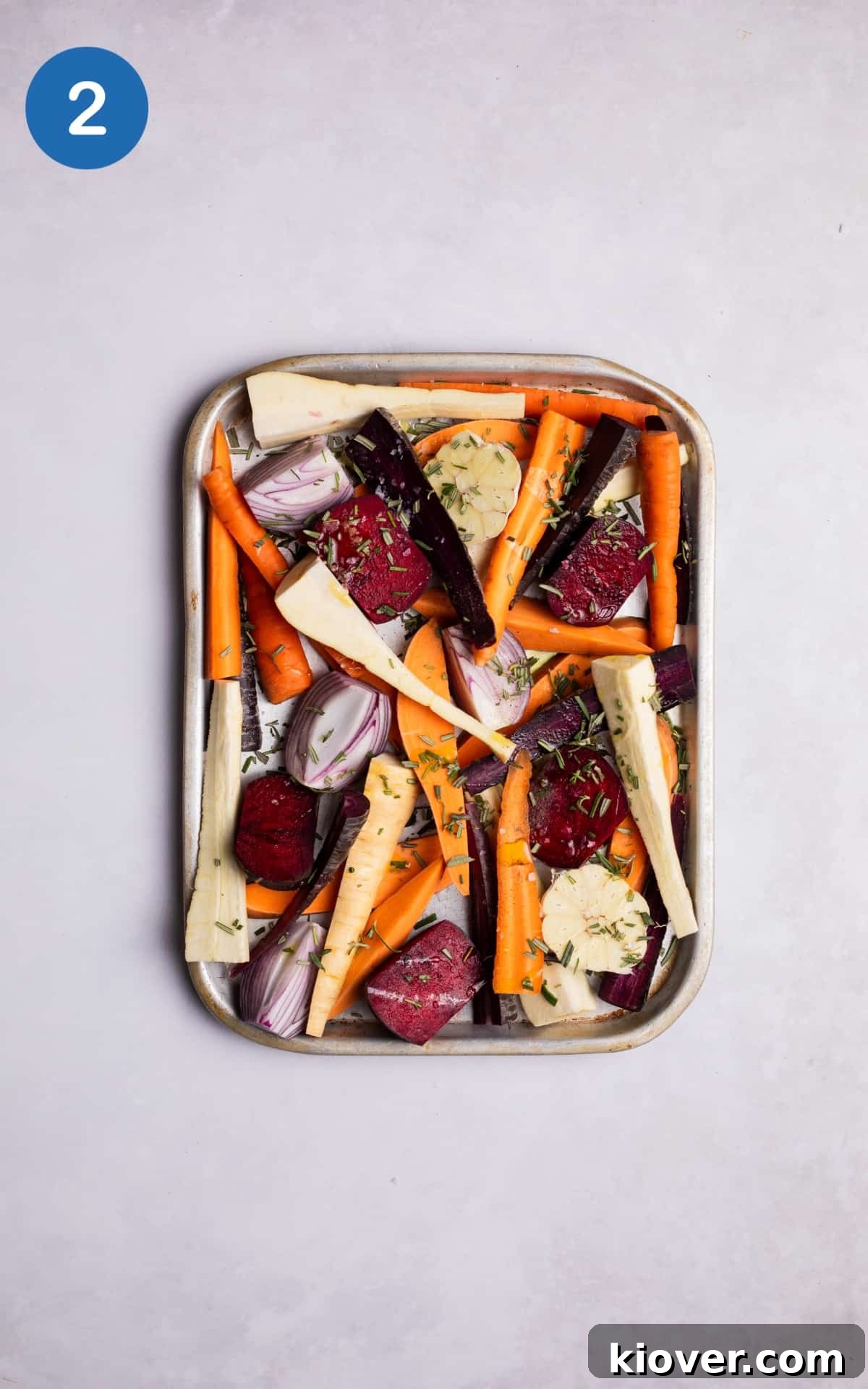
Step 2: Season and Spread. Place all the chopped vegetables onto a large roasting tray. Drizzle generously with olive oil, ensuring every piece is lightly coated. Season with a few generous pinches of salt, a pinch of freshly ground black pepper, and the finely chopped fresh rosemary. Toss everything together directly on the tray until all the vegetables are evenly seasoned. Avoid overcrowding the tray; use two trays if necessary to ensure the vegetables roast rather than steam, leading to better caramelization.
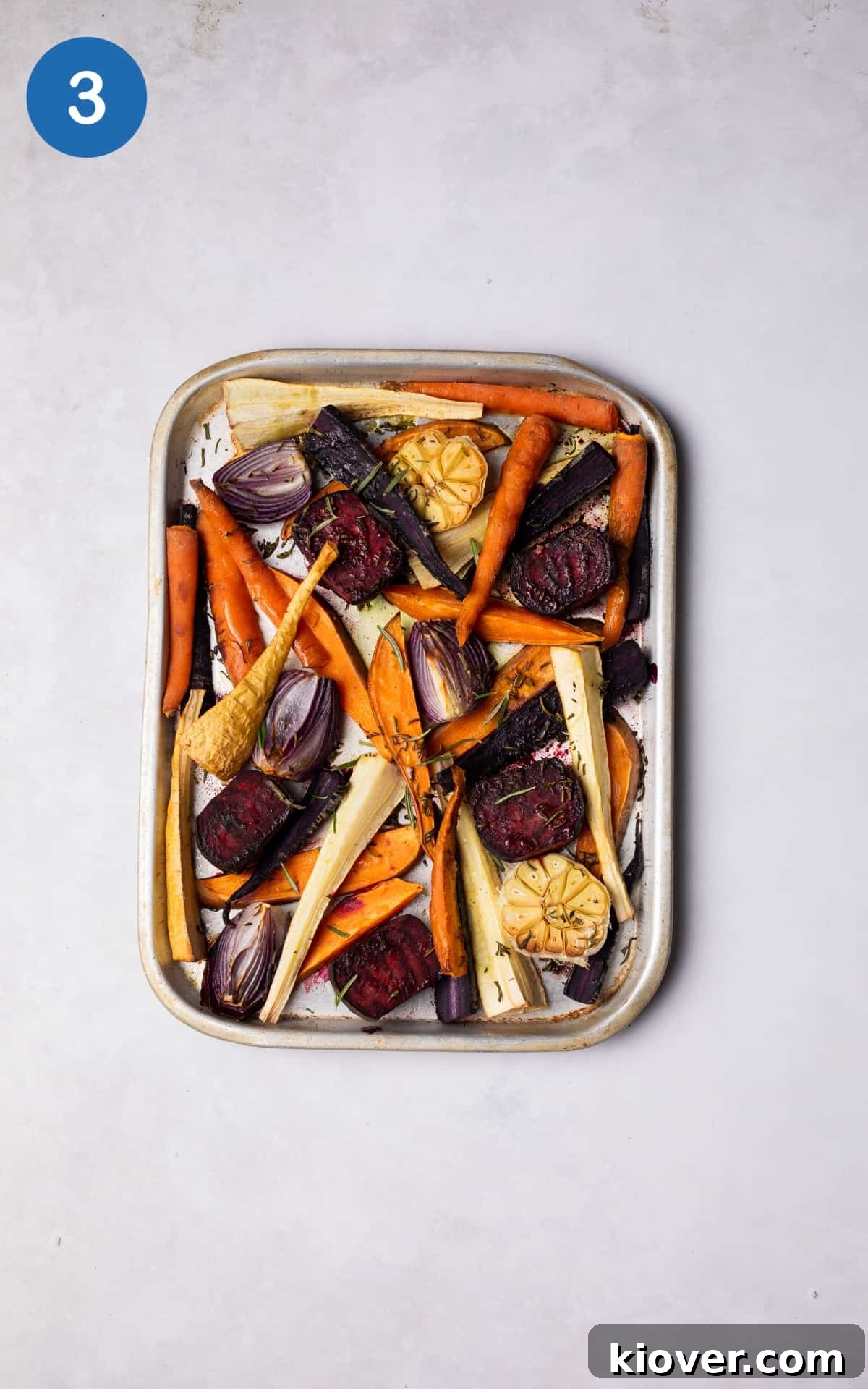
Step 3: Roast to Perfection. Place the roasting tray in the preheated oven and bake for 30 minutes. After this initial period, remove the tray, give the vegetables a good stir or ‘turn’ to expose different sides to the heat, and then return them to the oven for another 10-15 minutes, or until they are tender when pierced with a fork and beautifully caramelized around the edges.
Pro Tip: Ovens can vary significantly in temperature and cooking efficiency. Always keep a close eye on your vegetables, especially during the final stages of roasting, to prevent burning and ensure they reach your desired level of tenderness and crispness. The total cooking time may need slight adjustment based on your oven and the size of your vegetable pieces.
Leftovers and Storage Tips
One of the many joys of roasted root vegetables is how well they keep, allowing you to enjoy their deliciousness for days to come. Store any leftover roasted vegetables in an airtight container in the refrigerator for up to three days. For reheating, you have a couple of excellent options: gently warm them in the oven at a moderate temperature (around 180°C/350°F) for 10-15 minutes until heated through and slightly re-crisped, or toss them in a hot pan on the stovetop for a quicker reheat. While freezing roasted vegetables is possible, it’s generally not recommended for this recipe as it can alter their texture, making them a bit mushy upon thawing. They are best enjoyed fresh or within a few days from the fridge.
Beyond simply reheating, leftover roasted root vegetables can be wonderfully repurposed. Add them to salads for extra substance and flavor, mix them into grain bowls with your favorite protein, or even incorporate them into a frittata or omelet for a quick and nutritious breakfast or brunch. They can also be pureed into a comforting soup or blended into a vibrant hummus. Their versatility makes them a fantastic ingredient to have on hand for quick meal solutions.
Frequently Asked Questions About Roasting Vegetables
Roasting vegetables in the oven is incredibly simple and yields fantastic results! The basic process involves three key steps: proper preparation, generous seasoning, and controlled baking. First, chop your chosen vegetables into uniform sizes for even cooking. Next, toss them with a good quality oil, salt, pepper, and your favorite herbs or spices. Finally, spread them in a single layer on a large roasting tray to prevent steaming and bake in a hot oven until tender and caramelized. It’s that easy!
For a truly delicious and visually appealing roast vegetable medley, I highly recommend a collection of hearty root vegetables. My personal favorite combination includes vibrant multi-colored carrots, sweet parsnips, creamy sweet potato, earthy beetroot, aromatic red onion, and a large bulb of garlic. To enhance these natural flavors, I season them with olive oil, fresh rosemary, and a generous sprinkle of salt and pepper. This mix creates a perfect balance of sweetness, earthiness, and satisfying texture.
Without a doubt, baking root vegetables in the oven is the tastiest and easiest method. Roasting brings out their natural sugars, leading to a wonderful caramelization and a slightly crispy exterior with a tender, flavorful interior. Simply chop them, arrange them on a sheet pan in a single layer, toss with oil and your chosen herbs, and bake until golden brown and fork-tender. This method ensures even cooking and superior flavor development compared to boiling or steaming.
Absolutely! An air fryer is a fantastic tool for roasting root vegetables, especially when you’re cooking for fewer people or want a quicker result. Prepare the vegetables in the same way – chop, oil, and season. Then, cook them in your air fryer at approximately 200°C (390°F) for about 20-25 minutes, shaking the basket halfway through to ensure even cooking and crisping. Cooking times may vary slightly depending on your air fryer model and the size of your vegetable pieces, so keep an eye on them.
To get the best results, avoid overcrowding your roasting tray, as this leads to steaming instead of roasting. Ensure your vegetables are cut to a similar size for even cooking. Don’t skimp on the oil and seasoning; they are crucial for flavor and texture. Also, make sure your oven is fully preheated to the correct temperature. Finally, resist the urge to constantly flip or stir the vegetables; allow them to develop a nice crust before turning.
Yes, you can definitely prep root vegetables in advance! You can wash, peel, and chop them the day before you plan to roast them. Store the chopped vegetables in an airtight container or a sealed bag in the refrigerator. If you’re using water-sensitive vegetables like potatoes, you might want to submerge them in cold water to prevent browning, then drain and pat them very dry before roasting. This simple step can save you valuable time on busy cooking days.
YOU MIGHT ALSO LIKE…
Sides
Roast Parsnips
Air Fryer Recipes
Air Fryer Sweet Potato Fries
Sides
Smashed Brussels Sprouts
Sides
Smashed Potatoes
Tried this Roasted Root Vegetables recipe? Please leave a star rating below and let me know how you get on. Hearing positive feedback is one of the best parts of creating recipes, so please share your experience in the comments!
P.S. Never miss a new recipe! Get more healthy and delicious recipes sent straight to your inbox weekly – Subscribe to my newsletter and receive a free recipe eBook!
Roasted Root Vegetables
James Wythe
15 minutes
40 minutes
55 minutes
6 people
Ingredients
- 8 multi-colored carrots, use thin carrots or slice thicker ones into quarters
- 4 parsnips, sliced into quarters
- 1 medium sweet potato, sliced into wedges
- 3 small beetroot, washed and sliced into halves
- 1 large red onion, sliced into quarters
- 1 large bulb of garlic, sliced down the middle
- 1 handful Fresh rosemary, chopped
- Olive oil, for drizzling
- Salt & pepper, to taste
Instructions
-
Preheat your oven to 200°C (390°F). While the oven heats, wash, peel (if necessary), and chop all the vegetables as instructed in the ingredients section, ensuring pieces are roughly uniform in size for even cooking.
-
Place all the chopped vegetables onto a large roasting tray. Drizzle generously with olive oil, ensuring everything is lightly coated. Add a few generous pinches of salt, a pinch of black pepper, and the chopped fresh rosemary. Toss the vegetables directly on the tray until they are evenly seasoned. If your tray appears overcrowded, use two trays to ensure the vegetables roast beautifully instead of steaming.
-
Bake in the preheated oven for an initial 30 minutes. After this time, remove the tray from the oven, gently turn the vegetables with a spatula to promote even browning, and then return them to the oven for another 10-15 minutes, or until they are tender and beautifully caramelized. Keep an eye on them as oven temperatures can vary.
Notes
Substitutions & Variations: Detailed lists of ingredient swaps and creative variations are provided in the blog post above to help you customize this dish.
To Store: Store any leftover roasted vegetables in an airtight container in the refrigerator for up to 2-3 days. Reheat gently in the oven or a pan on the stovetop until warmed through.
To Freeze: Freezing is not recommended for this recipe, as it can significantly impact the texture of the roasted vegetables upon thawing.
Tip 1: Time Saver: To save time on a busy day, prepare all the vegetables (wash, peel, chop) the day before. Store them in an airtight container in the fridge, ready for roasting.
Tip 2: Spice it Up: For those who love a bit of heat, toss the vegetables in a blend of cumin and paprika along with the olive oil before baking for an extra layer of flavor.
Tip 3: Oven Monitoring: Always monitor your vegetables closely while they cook. Oven temperatures can vary, so adjust cooking times as needed to achieve perfectly tender and caramelized results.
Nutrition
Carbohydrates: 32g |
Protein: 3g |
Fat: 1g |
Saturated Fat: 0.2g |
Fiber: 9g |
Sugar: 16g