
The Greyhound Cocktail: A Journey Through Time and Taste
The Greyhound cocktail, a seemingly straightforward concoction of grapefruit juice and spirits, holds a surprisingly rich tapestry of history within its simple blend. Far from a mere mixed drink, its very existence is a testament to humanity’s ingenuity, exploration, and adaptation across continents and centuries. From the deliberate creation of a unique fruit to the evolution of preferred alcoholic spirits, every component of the Greyhound possesses a storied past that intertwines with global events and cultural shifts. To order or craft this classic beverage is, in essence, to partake in a small celebration of human achievements and the overcoming of various obstacles. Today, we embark on an illuminating journey to uncover the fascinating history behind the beloved Greyhound cocktail.
Unraveling the Greyhound Cocktail’s Historic Roots
What Makes a Greyhound Cocktail? Ingredients Unveiled
At its core, the contemporary Greyhound recipe is elegantly simple: ice, fresh grapefruit juice, and vodka. While this description might suggest a lack of complexity, each of these elements carries a fascinating narrative, contributing to a drink with a surprisingly intricate past. The grapefruit itself is not a naturally occurring fruit but rather a product of human intervention. Similarly, vodka, though the dominant spirit in today’s Greyhound, wasn’t always the alcohol of choice. And, of course, the story of how these disparate ingredients converged to form the iconic Greyhound is a captivating tale in itself.
The Birth of a Classic: When Was the Greyhound Invented?
Pinpointing the exact moment of a cocktail’s creation can often be challenging, especially when its genesis isn’t tied to a specific brand or a well-documented event, unlike the Moscow Mule’s association with Smirnoff. The Greyhound lacks such a clear-cut origin story, but historical consensus generally places its first documented appearance in print around 1930. This landmark record is found within the pages of a legendary cocktail book published by London’s prestigious Savoy Hotel.
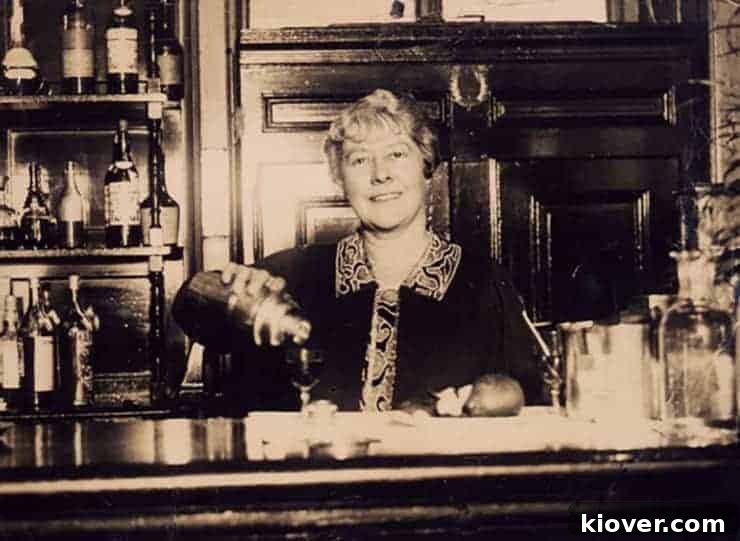
Harry Craddock and The Savoy Cocktail Book: A Bartending Legend
The esteemed author behind The Savoy Cocktail Book was none other than Harry Craddock. Craddock was a celebrated figure in the bartending world of the 1920s and 1930s, revered for his skill and innovation. Originally from England, he sought greater opportunities by immigrating to the United States at the turn of the century, where he honed his craft at several of America’s most famous drinking establishments. His contributions to mixology are immeasurable, and his work at The Savoy would cement his legacy.
Prohibition’s Unforeseen Impact on Cocktail Culture
The advent of Prohibition in the United States in 1920 dramatically altered Craddock’s trajectory. Facing a ban on alcohol, he made the strategic decision to return to his homeland. It was during this era that The Savoy Hotel, particularly its American Bar, became a haven for cocktail enthusiasts. While American-invented cocktails were suppressed in their country of origin, The Savoy’s American Bar provided a vibrant sanctuary where the art of mixology continued to flourish. Craddock presided over this iconic bar, crafting numerous new drinks and, quite possibly, refining or popularizing the Greyhound, which, interestingly, did not initially feature vodka.
The Great Spirit Debate: Gin or Vodka in a Greyhound?
Today, vodka is undeniably the more prevalent spirit in a Greyhound. However, delving into the cocktail’s early history reveals a different preference. Our exploration of the Moscow Mule’s rise to fame showed us that vodka’s popularity in the U.S. truly began to soar only after World War II. Prior to that, brands like Smirnoff struggled to gain traction in the American market, with vodka only starting to achieve widespread recognition in the 1940s.
In the pre-WWII era, American palates were largely dominated by whiskey, but gin also held a significant and respected position across the U.S. and globally. Given that the earliest documented Greyhound recipe dates back to 1930 at an American cocktail bar, it is entirely logical that gin would have been the original spirit of choice. Gin’s established popularity and widespread availability during that period make it the most probable candidate for the Greyhound’s inaugural formulation.
As the decades progressed, the landscape of popular spirits shifted dramatically. Vodka, often lauded for its neutrality, offers a clean canvas for cocktails, appealing to those who prefer not to taste the base spirit’s inherent flavors. This characteristic undoubtedly contributed to its eventual triumph over gin and whiskey in U.S. sales, making it a ubiquitous presence in bars and homes today. While gin’s role as the original spirit in the Greyhound is historically sound, vodka’s ascension to replace it reflects evolving consumer tastes and the burgeoning appeal of a versatile, “flavorless” spirit.
The Remarkable Tale of the Grapefruit: A Human-Engineered Marvel
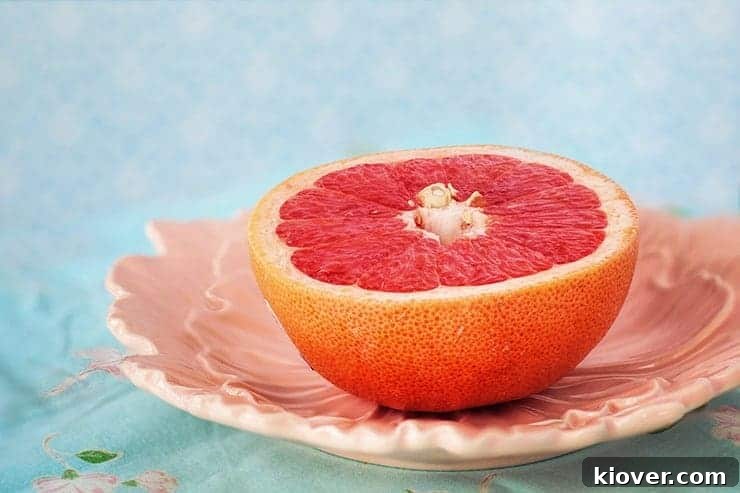
One of the most astonishing facts about the Greyhound is that its core ingredient, the grapefruit, is not a naturally evolved fruit but rather a fascinating product of human cultivation and accidental hybridization. The grapefruit is a cross between a sweet orange (the delightful varieties we enjoy today) and another distinct citrus fruit known as the pomelo or shaddock.
Both the sweet orange and the pomelo trace their origins back to India and Southeast Asia, eventually making their way to the Caribbean through trade routes and human migration. It was in the mid-1700s, most likely through an accidental cross-pollination, that these two citrus species merged, resulting in the birth of the grapefruit. This serendipitous event in the West Indies marked a pivotal moment, laying the foundation for a fruit that would later become a staple in kitchens and cocktail bars worldwide.
From Bitter to Sweet: The Orange’s Global Journey
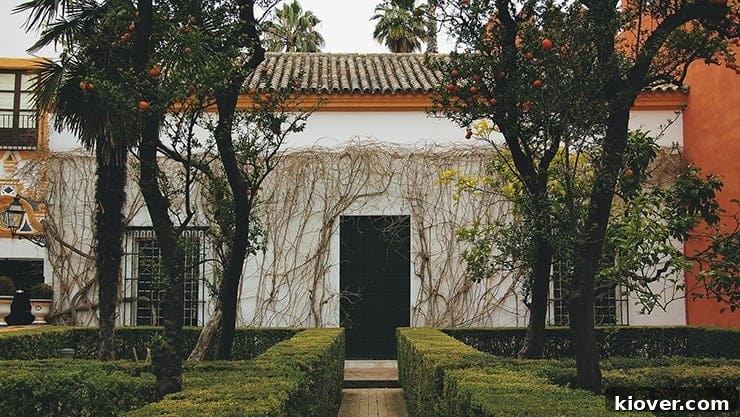
The juicy, sweet oranges commonly found in grocery stores today are the result of thousands of years of human cultivation. While oranges have existed for over 7,000 years, the early varieties were vastly different from what we consume now. For instance, in Seville, Spain, where orange trees line the streets, the fruit, though visually stunning, is incredibly bitter and not suitable for direct consumption. These bitter oranges, prevalent in the Western world until the 1400s, were typically processed into marmalades or incorporated into dishes requiring significant added sugar. Their presence illustrates the long evolution of citrus fruits and human efforts to refine them.
The Sweet Orange Revolution and Its Role in Grapefruit’s Genesis
The arrival of the sweet orange in Europe during the 1400s marked a significant turning point. Europeans quickly embraced this delicious new fruit, leading to its widespread cultivation and expansion. From Europe, these sweet oranges were subsequently exported to the Caribbean and South America. It was in this new tropical environment, with its conducive climate and diverse botanical landscape, that the “big bang” of the grapefruit occurred, a remarkable chapter in agricultural history that paved the way for the Greyhound cocktail’s distinctive flavor profile.
Beyond The Savoy: Early Grapefruit Cocktails and Speculation
Given that the grapefruit itself didn’t exist before approximately 1750, a Greyhound cocktail could not have been created prior to that date. This establishes a broad timeline, spanning from around 1750 to 1930, during which the first Greyhound could have emerged. Considering the inherent simplicity of combining grapefruit juice with a spirit, it is highly probable that similar drinks were served before The Savoy Cocktail Book formally documented the recipe.
Narrowing the Timeline: Early Mentions and Grapefruit’s Ascension
Indeed, understanding human nature and our enduring affection for alcoholic beverages, it’s almost certain that such combinations were explored. We can, however, try to narrow down this timeline with more precision. A compelling piece of evidence comes from a recipe discovered from 1927, predating Craddock’s version. This snippet alludes to the use of grapefruit in a cocktail capacity that bears a striking resemblance to the Greyhound. While it includes a sweetener, which could classify it as a slight variation, it very likely falls under the conceptual umbrella of what we now recognize as a Greyhound. This suggests the drink, or a close precursor, was indeed circulating before 1930.
The Popularity of Grapefruits: A Culinary Catalyst
The increasing popularity of grapefruits themselves is a crucial factor in understanding their eventual widespread use in culinary and cocktail applications. Utilizing tools that map mentions in historical texts, it becomes evident that grapefruits truly began to gain significant traction and accelerate in popular discourse around the early 1900s. Prior to this, particularly in the mid-1800s, most references tended to be more academic or botanical in nature, rather than appearing in recipes or general consumer guides.
Speculation: The Greyhound’s Inevitable Rise
Between approximately 1910 and 1940, the frequency of grapefruit mentions in print skyrocketed, indicating a dramatic surge in its popularity. Some creations possess a perfect confluence of “time-place factor” that renders their emergence almost inevitable. It is highly plausible that the Greyhound cocktail began to gain significant traction and recognition somewhere between 1910 and the onset of Prohibition in 1920, even if not yet under its official name.
While definitive proof remains elusive, it is a compelling speculation that Harry Craddock may have had the Greyhound, or a similar grapefruit-based gin cocktail, within his repertoire long before his return to London and his tenure at The Savoy. This hypothesis is supported by the concurrent rise in popularity of both cocktails in general and grapefruits specifically, coupled with the inherent simplicity of the drink’s construction. For now, we can only muse and imagine the exact origins of Craddock’s recipe, pondering whether he independently conceived it or adapted it from an existing, perhaps lesser-known, creation. The converging histories of cocktails and grapefruits indeed create a compelling narrative for the Greyhound’s “big bang” moment, making its existence in that era almost predetermined.
A Toast to History: The Enduring Legacy of the Greyhound
The journey through the history of the Greyhound cocktail reveals far more than just a simple drink recipe. It underscores the intricate dance of human innovation, agricultural development, and cultural exchange that shapes our culinary and mixology landscape. From the deliberate cross-breeding that gave us the grapefruit to the shifting tides of spirit preferences influenced by global events like Prohibition, each component of the Greyhound tells a captivating story. The next time you savor this refreshing concoction, take a brief moment to appreciate the myriad small miracles and historical threads that converged to make your Greyhound cocktail possible. It’s more than just a drink; it’s a sip of history itself.