

Discover the ultimate recipe for a **simple aubergine curry** that bursts with **amazing flavor** while remaining wonderfully **healthy** and incredibly **quick to prepare**, ready in just **20 minutes**!

Recipe Difficulty – Very Easy
Table of Contents
- Introduction to Aubergine Curry
- Why This Recipe Works
- Essential Ingredients for Aubergine Curry
- Smart Substitutions
- Exciting Variations
- How to Master Aubergine Curry
- Serving Suggestions
- Leftovers and Storage
- Aubergine Curry FAQs
- More Aubergine Recipes
- You Might Also Like
- Rate This Recipe…
- Aubergine Curry Recipe
Introduction to Aubergine Curry
Welcome to your new go-to weeknight dinner: a rich and creamy aubergine curry that effortlessly combines exceptional flavor with incredible simplicity. This recipe transforms humble eggplants into a vibrant, aromatic dish that promises to delight your taste buds and become a regular feature in your culinary repertoire. Whether you’re a seasoned cook or a kitchen novice, this curry is designed to be accessible, quick, and utterly satisfying. Its natural gluten-free and vegan qualities make it a fantastic choice for diverse diets, but its universally appealing taste means everyone at your table will love it. Get ready to experience the magic of a healthy, delicious meal that comes together in mere minutes!
Why This Recipe Works
This creamy aubergine curry stands out as a culinary marvel for several compelling reasons, making it the perfect addition to your healthy living journey. It masterfully strikes a balance between delightful flavors and robust nutritional benefits, ensuring every spoonful is both satisfying and wholesome. Its sheer speed and ease of preparation mean you can have a gourmet-quality meal on the table in just 20 minutes, a perfect solution for busy weeknights.
Beyond its convenience, this aubergine curry is a powerhouse of health. Aubergine (or eggplant) is known for being rich in fiber, antioxidants, and essential vitamins and minerals, contributing to heart health and digestion. Combined with chickpeas, which provide an excellent source of plant-based protein and additional fiber, this dish keeps you feeling full and energized. The use of full-fat coconut milk not only lends a luxurious creaminess but also introduces healthy fats that are crucial for nutrient absorption.
Moreover, this recipe is naturally **gluten-free and vegan**, making it an inclusive option for those with dietary restrictions or anyone looking to incorporate more plant-based meals into their diet. You don’t have to compromise on taste; even your friends who don’t follow specific diets will rave about this flavorful eggplant curry. Its versatility allows it to be perfectly served with a variety of sides, from light and fluffy Quinoa to classic basmati rice. For an added touch of gluten-free goodness, consider pairing it with my amazing Easy Socca recipe, a delightful chickpea flatbread that complements the curry beautifully.
If you’re exploring other vegetable-based curries that are just as easy and delicious, be sure to check out my Cauliflower Curry, Potato Curry, or my speedy 15-Minute Vegetable Curry. Each offers a unique flavor profile while maintaining the simple, healthy ethos of this aubergine creation.
Essential Ingredients for Aubergine Curry
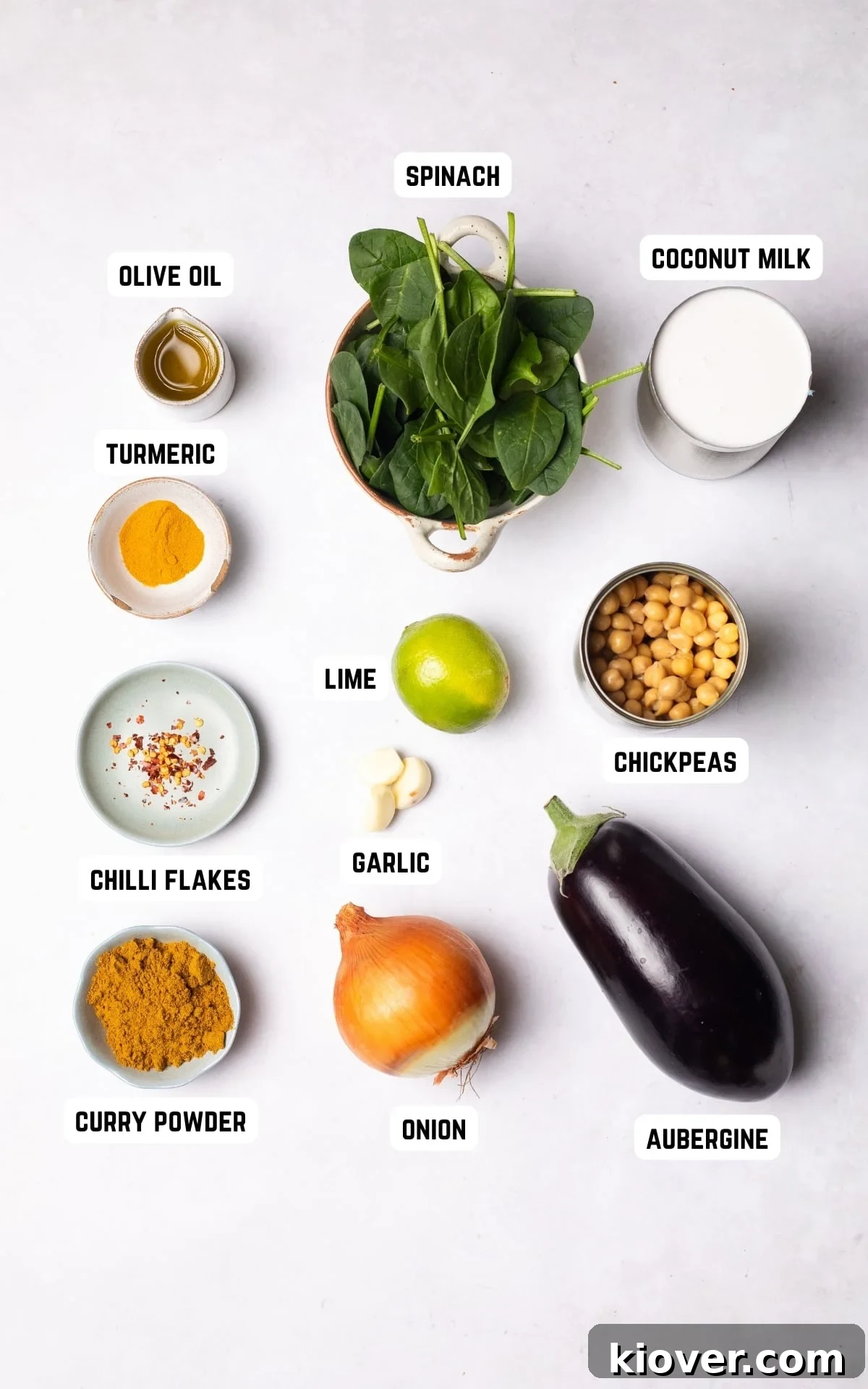
Crafting this flavorful aubergine curry relies on a few key ingredients, each playing a vital role in creating its distinctive taste and texture. Here’s a closer look at what you’ll need and why each component is essential:
- Aubergine – Also known as eggplant, this purple gem is undoubtedly the star of our delicious Indian-inspired curry. When cooked, it becomes tender and creamy, absorbing the rich flavors of the spices beautifully. Look for firm, shiny aubergines without blemishes.
- Curry Powder – This essential spice blend forms the aromatic foundation of our curry. I typically opt for a mild curry powder to keep the dish broadly appealing, but you are absolutely encouraged to choose a heat level that matches your preference – medium or hot curry powder will add a fantastic kick.
- Olive Oil – A staple in most kitchens, olive oil is used to sauté the aromatics, building the initial layer of flavor for the curry. It adds a subtle fruity note that complements the other ingredients.
- Onion – Finely diced onion provides a crucial aromatic undertone to this aubergine coconut curry. As it softens and caramelizes, it releases a natural sweetness that deepens the overall flavor profile of the dish.
- Garlic Cloves – Garlic is indispensable for most savory dinners, and this curry is no exception. Its pungent, aromatic qualities add depth and warmth, creating a truly inviting fragrance and taste. Freshly crushed garlic makes all the difference!
- Ground Turmeric – Beyond its vibrant golden hue, turmeric contributes complex flavors—a touch of sweetness alongside earthy, gingery, and peppery notes. It’s also celebrated for its anti-inflammatory properties, adding a healthy boost.
- Chilli Flakes – For those who enjoy a little warmth, chilli flakes are perfect for introducing a gentle heat that awakens the palate without overwhelming the other delicate flavors. Adjust the quantity to your desired spice level.
- Chickpeas – These versatile legumes add a wonderful creamy texture and a nutty flavor to the curry, making it more substantial and satisfying. They are also an excellent source of plant-based protein and fiber. Be sure to drain and rinse them thoroughly before adding.
- Coconut Milk – For that signature rich and creamy consistency, full-fat coconut milk is non-negotiable for this recipe. It provides a luscious base and a subtle sweetness that balances the spices beautifully. Do not opt for light coconut milk if you want the best texture.
- Spinach – A large handful of fresh spinach is a fantastic way to finish off this recipe, wilting into the curry to add valuable nutrients and a beautiful pop of green color. It’s an easy way to sneak in extra vegetables.
- Lime Juice – A squeeze of fresh lime juice at the end brightens the entire dish, cutting through the richness of the coconut milk and elevating all the flavors with a zesty, fresh finish. Always use juice straight from a fresh lime for the best results.
For precise measurements and detailed instructions, please refer to the complete recipe card below.
Smart Substitutions
Flexibility is key in the kitchen, and this aubergine curry recipe is incredibly adaptable. Don’t have an ingredient on hand, or simply want to try something different? Here are some smart substitutions that will keep your curry delicious:
- Aubergine – While aubergine is the star, you can certainly experiment. If you’re using smaller varieties, about 3 baby aubergines (or baby eggplants) can replace a regular-sized one, offering a slightly sweeter flavor. If aubergine isn’t your favorite, fear not! There are plenty of other fantastic vegan and gluten-free curry recipes to explore. For instance, my creamy Butternut Squash Curry offers a delightful sweetness and similar creamy texture. Other great alternatives include sweet potato, zucchini, or bell peppers.
- Spices – Feel free to adjust the quantities and types of spices to perfectly match your taste preferences. If you find yourself without curry powder, **garam masala** is a wonderful substitute, offering a slightly sweeter and more aromatic profile. Adding extra ground coriander or ground cumin can also enhance the depth of flavor beautifully, providing an earthy warmth. Don’t hesitate to experiment with a pinch of smoked paprika for a different smoky dimension.
- Chickpeas – These legumes provide a hearty texture, but most white beans can serve as a great replacement for chickpeas. Cannellini beans or butter beans would offer a similar creamy texture, while lentils (red or green) can also be used, though they will change the texture slightly, making the curry even thicker.
- Coconut Milk – The full-fat coconut milk contributes significantly to the richness and flavor of this aubergine and chickpea curry. However, if you’re looking for an alternative, you could replace it with any other type of unflavored plant-based milk (like oat or soy milk) or a dairy-free cream. For a tangier flavor and richer texture, a plant-based plain yogurt could also work well, added at the very end to prevent curdling.
- Spinach – If spinach isn’t available, kale would also work very well for this recipe. Simply chop it finely and add it to the curry in the same step, allowing a few extra minutes for it to wilt down. Other leafy greens like Swiss chard or mustard greens could also be used.
- Lime Juice – Fresh lime juice provides an unparalleled brightness, but if you don’t have a fresh lime, bottled lime juice is a convenient alternative. Lemon juice would also work effectively, offering a similar acidic lift and zesty finish.
Exciting Variations
Transform your aubergine curry into a new culinary adventure with these exciting variations, catering to different tastes and occasions:
- Spicy Sensation – For those who crave heat, intensify the spice level. Use a hotter curry powder blend, increase the amount of chilli flakes, or incorporate freshly chopped bird’s eye chilies. A finely grated knob of fresh ginger added with the garlic and onion will also introduce a sharp, warming heat that elevates the entire dish. A dash of cayenne pepper can also do the trick for a fiery kick.
- Deluxe Dining – Elevate this simple curry to a gourmet experience. Serve it alongside fragrant basmati rice, a side of crispy Bombay Potatoes, or even some soft, pan-fried noodles for a truly indulgent meal. To enhance the texture and richness of the curry itself, add a handful of chopped fresh tomatoes for a burst of sweetness and acidity. Stir in roasted peanuts or cashews towards the end of cooking to create a delicious cashew or peanut curry, adding a delightful crunch and nutty flavor. Garnish generously with fresh coriander, thinly sliced red chilli, and a spoonful of sweet mango chutney for an irresistible combination of flavors and textures.
- Kid-Friendly Creation – Make this wholesome curry appealing to younger palates. If children are hesitant about aubergine, cut it into very small, bite-sized pieces so it blends more seamlessly into the sauce. Opt for a very mild curry powder and reduce or omit the chilli flakes. Serving it with soft, fluffy rice and some warm Gluten Free Naan Bread for dipping can make mealtime fun and encourage them to try new flavors. You can also add other finely chopped, sweet vegetables like carrots or bell peppers to enhance the nutritional value and sweetness.
If you’re a fan of Indian food and seeking more plant-based inspiration, you’ll love my other creations like the hearty Sweet Potato and Chickpea Curry, the comforting Coconut Dal, my classic Potato Curry, or the incredibly convenient Slow Cooker Chickpea Curry.
How to Master Aubergine Curry
Creating this delicious aubergine curry is a straightforward process, broken down into simple, easy-to-follow steps. Precision and a little attention to detail will ensure a perfect, flavorful outcome every time.

Step 1: Prepare and Roast the Aubergine. Begin by washing and slicing your aubergine into generous, uniform pieces. This ensures even cooking. Arrange the slices on a baking tray in a single layer to avoid overcrowding. Drizzle generously with olive oil, then sprinkle with 1 tablespoon of curry powder, a pinch of salt, and freshly ground black pepper. Toss gently to ensure all pieces are well-coated. Roast in a preheated oven at 200°C (400°F) for approximately 20 minutes, or for a quicker alternative, air fry at 205°C (400°F) for about 12 minutes, until tender and lightly golden.

Step 2: Sauté Aromatics. While the aubergine is cooking, prepare your aromatics. Finely dice the white onion and crush the garlic cloves. Heat a splash of olive oil in a large pan or pot over medium heat. Add both the diced onion and crushed garlic to the pan. Sauté gently for 2-3 minutes, stirring occasionally, until the onion softens and becomes translucent and the garlic is fragrant, being careful not to burn it.

Step 3: Bloom the Spices. To the softened onion and garlic, add the remaining tablespoon of curry powder, the ground turmeric, and a pinch of chilli flakes. Stir constantly for about one minute. This step, known as blooming the spices, helps to toast them lightly, releasing their full aroma and intensifying their flavors before any liquids are added.

Step 4: Build the Curry Base. Now, introduce the drained and rinsed chickpeas, followed by the full-fat coconut milk. Season with an additional pinch of salt and pepper to taste. Bring the mixture to a gentle simmer, then reduce the heat and let it cook for 7-8 minutes, stirring occasionally. This simmering time allows the flavors to meld beautifully and the sauce to thicken to a wonderfully creamy consistency.

Step 5: Finish and Serve. Once the sauce has thickened and the flavors are harmonious, stir in the fresh spinach and the bright, zesty lime juice. Continue to stir until the spinach has fully wilted into the curry, imparting a beautiful green hue and extra nutrients. Finally, gently fold in the baked aubergine pieces. Taste and adjust seasoning if necessary. Serve hot and enjoy your homemade aubergine curry!
Hint: Oven temperatures can vary significantly, so it’s always wise to keep a close eye on your aubergine during the roasting process. You want them tender and slightly caramelized, not burnt, so adjust cooking times as needed for your specific appliance.
Serving Suggestions
This versatile aubergine curry pairs wonderfully with a variety of sides, allowing you to create a complete and satisfying meal. For a classic Indian experience, serve it with steaming basmati rice, which beautifully soaks up the rich, creamy sauce. If you prefer a healthier grain, fluffy quinoa or brown rice makes an excellent accompaniment, adding extra fiber and nutrients. For an elevated touch, consider warm, pillowy naan bread (gluten-free if needed) perfect for scooping up every last bit of the delicious curry. You can also serve it with a light side salad or a cooling raita (yogurt dip) to balance the spices. Don’t forget a sprinkle of fresh coriander and a squeeze of lime just before serving for that final burst of freshness!
Leftovers and Storage
One of the many joys of this aubergine and spinach curry is how well it keeps, often tasting even better the next day as the flavors deepen. Store any leftover curry in an airtight container in the refrigerator, where it will remain fresh and delicious for about 4-5 days. When you’re ready to enjoy it again, simply reheat it gently in a pan over low heat on the stove, stirring occasionally, until it is thoroughly warmed through. Alternatively, you can reheat it in the microwave in short bursts, stirring in between, until piping hot. These leftovers are truly perfect for a quick, wholesome lunch or a hassle-free dinner on another busy evening!
Aubergine Curry FAQs
Absolutely! This aubergine curry is an excellent candidate for freezing, making it ideal for meal prepping or batch cooking ahead of time. It will maintain its quality in an airtight, freezer-safe container for approximately 3 months. To enjoy, simply thaw it overnight in the refrigerator, then reheat gently on the stove or in the microwave until it’s hot throughout. This makes for a convenient and delicious meal any time you need it.
Not only can you, but I enthusiastically recommend it! Aubergine (eggplant) softens beautifully when cooked, absorbing the rich flavors of the curry sauce and becoming delightfully sweet and tender. It adds a wonderful depth and texture that truly enhances the dish. Beyond aubergine, many other vegetables shine in curries, such as pumpkin, sweet potato, butternut squash, bell peppers, courgette (zucchini), and green beans. Don’t hesitate to experiment with your favorite seasonal produce!
Peeling aubergine for curry is entirely a matter of personal preference, not a necessity. The skin of an aubergine is completely edible and contains beneficial nutrients. Therefore, the decision usually comes down to whether or not you enjoy its texture. Smaller aubergines, like Japanese eggplant, typically have thinner, more delicate skin that softens easily during cooking. Larger varieties, however, can sometimes have thicker, slightly tougher skin, in which case you might choose to peel it for a smoother texture. For this recipe, I find that leaving the skin on adds a lovely texture and nutritional value.
Modern aubergine varieties are generally less bitter than older ones. However, if you’re concerned, you can “sweat” the aubergine. After slicing, sprinkle the pieces generously with salt and let them sit for 20-30 minutes. This draws out excess moisture and any potential bitterness. Rinse the salt off thoroughly and pat the aubergine dry before cooking. This method also helps prevent the aubergine from absorbing too much oil.
This curry is incredibly versatile! It pairs perfectly with staple Indian sides like fluffy basmati rice, brown rice, or quinoa for a wholesome meal. Warm naan bread (gluten-free or regular) is excellent for scooping up the rich sauce. For added freshness, serve with a side of cooling cucumber raita or a simple green salad. A sprinkle of fresh cilantro (coriander) and a wedge of lime for squeezing are also highly recommended for garnish.
More Aubergine Recipes
If you’ve fallen in love with aubergine after trying this curry, you’re in luck! This versatile vegetable can be transformed into a myriad of delicious dishes. Explore some of my other favorite aubergine-centric recipes:
- Awesome Aubergine Bake
- Aubergine Miso (Nasu Dengaku)
- Aubergine Salad
- Mediterranean Vegetables
- Peanut Butter Miso Roasted Aubergines
- Ultimate Vegan Moussaka
- Speedy Vegetable Curry
- Classic Aubergine Parmigiana
- Crispy Air Fryer Aubergine
- Simple Roasted Aubergine

You Might Also Like
5 Ingredients
The BEST Aubergine Miso (Nasu Dengaku)
Dinner
Awesome Aubergine Bake
Dinner
Potato Curry
Dinner
The Best Thai Red Prawn Curry
Rate This Recipe…
Have you tried this fantastic **Aubergine Curry** recipe? We’d love to hear your feedback! Please take a moment to leave a star rating ⭐️⭐️⭐️⭐️⭐️ below and share your experience in the comments. Your positive feedback is incredibly valuable and one of the most rewarding parts of creating recipes like this. So, please review it and let us know how it turned out!
P.S. Never miss out on a delicious new recipe! Get more healthy, easy-to-make recipes sent straight to your inbox every week – Subscribe now and receive a free exclusive recipe eBook as our thank you!

Aubergine Curry
Ingredients
- 1 large aubergine
- 2 tbsp curry powder, mild or to your preference
- 1 drizzle olive oil
- 1 white onion, finely diced
- 3 garlic cloves, crushed
- ½ tsp ground turmeric
- 1 pinch chilli flakes, or more to taste
- 1 can chickpeas, (400g), drained and rinsed
- 1 can full-fat coconut milk, (400ml)
- 1 large handful fresh spinach, optional, but recommended
- 1 lime juice, freshly squeezed
- Salt & Pepper, to taste
Instructions
-
Firstly, slice the aubergine into large, even pieces and arrange them on a baking tray. Drizzle generously with olive oil, sprinkle with 1 tbsp of curry powder, a pinch of salt & pepper, and shake until well coated. Place in the oven at 200°C (400°F) for 20 minutes, or air fry at 200°C (400°F) for 12 minutes, until tender and lightly browned.
-
While the aubergine cooks, finely dice the onion and crush the garlic. Add both to a large pan with a drizzle of oil and sauté over medium heat for 2-3 minutes until softened and fragrant.
-
Add the remaining 1 tbsp of curry powder, ground turmeric, and chilli flakes to the pan. Fry together with the onion and garlic for another minute, stirring constantly to bloom the spices and release their aromas.
-
Now, add the drained chickpeas, full-fat coconut milk, and another pinch of salt & pepper to the pan. Bring the mixture to a gentle simmer and let it cook for 7-8 minutes, stirring occasionally, until the sauce thickens to a rich and creamy consistency.
-
Finally, stir in the fresh spinach and the juice of the lime. Continue to stir until the spinach has wilted completely into the curry. Gently fold in the baked aubergine pieces. Serve hot and garnish as desired.
Notes
Substitutions & Variations: Creative ideas and dietary adjustments are detailed in the “Smart Substitutions” and “Exciting Variations” sections above to help you customize your curry.
To Store: Store any leftovers in an airtight container in the fridge for up to 4-5 days. Reheat gently in a pan over low heat until piping hot, or use a microwave for convenience.
To Freeze: This curry freezes exceptionally well! Transfer cooled curry to an airtight, freezer-safe container and freeze for up to 3 months. Thaw overnight in the fridge before reheating on the stove or in the microwave.
Tip 1: Don’t be afraid to add more vegetables! Bell peppers, mushrooms, sweet potatoes, or even green lentils are excellent additions to boost nutrient content and flavor.
Tip 2: If you adore spicy dishes, consider incorporating freshly chopped green or red chilies along with the garlic, or simply add extra chilli flakes to taste. Using a spicier curry powder blend is another great option.
Tip 3: While this recipe is designed to be vegan, non-vegan diners can easily add beef, chicken, salmon, or lamb. For vegetarians/vegans seeking additional protein, firm tofu or paneer would be a delicious inclusion.