
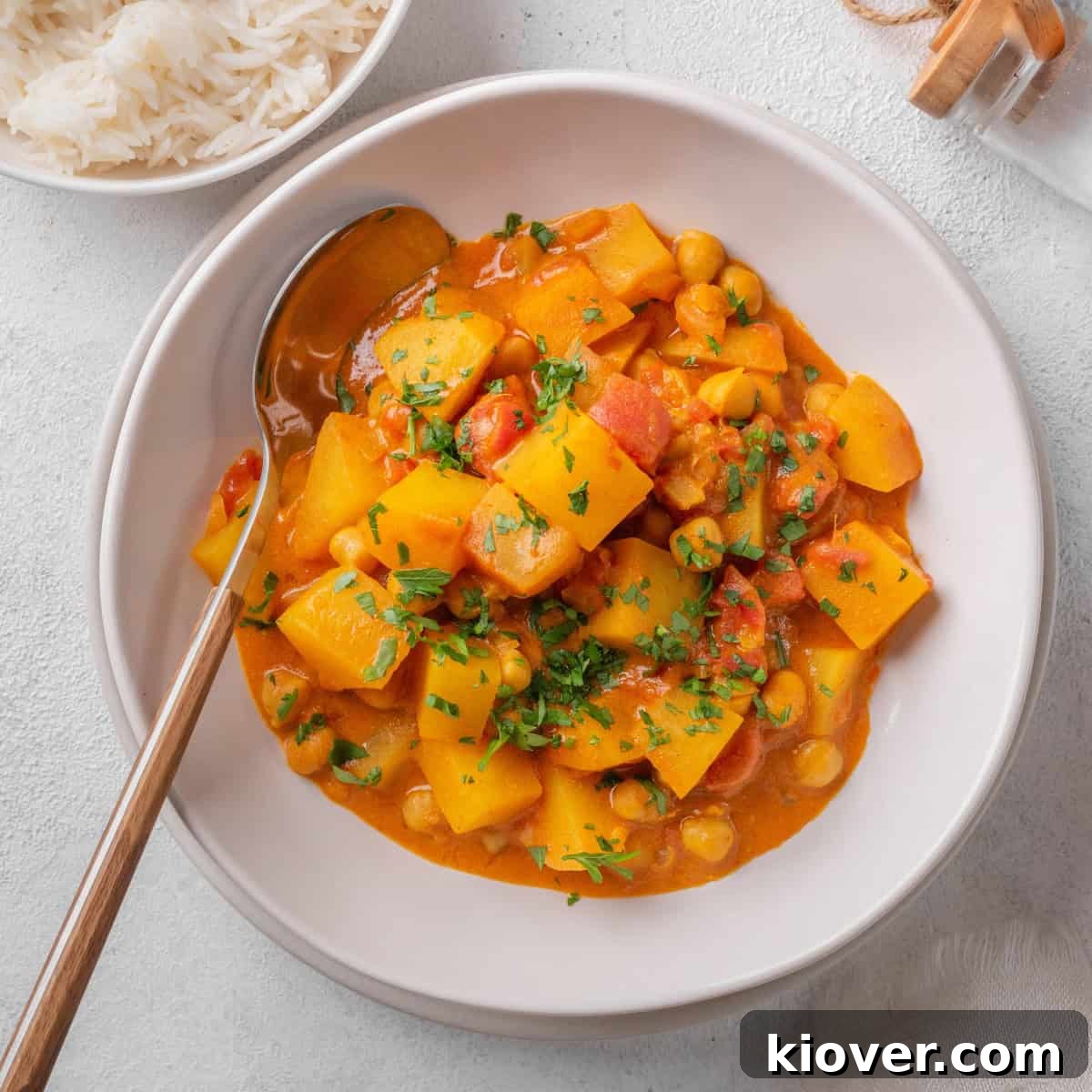
Creamy & Comforting One-Pot Potato Curry (Aloo Curry)
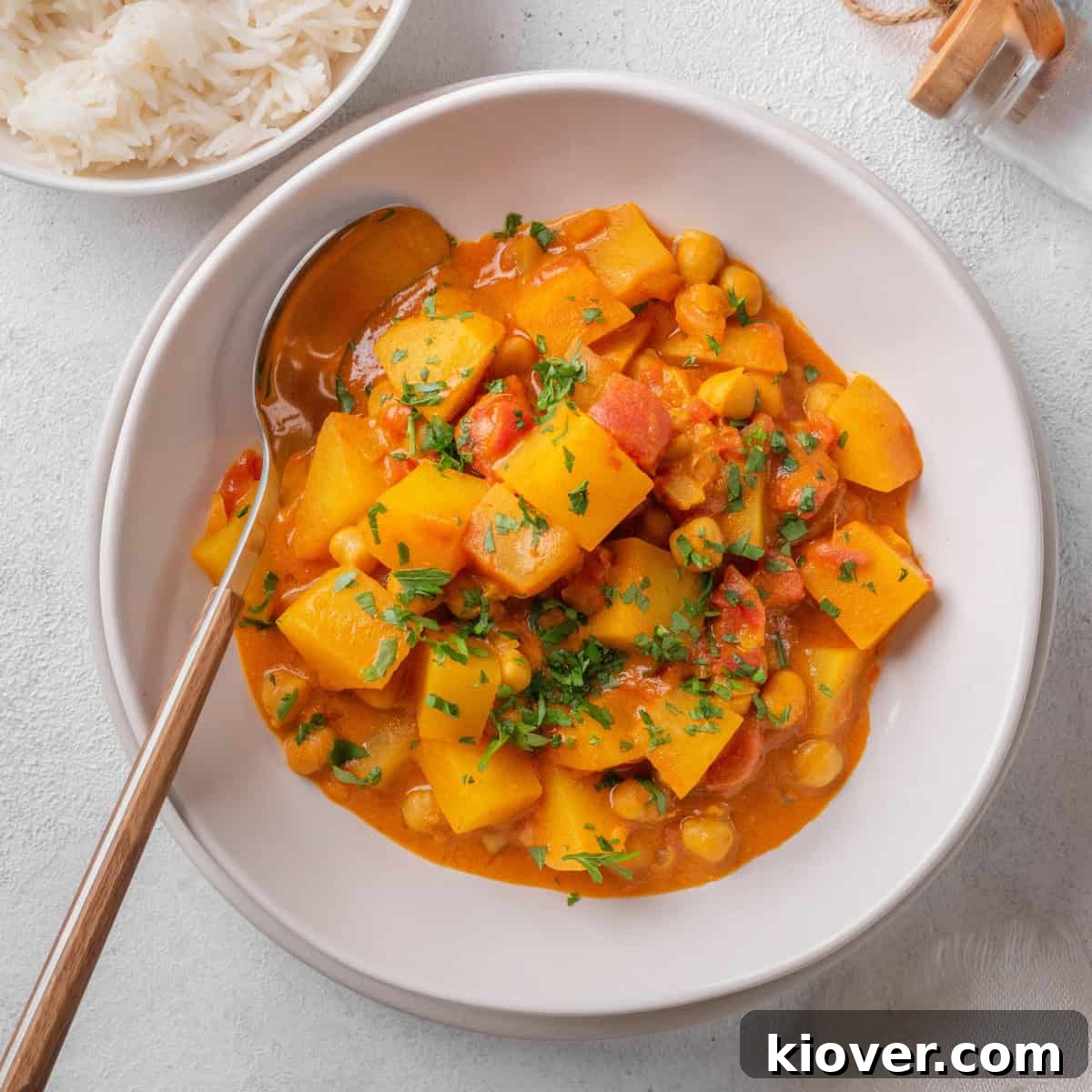
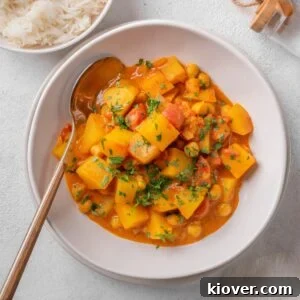
Welcome to your new favorite weeknight meal! This incredibly flavorful and **easy one-pot potato curry** is designed to impress with its rich, aromatic spices and creamy texture. Perfect for warming you up on a chilly evening, this **vegan potato curry** can be ready in just **35 minutes**, making it an ideal choice for busy schedules. It’s not just a meal; it’s a comforting embrace in a bowl, packed with wholesome ingredients like chickpeas and tender potatoes.
Recipe Difficulty – Very Easy
Table of Contents
- Why You’ll Love This Potato Curry
- Essential Ingredients for Aloo Curry
- Ingredient Substitutions
- Delicious Variations
- Step-by-Step Guide to Making Potato Curry
- Storing and Reheating Leftovers
- Frequently Asked Questions About Potato Curry
- More Comforting Curry Recipes
- Explore More Potato Dishes
- Rate This Recipe
- Potato Curry Recipe Card
Why You’ll Love This Easy One-Pot Potato Curry
Indian cuisine holds a special place in my heart, and I’m thrilled to share this fantastic **chickpea and potato curry** recipe with you. It’s not just incredibly delicious; it’s also remarkably simple to prepare, making it the ideal dinner solution for any busy weeknight. If you’re searching for a hearty, flavorful, and quick meal, this is it!
This **aloo curry** is naturally vegan, making it a wonderful plant-based option for everyone. The chickpeas provide a fantastic source of protein, while the tender potatoes and a blend of aromatic spices create a filling and deeply satisfying meal. It’s the perfect blend of warmth and flavor, designed to be enjoyed with friends and family. For another incredible vegetable-focused dish, be sure to explore my Cauliflower Curry.
Beyond its incredible taste, this **easy potato curry** offers several compelling reasons to become a staple in your kitchen:
- Effortlessly Delicious: Despite its rich flavor profile, this curry requires minimal effort and simple cooking techniques, making it accessible for cooks of all levels.
- One-Pot Wonder: Say goodbye to mountains of dishes! This entire recipe comes together in a single pot, simplifying both the cooking and cleanup process.
- Lightning Fast: From prep to plate, you can have this delightful curry ready in just 35 minutes, a lifesaver for those evenings when time is of the essence.
- Wholesomely Vegan: Packed with plant-based goodness from potatoes and chickpeas, it’s a nutritious and satisfying meal that caters to vegan diets and anyone looking to incorporate more vegetables.
- Budget-Friendly: Made with readily available and inexpensive ingredients, this recipe is kind to your wallet without compromising on flavor or quality.
- Customizable Comfort: Easily adapt the spice level and add your favorite vegetables, making it a versatile dish that can be tailored to individual preferences.
- Perfect for Meal Prep: This curry tastes even better the next day, making it an excellent candidate for meal prepping healthy lunches or dinners throughout the week.
Essential Ingredients for Making the Best Potato Curry
Creating a truly authentic and flavorful **Aloo Curry** starts with a careful selection of ingredients. Each component plays a vital role in building the depth and complexity of this beloved dish. Here’s a closer look at what you’ll need and why each one is important:
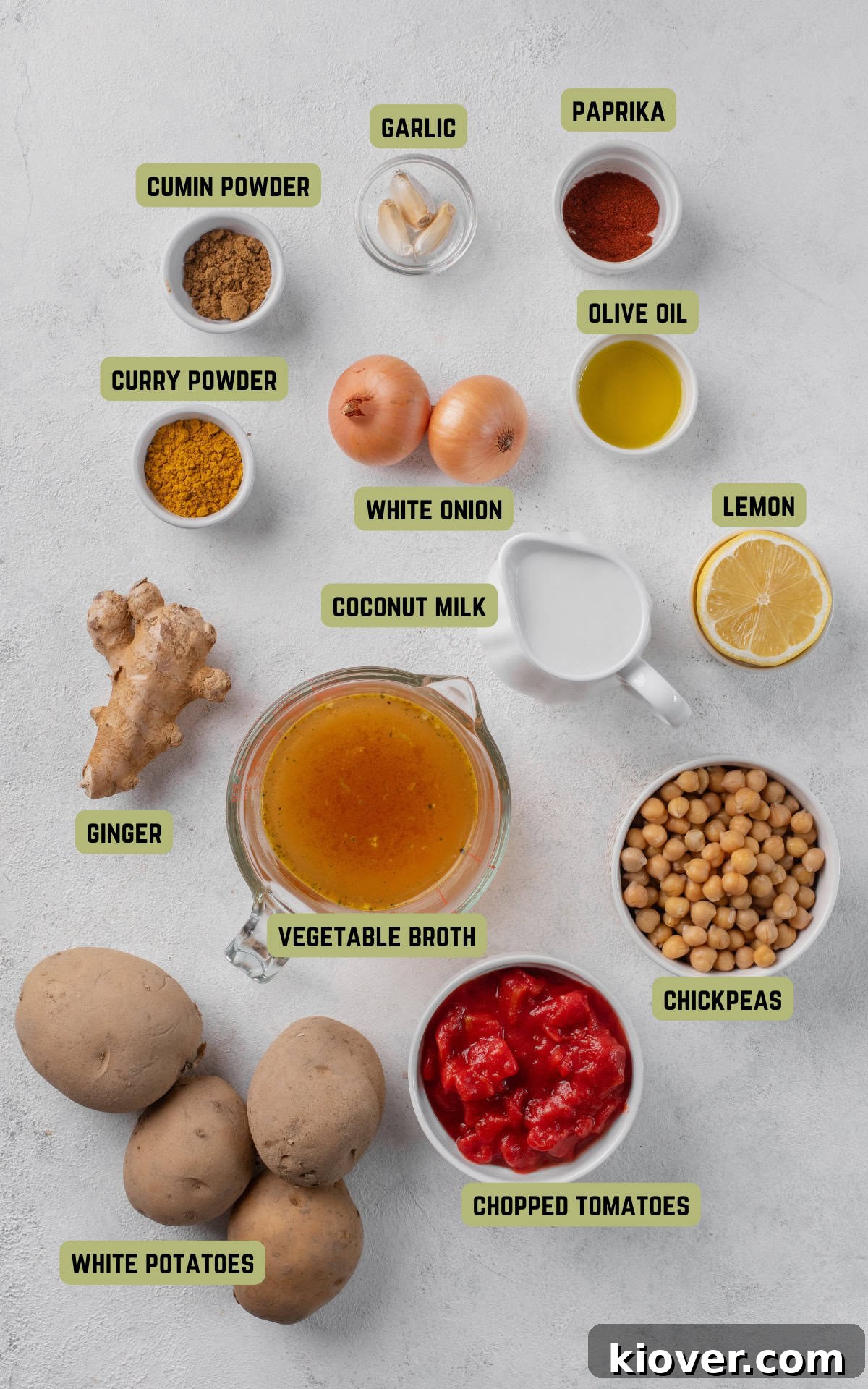
- Olive Oil: The foundation for sautéing our aromatics. It imparts a subtle fruity note, but any neutral oil can be used for frying the onion and garlic.
- Onions: Whether you choose white or yellow onions, they form the sweet and savory base of the curry, caramelizing to release deep flavors. Diced onions blend seamlessly into the sauce.
- Garlic Cloves: A cornerstone of savory cuisine, garlic adds an essential pungent and aromatic kick that is characteristic of many Indian dishes. Freshly minced garlic is always best for maximum flavor.
- Curry Powder: This isn’t a single spice but a fragrant blend, typically including turmeric, coriander, cumin, and chili. It’s the heart of our **easy potato curry**, providing its signature warm and complex spice profile.
- Cumin Powder: Earthy, warm, and slightly peppery, cumin powder enhances the overall spice blend and adds a distinct depth of flavor to the dish, complementing the curry powder beautifully.
- Paprika: Depending on your preference, you can use sweet or smoked paprika. It adds a lovely vibrant color and a mild, sweet, or smoky flavor that rounds out the spice blend without adding excessive heat.
- Fresh Ginger Root: Offering a warm, slightly spicy, and zesty kick, fresh ginger is crucial for bright, invigorating notes that cut through the richness of the curry. Finely chopped ginger integrates best.
- White Potatoes: Waxy potatoes like white potatoes or new potatoes are ideal for curries as they hold their shape well during simmering, becoming tender without turning mushy. Cutting them into even cubes ensures they cook uniformly. If you have extra, consider trying my Potato Waffles or Cheese and Potato Pie.
- Canned Chickpeas: A fantastic source of plant-based protein and fiber, chickpeas add a delightful texture and heartiness to this **chickpea and potato curry**. Remember to rinse and drain them thoroughly before adding to remove excess sodium and improve digestibility.
- Vegetable Broth: This liquid gold provides a foundational layer of savory flavor and helps create the perfect consistency for the curry sauce. Opt for a low-sodium broth if preferred.
- Canned Chopped Tomatoes: Bringing a touch of tang and sweetness, chopped tomatoes contribute to the rich color and body of the sauce. Make sure to include all the juices from the can, as they add essential liquid and flavor.
- Canned Coconut Milk: The secret to a luxuriously creamy and dairy-free curry. Full-fat coconut milk will yield the richest, most decadent sauce, while light coconut milk offers a lighter alternative, though with a slightly less creamy consistency.
- Lemon Juice: A squeeze of fresh lemon juice at the end brightens all the flavors, adding a necessary acidic balance that elevates the entire dish and makes the spices sing.
- Salt and Pepper: These fundamental seasonings are crucial for enhancing all the other flavors. Salt brings out the best in each ingredient, while a touch of black pepper adds a subtle warmth and depth. Adjust to your taste!
For precise measurements and detailed instructions, refer to the full recipe card below.
Smart Ingredient Substitutions for Your Potato Curry
One of the beauties of a **one-pot potato curry** is its adaptability. Don’t have an ingredient on hand, or want to tweak it to your preference? Here are some simple and effective substitutions:
- Olive Oil: Feel free to swap olive oil with other neutral cooking oils like canola, sunflower, coconut, or vegetable oil. Each will offer a slightly different flavor profile, but all will work well for sautéing.
- Spices: The spice blend is highly customizable. Experiment with other complementary Indian spices such as turmeric powder for added color and earthy notes, a pinch of mustard seeds at the beginning for a nutty aroma, or garam masala added towards the end for a deeper, more aromatic finish. You can also adjust the quantities of curry powder and cumin to make it milder or more intense.
- White Potatoes: While white potatoes are excellent, other potato varieties can also be used. Yukon Gold potatoes will provide a slightly sweeter and creamier texture, red potatoes are great for maintaining their shape, and even russet potatoes can work, though they might become a bit softer. Just ensure they are cut into even pieces for uniform cooking.
- Coconut Milk: For those who prefer a non-coconut option or a different flavor, you can replace the canned coconut milk with 200ml of water and 200ml of dairy cream or a plant-based cream alternative (like oat or soy cream) for a rich, creamy sauce.
- Chickpeas: If chickpeas aren’t your favorite, you could substitute them with other legumes like cannellini beans or kidney beans for a similar protein boost and texture.
- Vegetable Broth: If you don’t have vegetable broth, water can be used in a pinch, though the broth will add more depth of flavor. You can also dissolve a vegetable bouillon cube in hot water as an alternative.
Delicious Variations to Elevate Your Potato Curry
This **Aloo Curry** recipe is a fantastic canvas for creativity. Here are some ideas to add your personal touch and explore different flavor profiles:
- Make it Spicy: For those who love a fiery kick, introduce some heat! Sauté a finely chopped green chili (like Serrano or jalapeño) with the onions, add a pinch of cayenne pepper with your other dry spices, or sprinkle red chili powder to taste. A dash of red pepper flakes can also add a delightful warmth.
- Deluxe Version with Added Veggies & Herbs: To make this **chickpea and potato curry** even more vibrant and nutritious, consider adding a cup of fresh or frozen peas during the last 5-10 minutes of simmering. Stir in a handful of fresh spinach, which will wilt beautifully into the sauce. For a burst of freshness, top generously with freshly chopped cilantro (coriander) just before serving.
- Kid-Friendly Adaptation: If you’re cooking for little ones who are sensitive to heat, simply reduce the amount of curry powder and cumin, or opt for a mild curry powder blend. Serve this **vegan potato curry** with warm naan bread, rice, or roti, which kids love for dipping into the creamy sauce. You can also add some sweet elements like a tiny bit of mango chutney on the side.
- Add More Protein: While chickpeas offer great protein, you can enhance it further. Stir in cooked lentils, crumbled firm tofu, or even plant-based chicken pieces during the last stage of cooking.
- Tangy Twist: For an extra layer of tanginess, add a teaspoon of tamarind paste (diluted) or a tablespoon of plain yogurt (dairy or non-dairy, if not strictly vegan) right before serving.
- Smoky Flavor: A pinch of smoked paprika or a tiny amount of liquid smoke can impart a lovely smoky depth to the curry.
Step-by-Step Guide to Making Delicious Potato Curry
Creating this flavorful **one-pot potato curry** is a straightforward process, designed for efficiency and maximum taste. Follow these simple steps to bring this comforting dish to life in your kitchen.
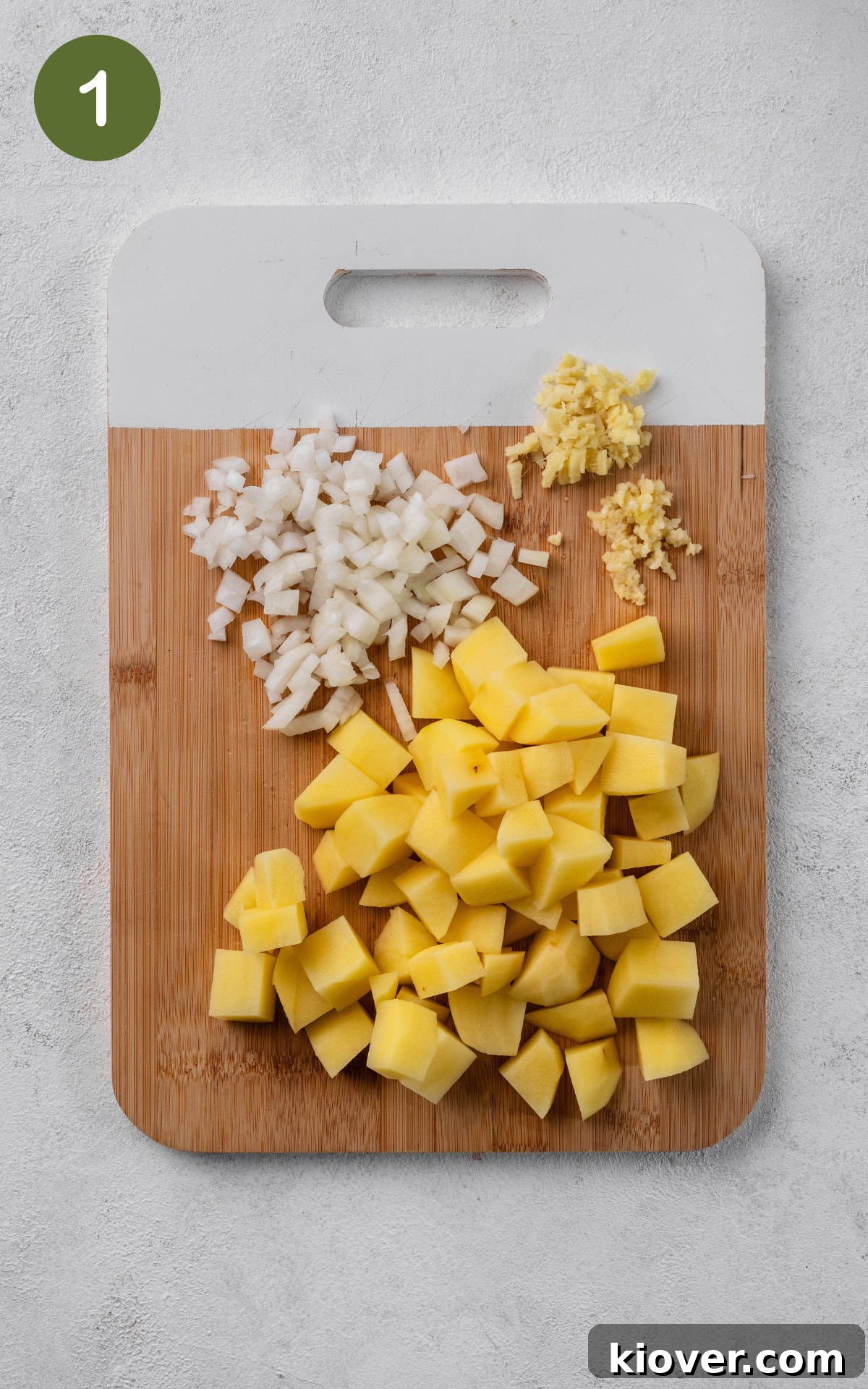
Step 1: Prepare Your Vegetables. Begin by peeling and finely chopping your onions. Mince the garlic cloves to a fine consistency, and peel the potatoes, then cut them into uniform cubes or bite-sized pieces. Uniformity ensures even cooking.
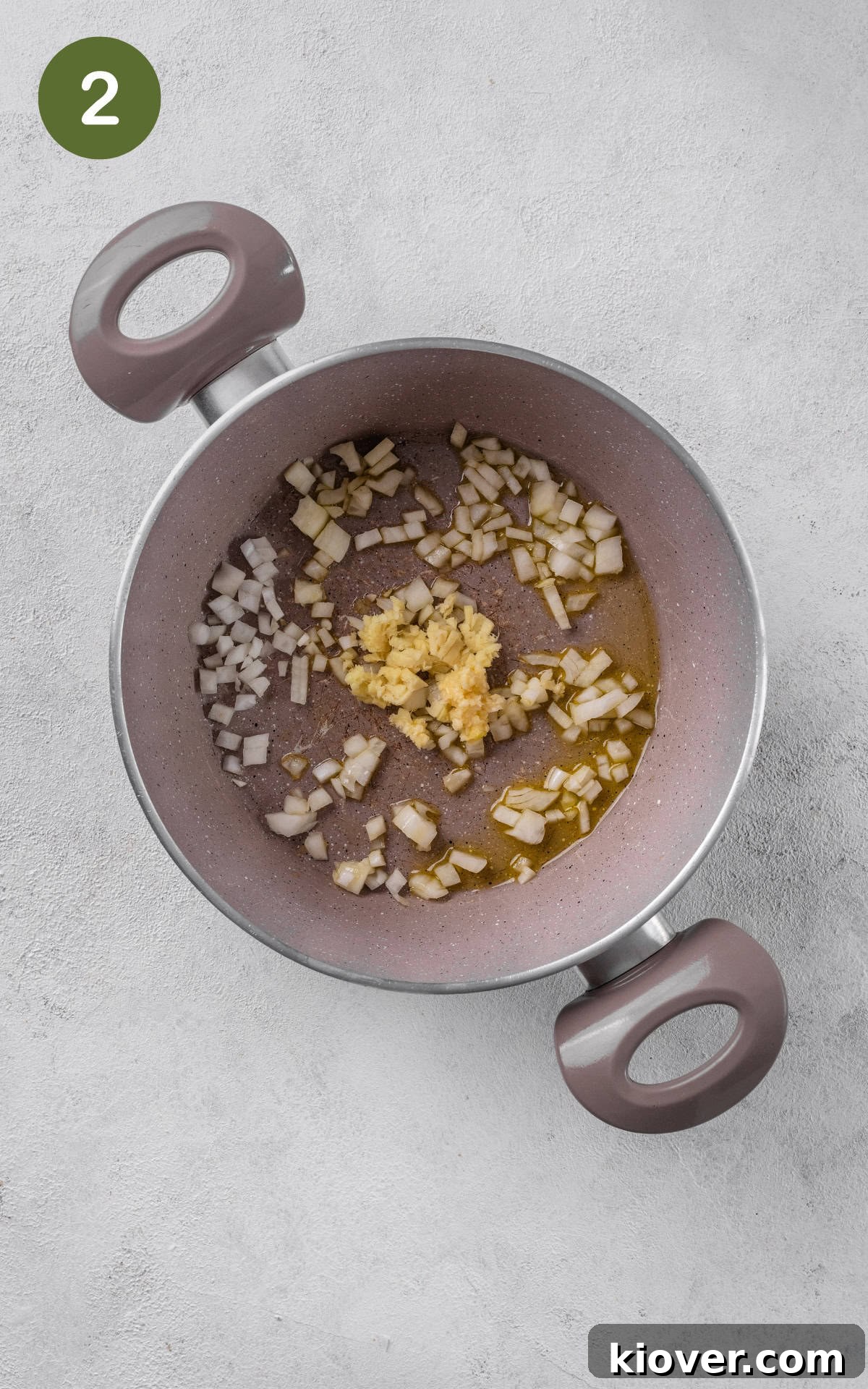
Step 2: Sauté Aromatics. Heat the olive oil in a large saucepot or Dutch oven over medium-high heat. Add the chopped onions and cook for about 3 minutes until they begin to soften and become translucent. Next, add the minced garlic and finely chopped ginger, continuing to cook for another minute until fragrant. Be careful not to burn the garlic.
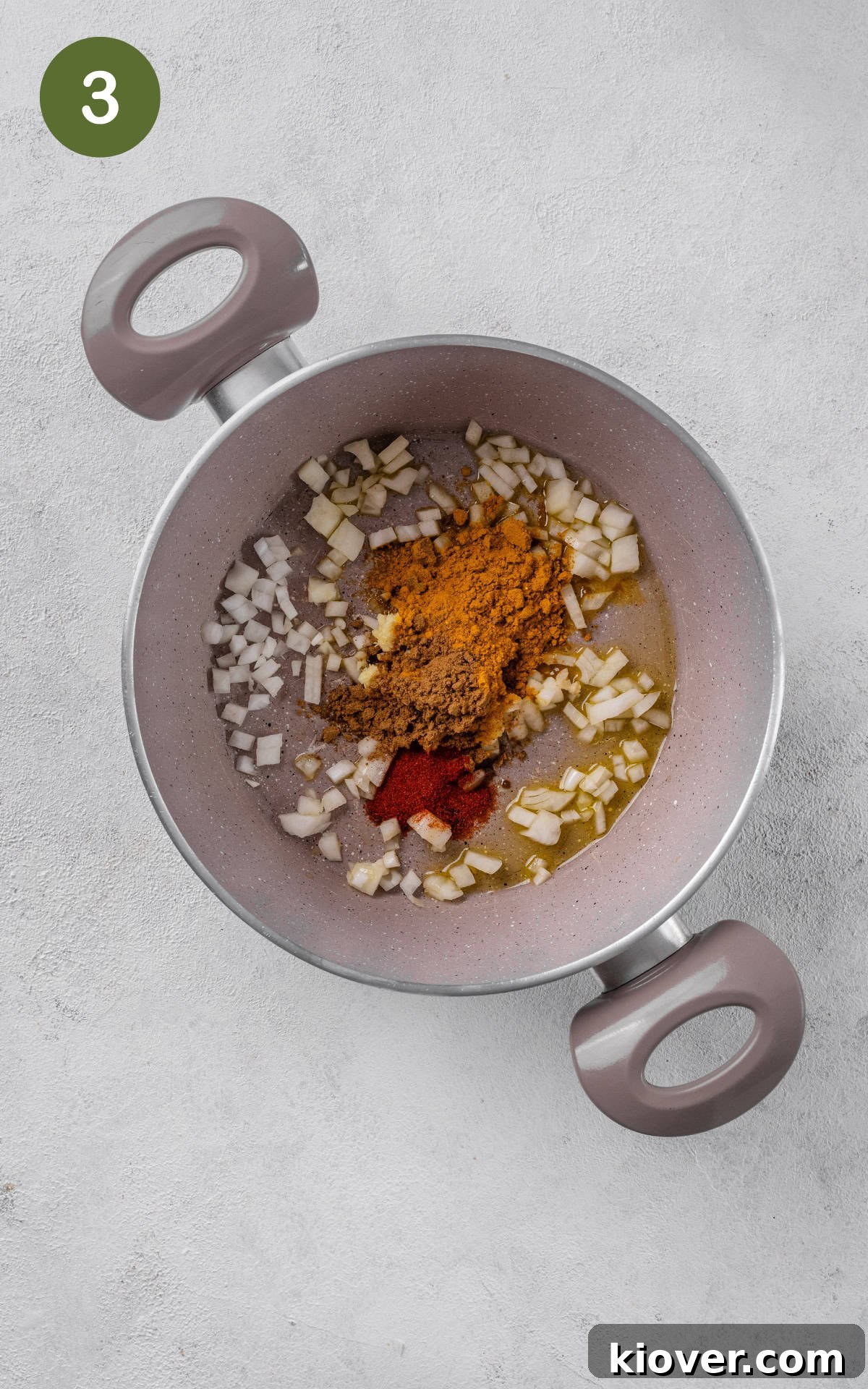
Step 3: Bloom the Spices. Now, add the curry powder, cumin powder, and paprika to the pot. Stir well to coat the onions and cook for 2 minutes. This step, known as “blooming” the spices, intensifies their flavors and releases their aromatic oils, building the complex base of your **Indian potato curry**.
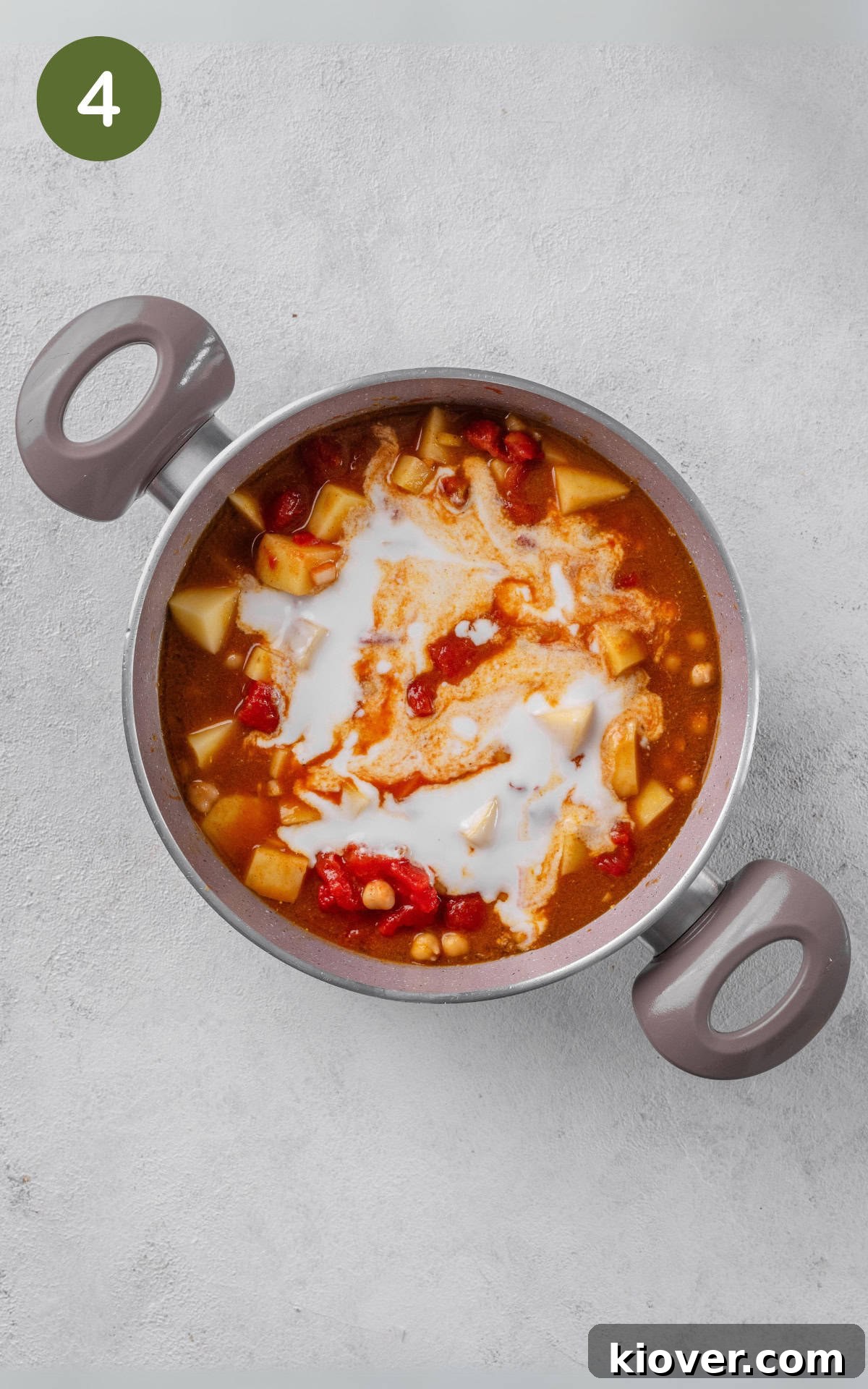
Step 4: Combine and Simmer. Add the cubed potatoes, rinsed and drained chickpeas, vegetable broth, canned chopped tomatoes (with their juices), and coconut milk to the pot. Give everything a good stir to combine all the ingredients thoroughly. Bring the mixture to a gentle simmer, then reduce the heat to medium-low, cover, and cook for 20 minutes, or until the potatoes are perfectly tender. Stir occasionally to prevent sticking.
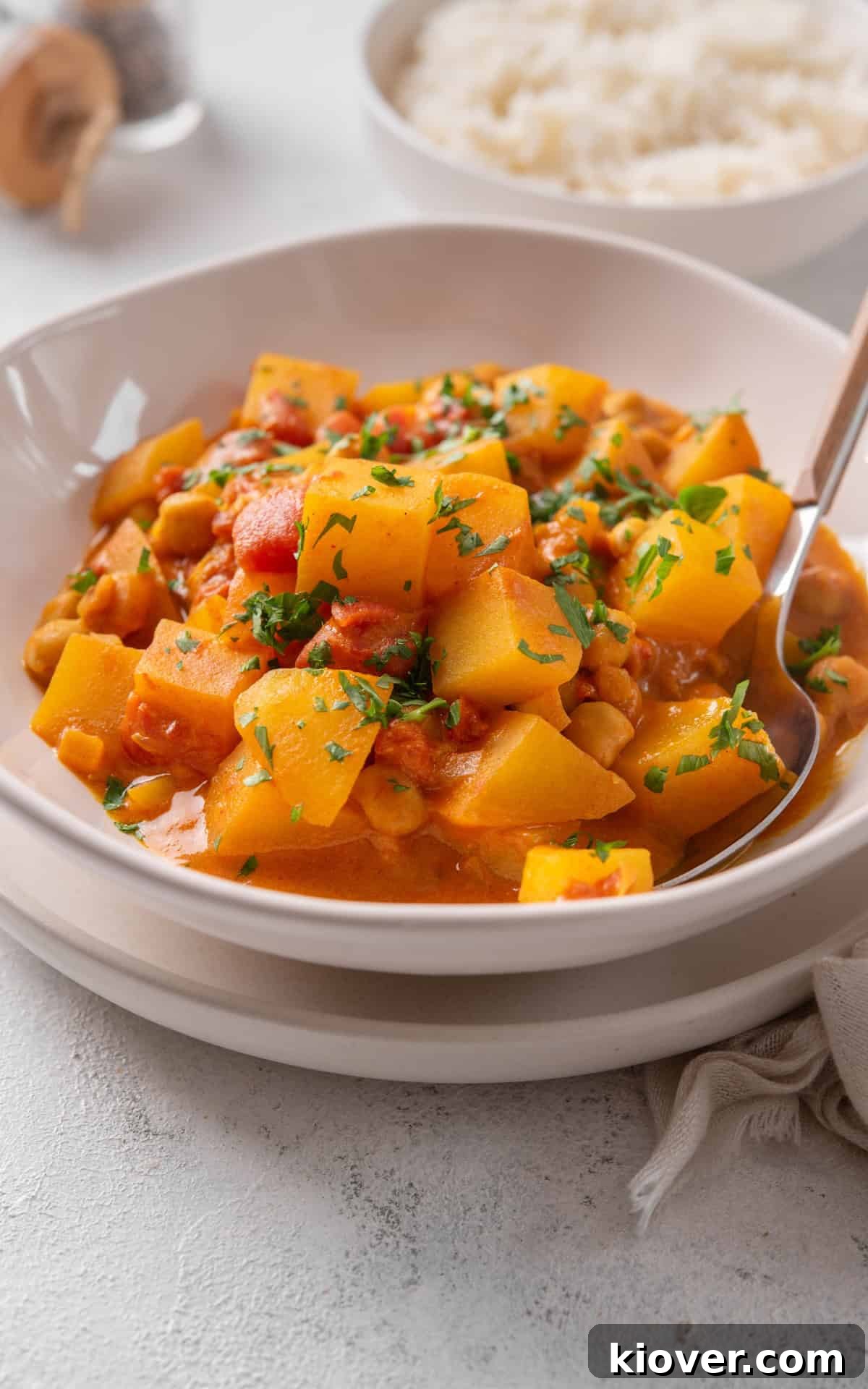
Step 5: Finish and Serve. Once the potatoes are tender, remove the curry from the heat. Stir in the fresh lemon juice, which adds a bright, zesty finish that balances the richness of the curry. Taste and adjust seasonings as needed, adding more salt, pepper, or spices to suit your preference. Serve immediately while still warm, perhaps with a garnish of fresh cilantro.
Pro Tip: Throughout the cooking process, don’t hesitate to do a quick taste test. Adjusting the spices to your personal palate is key to achieving your perfect **Aloo Curry**.
Storing and Reheating Your Delicious Potato Curry
This **creamy potato curry** often tastes even better the next day, as the flavors have more time to meld and deepen. Proper storage ensures you can enjoy your leftovers safely and deliciously.
To Store: Allow the **potato and chickpea curry** to cool completely before transferring it to an airtight container. It can be stored in the refrigerator for up to three days. This makes it an excellent option for meal prepping healthy lunches or quick dinners during the week.
To Reheat: When ready to enjoy, reheat the curry gently. You can warm it in a microwave safe dish until piping hot, or transfer it to a saucepot and reheat over medium-low heat on the stove, stirring occasionally. If the curry has thickened too much in the fridge, you can add a splash of water, vegetable broth, or a bit of coconut milk/cream to loosen it back to your desired consistency.
To Freeze: This **vegan potato curry** freezes beautifully for longer storage. Once completely cooled, transfer the curry to freezer-safe airtight containers or heavy-duty freezer bags. It can be frozen for up to two months. When ready to use, thaw the curry in the refrigerator overnight. Reheat it using the same methods as refrigerated leftovers (microwave or stovetop), adding liquid if needed to restore its texture.
Frequently Asked Questions About Potato Curry
Here are some common questions about making and enjoying this delightful **Aloo Curry**:
Potato curry is incredibly versatile and pairs well with a variety of accompaniments. It’s excellent served over fluffy basmati rice, quinoa, or brown rice. For scooping up every last bit of the delicious sauce, warm naan bread or chapati are perfect. A cooling side of cucumber yogurt sauce (raita) or a simple green salad can balance the rich flavors. For added protein, consider serving it with fried tofu or plant-based chicken pieces.
Absolutely! As with all meals, portion control is key, but this **chickpea and potato curry** is packed with nutrient-rich ingredients. Potatoes provide complex carbohydrates and potassium, while chickpeas offer protein and fiber, promoting satiety. The healthy fats from coconut milk contribute to nutrient absorption. It’s a wholesome, flavorful, and satisfying meal that can certainly be part of a balanced diet.
Yes, while coconut milk provides a unique creaminess and flavor, you can make substitutions. As mentioned in the variations, you can use a combination of vegetable broth and a dairy or non-dairy cream. For a less creamy but still flavorful option, simply increase the vegetable broth and chopped tomatoes, perhaps adding a tablespoon of cashew butter for a subtle richness.
Waxy potatoes that hold their shape well during cooking are generally preferred for curries. White potatoes, Yukon Golds, or red potatoes are excellent choices as they become tender without breaking down too much into the sauce. Avoid very starchy potatoes like Russets if you want distinct potato pieces, as they tend to become very soft.
More Comforting Curry Recipes to Explore
If you’ve enjoyed this **easy potato curry**, you’ll surely love these other delightful curry creations:
- Aubergine Curry
- Butternut Squash and Chickpea Curry
- Chickpea and Spinach Curry
- Cod and Cauliflower Curry
- 10-Minute Peanut Butter Curry
- Prawn Curry
- Pumpkin Quinoa Curry
- 15-Minute Vegetable Curry
- Apricot Butternut Squash Cashew Curry
You Might Also Like These Potato Delights
Dinner
Hearty Potato Stew
Sides
Bombay Aloo (Bombay Potatoes)
Sides
Smashed Potatoes
Healthy Soups
Leek and Potato Soup
Rate This Recipe & Share Your Experience!
Tried this **Creamy Potato Curry** recipe? We’d love to hear from you! Please consider leaving a star rating below and sharing your thoughts in the comments. Your positive feedback is incredibly valuable and helps inspire new recipes.
P.S. Never miss a new recipe! Get more healthy and delicious recipes sent straight to your inbox weekly – Subscribe Here and receive a free recipe eBook!
Potato Curry Recipe
Pin Recipe
Print Recipe
Author: James Wythe
This easy potato curry is creamy, comforting, and incredibly filling, yet it’s ready in under 35 minutes! Serve it with fluffy rice or warm naan for the ultimate satisfying meal.
Prep Time: 10 minutes
Cook Time: 25 minutes
Total Time: 35 minutes
Servings: 6
Ingredients
- 2 tbsp olive oil
- 2 small onions, diced
- 3 cloves garlic, chopped
- 3 tsp curry powder
- 1½ tsp cumin powder
- 1 tsp paprika
- 2 tsp ginger root, finely chopped
- 680 g white potatoes, peeled, cut into cubes
- 400 g can chickpeas, rinsed and drained
- 250 ml vegetable broth
- 400 ml can chopped tomatoes, with juices
- 400 ml can coconut milk
- 1 tbsp lemon juice
- Salt and pepper, to taste
Instructions
- Firstly, prepare your vegetables. Peel and chop the onions, and mince the garlic. Peel the potatoes and cut them into uniform cubes or bite-size pieces for even cooking.
- Heat olive oil in a large saucepot over medium-high heat. Add the chopped onions and cook for 3 minutes until softened. Add the minced garlic and finely chopped ginger, then cook until fragrant, about 1 minute.
- Now, add the curry powder, cumin powder, and paprika to the pot. Stir well to coat the onions and cook for 2 minutes, allowing the spices to bloom and release their aromas.
- Add the cubed potatoes, rinsed chickpeas, vegetable broth, canned chopped tomatoes (with their juices), and coconut milk to the pot. Give it a good stir to combine all ingredients. Bring the mixture to a gentle simmer.
- Reduce the heat to medium-low, cover the pot, and simmer for 20 minutes, or until the potatoes are tender when pierced with a fork. Stir occasionally to prevent sticking.
- Finally, stir in the fresh lemon juice and remove the curry from the heat. Taste and season generously with salt and pepper to your preference. Serve immediately while still warm.
Notes
- Step-by-Step Photos: My blog post includes helpful step-by-step photos to guide you through making this recipe visually.
- Substitutions & Variations: A comprehensive list of ingredient swaps and creative variations is included in the post above.
- To Store: Store any leftover curry in an airtight container in the fridge for up to 3 days. Reheat in a pot or pan over low heat until piping hot, or in the microwave. You may need to add a splash of water or cream to loosen the sauce.
- To Freeze: This curry freezes well for up to 2 months in an airtight container. Thaw in the fridge overnight before reheating on the stove or in the microwave. Add water or cream if needed to adjust the consistency.
- Tip 1: Ensure potatoes are cut into even pieces to allow them to cook at the same rate and reach the perfect tenderness simultaneously.
- Tip 2: If you enjoy spicy dishes, you can add freshly chopped green chilies (like serrano or jalapeño) or even a pinch of chili flakes to taste along with the other spices.
- Tip 3: Feel free to add other vegetables you might have in your fridge, such as bell peppers, diced carrots (add with potatoes), or green peas (add during the last 5-10 minutes of simmering) for added nutrition and texture.
Nutrition (per serving)
Calories: 380 kcal | Carbohydrates: 41g | Protein: 8g | Fat: 23g | Saturated Fat: 15g | Fiber: 9g | Sugar: 7g
Did you make this recipe? Tag me Today!
Tag @HealthyLivingJames on Instagram and use #HealthyLivingJames!