

Have you ever paused at your dinner table, pondering the fascinating journey of the ingredients before you? Perhaps you’ve wondered about the origins of beloved dishes like pizza or the comforting history of macaroni and cheese. Here at Ramshackle Pantry, we delve into these intriguing culinary questions, and today, we’re uncovering the captivating story behind a true Upper Midwest icon: the hotdish.
Often referred to simply as “hot dish,” this humble yet hearty meal graces family tables and church potlucks across Minnesota, the Dakotas, and beyond. Its journey is far from ordinary, intricately woven with monumental events in American history such as the World Wars and the Great Depression. Prepare to explore the rich and storied past of the hotdish, a dish that is much more than the sum of its parts.
Understanding the Casserole: A Precursor to Hotdish
For those unfamiliar with the term, a hotdish is essentially a specific type of casserole, deeply rooted in the culinary traditions of the Upper Midwest. While many Americans might recognize the broader category of “casserole,” the hotdish holds a distinct identity. As we’ve explored in our post, What is A Hotdish, there’s a nuanced difference worth appreciating:
All hotdishes are casseroles, but not all casseroles are hotdishes.
The term ‘casserole’ itself has a rich etymological history, originating from a French word meaning ‘saucepan’. Prior to the 20th century, ‘casserole’ primarily referred to the specialized baking vessel itself rather than the meal cooked within it. Dishes baked in these vessels, such as the ancient Greek moussaka or the beloved British shepherd’s pie, demonstrate the long-standing tradition of baked, layered meals across various cultures. These early forms set the stage, but how did this culinary concept evolve into the distinct regional phenomenon we now call hotdish?
The Genesis of Hotdish: A Midwestern “Big Bang”
Pinpointing the exact moment of a dish’s creation can be challenging, but the earliest known recipe explicitly titled “Hot Dish” emerges from a particularly authentic source: a church cookbook. The Grace Lutheran Ladies Aid cookbook from Mankato, Minnesota, published in 1930, proudly features a recipe that many consider the foundational text for modern hotdish. This recipe, contributed by a Mrs. C. W. Anderson, provides a fascinating glimpse into its early form:
“Fry two pounds of hamburger. Fry, but not till brown, two large onions. Boil in salted water until tender one box Creamettes. Put in baking dish the fried hamburger, onions, creamettes, and add one bunch of celery cut up, one can of peas, 1 can of tomato soup, and 1 quart tomatoes, salt and pepper. Stir all together and enough water so liquid covers all, bake. — Mrs. C. W. Anderson”
Initially, one might assume that “hot dish” recipes predate 1930, given the enduring nature of similar comfort foods. However, extensive research consistently points to Mrs. C. W. Anderson’s contribution as the earliest documented instance of the specific “Hot Dish” title. While the possibility of older, similarly constructed recipes existing under different names remains, for now, Mrs. Anderson holds the esteemed position as the recognized “Hot Dish” creator. This discovery, though simple, highlights the profound influence of community-driven recipe collections, especially church cookbooks, in preserving and disseminating culinary heritage.
The Early Linguistic and Culinary Evolution of Hotdish
The journey of the term “hot dish” from a mere description to a recognized meal is as intriguing as the dish’s culinary development. Tracing its usage through various historical documents reveals a fascinating shift in meaning leading up to Mrs. C. W. Anderson’s groundbreaking recipe.
Prior to 1900: A “Hot Dish” is Simply a Serving Plate
In the 19th century, references to “hot dish” were common, but their context was markedly different. During this era, the phrase almost exclusively referred to the serving vessel itself—a plate or platter designed to keep food warm. Phrases like “put out into a hot dish” frequently appeared in old recipes and household magazines, indicating a functional object rather than a specific culinary preparation. The compound word “hotdish,” without a space, was notably absent from written records of this period.
Early 1900s to 1930: The Emergence of “One Hot Dish”
As the 20th century dawned, a subtle but significant evolution in the term’s meaning began to emerge. In the United States, progressive movements advocating for public health and child welfare led to widespread experimentation with hot school lunch programs. Within these initiatives, the phrase “hot dish” or “the One Hot Dish” took on a new significance. It no longer described a vessel but rather a warm, principal component of a meal—the antithesis of a cold dish.
Publications from this era frequently discussed the advantages of serving “the hot dish” to students, emphasizing its nutritional benefits for children in need and its role in providing sustained energy for the school day. Even the Minnesota Farmers Institute Annual from 1912 highlighted the importance of such programs, particularly in rural schools where resources were often scarce. Providing a hot meal in these settings required careful planning and resourcefulness, making “the hot dish” a symbol of concerted effort and community care.
While many suggestions for “the Hot Dish” in schools included easily prepared items like soups, goulashes, or even cocoa, they generally weren’t the complex, all-in-one meals we associate with modern hotdish. Nevertheless, this period was crucial: the term “Hot Dish” distinctly transitioned from merely describing a serving plate to denoting a significant, often central, hot meal component.
From School Cafeterias to Church Potlucks: Hotdish as a Community Staple
The evolution of hotdish from a school lunch component to a quintessential church potluck staple is a logical and fascinating trajectory. While schools were instrumental in popularizing the concept of a communal, hot, all-in-one meal, it was the rural church that often became the ultimate incubator for the hotdish as we know it today.
Consider the communal landscape of early 20th-century rural America. Beyond the schoolhouse, the church served as the primary gathering place—a hub for social interaction, support, and celebration. Weddings, funerals, weekly services, and various community events all revolved around the church. It was a natural extension for the techniques and principles of serving “the Hot Dish” in schools to be readily adopted and adapted by rural churches.
Many rural churches, much like rural schools, often lacked advanced public utilities until relatively recently. Preparing large-scale meals under these conditions demanded efficiency, heartiness, and ease of transport—qualities perfectly embodied by the hotdish. The ability to prepare a substantial, warming meal in one dish, often ahead of time, made it an ideal offering for church suppers and potlucks, fostering community through shared food.

This seamless transition solidifies the belief that the practical “Hot Dish” concept from schools was enthusiastically embraced by rural churches, providing an effective and comforting means to facilitate community events and solidify its place in Midwestern culture.
Why the Upper Midwest Embraced Hotdish: A Confluence of Factors
The deep roots of hotdish in the Upper Midwest are not merely a matter of chance; they stem from a unique combination of geographic, cultural, and agricultural circumstances that converged to make this region its natural home.
The Enduring Spirit of Rural Living
As previously highlighted, the rural character of the Upper Midwest played a pivotal role in the hotdish’s evolution. In these expansive, often isolated communities, the church was more than a spiritual sanctuary; it was the vibrant heart of social life. These gatherings—be it a Sunday service, a harvest festival, a funeral repast, or a wedding reception—were vital for maintaining community bonds. The need for simple, substantial, and easily shared meals became paramount in these settings. Hotdish, with its ability to feed many from a single pan, became a natural fit, fostering conviviality and strengthening community ties.
Resourcefulness and Readily Available Ingredients
Another crucial ingredient in the hotdish story is the region’s agricultural landscape and the resourcefulness of its inhabitants. While many now associate hotdish with cream-of-mushroom soup and tater tots, Mrs. Anderson’s 1930 recipe and Betty Crocker’s basic version point to a tomato base. This preference was no accident. The Upper Midwest, particularly Minnesota and the Dakotas, had consistent access to key ingredients year-round. Tomato canning, for example, is a generations-old tradition in these lands, ensuring a supply of this versatile fruit even through harsh winters. Furthermore, the region’s historical reputation for wheat production meant pasta was accessible, and widespread ranching guaranteed a ready supply of beef. The availability of these foundational ingredients—tomatoes, pasta, and ground beef—made hotdish an economical and attainable meal for most households, schools, and churches, cementing its status as a regional staple.
The Impact of Industrialization: Shaping Modern Hotdish
While the earliest hotdish recipes relied on fresh and home-canned ingredients, the mid-20th century saw a dramatic transformation propelled by the industrialization of the food industry. This shift profoundly influenced the hotdish, moving it towards the highly convenient, often cream-of-mushroom and tater tot-laden versions many recognize today.
The post-World War II era brought about a booming economy and a new emphasis on convenience in the American household. Food manufacturers responded with a plethora of time-saving products. Instead of the laborious process of canning tomatoes, homemakers could now simply open a can of Campbell’s Cream of Mushroom soup, first introduced in 1934 and gaining immense popularity in the following decades. Similarly, the starch component of hotdish evolved. Rather than boiling noodles from scratch, the introduction of Ore-Ida’s Tater Tots in 1953 provided an instant, crispy, and universally loved alternative.
This era of convenience foods perfectly aligned with the hotdish’s inherent mission: to provide an easy, economical, and satisfying meal. The burgeoning availability of canned soups, frozen vegetables, and processed potato products made hotdish even more accessible and quicker to prepare. This newfound ease resonated deeply with families, allowing busy parents to whip up a reasonably nutritious meal without spending hours over the stove. For community organizers, like the “Church Lady” planning a gathering, industrialization made it incredibly simple to cater to dozens of people with minimal effort, further embedding hotdish into the social fabric of the Upper Midwest.
Resilience on the Dinner Table: Hotdish Through World Wars and the Great Depression
It’s impossible to discuss the history of hotdish without acknowledging the profound impact of two World Wars and the Great Depression. These monumental events reshaped American society and, critically, transformed how Americans ate. The hotdish, with its inherent economy and versatility, emerged as a culinary hero during these challenging times.
During World War I, while formal food rationing wasn’t mandated in the United States, extensive propaganda campaigns urged citizens to conserve resources. Slogans like “Food Will Win the War” encouraged Americans to “stretch” their meat and wheat consumption, advocating for “meatless Mondays” and “wheatless Wednesdays.” Meals that could make a small amount of protein and grain feed many became essential.
The austerity of World War II brought about large-scale, mandatory rationing. Staples like meat, butter, and canned foods were strictly controlled. Households had to become incredibly resourceful, making every ingredient count.
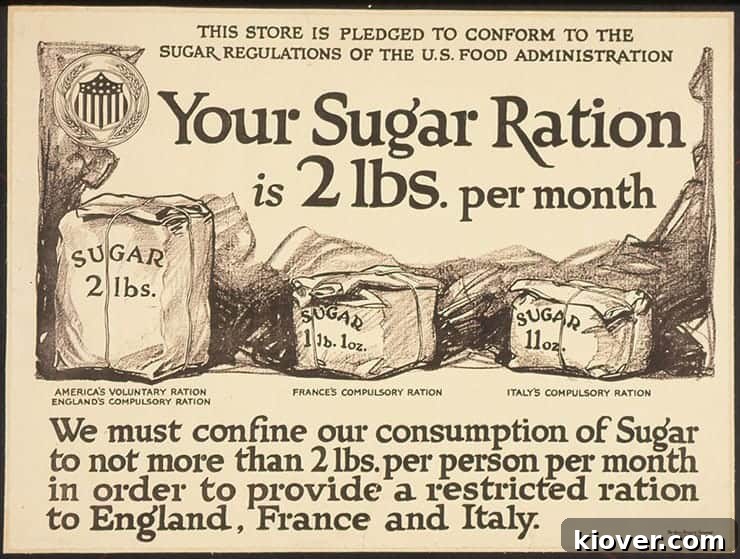
Compounding these challenges was the Great Depression, the most severe economic downturn in U.S. history. With unemployment rates soaring past 20% at its peak, families faced unprecedented financial hardship. Affordability and the ability to make ingredients stretch became the ultimate culinary priorities.
From the onset of WWI in 1914 to the end of WWII in 1945—a period spanning over three decades—the United States experienced three major crises that drastically impacted food consumption patterns. Each event necessitated or strongly encouraged households to maximize their meals, extracting the most value from every ingredient. While hotdish may not have been explicitly “created” by these events, the circumstances certainly promoted and perfected the hotdish style of cooking. How else could a pound of ground beef, some noodles, a few vegetables, and a couple of cans of soup feed a family of four or more? The answer, time and again, was hotdish.
From “Hot Dish” to “Hotdish”: A Name Evolves, a Legacy Endures
Observing modern usage, it’s clear that “Hot Dish” and “Hotdish” are now often used interchangeably. At some point, the space between the words began to disappear, signifying a transition from a descriptive phrase to a recognized proper noun for a specific dish. Even respected culinary sources now adopt the single-word “hotdish,” solidifying its status as a unique culinary entity.
This gradual linguistic evolution likely began around the time Mrs. C. W. Anderson’s recipe was published in 1930. As the dish became more defined and widespread, it shed its initial descriptive nature to become “its own thing,” distinct from merely “a hot dish” that happened to be a meal. Through the crucible of wars, economic disasters, and the transformative power of industrialization, the concept of “hotdish” evolved, taking on a singular identity that is instantly recognizable to anyone in the Upper Midwest.
The hotdish, despite its humble origins, proved to be precisely the meal America, and particularly the Midwest, needed during trying times. It was there at the dawn of school lunches, providing sustenance to children. It supported families doing their part during national war efforts. It fostered community at church gatherings, bringing neighbors together over a shared, comforting meal. And today, it continues to be a go-to for busy families and individuals seeking an economical and satisfying dish.
While some may not fully appreciate the unassuming nature of hotdish, perceiving it as merely a convenience food, its true value lies deeper. Though beautiful gourmet versions can certainly be crafted, the traditional hotdish is, at its heart, a meal of unparalleled comfort and practicality. Hotdish doesn’t demand admiration; it simply shows up, consistently providing warmth, nourishment, and a taste of home. It has, and continues to have, our back.
It’s perfectly acceptable if not everyone “gets” hotdish. For many, myself included, hotdish transcends a mere recipe; it embodies memories, tradition, and a specific era. It is the quintessential comfort food of the Upper Midwest—a steadfast symbol of resilience, community, and heritage. And while it may rarely grace the tables of haute cuisine, the hotdish will forever hold its revered place at countless family tables, school cafeterias, and church potlucks across the Midwest, a timeless testament to simple, hearty goodness.