
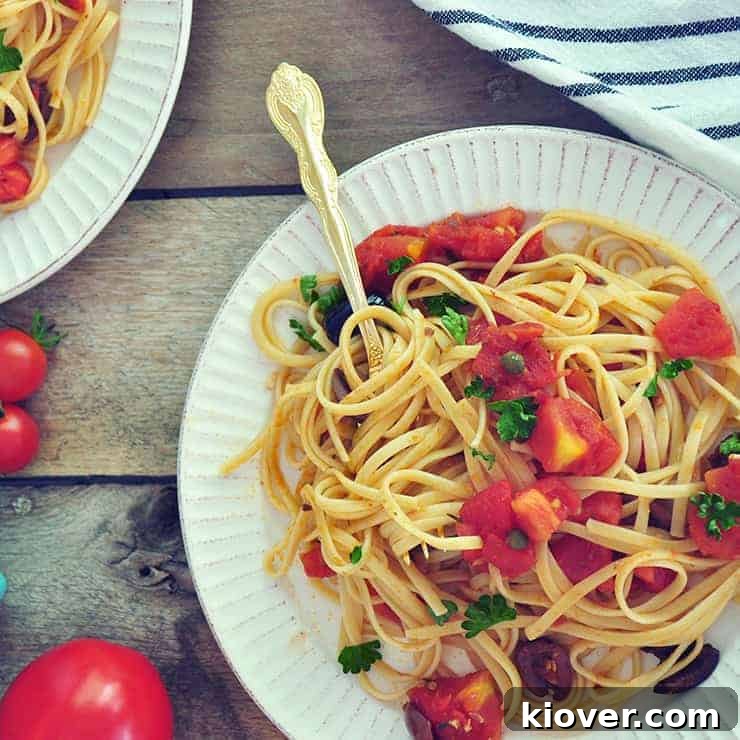
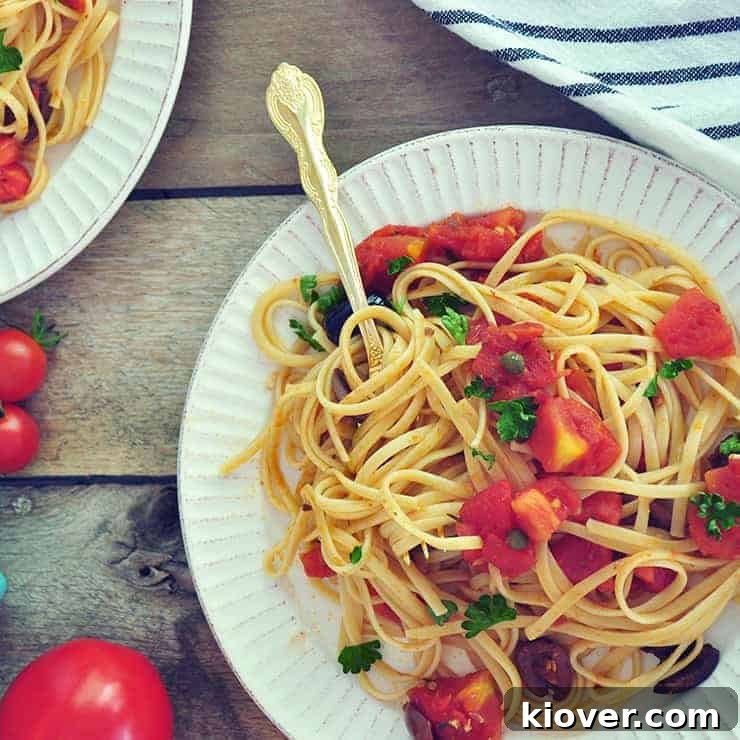
Welcome to the captivating world of Italian cuisine, where tradition meets tantalizing flavors. Today, we’re diving into a beloved classic that promises a burst of Mediterranean zest: Puttanesca Sauce with Linguine. This vibrant pasta dish isn’t just incredibly simple and quick to prepare; it’s a journey through Italy’s culinary soul, boasting a rich history as colorful as its ingredients. Prepare your palate for an explosion of authentic taste, making this dish a standout choice for any meal.
What is Puttanesca Sauce? A Flavorful Introduction
At its heart, Puttanesca sauce is a celebration of bold, savory, and piquant flavors. It’s a testament to how a few simple, high-quality ingredients can create something truly extraordinary. Originating from Naples, this iconic sauce (Sugo alla Puttanesca) is renowned for its distinctive salty, tangy, and subtly spicy profile, all coming together in a harmonious blend that clings beautifully to pasta. Despite its complex taste, it’s a remarkably uncomplicated sauce to make, requiring minimal cooking time but delivering maximum impact.
The magic of Puttanesca lies in its core components: ripe tomatoes, briny Kalamata olives, salty capers, pungent anchovies, aromatic garlic, and a hint of red pepper flakes for warmth. These pantry staples combine to form a robust sauce that can transform a simple pasta dish into an unforgettable Italian feast. Our recipe focuses on delivering this authentic experience right to your home, proving that you don’t need hours in the kitchen to enjoy a gourmet Italian meal.
The Unmistakable Flavors of Authentic Puttanesca
The beauty of Puttanesca sauce lies in the interplay of its bold ingredients. Each component contributes a unique layer to the overall flavor profile, creating a symphony of tastes that is both robust and incredibly satisfying. Let’s delve deeper into these essential elements.
Tomatoes: The Heart of the Sauce
Tomatoes form the vibrant base of any great Italian pasta sauce, and Puttanesca is no exception. The quality of your tomatoes significantly impacts the final taste, so choose wisely.
Fresh vs. Canned Tomatoes: Making the Right Choice
While I generally advocate for using the freshest, ripest tomatoes available, especially during peak season, both fresh and canned varieties have their merits for Puttanesca. If you’re using fresh, opt for plump, sun-ripened Roma tomatoes. Their firm flesh and lower water content make them ideal for creating a rich, concentrated sauce. I often use about three pounds from a local farmer’s market, which yields a wonderfully flavorful base.
However, if fresh tomatoes aren’t in season or easily accessible, high-quality canned tomatoes are an excellent alternative. Professional canners select tomatoes at their peak ripeness, locking in their flavor. For an unparalleled taste, I highly recommend using San Marzano tomatoes. These D.O.P. certified Italian plum tomatoes are famous for their sweet, balanced flavor, tender flesh, and low acidity, making them a premium choice for any Italian sauce.
Blanching and Peeling Fresh Tomatoes
If you choose to use fresh tomatoes, blanching them is a simple yet crucial step to achieve a smooth, silky sauce texture. This process involves quickly loosening the tomato skins for easy removal, along with coring them for a cleaner finish.
To blanch, gently score a small ‘X’ at the bottom of each tomato, then immerse them in a pot of boiling water. The skin will begin to crack and peel back, typically within 30 seconds to 1 minute 30 seconds. This is your sign they are ready. If some are stubborn, a quick poke with a sharp knife can help. Once removed from the boiling water, immediately transfer them to an ice bath. This stops the cooking process and cools them enough to handle. Once cool, the skins should slip off effortlessly, leaving you with perfectly prepared tomatoes for your sauce.
Anchovies: The Umami Secret
Don’t let the thought of anchovies deter you! In Puttanesca, these small, salt-cured fish are not meant to impart a strong “fishy” flavor. Instead, they dissolve into the hot olive oil and garlic, creating a profound depth of savory, umami-rich flavor that is utterly essential to the sauce’s character. Think of them as a hidden ingredient that elevates the entire dish, much like they do in classic Caesar dressing or Worcestershire sauce. Even if you’re not typically an anchovy enthusiast, I encourage you to try them in this recipe; you’ll be amazed by the complexity they add without being overtly noticeable as fish.
When purchasing, look for simple tins of anchovies packed in oil, avoiding any flavored varieties, to ensure the purest taste for your sauce.
Kalamata Olives: Briny Perfection
These distinctively dark, almond-shaped olives are a cornerstone of Puttanesca sauce. Hailing from Greece, Kalamata olives offer a wonderfully robust, fruity, and slightly tart flavor with a pleasing brininess that complements the other ingredients beautifully. Fortunately, they are widely available pre-pitted and often halved, saving you valuable prep time. Their distinctive taste and texture are irreplaceable in this classic dish.
Capers: A Tangy Kick
Capers are the unripened flower buds of the caper bush, typically pickled in brine or packed in salt. Small but mighty, they deliver a bright, briny, and subtly tangy punch that cuts through the richness of the sauce, adding a refreshing counterpoint to the olives and anchovies. They are crucial for that characteristic piquant flavor of Puttanesca.
Garlic and Red Pepper Flakes: Aromatic Foundation with a Hint of Heat
Minced garlic provides an aromatic backbone, infusing the olive oil with its pungent, sweet fragrance. Red pepper flakes, or peperoncino, add a gentle warmth and subtle kick, enhancing the overall vibrancy of the sauce without making it overtly spicy. Adjust the amount to your preference for heat.
Fresh Herbs: Aromatic Enhancements (Optional)
While the core ingredients are king, a sprig or two of fresh thyme, or a handful of fresh basil or oregano added towards the end of cooking, can elevate the sauce with garden-fresh aromas. Use what you have and what you love – Italian cooking embraces flexibility with herbs.
Choosing Your Pasta: Linguine and Beyond
Our recipe specifically calls for linguine, a long, flat pasta that is slightly wider than spaghetti. Linguine is an excellent choice for Puttanesca because its broader surface area is perfect for catching and holding the chunky, flavorful sauce. It provides a satisfying texture that complements the sauce’s robust ingredients.
However, the beauty of pasta dishes is their adaptability. If linguine isn’t available or you prefer another shape, feel free to substitute. Spaghetti is a very common and equally delicious alternative, offering that classic twirl. Other great options include bucatini (a hollow spaghetti-like pasta), penne, or rigatoni, which can trap the sauce within their tubes. The most important tip for any pasta is to cook it al dente – firm to the bite – ensuring it retains texture and doesn’t become mushy when tossed with the sauce.
The Intriguing History of Puttanesca Sauce
The origin of Puttanesca sauce is as spicy and captivating as its flavor, with a few popular theories vying for authenticity. The name itself, deriving from the Italian word “puttana” (meaning prostitute), hints at the colorful stories behind this Roman-Neapolitan staple.
The “Lady of the Night” Legend
Perhaps the most famous, and certainly the most dramatic, origin story links the sauce to the brothels of Naples. According to this popular legend, “ladies of the night” would prepare this sauce for several reasons. Firstly, it was incredibly quick and easy to make between clients, requiring minimal effort and readily available ingredients. Secondly, the sauce’s strong, aromatic scent—from the garlic, anchovies, and olives—was believed to waft out into the streets, attracting potential customers with its enticing aroma. While a captivating tale that adds a certain mystique to the dish, food historians often debate its factual accuracy. One might reasonably ask, why not just make a sandwich? Nevertheless, it’s a wonderfully dramatized piece of food history that adds to Puttanesca’s allure.
The “Anything Goes” Origin: Sandro Petti’s Innovation
A more plausible, and widely accepted, account places the creation of Puttanesca sauce in the 1950s, attributed to a restaurateur named Sandro Petti. The story goes that Petti, the co-owner of a famous nightspot on the island of Ischia, Rancio Fellone, was working late one evening. He had some friends who arrived hungry, but the kitchen was almost bare, with nothing fresh left to cook. When his friends expressed their hunger, they reportedly exclaimed, “Abbiamo fame, Facci una puttanata qualsiasi!” which roughly translates to, “We are hungry, make us any kind of garbage!” or “make us whatever junk you have!”
Taking this request literally, Petti quickly cobbled together a sauce from the few remaining pantry staples: capers, olives, and anchovies, all non-perishable ingredients that didn’t require fresh cooking. He tossed them with some pasta, and thus, the first “Spaghetti alla Puttanesca” was born—a quick, resourceful, and incredibly flavorful dish created out of necessity. This theory resonates more strongly, highlighting the dish’s humble origins and its reliance on readily available, robust ingredients that define its character.
Crafting Your Puttanesca: A Step-by-Step Guide
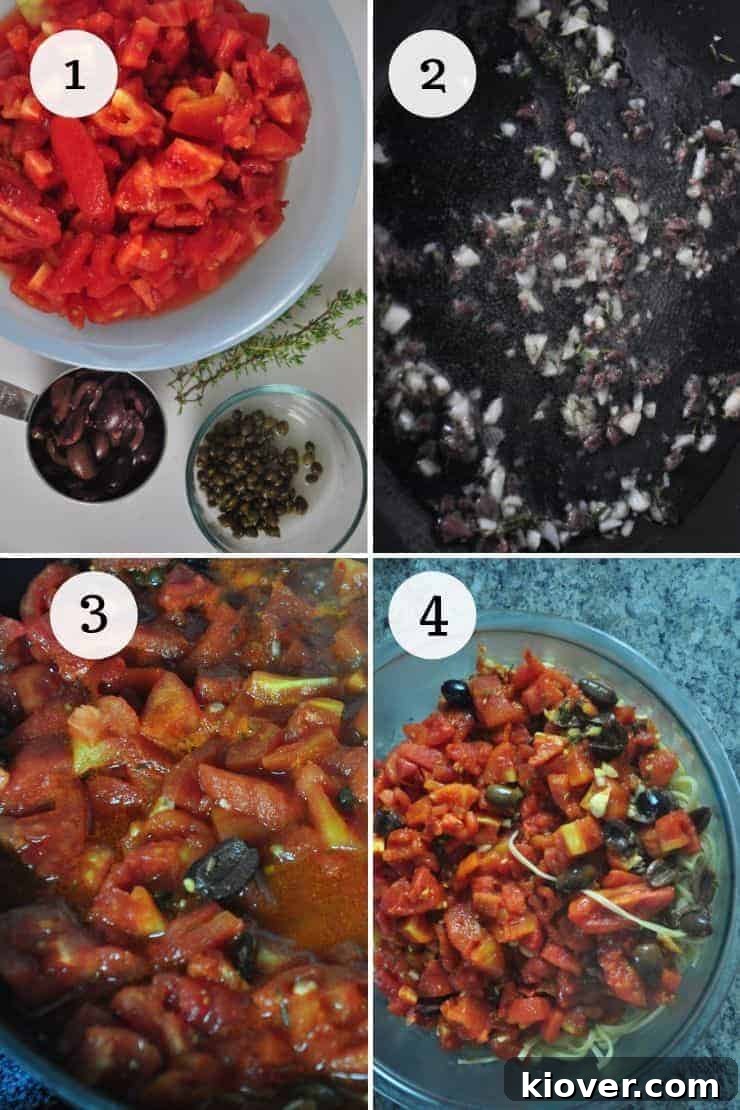
Creating this authentic Puttanesca sauce is a straightforward and rewarding process. Follow these steps for a perfect dish:
- **Prepare Ingredients:** Begin by ensuring all your tomatoes are peeled, cored, and finely chopped. Have your olives halved, capers ready, anchovies minced, and garlic peeled and minced. Organized ingredients make for a smooth cooking process.
- **Heat the Oil:** In a large, heavy-bottomed pan or Dutch oven, heat the olive oil over medium-low heat. This gentle heat is crucial for slowly infusing the oil with flavor without burning the garlic.
- **Combine Sauce Base Ingredients:** In a separate large bowl, combine your chopped tomatoes, halved Kalamata olives, capers, red pepper flakes, salt, and black pepper. Set this mixture aside. This pre-mix ensures all non-aromatic ingredients are ready to go into the pan together.
- **Sauté Garlic:** Add the minced garlic to the heated olive oil in the pan. Cook gently until the garlic is fragrant and soft, but not browned, which typically takes 1-2 minutes. Browning garlic can make it bitter.
- **Incorporate Anchovies:** Add the minced anchovies to the pan with the garlic. Stir continuously for 1-2 minutes, allowing the anchovies to melt and dissolve into the oil, creating a rich, savory base. Don’t worry if they almost disappear; that’s exactly what you want!
- **Simmer the Sauce:** Pour the tomato and olive mixture from your bowl into the pan with the garlic and anchovies. Stir everything together. Bring the sauce to a gentle boil, then reduce the heat to a simmer. Let it cook for 15-20 minutes, allowing the flavors to meld and the sauce to thicken slightly. Stir occasionally.
- **Cook the Linguine:** While your sauce is simmering, bring a large pot of salted water to a rolling boil. Add the linguine and cook according to package instructions until it is perfectly al dente.
- **Combine Pasta and Sauce:** Once the linguine is cooked and drained (reserving a bit of pasta water if desired for consistency), add it directly to the large pan with your simmering Puttanesca sauce. Toss thoroughly to ensure every strand of pasta is coated with the flavorful sauce. The residual heat will help the flavors marry even further.
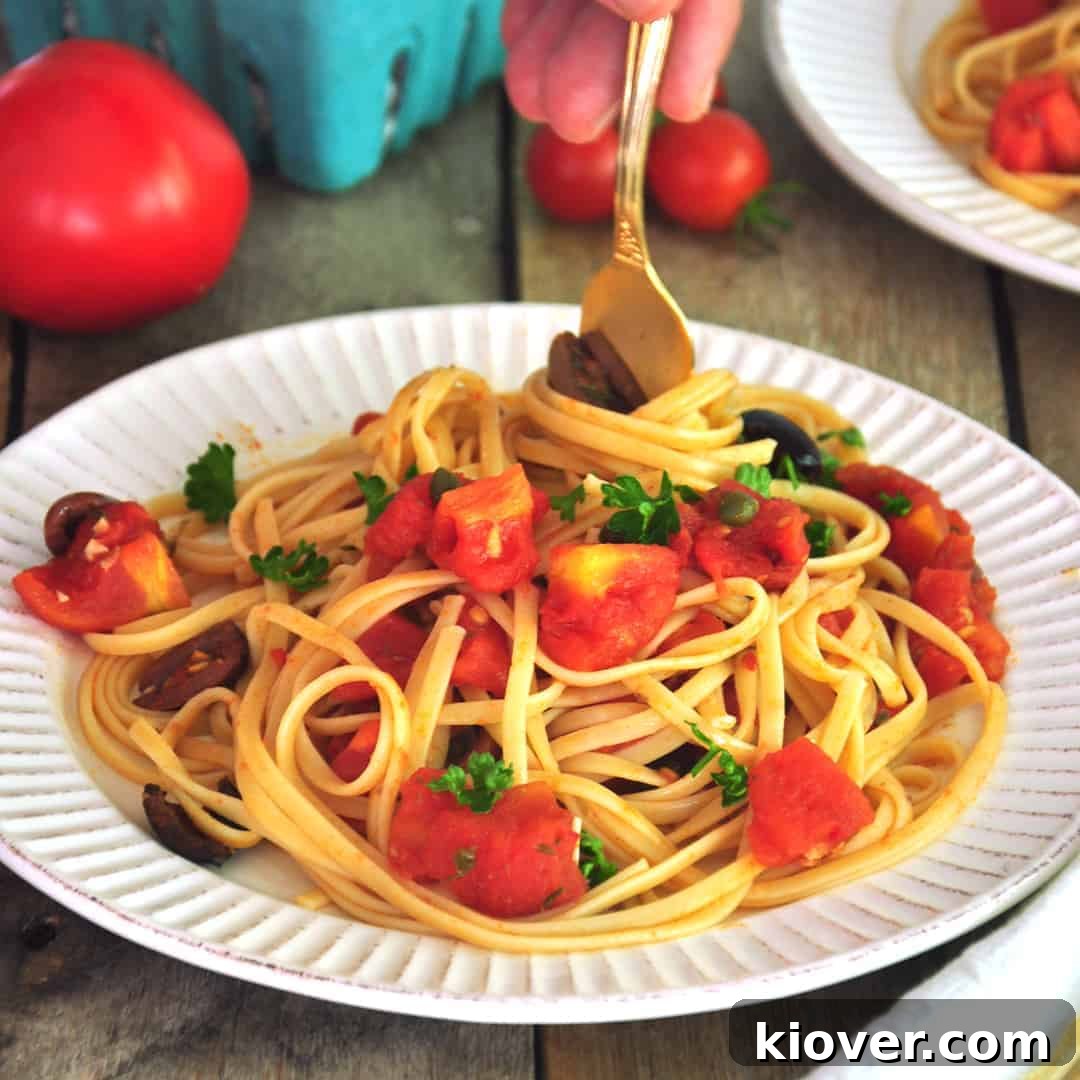
- **Serve and Garnish:** Transfer the Puttanesca with linguine to individual serving plates. Garnish generously with freshly chopped parsley for a burst of color and fresh flavor. Serve immediately and enjoy your authentic Italian classic!
Expert Tips for the Perfect Puttanesca
Achieving the perfect Puttanesca is simple, especially with a few insider tips:
- **Tomato Quality is Key:** Whether fresh or canned, prioritize quality. Fresh Roma tomatoes during their season are unbeatable, but premium canned San Marzano tomatoes offer consistent, robust flavor year-round.
- **Don’t Fear the Anchovies:** Seriously, they are crucial for the umami depth and will not make your sauce taste overtly fishy. Opt for oil-packed anchovies in simple tins for the best results.
- **Convenience with Olives:** Save time by purchasing Kalamata olives that are already pitted and halved. It’s a small shortcut that makes a big difference in prep.
- **Serving Size Considerations:** This recipe is designed for four generous main course servings. If you’re serving it as part of a larger meal with multiple courses, you might consider halving the portion size per person.
- **Embrace Fresh Herbs:** While the sauce is incredibly flavorful on its own, a sprinkle of fresh parsley, basil, or oregano at the end adds a vibrant freshness.
- **Pasta Water is Your Friend:** Reserve about a cup of the starchy pasta cooking water before draining. If your sauce seems too thick when tossing with the pasta, a splash of this water can help create a silkier consistency and bind the sauce to the pasta.
- **Pair with Crusty Bread:** Serve your Puttanesca with a good crusty Italian bread to soak up every last drop of the delicious sauce.
- **Wine Pairing:** A medium-bodied red wine like a Montepulciano d’Abruzzo or a dry white wine such as Vermentino would beautifully complement the bold flavors of this dish.
- **Explore Other Italian Delights:** If you love discovering traditional Italian dishes, be sure to check out this Authentic Testaroli pasta recipe or this hearty baked Pasta Al Forno recipe.
Variations to Explore
While the classic Puttanesca is perfect as is, you can personalize it to your taste:
- **Add More Vegetables:** Sauté some finely diced bell peppers or zucchini along with the garlic for added texture and nutrients.
- **Spicy Kick:** If you love heat, increase the amount of red pepper flakes or add a finely minced fresh red chili with the garlic.
- **Protein Boost:** While not traditional, you can easily add protein. Flaked canned tuna (packed in oil), cooked shrimp, or even leftover shredded chicken can be stirred in at the end. For a vegetarian protein, consider adding drained and rinsed chickpeas.
- **Fresh Cherry Tomatoes:** Instead of or in addition to the chopped tomatoes, a handful of halved cherry tomatoes can be added during the simmering stage for a burst of fresh, sweet flavor.
- **Vegetarian/Vegan Option:** For a strictly vegetarian version, you can omit the anchovies. Be aware that this will alter the flavor profile significantly, as anchovies contribute a deep umami that is hard to replicate. However, you can try adding a dash of tamari or a bit of finely minced dried porcini mushrooms for some savory depth.
Recommended Kitchen Tools for Success
Having the right tools can make preparing Puttanesca even more enjoyable and efficient:
- **Large Colander/Strainer:** Essential for draining your pasta thoroughly. A good colander ensures your pasta isn’t watery when it meets the sauce.
- **Large Glass Bowl:** Perfect for mixing your sauce ingredients before adding them to the pan, or for tossing the finished pasta and sauce together.
- **Large Skillet or Dutch Oven:** A spacious pan is crucial for making the sauce, allowing it to simmer evenly and for easily tossing the pasta with the sauce without overcrowding.
- **Sharp Knife and Cutting Board:** For efficient chopping of tomatoes, garlic, and any optional herbs.
Frequently Asked Questions About Puttanesca Sauce
Can I make Puttanesca sauce ahead of time?
Yes, Puttanesca sauce can be made ahead of time! In fact, the flavors often deepen and meld even better after a day or two. Store the sauce in an airtight container in the refrigerator for up to 3-4 days. Reheat gently on the stove and toss with freshly cooked pasta.
How do I store leftovers?
If you have leftover sauce mixed with pasta, store it in an airtight container in the refrigerator for up to 2-3 days. Reheat gently in a pan with a splash of water or broth to prevent it from drying out, or microwave until heated through.
Is Puttanesca sauce spicy?
Puttanesca sauce traditionally has a mild kick from red pepper flakes. The level of spiciness can be easily adjusted to your preference. If you like it spicier, add more flakes; if you prefer it milder, use less or omit them entirely.
Can I freeze Puttanesca sauce?
Yes, the sauce (without the pasta) freezes beautifully. Allow it to cool completely, then transfer it to freezer-safe containers or bags. It can be frozen for up to 3 months. Thaw in the refrigerator overnight before reheating.
What if I don’t like anchovies?
While anchovies are a signature ingredient and provide a unique depth of umami, if you absolutely cannot stand them, you can omit them. However, be aware that the sauce will taste different. To compensate for some of the lost savory depth, you could add a pinch of dried mushroom powder or a splash of tamari/soy sauce.
Print Recipe Card

Puttanesca Sauce With Linguine
5 Stars 4 Stars 3 Stars 2 Stars 1 Star
5 from 1 review
Author: Ben Myhre
Prep Time: 10 minutes
Cook Time: 20 minutes
Total Time: 30 minutes
Yield: 4 Servings
Category: Classic Italian
Method: Stove Top
Cuisine: Italian
Description
Indulge in the vibrant flavors of Italy with this quick, classic Puttanesca Sauce with Linguine recipe. This robust pasta dish brings together bold ingredients like briny capers and Kalamata olives with savory anchovies and fresh tomatoes, creating an explosion of taste that’s surprisingly simple to achieve. Perfect for a weeknight meal, this recipe proves you don’t need hours over the stove to enjoy comforting, authentic Italian cuisine.
Ingredients
- 3 Pounds Roma tomatoes, peeled, cored, and chopped (or 2x 28-ounce cans of crushed San Marzano tomatoes)
- 1/4 cup extra virgin olive oil
- 4 garlic cloves, peeled and minced
- 2 Thyme Sprigs (optional, see notes for herb variations)
- 2 Ounces anchovies, minced (about 4-6 fillets)
- 2 Tablespoons capers, drained
- 1/2 Cup Kalamata olives, pitted and halved
- 1 teaspoon salt (adjust to taste, as anchovies and olives are salty)
- 1/2 teaspoon red pepper flakes (or to taste)
- 1/2 teaspoon freshly ground black pepper
- 16 Ounces (about 450g) Linguine
- Fresh chopped parsley for garnish
Instructions
- **Prepare Tomatoes:** Ensure your fresh Roma tomatoes are peeled, cored, and uniformly chopped. If using canned, simply have them ready.
- **Sauté Aromatics:** Heat the 1/4 cup olive oil in a large pan or Dutch oven over medium-low heat.
- **Combine Sauce Ingredients:** In a large bowl, mix together the chopped tomatoes (or crushed canned tomatoes), Kalamata olives, capers, red pepper flakes, salt, and pepper. Set this aside.
- **Cook Garlic:** Add the minced garlic to the pan and cook gently for 1-2 minutes until fragrant and softened, taking care not to burn it.
- **Add Anchovies:** Stir in the minced anchovies. Cook for another 1-2 minutes, stirring until they dissolve into the oil, creating a rich savory base. If using optional thyme sprigs, add them now.
- **Simmer Sauce:** Pour the tomato mixture from the bowl into the pan. Bring the sauce to a gentle boil, then reduce the heat to a simmer. Let it cook for 15-20 minutes, allowing the flavors to meld and deepen. Stir occasionally.
- **Cook Linguine:** While the sauce is simmering, cook the linguine according to package instructions in a large pot of salted boiling water until al dente.
- **Combine & Toss:** Once the linguine is cooked, drain it and immediately add it to the pan with the Puttanesca sauce. Toss vigorously to ensure the pasta is thoroughly coated.
- **Serve:** Plate the Puttanesca with linguine, garnish generously with fresh chopped parsley, and serve hot. Enjoy this robust Italian classic!
Notes
Note 1: While thyme is suggested, any fresh Italian herb you enjoy in a sauce, such as basil or oregano, would be a delightful addition. Feel free to use what you have on hand or what tastes best to you.
Nutrition
- Serving Size: 4 Ounces uncooked pasta and 1/4 sauce
- Calories: 849 Calories
- Sugar: 13 g
- Sodium: 861 mg
- Fat: 43 g
- Saturated Fat: 6 g
- Unsaturated Fat: 57 g
- Trans Fat: 0 g
- Carbohydrates: 97 g
- Fiber: 11 g
- Protein: 18 g
- Cholesterol: 2 mg