
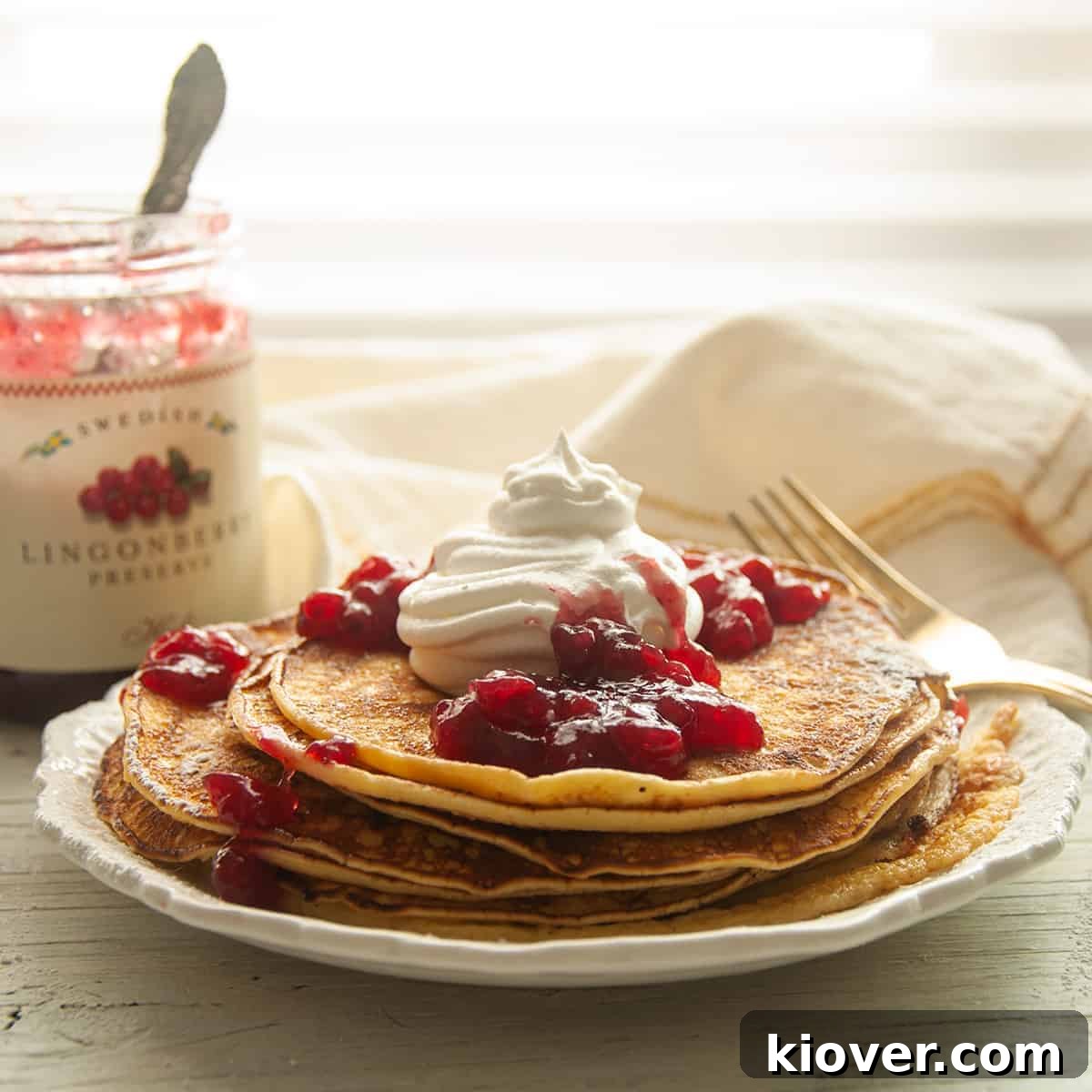
Swedish pancakes, affectionately known as Pannkakor, are a culinary delight that transcends the ordinary breakfast. These exquisite pancakes are distinguished by their incredibly thin, eggy, and buttery texture, presenting a softer, more delicate profile than their French crêpe cousins. Imagine them stacked warm on a plate, each one a golden canvas awaiting a smear of tart lingonberry jam, then gracefully rolled into a perfect, tender bundle. They are the epitome of simple elegance, an ideal indulgence for those leisurely mornings when time seems to slow down, inviting you to savor every bite.
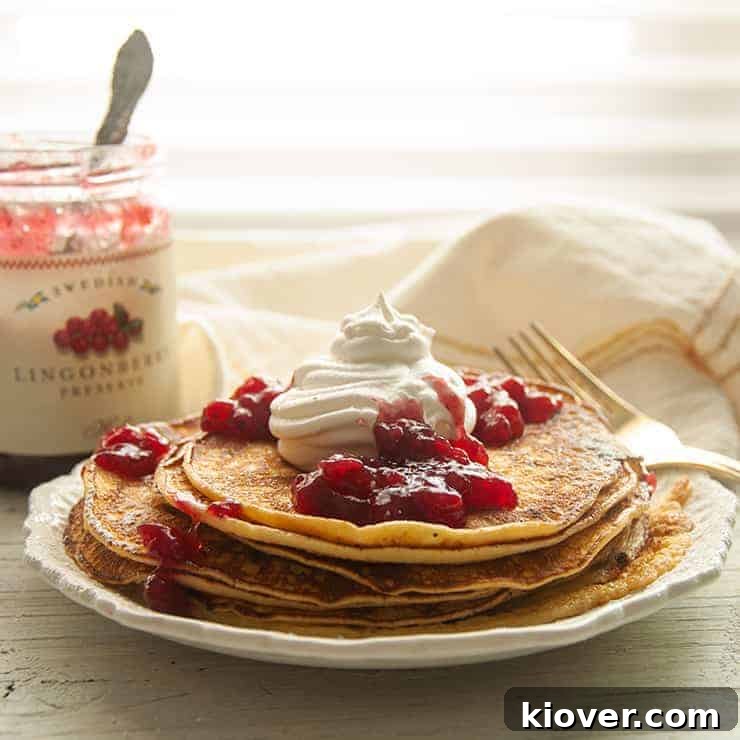
Discovering the Charm of Traditional Swedish Pancakes (Pannkakor)
There’s a unique joy that comes with preparing a heritage recipe, and this Pannkakor recipe embodies that sentiment perfectly. These cherished dishes, often passed down through generations, carry with them a legacy of taste and tradition, standing the test of time as beloved staples. To know that a recipe has delighted palates for decades, even centuries, adds an extra layer of warmth and significance to every batch. This particular Swedish pancake recipe is not just about making a meal; it’s about connecting with a rich culinary history and understanding why these thin, delicate pancakes have remained a favorite.
Beyond their rich history and delightful flavor, Swedish pancakes are surprisingly straightforward to prepare. While they share similarities with American pancakes in terms of basic ingredients, their consistency and preparation lean more towards the elegance of a French crêpe. The core of this recipe lies in creating a smooth, lump-free batter—a simple blend of fresh eggs, creamy milk, all-purpose flour, a touch of sugar for sweetness, a pinch of salt to balance the flavors, and rich melted butter. Once these humble ingredients are thoroughly whisked into a silky batter, the magic truly begins as we cook them to golden perfection.
What truly sets Swedish Pannkakor apart from other thin pancakes, especially French crêpes, are the traditional toppings that elevate them into a quintessential Scandinavian breakfast experience. While the possibilities for customization are endless, the classic Swedish way to serve these delectable treats involves a generous dollop of tart lingonberry jam, a cloud of freshly whipped cream, and a dusting of powdered sugar. This combination creates a harmonious balance of sweet and tangy, rich and light, making each bite an unforgettable journey into Swedish culinary tradition.
Crafting the Perfect Pannkakor Batter: Tips for a Silky Smooth Finish
Achieving a wonderfully smooth batter is the secret to producing the best Swedish pancakes. While the ingredient list is simple, paying attention to a few key techniques during the mixing process will make all the difference. The primary adversary in our quest for perfect pancakes is lumps, which can lead to unevenly cooked or textured results. Therefore, the first and most crucial step is to whisk your batter thoroughly and consistently until it reaches a velvety smooth consistency.
To further ensure a lump-free batter, I recommend incorporating the flour into the liquid ingredients in stages, specifically adding only half of the flour at a time. This method allows for better integration of the dry ingredients with the wet, preventing clumps from forming and making it much easier to achieve that desired smooth perfection. Once the first half of the flour is fully blended, you can then add the remaining flour, confident that you won’t be battling stubborn pockets of dry mix. This staged approach contributes significantly to a consistently smooth batter that will cook beautifully.
Another critical detail in batter preparation involves the melted butter. It’s essential to add melted butter to your batter, but it must not be too hot. My preferred method is to melt the butter directly in the frying pan I intend to use for cooking the pancakes, setting the heat to low. As soon as the butter has fully melted, I immediately transfer it to the batter mixture. The goal is warm, liquid butter, not bubbling or piping hot. If the butter is excessively hot, it can interact with the eggs in the batter, causing them to cook prematurely and form small lumps, compromising the batter’s smoothness. Always ensure the butter is warm, not scorching, for optimal results.
Finally, a common but often overlooked tip for thin pancake batters is to allow it to rest. After whisking all the ingredients together, cover the batter and let it sit at room temperature for at least 15-30 minutes, or even longer in the refrigerator. This resting period allows the flour to fully hydrate and the gluten to relax, resulting in a more tender, pliable pancake that is less likely to tear during cooking and has a smoother texture.
Mastering the Art of Cooking Delicate Swedish Pancakes
Swedish pancakes, with their delicate texture and thin consistency, require a bit of care and attention during the cooking process. Using the right equipment is paramount; I highly recommend a high-quality non-stick frypan with a flat bottom. For these particular pancakes, a 7-inch Swiss Diamond fry pan [AFFILIATE LINK] works exceptionally well. While it represents an investment, the superior quality and even heat distribution of such a pan truly make a difference in achieving consistently perfect results. These pans are, without a doubt, a personal favorite for their performance.
To maintain a smooth rhythm and consistent timing when making Swedish pancakes, I follow a precise set of steps. This systematic approach ensures that each pancake is cooked to perfection:
- Begin by pouring approximately ¼ cup of the prepared batter into a pourable 1-cup container. This helps with accurate measurement and easy dispensing.
- Ensure your non-stick pan is adequately heated to a consistent medium-high. Pour the ¼ cup of batter directly into the very center of the hot pan. Resist the urge to spread the batter; simply let gravity do its work as it naturally flows to create a thin, even circle.
- Immediately after pouring, start a timer on your phone for about 45 seconds. This precise timing is crucial for achieving the perfect golden hue on the first side.
- While the first pancake is cooking, reload your pourable cup with another ¼ cup of batter, preparing for the next pancake to keep the process flowing efficiently.
- Once the 45 seconds are up, carefully and gently flip the pancake using a thin, flexible spatula. The edges should appear set, and the surface will have a few small bubbles, indicating it’s ready.
- Allow the second side to cook for a shorter duration, typically another 10-15 seconds. This brief cooking time is sufficient for the delicate pancake to finish cooking through without becoming overly crisp.
- Promptly remove the cooked pancake from the pan and immediately begin the process again with the next batch of batter. Continue until all the batter has been used.
- A helpful tip: The first one or two pancakes often serve as “testers” as you adjust to your pan’s heat and the batter’s consistency. Don’t be discouraged if they aren’t perfect. Ensuring your pan is fully and evenly heated from the start can significantly reduce the chances of the initial pancakes being less than ideal. If needed, lightly butter the pan between pancakes, but generally, a good non-stick surface won’t require butter for every single one.
The Distinctive Qualities: Swedish Pancakes vs. American Pancakes
One of the most fundamental distinctions between a Swedish pancake (Pannkakor) and a typical American pancake lies in the absence of a leavening agent. Classic American pancakes rely on ingredients like baking powder or baking soda, which react with liquids and heat to produce carbon dioxide bubbles. These bubbles are responsible for the characteristic thick, fluffy, and airy texture that American pancakes are known for, causing them to rise significantly during cooking.
In stark contrast, Swedish pancakes contain no leavening agent whatsoever. This omission results in a much flatter, incredibly thin, and remarkably tender consistency that closely resembles a crêpe. The batter for Swedish pancakes is also considerably lighter and more fluid than that of traditional American pancakes. This difference in batter viscosity and the lack of rise contribute to their unique rollable form and delicate mouthfeel, offering a distinctively different pancake experience.
Swedish Pancakes vs. French Crêpes: A Subtle Yet Significant Divide
While both Swedish pancakes and French crêpes share the common trait of being thin, there are subtle yet significant differences that set them apart. French crêpes are renowned for being exceptionally delicate and paper-thin, often requiring a specialized crêpe spreader to achieve their ultra-fine consistency. With crêpes, the batter is spread very thinly over the entire surface of the pan, and sometimes, they are so thin that flipping might not even be strictly necessary, although many recipes do call for a quick flip to ensure even cooking.
Swedish pancakes, while thin, typically possess a slightly more substantial body than their French counterparts. They are still delicate enough to be rolled or folded beautifully, but they hold together a bit more firmly. When making Swedish pancakes, we rely on the batter’s natural flow and gravity to form the round shape and desired thickness. There’s no special tool needed for spreading the batter; simply pouring a measured amount into the center of the pan creates the perfect Pannkakor. The necessity of a definitive flip to cook both sides evenly is also a key differentiator, creating a lightly golden surface on both sides.
Exploring Exquisite Toppings for Your Swedish Pancakes
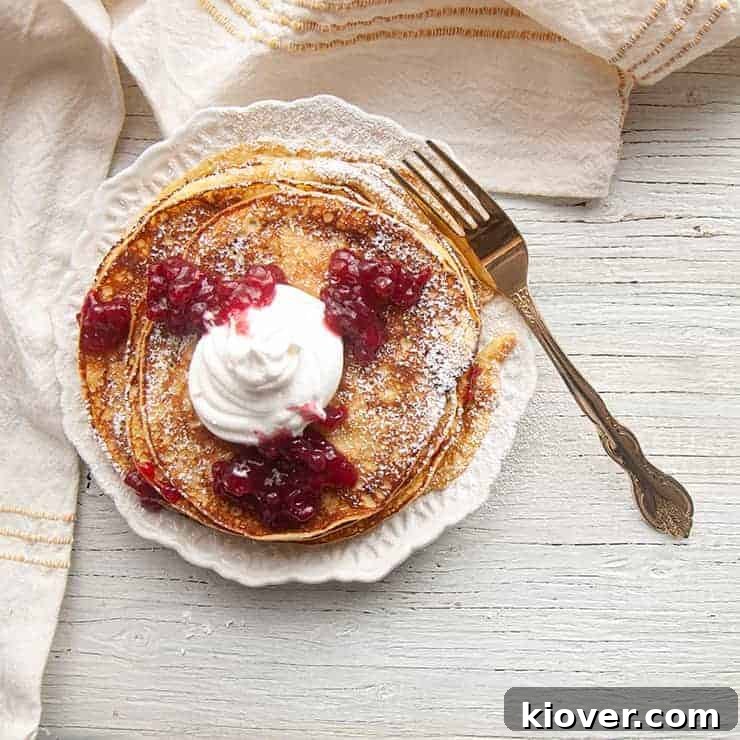
Part of the undeniable charm and uniqueness of Swedish pancakes lies in the delightful array of toppings they invite. For this recipe, the traditional choice is a vibrant and tart lingonberry jam. This specific jam, with its distinctive sweet-tart flavor profile, is a staple in Scandinavian cuisine and perfectly complements the rich, buttery notes of the pancakes. If authentic lingonberry jam isn’t readily available or you prefer an alternative, fear not! Any fruit jelly or jam you have on hand, such as strawberry, raspberry, or blueberry, will work wonderfully. I’ve personally enjoyed these pancakes with strawberry jelly, and the taste was absolutely fantastic. To complete the classic trifecta, I also recommend adding a generous dollop of whipped cream and a light dusting of powdered sugar. This combination creates a truly harmonious and indulgent sweet breakfast.
While I enthusiastically advocate for lingonberry jam as the traditional accompaniment, the beauty of Swedish pancakes is their versatility. They are often served as a sweet breakfast or dessert in many parts of the world, particularly in America. However, in Sweden, Pannkakor can also take on a savory role. A very common and traditional usage in Sweden is to serve these pancakes as a hearty side dish to yellow pea soup (Ärtsoppa), a classic Thursday meal. This savory pairing offers a completely different, yet equally delicious, experience. Whether you prefer fresh berries, fruit compotes, maple syrup, or even a more adventurous savory filling, feel free to customize your Swedish pancakes to suit your personal taste buds. Ultimately, the best way to enjoy Pannkakor is the way you like it best!
Expert Tips for Crafting Flawless Swedish Pancakes
- **Butter Temperature is Key:** When melting butter for the batter, ensure it is warm and liquid, but not excessively hot or bubbling. Overheated butter can cause the eggs in the batter to cook prematurely, leading to lumps.
- **Preheat Your Pan Thoroughly:** A properly heated pan is crucial for preventing sticking and achieving an even golden-brown color. Allow your non-stick pan ample time to reach the desired medium-high temperature before pouring the first pancake.
- **Invest in a Quality Non-Stick Pan:** A good non-stick frypan is your best friend when making delicate Swedish pancakes. I highly recommend a 7-inch Swiss Diamond pan for its exceptional performance and durability.
- **Handle with Care:** These pancakes are thin and delicate, making them prone to tearing if handled too roughly. Use a thin, flexible spatula and be gentle when flipping.
- **Understand Your Stovetop:** Heat settings can vary greatly between stoves. When the recipe calls for “medium-high heat,” adjust it to what works best for your appliance. On my stovetop, for instance, this often translates to a setting of 6 out of 9 on the dial.
- **Lingonberry Alternatives:** While lingonberry jam is traditional and highly recommended, don’t hesitate to use any other fruit jam or jelly you enjoy. Strawberry, raspberry, or blueberry jams are excellent substitutes and still create a delicious breakfast.
- **Rest the Batter:** Allow your batter to rest for at least 15-30 minutes after mixing. This hydrates the flour and relaxes the gluten, leading to more tender and flexible pancakes that are easier to cook and less likely to tear.
Recommended Products for Your Pancake Culinary Journey
- 7” Swiss Diamond Pan: An investment in quality that makes a noticeable difference for delicate cooking.
- Spatula: A thin, flexible spatula is essential for effortless flipping of these delicate pancakes.
- Lingonberry Jam: The traditional topping that perfectly balances the rich, buttery flavor of the pancakes.
Your Swedish Pancake Experience: Share and Connect!
Oh, I truly hope you adored making and savoring these traditional Swedish Pancakes as much as I do! They bring such a special touch to any morning. Please don’t hesitate to share your experience in the comments below—tell me how your batch turned out, or perhaps share your own cherished family traditions associated with these delightful Pannkakor. Your feedback and stories are always so encouraging and inspiring. If you found this recipe helpful and enjoyable, I would be incredibly grateful if you could share it with your friends and family on Facebook or Pinterest. Spreading the joy of these heritage recipes helps keep culinary traditions alive! And if you wish to receive more delicious recipes and updates straight to your inbox, remember to sign up for our email newsletter using the link on this page. Happy cooking!
Print
Classic Swedish Pancakes (Pannkakor) Recipe
5 Stars 4 Stars 3 Stars 2 Stars 1 Star
5 from 5 reviews
Author: Ben Myhre
Prep Time: 10 minutes
Cook Time: 20 minutes
Total Time: 30 minutes
Yield: 10 pancakes
Category: Breakfast
Method: Pan-fried
Cuisine: Swedish
Description
Indulge in this authentic Classic Swedish Pancake (Pannkakor) recipe, a cherished heritage dish that’s both easy to make and incredibly delicious. These thin, eggy, and buttery pancakes are a true Scandinavian delight, perfect for breakfast or brunch. Elevate your experience by serving them with traditional lingonberry jam, a dollop of whipped cream, and a dusting of powdered sugar for an irresistible sweet treat!
Ingredients
Units
Scale
- 4 large eggs
- 1 cup milk (whole or 2%)
- 1/2 cup all-purpose flour
- 1 tablespoon granulated sugar
- Pinch of fine sea salt
- 4 tablespoons salted butter, melted and cooled slightly
Instructions
- **Prepare the Batter:** In a large bowl, whisk together the eggs, milk, half of the flour, sugar, and salt until completely smooth. Once incorporated, add the remaining flour and whisk thoroughly until no lumps remain and the batter is silky smooth.
- **Melt the Butter:** Place your non-stick pan over low heat and melt the 4 tablespoons of butter. Ensure the butter melts but does not get excessively hot or brown.
- **Incorporate Butter:** Once melted, immediately remove the butter from the heat and whisk it into the prepared pancake batter. This adds richness and helps prevent sticking.
- **Heat the Pan:** Using the same pan, increase the heat to medium-high. Allow the pan to warm up thoroughly for a few minutes. A well-heated pan is key for even cooking and preventing the first pancake from sticking.
- **Cook the Pancakes:** Pour ¼ cup of batter into the very center of the hot pan. Let the batter naturally spread into a thin, round pancake. Allow it to cook for approximately 45 seconds, or until the edges begin to set and the bottom is golden brown.
- **Flip and Finish:** Carefully slide a thin spatula under the pancake and gently flip it over. Cook for another 10-15 seconds on the second side until lightly golden.
- **Repeat and Stack:** Remove the cooked pancake from the pan and place it on a plate. Repeat the process with the remaining batter, lightly buttering the pan between pancakes if necessary (especially after a few batches) to maintain the non-stick surface. Keep cooked pancakes warm under a clean kitchen towel or in a low oven (around 200°F/95°C) while you finish cooking the rest.
- **Serve Immediately:** Serve your warm Swedish pancakes with a generous spread of lingonberry jam (or your preferred jam), a dollop of whipped cream, and a dusting of powdered sugar. Roll them up and enjoy!
Notes
- **Butter Temperature:** Be careful not to overheat the butter. It should be warm and melted, not sizzling, to avoid cooking the eggs prematurely in the batter.
- **Pan Heat:** Always allow your non-stick pan to fully heat up before pouring the first pancake to ensure even cooking and prevent sticking.
- **Quality Pan:** A high-quality 7-inch non-stick pan, like a Swiss Diamond, is highly recommended for best results due to its even heat distribution and superior non-stick properties.
- **Gentle Handling:** Swedish pancakes are delicate due to their thinness. Use a thin, flexible spatula and flip them with care to prevent tearing.
- **Stovetop Calibration:** “Medium-high” heat can vary. Familiarize yourself with your stovetop’s settings; on many dials, this might be around 6 out of 9.
- **Jam Alternatives:** If lingonberry jam is unavailable, any fruit jam or jelly (strawberry, raspberry, blueberry) will make a delicious substitute.
- **Resting the Batter:** For optimal texture and easier handling, let the batter rest for 15-30 minutes at room temperature after mixing. This allows the flour to fully hydrate.
Nutrition
- Serving Size: 5 pancakes
- Calories: 537
- Sugar: 12 g
- Sodium: 403 mg
- Fat: 34 g
- Saturated Fat: 18 g
- Unsaturated Fat: 7 g
- Trans Fat: 0 g
- Carbohydrates: 36 g
- Fiber: 1 g
- Protein: 19 g
- Cholesterol: 430 mg