
Understanding Gin: Exploring Its Definition and Diverse Styles
Before we delve deeper into the captivating world of classic gin cocktails, it’s essential to establish a foundational understanding of this beloved spirit. Many drinkers are familiar with a single, dominant style of gin, often found in popular brands. However, the realm of gin is far more expansive and nuanced than commonly perceived. This comprehensive guide aims to demystify gin, exploring its official definition, the pivotal role of juniper berries, the diverse array of botanicals, and the various styles that contribute to its rich tapestry of flavors.
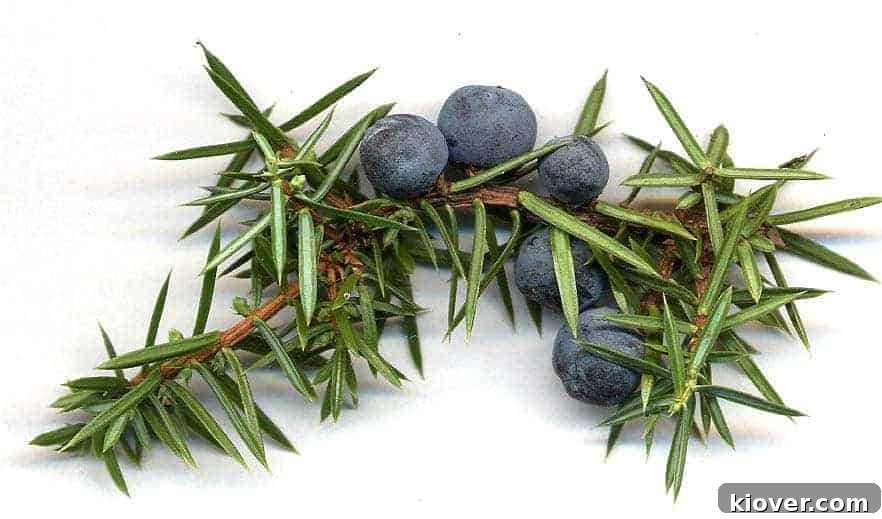
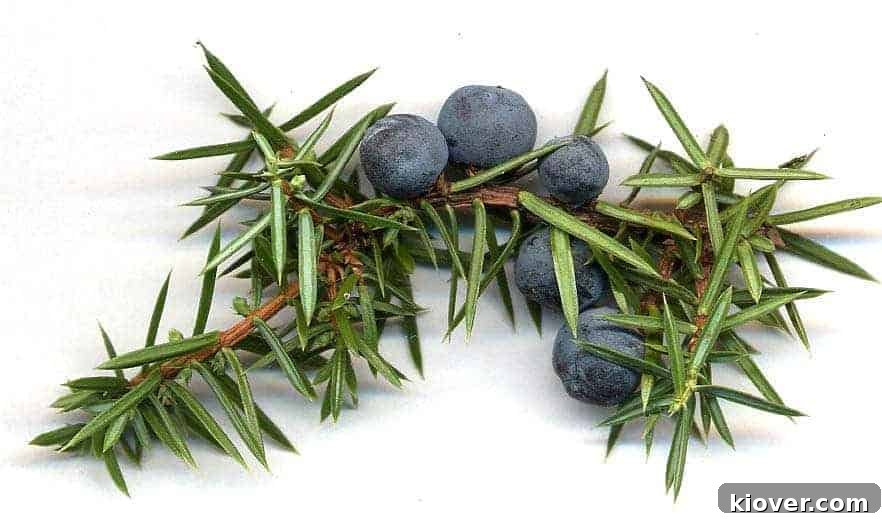
(Hero Image attribution MPF, Juniperus communis cones, CC BY-SA 3.0)
What Exactly is Gin? A Definitive Look
At its core, gin is a distilled alcoholic spirit that derives its predominant flavor from juniper berries. While this might seem straightforward, official definitions often provide a more detailed framework. The US government, for instance, provides a comprehensive definition that sheds light on the spirit’s production and characteristics. According to US regulations, gin is:
“Gin” is a product obtained by original distillation from mash, or by redistillation of distilled spirits, or by mixing neutral spirits, with or over juniper berries and other aromatics, or with or over extracts derived from infusions, percolations, or maceration of such materials, and includes mixtures of gin and neutral spirits. It shall derive its main characteristic flavor from juniper berries and be bottled at not less than 80° proof. Gin produced exclusively by original distillation or by redistillation may be further designated as “distilled”. “Dry gin” (London dry gin), “Geneva gin” (Hollands gin), and “Old Tom gin” (Tom gin) are types of gin known under such designations.
This definition highlights several key elements. Firstly, gin must be at least 80 proof (40% alcohol by volume). Secondly, and most importantly, its defining characteristic flavor must come from juniper berries. The definition also outlines various production methods, including original distillation from mash, redistillation of existing spirits, or the simple mixing of neutral spirits with juniper and other aromatics. This flexibility in production techniques allows for the wide array of gin styles we enjoy today. The mention of “extracts derived from infusions, percolations, or maceration” points to the various ways botanicals impart their essence into the spirit. Ultimately, whether through distillation or infusion, the presence and prominence of juniper are non-negotiable.
The Indispensable Role of Juniper Berries in Gin
Juniper is the unmistakable heart and soul of gin. Its characteristic pine-like, resinous, and sometimes peppery flavor is what sets gin apart from all other spirits. This distinct botanical note is so integral that regulations universally mandate juniper as the predominant flavor in any spirit labeled as gin. Historically, juniper was not merely a flavoring agent but was also valued for its perceived medicinal properties, particularly in treating ailments like stomach issues and kidney problems. The earliest forms of gin, such as Jenever, often began as medicinal elixirs.
For those curious to experience the pure, unadulterated taste of this foundational ingredient, fresh or dried juniper berries are readily available. You can even order them online and taste them directly. Understanding the core flavor of juniper provides a crucial reference point for appreciating the complexity added by other botanicals.
Beyond Juniper: The World of Other Aromatics and Botanicals
While juniper lays the foundation, the true artistry of gin-making often lies in the masterful selection and blending of “other aromatics,” commonly referred to as botanicals. These additional ingredients contribute depth, complexity, and unique character to each gin. The choice of botanicals, their proportion, and the method of extraction are what give each gin its distinctive signature.
Coriander seed is almost universally recognized as a second essential botanical, often providing citrusy, spicy, and earthy notes that beautifully complement juniper. Citrus elements are also prevalent, with lemon, lime, and grapefruit peels adding brightness and zest. Other frequently used botanicals include warm spices like cinnamon and cardamom, earthy roots such as angelica and orris root (which also acts as a fixative for other aromas), and various herbal notes from ingredients like savory, licorice, and anise. Some contemporary gins even incorporate more unusual botanicals like cucumber (famously in Hendrick’s), rose petals, or exotic fruits, pushing the boundaries of traditional flavor profiles.
The vast palette of botanicals allows distillers immense creative freedom. This flexibility ensures that while juniper remains the unifying element, the world of gin offers an endless array of sensory experiences, from crisp and citrusy to floral, spicy, or herbaceous. Each botanical contributes a layer of flavor, creating a symphony that delights the palate and defines the unique identity of each gin.
A Deep Dive into the Diverse Types and Styles of Gin
The US legal definition briefly mentions “Dry gin” (London dry gin), “Geneva gin” (Hollands gin), and “Old Tom gin” as recognized types. However, the world of gin extends far beyond these. We will explore these three, alongside Compound gin, Plymouth gin, and Navy Strength gin, providing a comprehensive overview of the most prominent and historically significant styles.
Geneva Gin (Jenever/Genever)
Geneva gin, often spelled Jenever or Genever, is the venerable ancestor of all modern gin. Originating in the Netherlands and Belgium, it predates London Dry gin by centuries and is considered the “grandpappy” of the spirit. Jenever typically features a malt wine base, giving it a richer, often grainier, and less juniper-forward profile compared to its descendants. This maltiness, combined with a subtle botanical blend, results in a spirit that can sometimes be mistaken for a light whiskey.
There are generally two main categories of Jenever: *Oude* (old) and *Jonge* (young). *Oude* Jenever adheres to older recipes, often featuring a higher proportion of malt wine and sometimes barrel-aged, resulting in a complex, malty, and slightly smoky character. *Jonge* Jenever, developed more recently, uses a lower proportion of malt wine or none at all, resulting in a lighter, drier, and more neutral spirit that more closely resembles modern gin, though still distinct. Exploring Jenever offers a fascinating glimpse into gin’s origins and its evolution.
London Dry Gin
London Dry Gin is arguably the most recognized and widely consumed style of gin globally, and likely the one residing in most liquor cabinets. Brands like Beefeater, Tanqueray, and Gordon’s are quintessential examples of this style. Despite its name, London Dry Gin doesn’t have to be produced in London; rather, it refers to a specific production method and flavor profile governed by strict regulations, particularly those outlined by the European Union. EU law specifies several key criteria for London Gin (with “Dry” simply indicating no added sugar):
- **Production Method:** It must be made in a traditional still by redistilling ethyl alcohol in the presence of all natural flavorings (botanicals). This ensures the flavors are fully integrated into the spirit during distillation.
- **Quality of Alcohol:** The ethyl alcohol used must be of superior quality, exceeding standard requirements, with a methanol level not exceeding 5 grams per hectolitre of 100% volume alcohol.
- **Flavorings:** Only approved natural flavorings can be used, and they must impart their flavor solely during the distillation process. No artificial flavorings are permitted, and crucially, no flavorings can be added after distillation.
- **Minimum Strength:** The resultant distillate must have a minimum strength of 70% ABV. Additional ethyl alcohol can be added post-distillation, provided it meets the same high standards.
- **No Sweetening (for Dry):** While a small amount of sweetening (not exceeding 0.5 grams per liter) is allowed for “London Gin” for brand protection purposes, absolutely no sugar is added to a “London Dry Gin,” ensuring its characteristically crisp, unsweetened profile.
- **No Coloring:** London Gin cannot be colored. The only other substance allowed post-distillation is water, used to reduce the spirit to a drinkable alcoholic strength.
These stringent rules ensure London Dry Gin’s hallmark crispness, clean juniper dominance, and balanced botanical notes, making it the preferred choice for classic cocktails like the Gin and Tonic or a Dry Martini.
Old Tom Gin
Old Tom Gin occupies a fascinating historical bridge between the malty, often sweeter Jenever and the dry, crisp London Dry. This style was prominent in 18th-century England and experienced a significant resurgence in recent years, thanks to the craft cocktail movement. Old Tom is typically sweeter than London Dry, a characteristic that historically helped to mask the impurities of less refined spirits. While there are no strict regulations governing its production beyond adhering to general gin laws, its defining feature is its perceptible sweetness and often a richer, more rounded botanical profile compared to the sharp purity of London Dry.
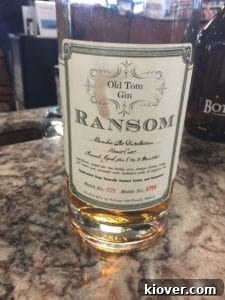
Many Old Tom gins are distilled with a slightly less aggressive juniper character, allowing other botanicals to shine through, contributing to its smoother, sometimes almost whiskey-like taste. I had the pleasure of sampling Ransom’s Old Tom Gin at my favorite local liquor store, Bottle Barn, and it was a delightful experience. It definitely offered a sweeter, almost caramel-like note alongside its juniper core, making it an excellent choice for cocktails that benefit from a touch of sweetness, such as the Tom Collins or Martinez. Its revival has brought a wonderful dimension back to classic gin cocktails.
Compound Gin
Unlike most other gin styles that involve redistillation, Compound Gin requires no secondary distillation process. Its creation is simpler: botanicals are directly added to a neutral grain spirit, allowing their flavors to infuse over time. This method is often associated with the historical “bathtub gin” of the Prohibition era, where illicit distillers would steep ingredients in cheap alcohol. While this image might evoke connotations of rudimentary and potentially poor-quality spirits, modern craft distillers have elevated compound gin to an art form.
Today, responsible compound gin makers use high-quality neutral spirits and carefully selected botanicals, allowing for creative and experimental flavor profiles. The absence of redistillation means the botanicals are typically steeped or macerated in the base spirit, and then the liquid is filtered and bottled. This method can result in gins with a fuller body, and sometimes a slight coloration from the botanicals themselves. It offers immense flexibility for home enthusiasts and small-batch producers to experiment with unique botanical combinations, making it an exciting area for innovation within the gin category. I am particularly excited about taking some vodka and transforming it into my own rustic gin, which would perfectly fall under this versatile classification.
Plymouth Gin
Plymouth Gin is a geographically protected designation, meaning it can only be produced in Plymouth, England. This makes it one of the few gins with a true Geographical Indication (GI), similar to Champagne or Cognac. Currently, there is only one distillery licensed to produce Plymouth Gin: the historic Black Friars Distillery in Plymouth. Their flagship product is simply named Plymouth Gin.
Historically, Plymouth Gin was the gin of choice for the British Royal Navy and played a significant role in colonial expansion. Its flavor profile is distinct from London Dry; it is generally described as being drier, more earthy, and fruitier, with a slightly softer juniper presence and a sweeter finish due to the use of root botanicals. It lacks the intense citrus notes often found in London Dry and is not bound by the same strict sugar restrictions. These characteristics make Plymouth Gin an exceptional choice for specific classic cocktails, particularly those that benefit from a less assertive juniper and a more rounded mouthfeel.
Navy Strength Gin
Navy Strength Gin isn’t a separate style based on botanical profile or production method, but rather a designation indicating a higher alcoholic proof. Any of the other gin styles discussed (London Dry, Plymouth, Old Tom) could potentially be bottled at Navy Strength. This designation means the gin is bottled at a minimum of 57% alcohol by volume (114 proof), significantly stronger than the typical 40-47% ABV of standard gins.
The term “Navy Strength” carries a fascinating historical anecdote. Back in the days of the British Royal Navy, sailors were issued a daily rum ration. To ensure they weren’t being short-changed with watered-down spirits, the officers would perform a rudimentary test: they would mix the spirit with a small amount of gunpowder and attempt to ignite it. If the mixture caught fire, it was deemed to be at least 57% ABV, or “proof strength,” and thus acceptable for purchase. If it failed to ignite, it was considered “underproof” and rejected. While this was a rather unscientific method, the 57% mark became the historical benchmark for spirits deemed strong enough for the Navy. Modern Navy Strength gins are celebrated for their robust flavor, which stands up beautifully in cocktails, offering a more intense and concentrated botanical experience.
Contemporary/New Western Gin (A Brief Mention)
Beyond these traditional styles, a burgeoning category known as “Contemporary” or “New Western” gin has emerged. These gins often intentionally dial back the juniper dominance, allowing other botanicals to take center stage. They prioritize creativity and often feature unique, regional, or innovative botanical blends, resulting in highly diverse flavor profiles that challenge traditional perceptions of gin. While not a legally defined category, it represents a significant and exciting frontier in modern gin production.
Conclusion: The Endless Allure of Gin
From its humble beginnings as a medicinal tonic to its current status as a globally cherished spirit, gin offers a captivating journey through history, distillation, and botanical artistry. We’ve explored the fundamental definition, the indispensable role of juniper, the vast array of complementary aromatics, and the distinctive characteristics of Geneva, London Dry, Old Tom, Compound, Plymouth, and Navy Strength gins. Each style tells its own story and offers a unique sensory experience. Understanding these nuances not only deepens your appreciation for gin but also empowers you to choose the perfect bottle for any occasion or cocktail. Now, with a solid grasp of gin’s foundations, we can confidently move forward to explore classic concoctions like the timeless Gin and Tonic, appreciating every facet of its complex charm.