
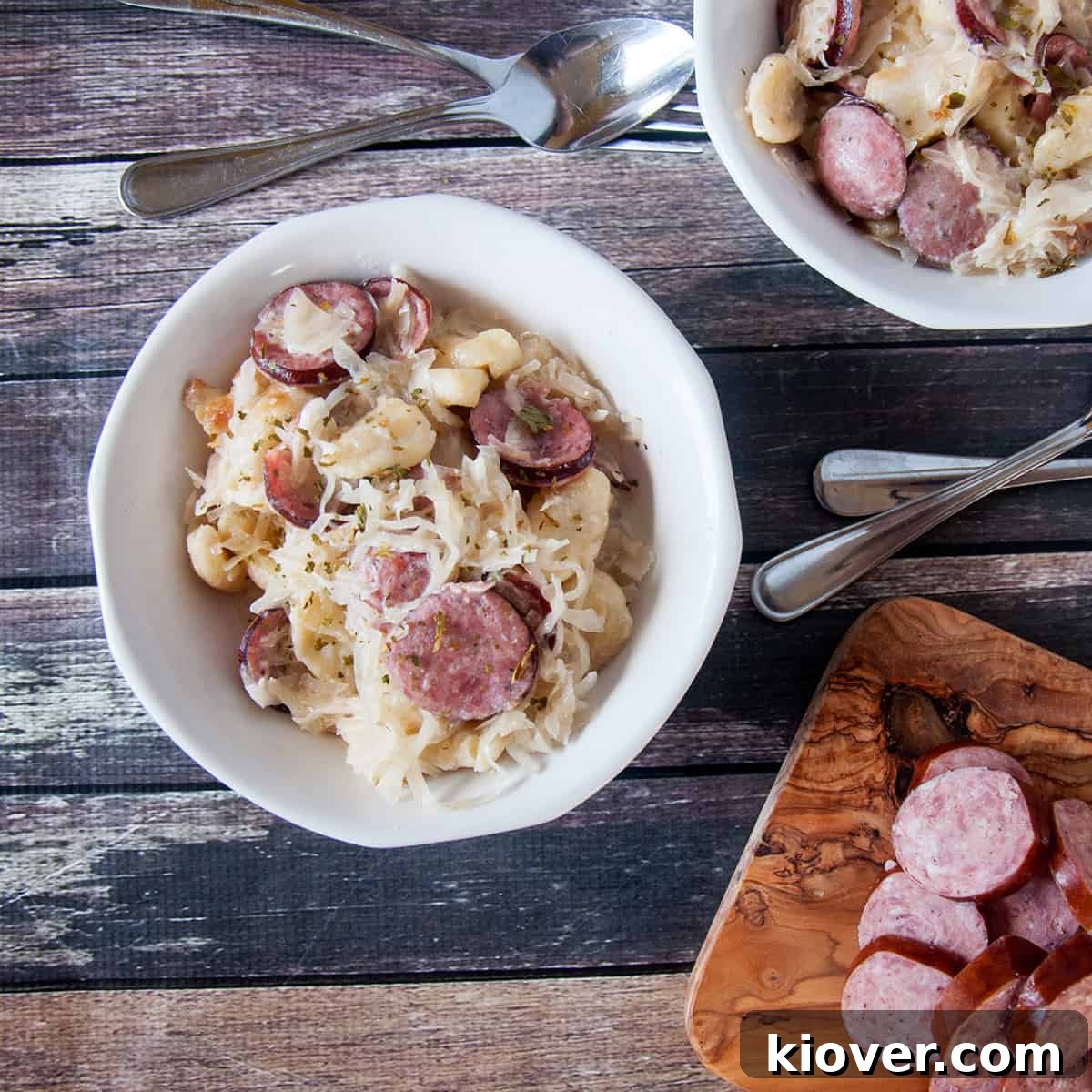
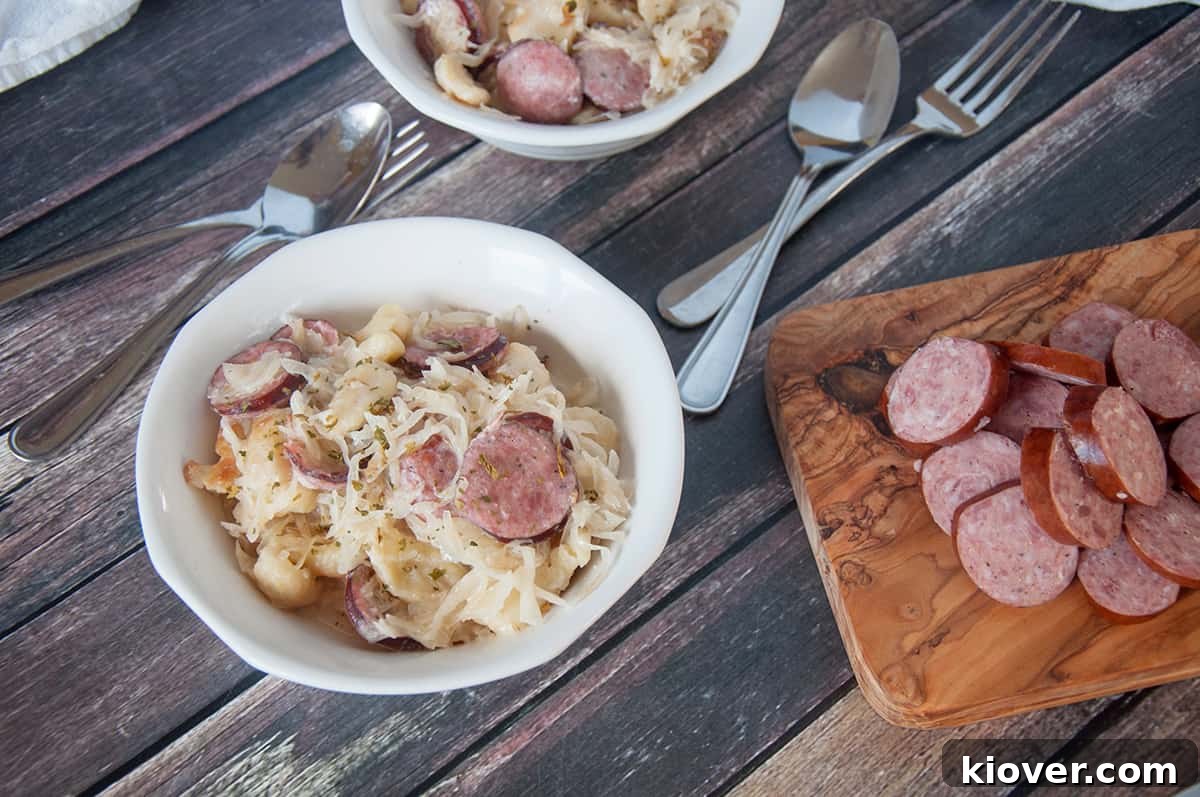
Immerse yourself in the rich, comforting embrace of traditional German cuisine with this exquisite **Sauerkraut and Sausage Skillet featuring Homemade Knoephla Dumplings.** This isn’t just a meal; it’s a culinary journey, transforming simple ingredients into a **luxurious, indulgent feast** that will captivate your senses. Picture the **smoky aromas of sizzling German sausage** mingling with the tangy notes of sauerkraut, all enveloped in a **creamy, buttery sauce** alongside tender, pan-fried dumplings. It’s the ultimate **comfort food**, a hearty skillet dish that is **perfect for a cozy weeknight dinner** or whenever you’re **craving something truly special and deeply satisfying.**
🥟 What Makes This Sauerkraut and Sausage Recipe So Special?
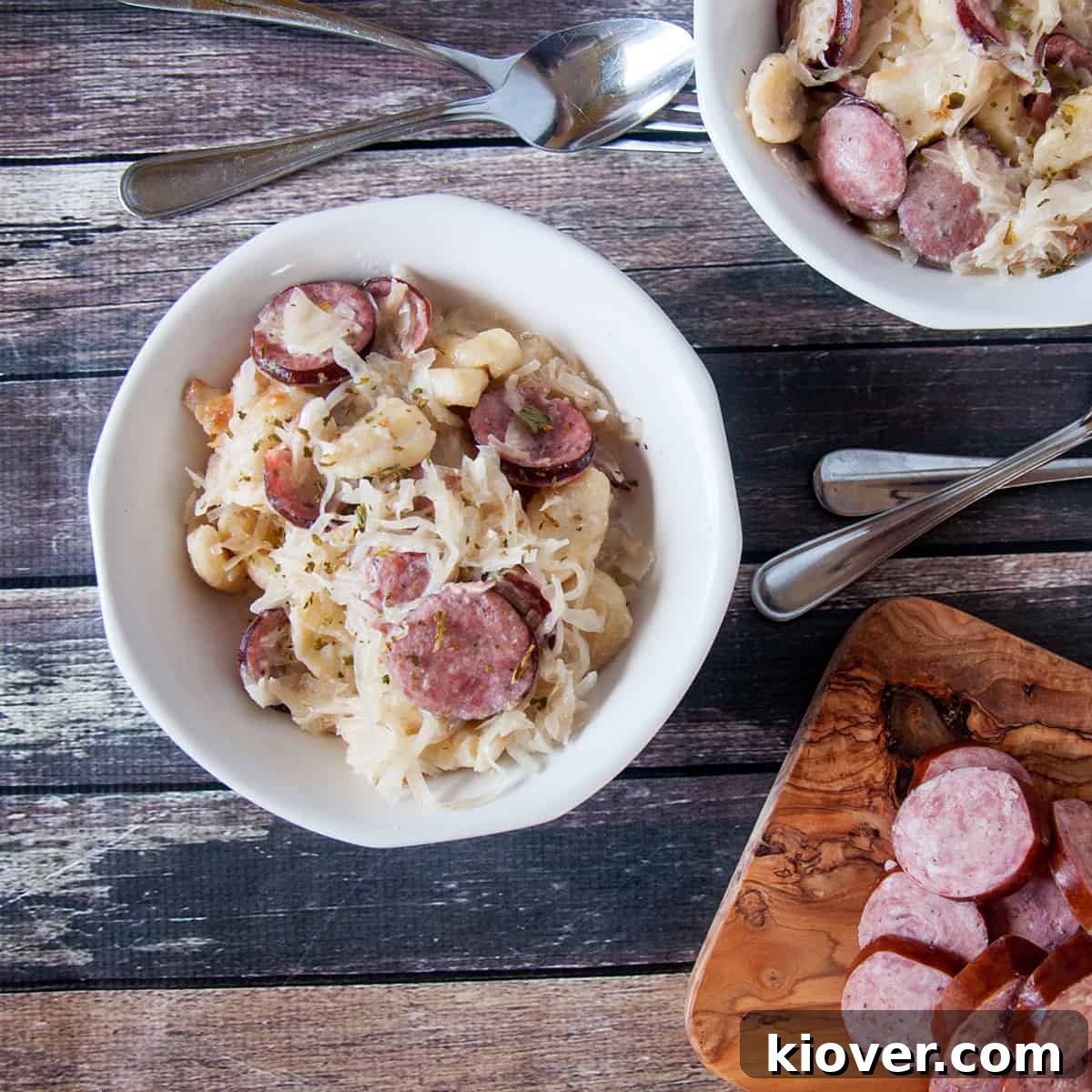
While sausage and sauerkraut recipes are commonplace, often appearing as simple stovetop preparations, this particular German creation stands out. The secret lies in the harmonious blend of rich cream, tangy sauerkraut, savory smoked sausage, and, most importantly, our easy-to-make, pan-fried knoephla dumplings. This combination elevates a classic pairing into an unforgettable culinary experience.
The knoephla dumplings, a traditional German-Russian staple, are surprisingly simple to prepare from scratch. Once boiled, they are pan-fried to achieve a delightful golden-brown crust, adding an incredible texture and depth of flavor that perfectly complements the robust sauerkraut and the succulent German sausage. Infused with a touch of cream and butter, the entire dish transforms into a velvety, hearty, and truly special comfort meal. The interplay of textures – the soft, pillowy interior of the dumplings, their slightly crispy exterior, the tender sausage, and the crisp bite of sauerkraut – creates a symphony on your palate.
If you have a passion for authentic German cuisine, you’ll love exploring other traditional dishes. Don’t miss this Traditional Spaetzle recipe for another delightful German noodle, these classic German potato pancakes (Kartoffelpuffer) which are always a crowd-pleaser, or the meaty elegance of this Rouladen recipe. And, of course, for a quick and satisfying option, there’s always this easy schnitzel recipe. For those who enjoy a comforting soup, one of my personal favorites, Knoephla soup, uses these very same versatile dumplings. No matter what German dish you choose to make tonight, treat yourself to the rich flavors and comforting traditions of German cooking.
Table of Contents
- 🥟 What Makes This Sauerkraut and Sausage Recipe So Special?
- 🍖 Key Ingredients for Your German Skillet
- 🍲 Step-by-Step Instructions
- 🤷 Substitutions and Variations to Customize Your Dish
- 📦 Storage Tips for Leftovers
- 🎓 A Taste of History: Knoephla and Sauerkraut
- ❓ Frequently Asked Questions
- 📝 Expert Tips and Tricks for the Perfect Skillet
- 🛠 Recommended Kitchen Tools and Products
- 😋 Share Your German Sauerkraut and Sausage Creation!
- Sauerkraut and Sausage Knoephla Skillet Dish Recipe
🍖 Key Ingredients for Your German Skillet
This recipe calls for homemade knoephla dumplings, which means a few more ingredients than a basic sausage and sauerkraut dish. However, the extra effort is minimal and the reward is a dish that far surpasses any shortcut version. Each ingredient plays a crucial role in building the layers of flavor that make this skillet truly exceptional.
Choosing the Perfect Sausage
For this recipe, any good quality smoked sausage will work, but to truly embrace the German spirit of the dish, opt for a German-style smoked sausage if available. Varieties like bratwurst, knackwurst, or even a good quality smoked kielbasa (a Polish sausage that pairs wonderfully with sauerkraut) are excellent choices. The key is a pre-cooked or smoked sausage, which simplifies preparation and infuses the dish with a deep, savory flavor. Look for a sausage with a good balance of fat and spice. If you can’t find specific German varieties, don’t overthink it; your favorite smoked link sausage will still create a delicious and satisfying meal. You can slice it into half-inch rounds or chop it into smaller pieces, depending on your preference for texture in the finished dish.
Selecting Your Sauerkraut
Sauerkraut, or “sour cabbage,” is the tangy backbone of this dish. While its preparation doesn’t need to be complicated, your choice of sauerkraut can subtly influence the final flavor and texture. In our home, we often prepare our own homemade sauerkraut, which offers unparalleled freshness, crispness, and a robust fermented flavor that store-bought versions often lack. It’s surprisingly easy and economical to make, and truly superior.
If purchasing from a store, you’ll typically find a few options:
- **Canned Sauerkraut:** This is generally the most accessible, cheapest, and has the longest shelf life. It’s perfectly fine for this recipe; just open the can, drain it thoroughly (or not, depending on your desired tanginess), and add it to the skillet.
- **Refrigerated Sauerkraut:** Found in the refrigerated section of most grocery stores, this variety is often less processed and can offer a crisper texture and more complex flavor profile. Many people prefer it for its potential probiotic benefits. However, it’s important to note that since we cook the sauerkraut in this dish, any beneficial live probiotics are likely to be killed by the heat. Nevertheless, if you enjoy its superior texture and fresher taste, it’s an excellent choice.
Whether you rinse your sauerkraut is a matter of personal preference. Rinsing reduces its intensity, resulting in a milder flavor, while not rinsing preserves its full, pungent character and some of its liquid, which can add to the sauce.
🍲 Step-by-Step Instructions: Crafting Your German Skillet
This heartwarming German skillet dish comes together in two main stages: preparing the tender knoephla dumplings, and then assembling and simmering the entire dish in a single skillet. Each step is straightforward, leading to a deeply flavorful meal.
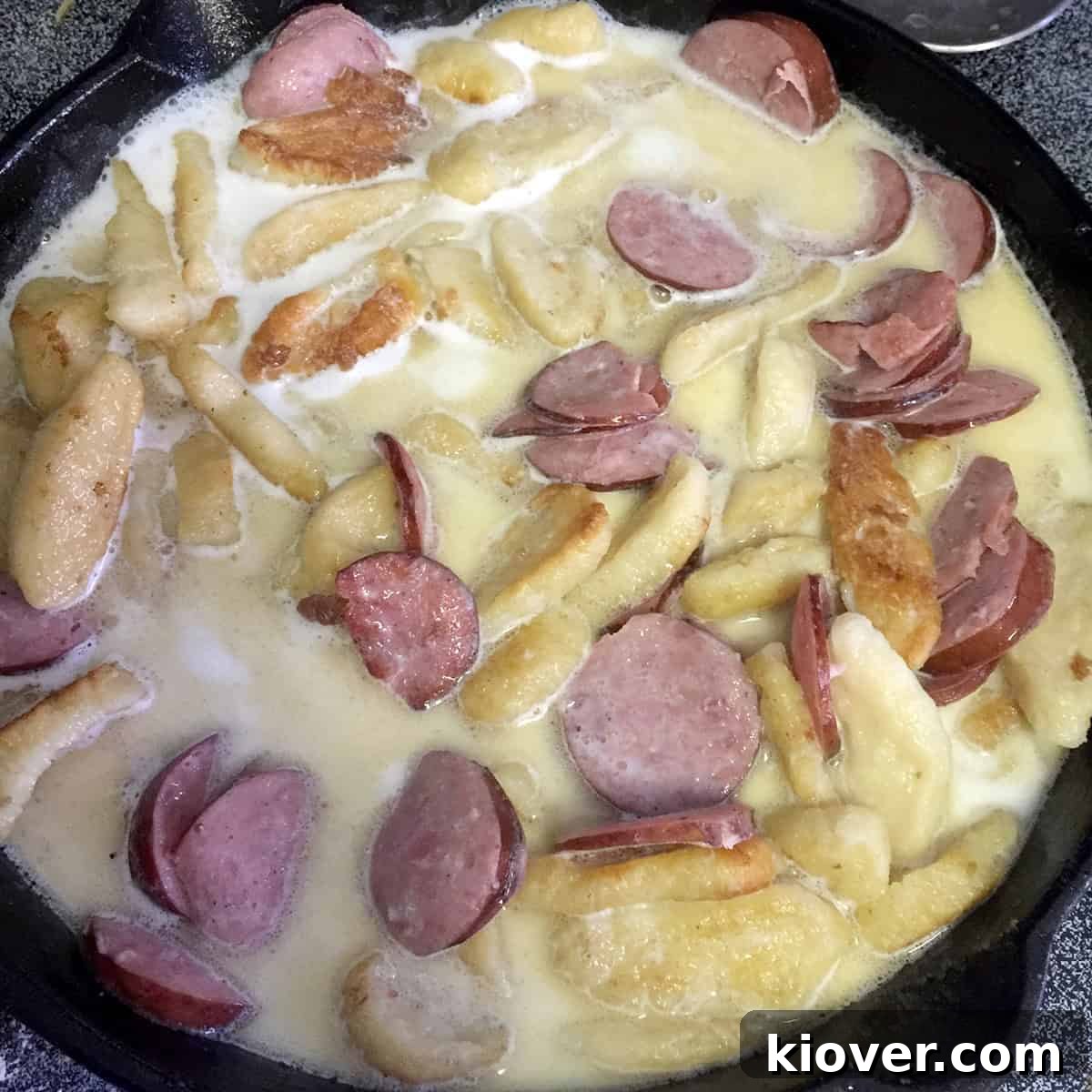
First, we focus on the star of the show: the knoephla dumplings. This involves combining a few simple ingredients, rolling out the dough, and cutting it into small, bite-sized pieces. Once the dumplings are shaped, they are briefly boiled until they float, then set aside. Next comes the skillet magic. In a large pan, the boiled knoephla are pan-fried in butter until golden and slightly crispy. The sausage is then added and cooked until heated through and lightly browned. Finally, milk is added to create a rich, creamy sauce, followed by the sauerkraut. A quick simmer allows all the flavors to meld together, and your luxurious German sauerkraut and sausage dish is ready to be enjoyed.
🤷 Substitutions and Variations to Customize Your Dish
Cooking is all about personal preference and making a recipe your own. This German sauerkraut and sausage skillet is incredibly versatile, allowing for several easy substitutions and creative variations:
- Dumplings: While homemade knoephla are highly recommended for their authentic flavor and texture, you can certainly use store-bought frozen dumplings (such as potato dumplings or even gnocchi for a different twist) to save time. Be sure to follow package instructions for thawing and cooking before adding them to the skillet.
- Sausage: The recipe calls for smoked German sausage, but don’t feel limited. Any smoked or pre-cooked ring sausage will work beautifully, including various types of bratwurst, Italian sausage (for a slightly different flavor profile), or even a robust chicken or turkey sausage if you prefer a leaner option. For an even quicker preparation, cooked ground sausage (like breakfast sausage or a mild Italian ground sausage) can be crumbled and browned directly in the skillet before adding the dumplings.
- Sauerkraut: If you’re a true kraut enthusiast, feel free to increase the amount to your liking. The recipe suggests draining the sauerkraut, but if you enjoy a more intense, tangy flavor and a slightly thinner sauce, you can skip draining it entirely or only partially drain it, allowing some of its flavorful liquid to contribute to the dish.
- Vegetables: Consider adding thinly sliced onions or chopped garlic to the skillet with the butter before frying the dumplings and sausage for an extra layer of aromatic flavor. Diced apples or caraway seeds can also be added for a touch of sweetness and an authentic German spice note.
- Broth: For a richer sauce, you can substitute half of the whole milk with chicken or vegetable broth. This will add depth without making the dish overly creamy.
Remember, the goal is to create a delicious dinner that suits your taste. Don’t hesitate to experiment and adjust the ingredients to make this recipe uniquely yours.
📦 Storage Tips for Leftovers
This hearty German skillet dish makes excellent leftovers, often tasting even better the next day as the flavors have more time to meld. To store any remaining portions, first allow the dish to cool completely to room temperature. This prevents condensation build-up, which can lead to sogginess and affect food safety. Once cooled, transfer the entire dish or individual servings into an airtight container.
It will keep well in the refrigerator for up to 3 days. When you’re ready to reheat, gently warm it on the stovetop over medium-low heat. If the creamy sauce has thickened too much during refrigeration, simply add a splash of water, milk, or broth to loosen it to your desired consistency. Stir frequently to ensure even heating and prevent sticking. You can also reheat individual portions in the microwave, using short bursts and stirring in between, though the stovetop method often yields better texture.
For longer storage, this dish freezes beautifully for up to 3 months. Portion out cooled leftovers into freezer-safe containers or heavy-duty freezer bags, removing as much air as possible to prevent freezer burn. When ready to enjoy, thaw the dish overnight in the refrigerator. Reheat gently on the stovetop as described above for the best possible results, bringing back that comforting warmth and rich flavor.
🎓 A Taste of History: Knoephla and Sauerkraut
The ingredients in this recipe aren’t just delicious; they carry centuries of culinary tradition. We use traditional Knoephla dumplings, a type of soft dumpling particularly popular in the German-Russian communities of the Midwest United States, where it’s often used in rich, creamy soups. However, frying knoephla, as we do in this skillet, is also a fairly common and equally delightful preparation method. For a deeper dive into its origins, here is an entire article about the fascinating history of Knoephla soup and its cultural significance.
Sauerkraut, the humble fermented cabbage, boasts an even longer and more widespread history. It has been a staple in the German diet since the 1600s, cherished not only for its tangy flavor but also for its impressive nutritional benefits and long shelf life, particularly valuable during harsh winters. But its roots go back even further, with evidence suggesting similar fermented cabbage dishes were consumed in ancient China over 2,000 years ago. German immigrants brought their love for sauerkraut to America, where it became a popular accompaniment to many hearty dishes. Make sure to check out that link for more intriguing facts about sauerkraut’s rich history and its status as a “superfood.”
❓ Frequently Asked Questions (FAQ)
Whether you rinse sauerkraut before cooking is entirely a matter of personal preference and how tangy you like your dish. Rinsing the sauerkraut with cold water will help moderate its intense sour flavor and reduce its saltiness, resulting in a milder finished dish. If you prefer a bolder, more traditional tang, you can simply drain the sauerkraut (or not drain it fully) and add it directly to the skillet. The liquid from the sauerkraut is safe to consume and adds to the dish’s flavor.
For a truly authentic and delicious pairing with sauerkraut, smoked German sausages are an excellent choice. Varieties like bratwurst, knackwurst, or even a good quality bockwurst complement the tanginess of the kraut perfectly. Kielbasa, a smoked Polish sausage, is another fantastic option that is widely available and works incredibly well. Essentially, any pre-cooked or smoked link sausage with a savory, slightly smoky profile will be a great match.
Sauerkraut and sausage is a hearty dish that pairs beautifully with a variety of sides. For a traditional German experience, serve them with creamy mashed potatoes, hearty rye bread, or soft pretzels. A light, crisp green salad or roasted root vegetables can add a fresh balance to the rich flavors. If you’re in the mood for something lighter, a dollop of sharp mustard, some tangy pickles, or a classic German potato salad makes a wonderful accompaniment. To complete the meal, consider washing it all down with a good German beer, a dry white wine, or even a refreshing hard cider.
You can prepare the knoephla dumpling dough a day in advance. Simply mix the ingredients, roll out the ropes, cut the pieces, and store them lightly floured on a baking sheet covered with plastic wrap in the refrigerator. This allows you to quickly boil and fry them when you’re ready to make the skillet dish, saving time on a busy weeknight.
No, this traditional German sauerkraut and sausage skillet is not typically spicy. The flavors are savory, tangy, and rich, primarily from the smoked sausage, fermented cabbage, and creamy sauce. Any heat would come from the specific type of sausage you choose (some bratwursts can be mildly spiced) or if you add chili flakes, which is not traditional for this recipe.
📝 Expert Tips and Tricks for the Perfect Skillet
- Sausage Selection: While any cured sausage works, a high-quality smoked German sausage or Kielbasa will deliver the most authentic and satisfying flavor profile. If using uncooked sausage (like fresh bratwurst), make sure to brown it thoroughly before adding the dumplings.
- Pan Choice: A cast iron skillet is ideal for this dish due to its excellent heat retention and ability to create a beautiful crust on the dumplings. However, any large, heavy-bottomed frying pan or Dutch oven will work perfectly well for simmering and frying.
- Don’t Overcrowd the Pan: When frying the dumplings, work in batches if necessary to avoid overcrowding. This ensures the dumplings get a nice golden-brown crust rather than steaming.
- Taste and Adjust: Always taste the dish before serving and adjust the seasoning (salt, pepper, and perhaps a pinch of caraway seeds) as needed. The saltiness of the sausage and sauerkraut can vary, so adjust accordingly.
- Simmer for Flavor: Allow the milk and sausage to simmer for the full 15 minutes. This step is crucial for developing a rich, flavorful sauce and tenderizing the sausage.
- Creaminess Factor: For an even richer and creamier dish, a splash of heavy cream or a dollop of sour cream stirred in at the very end can take this skillet to the next level.
- Serving Suggestion: This dish is quite hearty on its own, but a sprinkle of fresh chopped parsley or chives before serving adds a touch of freshness and color.
🛠 Recommended Kitchen Tools and Products
Having the right tools can make preparing this comforting German dish even more enjoyable and efficient:
- Large Pot: Essential for boiling the knoephla dumplings.
- Cast Iron Skillet: Ideal for achieving that perfect golden-brown crust on your dumplings and for simmering the entire dish.
- Chef’s Knife: For slicing sausage and preparing any additional vegetables.
- Strainer: Crucial for draining the boiled dumplings and sauerkraut.
- **Rolling Pin (Optional):** While you can roll the dumpling dough by hand, a rolling pin can help achieve a more uniform thickness.
😋 Share Your German Sauerkraut and Sausage Creation!
We hope you thoroughly enjoyed preparing and savoring this authentic German Sauerkraut and Sausage Skillet with Knoephla Dumplings! It’s truly awesome to know you’ve tried our recipe, and we extend our sincerest gratitude. Your feedback helps us immensely. If you could take a moment to leave a rating and share your thoughts in the comment section below, it would be greatly appreciated. This valuable input helps us understand what works well and assists other aspiring cooks in deciding whether to embark on this culinary adventure. Most of all, thank you for visiting Ramshackle Pantry and being a part of our cooking community!
Sauerkraut and Sausage Knoephla Skillet Dish
5 Stars
4 Stars
3 Stars
2 Stars
1 Star
5 from 5 reviews
Author: Ben Myhre
Prep Time: 15 minutes
Cook Time: 30 minutes
Total Time: 45 Minutes
Yield: 4 servings
Category: Dumplings, Skillet Dish
Method: Fry, Simmer
Cuisine: German
Description
This German sauerkraut and sausage dish, when combined with delicate knoephla dumplings, rich cream, and savory butter, creates an unparalleled heaven-in-a-skillet experience. Expect an explosion of authentic German flavors in every creamy, comforting bite.
Ingredients
For Homemade Knoephla Dumplings:
- 2 large eggs
- 1/2 cup whole milk
- 1 teaspoon salt
- 2 cups all-purpose flour (plus more for dusting)
For the Skillet Dish:
- 4 Tablespoons unsalted butter
- All of the prepared Knoephla Dumplings
- 8 ounces German smoked sausage (such as bratwurst, knackwurst, or kielbasa), sliced into 1/2-inch rounds or chopped
- 2 cups whole milk
- 2 cups sauerkraut, thoroughly drained (or partially drained, to taste)
- Salt and freshly ground black pepper, to taste
- Optional: A pinch of caraway seeds for authentic flavor
Instructions
Part 1: Preparing the Knoephla Dumplings
- Combine Dumpling Ingredients: In a medium-sized bowl, whisk together the eggs, 1/2 cup whole milk, and 1 teaspoon salt. Gradually add the 2 cups of all-purpose flour, mixing until a soft, shaggy dough forms.
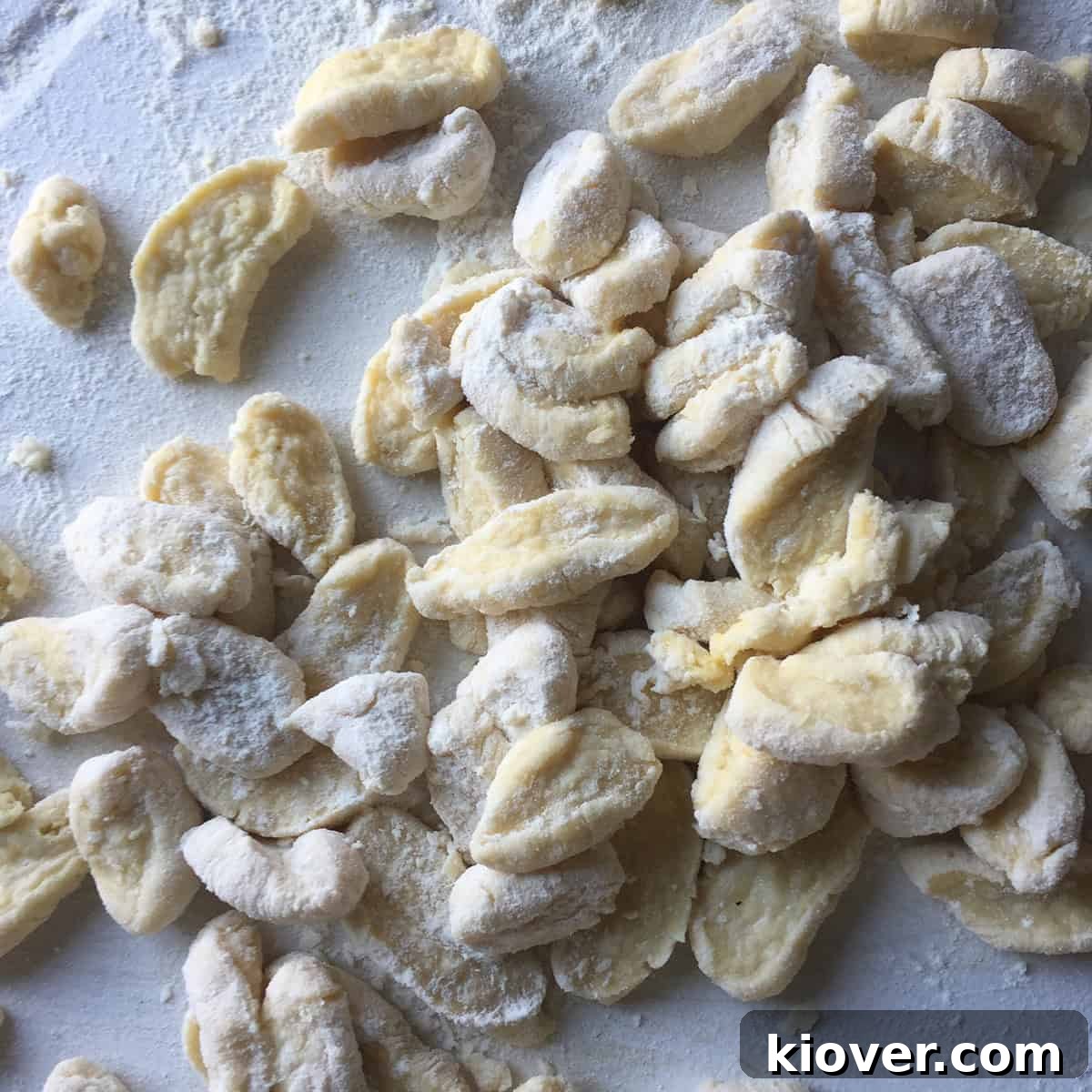
- Form Dough Ropes: Turn the dough out onto a lightly floured surface. Divide the dough into two manageable pieces. With your hands, roll each piece into a rope, approximately ½ inch in diameter. Sprinkle with additional flour as needed to prevent sticking.
- Cut Dumplings: Using a sharp knife or bench scraper, cut each dough rope into ½-inch dumpling pieces. Set them aside on a lightly floured surface or baking sheet to prevent them from sticking together.
- Boil Dumplings: Fill a large pot with water and add a generous pinch of salt. Bring the water to a rolling boil over high heat. Carefully add the knoephla dumplings to the boiling water, stirring gently to prevent sticking.
- Cook and Drain: Allow the dumplings to boil for 3-5 minutes, or until they all float to the surface. Once cooked, use a slotted spoon to transfer the dumplings to a colander and drain them thoroughly. Set aside while you prepare the skillet.
Part 2: Assembling the Skillet Dish
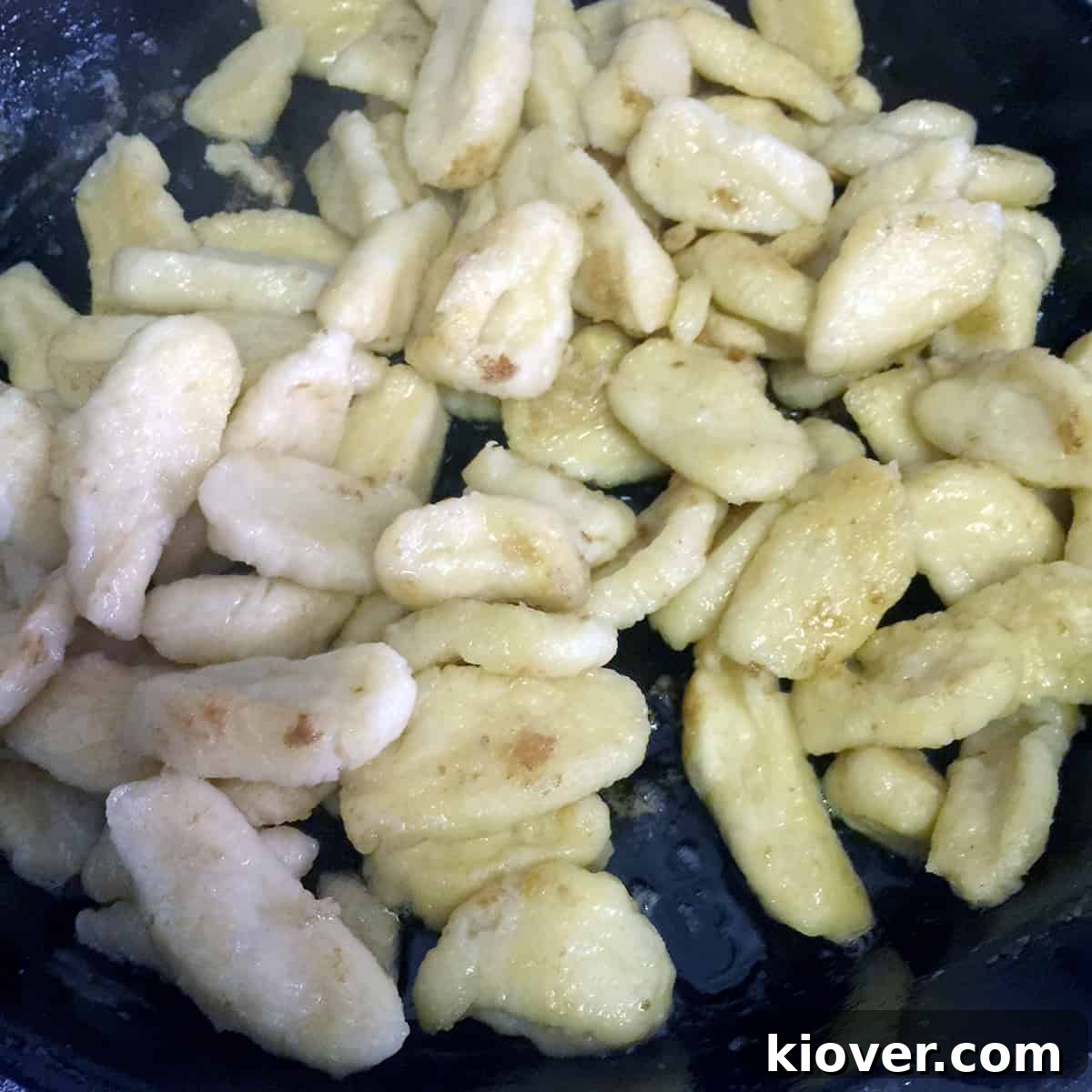
- Melt Butter and Fry Dumplings: Add 4 tablespoons of butter to a large frying pan or cast iron skillet and heat over medium-high heat until melted and sizzling. Add the boiled knoephla dumplings to the hot butter. Fry for about five minutes, stirring regularly with a spatula, until a beautiful golden-brown crust starts to develop on the dumplings.
- Add Sausage: Push the dumplings to one side (or remove them temporarily if your pan is too crowded). Add the sliced German smoked sausage to the pan. Cook for another 5 minutes, stirring occasionally, until the sausage is warmed through and slightly browned. Mix the dumplings and sausage together.
- Simmer with Milk: Pour in the 2 cups of whole milk. Bring the mixture to a gentle simmer, then reduce the heat to medium-low. Allow it to simmer for 15 minutes, stirring occasionally to prevent sticking and allow the flavors to meld and the sauce to slightly thicken.
- Season: Add salt and freshly ground black pepper to taste. If desired, you can also stir in a pinch of caraway seeds for an extra authentic German touch.
- Incorporate Sauerkraut: Finally, add the drained sauerkraut to the skillet. Stir it into the dumpling and sausage mixture and cook for just a few more minutes, until the sauerkraut is heated through.
- Serve: Your incredibly flavorful and comforting German sauerkraut and sausage knoephla skillet dish is now ready to serve! Enjoy it warm as a hearty main course.
Notes
- Feel free to use any cured or pre-cooked sausage you enjoy in this dish; just ensure it’s fully cooked before adding it to the skillet.
- A cast iron skillet is highly recommended for its even heat distribution and browning capabilities, but any large, heavy-bottomed pan will work perfectly.
- Adjust the amount of milk or add a splash of heavy cream for an even richer, creamier sauce if desired.