
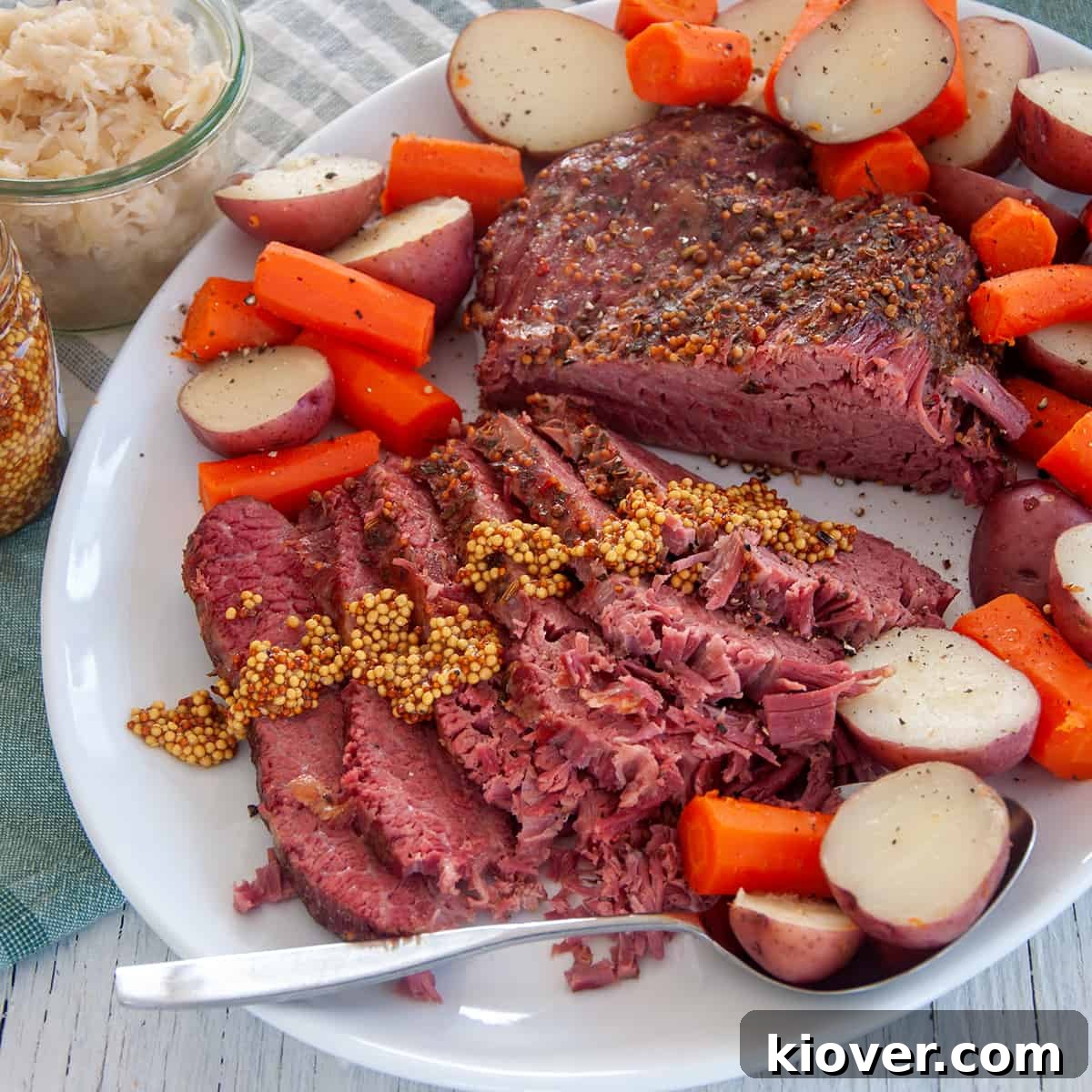
Welcome to the ultimate guide for preparing the most exquisitely tender and flavorful corned beef using the sous vide method. As a quintessential dish often associated with St. Patrick’s Day, corned beef takes on a new dimension when cooked precisely with sous vide, promising a fall-apart texture and rich, savory juices that traditional methods simply can’t match. This comprehensive recipe not only walks you through achieving culinary perfection with your corned beef but also pairs it with classic, comforting potatoes and carrots, making it an unforgettable meal for the holiday or any occasion where exceptional comfort food is desired.
The beauty of sous vide lies in its ability to maintain a consistent temperature throughout the cooking process, ensuring your corned beef is evenly cooked from edge to center. This method locks in moisture and flavor, preventing the dryness often encountered with oven roasting or the leaching of taste common with boiling. Prepare to elevate your corned beef experience to a gourmet level, turning a simple cut of meat into a succulent masterpiece that will impress everyone at your table.
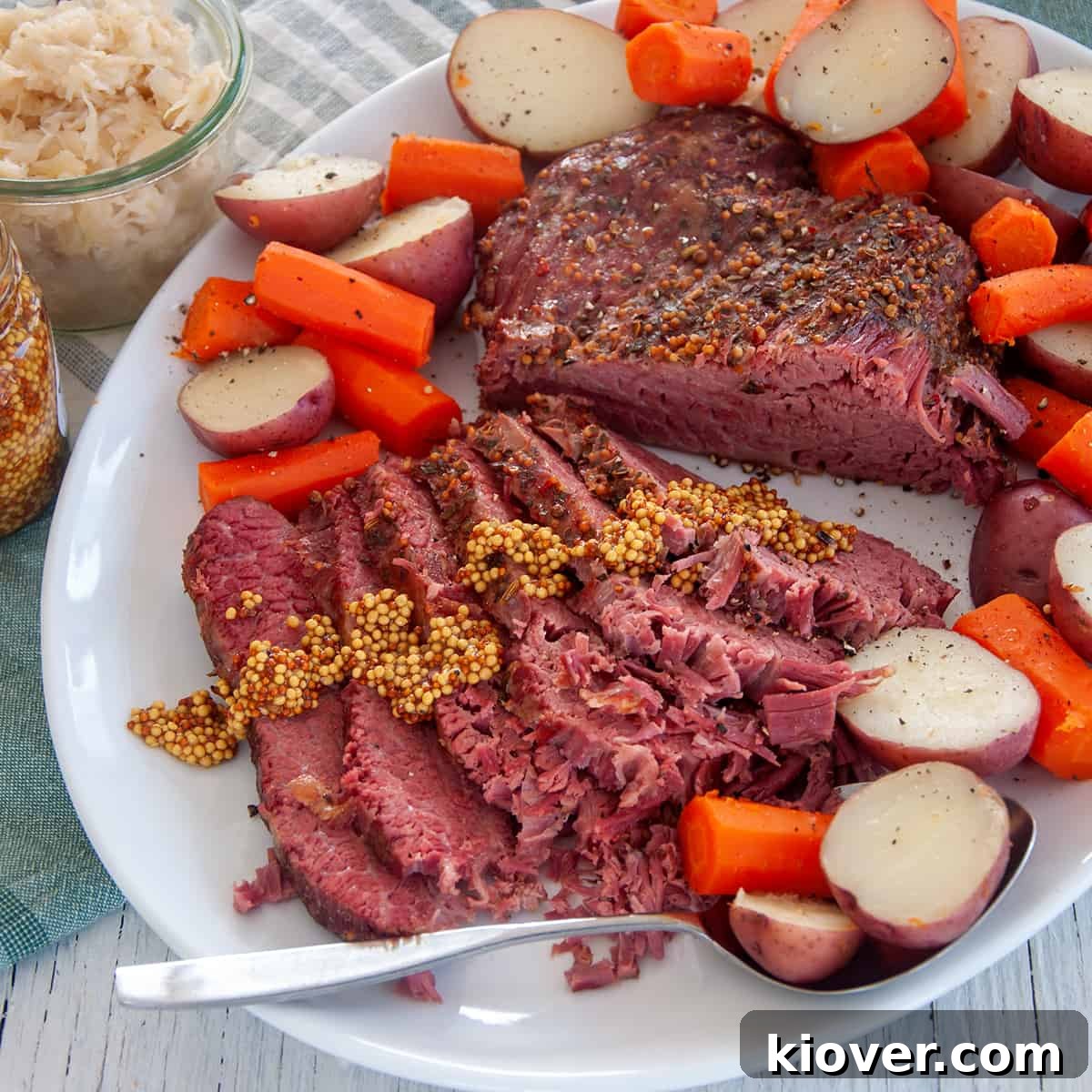
Why Sous Vide Corned Beef is a Culinary Revelation
If your ideal corned beef is incredibly tender, moist, and practically falls apart with a gentle touch, then the sous vide method is precisely what you need. This cooking technique is my absolute favorite for preparing a straightforward corned beef roast, and I’m confident it will become yours too. Beyond delivering an unbelievably tender result, sous vide excels at retaining all the delicious juices and robust flavors within the meat.
Unlike many conventional corned beef recipes that involve boiling the beef, which can unfortunately dilute its inherent flavors, sous vide cooking keeps all those precious essences locked inside. The gentle, consistent heat of the water bath allows the collagen in the corned beef to break down slowly, transforming tough fibers into a gelatinous, melt-in-your-mouth texture without sacrificing any of its savory depth. While I opt for oven bags and the displacement method rather than a vacuum seal for this particular recipe, the principle of cooking in its own juices remains paramount, ensuring no external liquid impacts the flavor profile negatively.
For those who own a sous vide machine and enjoy exploring its capabilities, this recipe offers a fantastic opportunity to diversify your culinary repertoire. It’s not just a practical cooking method; it’s also a fun and rewarding way to create extraordinary meals. This sous vide corned beef, traditionally served with a vibrant medley of potatoes and sauerkraut, makes for an unparalleled St. Patrick’s Day feast. Moreover, any delicious leftovers can be transformed into a delectable Corned Beef Hash or incorporated into a hearty Reuben Casserole. No matter how you choose to enjoy it, treating yourself to this magnificent meal is always a good idea!
Table of Contents
- Why Sous Vide Corned Beef is a Culinary Revelation
- Essential Ingredients for Sous Vide Corned Beef
- Step-by-Step Sous Vide Corned Beef Instructions
- Customizing Your Corned Beef: Substitutions and Variations
- Proper Storage and Reheating of Leftover Corned Beef
- The Surprising History of Corned Beef
- Frequently Asked Questions About Sous Vide Corned Beef
- Expert Tips and Tricks for Perfect Sous Vide Corned Beef
- Recommended Tools for This Recipe
- Share Your Sous Vide Corned Beef Experience
Essential Ingredients for Sous Vide Corned Beef
The beauty of this incredibly delicious recipe lies in its simplicity, reflected in a refreshingly short ingredients list. To embark on your journey to the perfect sous vide corned beef, you will need:
- Corned Beef: The star of our show, typically a brisket cut.
- Potatoes: A hearty complement, ideal for absorbing rich flavors.
- Carrots: Adding a touch of sweetness and vibrant color to your plate.
- Salt & Pepper: For seasoning the accompanying vegetables to perfection.
While the recipe card provides specific quantities, understanding the nuances of your main ingredient—the corned beef—is key to success.
Flat Cut or Point Cut Corned Beef: Choosing the Best Brisket
When you’re at the grocery store, you’ll generally encounter two primary cuts of corned beef brisket: the flat cut and the point cut. Both will work beautifully with this sous vide recipe, but understanding their differences can help you choose according to your preference.
The **Flat Cut**, often referred to as the “first cut,” is typically leaner with a more uniform, rectangular shape. It usually comes with a visible fat cap on one side, which can be trimmed to your liking. Its consistent shape makes it easier to slice into neat, attractive pieces, ideal if presentation is a priority. It yields classic, clean slices perfect for sandwiches.
The **Point Cut**, or “second cut,” is generally thicker and more irregularly shaped. It’s characterized by more marbling and a higher fat content distributed throughout the meat. This additional fat contributes significantly to moisture and flavor, often resulting in an even more tender, “fall-apart” texture, which is exactly what we’re aiming for with this sous vide method. If you’re like me and appreciate the rich tenderness that fat provides, the point cut might be your preferred choice. While both cuts deliver excellent results, for the ultimate melt-in-your-mouth experience, I often lean towards the point cut.
The Unsung Hero: Oven Bags for Sous Vide
Just as we utilize them in our Sous Vide Prime Rib recipe, oven bags are an excellent choice for this corned beef, particularly when dealing with larger cuts of meat. While traditional sous vide often calls for vacuum-seal bags, oven bags offer a practical and effective alternative, especially for substantial roasts that might not fit standard vacuum bags.
There are two critical factors in this recipe that make oven bags particularly suitable and necessitate a specific approach: the cooking time and temperature. We cook this corned beef for a full 24 hours at a relatively high sous vide temperature of 175°F (79.4°C). This extended duration and elevated temperature can test the integrity of single-layer bags.
For this reason, I strongly recommend using **two oven bags**, one inside the other. While I’ve only encountered an issue with a single bag tearing once (and that was after the cooking was complete, during handling), the risk of losing those precious meat juices is simply not worth it. The rich, flavorful juices produced during the sous vide process are absolutely essential, as they will be used to cook our accompanying vegetables. Doubling up on the bags provides an extra layer of security, ensuring no leaks and preserving every drop of that savory liquid. Furthermore, investing in a good quality brand of oven bags can significantly improve your chances of a successful and mess-free outcome.
Step-by-Step Sous Vide Corned Beef Instructions
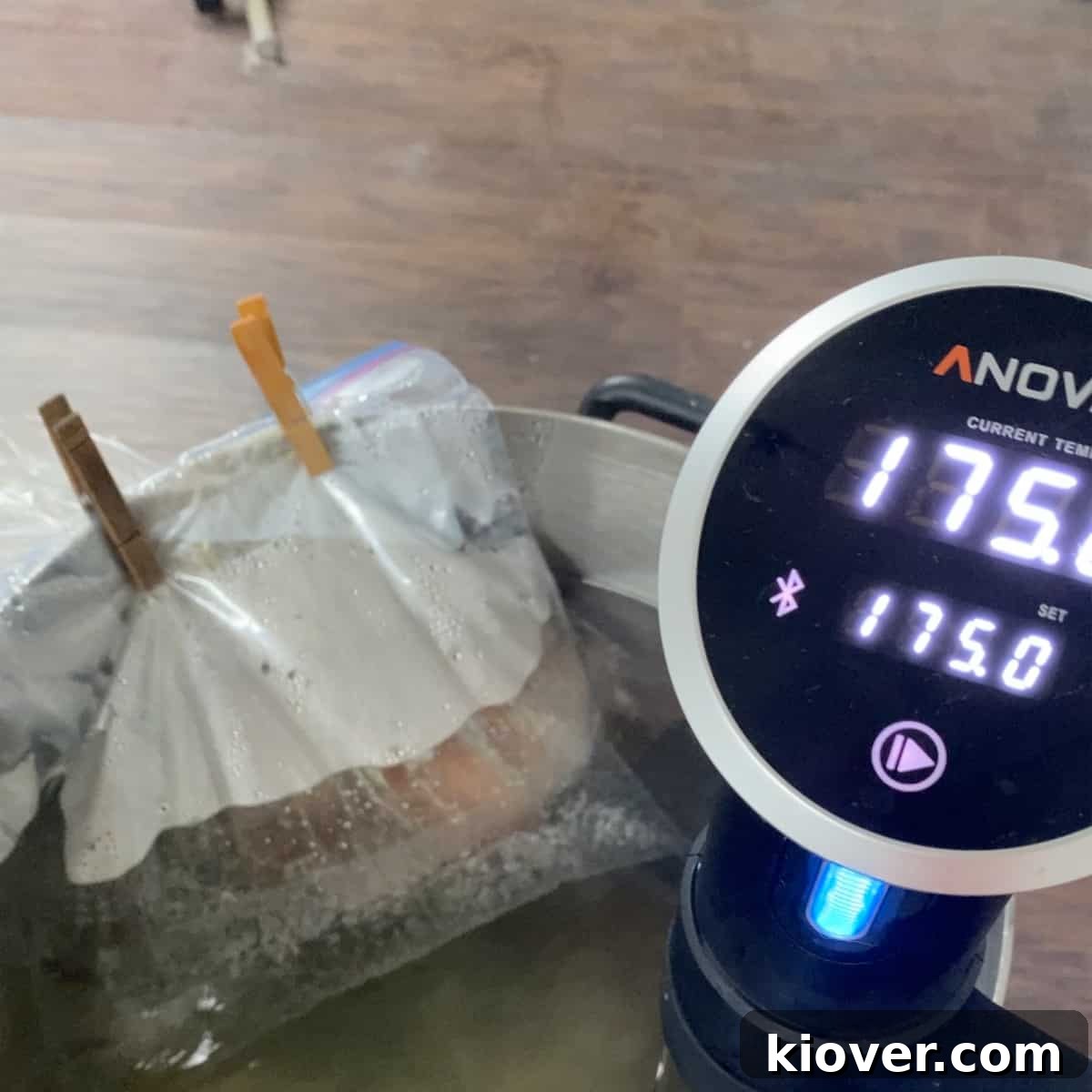
Forget the traditional methods of baking or boiling; today, we’re harnessing the power of sous vide to create a corned beef that is incredibly tender and truly falls apart. This recipe involves a slow and gentle cook at 175°F (79.4°C) for a full 24 hours, culminating in a finished product that is nothing short of delicious.
Once the sous vide process is complete, we’ll transform the rich, flavorful juices into a cooking liquid for our classic accompaniments. By simmering carrots and potatoes in these reserved juices, along with a touch of water, we infuse them with unparalleled depth. While the vegetables come to a boil, a quick sear of the finished corned beef in a high-temperature oven adds a beautiful caramelized crust, enhancing both texture and appearance. By timing these final steps carefully, your perfectly tender roast, rested and ready, will be served alongside exquisitely tender vegetables.
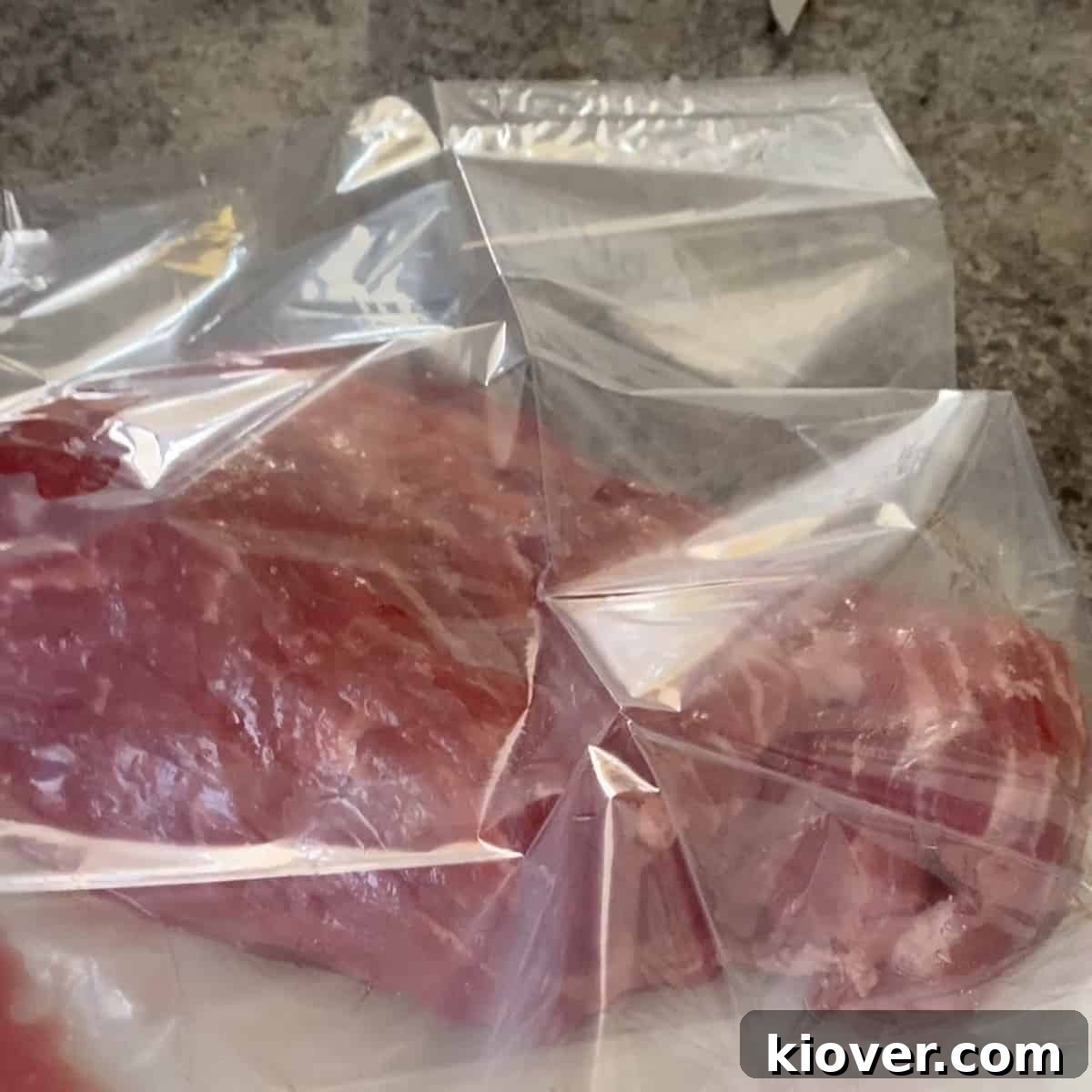
Displacement Method vs. Vacuum Sealing: Bagging Your Beef
When it comes to sous vide cooking, there are primarily two methods for preparing your food in a bag: vacuum sealing or the displacement method. For a large roast like corned beef, the displacement method often proves more practical. Finding a vacuum bag large enough to accommodate a substantial brisket can be challenging.
The **displacement method** is straightforward: you place your roast into a bag (or, as recommended for this recipe, two nested oven bags to prevent leaks). Then, slowly submerge the bagged roast into your water bath, allowing the water pressure to push as much air out of the bag as possible. The goal is to minimize air pockets, as air can act as an insulator and prevent even cooking. Once most of the air is expelled, secure the top of the bag to the side of your cooking container with a clip, ensuring the contents remain fully submerged and the top edge stays above the water line to prevent water from entering the bag.
The Floating Challenge and How to Solve It
A common issue when cooking large cuts of meat like corned beef in a sous vide bath is their tendency to float. This occurs because the meat, even when bagged, can contain air or fat that makes it buoyant. The core principle of sous vide is to cook food evenly by fully submerging it in a precisely temperature-controlled water bath. If your roast floats, parts of it won’t be in contact with the heated water, leading to uneven cooking.
To counteract this, I employ a simple yet highly effective trick: I fill a freezer-safe zipper-lock bag with water and place it directly on top of the bagged corned beef. The weight of the water bag acts as a gentle anchor, keeping the roast fully submerged throughout the entire cooking process. While specialized food-safe weights are available for purchase, a bag of water is a readily accessible and perfectly functional solution. To ensure the water bag stays in place, I typically use a clothesline clip to secure it over the oven bags, attaching it to the side of the container.
Optimal Time and Temperature for Fall-Apart Corned Beef
Many sous vide recipes for corned beef suggest cooking at a lower temperature, around 140°F (60°C), for an extended period, sometimes up to two days. This lower temperature typically results in a more sliceable, steak-like texture. However, for that coveted “fall-apart” tenderness, my recipe calls for a higher temperature: 175°F (79.4°C) for 24 hours. At 140°F, fat begins to render, but at 175°F, over a prolonged period, the connective tissues and collagen within the corned beef break down much more extensively, yielding an incredibly tender, shreddable result. This higher temperature and longer duration are specifically designed to achieve that desirable melt-in-your-mouth, fall-apart consistency that makes this corned beef so exceptional.
Maintaining Water Levels: A Critical Sous Vide Tip
One often-overlooked aspect of extended sous vide cooking, especially at higher temperatures, is water evaporation. Over 24 hours at 175°F, you will inevitably lose a significant amount of water from your sous vide bath. If the water level drops too low, your immersion circulator may stop functioning, or parts of your food could become exposed to air, leading to uneven cooking and potential food safety issues.
Most modern sous vide machines are equipped with alarms to alert you if the water level drops below a safe minimum. However, it’s always best to be proactive. Make it a habit to check the water level periodically, especially before going to bed. Refilling the bath with warm water as needed can prevent those inconvenient late-night alarms and ensure uninterrupted, perfect cooking.
The Perfect Finish: Oven Sear, Resting, and Slicing
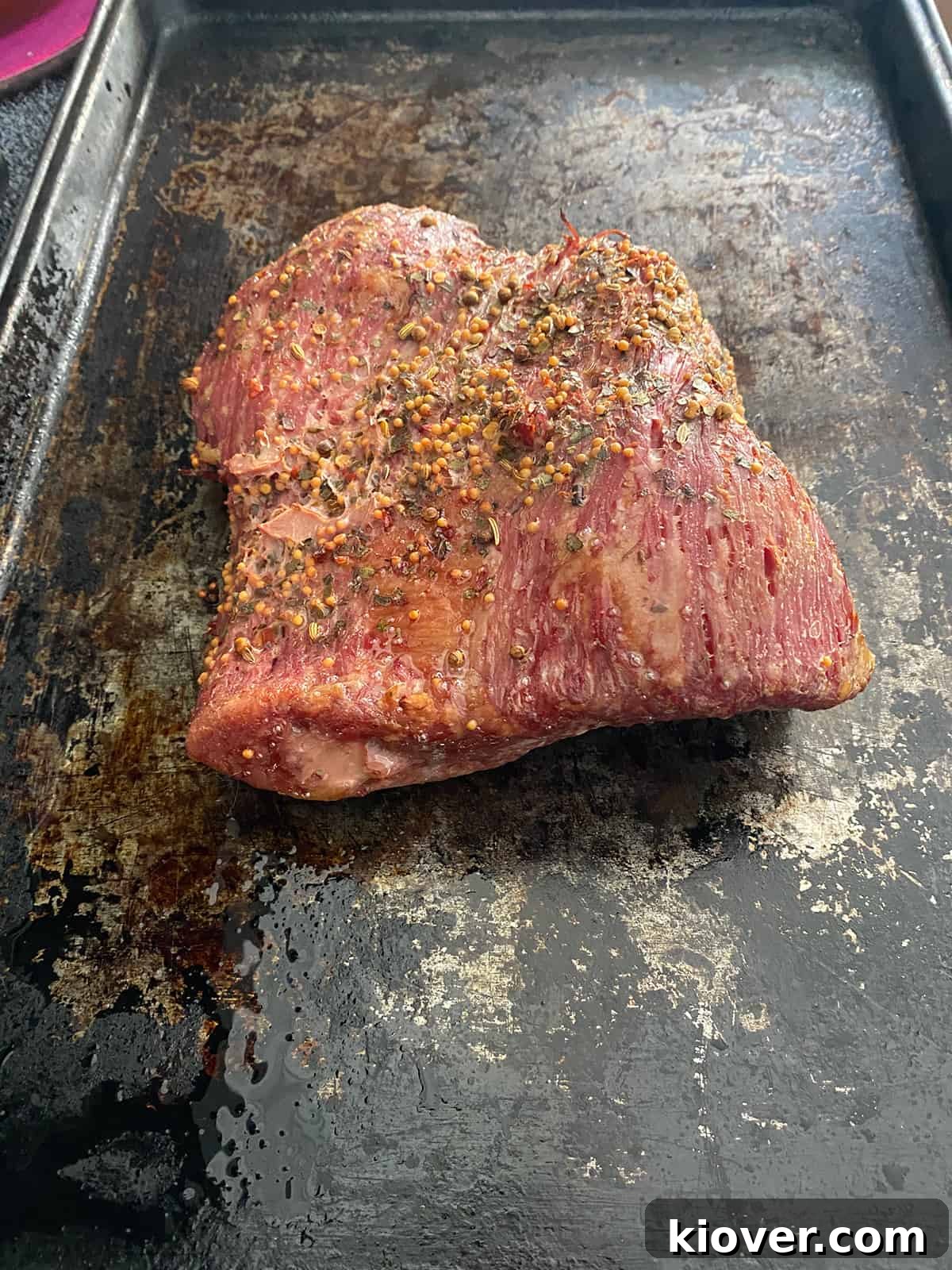
Once your corned beef has completed its long, tenderizing bath, it’s time for the final touches that elevate its texture and appearance. Transfer the roast to a roasting pan and place it in a preheated oven at a blazing 500°F (260°C) for just 10 minutes. This brief, high-temperature sear creates a beautiful, savory crust on the exterior of the corned beef without significantly altering its perfectly cooked internal temperature or tenderness. This step adds a crucial layer of flavor and a pleasing textural contrast.
After its oven finish, remove the roast and allow it to rest for approximately 5 minutes. This short resting period allows the juices to redistribute throughout the meat, ensuring every bite is moist and flavorful. When it’s time to slice, always cut the corned beef against the grain. This technique shortens the muscle fibers, making each slice even more tender and easier to chew, especially with a meat cooked to such a fall-apart consistency. You may find that the meat is so tender it practically shreds, which is exactly the desired outcome for this recipe. Handle it gently, and you’ll be able to present beautiful, succulent cuts of meat.
Orchestrating the Sides: Timing Potatoes and Carrots
While the initial sous vide cooking of the corned beef offers a great deal of flexibility in timing, the final stages of this recipe require a bit more coordination to ensure everything is ready to serve simultaneously. The key to success here is preparation and precise timing for the last few steps.
Before the sous vide cooking time for your corned beef is up, make sure your kitchen is ready. Have your potatoes and carrots already cleaned, peeled, and cut to your desired size. Additionally, preheat your oven to 500°F (260°C) well in advance. As soon as you remove the corned beef from the sous vide bath, place it in the preheated oven for its quick sear. Simultaneously, take the reserved meat juices from the oven bags and transfer them to a large pot. Add your prepped potatoes and carrots to this pot, cover with a bit of water, and bring them to a boil, then reduce to a simmer until tender. By timing these steps efficiently, your perfectly seared, rested corned beef will be ready to serve alongside exquisitely tender, flavor-infused potatoes and carrots, creating a cohesive and delicious meal.
Customizing Your Corned Beef: Substitutions and Variations
This sous vide corned beef recipe is wonderfully versatile and can be adapted to suit your preferences or what you have on hand. Here are a few ways you can customize your meal:
- Type of Potato: Feel free to use any variety of potato you prefer. Small red potatoes are classic, but Yukon Golds, Russets (peeled and cut larger), or even sweet potatoes can offer an interesting twist. Just adjust cooking time based on density and size.
- Side Vegetables: While carrots and potatoes are traditional, don’t limit yourself! Consider adding or substituting other hearty vegetables. Cabbage wedges, parsnips, turnips, or even Brussels sprouts cooked in the flavorful meat juices would be excellent choices, adding more variety and nutrients to your plate.
- Spice Packet: Most store-bought corned beef comes with a spice packet. You can absolutely include this in the sous vide bag with your brisket for an extra layer of traditional flavor. Alternatively, you can create your own spice rub with ingredients like bay leaves, mustard seeds, peppercorns, and allspice.
- Glaze Options: For an extra special touch, consider a glaze after the sous vide bath and before the oven sear. A simple brown sugar and mustard glaze, or a Guinness-infused reduction, can add a beautiful sheen and a tangy-sweet complement to the savory beef.
Proper Storage and Reheating of Leftover Corned Beef
Having leftover sous vide corned beef is a delight, as it’s incredibly versatile for future meals. To ensure its quality and safety, proper storage is crucial. Allow the cooked corned beef to cool to room temperature as quickly as possible (within two hours of cooking). Once cooled, you have a few options for storage.
For short-term storage, wrap the corned beef tightly in plastic wrap, then in aluminum foil, or place it in an airtight container. The key is to minimize air exposure, which can accelerate spoilage. Stored this way, cooked corned beef will remain fresh in the refrigerator for up to four days.
If you anticipate needing to keep it longer, corned beef freezes exceptionally well. Portion the cooled meat into meal-sized servings, wrap them tightly in plastic wrap and then foil, or use freezer-safe bags, expelling as much air as possible. Label with the date. Frozen corned beef can maintain its quality for two to three months. When you’re ready to enjoy it again, thaw it in the refrigerator overnight before reheating.
To reheat, you have several methods:
- Oven: For best results with larger portions, place slices or chunks in an oven-safe dish with a splash of broth or water, cover tightly with foil, and reheat at 300°F (150°C) until warmed through. This helps prevent drying.
- Stovetop: Dice or slice the corned beef and sauté gently in a pan with a little butter or broth until heated. This works well for hash or quick servings.
- Microwave: For individual servings, place on a microwave-safe plate, add a tablespoon of water or broth, cover, and heat in short bursts until warm. Be careful not to overcook, as this can dry out the meat.
Always ensure the corned beef is heated through to a safe internal temperature before serving.
The Surprising History of Corned Beef
While corned beef is indelibly linked with St. Patrick’s Day and Irish-American culture, its history is far more complex and globally influenced than many realize. The reality is that corned beef was not a traditional staple in Ireland for the majority of its history.
Ironically, Ireland became a significant producer of corned beef because of the demand from other nations, particularly the British Empire. The cattle industry thrived in Ireland, but the beef produced was largely exported. As this Smithsonian article explains, Irish people themselves often couldn’t afford the very beef raised on their own land, relying instead on pork and dairy.
However, corned beef found its place as a practical and affordable preserved meat in other parts of the world. Its salt-cured nature made it ideal for long journeys and storage, becoming a common ration for naval fleets and a sustenance food for the poor and enslaved populations. As Irish immigrants, particularly during the potato famine, arrived in America, they encountered a different culinary landscape. Beef was significantly cheaper and more accessible in America than in Ireland.
In urban centers like New York, they found themselves living alongside Jewish immigrant communities, who had their own traditions of curing brisket, notably pastrami. While pastrami was traditionally a different cut of meat, it shared the same preservation technique of brining. This cultural exchange led to corned beef becoming widely adopted by Irish immigrants in America, a more affordable substitute for the pork they ate back home, and eventually, a beloved tradition for St. Patrick’s Day celebrations. Today, you might even find pastrami made from the same brisket cut as corned beef, highlighting the shared culinary heritage.
Frequently Asked Questions About Sous Vide Corned Beef
The term ‘corned’ refers to the preservation process of the beef using large grains of salt, which were historically called “corns” of salt. These salt kernels were similar in size to corn kernels, hence the name ‘corned beef’. This brining process gives the meat its characteristic flavor and rosy pink color.
No, you should not sous vide corned beef directly in its original packaging. The plastic packaging used for store-bought corned beef is not designed for the temperatures and extended cooking times of sous vide, and chemicals could potentially leach into your food. Always remove the corned beef from its original packaging and place it in food-safe bags (like oven bags as recommended here, or vacuum-seal bags) before cooking sous vide.
It is generally recommended to slice corned beef after sous vide cooking. The sous vide process makes the meat incredibly tender, which means it will be much easier to slice neatly and against the grain once it’s cooked and rested. Slicing it beforehand might result in pieces that fall apart too much during the long cooking process. However, if you have a specific presentation in mind or want to ensure consistent seasoning for very thin slices, you could pre-slice and then vacuum-seal the individual slices for sous vide cooking, though this is less common for a large roast.
Yes, it’s a good practice to thoroughly rinse the corned beef brisket under cold running water before placing it in the sous vide bag. This helps remove any excess salt from the curing process and can prevent the final dish from being overly salty, ensuring a better flavor balance.
A common reason for a sous vide alarm is that the water level has dropped too low due to evaporation. If your alarm sounds, immediately check the water level. Carefully add warm water (to avoid shocking the system and potentially cracking your container) until the water reaches the minimum fill line or covers your food. Once the water level is restored, the machine should resume cooking.
Expert Tips and Tricks for Perfect Sous Vide Corned Beef
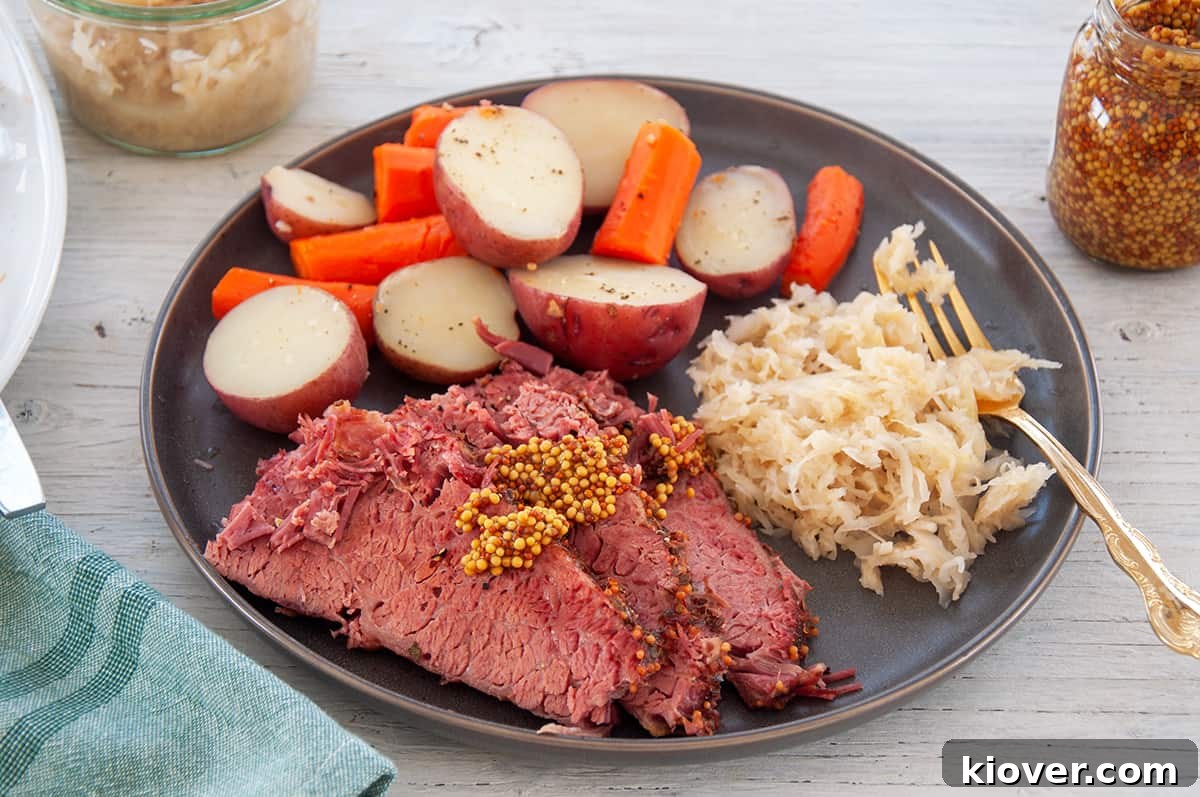
- I love serving my sous vide corned beef with tangy sauerkraut, which provides a wonderful counterpoint to the rich meat. Another fantastic option is to cook some fresh cabbage wedges alongside your potatoes and carrots in the flavorful meat juices, infusing the cabbage with delicious savory notes.
- Always **double bag your corned beef with oven bags** if you are using the displacement method. This is a crucial step to prevent any leaks during the long cooking time, ensuring all those precious juices are retained for cooking your vegetables.
- For a seamless serving experience, make sure your potatoes and carrots are peeled and cut, and your oven is preheated to 500°F (260°C) **before** you remove your beef from the sous vide bath. This perfect timing ensures your entire meal is hot and ready at the same time.
- While this recipe provides general nutritional information based on a 4-pound roast, remember that your serving size and actual nutritional values may vary depending on the size of your specific roast and individual appetites.
- A good quality mustard, particularly a coarse-grain Dijon or whole-grain variety, makes an excellent condiment for this dish. Its sharp, piquant flavor cuts through the richness of the corned beef beautifully.
- Don’t discard any leftover cooking liquid from the vegetables! It makes a fantastic base for a savory gravy to drizzle over your corned beef and sides. Simply thicken it with a cornstarch slurry or roux.
- For an extra crispy exterior, after the oven sear, you can also briefly sear the corned beef in a hot cast-iron skillet with a little oil, pressing down gently on all sides until a deep brown crust forms.
Recommended Tools for This Recipe
Having the right tools can make all the difference in achieving culinary success. For this Sous Vide Corned Beef recipe, these items will be invaluable:
- Sous Vide Machine: The essential device for precision temperature control.
- Oven Bags: Durable bags crucial for the displacement method and juice retention.
- Large Pot: To hold your sous vide bath and later, to boil your vegetables.
- Meat Thermometer: Useful for verifying the internal temperature of your roast or cooked vegetables, ensuring food safety and desired doneness.
Share Your Sous Vide Corned Beef Experience
We are absolutely thrilled that you decided to give this Sous Vide Corned Beef dinner recipe a try! Your culinary adventures are what make cooking so rewarding. If you enjoyed preparing and savoring this tender, fall-apart corned beef, we would be incredibly grateful if you could leave a rating in the comment section below. Your feedback helps us understand how we’re doing and assists other home cooks in discovering and deciding on their next delicious meal. Most importantly, thank you for visiting Ramshackle Pantry and for being a part of our culinary community!
Print Recipe
Sous Vide Corned Beef
5 Stars
4 Stars
3 Stars
2 Stars
1 Star
5 from 1 review
- Author: Ben
- Prep Time: 15 minutes
- Cook Time: 24 hours 30 minutes
- Total Time: 24 hours 45 minutes
- Yield: 6 servings
- Category: Beef
- Method: Sous Vide
- Cuisine: Irish
Description
Sous Vide Corned Beef can be tender, delicious, and perfect. Use this recipe to make a great fall-apart Corned Beef dinner using your Sous Vide machine. We also include a potatoes and carrots recipe that can be served as a wonderful side to the dish.
Ingredients
Units
Scale
- 1 Corned Beef 3-5 pounds
- 2 pounds of small red potatoes, halved or quartered
- 6 medium carrots, cleaned and roughly chopped
- Salt and pepper, to taste
Instructions
- Add corned beef roast to 2 oven bags and sous vide at 175° Fahrenheit for 24 hours.
- Near the end of cooking time, preheat the oven to 500° Fahrenheit.
- Remove roast from sous vide and remove from bag. Reserve liquid.
- Place roast on roasting pan.
- Cook in oven for 10 minutes.
- While cooking, put bag juices, potatoes, carrots into a large pot.
- Cover with water and bring to a boil and cook over medium-high until tender.
- When roast is done, remove and allow to rest for 5 minutes.
- Cut against the grain.
- Serve roast with potatoes and carrots.
Notes
- I like serving mine with sauerkraut. Another option is to cook some cabbage along with the potatoes and carrots.
- Double bag with oven bags if you are using the displacement method.
- Make sure to have your potatoes and carrots prepared and oven preheated before you remove your beef from the sous vide.
- For nutritional information, I am using a 4-pound roast. Your serving size might vary depending on appetites and the size of the roast.
- Mustard goes great with this dish.
Nutrition
- Serving Size: 1/6 of Total
- Calories: 676
- Sugar: 3 g
- Sodium: 2994 mg
- Fat: 40 g
- Saturated Fat: 13 g
- Unsaturated Fat: 27 g
- Carbohydrates: 32 g
- Fiber: 6 g
- Protein: 45 g
- Cholesterol: 147 mg