
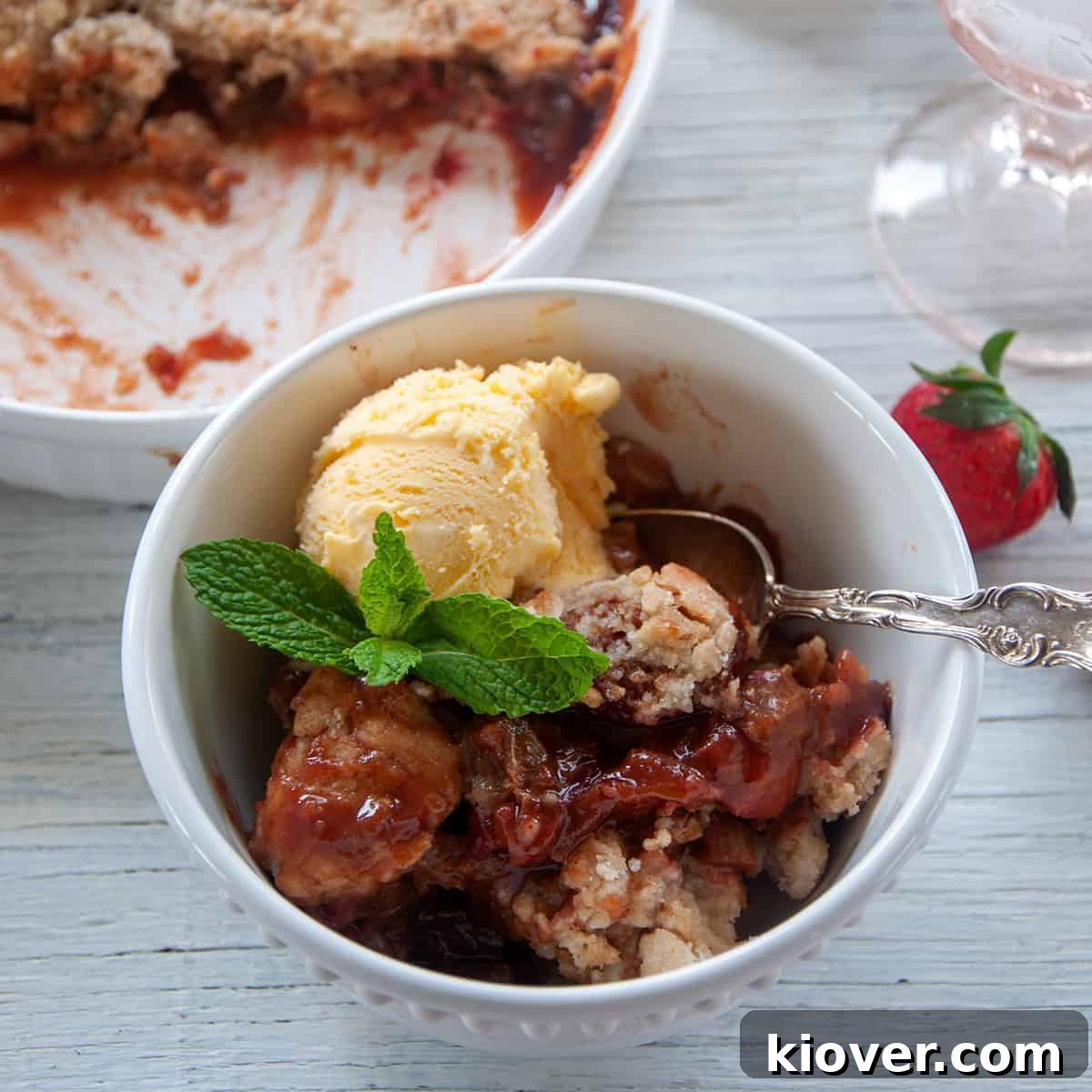
Irresistible Strawberry Rhubarb Cobbler: A Sweet & Tangy Springtime Delight
Prepare to be enchanted by this utterly delicious Strawberry Rhubarb Cobbler, a quintessential spring dessert that captures the vibrant flavors of the season. This easy-to-make cobbler combines the juicy sweetness of ripe strawberries with the delightful tartness of fresh rhubarb, all crowned with a simple yet incredibly satisfying topping. Perfect for spring gatherings, holidays, or simply a comforting treat on any given day, this recipe promises a mouthwatering experience that celebrates the best of seasonal produce.
The beauty of this cobbler lies in its simplicity and the harmonious balance of its key ingredients. Each spoonful offers a symphony of flavors and textures: the tender, fruit-filled base simmering in a rich, slightly thickened sauce, topped with rustic, golden-brown dough patties that are wonderfully crisp on the outside and soft within. It’s a dessert that feels both gourmet and homey, inviting you to savor every single bite. Let’s dive into how you can create this easy, tasty, and sweet Strawberry Rhubarb Cobbler in your own kitchen today.
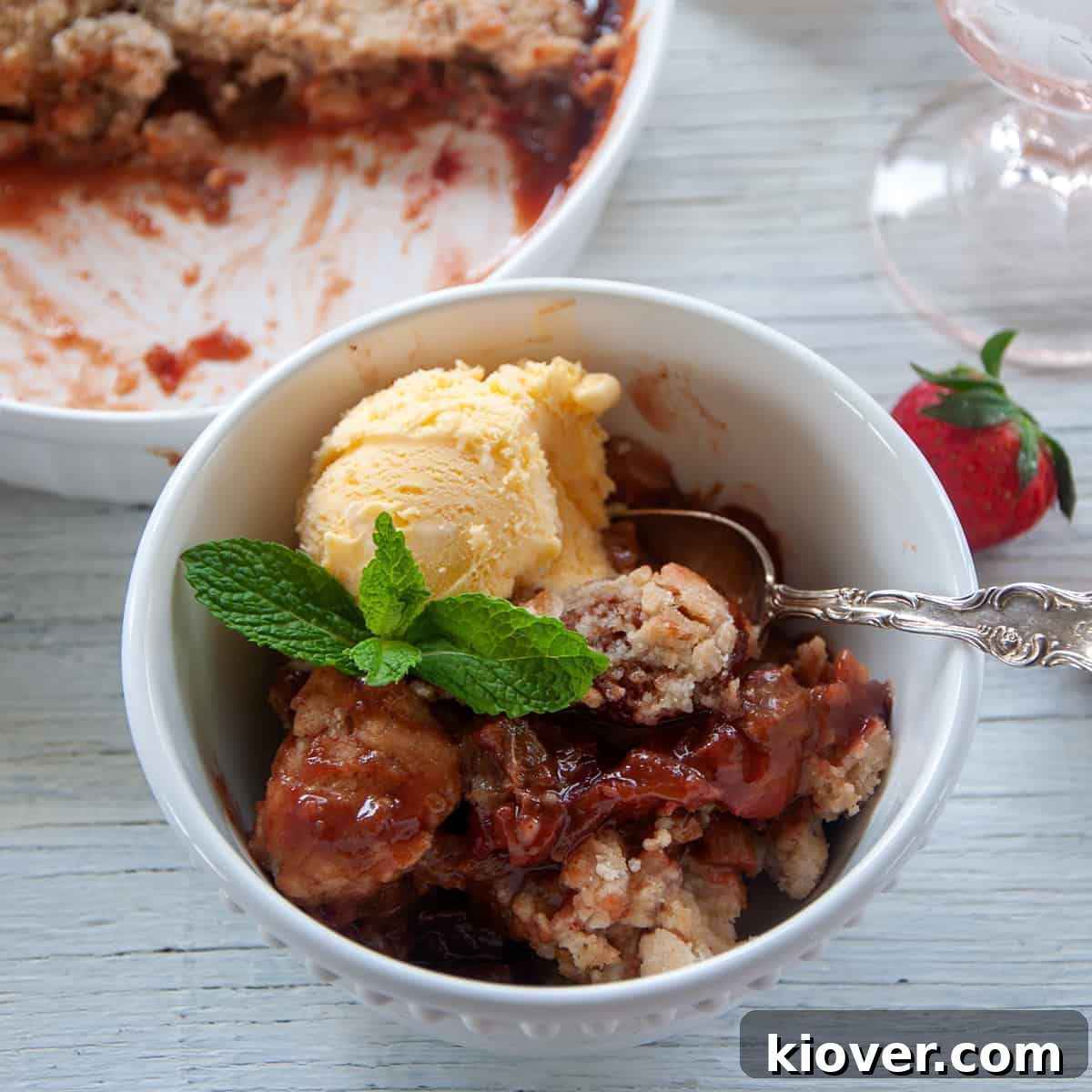
Understanding the Basics of a Perfect Cobbler
At its heart, a cobbler is a wonderfully straightforward dessert, typically consisting of two primary components: a flavorful fruit filling and a delightful dough topping. Our Strawberry Rhubarb Cobbler is no exception, adhering to this classic structure while delivering an explosion of seasonal taste. This section will walk you through the fundamentals, making the process approachable for even novice bakers.
Crafting the Delectable Strawberry Rhubarb Filling
The foundation of any great cobbler is its filling, and for this recipe, we celebrate the iconic pairing of strawberries and rhubarb. Creating this vibrant base is incredibly simple. It primarily involves combining the freshly prepared fruit with a few other essential ingredients that enhance its natural flavors and achieve the perfect saucy consistency. The most time-consuming part might be slicing the strawberries and chopping the rhubarb, but even this step is remarkably quick, taking only a few minutes to prepare these seasonal gems.
Once your fruits are prepped, they are gently mixed with sugar to sweeten the tart rhubarb and cornstarch to ensure the juices thicken into a luscious sauce rather than a watery mess during baking. A touch of lemon juice brightens the overall flavor profile, while a hint of cinnamon adds a subtle warmth that beautifully complements the fruit. For those seeking an extra layer of depth, a spoonful of molasses can introduce a rich, caramel-like note, evoking a classic, comforting essence. This mixture is then ready to be spread into your baking dish, awaiting its crowning glory.
The Rustic Charm of the Cobbler Topping
The topping for our cobbler is designed to be effortlessly delicious and distinctly rustic. It’s a simple combination of flour and sugar, enriched with melted butter and milk to bind it into a soft, pliable dough. Unlike pie crusts that demand precision, this cobbler topping thrives on a more relaxed approach, embracing a slightly crumbly and uneven texture. Once mixed, portions of the dough are gently formed into small, rustic patties and carefully arranged over the fruit filling.
These dough patties don’t need to be perfectly round or uniform; in fact, their charming imperfections are what give the cobbler its characteristic homemade appeal. As the cobbler bakes, these topping pieces transform into golden, tender biscuits, providing a wonderful contrast to the bubbling fruit below. The slight cracks and crumbles that form during shaping and baking contribute to the delicious textural variety that defines a classic cobbler.
Baking to Golden Perfection
The final step is perhaps the most rewarding: baking. A relatively short trip in a preheated oven allows the fruit filling to bubble and meld, its flavors intensifying under the heat, while the topping crisps and turns a beautiful golden brown. The aroma that fills your kitchen during this stage is simply irresistible, a testament to the comforting magic unfolding within. Once baked to perfection, the Strawberry Rhubarb Cobbler emerges, ready to be cooled slightly and devoured, promising a warm, sweet, and tangy escape.
Selecting the Ideal Baking Dish for Your Cobbler
Choosing the right baking dish is an important, yet flexible, aspect of preparing your Strawberry Rhubarb Cobbler. While the exact dimensions aren’t rocket science, using an appropriately sized dish ensures the filling and topping bake evenly and achieve the desired texture. For this particular recipe, a 1.5-quart casserole dish is highly recommended, as it perfectly accommodates the volume of both the fruit filling and the dough topping, allowing for a good depth of fruit and a satisfying coverage of biscuit. Many home cooks, like myself, cherish a good set of reliable baking dishes, and a quality Corningware dish often comes to mind for its even heat distribution and classic appeal.
However, if you don’t have a 1.5-quart casserole dish, there are several suitable alternatives. A standard 9×9 inch baking dish will work beautifully for this recipe. Its square shape and depth are well-suited for cobblers, providing ample surface area for the topping while keeping the fruit layer sufficiently thick. While a larger 9×13 inch baking dish could technically be used, it might spread the filling a bit too thinly, potentially resulting in a less substantial fruit layer and a more topping-heavy dessert. If you opt for a 9×13 inch dish, you might consider increasing the filling ingredients by about 25% to maintain a good fruit-to-topping ratio. Ultimately, the goal is to ensure enough filling to create a delicious base and enough dough to generously cover the top, allowing each component to shine. Don’t overthink it; as long as your dish can hold the ingredients comfortably and allow them to bake through, you’ll be set for a delightful outcome.
The Beauty of a Forgiving Fruit Filling
One of the most comforting aspects of making this Strawberry Rhubarb Cobbler is just how forgiving the fruit filling truly is. We are, after all, working with a wonderful combination of sweet fruit and sugar—ingredients that are inherently difficult to spoil. While it’s always a good idea to follow the recipe for the best results, don’t fret if your fruit measurements are slightly off. A minor deviation in the amount of strawberries or rhubarb is unlikely to significantly alter the delicious final flavor, allowing for a relaxed and enjoyable baking experience.
Beyond the core fruit and sugar, a few additional ingredients are introduced to elevate the filling from merely good to truly exceptional. Cornstarch plays a crucial role here, acting as a natural thickening agent. Rhubarb and strawberries release a fair amount of liquid as they cook, and cornstarch ensures that this liquid transforms into a luxurious, glossy sauce rather than a thin, watery pool. This results in a filling that clings beautifully to the fruit, providing a richer mouthfeel and preventing a messy presentation.
To further enhance the flavor profile, a touch of lemon juice is added. This seemingly small addition works wonders, brightening the overall taste and adding a subtle tang that perfectly complements the sweetness of the strawberries and the tartness of the rhubarb. It awakens the fruit flavors, making them sing. Similarly, a hint of ground cinnamon weaves a thread of warmth and spice throughout the filling, adding a comforting depth that makes the dessert feel even more inviting.
An optional, yet highly recommended, ingredient is molasses. Its inclusion is inspired by the comforting, deep flavors often found in traditional Southern desserts, which cobblers beautifully embody. Molasses contributes a unique, slightly smoky sweetness and a rich depth of flavor that granulated sugar alone cannot provide. It imparts an interesting twist, a nuanced complexity that sets this cobbler apart. While brown sugar could serve as a substitute if you don’t have molasses on hand (or, as was my case, you simply ran out of brown sugar!), the distinctive profile of molasses is truly worth seeking out for this recipe.
Ultimately, the message here is to relax and enjoy the process. This dessert is a sweet, glorious amalgamation of wonderful ingredients. While adhering to recipes generally leads to success, remember that you’re combining naturally sweet fruit with complementary flavors. It’s genuinely challenging to mess this one up, ensuring a delightful outcome almost every time.
Embracing Imperfection: The Art of the Cobbler Topping
If there’s any part of creating this Strawberry Rhubarb Cobbler that might give a baker pause, it’s arguably the topping. Yet, the secret to a truly great cobbler topping lies in letting go of the need for perfection and embracing its rustic, charming imperfections. Unlike a meticulously rolled pie crust, where uniformity and crispness are often the goals, the cobbler topping actively encourages a more relaxed, handmade approach. My own instinct is often to strive for neatness and precision, but this particular dough, by its very nature, can be somewhat uneven and wonderfully crumbly, and that’s precisely how it should be.
This embrace of imperfection is what gives the cobbler its signature character. When compared to the delicate, precise ingredients and paramount process required for a perfect Apple Pie Crust, the cobbler topping offers a liberating experience. You simply combine the flour, sugar, melted butter, and milk, bringing them together to form a dough that’s sturdy enough to shape but still maintains a delightful crumbliness. The beauty emerges as you hand-patty these into small circles, which are then placed over the fruit filling.
There’s no need for your patties to be perfectly uniform discs. In fact, we celebrate the cracks, the crumbles, and all the charming little bits that might naturally break off or fall to the side as you shape them. These “flaws” are actually assets, contributing to the rich texture and visual appeal of the finished cobbler. It’s a testament to rustic baking, where the handmade touch is celebrated rather than concealed.
Understanding and accepting this can sometimes be a challenge, especially in a world where we often expect recipes to yield identical, perfect results. But with a cobbler, uniformity is not the highest virtue. A cobbler truly shines with a little bit of beautiful imperfection, each piece unique, showcasing its homemade origin and inviting a sense of comforting authenticity.
Achieving the Ideal Dough Consistency
When you’re mixing the ingredients for the cobbler topping, aim for a consistency that allows the dough to come together into a ball, but one that also feels somewhat crumbly and would easily fall apart if handled too vigorously. There’s absolutely no need for extensive kneading; overworking this dough would only lead to a tougher topping. Instead, mix until just combined, then use your hands to gently bring it to the desired texture. It should be pliable enough to form into patties but retain that rustic, slightly irregular feel. A visual reference for this consistency can be found in the process pictures below, providing a clear guide for what you’re aiming for.
Shaping Your Charming Cobbler Patties
The goal is to create about six modest-sized patties and arrange them evenly across the top of your fruit filling. This recipe is designed to yield six servings, so thinking of each serving getting its own small, rustic dough topping can be a helpful guide, though precise placement isn’t critical. Aim for patties that are relatively thin, perhaps around half an inch thick. As you form them, don’t worry if they crack or if small pieces break off—this is perfectly fine and, in fact, desirable. The natural cracks and uneven edges contribute to the cobbler’s signature rustic appearance and create pockets of crispiness after baking. Remember, this topping is a simple mixture of flour, sugar, and butter; it’s inherently forgiving and difficult to get “wrong.”
Maximizing Flavor with Extra Bits and Crumbs
As you’re forming your dough patties, it’s almost inevitable that you’ll end up with a few leftover crumbs or small bits of dough. Do not discard these! These little morsels are packed with flavor and texture. Gather them up and generously sprinkle them over the entire top of the cobbler, filling in any gaps between the larger patties. These “extra bits” will bake up beautifully, adding a delightful crunch and extra burst of buttery sweetness, ensuring no deliciousness goes to waste. It’s a simple trick that adds another layer of homemade charm to your already wonderful dessert.
Visual Guide: Strawberry Rhubarb Cobbler in Progress
To help guide you through the process, here are some visual references that illustrate key stages of making your Strawberry Rhubarb Cobbler, ensuring you achieve the perfect consistency and presentation for your topping.
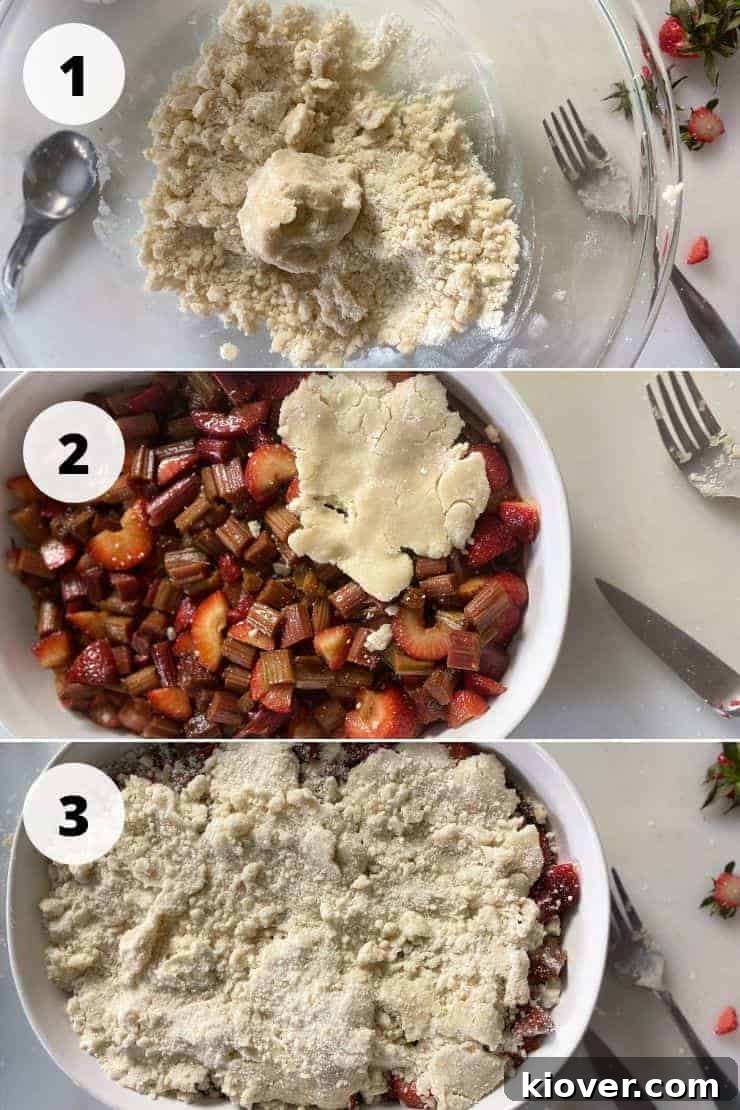
- Dough Consistency: The first image demonstrates the ideal consistency for the cobbler dough. It should be firm enough that you can gently press it into a ball, yet crumbly enough that it would easily break apart if you were to handle it too roughly or knead it excessively. This texture is key to the rustic, tender topping.
- Formed Dough Patty: The second image showcases one of the six individual dough patties that you will form. This patty is placed directly on top of the fruit filling in the baking dish. Aim to distribute these patties fairly evenly across the surface, ensuring a good coverage over the vibrant fruit layer.
- Topping Completion: In the third image, all six dough patties have been placed atop the fruit filling. Additionally, any leftover dough crumbs from the shaping process have been generously sprinkled around the patties and over the remaining exposed fruit. At this stage, your cobbler is perfectly prepared and ready to go into the oven for baking.
Cooling and Serving Your Warm Cobbler Creation
Once your Strawberry Rhubarb Cobbler emerges from the oven, golden and bubbling, the anticipation can be almost unbearable! However, patience is a virtue, and allowing the dessert to cool for at least thirty minutes before serving is highly recommended. This cooling period is crucial for several reasons: it allows the fruit filling to set and thicken properly, preventing it from being too runny, and it ensures the flavors have a chance to meld and deepen. While a half-hour cool-down is ideal, your cobbler will still retain its inviting warmth, which is precisely the desired state for maximum enjoyment.
There are few culinary pairings as perfect as warm fruit cobbler with a generous scoop of vanilla ice cream. The creamy, cold sweetness of the ice cream provides a delightful contrast to the warm, tangy-sweet fruit and the tender, rustic topping. As the ice cream slowly melts into the warm cobbler, it creates an irresistible, comforting sauce that elevates the entire experience. Alternatively, a dollop of freshly whipped cream can offer a lighter, yet equally luxurious, accompaniment. Consider garnishing with a fresh mint leaf or a few extra strawberry slices for an elegant touch that also hints at the dessert’s vibrant flavors. Serving this cobbler warm, perhaps after a satisfying meal or as a standalone treat, promises a truly memorable and comforting dessert experience.
A Slice of History: The Humble Origins of the Cobbler
The history of the cobbler is deeply rooted in resourcefulness and adaptation, particularly as European settlers moved into the New World. While pie, in its many forms, boasts a long and storied tradition in Europe, the early American colonists found themselves in a new land with different native fruits and limited access to their familiar culinary tools and ingredients. This scarcity spurred innovation, leading to the creation of comforting, home-style desserts like the cobbler.
The popular narrative suggests that as early British colonists began to expand westward across America, they often encountered fruits that were unfamiliar or different from those readily available in their homelands. Furthermore, the journey itself, often rugged and challenging, meant they didn’t always have the same sophisticated baking equipment or ample time for intricate preparations required for traditional pies. Faced with these challenges, they improvised. Rather than painstakingly rolling out delicate pie crusts, they “cobbled together” simple fruit fillings and topped them with a rough-and-ready dough, often dropped in dollops or placed in rustic patties over the fruit. This informal, less refined approach to dessert-making is believed to be the origin of the term “cobbler.”
The name itself, “cobbler,” vividly paints a picture of its creation: something quickly and somewhat crudely “cobbled together” from available resources. It reflects the pioneering spirit and the necessity of making do with what was at hand. Over time, this resourceful improvisation evolved into a beloved American dessert, celebrated for its comforting simplicity and its ability to highlight seasonal fruits. From its humble beginnings, the cobbler has become a cherished part of culinary heritage, a sweet reminder of ingenuity and the enduring appeal of homespun baking.
Expert Tips for Crafting Your Best Strawberry Rhubarb Cobbler
Achieving a truly exceptional Strawberry Rhubarb Cobbler is easier than you might think, especially with a few insider tips to guide you. These recommendations will help you master the key elements of this delightful dessert, ensuring a flavorful and perfectly textured outcome every time.
- Embrace the Rustic Topping: The most important advice for the cobbler topping is to not take it too seriously. Its charm lies in its irregularity. Expect it to be a bit crumbly and rustic; these are desirable qualities that contribute to its deliciousness. Imperfection, in this case, truly is perfect, creating a tender, varied texture that contrasts wonderfully with the fruit.
- Utilize Every Crumb: As you form the individual dough patties for the topping, you’re bound to have small bits and crumbs leftover. Don’t let these go to waste! Gather all those delicious crumbs and sprinkle them evenly over the exposed fruit filling and between the patties. They will bake into crispy, flavorful bits, adding an extra layer of texture and ensuring maximum taste with no waste.
- Optimal Baking Dish Choice: While a shallow 1 ½ quart Corningware dish is often ideal for this recipe, offering excellent heat distribution and a good fruit-to-topping ratio, a standard 9×9 inch baking dish is an equally suitable alternative. Both options provide enough depth for a substantial fruit layer and adequate surface area for the topping to bake beautifully.
- Serve Warm with a Complement: For the ultimate experience, serve your Strawberry Rhubarb Cobbler warm. The heat enhances the fruit’s aroma and the gooey texture of the filling. Pair it with a scoop of premium vanilla ice cream or a generous dollop of freshly whipped cream. The cold, creamy element provides a delightful contrast to the warm, sweet-tart fruit, creating a truly irresistible dessert sensation.
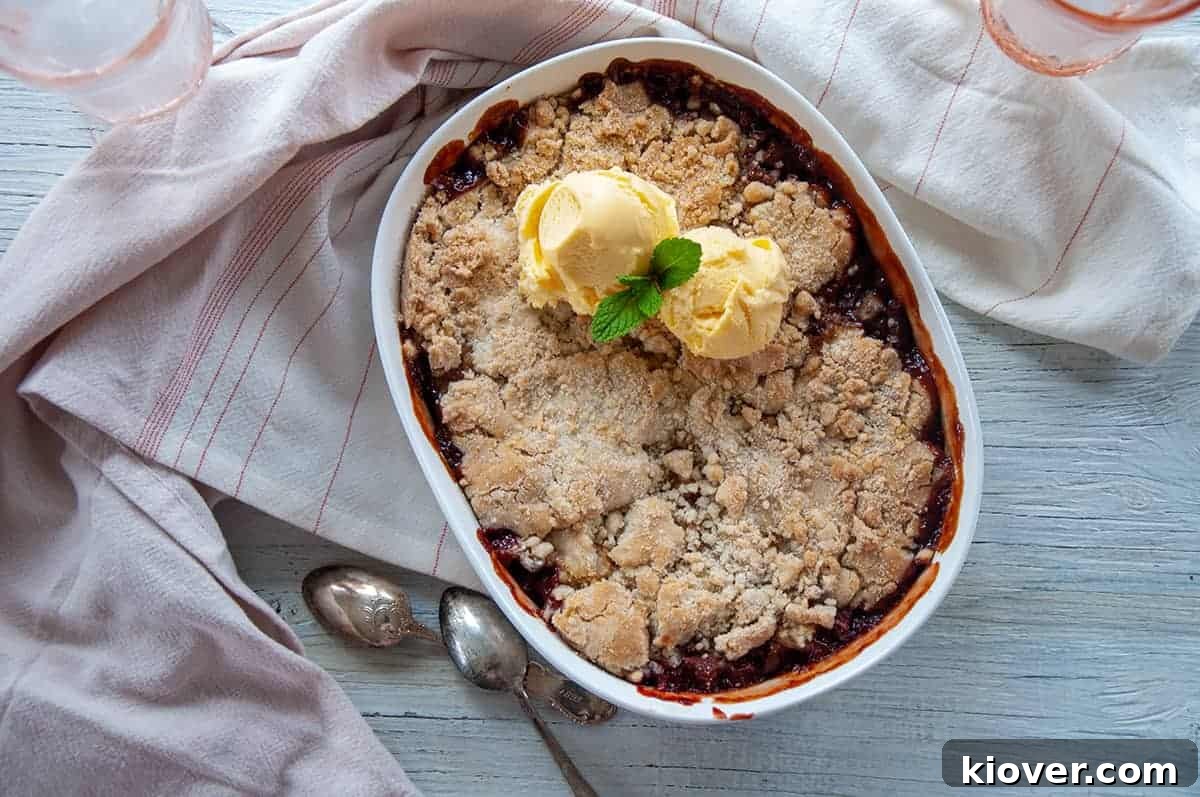
Essential Kitchen Products for This Recipe
Having the right tools can make your baking experience smoother and more enjoyable. Here are a couple of recommended products that will assist you in creating this delightful Strawberry Rhubarb Cobbler with ease.
- Shallow 1.5 Quart Corningware Baking Dish: This dish is perfectly sized for this recipe, ensuring even baking and a beautiful presentation. Its durable construction makes it a staple for any home baker.
- Glass Mixing Bowl Set: A versatile set of glass mixing bowls is indispensable in the kitchen. They are excellent for preparing both the fruit filling and the cobbler topping, allowing you to easily see the ingredients as you mix.
Your Feedback Matters: Share Your Cobbler Creations
Thank you for trying this wonderful Strawberry Rhubarb Cobbler recipe! I genuinely hope it brought a delicious burst of springtime flavor to your home. Your culinary adventures are important to me, and I would love to hear all about your experience. Was it as delicious as you hoped? Did it become a new family favorite?
Please share your thoughts in the comments section below. Your feedback not only brightens my day but also helps other home cooks discover and refine their own baking skills. Furthermore, if you enjoyed this recipe, a simple share on Facebook or Pinterest would be a tremendous help in spreading the word. Let your friends and followers know how much you loved this sweet and tangy dessert! And, of course, I invite you to subscribe to my email updates to ensure you never miss out on new, delightful recipes like this one.

Strawberry Rhubarb Cobbler
- Author: Ben Myhre
- Prep Time: 15 Minutes
- Cook Time: 50 Minutes
- Total Time: 1 hour 5 minutes
- Yield: 6 Servings
- Category: Dessert
- Method: Baking
- Cuisine: American
Description
A classic Spring dessert! This delicious Strawberry Rhubarb Cobbler has just the right amount of sweetness and a tang of rhubarb to make this a hit for the whole family. Add in a side of vanilla ice cream and this is such a delight.
Ingredients
For Filling
- 2 cups rhubarb, chopped and drained
- 8 ounces strawberry, sliced and halved
- 1/2 cup sugar
- 1 teaspoon cinnamon
- 1 teaspoon corn starch
- 1 teaspoon lemon juice
- 1 Tablespoon Molasses (optional)
For Topping
- 1 cup sugar
- 1 cup all purpose flour
- 1 teaspoon baking powder
- 1/4 teaspoon salt
- 4 Tablespoon butter, melted but not hot
- 3 Tablespoons whole milk
Instructions
- Preheat oven to 350° Fahrenheit
- In large bowl, mix all filling ingredients and set aside.
- In separate bowl combine topping sugar, flour, baking powder, and salt.
- Add butter and mix well with a fork or spoon. It should start to be feeling like a dough.
- Add two tablespoons of milk and mix with fork and hand. It should be able to stay together, but may be a bit crumbly. If the dough will not stay together, add another tablespoon of milk and mix well.
- In a 1 ½ Quart Baking dish, dump filling and spread evenly.
- The end goal is to have 6 patties of dough on top of the filling for baking. Take about 1/6 of the dough (maybe golf ball size) and form into a patty in your hand. We want these patties fairly thin. 1/2 inch or so. If it gets a little crumbly, that is 100% ok. In fact, that is good. This does not need to be perfect. Place in corner of dish.
- Repeat until the filling is fairly well covered with 6 patties.
- If there are leftover crumbles from your topping, just sprinkle them across the top.
- Bake in oven for 50 minutes.
- Allow to cool for at least 30 minutes and then serve.
Notes
- Don’t take the cobbler topping too seriously. It will be crumbly, bumbly, and good.
- Take all the left-over cobbler topping crumbs from forming the topping and spread it evenly over the cobbler.
- I use a shallow 1 ½ quart Corningware dish, but you could also use a normal 9×9 baking dish.
- Consider serving warm and with ice cream or whipped cream.
- Here is a great recipe for homemade Ice Cream!
Nutrition
- Serving Size: 1/6 of Entire Dish
- Calories: 373 Calories
- Sugar: 55 g
- Sodium: 185 mg
- Fat: 8 g
- Saturated Fat: 5 g
- Unsaturated Fat: 3 g
- Trans Fat: 0 g
- Carbohydrates: 73 g
- Fiber: 2 g
- Protein: 3 g
- Cholesterol: 21 mg