
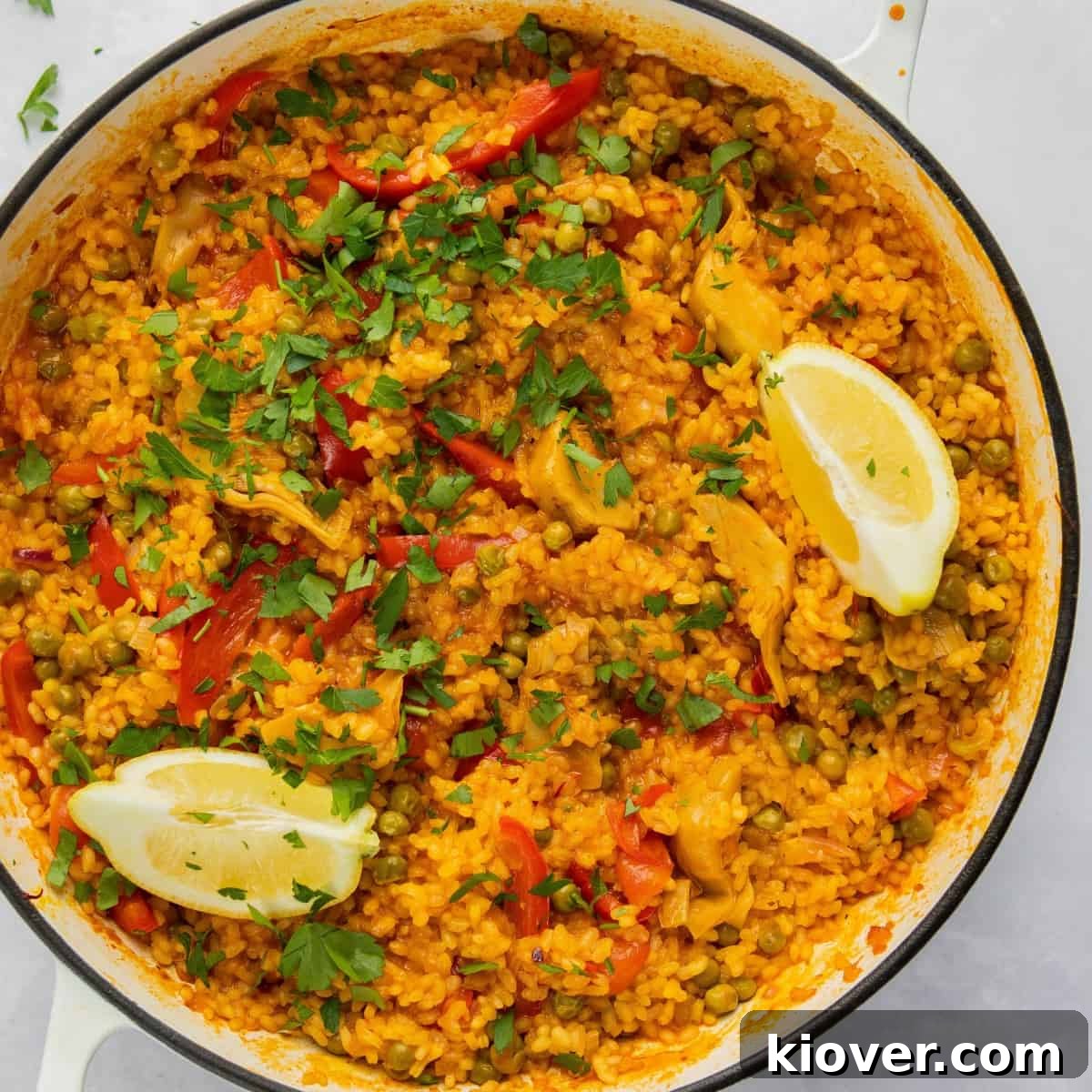
Are you ready to create the best Vegetarian Paella you’ve ever tasted? Look no further! This incredible one-pot version of the classic Spanish dish is designed for simplicity without compromising on authentic flavor. It’s a truly effortless dinner recipe, crafted with readily available, wholesome ingredients. This paella is not only comforting and deeply satisfying but also remarkably adaptable, bursting with vibrant flavors, and perfect for those following vegan and gluten-free diets. Get ready to impress your taste buds and your guests with this delightful plant-based masterpiece!
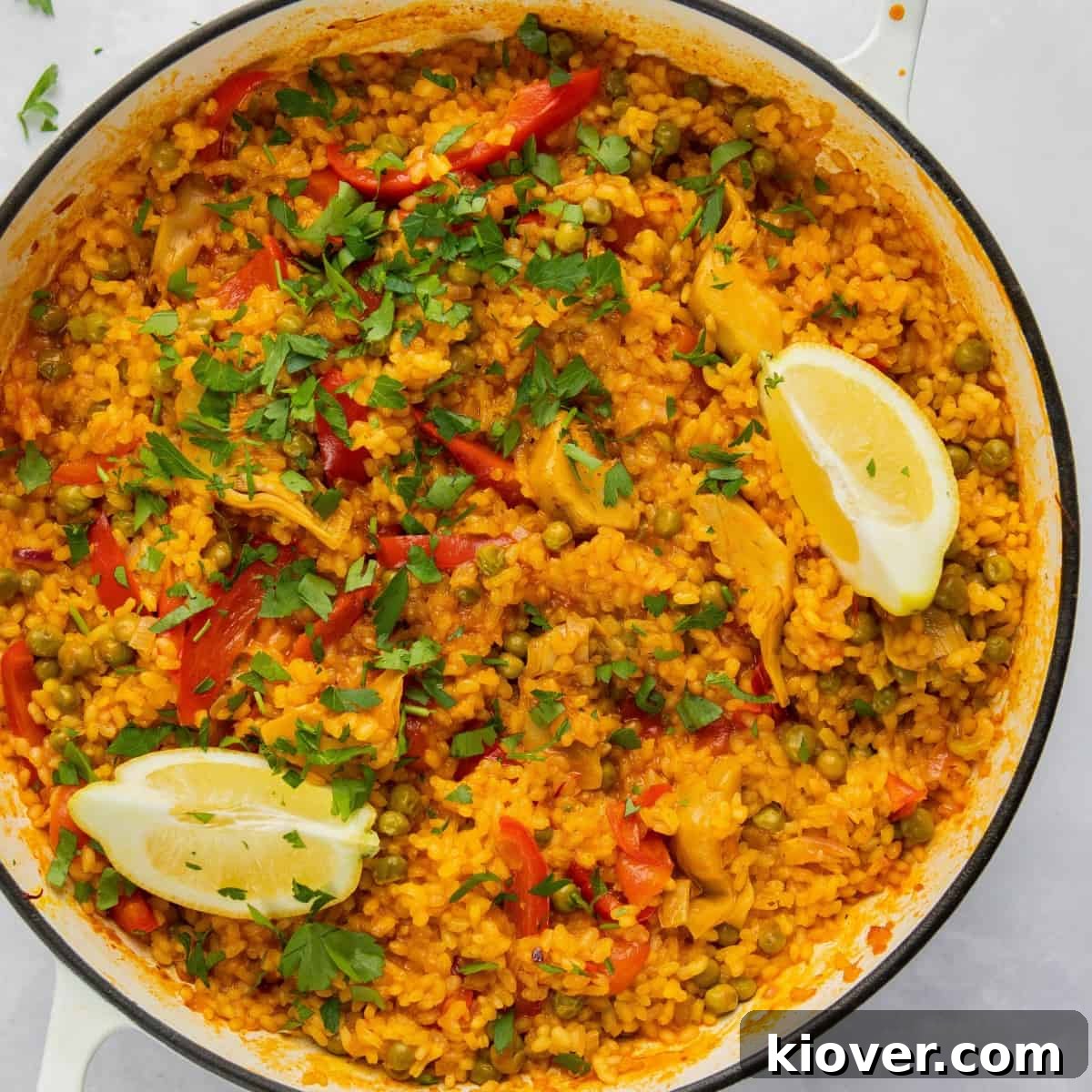
Recipe Difficulty – Easy
Table of Contents
- The Allure of Paella: A Timeless Classic, Reimagined
- Why This Recipe Works: Your Go-To Vegetarian Paella
- Key Ingredients for an Unforgettable Vegetarian Paella
- Smart Substitutions for Your Vegetarian Paella
- Exciting Variations to Customize Your Paella
- Step-by-Step Guide: How to Make Vegetarian Paella
- Storing and Enjoying Leftover Paella
- Vegetarian Paella Recipe FAQs
- Vegetarian Paella Recipe Card
The Allure of Paella: A Timeless Classic, Reimagined
Paella is more than just a dish; it’s a celebration of Spanish culinary heritage, known for its vibrant colors, rich aromas, and harmonious blend of flavors. Traditionally a rice dish from Valencia, Spain, paella often features seafood, meat, or a combination of both. However, this vegetarian rendition captures the spirit and essence of authentic Spanish paella, offering a plant-based alternative that is equally satisfying and incredibly flavorful. It’s a wonderful way to enjoy the global appeal of paella while catering to diverse dietary needs, proving that a hearty, delicious paella doesn’t always require meat or fish.
This recipe transforms the classic into an accessible and easy-to-prepare meal, perfect for a busy weeknight or a relaxed weekend gathering. We focus on aromatic vegetables, fragrant spices, and quality rice to build layers of taste that will transport your senses straight to the Mediterranean. It’s an ideal choice for anyone looking to incorporate more vegetables into their diet without sacrificing taste or culinary adventure. Whether you’re a seasoned chef or a beginner in the kitchen, this vegetarian paella promises a rewarding cooking experience and a truly memorable meal.
Why This Recipe Works: Your Go-To Vegetarian Paella
This vegetarian take on authentic Spanish paella truly shines, requiring minimal effort while delivering an explosion of flavor with every single bite. The secret lies in a carefully selected blend of spices—saffron, paprika, and a hint of cayenne pepper—which imbues this delicious vegan paella with a mildly spiced, wonderfully aromatic character. You’ll be amazed at how quickly this dish comes together, ready to burst with flavor in just about 40 minutes from pot to plate. It’s a perfect example of how simple ingredients can create profound culinary experiences.
Paella, especially this vibrant vegetarian version, is one of my all-time favorite dishes, particularly enjoyable during the warmer months. As a proponent of “vegifying” recipes, my aim is to effortlessly incorporate a diverse array of vegetables into everyday meals, and this paella does exactly that. The beauty of this recipe extends beyond its taste; it’s incredibly versatile. Enjoy it piping hot as a hearty main course alongside a crisp green salad, or savor it cold as a delightful leftover lunch the following day. It’s a dish that continues to give, tasting wonderful at any temperature.
I confidently recommend this paella as a crowd-pleaser for entertaining family and friends. Its rich flavors and satisfying texture guarantee rave reviews. This truly is a recipe you HAVE to try! For an extra special touch, pair it with my Easy Gluten Free Focaccia recipe – together, they create an unbeatable culinary duo. If you’re in the mood for a quicker rice dish with a similar comforting vibe, you might also love my Easy One-Pot Tomato Risotto.
Key Ingredients for an Unforgettable Vegetarian Paella
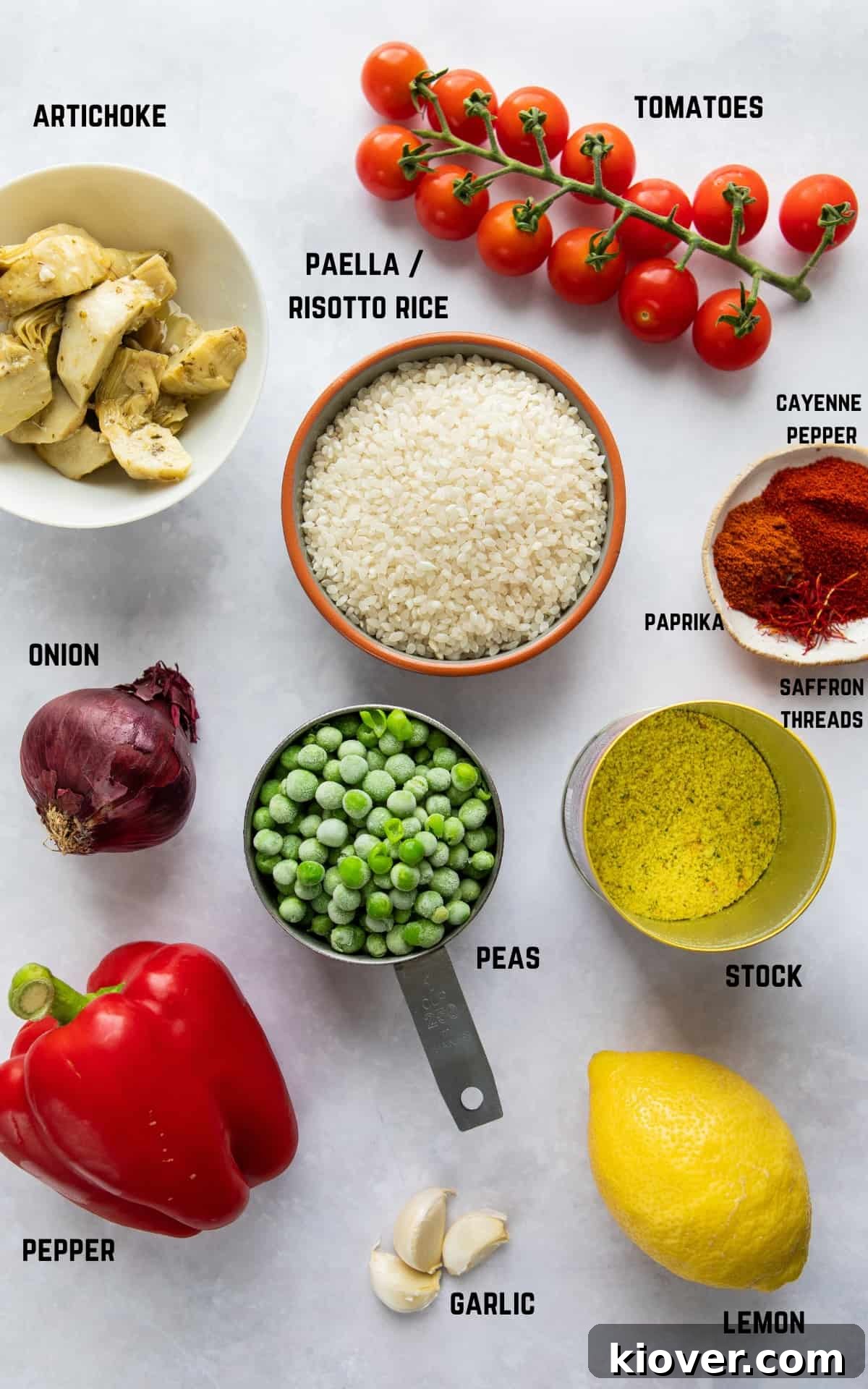
Crafting a truly exceptional vegetarian paella begins with a selection of fresh, high-quality ingredients. Each component plays a crucial role in building the layered flavors and textures that make this dish so special.
- Red Onion: Offering a delicious, slightly sweet bite and a beautiful purple hue, red onions provide an excellent aromatic base, mellowing wonderfully as they cook.
- Garlic Cloves: Essential for depth of flavor, crushed garlic contributes a subtle acidity and pungent sweetness that perfectly complements the creamy paella rice and other vegetables.
- Red Bell Pepper: Sliced red bell pepper adds a fantastic pop of color, a sweet crunch, and a healthy dose of vitamins, enhancing both the visual appeal and nutritional value of the dish.
- Cherry Tomatoes: These juicy, bursting tomatoes are a personal favorite addition. When halved, they release their sweet, concentrated flavor into the rice, creating pockets of delightful tartness and moisture.
- Artichoke Hearts: For convenience and consistent quality, jarred artichoke hearts are a fantastic choice. They contribute a wonderful “meaty” texture and a distinct earthy flavor that is excellent for gut diversity and mimics some traditional paella ingredients.
- Frozen Peas: Far easier to use than fresh and equally vibrant, green peas add a lovely sweetness, a tender texture, and a striking color contrast to the finished paella.
- Paprika: A cornerstone of Spanish cuisine, paprika lends a smoky, fruity, and mildly sweet flavor that is indispensable for an authentic paella taste.
- Cayenne Pepper: Just a touch of cayenne provides a subtle warmth and a perfect “kick” without making the paella overly spicy, balancing the sweetness of the other ingredients.
- Saffron Threads: The luxurious, delicate threads of saffron are non-negotiable for traditional paella. They infuse the dish with its characteristic golden color and a uniquely sweet, slightly metallic, floral aroma that defines the dish.
- Lemons: You’ll utilize both the fresh juice of lemons to brighten the flavors during cooking and elegant lemon wedges for serving, allowing each diner to add a final burst of zesty freshness.
- Paella or Risotto Rice: The foundation of this recipe, short-grain rice like bomba or arborio is crucial. These varieties absorb liquid beautifully while retaining their shape, resulting in that perfectly creamy, yet al dente texture typical of paella.
- Vegetable Stock: This liquid is vital not only for cooking the rice to perfection but also for infusing it with a deeper, savory flavor, far more complex than plain water.
See the full recipe card below for precise measurements and detailed instructions on all ingredients and quantities.
Smart Substitutions for Your Vegetarian Paella
One of the beauties of paella is its flexibility. Don’t be afraid to experiment with these thoughtful substitutions to tailor the dish to your pantry or preferences:
- Rice: While paella or risotto rice is ideal, you can explore other options. Swapping for brown basmati rice will give this healthy paella a slightly different texture and nutty flavor profile, though it may require a longer cooking time and more liquid. Other short-grain rices can also work well, maintaining a good absorption rate.
- Bell Pepper: Any color of bell pepper will integrate beautifully into this recipe. Green bell peppers offer a slightly more bitter, earthy taste, while yellow or orange peppers provide additional sweetness and a vibrant visual contrast. Feel free to use a mix for an even richer color palette.
- Cherry Tomatoes: If fresh cherry tomatoes aren’t available, quality canned diced tomatoes can be a suitable alternative. Look for fire-roasted tomatoes to introduce a smoky depth, or crushed tomatoes for a smoother sauce. However, fresh tomatoes always offer the best, brightest flavor.
- Vegetables: This is where you can truly make the paella your own! Consider incorporating green beans for added crispness, black olives for a briny, savory note, or even roasted piquillo peppers for a sweet and slightly smoky touch. Chickpeas or cannellini beans can also be added for extra protein and heartiness.
- Vegetable Stock: In a pinch, a good quality vegetable broth can be used in place of stock. Ensure it’s low-sodium so you can control the seasoning of your paella.
- Cooking Vessel: A traditional paella pan is designed for the perfect “socarrat” (crispy bottom layer), but a large, shallow casserole dish or a wide, heavy-bottomed skillet will yield excellent results. The key is a wide surface area to allow the rice to cook evenly and liquid to evaporate properly. If using a large pot, ensure it has a wide base.
Exciting Variations to Customize Your Paella
Take your vegetarian paella to the next level with these creative variations, allowing you to fine-tune the flavors to your exact liking:
- Spicy Paella: For those who love a bit of heat, easily transform this into a spicy paella. Incorporate finely diced serrano peppers or jalapeños, add a pinch of hot paprika, a dash of ground cumin for earthy warmth, or a few dried red chili flakes during the initial sauté. Adjust quantities to your preferred level of spiciness.
- Deluxe Vegetarian Paella: To make this dish even more substantial and rich, consider adding various beans for protein and texture. White beans, fava beans, or kidney beans stirred in towards the end of cooking will create a heartier, more filling meal. If you’re not strictly vegetarian, a handful or two of cooked chicken, chopped chorizo, or cooked prawns can be added towards the end, stirring well until thoroughly heated and piping hot. Garnish with an abundance of fresh herbs like chopped flat-leaf parsley or cilantro for a beautiful presentation and added freshness. To truly complement the flavors, serve this delicious recipe with my Chickpea Flat Bread, perfect for soaking up every last drop of the flavorful sauce!
- Kid-Friendly Paella: This dish, with its naturally sweet and mild spices, is inherently appealing to children. If your kids have specific vegetable preferences, feel free to swap out any they dislike for their favorites. To ensure an even milder flavor profile, you can simply skip the cayenne pepper. For another fantastic kid-friendly rice dish, you might also want to check out my Easy One-Pot Tomato Risotto on the blog, which shares a similar comforting base with perhaps an even milder flavor profile that kids often adore.
Step-by-Step Guide: How to Make Vegetarian Paella
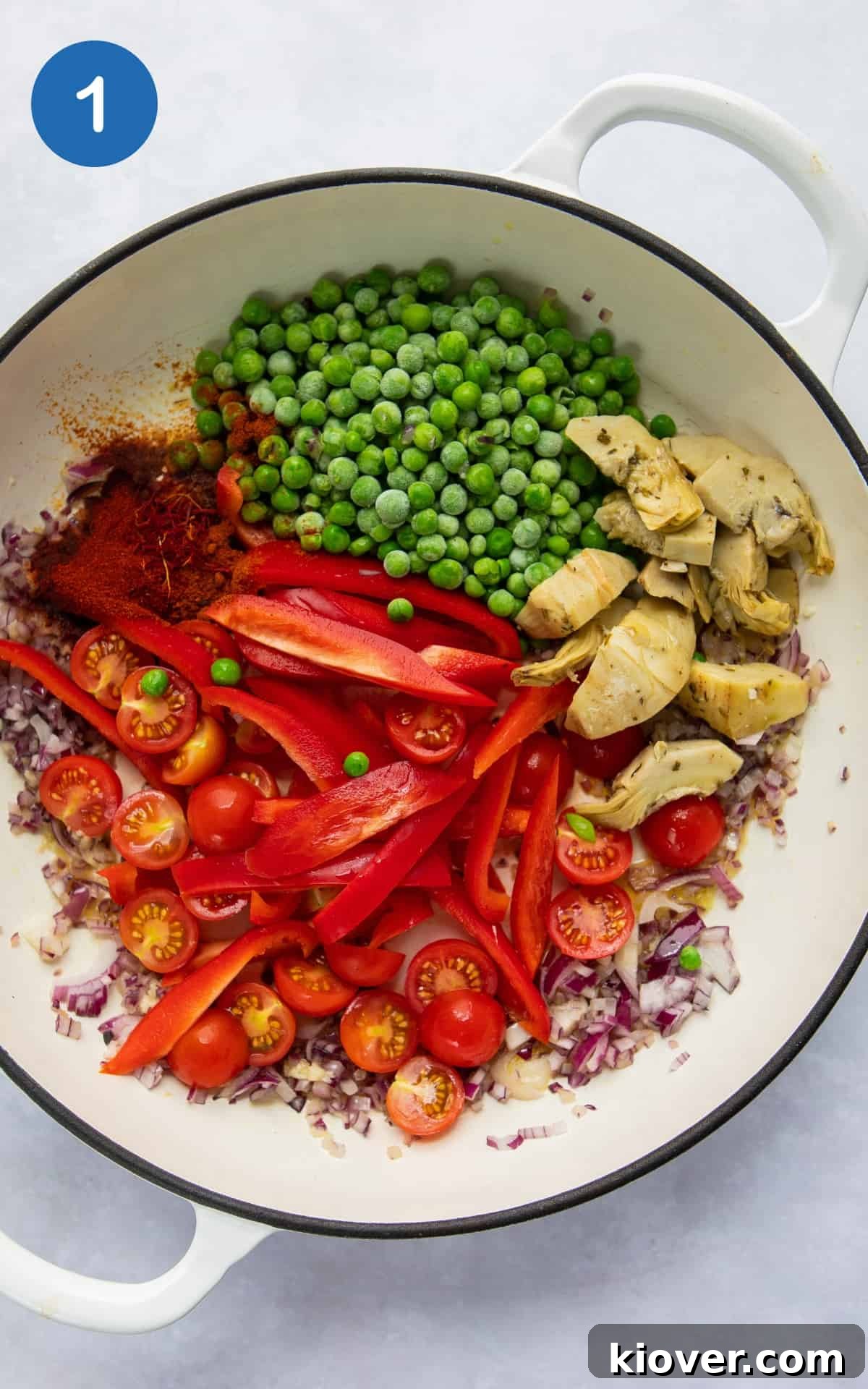
Step 1: Prepare Your Aromatics and Vegetables
Begin by meticulously preparing your ingredients to ensure a smooth cooking process. Dice the red onion into small, even pieces, crush the garlic cloves thoroughly to release their pungent aroma, thinly slice the red bell pepper, and halve the cherry tomatoes. Once prepped, heat the olive oil in your chosen large, shallow casserole dish or paella pan over medium heat. Add the diced red onion and crushed garlic, sautéing for approximately 3-5 minutes until they become wonderfully softened and fragrant, but not browned. Next, introduce the remaining prepped vegetables (red pepper, cherry tomatoes, artichokes, frozen peas), along with the paprika, cayenne pepper, saffron threads, and the juice of one lemon. Fry this vibrant mixture for another 5 minutes, stirring occasionally, until the bell pepper begins to soften and the frozen peas have fully defrosted, infusing the pan with incredible aromas.
Step 2: Cook the Rice to Perfection
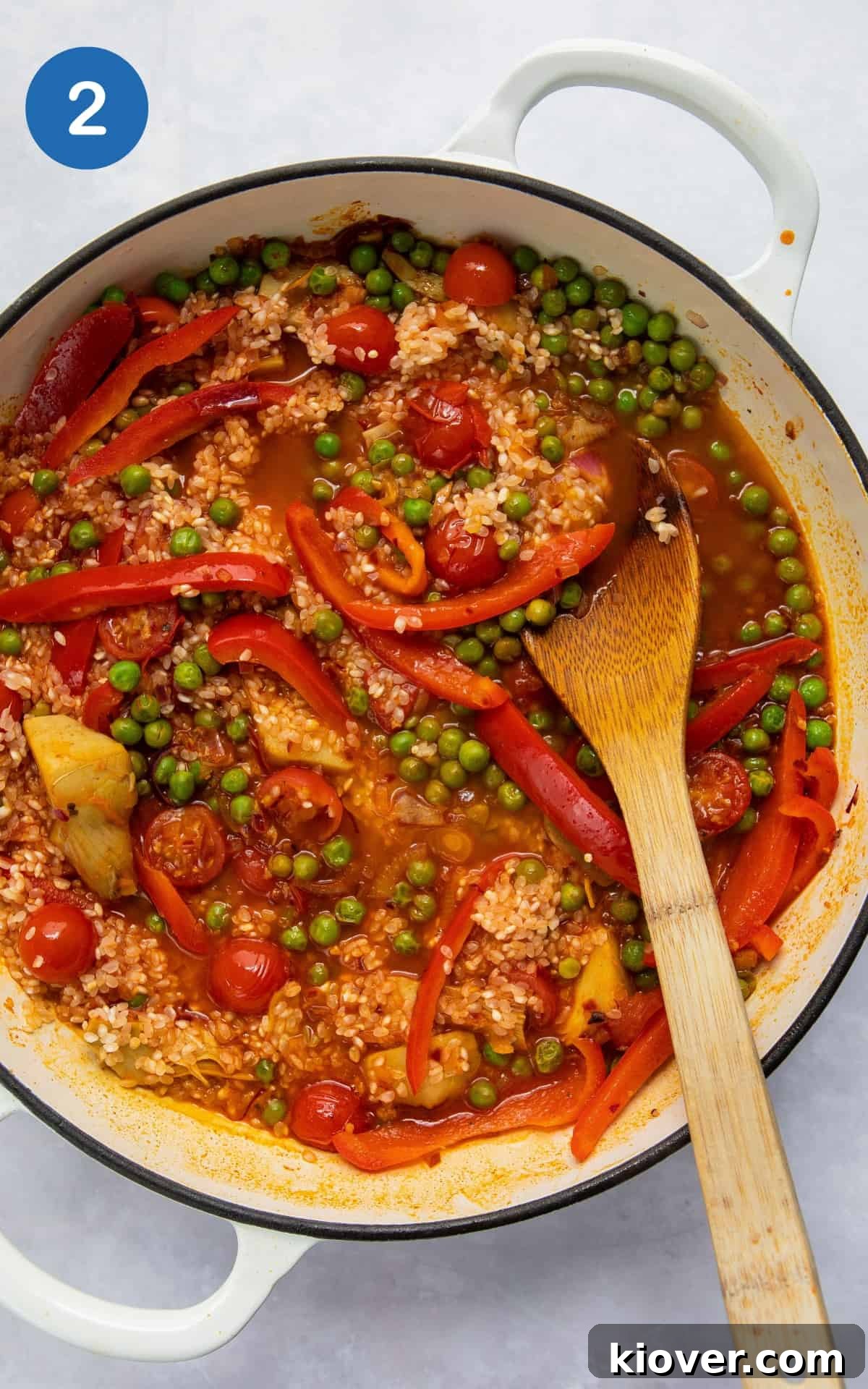
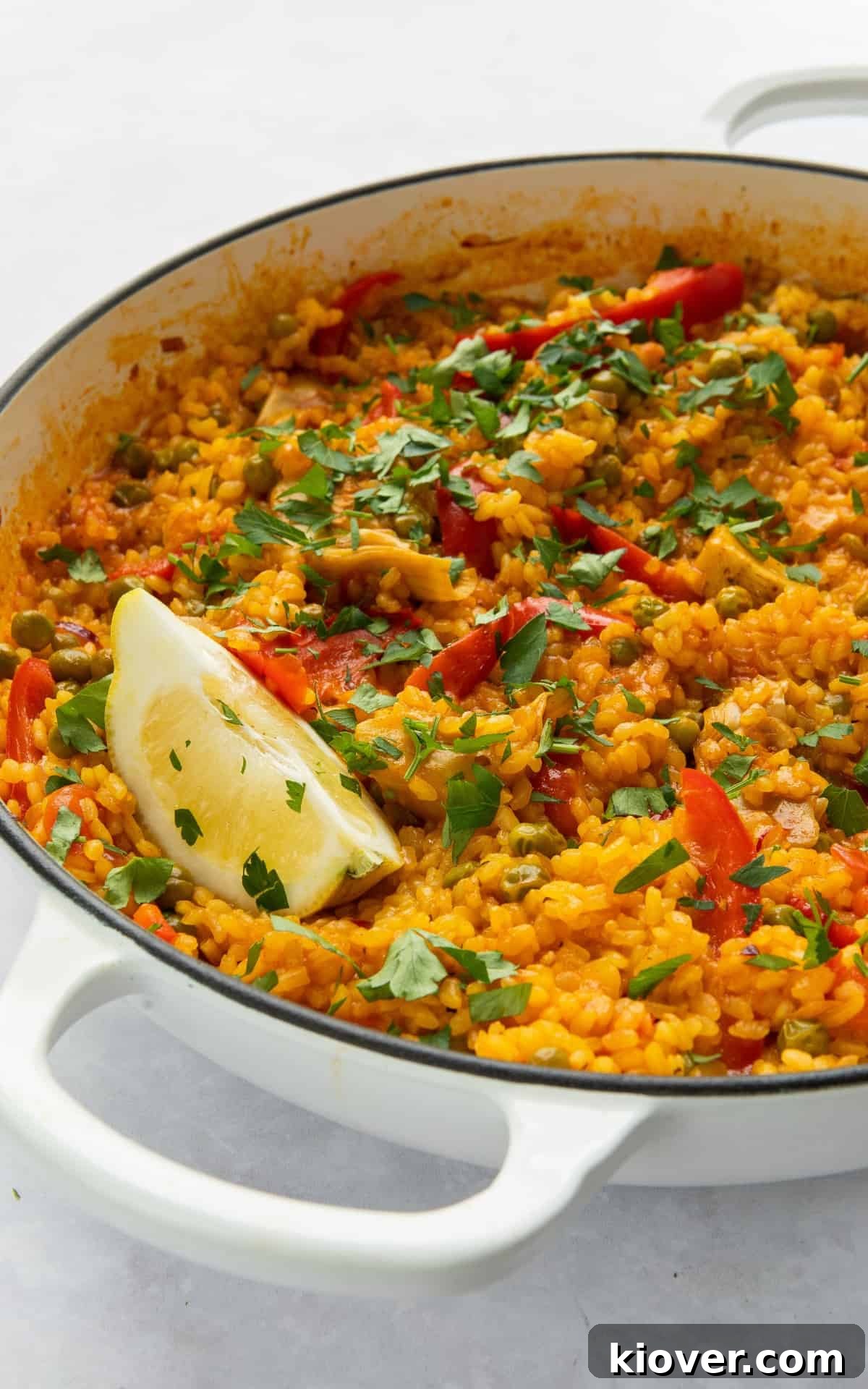
Add the paella or risotto rice to the pan with the sautéed vegetables and spices. Stir everything thoroughly to ensure each grain of rice is coated in the flavorful oil and spices. Pour in the first 250 ml of vegetable stock, give it a good stir, then immediately cover the pan with a tight-fitting lid. Reduce the heat to a low simmer and cook for 8-10 minutes, allowing the rice to absorb all the liquid. Once absorbed, add another 250 ml of vegetable stock, stir gently, and cook again until that liquid is also fully absorbed. Continue this process, adding the remaining vegetable stock in 250 ml increments, until all the stock has been used and the rice is tender, yet still retains a slight bite (al dente). For the final 5 minutes of cooking, add the juice of the second lemon and remove the lid, allowing the remaining liquid to evaporate and, if using a paella pan, encouraging the formation of a desirable crispy bottom layer known as “socarrat.” Serve your magnificent paella immediately, garnished generously with fresh lemon wedges for a final squeeze of brightness and a sprinkle of freshly chopped flat-leaf parsley for herbaceous notes. Enjoy your homemade Spanish feast!
Storing and Enjoying Leftover Paella
One of the great advantages of this vegetarian paella is how well it keeps, making meal prep and future quick meals a breeze. If you find yourself with delightful leftovers, ensure they are stored correctly to maintain freshness and safety.
Once cooled to room temperature, transfer the leftover paella to an airtight container. It can be safely stored in the refrigerator for 3 to 5 days. For reheating, gently warm the paella in a large non-stick frying pan over low heat with a splash of water or a tiny bit of olive oil, stirring occasionally, until it is heated through and piping hot. Alternatively, you can microwave it, but be sure to stir halfway through to ensure even heating. It’s important to note that if you decide to add any meat or seafood to a variation of this recipe, storage guidelines might change, so always ensure those ingredients are fresh and handled appropriately.
For an even quicker meal, this paella tastes surprisingly delicious cold! It makes a fantastic packed lunch for the next day, offering all the wonderful flavors without the need for reheating. While you can freeze paella for up to a month in an airtight container, the texture of the rice and some vegetables may become slightly softer upon thawing. If freezing, make sure to thaw it completely in the refrigerator overnight before reheating thoroughly.
Vegetarian Paella Recipe FAQs
Paella is a renowned traditional Spanish rice dish, originally from the Valencia region. It is celebrated for its rich flavors, fragrant rice base, and diverse ingredients which often include vegetables, various meats, and seafood. The name “paella” actually refers to the wide, shallow frying pan in which it is traditionally cooked. These authentic paella pans are typically made of carbon steel and are quite thin, designed to cook the rice evenly and create a caramelized crust at the bottom, known as “socarrat.”
Achieving the perfect texture is paramount in a rice dish like paella, so selecting the right type of rice is crucial! Short-grain rice varieties are generally the best choice because they absorb moisture and flavor efficiently while maintaining their shape without becoming overly sticky or mushy. My top recommendations are specific paella rice types like Bomba rice or Calasparra rice, which are prized for their ability to absorb a lot of liquid without bursting. Risotto rice, such as Arborio rice, is an excellent and more readily available alternative. Medium-grain rice can also work, but long-grain rice varieties are generally not recommended as they tend to become too soft and lack the desired creamy consistency. You can also experiment with brown rice for a healthier twist, though it may alter the cooking time and liquid absorption.
Traditional paella varies regionally, but common elements across different authentic versions include saffron-infused rice, a sofrito base (sautéed onions, garlic, and tomatoes), and a combination of vegetables. Depending on the specific type of paella, it will also feature some form of protein. For instance, Paella Valenciana (the original) traditionally includes rabbit, chicken, and sometimes snails and green beans. Seafood paella, on the other hand, is packed with various shellfish and fish. The beauty of paella is its adaptability, allowing for numerous flavor combinations and adjustments, so it doesn’t have to taste exactly the same every time you make it!
If you’re not adhering to a vegetarian diet and wish to add meat or seafood, paella offers a wide array of delicious options. For fans of seafood paella, popular choices include succulent prawns, mussels, clams, squid, and various white fish. If you prefer a meat-based paella, chicken paella is a classic, often featuring bone-in chicken pieces that add depth of flavor. You can also elevate it by combining chicken with spicy chorizo sausage for a smoky, rich profile, or even include rabbit or duck for a more traditional gamey taste. Always ensure any added proteins are cooked thoroughly and integrated at the appropriate stage of the cooking process.
While paella is best enjoyed fresh off the stove, you can prepare some components in advance. The sofrito (sautéed onions, garlic, peppers, and tomatoes) can be made a day ahead and stored in the fridge. This significantly cuts down on active cooking time. However, it’s generally recommended to cook the rice fresh, as it can lose its optimal texture when reheated extensively. If you have leftovers, they can be reheated, but the crispy bottom layer (socarrat) may not be as prominent.
The “socarrat” is the highly prized, slightly crispy, caramelized crust that forms at the bottom of the paella pan, a hallmark of an expertly made paella. To achieve this, resist the urge to stir the rice too much once the liquid has been added and the lid is off. Towards the very end of cooking (the last 5-10 minutes), increase the heat slightly to medium-high for a short period, allowing the rice at the bottom to toast without burning. Listen for a gentle sizzling sound and you might even catch a slight aroma of toasted rice. Do not stir during this phase! Once done, immediately remove from heat and let it rest for a few minutes before serving. A wide, shallow paella pan is also essential for maximizing the surface area for socarrat formation.
YOU MIGHT ALSO LIKE…
Budget Friendly Meals
Easy One Pot Tomato Risotto
Dinner
Vegan Mushroom Risotto
15 Minute Dinners
Vegan Mushroom Pasta
Lunch
Easy Red Pepper and Tomato Soup
Tried this Vegetarian Paella recipe? We’d absolutely love to hear about your experience! Please take a moment to leave a star rating ⭐️⭐️⭐️⭐️⭐️ below and share your thoughts in the comments. Your positive feedback is one of the most rewarding aspects of creating and sharing recipes, so don’t hesitate to let us know how you got on!
P.S. Don’t want to miss out on any delicious new recipes? Get more healthy, easy-to-make recipes sent straight to your inbox weekly – Subscribe now and you’ll also receive a fantastic free recipe eBook!
Pin
Vegetarian Paella
Equipment
-
Chopping Board
-
Sharp Knife
-
Large Shallow Casserole Dish or Paella Pan
Ingredients
- 2 tbsp olive oil
- 1 red onion, diced
- 3 garlic cloves, crushed
- 1 red pepper, sliced
- 150 g cherry tomatoes, halved
- 100 g artichokes , (from a jar)
- 1 cup frozen peas
- 2 tsp paprika
- 1 tsp cayenne pepper
- 1 tsp saffron threads
- juice of 2 lemons plus lemon wedges, to serve
- 350 g paella or risotto rice
- 1 litre vegetable stock
- handful of chopped fresh flat leaf parsley, to serve, (optional)
Instructions
-
Firstly, prepare your ingredients: finely dice the red onion, thoroughly crush the garlic cloves, thinly slice the red bell pepper, and halve the cherry tomatoes. This mise en place ensures a smooth cooking process.
-
Then, heat 2 tablespoons of olive oil in a large, shallow casserole dish or paella pan over a medium heat. A wide surface area is key for even cooking.
-
Add the diced red onion and crushed garlic to the heated oil. Cook for a few minutes, stirring occasionally, until they have softened and become translucent, releasing their sweet aromas into the pan.
-
Now, add all the remaining vegetables (sliced red pepper, halved cherry tomatoes, artichoke hearts, frozen peas) to the dish. Stir in the paprika, cayenne pepper, saffron threads, and the juice of 1 lemon. Fry everything together for about 5 minutes, or until the pepper begins to soften and the peas are defrosted and vibrant.
-
Next, add the paella or risotto rice to the pan and stir it well, ensuring every grain is coated with the aromatic vegetable mixture. Pour in the first 250 ml of vegetable stock. Give it a good, gentle stir to combine, then place a lid on the pan and reduce the heat to a low simmer. Cook for 8-10 minutes, or until the rice has completely soaked up all the liquid. Once absorbed, add another 250 ml of vegetable stock and cook again until it has been absorbed. Repeat this process until all the vegetable stock has been used, and the rice is tender with a slight bite.
-
About 5 minutes before the end of the total cooking time, add the juice of the remaining lemon. Remove the lid from the pan and continue to simmer gently, allowing any excess liquid to evaporate and, ideally, forming a delicious crispy layer (socarrat) at the bottom if using a paella pan. Once the rice is perfectly cooked and the liquid is absorbed, remove from heat. For a final flavor flourish, serve your paella immediately with extra lemon wedges for squeezing and a generous sprinkle of freshly chopped flat-leaf parsley. Enjoy!
Notes
Substitutions & Variations: I have included an extensive list of ideas for both substitutions and exciting variations within the main post above, allowing you to customize your paella to your taste and available ingredients.
To Store: Store any leftover paella in an airtight container in the refrigerator for up to 3 days. To re-heat, transfer the paella to a large non-stick frying pan with a little bit of oil and a splash of water over a low heat. Stir occasionally until it is thoroughly heated through and piping hot.
To Freeze: While possible, freezing this recipe is not highly recommended as the texture of the rice can become somewhat soft upon thawing. For best results, enjoy fresh or as refrigerated leftovers.
Tip 1: For even cooking and consistent texture, ensure all your vegetables are chopped into roughly similar-sized pieces before you begin to sauté them.
Tip 2: Saffron is a key component for authentic flavor and color, but it can be quite expensive. If budget is a concern, feel free to omit it. The paella will still be delicious thanks to the other vibrant spices.
Tip 3: The quality of your vegetable stock significantly impacts the overall flavor of your paella. Opt for a high-quality, flavorful vegetable stock to truly enhance the depth of the dish.