
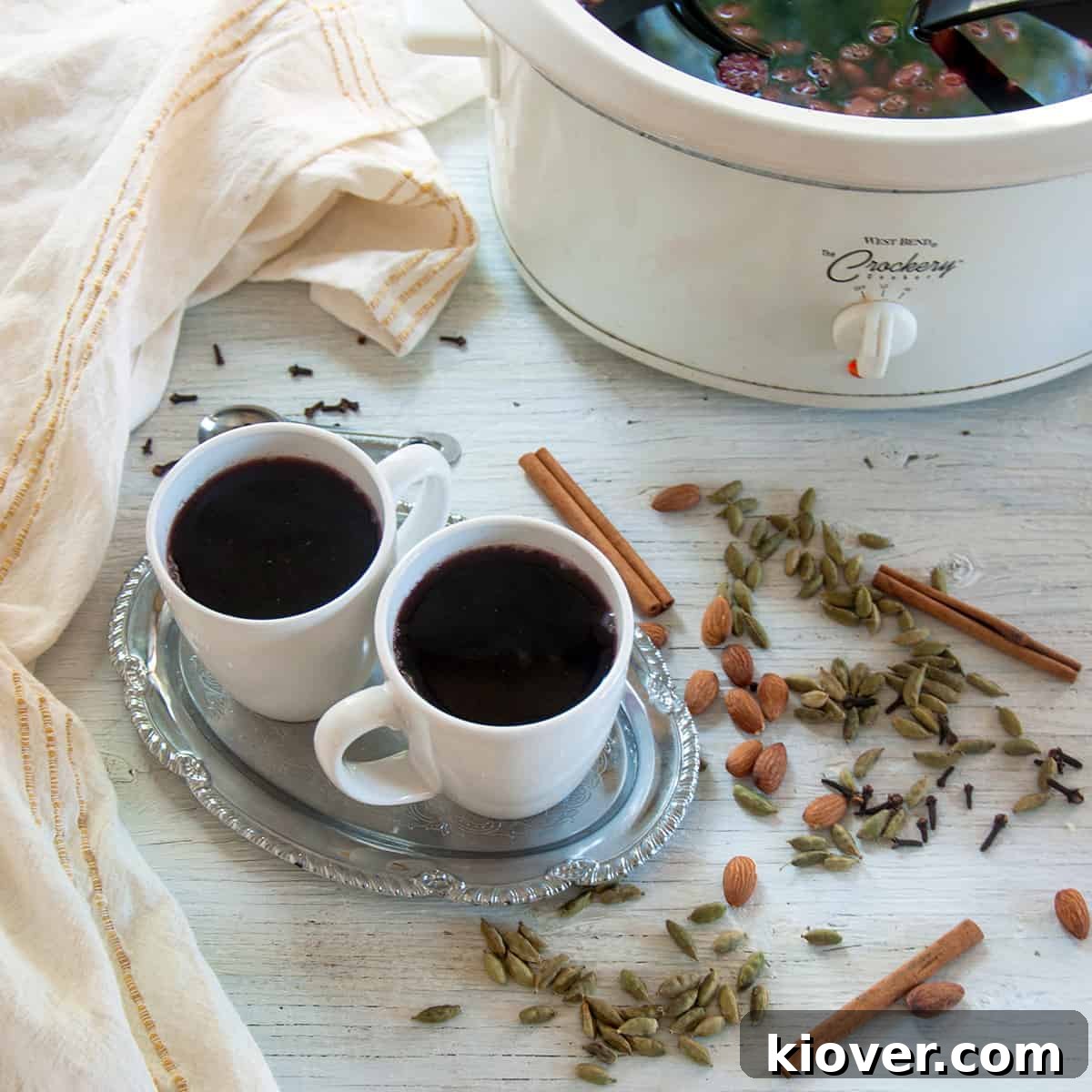
As the holiday season draws near, there’s nothing quite like a warm, spiced drink to embrace the festive spirit and celebrate rich cultural traditions. Today, we invite you to explore a cherished part of Scandinavian heritage with our delightful Glogg recipe. More than just a mulled wine, this version features a unique Scandinavian twist that promises to warm you from the inside out.
Whether you’re keen to share in Nordic traditions or simply looking to elevate your Christmas mulled wine game, this Glogg recipe is a must-try. It’s an easy-to-follow guide to creating a truly memorable holiday beverage that will become a staple in your festive celebrations.
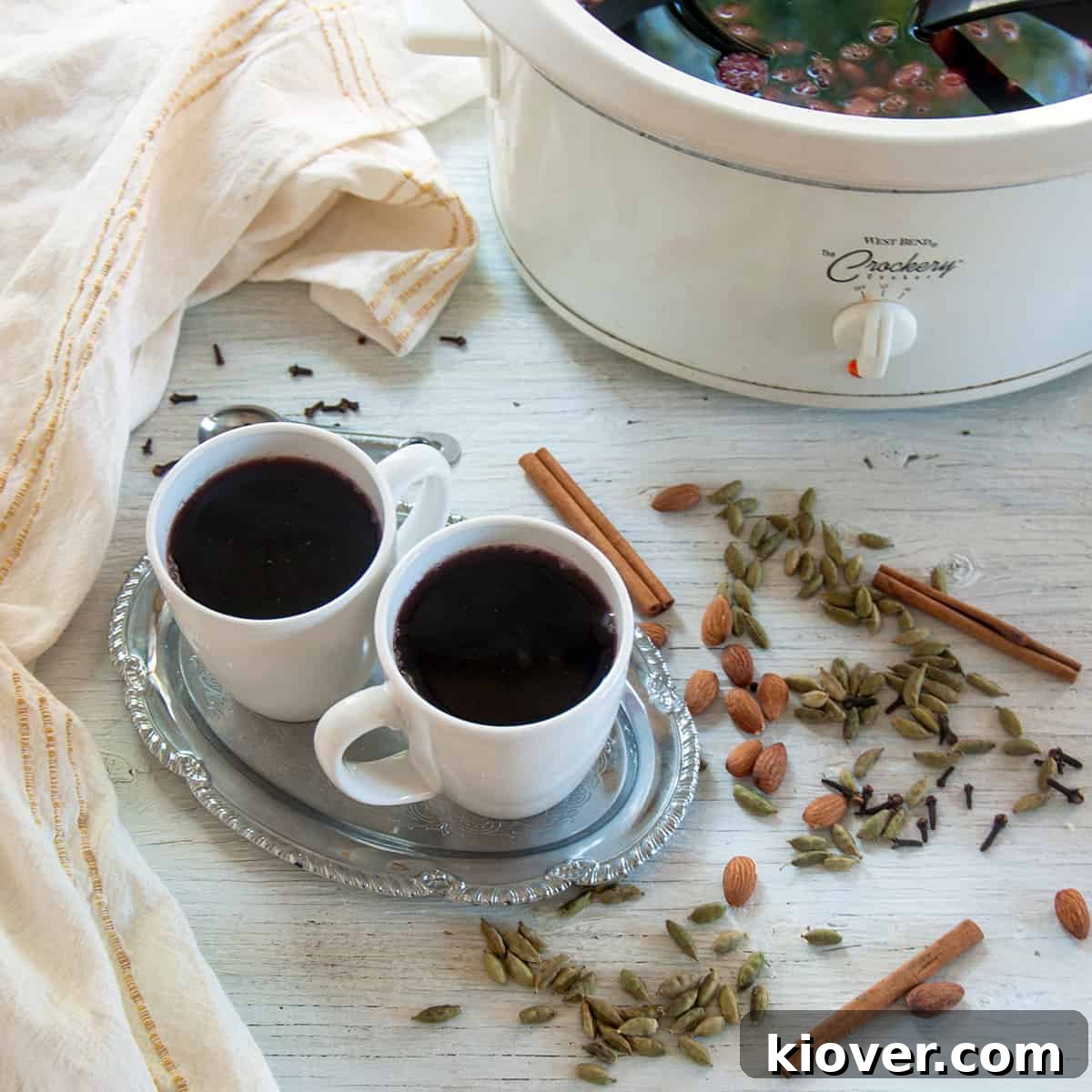
🍷 What Makes This Glogg Recipe Special?
At its heart, Glogg is a warm, spiced, and often fortified wine, reminiscent of classic mulled wine but with distinct Scandinavian characteristics. Throughout Norway, Sweden, Denmark, and Finland, you’ll encounter various spellings such as Glögg, Gløgg, or Gløgg. While the name may vary by region, the essence remains the same: a comforting, aromatic drink perfect for chilly winter evenings and holiday celebrations. For simplicity and widespread recognition, we’ll primarily refer to it as Glogg in this guide.
This traditional Glogg recipe is a beloved Scandinavian treat, with families often passing down slightly different versions. However, the fundamental concept endures: combine wine, a sweetener, and a medley of warming spices, then gently heat it to perfection. The result is a beautiful, inviting beverage that encapsulates the spirit of winter and the holiday season, offering a taste of Nordic hospitality.
If you’re seeking other comforting sips, you might also enjoy a homemade apple brandy, an adventurous Total Yodel shot, or the ultimate hot toddy. For truly festive vibes, consider our easy milk punch or a rich Kahlua-spiked eggnog. Whatever your preference, these drinks are designed to treat your senses and warm your soul.
Table of Contents
- 🍷 What Makes This Glogg Recipe Special?
- ☕ Understanding Glogg: More Than Just Mulled Wine
- 🍯 Key Ingredients for Authentic Glogg
- 🍲 Step-by-Step Glogg Preparation
- 🤷 Substitutions and Variations for Your Glogg
- 📦 Storage Tips for Glogg
- 🎓 The Rich History of Glogg: A Journey Through Time
- ❓ Frequently Asked Questions About Glogg
- 📝 Expert Tips and Tricks for Perfect Glogg
- 🛠 Recommended Products for Your Glogg Recipe
- Glogg Recipe – A Traditional Scandinavian Holiday Drink (Full Recipe Card)
☕ Understanding Glogg: More Than Just Mulled Wine
While often categorized as a variation of mulled wine, Glogg possesses distinct characteristics that set it apart. The primary ingredients that give Glogg its unique Scandinavian identity are cardamom and Aquavit. These two elements elevate it beyond a generic spiced wine, infusing it with a depth of flavor and cultural significance that is unmistakably Nordic.
Cardamom, a spice derived from the pods of various plants in the ginger family, is central to Glogg’s aromatic profile. Though its origins lie in the southern hemisphere, cardamom has become an indispensable spice in traditional Scandinavian cuisine, particularly in baking and warm beverages. Its bright, slightly citrusy, and sweet notes harmonize beautifully with the wine and other spices, making it a defining feature of authentic Glogg and giving it a fragrance unlike any other mulled drink.
The second distinctive ingredient is Aquavit. This potato-based or grain-based spirit is a staple in Scandinavian countries and parts of Germany. Unlike vodka, which aims for a neutral flavor, Aquavit is celebrated for its rich, often savory flavor profile, typically infused with herbs and spices like caraway, dill, fennel, coriander, and sometimes aged in oak barrels. Its inclusion adds a complex, herbaceous depth and a robust fortification that is characteristic of traditional Glogg, distinguishing it significantly from other mulled wines and providing a warming kick.
🍯 Key Ingredients for Authentic Glogg
Crafting the perfect Glogg relies on a thoughtful selection of ingredients that balance sweetness, spice, and spirit. While there’s room for personalization, this combination offers a truly authentic and delicious Scandinavian experience:
- Cloves: Pungent and aromatic, they provide classic warm spice notes essential for any mulled drink.
- Green Cardamom Pods (cracked): Essential for Glogg’s signature floral and slightly citrusy aroma. Cracking them before use helps release their full, potent flavor into the wine.
- Pinot Noir: A light to medium-bodied red wine that serves as an excellent base, allowing the intricate flavors of the spices to shine without being overshadowed by heavy tannins.
- Fresh Ginger: Adds a zesty, slightly peppery warming heat that beautifully complements the other spices and rounds out the flavor profile.
- Raisins: They plump up in the warm wine, absorbing all the aromatic spices and offering a sweet, chewy bite, making them a delightful edible garnish.
- Blanched Almonds: Provide a subtle nutty crunch and are a traditional garnish for Glogg, adding texture and a mild flavor.
- Orange Peel: Infuses bright, uplifting citrusy notes that cut through the richness of the wine and spices, adding freshness.
- Honey: A natural sweetener that adds depth and a rich, floral undertone, honoring the historical sweetening methods of traditional Glogg.
- Cinnamon Sticks: A classic mulled wine spice, offering pervasive warmth and a sweet, woody aroma that defines holiday beverages.
- Aquavit: The quintessential Scandinavian spirit, providing a unique herbaceous and fortified character that is the hallmark of authentic Glogg.
You’ll find precise quantities for these ingredients in the detailed recipe card at the end of this guide, ensuring you have everything you need to begin your Glogg journey.
Fortify with Aquavit: The Nordic Spirit
The addition of Aquavit is what truly imbues this Glogg recipe with its authentic Scandinavian soul. While you could fortify Glogg with port, brandy, sherry, or even omit the additional alcohol entirely, embracing Aquavit keeps the tradition alive and provides a distinct flavor profile. We particularly recommend the Linie brand, which boasts a captivating history and unique maturation process.
Established in 1805, the Linie Aquavit recipe has remained largely unchanged. What makes it truly extraordinary is its unique maturation process: every barrel of Linie Aquavit is shipped from Norway to Australia and back again, crossing the equator (“Linie” meaning “line” in Norwegian) twice. The constant rocking, temperature fluctuations, and changing humidity during this prolonged sea voyage are believed to impart a distinctive smoothness, complexity, and unique character to the spirit. This fascinating tradition, originating in the early 1800s, continues to this day, making each bottle a piece of history.
While Linie, a robust Norwegian brand, is highly recommended for its historical authenticity and rich flavor, other excellent Aquavit brands are available across Scandinavia. You might find varieties from Sweden, Denmark, or Finland, each with subtle differences in flavor profile, often emphasizing different botanicals. In regions with a strong Scandinavian immigrant history, like the Upper Midwest of the United States, local distillers might even produce their own Aquavit. Choose the brand that is most accessible to you, but if possible, experience the unique journey and taste of Linie Aquavit for a truly traditional Glogg.
Choosing the Right Wine for Glogg
Similar to making mulled wine or sangria, the specific red wine you select for Glogg is not overly critical. In fact, historically, mulled wines like Glogg were often a clever way to transform more marginal or inexpensive wines into something delightful by enhancing them with an array of potent spices and natural sweeteners. The robust flavors of the added ingredients tend to mask any subtle nuances or imperfections of the wine itself.
We often opt for an affordable Pinot Noir, especially one found on sale, as its lighter body and fruit-forward notes provide an excellent, versatile base without competing or clashing with the strong spices and herbaceous Aquavit. Other good choices include Merlot, Grenache, or even a basic table red blend. The key is to avoid wines that are heavily oaked or overly tannic, as these characteristics might become accentuated in an undesirable way when heated and spiced. While the wine certainly contributes to the overall body and a foundational flavor, remember that it’s just one component in a complex, spiced beverage. Feel free to use your discretion, but there’s no need to splurge on an expensive bottle; a good value, fruit-friendly red wine will serve you perfectly for a delicious Glogg.
The Perfect Spice Blend for Glogg
Our recommended spice blend—cloves, green cardamom, fresh ginger, cinnamon sticks, and orange peel—creates a classic and beautifully balanced Glogg that embodies the traditional Scandinavian flavor profile. However, this is merely a starting point for your culinary adventure. Glogg is incredibly adaptable, and you’re encouraged to customize it to your taste, making it uniquely yours.
Many traditional mulled wine recipes, and some Glogg variations, feature star anise, which offers a distinct licorice-like flavor. If you enjoy star anise in your mulled wine, feel free to add a few pods to your Glogg for an extra layer of complexity. Other spices like whole allspice berries, a few dried bay leaves, or even a hint of vanilla bean could also introduce interesting layers of flavor and aroma. Consider adding a few juniper berries for an even more rustic, forest-like note that complements the Aquavit. Don’t hesitate to experiment with what you feel is missing or what best suits your palate to make this Glogg truly your own festive creation, creating new traditions for your family.
Sweetening Your Glogg: Honey vs. Sugar
As a passionate advocate for natural ingredients and with a personal connection to beekeeping, using honey as a sweetener for this Glogg recipe feels like a natural and deeply resonant choice. This traditional drink dates back centuries, to a time when refined sugar was an incredibly rare and costly luxury, primarily available only to the wealthy elite. Honey, in contrast, was a far more common, accessible, and essential sweetener for most households until relatively recent times (post-17th and 18th centuries), when sugar production became more industrialized.
Using honey not only connects this Glogg to its historical roots but also imparts a unique depth and subtle floral complexity that granulated white sugar simply cannot replicate. Its rich, nuanced flavor beautifully complements the robust spices and the herbaceous notes of Aquavit, contributing to a more profound and authentic taste experience. If you prefer to use white granulated sugar, perhaps for consistency or convenience, a good general conversion is to substitute approximately 1⅓ cups of sugar for every 1 cup of honey called for in the recipe. Always adjust the quantity to your desired sweetness level, as individual preferences vary, but remember that honey offers a character that enhances the Glogg’s traditional essence.
🍲 Step-by-Step Glogg Preparation
Preparing Glogg in a slow cooker or crockpot makes this festive drink incredibly easy and convenient, allowing the flavors to meld beautifully over several hours with minimal fuss. This method ensures a gentle infusion and perfect warmth, ideal for holiday gatherings. Here’s how to make your perfect batch:
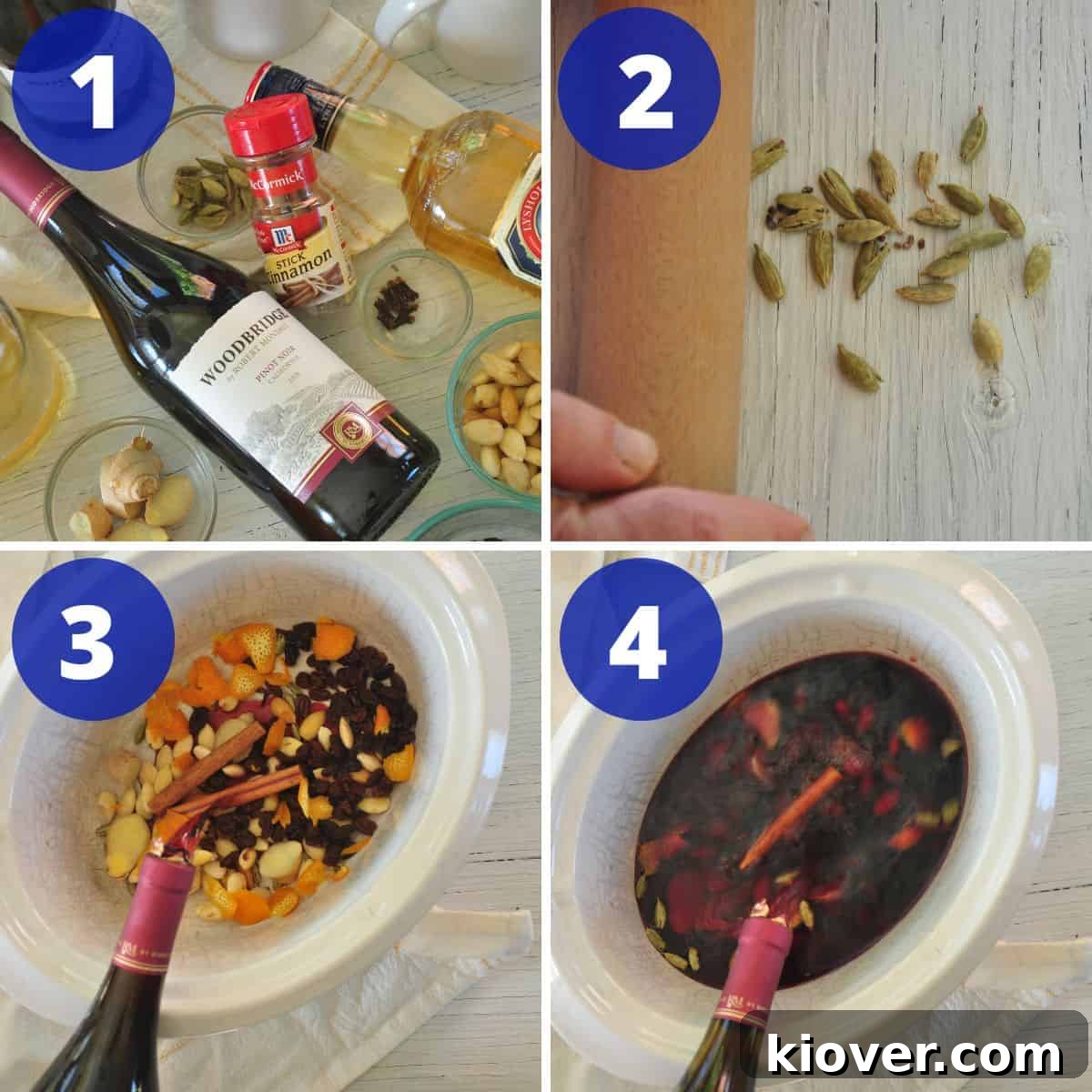
- Combine Ingredients: Begin by adding all the core Glogg ingredients, with the sole exception of the Aquavit, into the basin of your slow cooker or crockpot. This includes the wine, spices, honey, raisins, almonds, and orange peel.
- Slow Cook and Infuse: Set your slow cooker to the “low” setting and allow it to cook for a minimum of 2½ hours, and up to a maximum of 6 hours. The goal here is to gently warm the mixture, enabling the spices to thoroughly infuse their complex aromas and flavors into the wine. It is absolutely crucial that the mixture never comes to a boil, as this will cause the alcohol to evaporate prematurely, diminishing both the potency and the delicate aromatic compounds. The ideal temperature should consistently remain below 172°F (78°C).
- Add Aquavit: Approximately 30 minutes before you plan to serve your Glogg, stir in the ½ cup of Aquavit. Adding it towards the end ensures that its distinct and potent flavor profile is preserved and doesn’t dissipate during the longer cooking process, maintaining its characteristic Scandinavian kick.
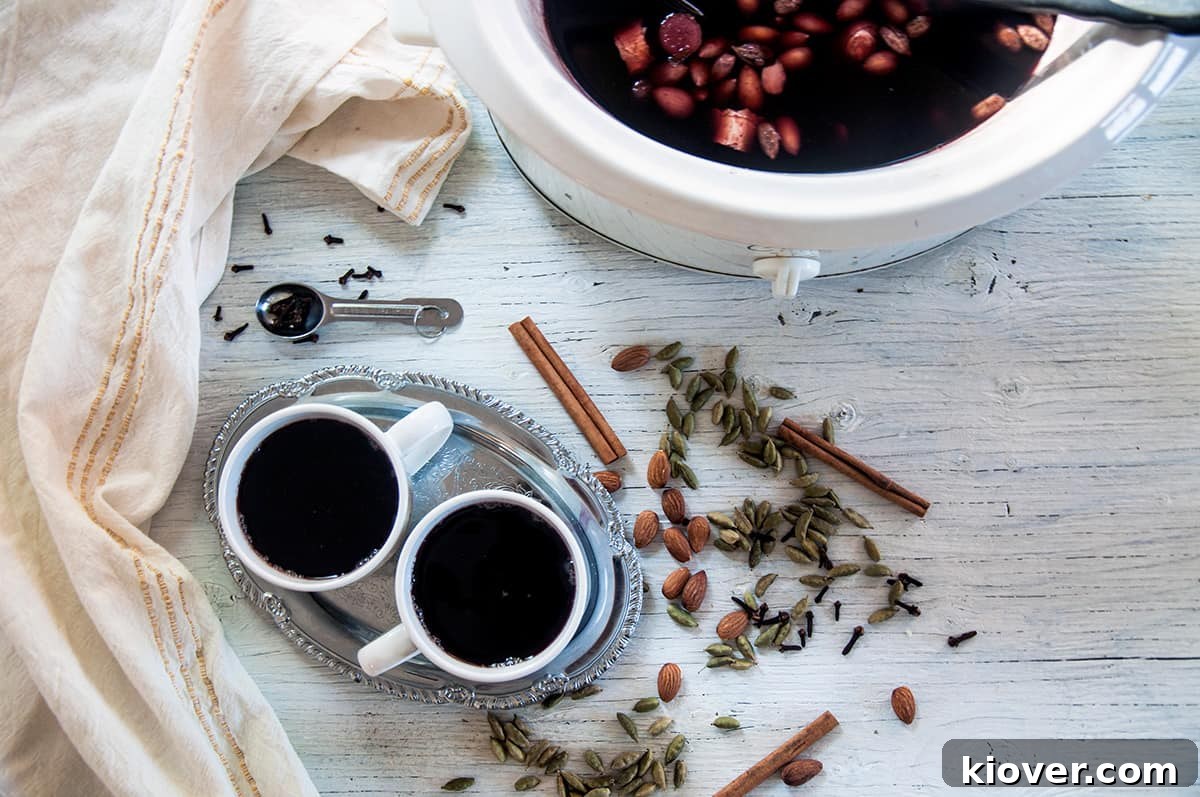
- Serve Warm: Once heated through and perfectly infused, carefully ladle your Glogg into heatproof mugs or glasses. For an authentic touch, serve it with a small spoon to allow guests to enjoy the delightful, wine-soaked raisins and blanched almonds. This simple process yields a deliciously warm and spiced holiday drink, ready to be enjoyed!
Straining and Serving Options for Glogg
While some purists, myself included, appreciate the rustic charm of serving Glogg with all its ingredients floating, many prefer a smoother drinking experience. Spices like whole cloves, cracked cardamom pods, pieces of fresh ginger, and full cinnamon sticks are not always pleasant to bite into. Additionally, some guests might not enjoy the texture of the softened orange peel, raisins, or almonds directly in their mug. Here are a couple of thoughtful methods to manage these elements, ensuring everyone enjoys their Glogg:
- Strain Before Serving: If you prefer a completely clear Glogg, you can strain the entire mixture through a fine-mesh sieve or colander just before serving. This removes all the solid spices and fruit. However, if you wish for the raisins and blanched almonds to be part of the drink (which is traditional and adds wonderful texture and flavor), remember to add them back into the strained liquid before ladling into mugs.
- Use a Cheesecloth Spice Bag: A more convenient option, particularly if you want to keep the raisins and almonds in the drink but remove the harder spices, is to place all the non-edible spices (cloves, cardamom pods, ginger, cinnamon sticks, and orange peel) into a small cheesecloth bag. Tie it securely and add this bag to the crockpot along with the other ingredients. This ingenious method allows the flavors to infuse thoroughly into the wine while keeping the solid spices neatly contained for easy removal just before serving. This saves you the trouble of straining the entire batch and ensures a smooth, spice-free sip without sacrificing any of the rich, infused flavor.
Ultimately, the choice is yours. Serving it with all the elements allows for an authentic, visually appealing presentation and robust flavor, while straining offers a refined and easy-to-drink experience.
How to Blanch Almonds for Glogg
Blanching almonds is a simple but important step for this Glogg recipe, ensuring the best possible flavor and texture. The natural skins of unblanched almonds can impart a slightly bitter taste to your drink, which we definitely want to avoid for a perfectly balanced Glogg. While you can certainly purchase pre-blanched almonds from most grocery stores, blanching them yourself is remarkably easy and cost-effective, especially if you buy almonds in bulk.
Here’s a straightforward guide on how to blanch almonds at home:
- Prepare Boiling Water: Bring a small pot of water to a rolling boil. Ensure you have enough water to fully submerge the almonds.
- Add Almonds: Carefully add the raw, whole almonds to the vigorously boiling water. Allow them to simmer for precisely 60 seconds. Do not overcook, as this can make them soft.
- Strain and Rinse: Immediately after 60 seconds, strain the almonds using a colander. Transfer them directly under cold running water to quickly stop the cooking process. This chilling also helps the skins loosen.
- Remove Skins: Once the almonds are cool enough to handle, gently squeeze each almond between your thumb and forefinger. The blanched skins should easily slip off, revealing the smooth, pale almond inside. While this process requires individual attention, you’ll find it becomes surprisingly quick and meditative once you get into a rhythm.
Set your freshly blanched almonds aside until you are ready to add them to your Glogg mixture. This small step makes a significant difference in the final taste and presentation of your traditional Scandinavian holiday drink.
Serving Glogg with a Spoon
Given the delightful presence of plump raisins and crunchy blanched almonds in this Glogg, serving it with a small spoon is a traditional and highly recommended practice that enhances the overall drinking experience. This thoughtful addition allows your guests to easily scoop up these flavorful “treats” from the bottom of their mug.
The raisins, having soaked in the warm, spiced wine for hours, become wonderfully succulent and infuse with incredible flavor. The blanched almonds, on the other hand, retain a satisfying crunch, offering a pleasant textural contrast to the soft raisins and smooth liquid. Guests can enjoy these edible garnishes as they sip their Glogg, and simultaneously, easily set aside any non-edible spices like whole cloves, large chunks of ginger, or cardamom pods that might have remained in their mug. While a spoon isn’t strictly necessary for drinking Glogg, it adds a practical, charming, and authentic touch, making this festive beverage even more enjoyable and interactive.
Slow Cooker vs. Stovetop for Glogg
While I highly recommend a slow cooker for its convenience and hands-off approach, Glogg can certainly be prepared in a large pot or saucepan on your stovetop. The beauty of the slow cooker method lies in its “set it and forget it” nature; you simply combine the ingredients, and it gently simmers for hours, allowing the complex flavors to develop and meld with minimal oversight. This makes it perfect for entertaining, as you can focus on other tasks.
If using a stovetop, the most critical consideration is meticulous temperature control. You must keep the heat on very low and monitor it carefully to avoid overheating. The golden rule for Glogg (and any mulled wine) is: **never bring it to a boil.** Alcohol begins to evaporate at approximately 172°F (78°C), whereas water boils at 212°F (100°C). Boiling your Glogg would cause much of the alcohol, and a significant portion of the delicate aromatic compounds from the spices, to evaporate prematurely, diminishing both its potency and its intended nuanced flavor profile. Aim to heat the mixture gently and consistently, keeping it warm but well below a simmer or boil, ideally under the 172°F mark, to preserve its rich character and ensure a truly enjoyable Glogg.
Optimal Crockpot Cooking Time for Glogg
The recommended cooking time for Glogg in a crockpot ranges from a minimum of 2.5 hours to a maximum of about 6 hours. In this specific recipe, we suggest a total of three hours, which is an excellent sweet spot for optimal flavor development without over-extraction of spices. This duration allows the various spices and honey to fully meld with the wine, creating a deeply aromatic, complex, and harmonious drink. The gentle, prolonged heating ensures that all the subtle notes from the cardamom, cinnamon, ginger, and orange peel are thoroughly infused.
The longer you let the ingredients steep and marinate at a low temperature, the more pronounced and complex the flavors will become, deepening the character of your Glogg. However, it’s important to be mindful not to overcook it, especially if your slow cooker tends to run hot, to avoid any risk of accidentally bringing it to a boil. Within this 2.5 to 6-hour window, you can adjust the cooking time slightly based on your desired intensity of spice and flavor; a shorter time for a lighter infusion, a longer time for a more robust Glogg.
🤷 Substitutions and Variations for Your Glogg
Glogg is a wonderfully versatile drink, and many enjoyable variations can be made to suit different preferences, dietary needs, or simply to experiment with new flavors. Don’t be afraid to get creative and personalize your batch!
- Spices: While our blend is traditional, feel free to experiment! Consider adding star anise for a distinct licorice note, whole allspice berries for a warm, peppery touch, or a few strips of lemon peel for extra zest and brightness. Nutmeg, either whole (grated fresh) or ground, also makes a wonderful addition, as can a few juniper berries for a more rustic, resinous aroma.
- Fortification: If Aquavit is unavailable or not to your taste, you have several excellent options. You can omit it entirely for a lighter, less potent Glogg. Alternatively, substitute with a good quality brandy, cognac, or a robust, flavorful sherry (like Oloroso or Amontillado) for a different kind of warmth and depth. Dark rum can also add an interesting, sweet complexity.
- Cooking Method: Don’t have a slow cooker? No problem! You can easily prepare Glogg in a large pot on your stovetop. Just ensure you keep the heat on very low, maintaining a gentle warmth and preventing it from boiling to preserve the alcohol and delicate aromas. An instant pot on its “warm” setting can also be used.
- Sweetener: If you prefer not to use honey, granulated sugar is a perfectly acceptable substitute. As mentioned, for every 1 cup of honey, use approximately 1⅓ cups of white sugar, adjusting to your desired sweetness level. Maple syrup or brown sugar could also offer an interesting, deeper flavor profile.
- Wine Choice: While Pinot Noir is recommended, other dry red wines like Merlot, Grenache, or a lighter Cabernet Sauvignon can work well. The key is to avoid wines that are too tannic, heavily oaked, or overly sweet, as they might clash with the spices.
- Fruit Additions: Beyond raisins and orange peel, consider adding dried cranberries, dried figs (chopped), or even thinly sliced fresh apples or pears to the mix for additional fruit notes, visual appeal, and delightful texture.
- Non-Alcoholic Version: For a family-friendly option, substitute the red wine with cranberry juice, blackcurrant juice, or a high-quality non-alcoholic red wine. Omit the Aquavit entirely or replace it with a splash of non-alcoholic spirit or a little extra ginger juice for a spicy kick.
📦 Storage Tips for Glogg
Glogg is best served fresh and warm directly from your slow cooker, creating an inviting aroma that fills your home and sets a festive mood. However, if you find yourself with any delicious leftovers, Glogg can be stored and enjoyed again later. To ensure optimal flavor and longevity, it’s highly recommended to prepare it for storage properly.
Before storing, always strain all solid ingredients (spices, raisins, almonds) out of the Glogg. This crucial step prevents the flavors from becoming too concentrated, bitter, or muddled over time, as prolonged contact with spices can sometimes lead to undesirable tastes. Once strained, transfer the Glogg into an airtight container – a glass bottle with a tight-fitting lid or a sealed pitcher works perfectly. Store it in the refrigerator, where it will keep well for up to a week. When you’re ready to enjoy it again, gently reheat the Glogg on the stovetop over low heat, ensuring once again that it does not come to a boil. You can add a fresh garnish of blanched almonds and raisins, along with a new orange slice or cinnamon stick, when serving the reheated Glogg to refresh its appearance and texture, bringing back that festive touch.
🎓 The Rich History of Glogg: A Journey Through Time
The story of Glogg is a captivating journey that intertwines with the ancient traditions of spiced wines across Europe, echoing histories shared by similar festive drinks like Sangria and other fortified wine concoctions. Glogg is undeniably a direct descendant of mulled wine, evolving over centuries with unique regional adaptations that led to its distinct Scandinavian character. Tracing its historical elements provides a vivid picture of how this cherished Nordic holiday drink came to be, reflecting broader cultural and culinary developments.
Roots in Mulled Wine and Hippocras
Like its popular cousin, mulled wine, Glogg’s lineage can be traced back to Hippocras, an ancient spiced and sweetened wine. Early humans, ever resourceful and keen to enhance their provisions, began experimenting with wine by adding various aromatic spices and natural sweeteners. This practice, believed to have originated in ancient Rome around the 2nd century AD, was driven by both flavor enhancement and practical preservation, as well as a clever way to make less palatable or older wines more enjoyable.
Hippocras was famously filtered through a conical cloth filter known as “Hippocrates’ sleeve,” hence its enduring name. This early form of spiced wine, which could be served warm or cold depending on the climate and preference, eventually spread throughout the Roman Empire and subsequently across Europe. It is widely considered the venerable ancestor of both modern mulled wine and, consequently, the entire family of spiced, fruit-infused wines, including Glogg and Sangria, establishing a shared heritage of aromatic beverages across diverse cultures and centuries.
The Story of Aquavit: A Nordic Elixir
Aquavit, a defining and culturally significant component of Glogg, holds its own esteemed place in Nordic history. While the Linie brand, highlighted earlier for its unique maturation journey, dates back to 1805, the spirit itself is much older. The very first documented mention of Aquavit (or Akvavit, a term derived from the Latin “aqua vitae,” meaning “water of life”) appears in a letter from 1531. This letter, sent to a Catholic Archbishop of Norway, refers to a spirit believed to cure all manner of ailments, indicating its presence and perceived value in the region centuries before commercial production began.
This potent spirit, traditionally distilled from grain or potatoes and distinctively flavored with caraway, dill, and other botanicals, is deeply embedded in the cultural fabric of Norway, Sweden, Denmark, Finland, and even parts of Germany. Historically, it was consumed for both medicinal purposes and, perhaps more famously, as a celebratory drink during festive occasions like Christmas, Midsummer, and other important feasts. Its distinctive flavor profile, which varies slightly by country and producer, makes it an irreplaceable element in authentic Glogg, contributing a unique herbaceous warmth, a complex layer of flavor, and a powerful sense of tradition.
Cardamom’s Northern Journey: An Unexpected Staple
Cardamom seeds are an indispensable ingredient in Glogg and have become a true cornerstone of Scandinavian culinary traditions. It’s often quipped, perhaps with a touch of hyperbole, that Norwegians consume significantly more cardamom than the average person globally. What makes this particularly fascinating is that cardamom, a fragrant and potent spice, is a distant relative of ginger and is not native to the northern climes but originates from the tropical regions of India and Southeast Asia.
The journey of cardamom from its tropical homeland to the colder reaches of Scandinavia is a compelling testament to ancient global trade routes. Theories suggest it traveled via southern or southeastern European routes, making its way through bustling trading hubs in regions like Spain (which had strong connections to North Africa) and Turkey (which served as a gateway between Europe and the Middle East). This geographical progression explains how a tropical spice became so deeply integrated into Nordic baking, confectionary, and warm beverages. Historical texts further confirm its long-standing presence; for instance, the 13th-century “Libellus De Arte Coquinaria,” one of the earliest known Scandinavian and German recipe books, explicitly references the use of cardamom, showcasing its surprisingly deep roots in traditional Nordic dishes.
Glogg’s Evolution in Scandinavia
The distinct tradition of Glogg, as we know it today, truly emerged from the fascinating confluence of established mulled wine traditions with the burgeoning popularity and regional integration of Aquavit and cardamom in Scandinavia. Mulled wine, with its history tracing back to 2nd century Rome, spread throughout Europe as a practical and comforting way to warm oneself during cold months and to utilize less-than-perfect wines by sweetening and spicing them. By the 14th century, it was already a well-known beverage, featured in one of England’s oldest cookbooks, “The Forme of Cury.”
In Germany, a very similar spiced wine drink called Glühwein (meaning “glowing wine”) gained immense popularity, and given Aquavit’s presence and historical roots there, it is highly plausible that this tradition flowed north into Norway and Sweden. The very name “Glogg” itself is thought to derive from the Swedish word “glödga,” meaning “to mull” or “to burn,” stemming from “glöd” (glowing coal). This refers to an older preparation method where a lump of sugar was set alight and allowed to drip into the wine, creating a “glowing” effect. Merriam-Webster Dictionary confirms this etymology, linking it to Old Norse “glōth” and Old English “glēd” (both meaning “glowing coal”).
Thus, the precise moment when the widespread tradition of mulled wine, the distinctive character of Aquavit, and the pervasive aroma of cardamom converged and were embraced in the Nordic countries marked the definitive birth of Glogg as the unique and beloved holiday classic it is today. It’s a beautiful testament to how cultural exchange, regional ingredients, and evolving culinary practices can transform a common drink into a deeply cherished and iconic tradition.
❓ Frequently Asked Questions About Glogg
What is the best wine for making Glogg?
Glogg is very forgiving when it comes to wine choice, making it a wonderful recipe to experiment with. While we recommend a Pinot Noir for its balanced fruitiness, most dry to semi-dry red wines work exceptionally well. The key is to choose an affordable, non-oaked red wine whose flavors won’t overpower the rich spices and Aquavit. Avoid heavily tannic or very sweet wines.
What exactly is Glogg?
Glogg is a traditional Scandinavian warm drink, a celebrated type of mulled wine. It’s distinguished by its specific aromatic profile, often including generous amounts of green cardamom, cinnamon, cloves, ginger, and orange peel. It’s also traditionally garnished with blanched almonds and raisins, and frequently fortified with the unique Scandinavian spirit, Aquavit.
Is Glogg alcoholic?
Yes, Glogg is typically an alcoholic beverage. It always starts with a base of red wine and is traditionally fortified with a spirit like Aquavit, brandy, or another strong alcohol, giving it a comforting and warming kick perfect for the cold season. Non-alcoholic versions can be made by substituting the wine with juice.
What’s the difference between Mulled Wine and Glogg?
While both are warm, spiced wine drinks, Glogg has a more defined and consistent Scandinavian profile. Mulled wine recipes vary widely across different cultures, but Glogg specifically incorporates green cardamom as a central and defining spice, and is very often fortified with Aquavit. Its traditional serving also consistently includes blanched almonds and raisins, which are less common or varied in general mulled wine recipes.
Can I make Glogg non-alcoholic?
Absolutely! To make a delicious non-alcoholic Glogg, simply substitute the red wine with cranberry juice, blackcurrant juice, a blend of grape and apple juice, or a non-alcoholic red wine. Omit the Aquavit entirely or replace it with a splash of non-alcoholic spirit or extra spices and ginger for added depth. You’ll still achieve a wonderfully spiced, warm, and festive beverage suitable for all ages.
What should I serve with Glogg?
Glogg pairs beautifully with other Scandinavian holiday treats, enhancing the festive experience. Consider serving it alongside gingerbread cookies (pepperkaker), traditional Swedish lussekatter (saffron buns), or delicate krumkake. For a savory pairing, traditional Swedish meatballs or a festive cheese board featuring dried fruits, nuts, and crackers make excellent accompaniments.
How should Glogg be served?
Glogg is traditionally served warm in sturdy mugs or glasses, often accompanied by a small spoon. The spoon allows guests to scoop up the wine-soaked raisins and blanched almonds, which are an integral part of the Glogg experience. Garnishing with an orange slice or a fresh cinnamon stick also adds a nice touch.
📝 Expert Tips and Tricks for Perfect Glogg
- Spice Bag for Easy Serving: For a smoother drinking experience and significantly easier cleanup, consider placing all non-edible spices (such as whole cloves, cinnamon sticks, chunks of ginger, cardamom pods, and larger pieces of orange peel) into a cheesecloth bag. Tie it securely before adding it to the crockpot. This method allows the flavors to infuse beautifully, and you can simply remove the bag before serving, leaving a clear, spice-free liquid.
- Optional Straining for Smoothness: If you or your guests prefer a completely clear Glogg without any floating bits, you can choose to strain out all solid ingredients (spices, raisins, almonds) through a fine-mesh sieve before serving. However, if you do this, remember to reintroduce the blanched almonds and raisins if you wish for them to be part of the traditional serving.
- Storage Best Practice: When storing leftover Glogg, always strain out all solid components first. This crucial step prevents the spices from over-infusing and potentially making the drink bitter or overly pungent over extended periods. Store the strained Glogg in an airtight container in the refrigerator for up to one week, maintaining its fresh, spiced flavor.
- Temperature Control is Key: Whether you’re using a slow cooker or preparing Glogg on the stovetop, it is paramount that you never let your Glogg come to a boil. Gentle heating below 172°F (78°C) is essential to preserve the alcohol content and the delicate aromas of the spices. Boiling will cause both the alcohol and much of the complex flavor profile to evaporate.
- Taste and Adjust Before Serving: Always give your Glogg a taste test shortly before serving. This allows you to make any final adjustments. You might want to add a little more honey if you prefer it sweeter, or a splash more Aquavit if you desire a stronger, more pronounced kick. A squeeze of fresh orange juice can also brighten the flavors.
- Garnish Generously for Presentation: Don’t underestimate the power of presentation! Serve Glogg with its traditional garnishes: a generous handful of blanched almonds and plump raisins in each mug. You can also add a fresh orange slice, a whole cinnamon stick, or a star anise pod for an inviting and aromatic visual appeal.
🛠 Recommended Products for Your Glogg Recipe
Having the right tools can make preparing your Glogg even more enjoyable and efficient, ensuring you achieve the perfect blend of flavors and aromas. Here are some products that we find particularly useful for crafting this traditional Scandinavian holiday drink:
- Mortar and Pestle: An indispensable tool for cracking cardamom pods and gently bruising other whole spices like cloves and ginger. This action helps to release their full aroma and flavor more effectively than simply adding them whole.
- Rolling Pin: A simple yet effective alternative to a mortar and pestle for cracking spices if you don’t have one readily available. Place spices in a sturdy bag and gently roll over them.
- Slow Cooker/Crockpot: The easiest and most recommended way to make Glogg. It allows for gentle, hands-off heating, ensuring perfect flavor infusion over several hours without the risk of boiling.
- High-Quality Green Cardamom Pods: Essential for the most authentic flavor. Ensure you purchase whole green cardamom pods, as they retain their essential oils better than pre-ground cardamom.
- Fine-Mesh Sieve: (Optional, but highly useful) For straining out spices if you prefer a smoother, clearer Glogg without any floating solid ingredients.
- Cheesecloth: (Optional, but recommended) For creating a spice bag to easily contain and remove whole spices, making cleanup effortless and serving smoother.
- Heatproof Mugs or Glasses: Essential for serving your warm Glogg safely and stylishly. Look for mugs with handles for easy sipping.
😋 Did You Make This Glogg Recipe?
We’re absolutely thrilled if you’ve given this traditional Scandinavian Glogg recipe a try! Your feedback and experience mean the world to us and help fellow Glogg enthusiasts embark on their own culinary adventures. If you enjoyed crafting and sipping this festive drink, please consider leaving a rating and comment below to share your experience, tips, or any variations you tried. Your insights help us improve our recipes and inspire others to discover and cherish this wonderful holiday tradition. Thank you for visiting and making Ramshackle Pantry a part of your culinary journey and festive celebrations!
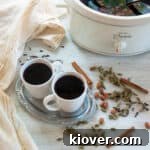
Glogg Recipe – A Traditional Scandinavian Holiday Drink
5 from 16 reviews
- Author: Ben Myhre
- Prep Time: 10 minutes
- Cook Time: 3 hours
- Total Time: 3 hours 10 minutes
- Yield: 12 servings
- Category: Holiday Drinks
- Method: Slow Cooker
- Cuisine: Norwegian
Description
Mulled wine with a Scandinavian twist. This warm traditional wine recipe is meant to warm your spirit and comfort your taste buds. Get out your crockpot and make this great recipe for your guests this holiday season or sip it by your fireplace.
Ingredients
- 10 whole cloves
- 20 green cardamom pods, cracked
- 2 bottles (2 x 750 ml) Pinot noir or similar dry red wine
- 4 inches fresh ginger, peeled and sliced or roughly chopped
- ½ cup raisins
- ½ cup blanched almonds
- 1 large orange peel (from about half an orange), avoiding the white pith
- 1 cup honey (or 1⅓ cups granulated sugar, adjusted to taste)
- 2 cinnamon sticks
- ½ cup Aquavit (or substitute with brandy, cognac, or omit)
Instructions
- Combine Ingredients: Add all ingredients, except the Aquavit, to a slow cooker or crockpot.
- Slow Cook: Heat on low for at least 2.5 hours and up to 6 hours. Ensure the mixture never reaches a boil, but remains gently warmed (below 172°F / 78°C) for optimal flavor infusion and alcohol preservation.
- Add Aquavit: Stir in the ½ cup of Aquavit about 30 minutes prior to serving to maintain its distinct flavor and strength.
- Serve: Ladle into heatproof coffee mugs and serve immediately with a small spoon, allowing guests to enjoy the softened almonds and raisins.
Notes
- Optional Spice Bag: For easy removal of whole spices, place cloves, cinnamon, ginger, orange peel, and cardamom into a cheesecloth container (spice bag) before adding to the crockpot.
- Straining for Smoothness: Alternatively, strain out all solid spices (cloves, cinnamon, ginger, orange, cardamom) before serving if a clear drink is preferred.
- Storing Leftovers: If you anticipate leftovers, strain out all solid ingredients before refrigerating the Glogg in an airtight container for up to one week. Reheat gently on the stovetop.
Nutrition Information (per serving, approximate)
- Serving Size: 1 mug (based on 12 servings)
- Calories: 416
- Sugar: 42 g
- Sodium: 18 mg
- Fat: 5 g
- Saturated Fat: 0 g
- Unsaturated Fat: 5 g
- Carbohydrates: 51 g
- Fiber: 2 g
- Protein: 3 g
- Cholesterol: 0 mg
*Nutritional information is an estimate and may vary based on specific ingredients and preparation methods.