
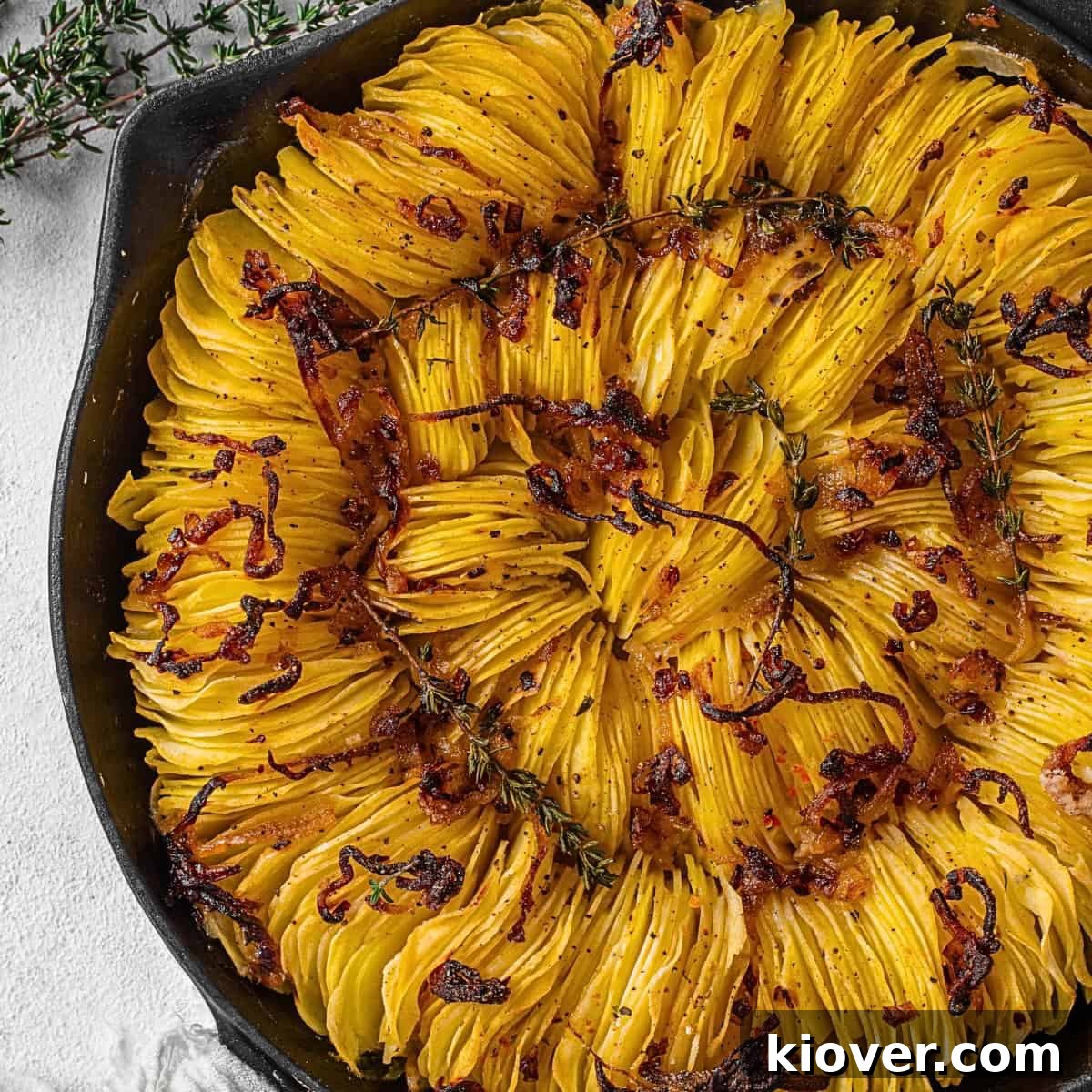
Irresistible Boulangere Potatoes: Your New Favorite Side Dish
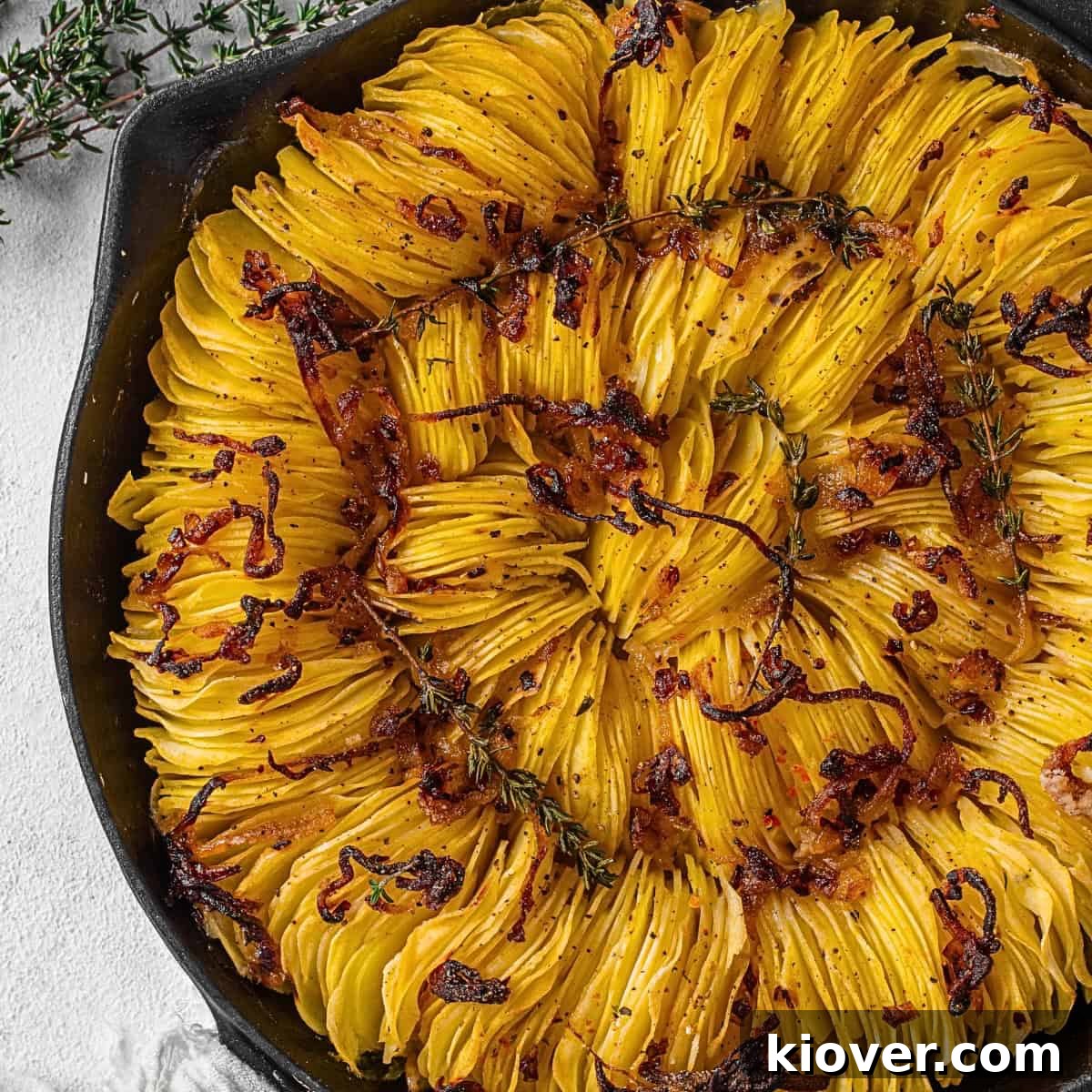
Elevate any meal with this truly irresistible Boulangere Potatoes recipe! A classic French potato dish, it’s renowned for its effortless preparation and surprisingly sophisticated flavor profile. With just about 10 minutes of active prep time, you can entrust your oven to work its magic, transforming humble potatoes into a masterpiece. Boulangere Potatoes are not just a side; they’re a culinary experience, destined to become a cherished family favorite in your home.
Recipe Difficulty – Very Easy
Table of Contents
- What Are Boulangere Potatoes?
- Why This Recipe Works
- Key Ingredients for Boulangere Potatoes
- Smart Substitutions for Your Recipe
- Delicious Variations to Try
- Step-by-Step: How to Make Boulangere Potatoes
- Expert Tips for Perfect Boulangere Potatoes
- Storing and Reheating Leftovers
- Frequently Asked Questions
- More Mouth-Watering Potato Recipes
- Dishes You Might Also Enjoy
- Boulangere Potatoes Recipe Card
What Are Boulangere Potatoes?
Boulangere Potatoes, or Pommes Boulangère as they are known in their native France, translate literally to “baker’s potatoes.” This name carries a rich historical tale: centuries ago, most homes in France didn’t have their own ovens. Instead, local bakers would open their ovens to the community after they were done baking bread for the day. Families would bring their prepped dishes, often layered potatoes with onions and stock, to be cooked in the baker’s cooling oven. This tradition gave rise to a beloved classic – a rustic, flavorful, and comforting potato dish.
Unlike its creamy cousin, Dauphinoise potatoes, Boulangere potatoes are famously made without cream or cheese. Instead, thinly sliced potatoes and onions are layered in a baking dish, bathed in savory vegetable or chicken stock, and baked until tender and golden. The stock, combined with the natural starch from the potatoes and the sweetness of caramelized onions, creates a light yet rich sauce that coats every slice. It’s a healthier, lighter alternative that still delivers incredible depth of flavor and a wonderfully soft texture, with delightfully crispy edges.
Why This Recipe Works
This Boulangere Potatoes recipe stands out for its elegant simplicity and incredible versatility. It’s the perfect potato dish that effortlessly complements almost any main course, from a succulent roasted chicken or a hearty Sunday roast to a light grilled fish or a vibrant vegetable tagine. The subtle, savory taste allows it to enhance, rather than overpower, other flavors on your plate.
Here’s why these potatoes are a must-try:
- Effortless Elegance: Despite its impressive appearance and rich flavor, the actual cooking process is straightforward. Minimal hands-on time means more time to enjoy with guests or relax.
- Flavorful Simplicity: Utilizing basic, wholesome ingredients like potatoes, onions, stock, and fresh thyme, this dish proves that less is often more. The magic happens as these ingredients slow-cook together, creating layers of aromatic delight.
- Incredibly Versatile: Its neutral yet deeply satisfying flavor profile makes it a universal side. It pairs beautifully with everything from sophisticated gourmet meals to simple weeknight dinners.
- Customizable: Easily adaptable to dietary preferences or flavor enhancements. Whether you need a dairy-free option or want to experiment with different herbs and spices, Boulangere potatoes are forgiving and flexible.
- Budget-Friendly: Made with inexpensive pantry staples, it’s a cost-effective way to create a dish that tastes far more luxurious than its ingredients suggest.
Key Ingredients for Boulangere Potatoes
Crafting perfect Boulangere Potatoes begins with selecting the right ingredients. Each component plays a vital role in achieving that signature tender texture and rich, savory flavor. Here’s a closer look at what you’ll need and why:
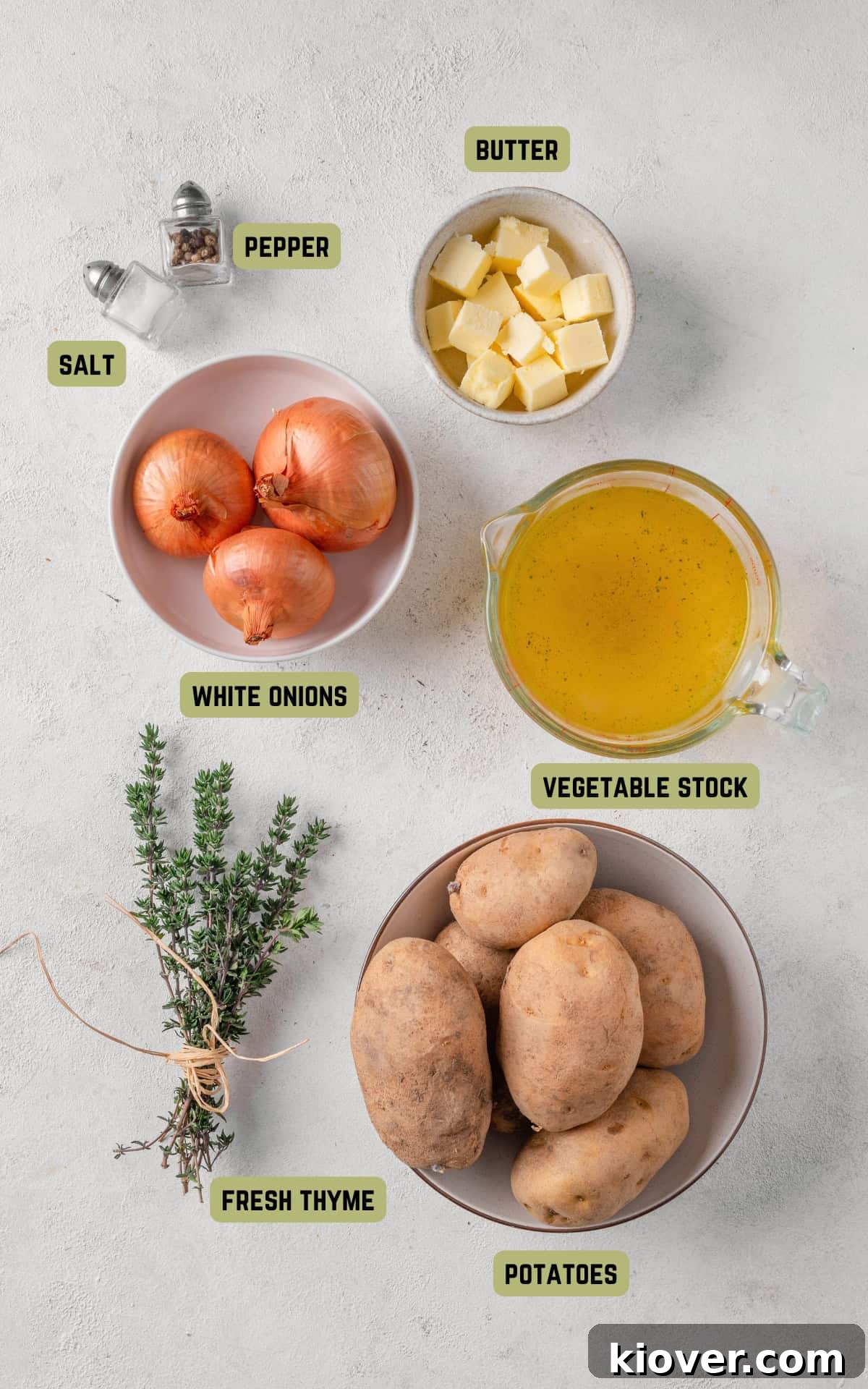
- Potatoes: The star of the show! For Boulangere potatoes, it’s crucial to choose floury or starchy potatoes that will break down slightly and create a wonderful, slightly thickened texture as they cook. This helps absorb the stock and meld with the onions. I highly recommend varieties like Desiree, Maris Piper, or Russet (also known as baking potatoes). These types have a higher starch content, which contributes to the creamy interior while allowing the edges to crisp beautifully.
- White Onions: These are not just for flavor; they are caramelized to a beautiful golden sweetness, adding an essential layer of savory depth to the dish. As they cook, their sugars release, complementing the earthy potatoes and aromatic thyme. The goal is a gentle caramelization, not a deep brown, to ensure a delicate sweetness.
- Vegetable Stock: This liquid gold is the backbone of the dish, providing the necessary moisture for the potatoes to cook through and infusing them with a rich, savory essence. Using a good quality vegetable stock ensures a robust flavor without overpowering the natural taste of the potatoes and onions. It also helps create the luscious, slightly thickened sauce that defines Boulangere potatoes.
- Butter: Essential for both flavor and cooking. Butter helps caramelize the onions to perfection and contributes a rich, nutty taste that permeates the entire dish. For those with dietary restrictions or preferences, I often opt for dairy-free butter, which performs just as well and maintains the desired richness.
- Fresh Thyme: This aromatic herb is a classic pairing with potatoes and adds a bright, slightly peppery, and earthy note that elevates the entire dish. Its fragrant leaves release their essential oils as the potatoes bake, creating an inviting aroma and a delightful flavor contrast. Fresh is always best for maximum impact.
- Salt and Pepper: These fundamental seasonings are crucial for bringing out all the natural flavors of the ingredients. Season generously, tasting as you go, to ensure a perfectly balanced dish. They are the final touch that makes all the other ingredients sing in harmony.
For precise measurements and quantities, please refer to the detailed recipe card below.
Smart Substitutions for Your Recipe
One of the best aspects of Boulangere Potatoes is how adaptable they are. Whether you’re managing dietary needs or simply looking to experiment with flavors, a few simple swaps can make a big difference without compromising the delicious outcome.
- Butter: If you’re out of butter or prefer a different fat, olive oil is an excellent alternative. It will still help caramelize the onions beautifully and contribute a lovely Mediterranean note to the dish. Coconut oil could also be used for a dairy-free option, though it might impart a slight coconut flavor.
- Vegetable Stock: While vegetable stock is highly recommended for its clean flavor, you can certainly substitute it with other broths. Vegetable broth is a direct and easy swap. For those who enjoy meat flavors, chicken stock or broth works wonderfully and adds a deeper, richer profile to the potatoes. Ensure your chosen stock is low sodium to control the overall saltiness of the dish.
- Potatoes: While specific starchy potatoes are recommended, if you only have access to all-purpose potatoes like Yukon Golds, they will still work. The texture might be slightly less creamy, but the flavor will remain delicious. Avoid waxy potatoes if possible, as they tend to hold their shape too well and don’t create the desired tender, melt-in-your-mouth consistency.
- Thyme: If fresh thyme isn’t available, you can use dried thyme. As a general rule, use about one-third of the amount of dried herbs compared to fresh (e.g., 1 teaspoon dried for 3 sprigs fresh). Rosemary or bay leaves could also offer a different, yet complementary, aromatic profile.
Delicious Variations to Try
While the classic Boulangere Potatoes recipe is perfect on its own, there’s always room to get creative and tailor the dish to your personal taste or the meal you’re serving. Here are some exciting variations to elevate your potato game:
- Spicy Kick: For those who love a bit of heat, infuse your vegetable stock with a pinch of cayenne pepper, red pepper flakes, or a dash of hot sauce before pouring it over the potatoes. This will add a subtle warmth that beautifully contrasts with the savory potatoes and sweet onions.
- Gourmet Deluxe: Transform this humble side into a showstopper by adding extra layers of flavor. Incorporate thinly sliced garlic cloves between the potato layers for an aromatic boost. Experiment with other fresh herbs like rosemary or sage, tucking them alongside the thyme. A sprinkle of fresh chopped parsley or chives just before serving also adds a pop of color and freshness.
- Cheesy Indulgence: While traditionally cream and cheese-free, a touch of cheese can turn this into a comforting, kid-friendly (and adult-friendly!) delight. During the last 15-20 minutes of baking, sprinkle a layer of grated Gruyère, Parmesan, or even a mild cheddar or mozzarella over the top. The cheese will melt into a golden, bubbly crust, adding a delightful richness. For best results, you can cover the dish with foil for the first half of the baking time to ensure the cheese melts evenly before uncovering to crisp.
- Herb Medley: Instead of just thyme, try a blend of your favorite herbs. A classic herbes de Provence mix, or a combination of thyme, rosemary, and a hint of oregano, can add a wonderfully complex aroma and taste.
- Mediterranean Twist: Add thinly sliced cherry tomatoes and black olives between the potato layers for a Mediterranean-inspired version. A squeeze of lemon juice after baking would brighten the flavors even further.
- Smoky Flavor: A tiny pinch of smoked paprika in the stock or a touch of smoked salt can impart a lovely smoky depth, especially if serving with grilled meats.
Step-by-Step: How to Make Boulangere Potatoes
Creating these heavenly Boulangere Potatoes is a straightforward process that yields incredibly rewarding results. Follow these simple steps for a perfect dish every time:
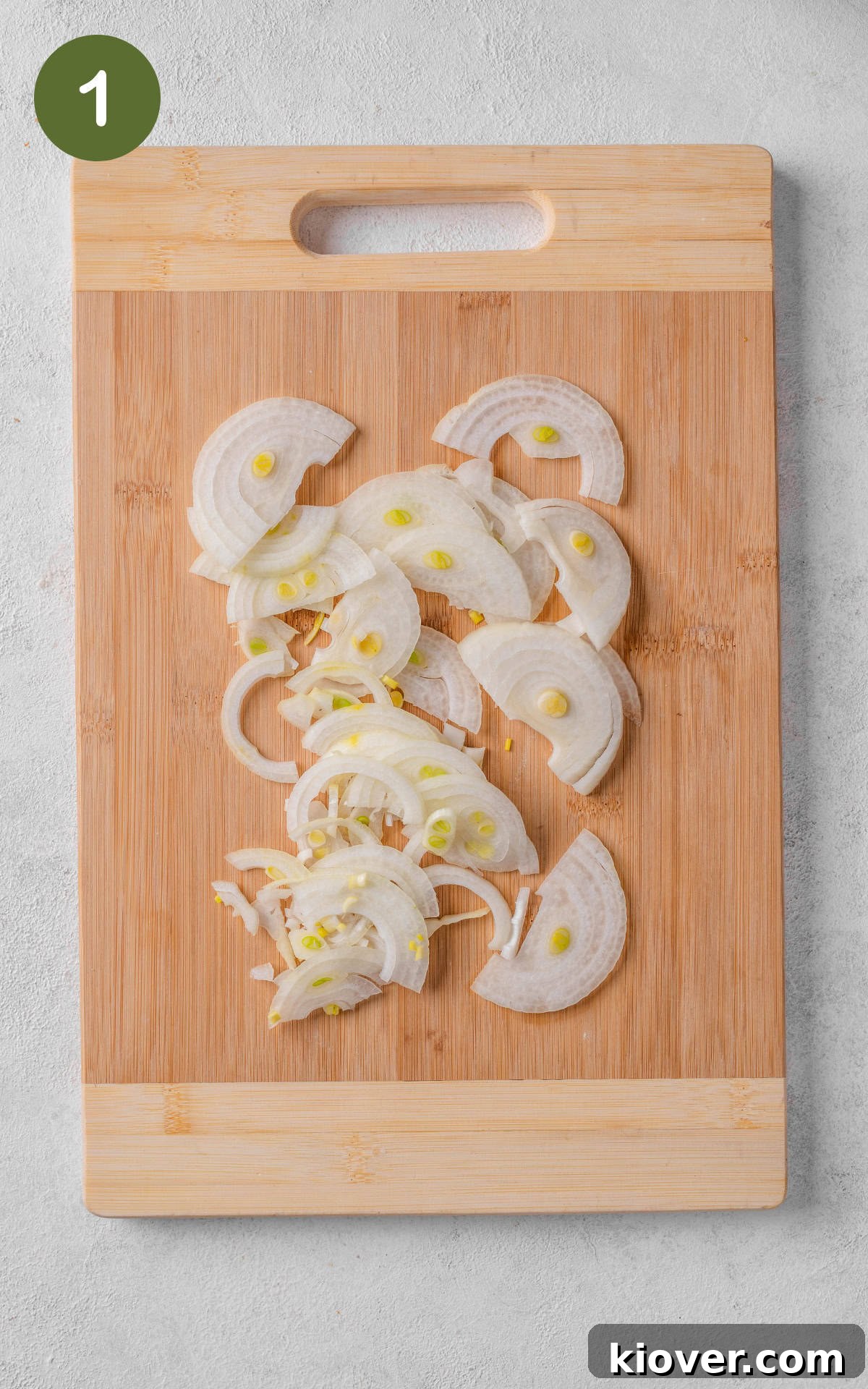
Step 1: Prepare Your Oven and Onions. Begin by preheating your oven to 180°C (360°F). While the oven warms, peel your white onions and thinly slice them into elegant half-moons. Consistency in slicing is key for even cooking.
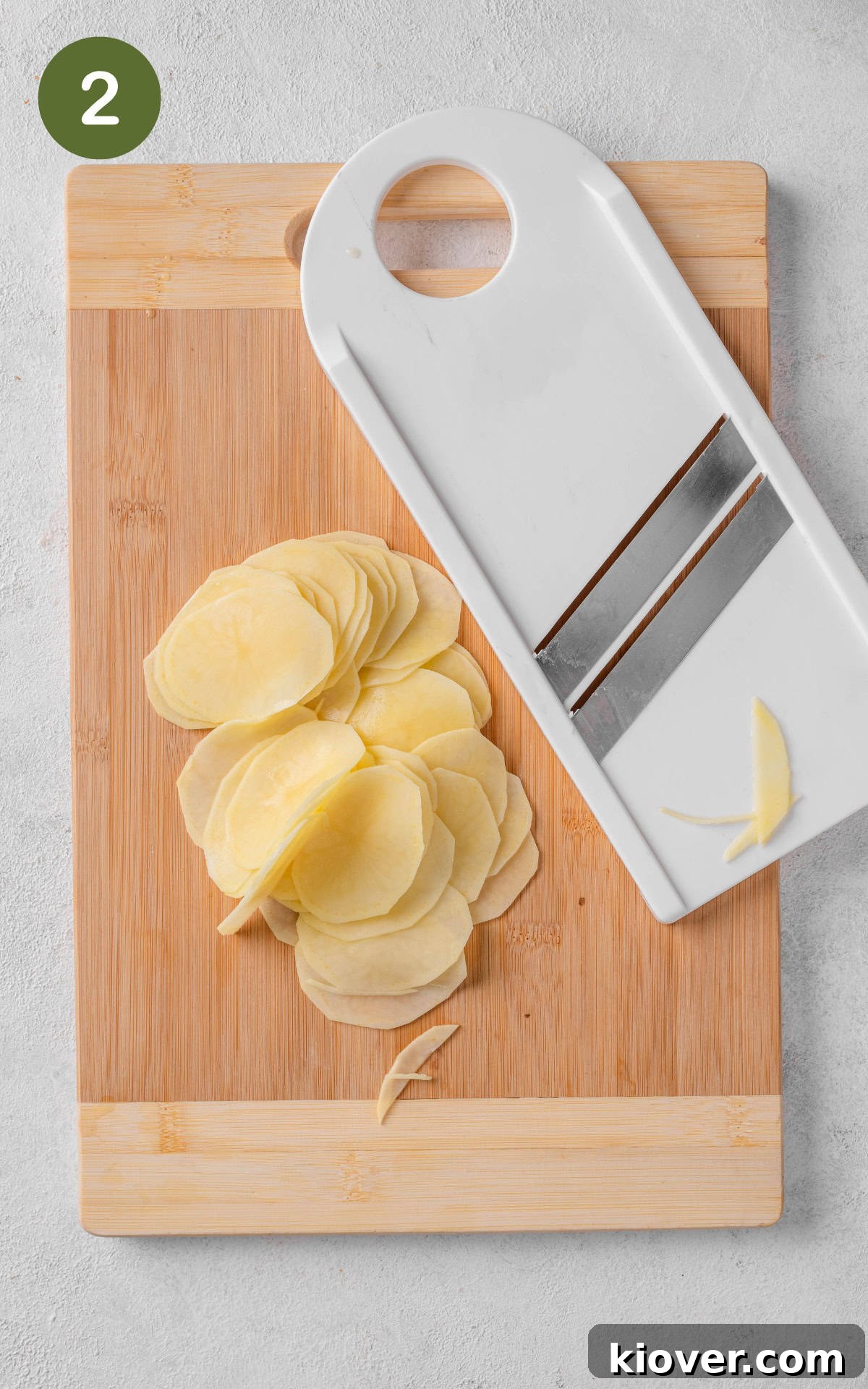
Step 2: Slice the Potatoes. Next, prepare your potatoes. Peel them carefully, then thinly slice them. A mandolin slicer is highly recommended for achieving uniform, paper-thin slices, which are crucial for the texture and presentation of Boulangere potatoes. If you don’t have a mandolin, a very sharp knife and a steady hand will also work.
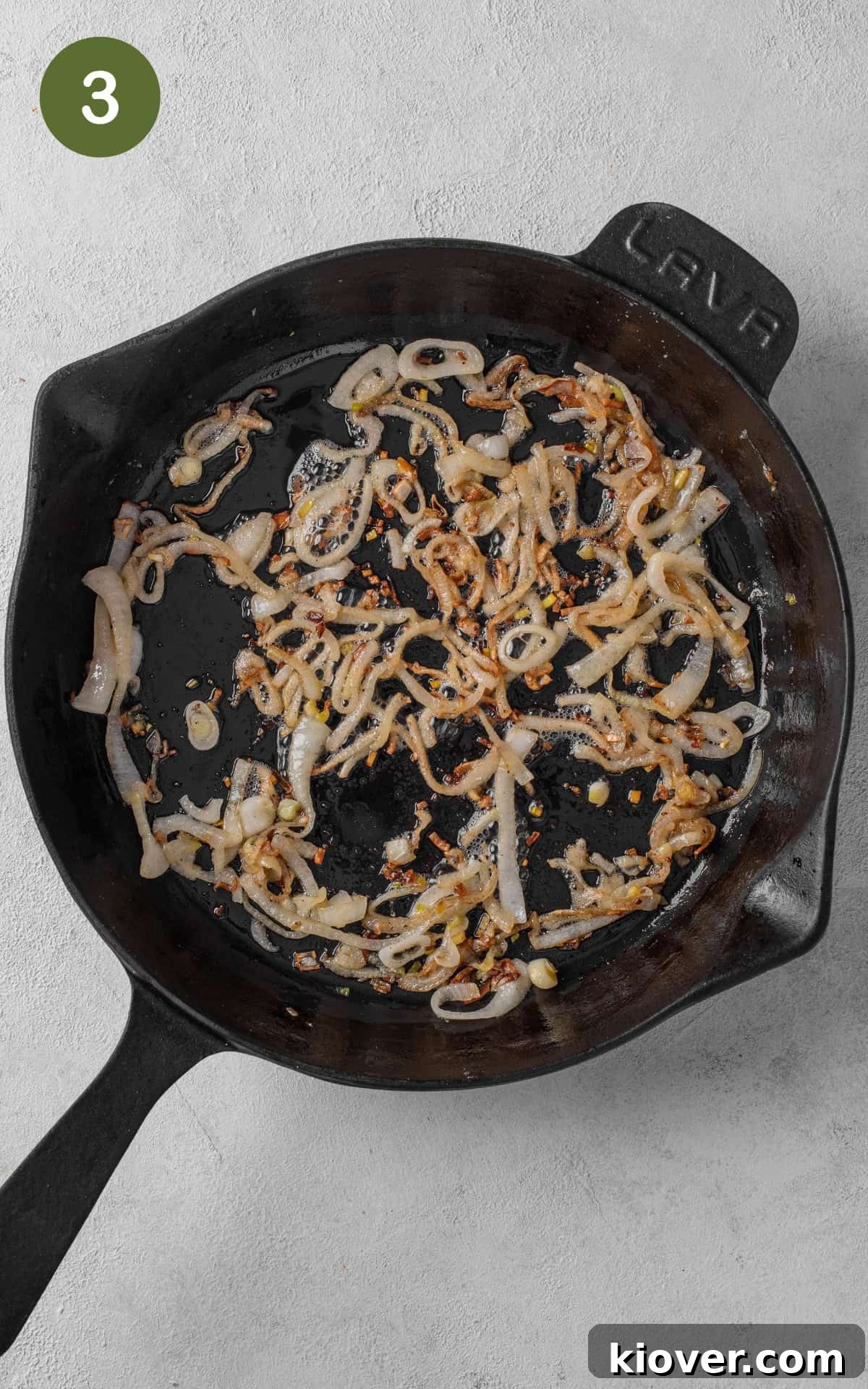
Step 3: Caramelize the Onions. In a cast-iron skillet or oven-safe baking dish (if you plan to bake in it), heat 25g of butter over medium-high heat. Add your sliced onions and cook, stirring occasionally, until they begin to soften and take on a beautiful light golden, caramelized color. This process enhances their sweetness and adds immense flavor. Once done, remove the onions from the skillet and set them aside.
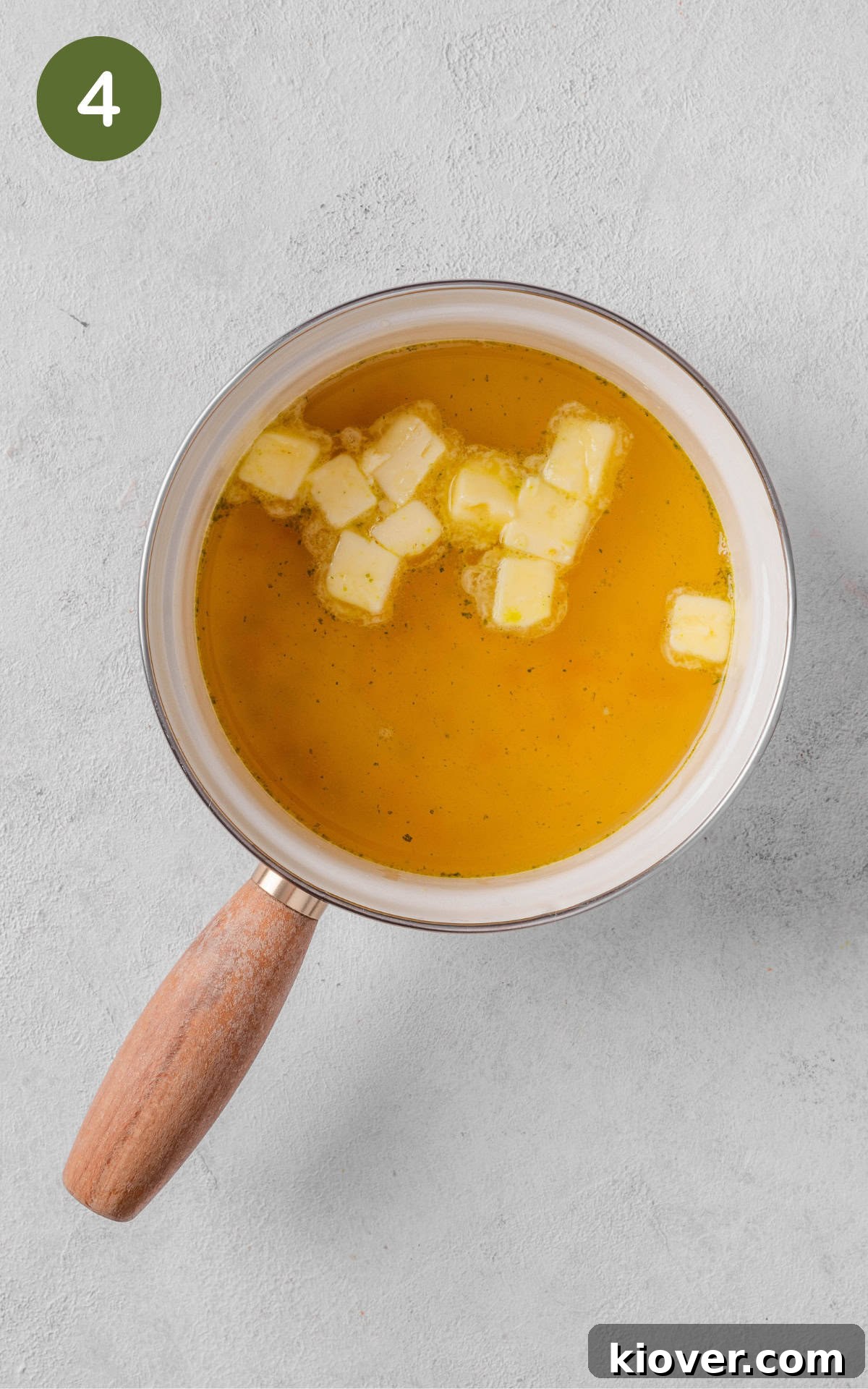
Step 4: Prepare the Stock Mixture. In a small saucepan, combine the remaining butter with the vegetable stock. Warm this mixture over medium heat, stirring gently, until the butter is completely melted and incorporated into the stock. This ensures even distribution of flavor and fat.
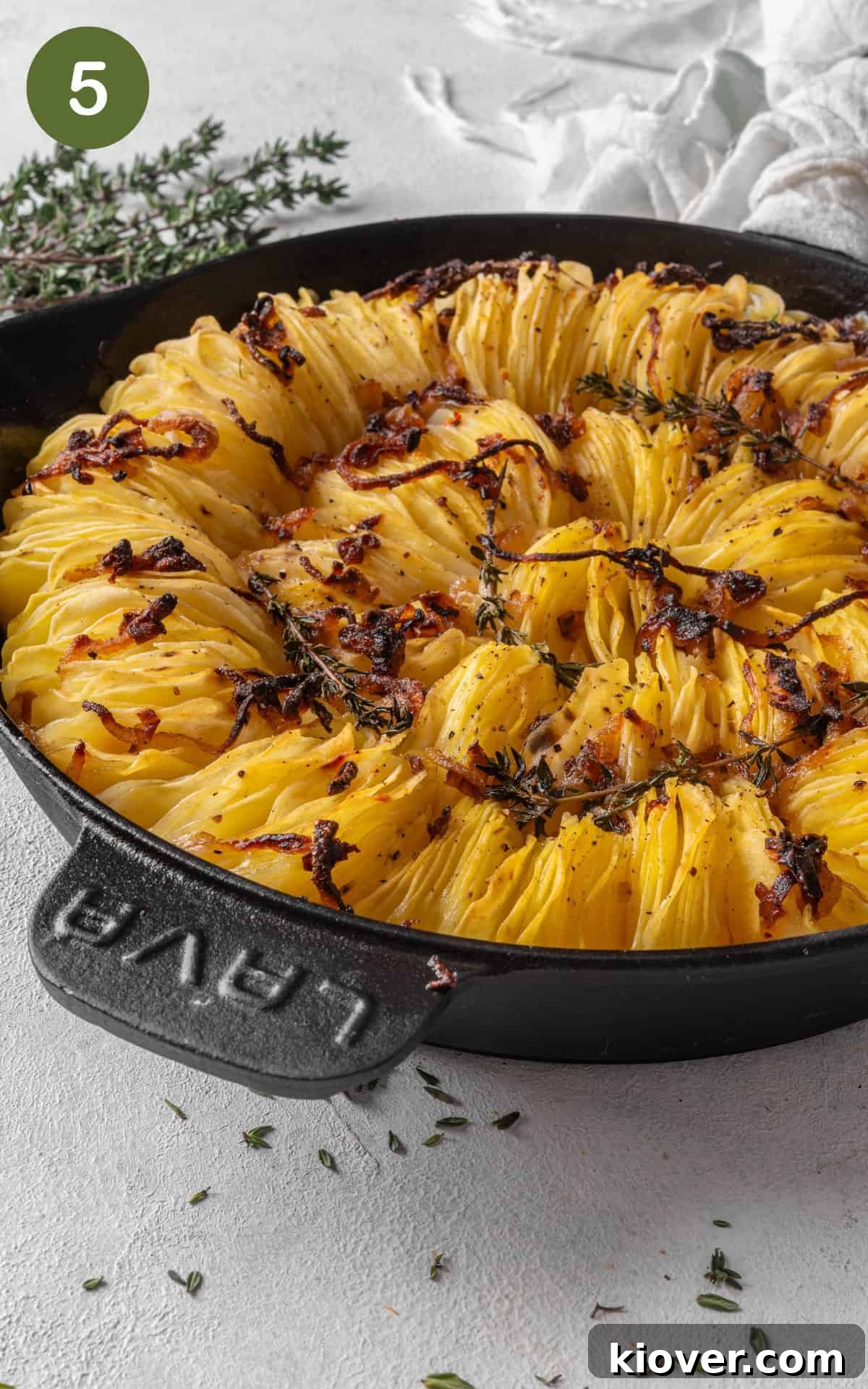
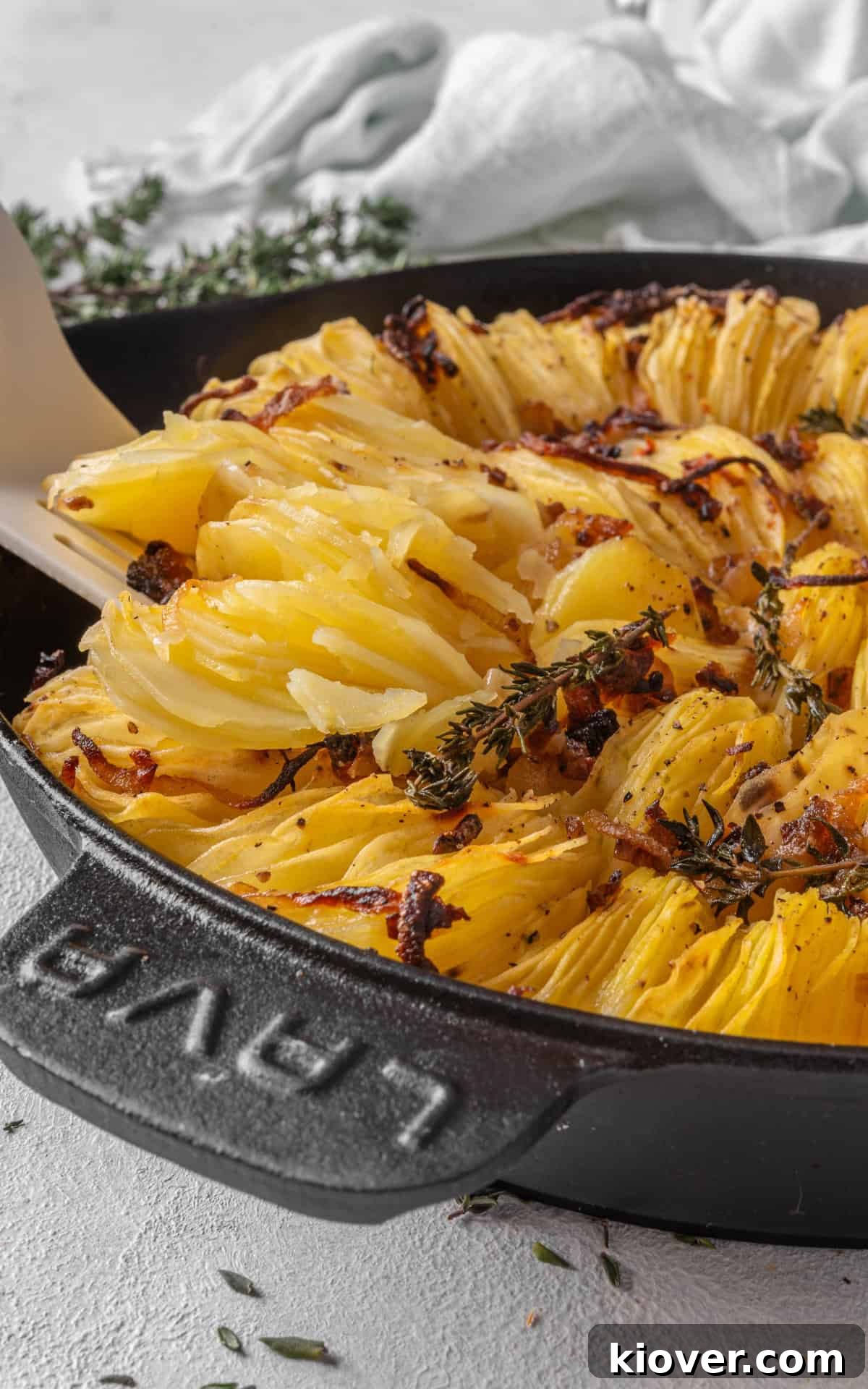
Step 5: Assemble and Bake. Now, it’s time to assemble your Boulangere potatoes. Arrange the thinly sliced potato layers in a circular pattern in your cast-iron skillet or baking dish. You can stack them slightly by hand to create a beautiful, fanned effect. Distribute the caramelized onions evenly over and between the potato layers. Pour the warm butter and stock mixture gently over the potatoes, ensuring it seeps between all the layers. Tuck the sprigs of fresh thyme strategically between the potato slices for maximum aromatic infusion. Finally, bake in your preheated oven for 50-60 minutes, or until the potatoes are fork-tender and the top is golden and slightly crispy.
Pro Tip: If you don’t have a cast-iron skillet or an oven-safe pan, a standard baking dish or tray works perfectly. Simply arrange the potato and onion layers in neat rows or a shingle pattern for an equally stunning presentation and delicious outcome.
Expert Tips for Perfect Boulangere Potatoes
Achieving Boulangere Potato perfection is easy with a few insider tricks. These tips will help you create a dish that’s not just delicious, but also beautifully presented and wonderfully textured.
- Uniform Slicing is Key: The thinner and more uniform your potato and onion slices are, the better. This ensures even cooking, allowing every piece to become tender simultaneously. A mandolin slicer is your best friend here, but a sharp chef’s knife and a steady hand can also achieve great results. Aim for slices that are about 1/8 inch (3mm) thick.
- Don’t Rush the Onions: Caramelizing the onions properly is crucial for building the dish’s flavor foundation. Cook them over medium heat until they’re soft and lightly golden, but not burnt. This slow process brings out their natural sweetness, which is a hallmark of this recipe.
- Layering for Success: When layering the potatoes, try to create a slight overlap, almost like shingles on a roof. This allows the stock to penetrate all the layers and ensures consistent cooking. Don’t press the layers down too much; allow some air circulation.
- Seasoning Throughout: Don’t just season at the end. Lightly season each layer of potatoes with a pinch of salt and pepper as you arrange them. This ensures every bite is flavorful, rather than just the top layer.
- To Cover or Not to Cover? For the first 30-40 minutes of baking, you might consider covering your dish loosely with foil. This traps steam and helps the potatoes cook through and become tender without drying out. For the last 15-20 minutes, remove the foil to allow the top layer to crisp up and achieve that beautiful golden-brown finish.
- Let It Rest: Just like a good roast, potatoes benefit from a short resting period after coming out of the oven. Allow your Boulangere potatoes to rest for 5-10 minutes before serving. This allows the flavors to settle and makes it easier to serve.
- Choose the Right Pan: A cast-iron skillet or a gratin dish with a wide surface area is ideal. This allows for maximum contact with the heat, promoting even cooking and delicious crispy edges. Ensure your dish is shallow enough for the liquid to evaporate and the top to brown.
- Don’t Peel the Potatoes if You Don’t Want To: While many recipes call for peeling, leaving the skin on can add extra nutrients and a rustic charm to your Boulangere potatoes. Just make sure to scrub them thoroughly before slicing.
Storing and Reheating Leftovers
Boulangere Potatoes are just as delicious, if not more so, the next day! They make fantastic leftovers, perfect for a quick lunch or dinner reheat. Proper storage and reheating will ensure they maintain their delightful texture and flavor.
- To Store: Once your Boulangere Potatoes have cooled completely to room temperature, transfer them to an airtight container. They will keep beautifully in the fridge for 2-3 days. Ensure the container is sealed well to prevent them from drying out or absorbing other odors from the fridge.
- To Reheat:
- Oven Method (Recommended for Best Texture): For the crispiest results, preheat your oven to 160°C (325°F). Place the leftover potatoes in an oven-safe dish, cover loosely with foil (to prevent drying), and bake for 15-20 minutes, or until heated through. For a crispier top, remove the foil for the last 5 minutes.
- Microwave Method (Quickest Option): If you’re short on time, individual portions can be reheated in the microwave. Place a serving on a microwave-safe plate and heat on high for 1-2 minutes, or until warm. Be aware that the microwave tends to soften the crispy edges.
- Stovetop Method: For a smaller portion, you can gently reheat in a non-stick pan over medium-low heat, with a lid, until warmed through. This can help retain some crispiness on the bottom.
- To Freeze: Boulangere Potatoes can be frozen, though the texture of potatoes can sometimes change slightly after freezing and thawing. After cooling completely, transfer portions to freezer-safe airtight containers or heavy-duty freezer bags. They can be stored in the freezer for up to 3 months.
- Thawing and Reheating from Frozen: Thaw overnight in the fridge before reheating using the oven method. Alternatively, you can reheat directly from frozen in the oven at a slightly lower temperature (around 150°C/300°F) for a longer period (30-45 minutes), ensuring it’s thoroughly heated.
Frequently Asked Questions
Boulangere Potatoes (Pommes Boulangère) are a classic French potato dish named after the French word for “baker.” Historically, people would take their prepared potato dishes to a local baker to be cooked in their communal ovens after the daily bread baking was complete. This recipe features thinly sliced potatoes and onions layered and baked in a savory stock, resulting in a tender, flavorful side dish without cream or cheese.
For the ideal texture, starchy or floury potatoes are recommended. Excellent choices include Russet, Desiree, or Maris Piper. These varieties break down slightly as they cook, helping to thicken the stock and create a wonderfully creamy interior while still allowing for crispy edges.
Boulangere Potatoes are incredibly versatile! They pair beautifully with almost any roasted or grilled meat, such as roast chicken, beef, or lamb. They also complement pork chops, sausages, and even a simple grilled fish. For a lighter meal, serve them alongside a crisp green salad or roasted vegetables. Their savory, earthy flavors make them a perfect accompaniment to rich and light dishes alike.
Yes, you can absolutely prep them in advance! You can slice the potatoes and onions and keep them submerged in cold water in the fridge for up to a day (this prevents potatoes from browning). You can also sauté the onions ahead of time. For best results, assemble the dish just before baking, or at most, a few hours prior to baking, storing it covered in the fridge. Allow it to come to room temperature for about 30 minutes before baking.
By default, this recipe is naturally gluten-free! If you use dairy-free butter (as recommended in the ingredients), it is also entirely dairy-free. Always check your vegetable stock ingredients to ensure it is certified gluten-free if this is a strict dietary requirement.
To achieve a beautifully crispy, golden-brown top, ensure your oven is adequately preheated. You can also bake the dish uncovered for the entire duration, or if you prefer the potatoes to steam and soften initially, cover for the first 30-40 minutes and then remove the foil for the remaining baking time. A slightly higher temperature (e.g., 200°C/400°F) during the last 10-15 minutes can also help crisp up the top, but watch carefully to prevent burning.
More Mouth-Watering Potato Recipes
If you’re a potato lover, you’re in for a treat! There are countless ways to enjoy this versatile root vegetable. Here are some more delectable potato recipes to inspire your next meal:
- Air Fryer Jacket Potato
- Cheese and Potato Pie
- Hasselback Potatoes
- Parmentier Potatoes
- Potato Cakes
- Potato Curry
- Potato Rosti
- Potato Waffles
Dishes You Might Also Enjoy
Looking for more delicious and healthy meal ideas? Explore these other popular recipes that perfectly complement a healthy lifestyle!
Dinner
Hearty Potato Stew
Sides
Vegan Dauphinoise Potatoes
Sides
Smashed Potatoes
Sides
Rosemary Roast Potatoes
Rate This Recipe!
Tried this Boulangere Potatoes recipe? We’d love to hear your thoughts! Please consider leaving a star rating below and sharing your experience in the comments. Your positive feedback is invaluable and helps other home cooks discover and enjoy these delicious recipes. Your reviews truly make a difference!
P.S. Never miss a new recipe! Get more healthy recipes sent straight to your inbox weekly – Subscribe Here and receive a free recipe eBook!
Save | Pin | Print
⭐️⭐️⭐️⭐️⭐️ 5 from 2 votes
Boulangere Potatoes
By: James Wythe
Upgrade your side dish with these beautifully baked Boulangere Potatoes. Simple & packed with flavor, they’re a must-try for any roast dinner or weeknight meal!
Prep Time: 10 minutes
Cook Time: 1 hour
Total Time: 1 hour 10 minutes
Servings: 4
Ingredients
- 1 kg potatoes (like Desiree, Maris Piper, or Russet)
- 3 medium white onions
- 250 ml vegetable stock (1 cup)
- 75 g butter (dairy-free option available)
- 3 sprigs fresh thyme
- Salt and pepper, to taste
Instructions
- Heat your oven to 180°C (360°F). Peel and thinly slice the onions into half-moons.
- Prepare the potatoes: peel them, then thinly slice using a mandolin slicer or a sharp knife.
- Heat 25g of butter in a cast-iron skillet over medium-high heat. Add onions and cook until they start to caramelize and turn a light golden color. Reduce heat to medium. Remove the onions and set them aside.
- Add the remaining butter into a saucepot with the stock and warm it over medium heat until the butter is melted.
- Stack the potato slices by hand and arrange them in a skillet in a circular form. Add the caramelized onions and pour the warm stock mixture over the potatoes. Tuck the fresh thyme sprigs between the potato layers. Bake for 50-60 minutes, or until the potatoes are tender and golden.
Notes
- Step-by-Step Photos: My blog post above includes helpful step-by-step photos to guide you through making this recipe.
- Substitutions & Variations: A detailed list of ingredient swaps and creative variations is included in the post above.
- To Store: Store leftovers in an airtight container in the fridge for 2-3 days. Reheat in the microwave or oven.
- To Freeze: After cooling, store extra potatoes in an airtight container in the freezer. Thaw in the fridge and then reheat, or reheat from frozen in the oven.
- Tip 1 (Cheesy Top): If adding cheese (like Mozzarella or Parmesan), cover with foil for the first half of cooking to melt, then uncover to crisp.
- Tip 2 (Peeling): You don’t have to peel the potatoes if you prefer a more rustic dish and wish to save time and add nutrients.
- Tip 3 (Scalloped feel): For a richer, scalloped potato feel, swap vegetable broth for cream and add cheese between layers of potatoes.
Nutrition
Calories: 339 kcal | Carbohydrates: 52g | Protein: 6g | Fat: 12g | Saturated Fat: 3g | Fiber: 7g | Sugar: 6g
Did you make this recipe? Tag me Today!
Tag @HealthyLivingJames on Instagram and use #HealthyLivingJames!