
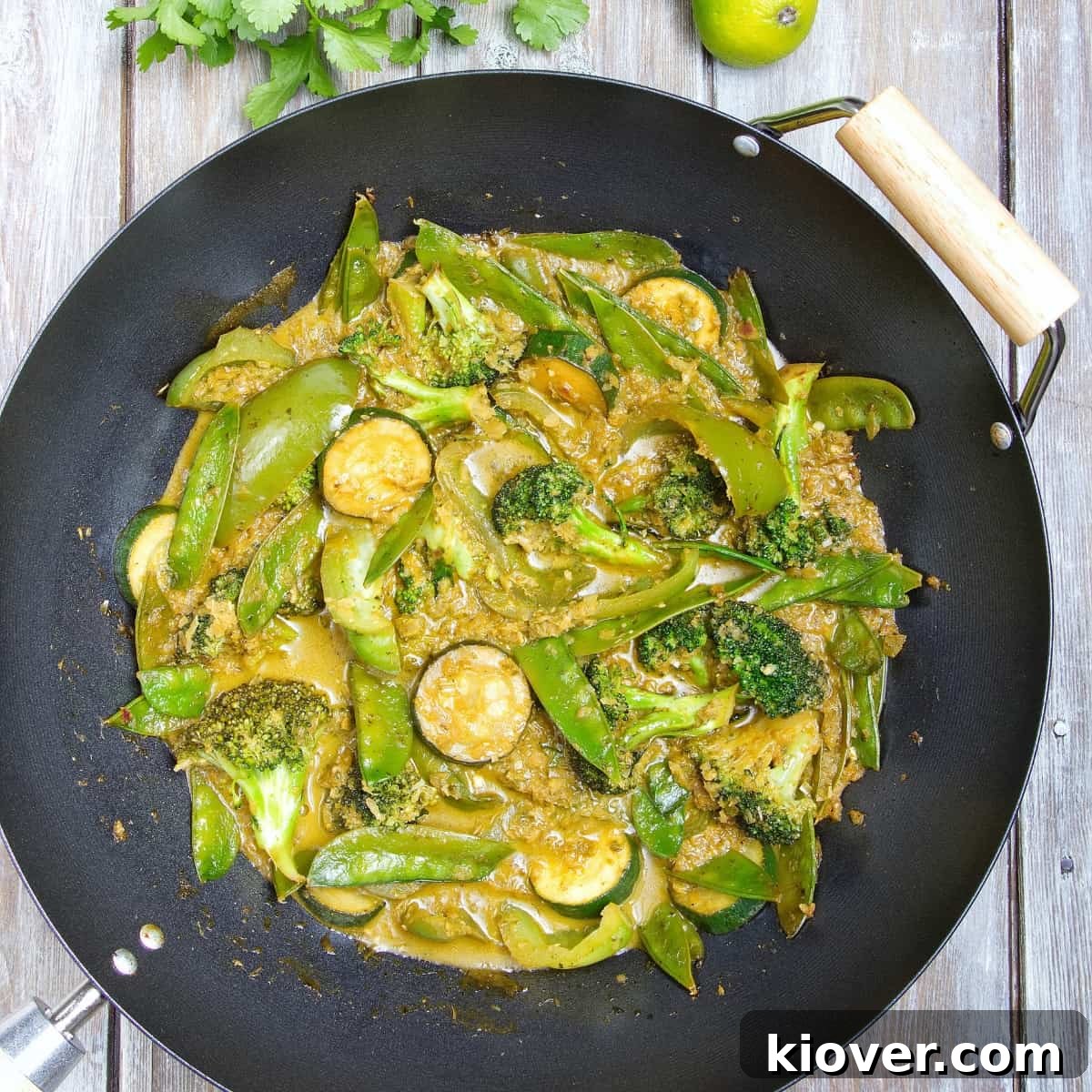
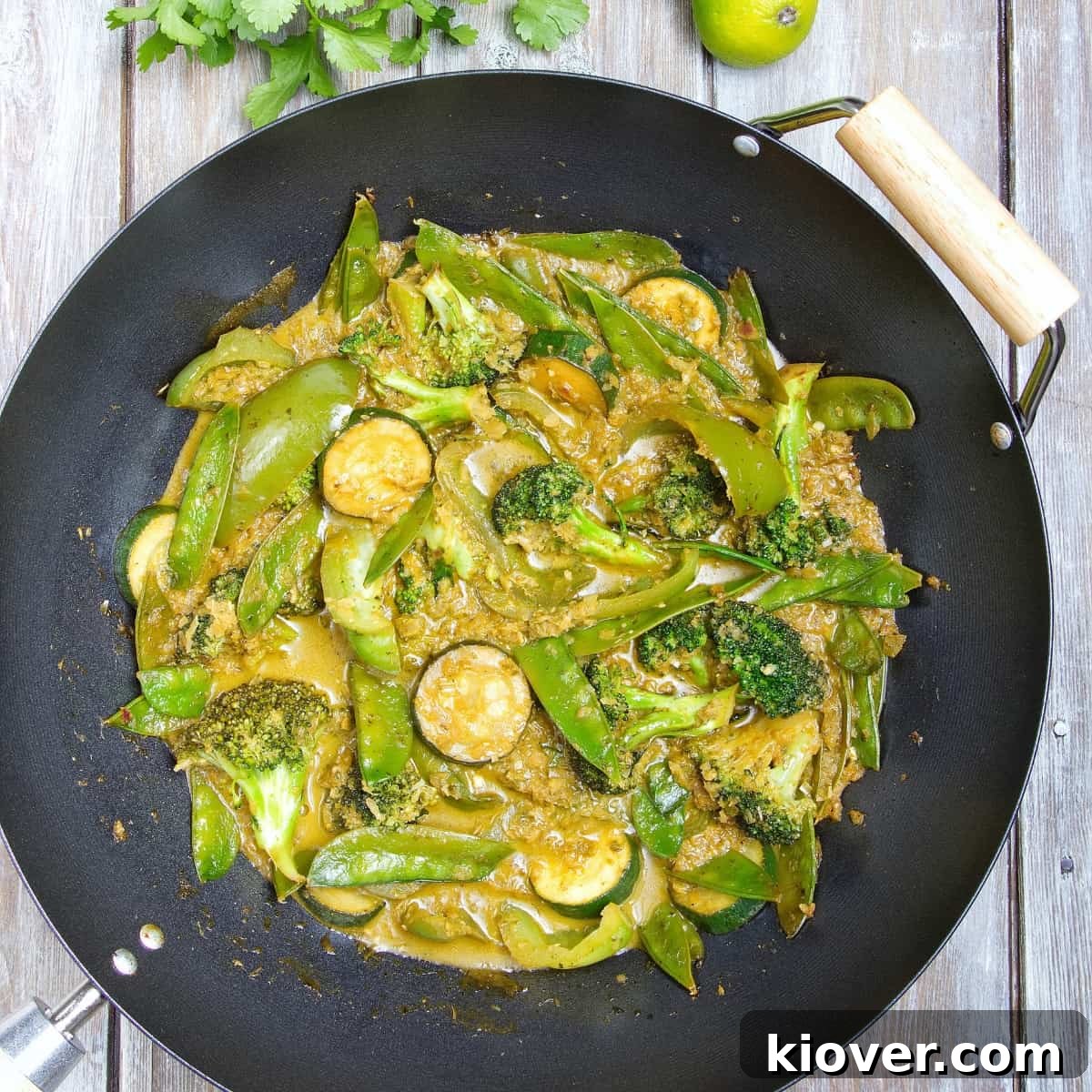
Discover the ultimate weeknight meal with this incredibly simple, yet immensely flavorful, Vegetable Thai Green Curry. This recipe delivers a wonderfully creamy texture, a perfect balance of spice, and an abundance of nutrients, making it exceptionally healthy. Featuring a vibrant, homemade Thai green sauce crafted with wholesome ingredients and thoughtful alternatives, this curry is proudly gluten-free, vegan, and free from refined sugars, catering to a wide range of dietary needs without compromising on taste.
Recipe Difficulty – Easy
Table of Contents
- Why This Recipe Works
- Essential Ingredients for Vegetable Thai Green Curry
- Smart Substitutions
- Delicious Variations
- Step-by-Step Guide to Making Vegetable Thai Green Curry
- Tips for a Perfect Thai Green Curry
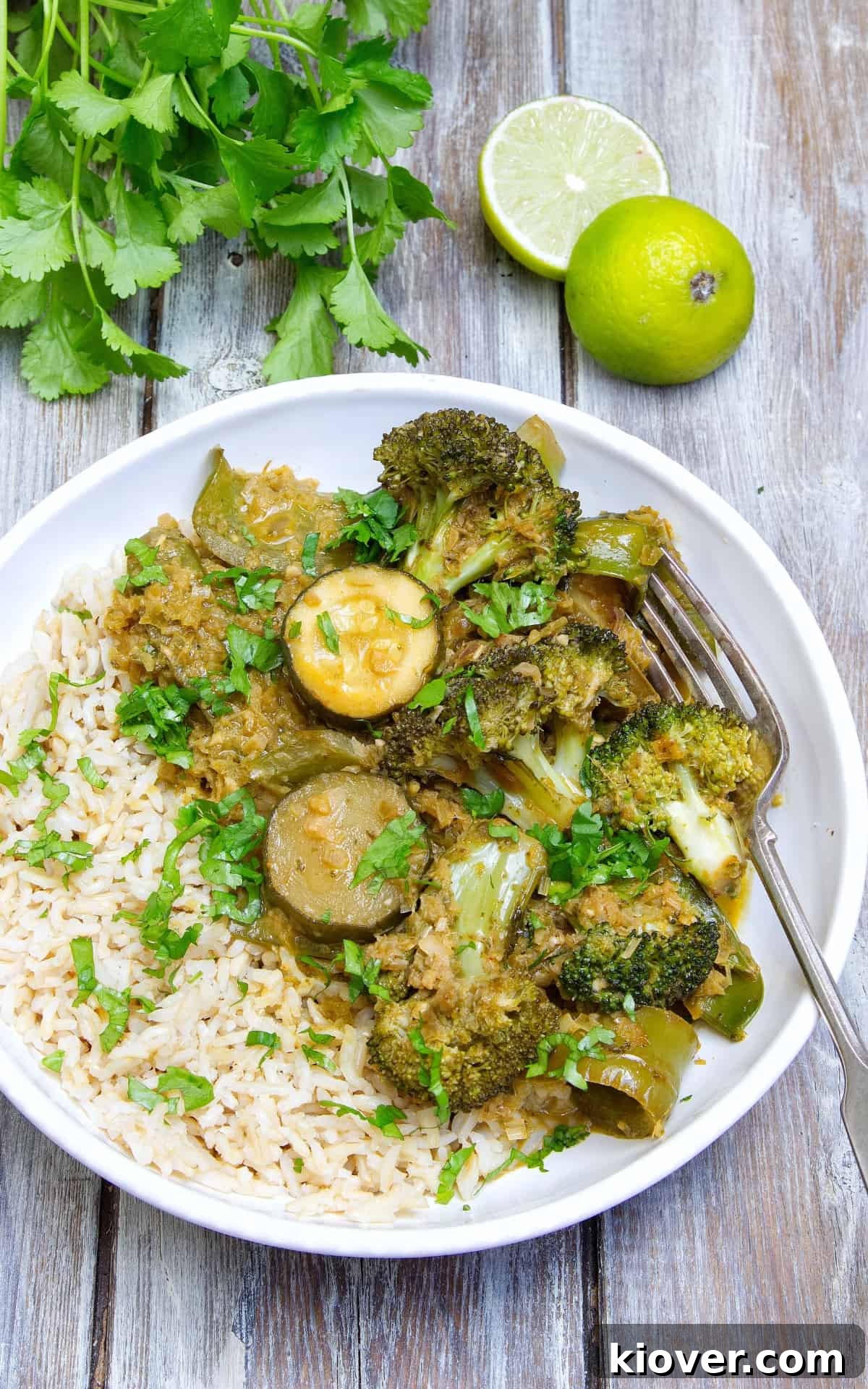
- Serving Suggestions
- Storing Leftovers & Meal Prep
- Recipe FAQs
- Vegetable Thai Green Curry Recipe Card
Why This Recipe Works: A Healthy and Flavorful Choice
This vegan Thai green curry isn’t just a meal; it’s a comforting experience, perfectly suited to warm you up during crisp autumn evenings and frosty winter days. It’s incredibly warming, luxuriously creamy, and absolutely bursting with an authentic array of Thai-inspired flavors. Expertly packed full of colorful green vegetables, this vegetarian Thai green curry is an excellent and delicious way to significantly boost your daily vegetable intake, contributing to a healthier lifestyle.
What truly sets this recipe apart is its dedication to fresh, simple ingredients. By crafting a homemade green Thai curry sauce from scratch, you avoid the hidden pitfalls often found in store-bought vegan green curry pastes and sauces, which are frequently loaded with undesirable sugars, artificial preservatives, and excessive sodium. Our version ensures you’re feeding your body only the best.
This vegan green curry shines when you’re craving Thai-inspired cuisine that’s both quick to prepare and deeply satisfying. It’s the quintessential homemade “fakeaway” – a term for recreating takeout dishes at home – offering a far healthier alternative that costs less than £10 to feed four people. Beyond being budget-friendly, it’s nutrient-dense and genuinely good for you, making it a guilt-free indulgence.
The satisfying depth of flavor and creamy consistency of this vegan Thai curry make it an ideal dish for entertaining guests. It’s universally appealing, sure to impress everyone at your table, regardless of their dietary preferences. Moreover, the inherent flexibility of this healthy curry recipe is truly amazing. You can effortlessly customize it by adding different vegetables or incorporating various protein sources to suit your taste. For those who aren’t vegan or vegetarian, lean proteins like chicken or prawns integrate seamlessly into this creamy vegetable green curry Thai sauce, enhancing its richness and heartiness.
This delightful recipe draws inspiration from other popular healthy dishes like my 15 Minute Veg Curry and Vegan Katsu Curry. It pairs exceptionally well with a side of fluffy rice, quinoa, or noodles, and is especially delicious alongside my amazing Gluten Free Naan Bread recipe or Socca Bread for a complete and satisfying meal.
Essential Ingredients for Vegetable Thai Green Curry
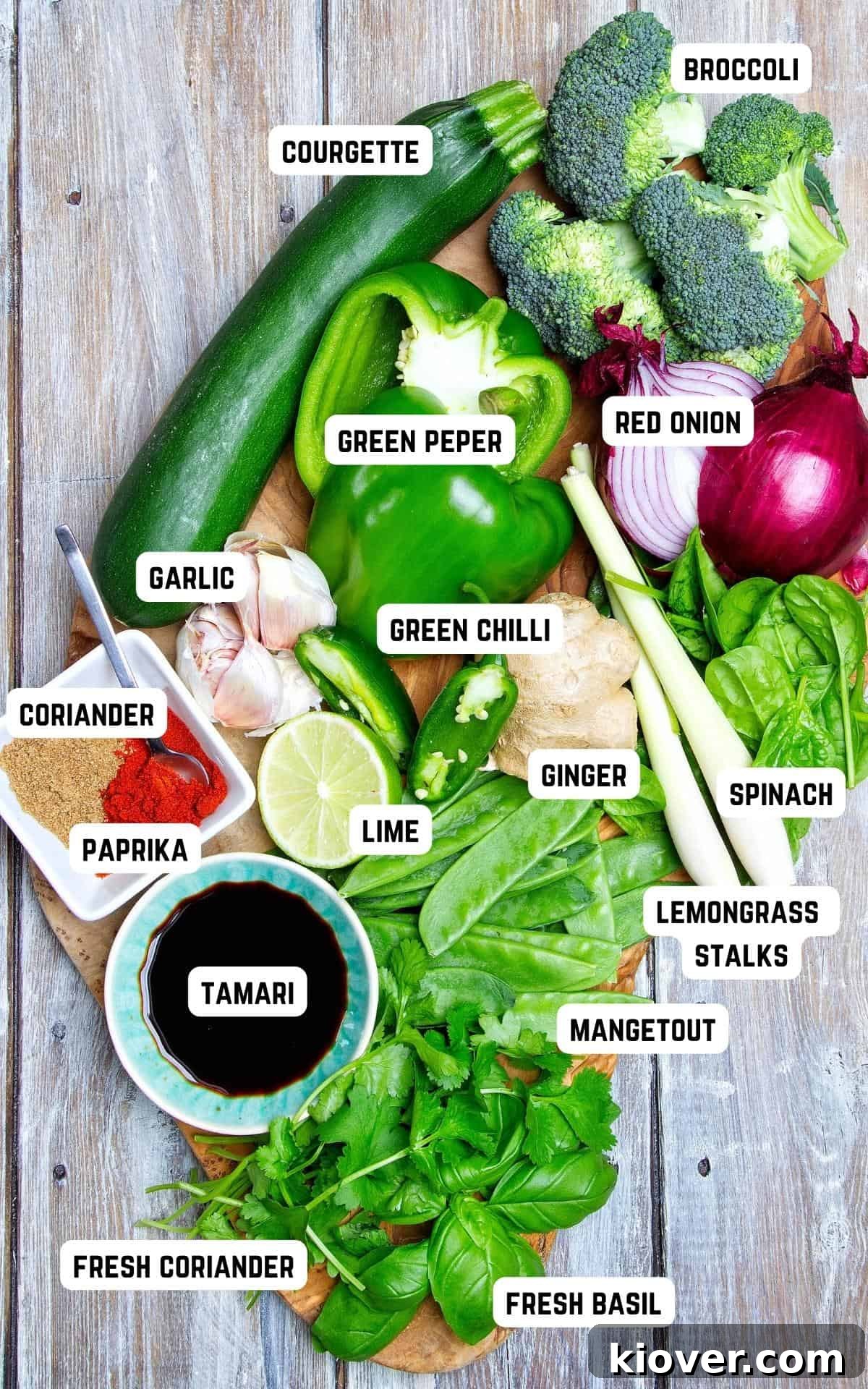
Crafting the perfect homemade Thai Green Curry begins with selecting fresh, high-quality ingredients. Here’s a breakdown of what you’ll need to create our signature sauce and the hearty curry itself:
For the Homemade Thai Green Sauce:
- Green Bell Pepper – Provides a subtle sweetness and a vibrant green hue, contributing to both the color and foundational flavor of the sauce. It offers a milder, fresher alternative to some spicier paste ingredients.
- Garlic Cloves – A cornerstone of almost any savory dish, garlic adds an indispensable pungent and aromatic depth, forming one of my go-to flavor bases.
- Red Onion – When roughly chopped and blended, red onion provides a robust, slightly sweet, and tangy base that mellows beautifully during cooking, adding complex flavor to the sauce.
- Lemongrass Stalks – Finely diced lemongrass imparts a distinct, refreshing lemony and subtly gingery aroma and flavor that is essential for authentic Thai cuisine. If you buy a pack of two, use the leftover stalk in my Thai Red Prawn Curry.
- Green Chilli – The primary source of the curry’s signature green color and its delightful, invigorating spice. Adjust the quantity to control the heat level to your preference.
- Fresh Ginger – Chopped fresh ginger introduces a warm, spicy, and zesty kick that complements the other aromatics, adding a layer of sophisticated flavor.
- Lime – You’ll need both the vibrant zest and the tangy juice from a fresh lime. The zest contributes aromatic oils, while the juice brightens and balances the rich flavors of the curry.
- Ground Coriander – This essential spice offers a warm, citrusy, and slightly sweet note that is absolutely perfect for enhancing the complex flavor profile of any curry.
- Paprika – Adds a mild, earthy sweetness and a beautiful underlying warmth, blending seamlessly with the other spices in this vegetable green Thai curry.
- Fresh Basil – Infuses the sauce with its unique sweet, peppery, and slightly anise-like notes, creating a really great mix between sweet and savory undertones.
- Fresh Coriander (Cilantro) – Utilize the entire plant, including the stalks! The stalks hold immense flavor and contribute a fresh, bright, and slightly pungent herbaceousness that defines Thai cuisine.
- Can of Coconut Milk – The hero ingredient for creaminess and richness, coconut milk imparts a luscious texture and a subtle, sweet coconut flavor. If you have spare cans, try them in my Vegan Thai Tofu Curry or Coconut Dhal.
- Spinach – A handful of fresh spinach is blended into the sauce, boosting its vibrant green color and adding a wealth of essential nutrients, including iron and vitamins.
- Salt and Pepper – Essential for seasoning, these simple additions finish off the flavor profile of this dish, ensuring every spoonful is perfectly balanced.
Other Key Ingredients for the Curry:
- Green Bell Peppers – In addition to being in the sauce, roughly sliced green peppers are cooked directly in the curry, adding texture and more fresh vegetable goodness.
- Head of Broccoli – When cooked, broccoli florets become delightfully tender and absorb the curry flavors beautifully, contributing significant nutrients.
- Mangetout (Snow Peas) – Also known as sweet peas, these thin, crisp pods add a lovely sweetness and a satisfying crunch to the final dish.
- Courgette (Zucchini) – Chopped courgette becomes wonderfully soft and succulent when simmered in the curry, adding bulk and a mild flavor.
- Tamari – A fantastic gluten-free alternative to traditional soy sauce, tamari provides a deep umami flavor and a savory depth. If you have any spare, try it in my Vegan Pad Thai recipe.
- Coconut Oil – My preferred choice for sautéing the vegetables, as its subtle coconut flavor beautifully melds with the overall Thai profile of the dish.
For precise measurements and quantities, please refer to the comprehensive recipe card below.
Smart Substitutions to Adapt Your Curry
Don’t have an ingredient on hand, or prefer something different? This recipe is incredibly versatile! Here are some smart substitutions you can make:
- Vegetables – The beauty of this curry lies in its adaptability. Feel free to mix up the vegetables you use with your own personal favorites or whatever fresh produce you have on hand. Excellent alternatives include creamy aubergine (eggplant), crisp green beans, tender carrots, bamboo shoots, or even hearty chunks of sweet potato for added substance and sweetness.
- Garlic Cloves – If fresh garlic isn’t available, you can easily substitute with 1 teaspoon of minced garlic from a jar or 1/2 teaspoon of garlic powder for every fresh clove required.
- Coconut Oil – While coconut oil offers a distinct and delightful flavor that melds perfectly with this dish, other cooking oils such as olive oil, avocado oil, or even a neutral vegetable oil would also work well for sautéing.
- Fresh Lemongrass – If fresh lemongrass is hard to find, a good alternative is lemongrass puree. Use approximately 2 teaspoons of store-bought lemongrass paste or puree for every stalk of fresh lemongrass.
- Green Chilli – For a milder flavor, remove the seeds from the green chili. If you prefer more heat, you can add an extra chili or a pinch of red pepper flakes to the sauce.
- Tamari – If you are not strictly gluten-free, regular low-sodium soy sauce can be used in place of tamari.
Delicious Variations to Customize Your Meal
This Vegetable Thai Green Curry is a fantastic base for endless culinary creativity. Explore these variations to make the dish uniquely yours:
- Adjusting the Spice Level – This dish already boasts a delightful warmth. If you’re a fan of extra heat, simply increase the amount of fresh green chili or ginger in the sauce. For an even bolder kick, you can add a dash of your favorite hot sauce or a pinch of dried chili flakes during cooking. Conversely, for a milder curry, deseed the chili completely or reduce its quantity.
- Deluxe Serving Options – Elevate your dining experience by serving this rich curry over a bed of fluffy quinoa, perfectly steamed jasmine rice, or tender rice noodles. For an extra touch of luxury and flavor, sprinkle generously with fresh herbs like more basil or coriander, toasted cashews or peanuts for crunch, and a squeeze of fresh lime juice just before serving.
- Kid-Friendly Modifications – Engaging children in the cooking process often makes them more inclined to try and love new meals! When preparing for younger palates, consider making the sauce milder by using less (or no) chili. You can also adapt the vegetable selection to their preferences – perhaps adding sweet corn or peas, or finely dicing vegetables so they are less noticeable.
- Add a Protein Boost – To make this curry even more substantial, incorporate a protein source. For plant-based eaters, smoked tofu (pressed and cubed), tempeh, or a can of chickpeas would be excellent additions. For those who consume meat, cooked chicken pieces or plump prawns can be stirred in during the last few minutes of simmering, allowing them to gently warm through and absorb the delicious flavors.
For another delightful twist on curry, be sure to check out my Sweet Potato Satay Curry recipe!
Step-by-Step Guide to Making Vegetable Thai Green Curry
Creating this vibrant and healthy Thai Green Curry is surprisingly straightforward. Follow these steps for a delicious meal:
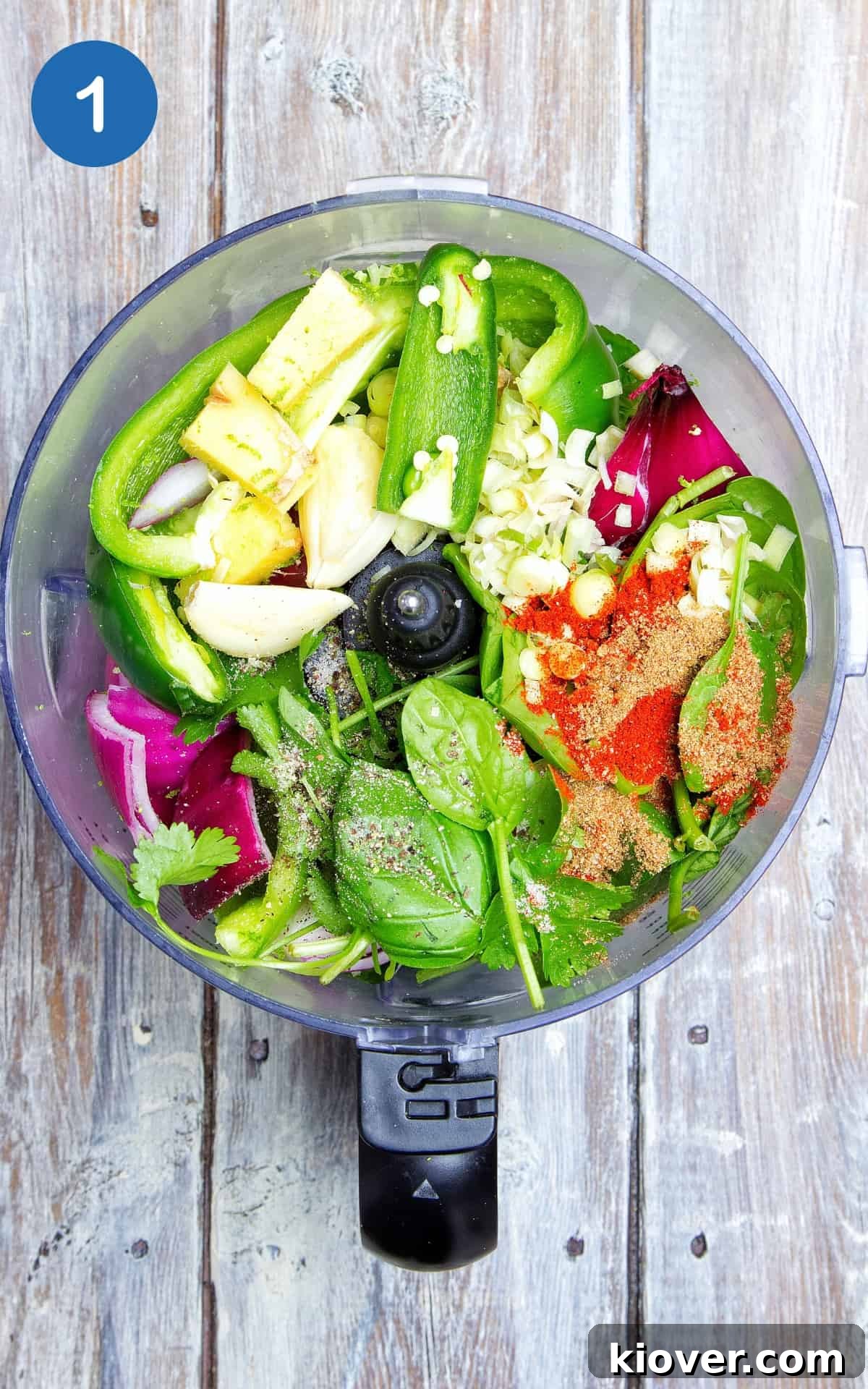
Step 1: Prepare Your Homemade Thai Green Sauce. Begin by gathering all the ingredients for your Thai green sauce. Add one chopped green bell pepper, garlic cloves, roughly chopped red onion, finely diced lemongrass, green chili (adjusting to your spice preference), a thumb-sized piece of chopped fresh ginger, ground coriander, paprika, the zest and juice from one lime, fresh basil leaves, fresh coriander (including the flavorful stalks), the entire can of creamy coconut milk, and a handful of fresh spinach. Place all these ingredients into a large, high-speed blender. Secure the lid and blend at full power for approximately two minutes, or until the mixture is completely smooth, vibrant green, and beautifully emulsified. Set aside your freshly made sauce.
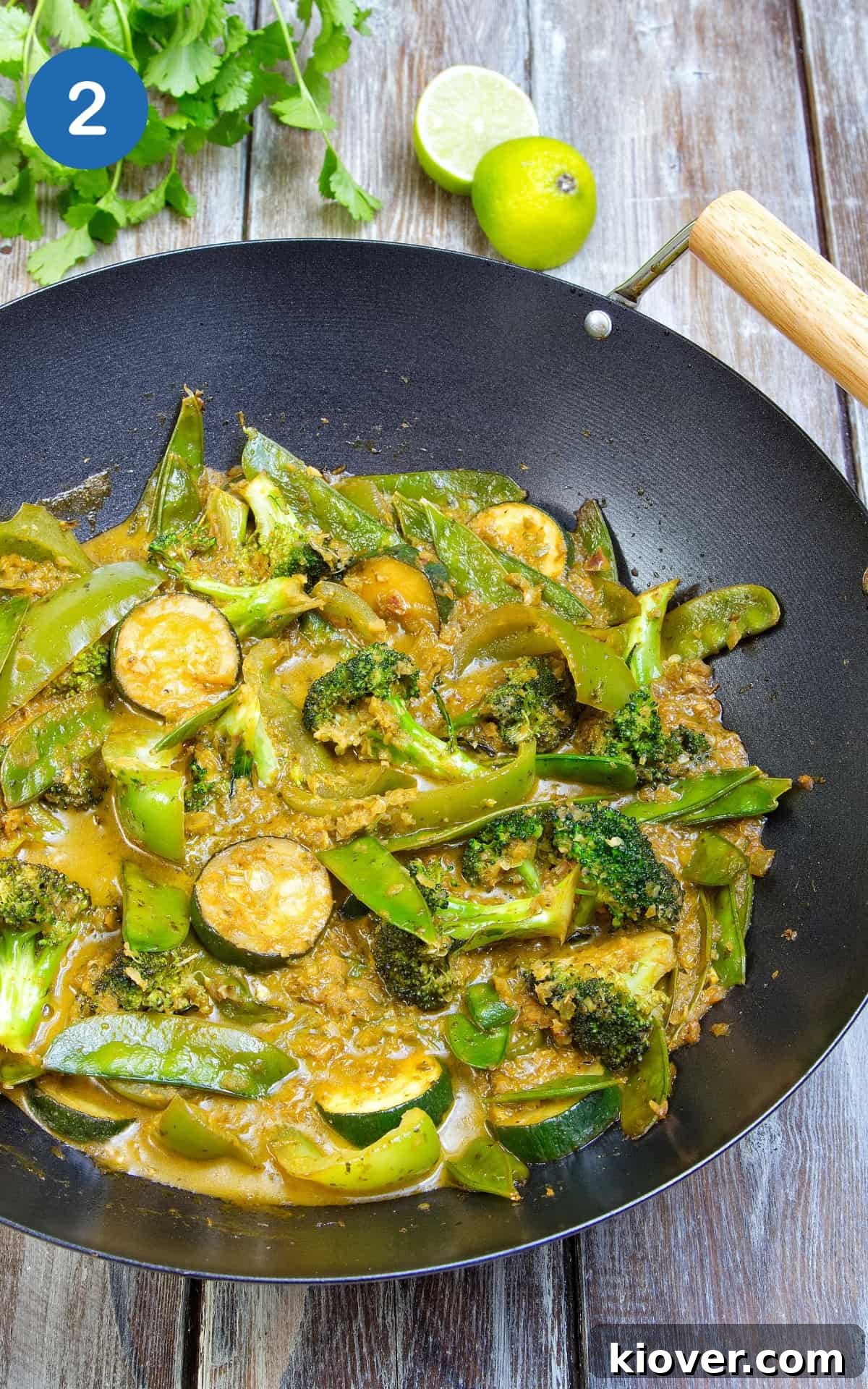
Step 2: Cook the Vegetables and Simmer the Curry. While your sauce is blending, prepare your curry vegetables. Roughly slice the remaining green peppers, cut the head of broccoli into bite-sized florets, prepare the mangetout (snow peas), and chop the courgette (zucchini). Heat a large wok or a deep, heavy-bottomed pan over medium-high heat. Add 2 tablespoons of coconut oil and allow it to melt. Stir in 2 tablespoons of tamari, then pour in your freshly blended Thai green sauce along with 1/2 cup of warm water. Mix everything thoroughly. Once the sauce is simmering gently, add all the prepped vegetables (green peppers, broccoli, mangetout, and courgette) to the wok. Stir to ensure all vegetables are coated in the luscious sauce. Reduce the heat to medium-low, cover, and let it simmer for 10-15 minutes, or until the vegetables are tender-crisp and the flavors have melded together beautifully. Avoid overcooking the vegetables to maintain their vibrant color and texture.
Hint: For a truly satisfying meal, cook up some fluffy rice, nutty quinoa, or your favorite noodles to serve as a perfect base for this rich and aromatic curry.
Tips for a Perfect Thai Green Curry
Achieving a restaurant-quality Thai Green Curry at home is easier than you think with a few simple tips:
- Use Fresh Ingredients: The freshness of your herbs and vegetables truly makes a difference in the vibrant flavor profile of the curry paste. Opt for bright green chilies, fragrant lemongrass, and firm, colorful vegetables.
- Don’t Overcook Vegetables: For the best texture and nutrient retention, aim for vegetables that are tender-crisp rather than mushy. They should still have a slight bite to them.
- Taste and Adjust Seasoning: Thai cooking is all about balance. Always taste your curry before serving and adjust the salt, lime juice, or chili for heat as needed. A little extra lime juice can brighten the entire dish.
- Quality Coconut Milk: The type of coconut milk you use can significantly impact the creaminess and richness. Opt for full-fat, good-quality canned coconut milk for the best results. Shake the can well before opening.
- Meal Prep Wisely: If preparing ahead, keep the sauce separate from the cooked vegetables. Combine and heat just before serving to prevent vegetables from becoming soggy.
- Slow Cooker Option: For an incredibly aromatic experience, you can adapt this recipe for a slow cooker. Prepare the sauce as instructed, then combine it with your prepped vegetables (and any added protein) in the slow cooker. Cook on high for 3 hours, or low for 6 hours, for a deeply infused and tender curry.
Serving Suggestions
This Vegetable Thai Green Curry is incredibly versatile and pairs beautifully with a variety of accompaniments:
- Classic Rice: Steamed jasmine rice or brown rice is the traditional choice, soaking up all the delicious sauce.
- Noodles: Serve over vermicelli, flat rice noodles, or even whole wheat noodles for a hearty meal.
- Quinoa: For an extra protein boost and nutty flavor, quinoa makes an excellent base.
- Gluten-Free Flatbread: My Gluten Free Flatbread is perfect for scooping up every last drop of the rich sauce.
- Fresh Herbs: Garnish with extra fresh coriander and basil leaves for an aromatic finish.
- Crunchy Toppings: Toasted peanuts, cashews, or crispy fried onions add a delightful texture contrast.
- Lime Wedges: A fresh squeeze of lime juice just before eating brightens all the flavors.
Storing Leftovers & Meal Prep
This Vegetable Thai Green Curry makes for fantastic leftovers, perfect for quick lunches or dinners throughout the week.
- To Store: Leftovers should be transferred to an airtight container and can be safely kept in the fridge for up to 3-4 days. The flavors often deepen overnight, making it even more delicious!
- To Reheat: For best results and to help the vegetables retain some of their texture, I recommend gently warming the curry in a wok or large pan over medium heat. Stir occasionally until thoroughly heated through. You can also reheat individual portions in the microwave, though the vegetables might be slightly softer.
- To Freeze: This curry freezes exceptionally well! Once cooled completely, portion the curry into freezer-safe airtight containers or bags. It can be frozen for up to three months. To reheat, thaw overnight in the refrigerator, then warm gently in a wok or microwave as described above.
- Meal Prep Tip: If you’re planning to make this dish ahead for meal prep, you can prepare the curry sauce and chop all your vegetables in advance. Store the sauce separately in the fridge for a couple of days. Cook the vegetables fresh on the day you plan to serve, adding them to the pre-made sauce for the best possible texture and vibrant appearance.
Recipe FAQs
Yes, absolutely! For maximum freshness and texture, you can make the curry sauce ahead of time and store it in an airtight container in the fridge for up to two days. I highly recommend frying up the fresh vegetables on the day you plan to serve for the best crisp-tender texture and vibrant color.
This curry is incredibly versatile. It’s delicious served with fluffy brown rice, protein-rich quinoa, or your favorite Asian-style noodles. For a delightful accompaniment, I also have a fantastic Gluten Free Flatbread recipe that would be great for soaking up the flavorful sauce!
The primary difference between Thai red curry and green curry lies in the type and quantity of chilies used in their respective pastes. Red curry paste typically features large dried red chilies, giving it a deeper, often spicier, and certainly red hue. Green curry, on the other hand, utilizes fresh green chilies, along with green herbs like kaffir lime leaves and basil, which contribute to its distinctive vibrant green color and fresh, often brighter, flavor profile.
Absolutely, it is! Especially this Vegetable Thai Green Curry recipe, as the Thai green sauce is made entirely from scratch with fresh, wholesome ingredients. It’s absolutely packed full of nutrient-dense vegetables and aromatic spices, free from refined sugars and unhealthy additives often found in store-bought versions. It’s a wonderfully balanced and nutritious meal.
For the creamiest and richest texture, I recommend using full-fat canned coconut milk. Light coconut milk can be used for a lower-calorie option, but it will result in a thinner consistency.
Yes, easily! To increase the spice level, you can add an extra green chili to the sauce blend, or leave the seeds in the chili you use. A pinch of red pepper flakes added during the simmering stage can also boost the heat.
Yes, it’s excellent for meal prepping! You can prepare the sauce and chop all the vegetables in advance. When ready to eat, simply combine and cook. Cooked curry also reheats well for a few days, making it perfect for grab-and-go meals.
YOU MIGHT ALSO LIKE…
More Delicious Curry Recipes You’ll Love
Dinner
The Best Thai Red Prawn Curry
15 Minute Dinners
Thai Curry Noodle Soup
Dinner
10 Minute Chickpea And Spinach Curry
One Pot or Pan
Sweet Potato Satay Curry
Tried this Vegetable Thai Green Curry recipe? We’d love to hear from you! Please leave a star rating ⭐️⭐️⭐️⭐️⭐️ below and share your experience in the comments. Your positive feedback is one of the most rewarding parts of creating recipes!
P.S. Never miss out on new, healthy recipes! Get more delicious meals sent straight to your inbox weekly – Subscribe Here and receive a free recipe eBook!
Vegetable Thai Green Curry
Ingredients
- 3 garlic cloves
- 1 red onion, roughly chopped
- 2 lemongrass stalks, finely diced
- 1 green chilli
- 1 thumb size piece of fresh ginger, chopped
- 1 lime, zest & juice
- 1/2 tsp ground coriander
- 1/2 tsp paprika
- Handful fresh basil
- Handful fresh coriander, including stalks
- 1 can coconut milk
- Handful spinach
- 3 green peppers, roughly sliced
- 1 head of broccoli
- 150 g mange tout
- 1 courgette, chopped
- 2 tbsp tamari
- Coconut oil
- Salt and pepper
Instructions
-
1. Create the Homemade Thai Green Sauce: First, begin by preparing your vibrant Thai green sauce. In a large, high-speed blender, combine one chopped green bell pepper, garlic cloves, roughly chopped red onion, finely diced lemongrass, one green chilli (adjusting for desired spice level), a thumb-sized piece of chopped fresh ginger, ground coriander, paprika, the zest and juice from one fresh lime, fresh basil leaves, fresh coriander (including the flavorful stalks), a full can of rich coconut milk, and a handful of fresh spinach. Blend all these ingredients at full power for approximately two minutes until the mixture is completely smooth, beautifully green, and well combined. This forms the aromatic heart of your curry.
-
2. Prepare Your Vegetables: While the sauce is blending, take the opportunity to prepare the remaining fresh vegetables for your curry. Roughly slice the additional two green peppers, cut the head of broccoli into small, manageable florets, get your mangetout (snow peas) ready, and chop the courgette (zucchini) into bite-sized pieces. Having your vegetables prepped and ready will ensure a smooth cooking process.
-
3. Simmer Your Curry to Perfection: Heat a large wok or a deep, heavy-bottomed pan over medium-high heat. Add 2 tablespoons of coconut oil and allow it to melt and shimmer. Stir in 2 tablespoons of tamari, then carefully pour in your freshly blended Thai green sauce along with 1/2 cup of warm water. Stir well to combine all the liquids. Once the sauce begins to gently simmer, add all the prepared vegetables (sliced green peppers, broccoli florets, mangetout, and chopped courgette) to the wok. Stir gently, ensuring all the vegetables are coated in the creamy, aromatic sauce. Reduce the heat to medium-low, cover the wok, and allow the curry to simmer for 10-15 minutes, or until the vegetables are tender-crisp and the flavors have fully melded together. Season with a generous pinch of salt and pepper to finish, adjusting to taste. Serve immediately over your choice of rice or noodles.
Notes
Substitutions & Variations: For detailed ideas on how to adapt this recipe to your preferences or what you have on hand, I have included a comprehensive list of substitutions and variations in the main post above.
To Store: Leftover Vegetable Thai Green Curry can be kept in an airtight container in the refrigerator for up to 3-4 days. For reheating, gently warm it up in a wok or pan over medium heat to help crisp up the vegetables slightly and ensure even heating.
To Freeze: This curry freezes beautifully! Portion leftover curry into airtight, freezer-safe containers and store for up to three months. To enjoy, simply thaw in the refrigerator overnight, then reheat thoroughly in a wok or saucepan until piping hot.
Tip 1: Make Ahead Prep: If you’re planning to prepare this dish in advance for meal prepping, I highly recommend making the sauce and chopping all the vegetables ahead of time. Store them separately in the fridge. This way, you can leave the actual cooking of the vegetables until right before serving, which helps maintain their optimal texture and freshness.
Tip 2: Slow Cooker Option: For a different cooking method that infuses flavors deeply, you can try this recipe in a slow cooker. You’ll be amazed at the wonderful aroma filling your kitchen! Prepare the sauce as instructed, then combine it with your prepped vegetables (and any additional protein) directly in the slow cooker. Cook on high for about 3 hours, or on low for 6 hours, until the vegetables are tender and the flavors are rich.
Tip 3: Adding Protein: This versatile recipe can easily be adapted to include other protein sources. If you are not strictly vegan or vegetarian, you can transform this into a delicious Thai chicken curry by adding cooked chicken pieces, or stir in prawns during the last few minutes of simmering. For a plant-based protein boost, consider adding cubed smoked tofu, tempeh, or chickpeas to the curry.
Nutrition