
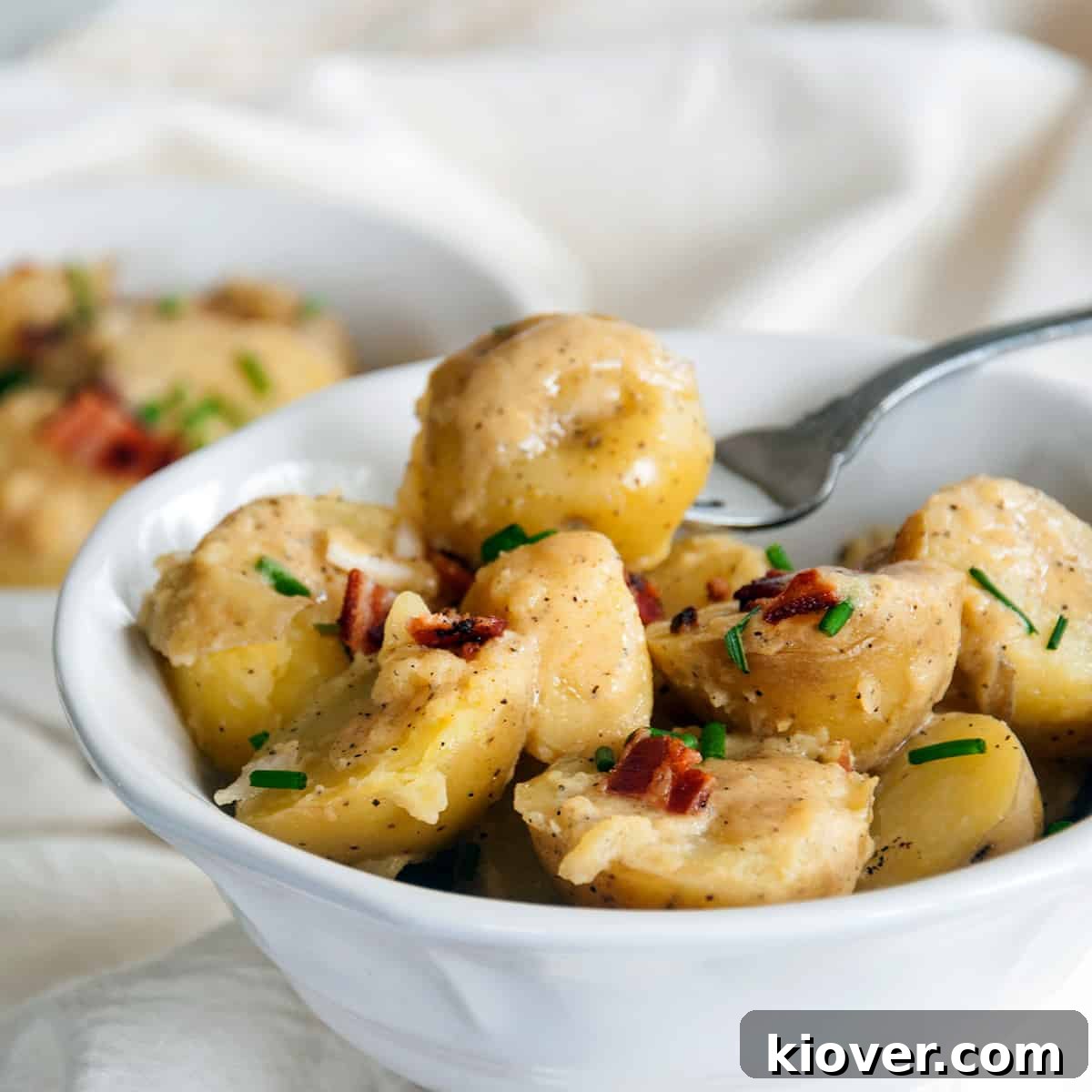
Authentic German Potato Salad (Kartoffelsalat): A Tangy, Warm Delight
Experience the true taste of German tradition with this authentic Kartoffelsalat recipe. Unlike its mayonnaise-laden American cousin, this Swabian-style German potato salad is typically served warm, boasting a vibrant, tangy vinegar base, sharp Dijon mustard, and the irresistible crunch of crispy bacon. Inspired by the unforgettable flavors found in Munich’s lively beer halls, this recipe delivers a perfect balance of savory, acidic, and fresh notes, making it more than just a side dish—it’s a culinary journey that brings comfort and robust flavor to any table.
Why This German Potato Salad Recipe Stands Out
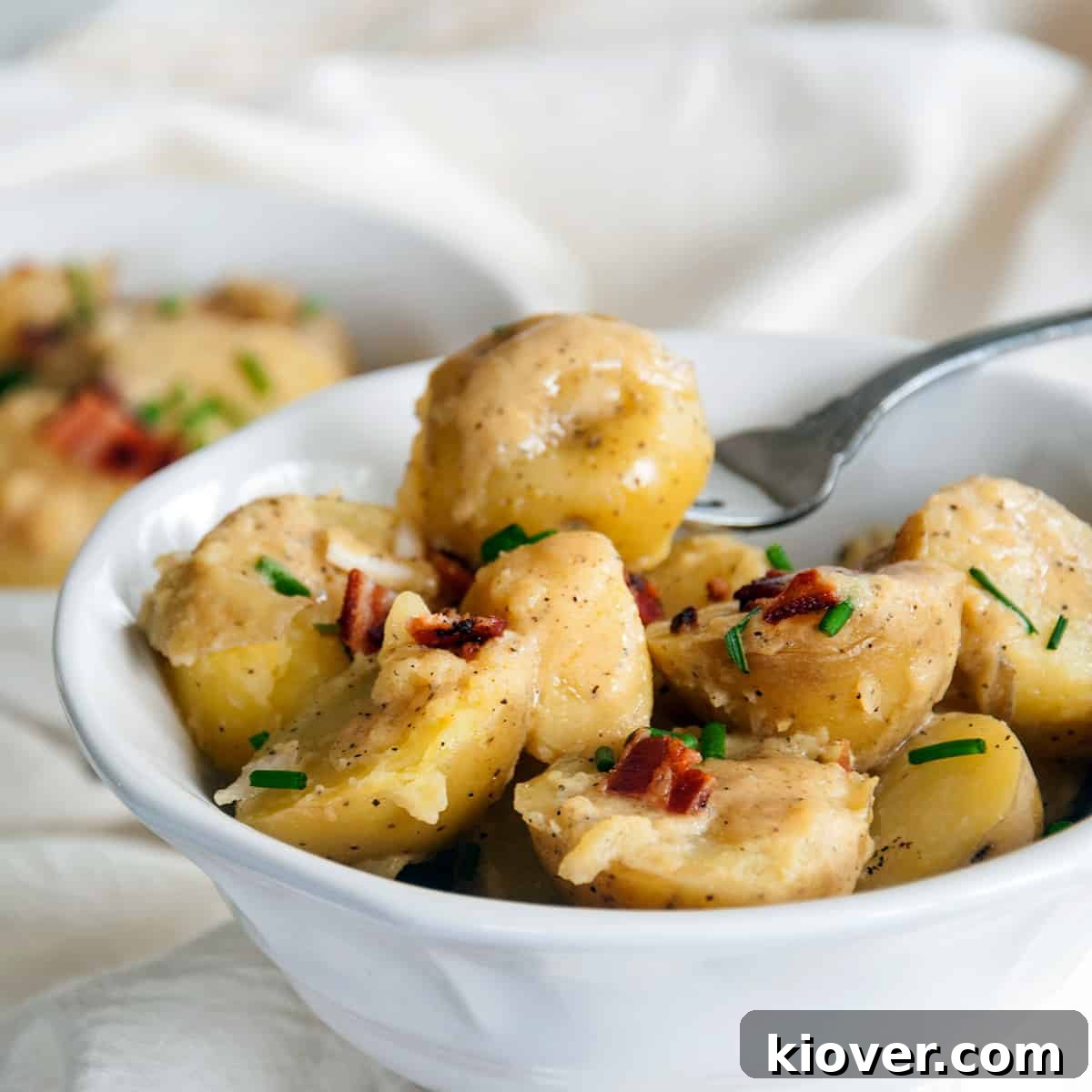
This particular Kartoffelsalat recipe isn’t just a dish; it’s a celebration of simple, robust flavors that evoke comfort and tradition. What truly sets this Swabian-style version apart is its distinctive warm serving temperature and the absence of heavy mayonnaise. Instead, it relies on a bright, tangy vinegar-based dressing that truly penetrates the potatoes, infusing every bite with zesty goodness. The interplay of tender, yet firm, Yukon Gold potatoes, the piquant kick of quality Dijon mustard, a generous splash of white vinegar, and the savory depth of crispy bacon creates a symphony of textures and tastes that is both hearty and refreshingly vibrant.
We use Yukon Gold potatoes specifically because they maintain their shape beautifully when sliced, yet become wonderfully creamy on the inside, perfectly absorbing the warm dressing without turning mushy. The Dijon mustard delivers a sharp, clean tang that is central to the salad’s character, elevating it beyond a simple side. This recipe exemplifies the idea that extraordinary food often comes from the most honest and straightforward ingredients, designed to be savored and shared, bringing a true taste of Germany right into your home.
Table of Contents
- Why This German Potato Salad Recipe Stands Out
- Essential Ingredients for Authentic Kartoffelsalat
- Choosing the Best Potatoes for German Potato Salad
- The Tangy Vinegar Dressing Explained
- Mastering the Bacon: Crispy Perfection
- Step-by-Step Instructions: Crafting Your Kartoffelsalat
- Substitutions and Variations to Customize Your Salad
- Storage and Serving Tips
- A Brief History of the Potato in German Cuisine
- Frequently Asked Questions About Kartoffelsalat
- Expert Tips and Tricks for Perfect Kartoffelsalat
- Serving Suggestions: What to Pair with Kartoffelsalat
- Essential Kitchen Tools for This Recipe
- Your Feedback Matters!
- German Potato Salad – Kartoffelsalat Recipe Card
Essential Ingredients for Authentic Kartoffelsalat
Creating a truly authentic and delicious German Potato Salad begins with selecting the right ingredients. While the recipe might seem simple, each component contributes significantly to the final flavor and texture. Here’s a closer look at the key elements that make this dish shine:
Choosing the Best Potatoes for German Potato Salad
For this recipe, my top recommendation is **Yukon Gold potatoes**. They are the ideal choice for warm potato salads due to their medium starch content. This characteristic ensures they strike an ideal balance: firm enough to hold their shape beautifully when sliced or cubed, yet creamy and tender enough to readily absorb the warm, tangy dressing. This unique texture prevents the potatoes from becoming mushy, which is crucial for a satisfying Kartoffelsalat that isn’t gummy. If Yukon Golds aren’t available, other waxy or all-purpose varieties like red-skinned potatoes, new potatoes, or even fingerlings can be good alternatives, offering a slightly firmer bite. It’s best to avoid very starchy potatoes like Russets, as they tend to fall apart and create a mealy texture when dressed warm, which isn’t what we’re aiming for.
The Tangy Vinegar Dressing Explained
The heart of a great German potato salad lies in its vibrant, piquant dressing. **Dijon mustard** is a foundational ingredient here. Its smooth, sharp, and slightly spicy profile provides a distinct tang that elevates the entire dish. Opt for a high-quality, authentic French-style Dijon with a clean, short ingredient list. Steer clear of overly sweet or heavily processed mustards, as they won’t deliver the same authentic punch and might throw off the balance. The Dijon works in tandem with **white vinegar**, which provides the primary acidic component, cutting through the richness of the potatoes and bacon. You can experiment with apple cider vinegar for a slightly sweeter, fruitier tang if you prefer, adding another layer of complexity. A touch of **sugar** (often white sugar) is crucial for balancing the acidity, preventing the dressing from being too sharp and harsh. **Beef broth** (or vegetable broth for a vegetarian option) adds a layer of savory umami and helps to emulsify the dressing, giving it a rich depth. Finely diced **white or yellow onion** adds a crucial aromatic sharpness and a subtle crunch that complements the other flavors, making the dressing truly dynamic.
Mastering the Bacon: Crispy Perfection
Crispy, savory **bacon bits** are a hallmark of many German potato salad recipes, including this Swabian version. The bacon not only provides a fantastic salty crunch that adds an irresistible textural contrast but also contributes precious rendered fat, often referred to as ‘bacon grease.’ This flavorful fat can be incorporated into the dressing for extra depth, richness, and a smoky nuance. Thick-cut bacon is often preferred for its meatiness and the generous amount of fat it renders. When cooking, ensure the bacon is rendered until perfectly crisp, then crumbled into small, bite-sized pieces. If you’re vegetarian or vegan, smoked tofu or tempeh bacon can be pan-fried to a similar crispness and used as a delicious substitute, ensuring the salad retains its savory, smoky character.
Freshly chopped **chives** are the quintessential garnish, adding a mild, delicate oniony freshness and a vibrant green color that brightens the salad visually and taste-wise. Don’t underestimate the importance of proper seasoning with **salt** and **pepper**. These are essential not just for taste, but also for enhancing the natural flavors of the potatoes and dressing. Seasoning the potato cooking water and adjusting the dressing to taste are key steps in achieving a perfectly flavored salad that sings with every bite.
You’ll find the precise quantities for all these exquisite ingredients in the comprehensive recipe card below, ensuring you have everything you need to create this comforting classic with confidence.
Step-by-Step Instructions: Crafting Your Kartoffelsalat
Making authentic German potato salad is a straightforward process, but paying attention to a few key details ensures a perfectly textured and flavored dish. Follow these steps for success:
- Prepare and Cook the Potatoes: Begin by washing two pounds of Yukon Gold potatoes thoroughly. Peeling is optional; many prefer to leave the skin on for added texture and nutrients, but ensure they are impeccably clean. Place the potatoes in a large pot and cover them with cold water, ensuring they are fully submerged. Add a generous tablespoon of salt to the water – this crucial step seasons the potatoes from the inside out as they cook. Bring the water to a rolling boil, then reduce the heat to a gentle simmer. Cook for approximately 25-35 minutes, or until the potatoes are fork-tender. They should be soft enough for a fork to pierce easily without resistance, but importantly, they should not be mushy. Overcooked potatoes will disintegrate when cut and tossed.
- Cook the Bacon: While the potatoes are simmering, prepare the bacon. In a separate skillet, cook four slices of bacon over medium heat until they are perfectly crisp. Remove the bacon with a slotted spoon and place it on a paper towel-lined plate to drain any excess fat. Once cooled slightly, crumble the bacon into small, bite-sized pieces and set aside. For an extra layer of flavor, you can reserve one to two tablespoons of the rendered bacon fat to incorporate into the dressing, replacing some of the vegetable oil.
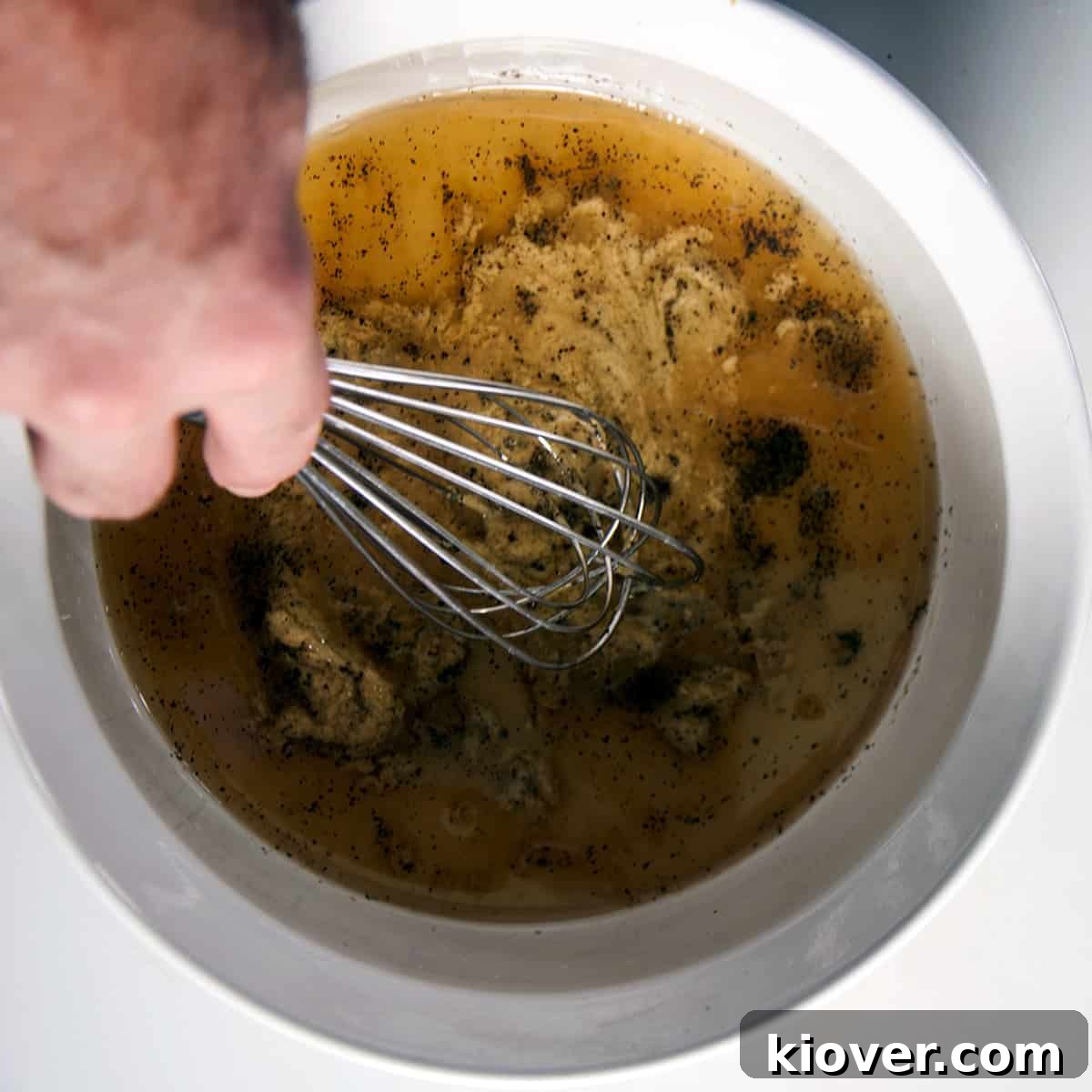
- Whisk the Dressing: In a large mixing bowl (ensure it’s spacious enough to comfortably hold all the potatoes), whisk together the dressing ingredients: 2 tablespoons of white vinegar, 2 tablespoons of Dijon mustard, 1 tablespoon of white sugar, 2 tablespoons of vegetable oil (or reserved bacon fat), 1/4 cup of beef broth, 1/2 teaspoon of salt, and 1/2 teaspoon of pepper. Whisk vigorously until all ingredients are thoroughly combined and the sugar is completely dissolved. This tangy concoction is the vibrant soul of your Kartoffelsalat.
- Add Onions to Dressing: Stir in the 1/4 cup of finely diced white or yellow onion into the prepared dressing. Allowing the onions to sit in the dressing for a few minutes while the potatoes cool will slightly mellow their sharpness and allow their flavors to infuse into the liquid.
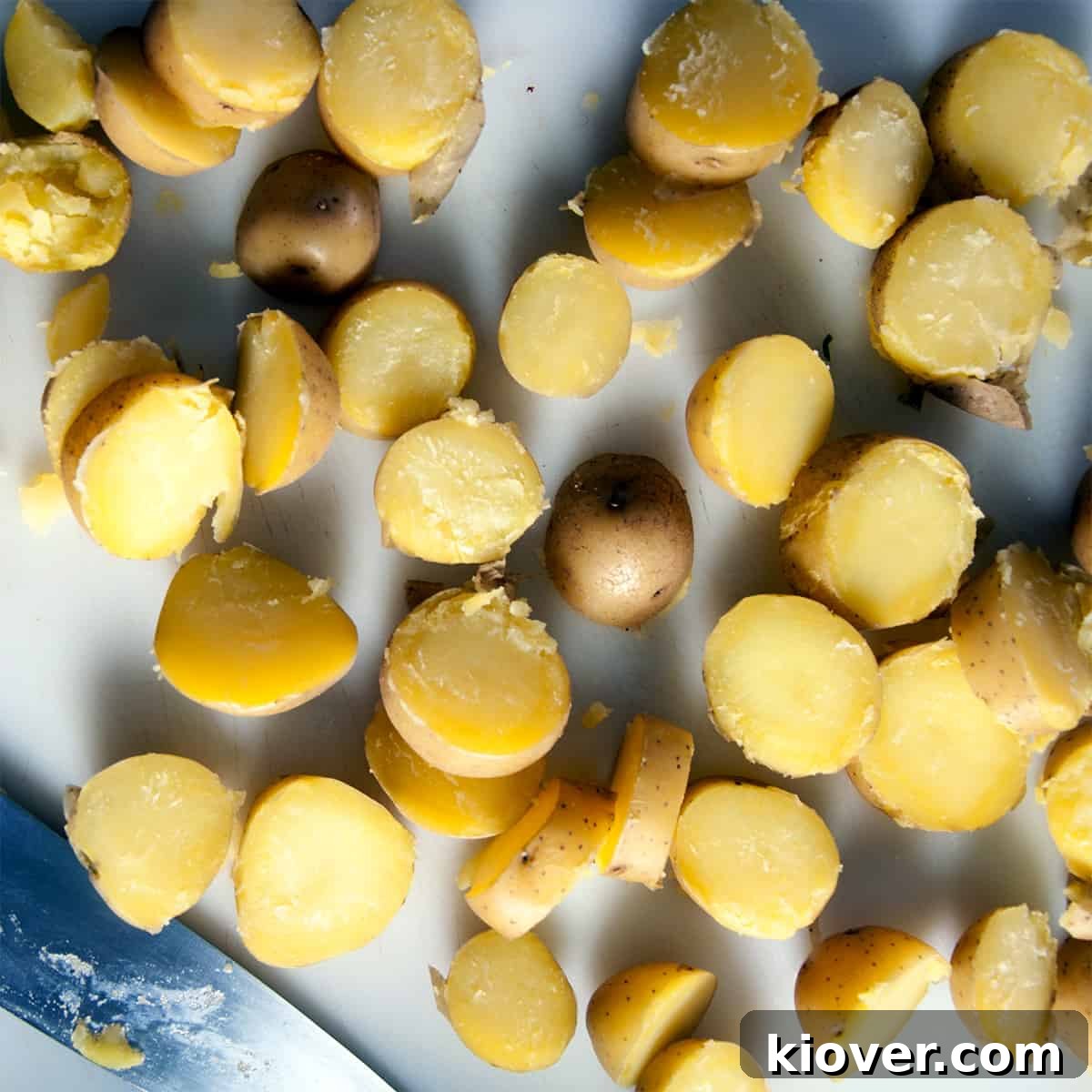
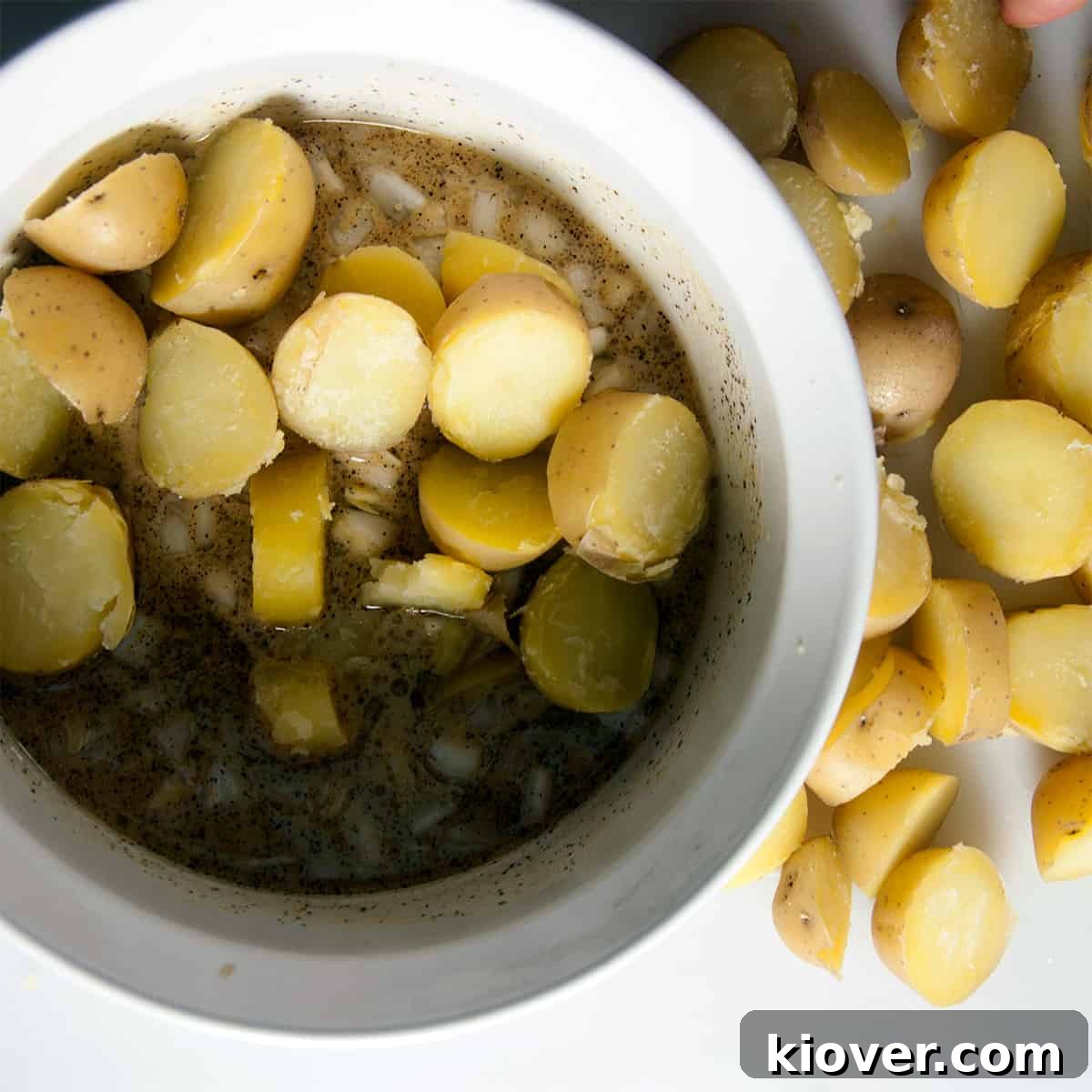
- Cool and Cut Potatoes: Once the potatoes are cooked to perfection, drain them immediately in a colander. Allow them to cool for about 5-10 minutes – they should still be warm to the touch, but cool enough to handle comfortably without burning yourself. This residual warmth is absolutely essential for the potatoes to properly absorb the tangy dressing, allowing the flavors to penetrate deeply. Carefully cut the potatoes into uniform 1-inch (or desired bite-sized) chunks or slices.
- Combine Potatoes and Dressing: Add the warm, cut potatoes directly into the large bowl containing the dressing and onions. Gently toss the potatoes with a spatula or large spoon, ensuring every single piece is thoroughly coated with the tangy liquid. The warmth of the potatoes will act like a sponge, helping them to soak up the flavors more effectively, creating a deeply infused and satisfying salad.
- Rest and Serve: For optimal flavor development, especially if you plan to serve it warm, allow the salad to rest for at least 15-20 minutes before serving. This crucial resting period allows the flavors to meld beautifully and intensify. If you prefer to serve your Kartoffelsalat cold, cover the bowl tightly and refrigerate for at least 2 hours to allow it to chill completely and the flavors to deepen further.
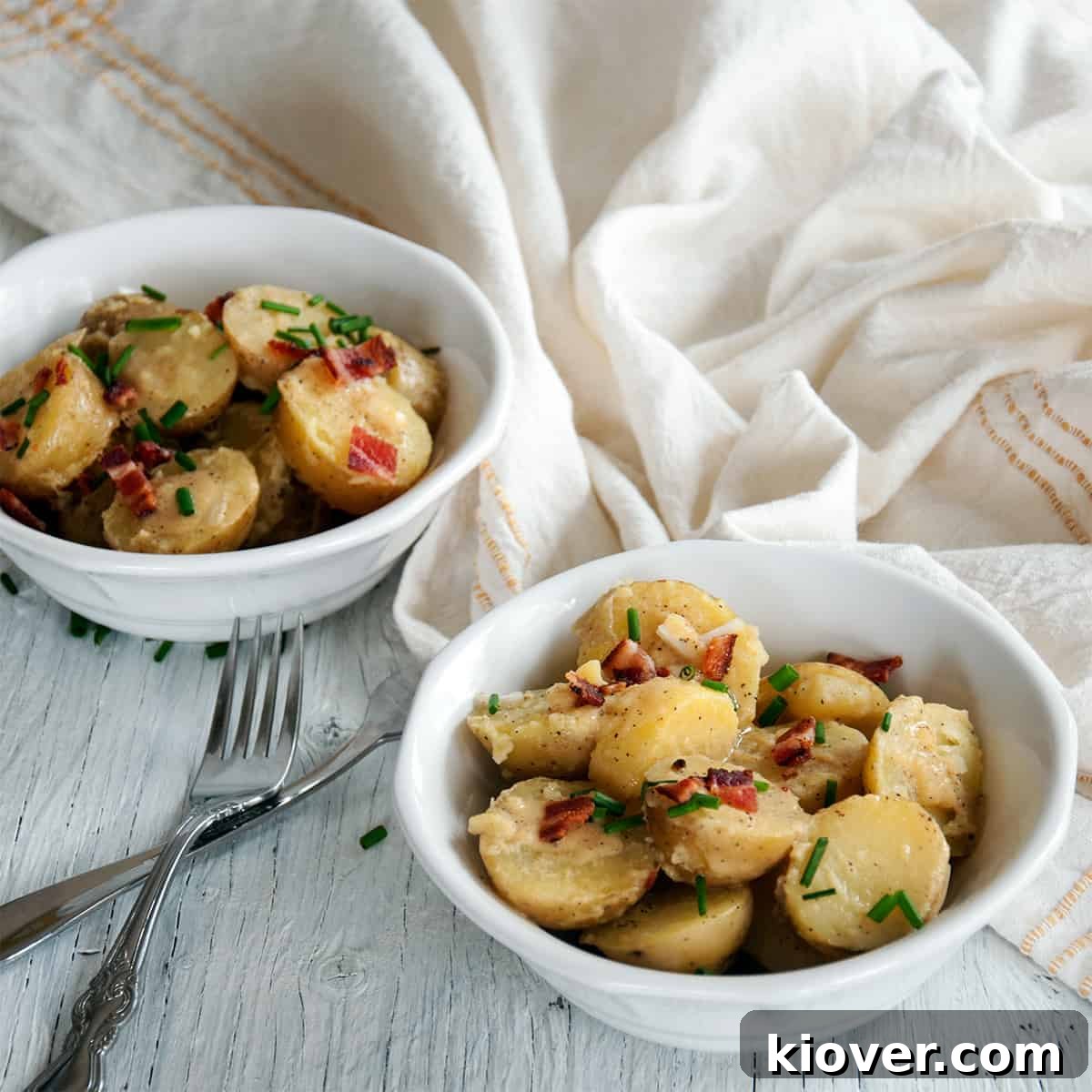
- Garnish and Enjoy: Just before serving, stir in the crumbled bacon bits and the freshly chopped chives. These additions provide a burst of fresh flavor, a delightful textural contrast, and an appealing visual finish. Serve warm or chilled, according to your preference and the occasion.
Substitutions and Variations to Customize Your Salad
One of the joys of cooking is the freedom to adapt recipes to suit your taste, dietary needs, or simply what you have on hand. This Kartoffelsalat recipe, while rooted in tradition, is wonderfully flexible. Don’t hesitate to experiment and make this German Potato Salad truly your own!
- Potato Alternatives: While Yukon Golds are highly recommended for their ideal texture, you can certainly use other waxy or all-purpose potatoes. Red new potatoes, for instance, offer a slightly firmer bite and beautiful color, while fingerling potatoes provide an elegant presentation when halved lengthwise. Just ensure they hold their shape well after cooking.
- Vinegar Choices: White vinegar provides a crisp, clean tang, which is classic for Swabian Kartoffelsalat. However, if you prefer a slightly softer, sweeter acidity, **apple cider vinegar** is an excellent substitute that adds a subtle fruity note. For a deeper, more robust flavor profile, some recipes even incorporate a touch of white wine vinegar or malt vinegar.
- Mustard Matters: Dijon mustard is crucial for its distinct sharp flavor profile that forms the backbone of the dressing. If you’re out of Dijon, a good quality German-style mustard (often a bit milder and sweeter, or a whole grain mustard) can work, though the flavor will be different. For an extra kick, a touch of spicy brown mustard could be interesting. However, it’s best to avoid bright yellow American hot dog mustard, as its flavor profile is too sweet and less nuanced for this traditional dish.
- Vegetarian and Vegan Options: To make this Kartoffelsalat vegetarian or vegan, simply omit the bacon. For that savory, smoky crunch, you can replace it with pan-fried or baked **smoked tofu**, tempeh bacon, or even crispy fried shallots. Ensure your beef broth is replaced with a good quality vegetable broth to maintain the vegan aspect, and double-check other ingredients for hidden animal products.
- Adding Herbs and Aromatics: Beyond chives, consider other fresh herbs to brighten the salad. A sprinkle of fresh dill or parsley can add wonderful herbaceous notes. For a more pungent kick, finely minced garlic or shallots can be sautéed with the onions or even added raw (sparingly) to the dressing. A pinch of celery seed can also add a complex, savory depth.
- Extra Crunch and Tang: For additional texture and flavor, some people like to add finely chopped celery, mini dill pickles (gherkins), or even capers. These elements bring an extra layer of crunch and a contrasting tang that can be quite delightful and cut through the richness.
- Sweetness Adjustment: If you find the dressing too tart, you can slightly increase the sugar content, adding it a quarter teaspoon at a time until balanced. Conversely, if you prefer a sharper profile, reduce the sugar or omit it entirely. Some traditional recipes use a pinch of caraway seeds, which impart a unique, aromatic warmth that is distinctly German.
Storage and Serving Tips
Proper storage is key to enjoying your delicious Kartoffelsalat for days to come, and knowing how to best serve it will enhance the experience.
Storing Leftovers
Once your German potato salad has cooled, it’s important to transfer any leftovers promptly to an **airtight container**. This crucial step prevents the potatoes from drying out and helps lock in all those wonderful, tangy flavors. When stored correctly in the refrigerator, this versatile salad will remain fresh and absolutely delicious for **3-4 days**. For optimal flavor and food safety, ensure the salad is fully chilled before sealing and storing. This not only preserves freshness but also allows the complex flavors to continue melding and deepening, often making it taste even better the next day.
Freezing is generally not recommended for potato salads, especially those with a vinegar base and tender potatoes like Yukon Golds. The high water content in potatoes means they tend to become grainy, watery, and lose their desirable firm-yet-creamy texture after being frozen and thawed. This compromises the overall quality and enjoyment of the dish. For the best culinary experience, aim to enjoy your Kartoffelsalat fresh within the recommended refrigerated timeframe.
Serving Suggestions: Warm or Cold?
One of the unique and most appealing aspects of traditional German potato salad is its versatility in serving temperature. This Swabian-style Kartoffelsalat is traditionally served **warm or at room temperature**. Serving it warm allows the potatoes to fully absorb the tangy dressing, creating a richer, more integrated flavor profile that is deeply satisfying. The warmth also makes it a particularly comforting and hearty dish, especially during cooler months or as a substantial side for a robust meal.
However, it is also perfectly delicious served **cold**, much like its American counterparts. Chilling the salad allows the flavors to further develop and deepen, offering a different, equally enjoyable experience with a crisper texture. The choice between warm and cold often comes down to personal preference or what other dishes you’re serving it with. Both methods yield a fantastic result, so feel free to experiment to find your favorite!
Reheating Tips (if serving warm again)
If you’ve refrigerated the salad and wish to serve it warm again, it’s best to reheat it gently to preserve its texture and flavor. You can do this by placing it in a microwave-safe bowl and heating in short bursts (30-60 seconds at a time), stirring occasionally, until warmed through. Alternatively, for a more even reheat, you can warm it gently in a saucepan over low heat on the stovetop. If the salad appears a bit dry after refrigeration, you can add a small splash of beef broth or water while reheating to restore some moisture to the dressing, ensuring it remains flavorful and juicy.
A Brief History of the Potato in German Cuisine
The potato, a seemingly indispensable staple in German cuisine, has a surprisingly rich and often tumultuous history that spans centuries. Originally hailing from the high altitudes of the Andes region in South America, potatoes were introduced to Europe in the 16th century by Spanish explorers returning from the New World. However, their adoption was far from immediate or enthusiastic across the continent.
Early Europeans were largely wary of this unfamiliar tuber that grew underground, a stark contrast to their traditional grain crops. Belonging to the nightshade family, the potato was often met with suspicion and even fear, sometimes being derisively referred to as the “devil’s apple” due to its unappealing appearance and the mistaken belief that it was poisonous. It wasn’t until the mid-1700s, largely due to persistent agricultural promotion by influential figures like Frederick the Great of Prussia, that the potato began to gain widespread acceptance as a viable and valuable crop across Germany.
Frederick the Great, recognizing the potato’s potential to alleviate famine and provide a reliable food source, employed clever tactics to encourage its cultivation. He famously planted royal potato fields and then had them guarded, creating an illusion of exclusivity and value that piqued the curiosity of local farmers. This, combined with the potato’s inherent resilience – its ability to grow in poor soil, its high caloric yield, and its relative protection against pillaging armies (due to being underground) – made it an increasingly attractive and essential food source, particularly during times of hardship and conflict. This practicality, coupled with concerted efforts to educate the populace on its nutritional benefits, firmly solidified the potato’s place in the German diet.
As potatoes became widely cultivated and embraced, they integrated into countless regional dishes, including many of the popular German delicacies we know and love today. Kartoffelsalat, or German Potato Salad, emerged as a beloved comfort food, developing distinct regional variations. In the South of Germany, particularly in Swabia and Bavaria, a warm, tangy, vinegar-based salad became the norm, reflecting local culinary traditions and the ready availability of ingredients like bacon and broth. In contrast, Northern Germany often developed recipes that incorporated mayonnaise, influenced by neighboring culinary styles from countries like France and Belgium.
The story of Kartoffelsalat extends beyond Germany’s borders. In the 19th and 20th centuries, as millions of Germans emigrated to the Americas, they brought with them their cherished culinary traditions, including these diverse recipes for potato salad. These recipes persisted and evolved, contributing to the rich and diverse tapestry of American cuisine while retaining their distinctive German roots. Today, whether served warm and tangy or cool and creamy, German potato salad remains a delicious testament to its enduring cultural legacy and delicious adaptability across generations and continents.
Frequently Asked Questions About Kartoffelsalat
Got questions about German Potato Salad? We’ve got answers to some of the most common queries, helping you master this delightful dish:
What’s the difference between German potato salad and typical American potato salad?
The primary and most significant difference lies in the dressing and serving temperature. German potato salad (Kartoffelsalat), especially the traditional Swabian style, typically features a warm, tangy, vinegar-based dressing, often enriched with crispy bacon bits, onions, and beef broth, and crucially, contains no mayonnaise. American potato salad, on the other hand, is almost always served cold and features a creamy, mayonnaise or mustard-mayonnaise-based dressing, often mixed with celery, hard-boiled eggs, or pickles.
Why Dijon mustard? Can’t I use any mustard?
Dijon mustard is highly favored for its distinct sharp, tangy, and slightly spicy flavor profile, which beautifully complements the mildness of the potatoes and the acidity of the vinegar in the dressing. While you *can* experiment with other mustards (like a grainy mustard for texture or a spicy brown mustard for more heat), be aware that they will significantly alter the salad’s overall taste. Yellow American mustard is generally not recommended as its flavor is often too sweet and less nuanced for this traditional German dish.
Can I add other ingredients to my Kartoffelsalat?
Absolutely! The beauty of this dish lies in its adaptability and regional variations. While the classic recipe holds its own charm, feel free to get creative and customize it to your liking. Popular additions include hard-boiled eggs for extra protein and creaminess, chopped dill pickles (gherkins) for an extra tangy crunch, fresh dill or parsley for bright herbaceous notes, or even a touch of caraway seeds for a truly authentic German aroma and warmth. Experiment to find your perfect combination!
Can I make German Potato Salad ahead of time?
Yes, you certainly can! While many traditionalists prefer it freshly made and warm, Kartoffelsalat often tastes even better the next day as the flavors have more time to meld and deepen in the refrigerator. Simply store it in an airtight container. If you plan to serve it warm after chilling, gently reheat it on the stovetop over low heat or in the microwave, adding a splash of broth if it seems dry.
Is German Potato Salad gluten-free?
Typically, yes, this vinegar-based German potato salad is naturally gluten-free. Most traditional recipes rely on potatoes, vinegar, oil, mustard, bacon, and broth, which are inherently gluten-free ingredients. However, to ensure it is completely gluten-free, always double-check the labels of your beef broth and Dijon mustard, as some brands may contain gluten-containing additives or cross-contamination. If you have a strict gluten-free requirement, look for certified gluten-free products.
Expert Tips and Tricks for Perfect Kartoffelsalat
Achieving a truly exceptional German Potato Salad is easy with a few insider tips and techniques. These insights will help you elevate your dish from good to unforgettable:
- Choose the Right Potato: As emphasized, Yukon Gold potatoes are truly ideal due to their waxy-to-medium starch content. This characteristic allows them to hold their shape while still beautifully absorbing the dressing. If using other types, ensure they are not overly starchy like Russets, which tend to fall apart.
- Season the Potato Water Generously: This is a fundamental step. Always boil your potatoes in generously salted water. This is your first and best opportunity to infuse flavor directly into the potatoes from the inside out, creating a more cohesive taste profile for the entire salad.
- Dress Potatoes While Warm: This is arguably the most crucial tip for any vinegar-based potato salad. The residual warmth of the freshly cooked potatoes helps them to better absorb the tangy dressing, allowing the flavors to penetrate deeply into each piece. Do not let them get completely cold before tossing; they should still be warm enough to handle comfortably.
- Quality Dijon Matters: Dijon mustard is a key flavor driver and imparts a signature tang. Invest in a good quality Dijon that you genuinely enjoy, as its nuanced character will shine through significantly in the final dish.
- Don’t Overcook Potatoes: Cook potatoes until just fork-tender. This means a fork should slide in with slight resistance. Overcooked potatoes will become mushy and disintegrate when cut and tossed, leading to a less appealing texture and a potentially grainy salad.
- Balance the Dressing: Always taste your dressing before adding the potatoes. This is your chance to adjust the salt, pepper, and sugar as needed to achieve a perfect balance of tang, savory, and subtle sweetness. A well-balanced dressing is the secret to an outstanding Kartoffelsalat.
- Crispy Bacon is Key: Ensure your bacon is cooked to a perfect crispness. The textural contrast of crunchy bacon bits against the tender potatoes is a delightful and essential element of this salad. Don’t forget to use some of that flavorful bacon fat in the dressing for extra depth.
- Allow Flavors to Meld: While delicious immediately, Kartoffelsalat often improves after sitting for 15-30 minutes if served warm, or a few hours (or even overnight) in the refrigerator if served cold. This resting period allows all the flavors to deepen and harmonize, creating a more complex and satisfying taste experience.
- Garnish Freshly: Add your fresh chives and crispy bacon bits just before serving. This ensures their vibrant color and crisp texture are at their best, adding both visual appeal and a burst of fresh flavor.
Serving Suggestions: What to Pair with Kartoffelsalat
German Potato Salad is incredibly versatile and makes a fantastic accompaniment to a wide array of main dishes. Its tangy, savory profile cuts through richness and complements hearty meats beautifully, making it a reliable and delicious choice for almost any occasion. Here are some classic and creative serving suggestions:
- Classic German Fare: This is a natural and quintessential pairing. Serve warm Kartoffelsalat alongside traditional German sausages like bratwurst, knackwurst, or weisswurst. It’s also an excellent and authentic side for Wiener Schnitzel (breaded pork or veal cutlets), Schweinebraten (roasted pork), or Königsberger Klopse (meatballs in a creamy caper sauce). It’s the perfect complement to a hearty German feast.
- Barbecue and Grilling: The tangy notes of the vinegar-based salad make it a refreshing counterpoint to rich grilled meats. Pair it with grilled chicken, juicy steak, flavorful pork chops, or smoky ribs. It’s a fantastic, lighter alternative to creamy coleslaw or mayonnaise-based potato salads at any backyard barbecue or picnic, holding up well in warmer temperatures.
- Picnics and Potlucks: Especially if served chilled, Kartoffelsalat travels exceptionally well and is always a crowd-pleaser. Its robust flavors and non-mayonnaise base make it a safer and more durable choice for outdoor gatherings and events where food might sit out for a while.
- Roasted Meats: Elevate your Sunday roast by serving Kartoffelsalat alongside a perfectly roasted chicken, a slow-cooked pot roast, or a savory leg of lamb. The acidity in the potato salad helps to cut through and balance the richness of these substantial meat dishes, creating a harmonious meal.
- Hearty Sandwiches and Wraps: Add a generous scoop of chilled Kartoffelsalat as a side to a hearty pastrami or Reuben sandwich, a grilled chicken wrap, or any substantial deli sandwich for a complete and satisfying lunch that feels a bit more special.
- Fish Dishes: While perhaps less common, the bright and piquant flavors of Kartoffelsalat can surprisingly complement pan-fried or baked white fish, offering a refreshing and unexpected contrast to the delicate seafood.
- Vegetarian Mains: For a delicious vegetarian meal, pair Kartoffelsalat (remembering to use vegetable broth and omit bacon) with hearty lentil patties, grilled halloumi cheese, a robust mushroom steak, or even a flavorful bean burger.
Whether you’re hosting a German-themed dinner party, celebrating Oktoberfest, or simply looking for a flavorful and versatile side dish for your weeknight meal, Kartoffelsalat is a reliable and delicious choice that consistently delights palates.
Essential Kitchen Tools for This Recipe
Having the right kitchen tools can make the cooking process smoother, more efficient, and ultimately more enjoyable. For this Kartoffelsalat recipe, you’ll need a few basic essentials that are likely already in your kitchen:
- Large Pot: Essential for boiling your potatoes. A heavy-bottomed pot ensures even cooking and prevents scorching.
- Colander: For easily and safely draining the cooked potatoes from the hot water.
- Large Mixing Bowl: Crucial for whisking the dressing ingredients and, more importantly, for gently tossing the warm potatoes with the dressing without crowding or crushing them.
- Whisk: To ensure your dressing ingredients are thoroughly combined and emulsified, creating a smooth and cohesive flavor.
- Sharp Knife and Cutting Board: Indispensable for safely and efficiently dicing onions, chopping fresh chives, and most importantly, cutting the cooked potatoes into uniform pieces.
- Skillet or Frying Pan: For cooking the bacon until it achieves that perfect, desirable crispness.
- Measuring Cups and Spoons: For accurate ingredient quantities, ensuring the balance of flavors in the dressing is just right.
- Serving Spoon or Spatula: For gently mixing the salad and transferring it to your serving dish.
These tools are generally standard in most well-equipped kitchens, making this recipe accessible and enjoyable for home cooks of all experience levels. With these in hand, you’re well on your way to creating a delicious German potato salad!
Your Feedback Matters!
We absolutely love hearing from you! If you’ve given this authentic German Potato Salad (Kartoffelsalat) recipe a try, please consider leaving a rating and comment below. Your valuable feedback helps us improve our recipes, understand what you enjoy, and guides other home cooks in their culinary adventures. Sharing your experience not only supports our community but also helps others discover the joy and tradition of making this comforting dish. Thank you for visiting, and we wish you happy cooking and delicious eating!
German Potato Salad – Kartoffelsalat Recipe
Rating: 5 from 1 review
- Author: Ben Myhre
- Prep Time: 1 hour 35 minutes
- Cook Time: 25 minutes
- Total Time: 2 hours
- Yield: 4 servings
- Category: Side Dish
- Method: Simmer
- Cuisine: German
Description
An easy-to-make traditional German Potato Salad. This Kartoffelsalat is a Dijon and vinegar side dish that is perfect for a potluck, the holidays, or comforting at-home dining. Its warm, tangy profile sets it apart from creamy potato salads.
Ingredients
- 2 pounds Yukon potatoes, medium (rinsed off and optionally peeled)
- 1 Tablespoon White Sugar
- 1/4 cup beef broth
- 2 Tablespoons white vinegar
- 2 Tablespoons vegetable oil
- 2 Tablespoons Dijon mustard
- 1/2 teaspoon salt
- 1/2 teaspoon pepper
- 1/4 cup diced white or yellow onion
- 4 slices of bacon, cut into bacon bits
- 2 Tablespoons chopped chives
Instructions
- Simmer potatoes in generously salted water for 25 minutes or until tender enough to easily put a fork through, but not mushy.
- Cook bacon in a skillet until crisp. Remove and crumble, reserving 1-2 tablespoons of fat for the dressing if desired.
- Mix wet ingredients: In a large bowl, whisk together white vinegar, Dijon mustard, sugar, vegetable oil (or bacon fat), beef broth, salt, and pepper until well combined.
- Add diced onions to the dressing, allowing them to sit while potatoes cool.
- Drain potatoes once cooked.
- Cool: Allow potatoes to cool for 5-10 minutes; they should still be warm to the touch.
- Cut potatoes into 1-inch sections or desired bite-sized chunks.
- Add potatoes to dressing: Gently toss the warm, cut potatoes with the dressing and onions until well mixed and coated.
- Rest: Allow the salad to rest for 15-20 minutes for flavors to meld if serving warm. If serving cold, cover and refrigerate for at least 2 hours.
- Garnish: Just before serving, stir in the crumbled bacon bits and chopped chives.
Notes
- I recommend Yukon Gold Potatoes for their ideal texture, but any waxy or all-purpose potato should work well.
- Dijon Mustard is a flavor-driving ingredient; choose a high-quality one that you really like.
- Allow the potatoes to cool a bit (5-10 minutes) before you cut and mix; they should still be warm to properly absorb the dressing.
- This dish can be served hot, warm, or cold. While traditionally served warm, it is equally delicious chilled. Do what you like best!