
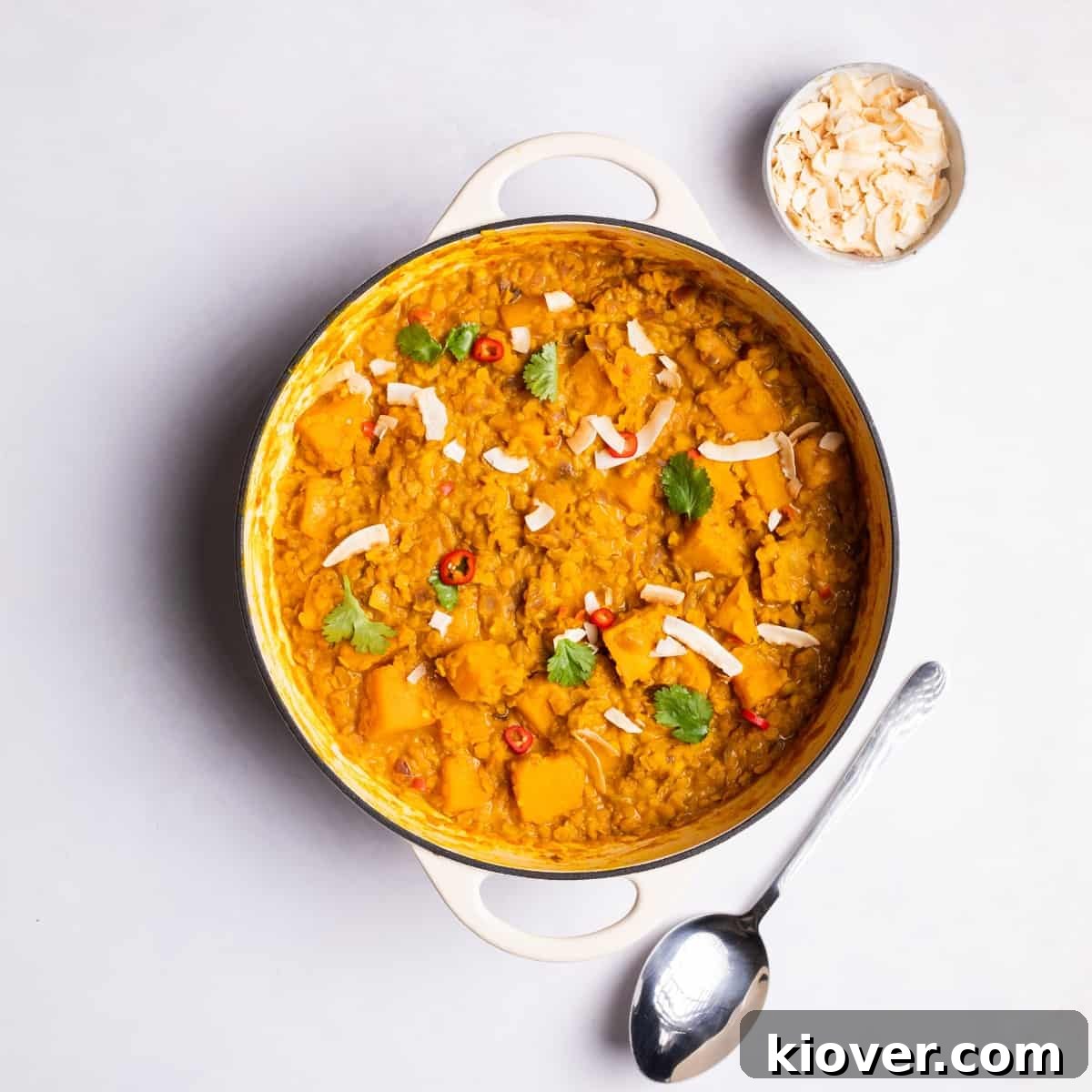
Flavorful One-Pot Coconut Dhal: A Vegan Delight
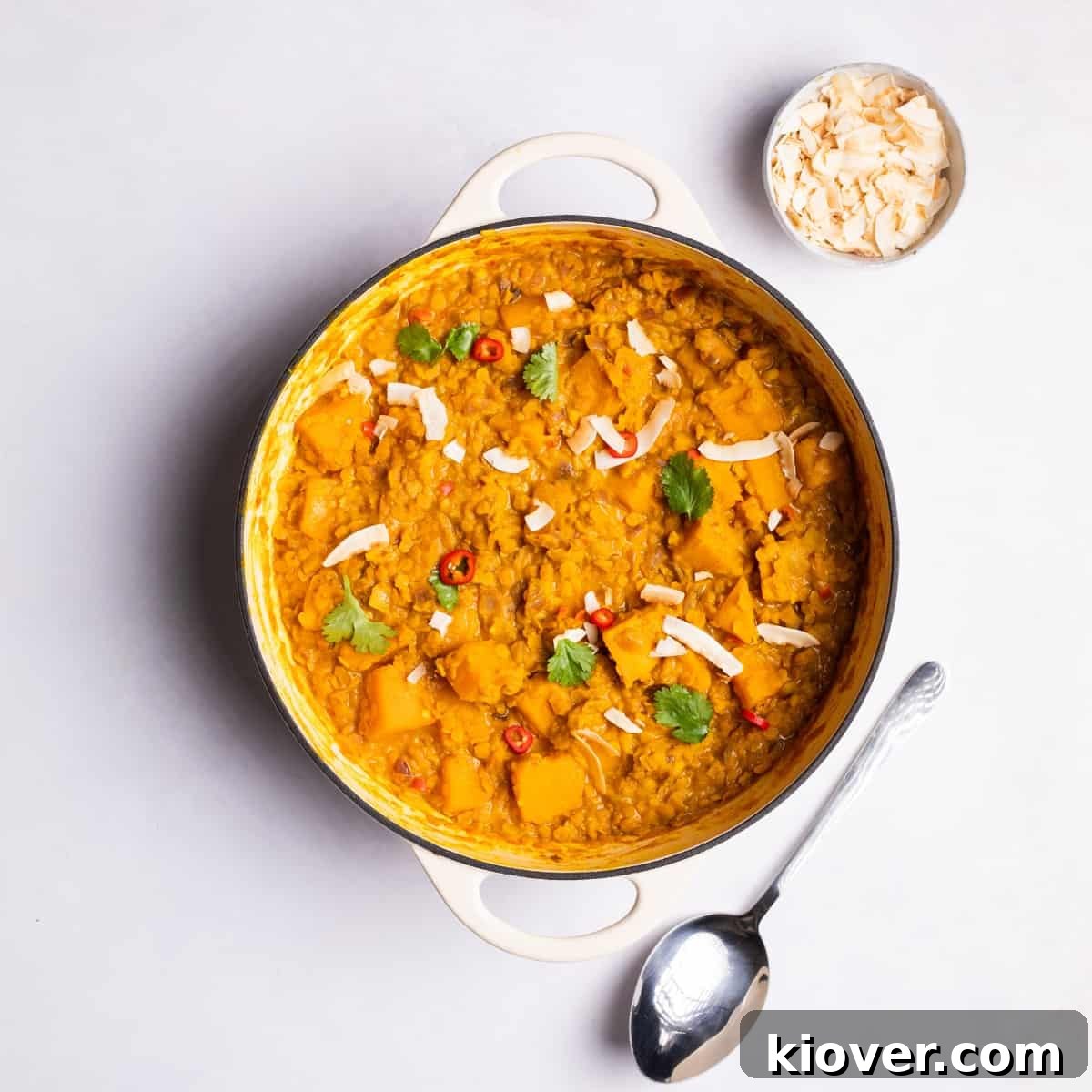
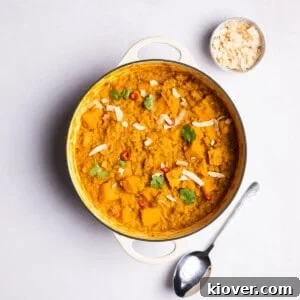
Discover the incredible ease and rich flavors of this **Coconut Dhal** recipe. It’s wonderfully **family-friendly**, surprisingly **budget-conscious** at under £2.00 per serving, and best of all, prepared entirely in **one pot** for minimal cleanup! Get ready to savor a truly amazing dish that will become a staple in your healthy cooking repertoire.
Recipe Difficulty – Very Easy
Table of Contents
- Why This Recipe Works
- What is Dhal?
- Ingredients for the Perfect Coconut Dhal
- Clever Substitutions for Your Dhal
- Exciting Variations to Try
- Step-by-Step: How to Make Coconut Dhal
- Storing and Enjoying Leftovers
- Frequently Asked Questions About Dhal
- Printable Coconut Dhal Recipe
Why This Recipe Works: Your New Go-To Vegan Meal
This **vegan Coconut Dhal** isn’t just a meal; it’s a culinary experience that blends heartwarming comfort with incredible flavor. My inspiration for this dish came from a desire to combine the creamy richness of coconut with the earthy sweetness of butternut squash, leading to a truly remarkable **lentil dhal**. It’s designed to satisfy your cravings, especially on a chilly autumn or winter evening, making it the ultimate cozy dinner.
Hailing from the vibrant culinary traditions of Sri Lanka, where coconut milk is a staple, this **Coconut Lentil Dhal** stands out. It quickly earns its place as a weekly favorite due to its simplicity, robust taste, and undeniable health benefits. We often find ourselves making double batches because it’s simply too good to have just once!
Beyond its deliciousness, this **red lentil dhal** is incredibly practical. It’s remarkably **cost-effective**, typically costing between £1.50 and £2.00 per portion, proving that healthy, flavorful eating doesn’t have to break the bank. The magic happens in **one pot**, significantly cutting down on washing up – a huge bonus for busy weeknights. Its **one-pot preparation** also makes it ideal for beginner cooks, removing intimidation and making healthy cooking accessible to everyone.
Furthermore, this dhal is a dream come true for **batch cooking**. Whether you plan to freeze portions for future quick meals or simply want to enjoy it for lunch the next day, it holds up beautifully. In fact, many believe the flavors deepen and meld even more wonderfully after a day, making leftovers an absolute treat. This recipe is also naturally **gluten-free** and **dairy-free**, catering to a wide range of dietary needs without compromising on taste or texture.
This recipe was inspired by my popular Butternut Squash and Chickpea Curry, and it pairs beautifully with my amazing Socca (Chickpea Flatbread) recipe for a complete and satisfying meal.
What is Dhal? A Global Comfort Food
Dhal, often spelled daal or dal, is a staple dish in South Asian cuisine, particularly in India, Nepal, Pakistan, Sri Lanka, and Bangladesh. At its heart, dhal refers to dried, split pulses (lentils, peas, or beans) that do not require pre-soaking. The term “dhal” also refers to the thick, stew-like dish prepared from these pulses, often seasoned with a variety of spices.
While Indian dhals are incredibly diverse and can feature a range of lentils and spices, this particular **Coconut Dhal** leans towards a Sri Lankan style. The generous use of creamy coconut milk gives it a distinct richness and slightly sweet undertone, differing from some of the more savory or tangy dhals found elsewhere. It’s essentially a thick, aromatic lentil soup or stew, rich in nutrients, protein, and fiber, making it a fantastic plant-based meal. It’s a testament to how simple, wholesome ingredients can be transformed into something profoundly comforting and delicious.
Ingredients for the Perfect Coconut Dhal: Fresh & Flavorful
Crafting this delicious **Butternut Squash Coconut Dhal** requires a selection of fresh, aromatic ingredients that come together to create its signature depth of flavor. Here’s a closer look at what you’ll need:
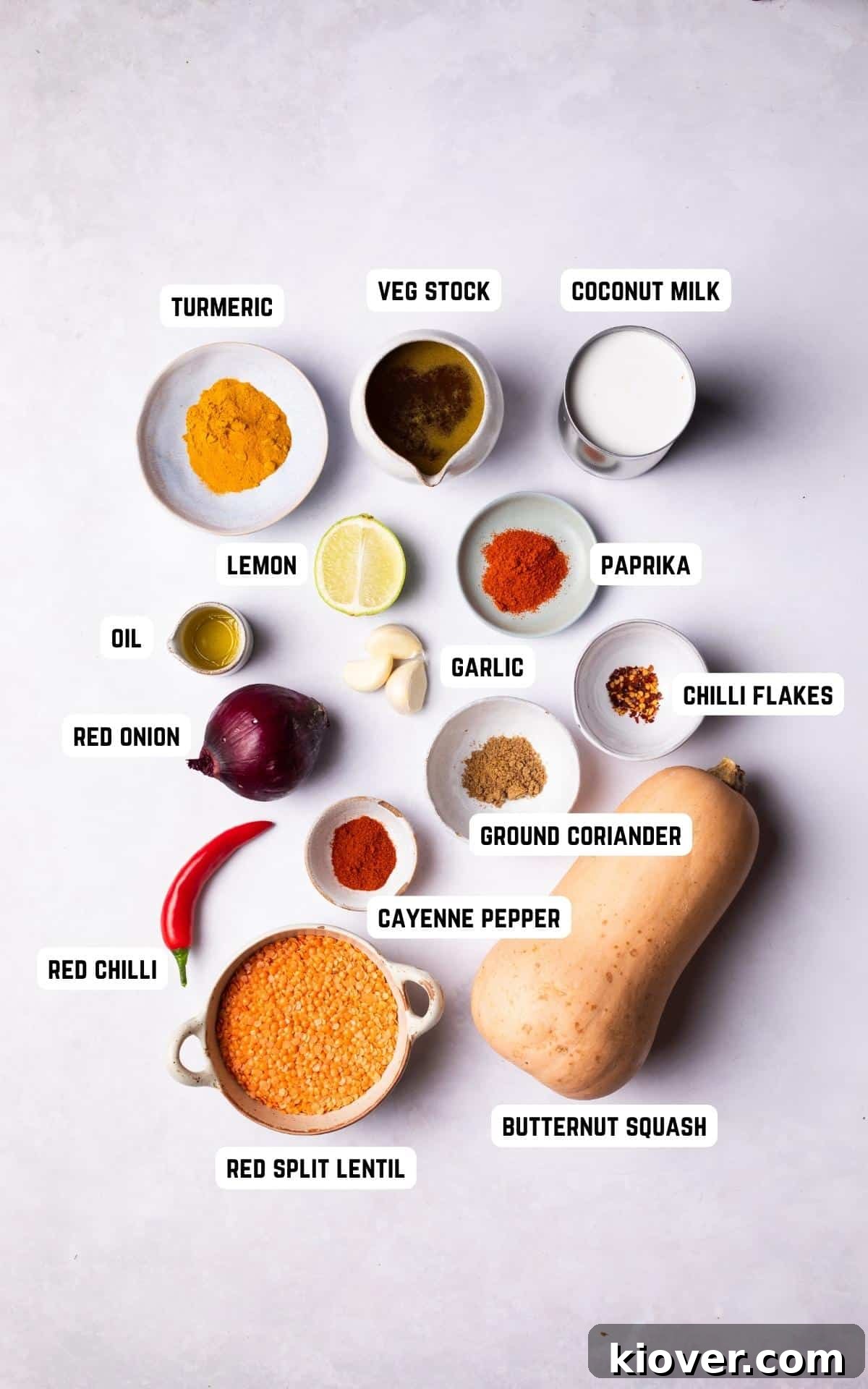
- Butternut Squash: This sweet, earthy vegetable forms a beautiful base for our **vegetable dhal**, adding natural sweetness and a creamy texture as it softens.
- Oil: Olive oil is my preference for its fruity notes and health benefits, but any neutral cooking oil will work well to sauté the aromatics.
- Garlic Cloves: A cornerstone of flavor in countless cuisines, freshly crushed garlic provides an indispensable pungent depth.
- Red Onion: Offering a wonderfully sweet and mild onion flavor compared to white or yellow onions, red onion becomes tender and aromatic when cooked.
- Turmeric: A common curry spice, turmeric imparts a warm, earthy flavor and a vibrant golden color, along with its renowned anti-inflammatory properties.
- Cayenne Pepper: Adds a lovely kick of heat to the dish, which can be adjusted to your personal preference.
- Paprika: Introduces a sweet and mild smokiness, enhancing the overall spice profile without overwhelming heat.
- Chilli Flakes: For those who enjoy a bit more warmth, chilli flakes provide an extra layer of heat and visual appeal.
- Ground Coriander: A bright, citrusy, and slightly earthy flavor, ground coriander is a staple in many curry dishes and elevates the dhal’s aromatic complexity.
- Fresh Red Chilli: Described as deseeded and finely chopped, this adds a fresh, vibrant heat. Remove the seeds to reduce spiciness.
- Fresh Lime Juice: A squeeze of fresh lime juice at the end brightens all the flavors, cutting through the richness and adding a zesty finish.
- Red Split Lentils: The star of our **lentil daal**, these cook quickly and break down to create a wonderfully creamy and thick texture, making the dhal hearty and satisfying. If you have extra, try making my Carrot & Lentil Soup.
- Coconut Milk: Essential for making this recipe delightfully **vegan** and providing a luxurious creaminess and rich flavor that defines this **Coconut Dhal**. Use full-fat for the creamiest result.
- Vegetable Stock: Forms the liquid base, helping to cook the lentils and vegetables while enhancing and deepening all the aromatic flavors in the dish.
For precise quantities and measurements, please refer to the comprehensive recipe section below.
Clever Substitutions for Your Dhal: Adapt to Your Pantry
One of the best aspects of this **Butternut Squash Coconut Dhal** is its adaptability. Feel free to customize it based on what you have on hand or your dietary preferences:
- Butternut Squash Alternatives – If butternut squash isn’t available, sweet potato or pumpkin are excellent substitutes. They offer similar textures and sweet profiles, though sweet potato might make the dhal slightly denser, and pumpkin could impart a subtly different earthiness.
- Seasoning & Spice Adjustments – The spice blend is key to dhal, but don’t hesitate to adjust quantities to your liking. Prefer it milder? Reduce the cayenne and chilli flakes. Craving more heat? A little extra kick can be achieved with more fresh chilli or a dash of hot sauce at the end.
- Garlic Options – While fresh crushed garlic offers the best flavor, convenience can sometimes win. Minced garlic from a jar or even garlic powder (use about 1/4 teaspoon per clove) can still contribute a good garlic essence.
- Lentil Varieties – While red split lentils are traditional for their quick cooking and creamy texture in this **dhal curry**, other lentils can be used. Yellow split peas or even small green lentils could work, though they may require longer cooking times and might not break down as much, resulting in a chunkier texture. Adjust liquid as needed.
Exciting Variations to Try: Elevate Your Coconut Dhal
Once you’ve mastered the basic **One-Pot Coconut Dhal**, consider these variations to keep things interesting and tailored to different palates:
- Spicy Lover’s Delight – For those who adore a fiery kick, significantly increase the amounts of cayenne pepper, chilli flakes, and fresh red chilli. A small pinch of ghost pepper flakes or a dash of hot sauce at serving can also amplify the heat without drastically changing the fundamental flavor profile. Remember to taste as you go!
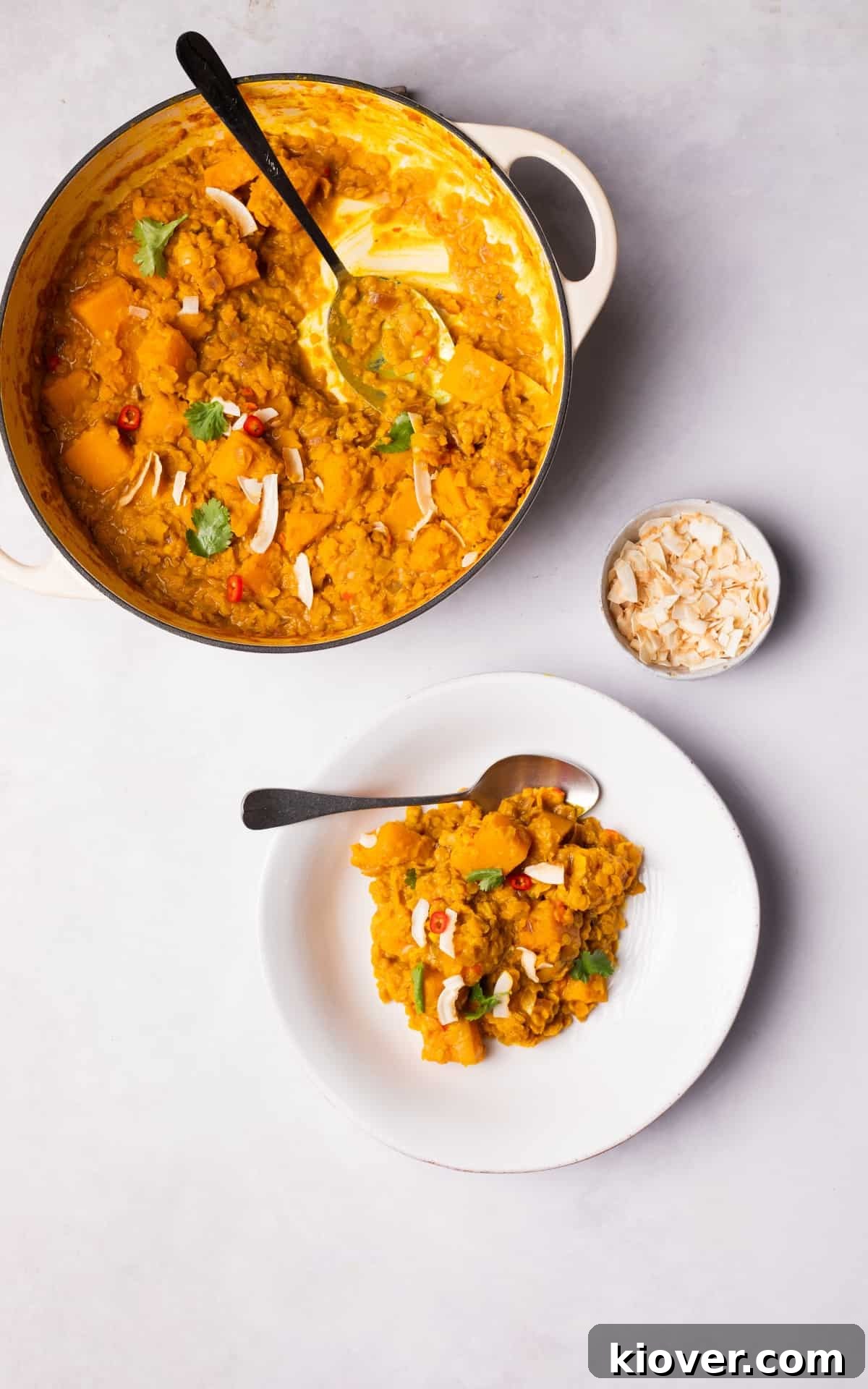
- Deluxe Dhal Experience – Transform your everyday dhal into a gourmet experience. Finish with a generous squeeze of fresh lime juice, a sprinkle of vibrant fresh coriander, a few thin slices of fresh chilli, and a scattering of toasted coconut flakes for added texture and an impressive presentation. A dollop of vegan yogurt or coconut cream swirled in at the end can also add an extra layer of richness.
- Kid-Friendly & Mild Version – To make this **family-friendly dhal** suitable for younger palates, completely omit or significantly reduce the fresh chilli, cayenne pepper, and chilli flakes. You can still use a hint of paprika and turmeric for color and mild flavor without any heat. Serving it with plain rice or naan can also help balance any subtle spice.
- Add More Vegetables – Feel free to stir in other quick-cooking vegetables during the last 10-15 minutes of simmering, such as spinach, kale, chopped bell peppers, or even frozen peas, to boost the nutritional content and add more texture.
If you’re a fan of comforting vegetable curries, you might also enjoy this Butternut Squash Tagine or my aromatic Vegetable Thai Green Curry.
Step-by-Step: How to Make Coconut Dhal in One Pot
Creating this flavorful and hearty **one-pot Coconut Dhal** is straightforward. Follow these simple steps for a perfect meal every time:
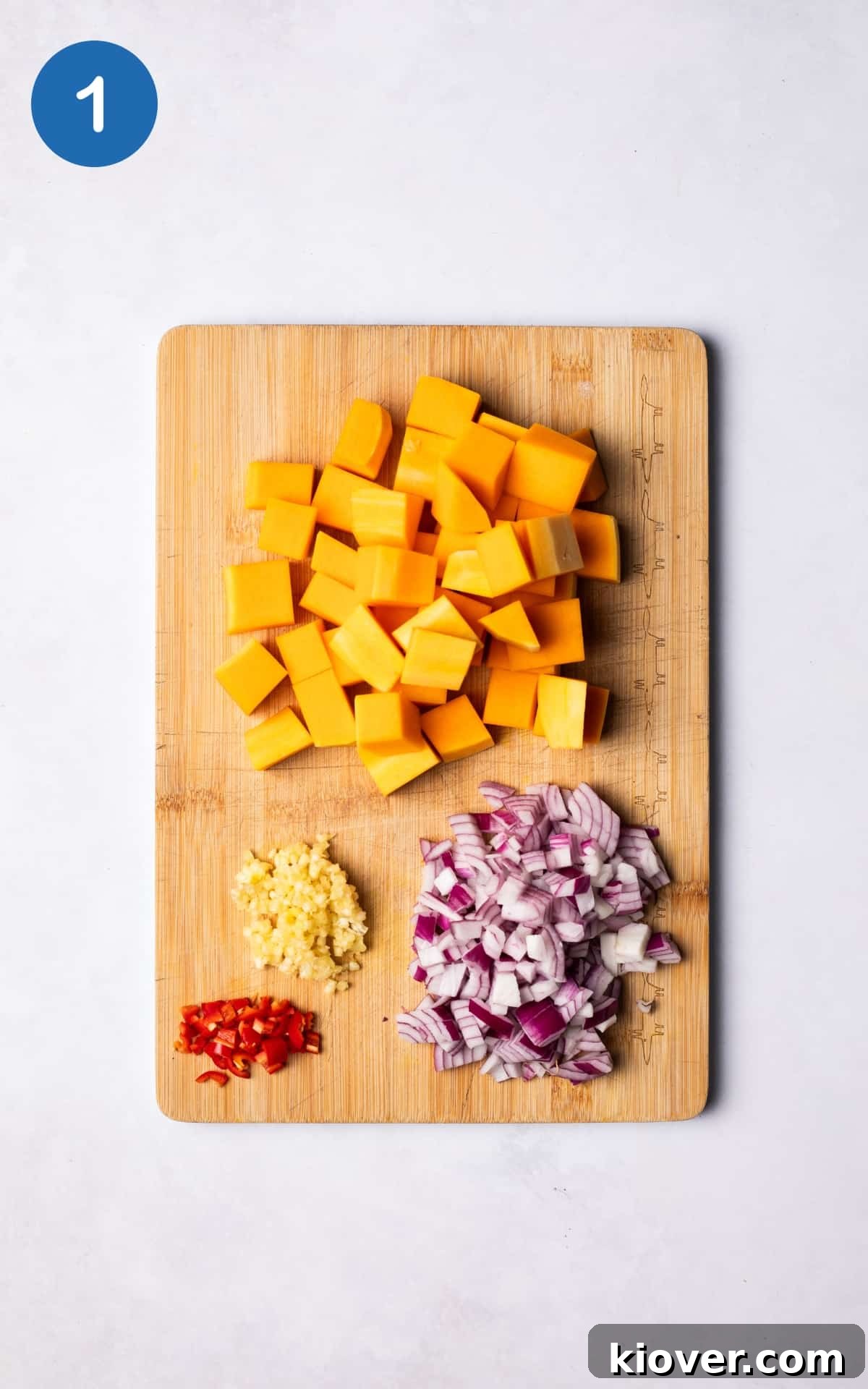
Step 1: Prepare Your Vegetables. Begin by peeling and deseed the butternut squash. Then, chop it into small, even-sized cubes. Next, dice your red onion and finely chop the fresh red chilli (remember to deseed it if you prefer less heat). Consistent chopping helps ensure even cooking.
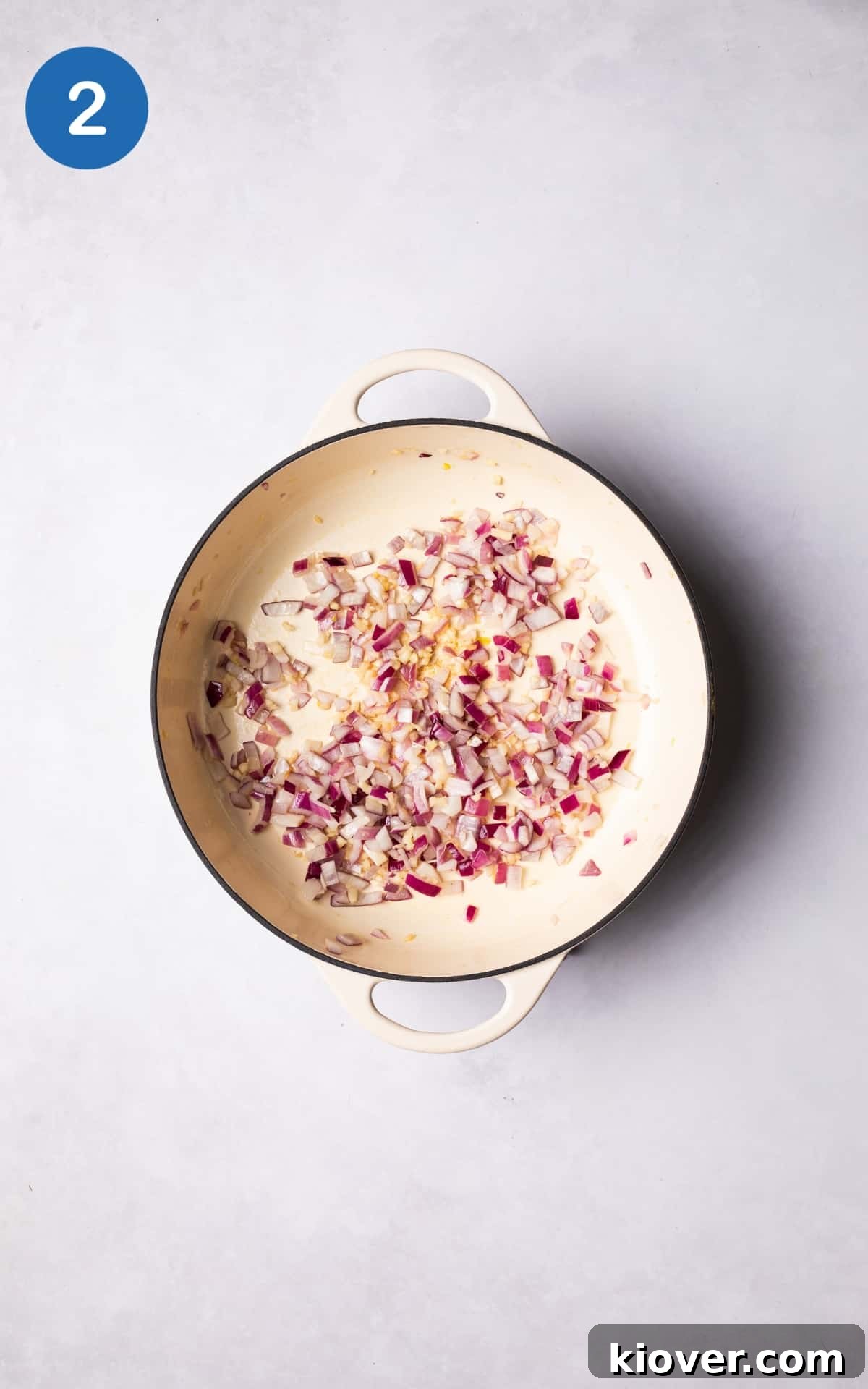
Step 2: Sauté the Aromatics. Heat a large, heavy-bottomed pot or Dutch oven over medium heat. Add your preferred cooking oil (like olive oil). Once hot, add the crushed garlic and diced red onion. Season with a generous pinch of salt and pepper. Sauté for a couple of minutes until the onion begins to soften and become translucent, releasing its sweet aroma.
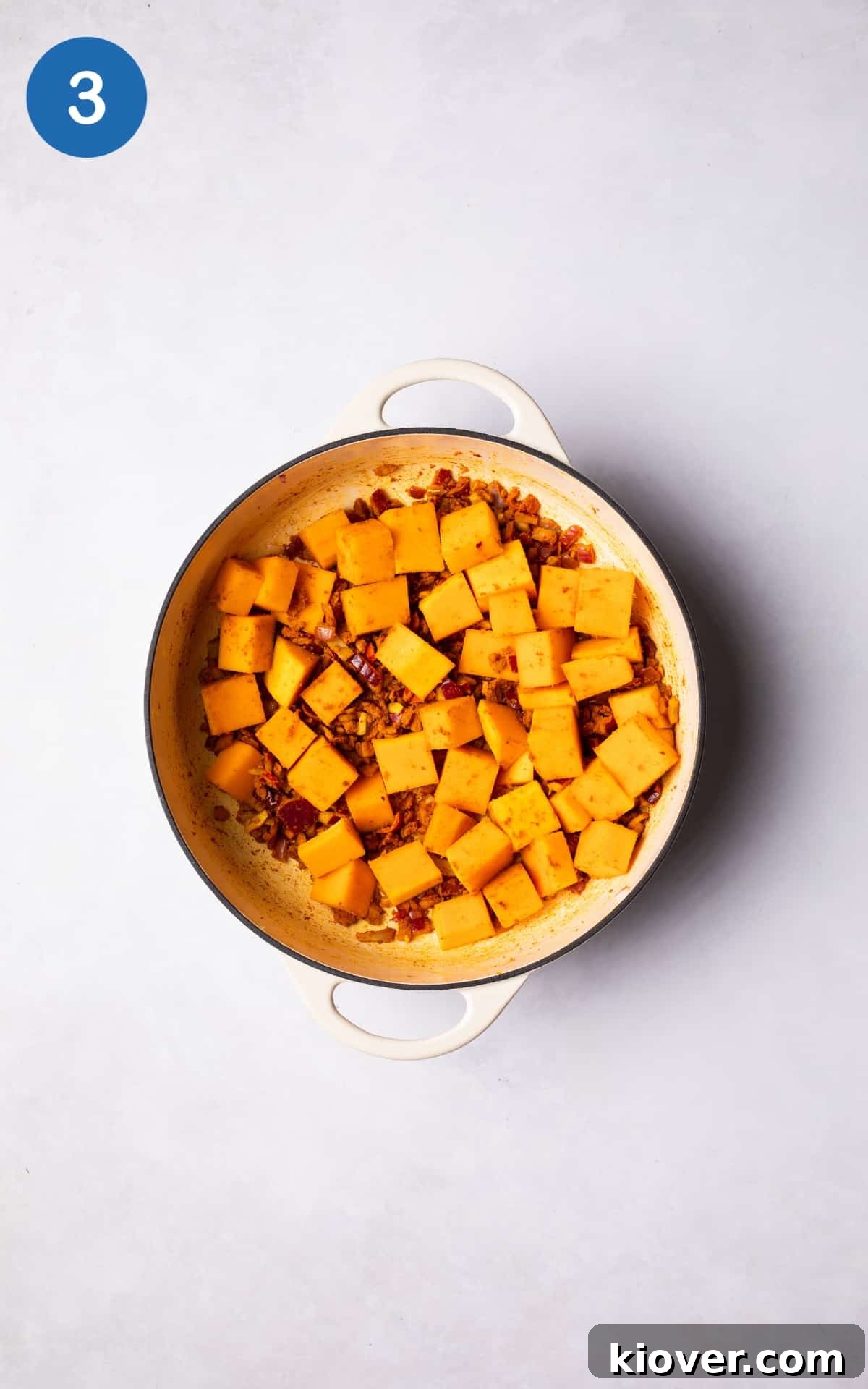
Step 3: Build the Flavor Base. To the pot, add all your spices: turmeric, cayenne pepper, paprika, chilli flakes, and ground coriander, along with the finely chopped fresh chilli and the juice from half a fresh lime. Stir well to coat the onions and garlic, allowing the spices to toast for about 30 seconds until fragrant. Then, add the chopped butternut squash and fry for another couple of minutes, stirring occasionally, to start softening the squash and infuse it with the spice blend.
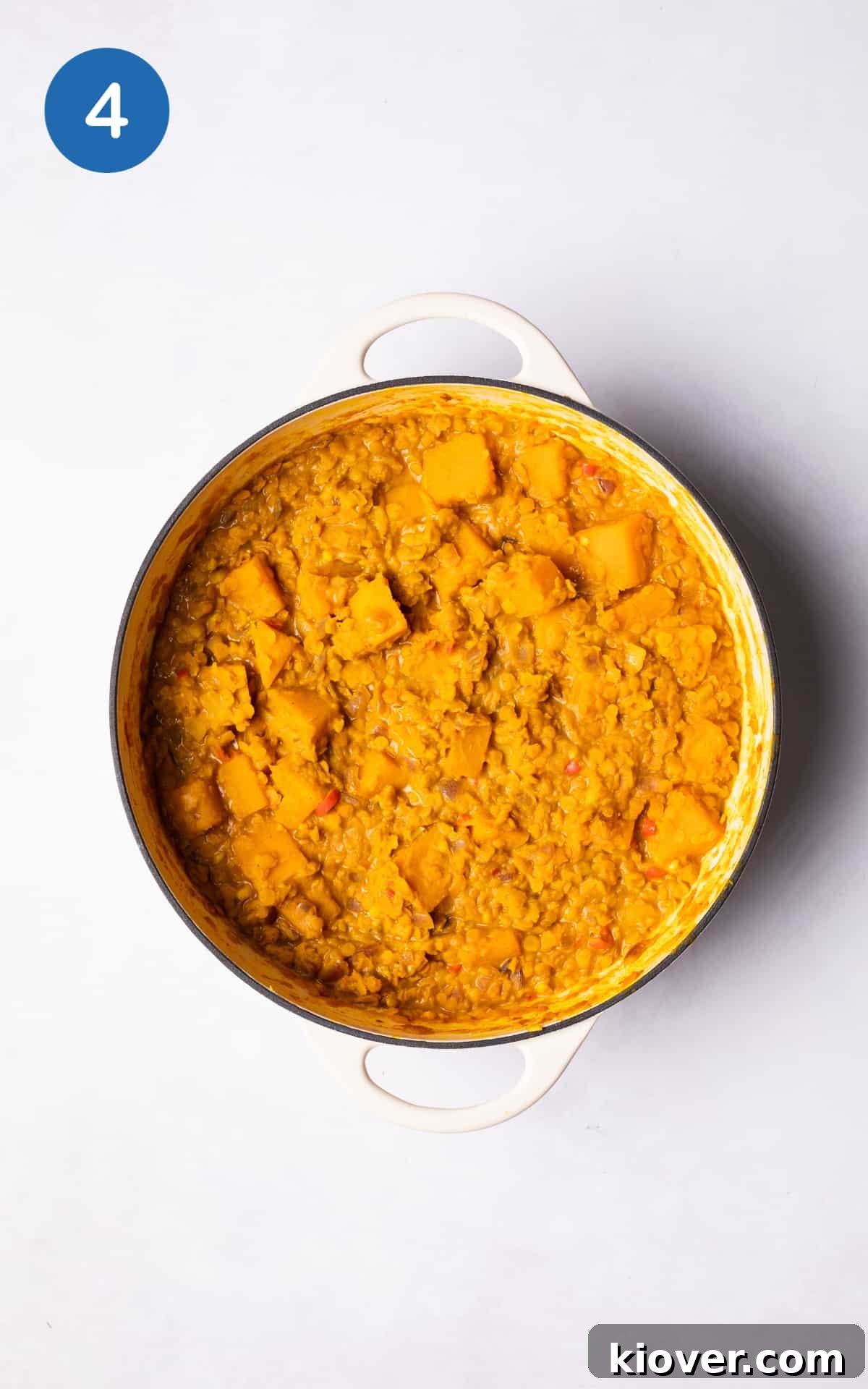
Step 4: Simmer to Perfection. Pour in the full can of coconut milk, followed by the vegetable stock and the red split lentils. Stir everything thoroughly, ensuring the lentils are fully submerged. Bring the mixture to a gentle boil, then reduce the heat to a low simmer. Cover the pot and let it cook for approximately 25 minutes, or until the lentils are tender and the butternut squash is soft. Remember to stir every 5-10 minutes to prevent sticking and ensure even cooking.
Hint: Always consider your personal heat tolerance when adding spicy ingredients. You can always add more later, but it’s hard to remove once incorporated!
Storing and Enjoying Leftovers: A Meal Prep Champion
This **one-pot Coconut Dhal** is not only delicious freshly made but also performs wonderfully as a meal prep hero. Its flavors deepen and mature overnight, making it an even more delightful experience the next day.
To Store: Once cooled, transfer any leftover dhal into an airtight container. It will keep beautifully in the refrigerator for up to 2-3 days. When reheating, gently warm it in a pot over low heat on the stovetop, stirring occasionally, until it’s piping hot. Alternatively, you can reheat individual portions in the microwave. You might find the dhal has thickened considerably in the fridge; simply add a splash of water or vegetable stock during reheating to achieve your desired consistency.
To Freeze: For longer storage, this **vegan dhal** freezes exceptionally well. Portion cooled dhal into freezer-safe containers or bags. It can be stored in the freezer for up to six months. When you’re ready to enjoy it, thaw the dhal overnight in the refrigerator. Reheat as you would with refrigerated leftovers, adding a little liquid if needed. This makes it perfect for those busy days when you need a healthy, home-cooked meal without the fuss.
Frequently Asked Questions About Dhal
At its core, dhal is a hearty lentil stew, traditionally infused with a variety of aromatic curry spices. Our **Coconut Dhal** elevates this classic by combining tender red lentils with sweet butternut squash, luxurious creamy coconut milk, and a carefully selected blend of seasonings. While dhal is renowned in Indian cuisine, the prominent use of coconut milk in this recipe gives it a distinctly Sri Lankan character, resulting in a rich, flavorful, and incredibly satisfying dish that’s both vegan and gluten-free.
This **vegan Coconut Dhal** is wonderfully versatile and pairs well with a variety of sides. My personal favorite is serving it with my Gluten Free Naan Bread, which is perfect for scooping up every last drop of the creamy sauce. Other fantastic options include fluffy basmati rice, quinoa, or brown rice for a wholesome meal. For a fresh contrast, consider a simple spinach and tomato salad, or roasted vegetables like aubergine or cauliflower. Don’t forget a sprinkle of fresh coriander and a squeeze of lime juice just before serving!
Dhal can certainly be **vegan**, but it’s not universally so. Traditional dhal recipes can sometimes include ghee (clarified butter) or other dairy products. However, this specific **Coconut Dhal recipe** is crafted to be completely **vegan**, utilizing delicious coconut milk to achieve its rich, creamy texture without any animal products. Always check the ingredients list if you’re ensuring a vegan meal.
While both dhal and curry are incredibly flavorful dishes with similar aromatic spice profiles, there are key differences. **Dhal** primarily refers to a dish made from split pulses (lentils, peas, beans) cooked into a thick, stew-like consistency. It often has a more soupy or creamy texture, with the lentils being the star ingredient. **Curry**, on the other hand, is a broader term encompassing a wide range of dishes, often featuring meat, vegetables, or seafood cooked in a spiced sauce, which can vary greatly in consistency from thin and brothy to thick and rich. While dhal can be considered a type of curry (specifically a lentil curry), not all curries are dhal. Our **Coconut Dhal** falls into the category of a rich and creamy lentil stew with curry flavors.
For this **One-Pot Coconut Dhal**, red split lentils are highly recommended. They cook relatively quickly (around 20-25 minutes) and naturally break down during simmering, contributing to the dhal’s desired creamy and smooth consistency. Other types like yellow lentils (moong dal) also work well for a creamy dhal. Green or brown lentils, while nutritious, tend to hold their shape more and require longer cooking times, which might result in a less creamy, more textured dhal.
YOU MIGHT ALSO LIKE…
Healthy Soups
Carrot and Lentil Soup
Dinner
Butternut Squash and Chickpea Curry
Lunch
Pumpkin and Butternut Soup
Dinner
Vegetable Tagine
Tried this Coconut Dhal recipe? Please leave a star rating ⭐️⭐️⭐️⭐️⭐️ below and let me know how you get on. Hearing positive feedback is one of the best parts of creating recipes so please review it below and leave a comment!
P.S Never miss a new recipe! Get more healthy recipes sent straight to your inbox weekly – Subscribe and receive a free recipe eBook!
Print Recipe
Coconut Dhal Recipe
James Wythe
5 minutes
30 minutes
35 minutes
4
people
Ingredients
- 1/2 large butternut squash (roughly 500g), peeled, deseeded, and cubed
- 1 tbsp oil (e.g., olive oil or coconut oil)
- 3 garlic cloves, crushed
- 1 medium red onion, diced
- 1 tbsp turmeric powder
- 1/2 tsp cayenne pepper
- 1/2 tsp paprika
- 1 pinch chilli flakes (adjust to taste)
- 1/2 tsp ground coriander
- 1/2 fresh red chilli (deseeded and finely chopped)
- 1/2 fresh lime, juice only
- 1 cup red split lentils, (180g), rinsed
- 1 can coconut milk (full-fat for creaminess)
- 400 ml vegetable stock
- Salt and black pepper to taste
Instructions
-
Peel, deseed, and chop the butternut squash into small, uniform cubes. Dice the red onion and finely chop the fresh red chilli (deseed for less heat).
-
Heat 1 tablespoon of oil in a large pot or Dutch oven over medium heat. Add the crushed garlic and diced red onion, along with a pinch of salt and pepper. Sauté for 2-3 minutes until the onion is softened and translucent.
-
Add all the dry spices (turmeric, cayenne pepper, paprika, chilli flakes, ground coriander) and the chopped fresh chilli to the pot. Stir well for about 30 seconds until fragrant. Pour in the juice of half a lime. Then, add the chopped butternut squash and fry for another 2-3 minutes, stirring to ensure it’s coated in the spices.
-
Add the coconut milk, vegetable stock, and rinsed red split lentils to the pot. Stir thoroughly to combine all ingredients. Bring the mixture to a boil, then reduce the heat to a low simmer. Cover and cook for approximately 25 minutes, or until the lentils are tender and the butternut squash is soft. Stir every 5-10 minutes to prevent sticking to the bottom of the pot. Taste and adjust seasoning as needed before serving.
Notes
Substitutions & Variations: Detailed lists for these can be found in the post above, offering creative ways to adapt the recipe.
To Store: Store leftover coconut dhal in an airtight container in the fridge for 2-3 days. Reheat in a pot/pan over a low heat until piping hot or in the microwave, adding a splash of water or stock to loosen if needed.
To Freeze: Store in an airtight container in the freezer for up to six months. Thaw in the fridge before reheating.
Tip 1: Be willing to experiment with the spice amounts to meet your family’s heat preferences. This recipe is really easy to adjust.
Tip 2: This is a fantastic dish for batch cooking! Double the recipe and freeze some for later.
Tip 3: If you aren’t a fan of butternut squash, try pumpkin or sweet potato for similar delicious results.
Video Guide: A video walkthrough demonstrating the preparation of this **One-Pot Coconut Dhal** is available within the full blog post to help you visualize each step.
Nutrition
Carbohydrates: 32g |
Protein: 7g |
Fat: 20g |
Saturated Fat: 14g |
Fiber: 7g |
Sugar: 8g
Did you make this recipe? Tag me Today!Tag @HealthyLivingJames on Instagram and use #HealthyLivingJames!