
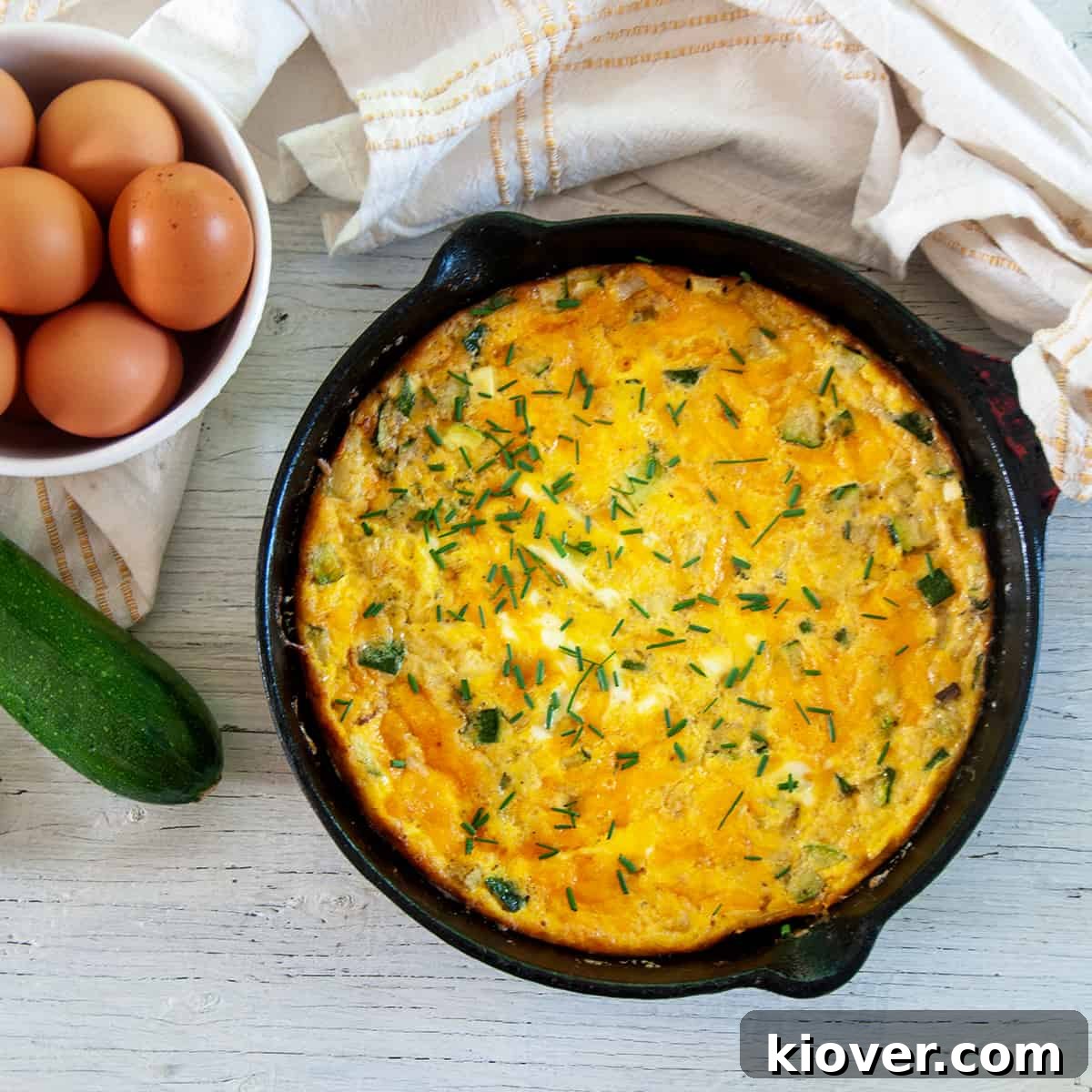
An incredibly **easy, flavorful, and cheesy breakfast** that brilliantly showcases your garden-fresh zucchini in a truly special meal. This **Zucchini Frittata is a timeless classic** that effortlessly transforms your garden bounty, CSA harvest, or farmer’s market finds into a magnificent centerpiece for your breakfast or brunch table. Beyond morning meals, it’s also **outstanding as a ‘breakfast for dinner’ option**, offering a comforting and wholesome solution for any time of day. Prepare to delight in this **delicious and convenient one-pan recipe** that promises both simplicity and gourmet taste.
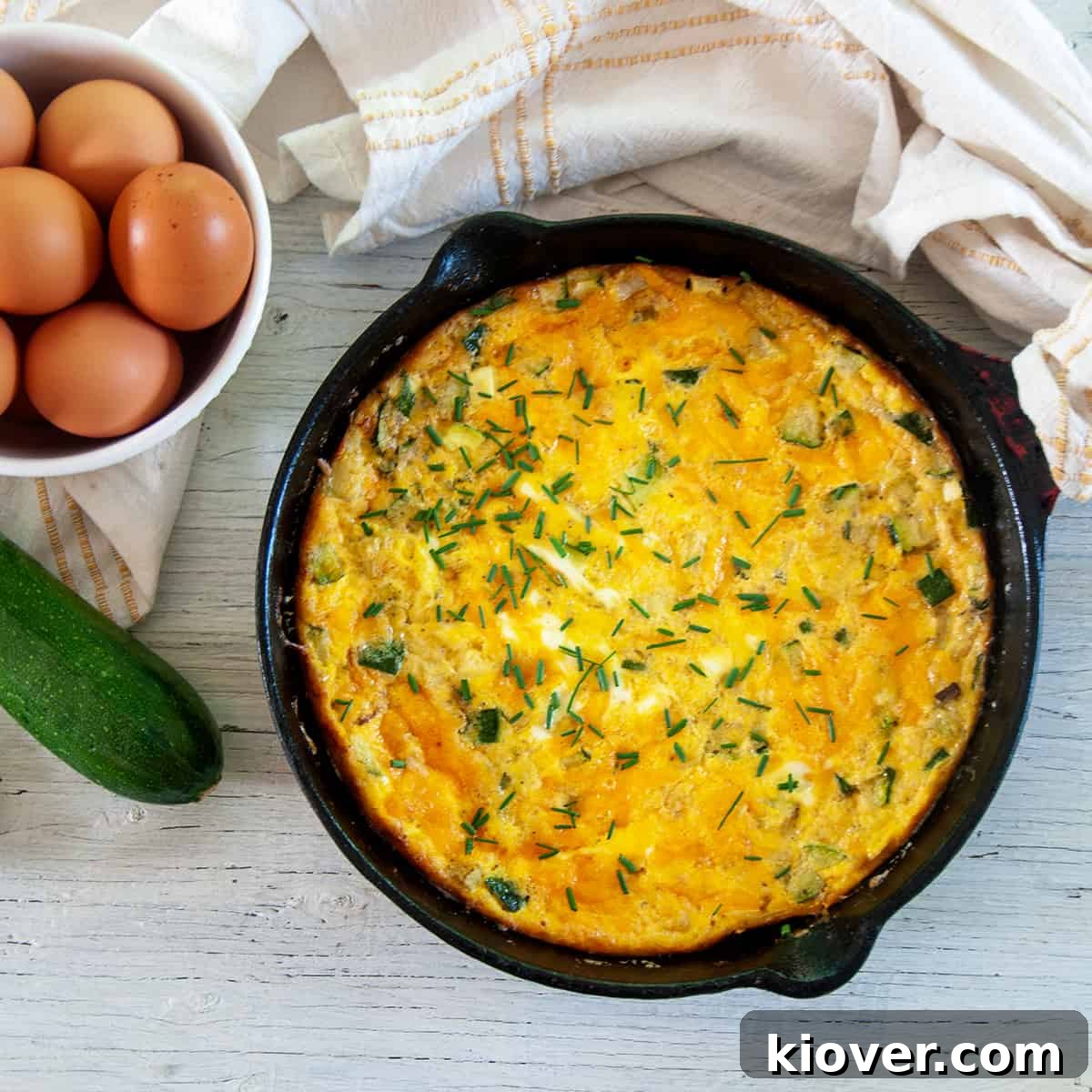
🍳 What Makes This Zucchini Frittata Recipe Truly Special?
This Zucchini Frittata stands out as a remarkable dish, primarily due to the exceptional harmony of its carefully chosen ingredients. At its heart is the fresh zucchini, a versatile and often abundant summer squash. Beyond adding a beautiful splash of vibrant green, zucchini contributes a subtle, earthy sweetness and a tender texture that perfectly complements the richness of the eggs. It’s a fantastic way to enjoy this nutritious vegetable, offering both visual appeal and a refreshing taste.
The foundation of any great frittata lies in its egg base. Here, the combination of farm-fresh eggs and whole milk creates an incredibly rich, creamy, and satisfying texture that sets this frittata apart. The milk ensures a moist, custardy interior, preventing the frittata from becoming dry or rubbery, a common pitfall in less refined recipes. Every forkful offers a luxurious mouthfeel that melts delightfully.
What truly elevates this frittata from good to extraordinary is the inclusion of sharp cheddar cheese. While some frittatas opt for a simpler, cheese-free approach, cheddar brings an irresistible depth of flavor and a delightful tanginess. It’s not just about adding cheese; it’s about the way the robust cheddar envelops the mild zucchini and creamy eggs, creating layers of flavor and a comforting, savory contrast that is simply irresistible. As it bakes, the cheese forms a golden crust, adding another textural dimension to the dish.
Finally, the aromatic whisper of thyme weaves through the entire dish. Whether you choose fresh sprigs from your garden or dried leaves from your pantry, thyme infuses the frittata with a warm, herbaceous, and slightly peppery note. It’s a classic pairing with eggs and vegetables, providing that perfect finishing touch that ties all the flavors together. As a confessed fan of thyme, I believe its earthy aroma enhances the freshness of the zucchini and balances the richness of the cheese, making each bite a truly memorable experience. This frittata isn’t just a meal; it’s an experience – a delicious reminder to savor something wonderfully different.
If you’re looking for other ways to utilize your zucchini harvest, consider this delicious Zucchini Casserole Recipe, a comforting and hearty option. Or, for those mornings when you crave an even more robust and savory start, my Corned Beef Hash recipe offers a satisfyingly rich alternative. No matter your choice, remember to treat yourself to a truly special breakfast or brunch experience!
Table of Contents
- 🍳 What Makes This Zucchini Frittata Recipe Truly Special?
- 🥒 Essential Ingredients for Your Zucchini Frittata
- 🍲 Step-by-Step Instructions for a Perfect Frittata
- 🤷 Substitutions and Variations: Unleash Your Culinary Creativity
- 📦 Storing Your Delicious Zucchini Frittata
- 🎓 A Brief History of the Frittata
- ❓ Frequently Asked Questions about Zucchini Frittata
- 📝 Pro Tips and Tricks for Frittata Perfection
- 🛠 Recommended Kitchen Tools for This Recipe
- 😋 Share Your Zucchini Frittata Experience!
🥒 Essential Ingredients for Your Zucchini Frittata
Crafting the perfect Zucchini Frittata begins with selecting quality ingredients. While the recipe is forgiving and adaptable, focusing on fresh components will yield the best results.
Fresh Zucchini: The Star of the Show
Undoubtedly, zucchini takes center stage in this recipe. We are incredibly fortunate to harvest a plentiful supply from our home garden and receive additional bounty from our local CSA. If you have access to garden-fresh zucchini, I highly recommend using it; its crisp texture and subtle sweetness truly shine. However, my culinary philosophy is “use what you’ve got!” so don’t hesitate to use zucchini from your local grocery store. Look for firm, unblemished zucchini of a medium size, which tend to have fewer seeds and more flavor than very large ones.
Cheddar Cheese: For Irresistible Creaminess and Tang
While shredded cheddar cheese from a bag offers convenience, I personally prefer to shred my own. Pre-shredded cheeses often contain anti-caking agents that can slightly alter their melting properties and, to some palates, diminish the fresh flavor. There’s certainly nothing inherently “bad” about store-bought shredded cheddar, and I’ve used it myself on occasion. However, for a truly superior texture and taste, a block of cheddar cheese, freshly shredded, makes a noticeable difference, contributing a richer, creamier melt and a more vibrant flavor profile. You can choose a mild, medium, or sharp cheddar based on your preference for tanginess. A sharp cheddar will add a more pronounced cheesy punch, while a mild one will offer a gentler, buttery note.
For a complete list of quantities for all other ingredients, please refer to the recipe card below.
🍲 Step-by-Step Instructions for a Perfect Frittata
This Zucchini Frittata recipe is renowned for its straightforward approach, proving that gourmet flavors don’t require complicated techniques. Follow these steps for a perfect, hassle-free meal.
- Prepare Your Pan and Oven: First, select an oven-safe pan, ideally a 10 ¼-inch cast iron skillet, which provides excellent heat distribution and a seamless transition from stovetop to oven. Any sturdy, oven-safe pan of a similar size will work. Add your olive oil to the pan and begin heating it over medium-high heat on the stovetop. Simultaneously, ensure your oven rack is positioned one level up from the center. The goal is to avoid direct exposure to the top heating element but allow for even browning. For instance, in an oven with five shelves, the second from the top is ideal. Preheat your oven to a precise 350° Fahrenheit. This temperature is crucial, as it allows the frittata to develop a beautifully golden, slightly crisp top while maintaining a soft, incredibly creamy center – the hallmarks of a perfectly cooked frittata.
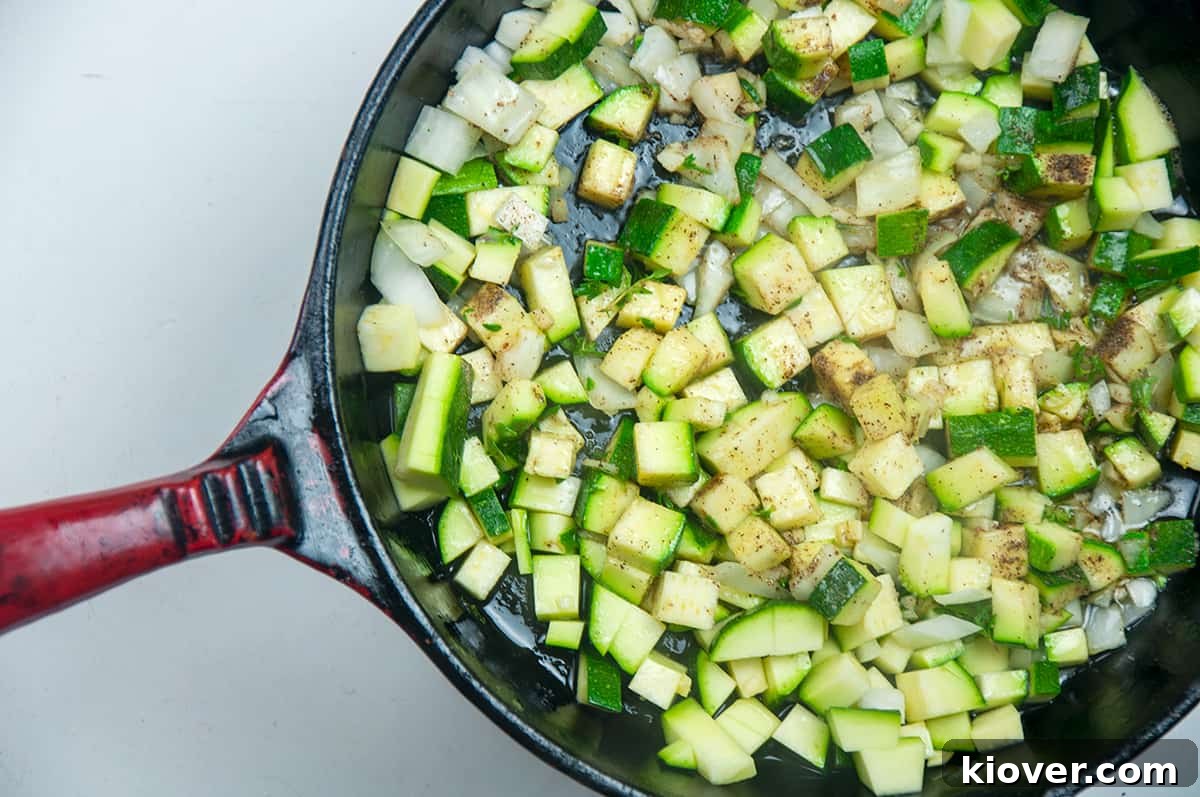
- Sauté the Aromatics and Zucchini: Once your pan is hot and the oil shimmers, add the chopped zucchini, onions, and minced garlic. Sauté these vegetables, stirring occasionally, until the onions become translucent and the zucchini softens and turns “glassy,” which means it has become tender and slightly translucent. This step is vital as it not only cooks the vegetables but also helps to release some of their moisture, preventing a watery frittata.
- Season the Vegetables: After the vegetables have softened, sprinkle in the salt, pepper, and thyme. Stir well to ensure the herbs and seasonings are evenly distributed, infusing the vegetables with their aromatic flavors.
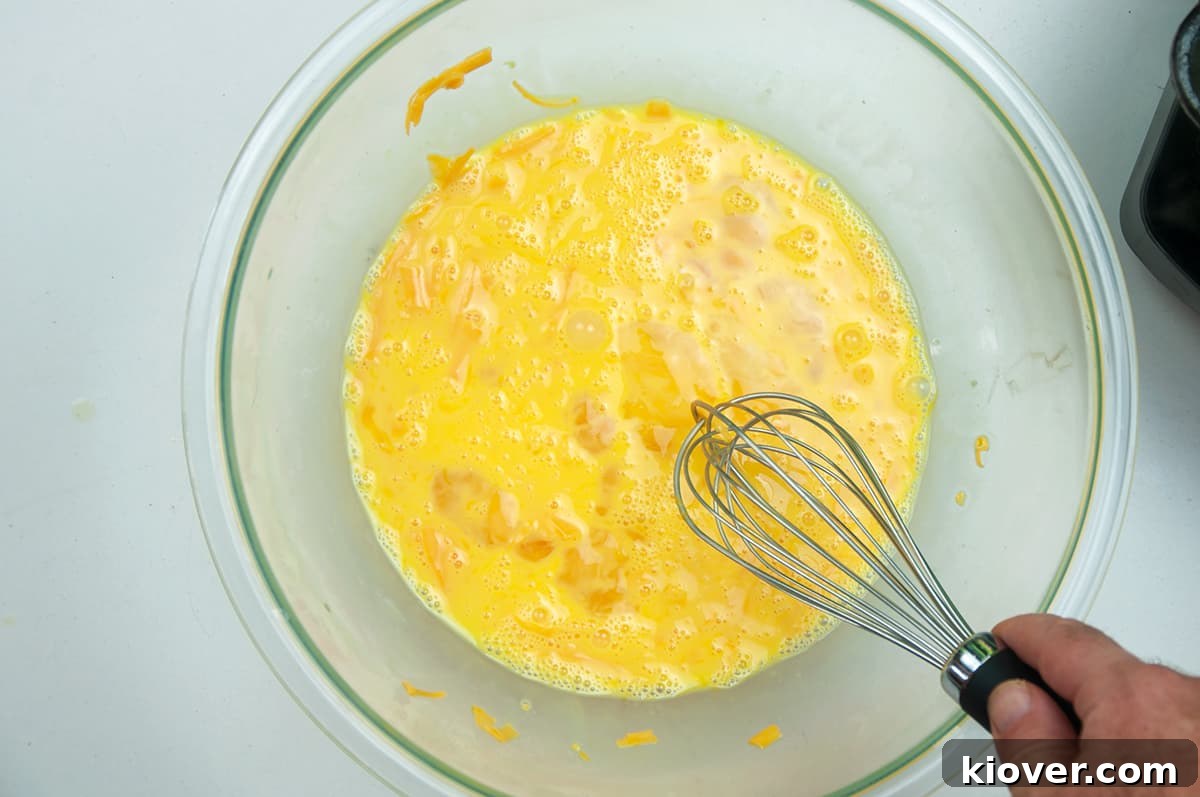
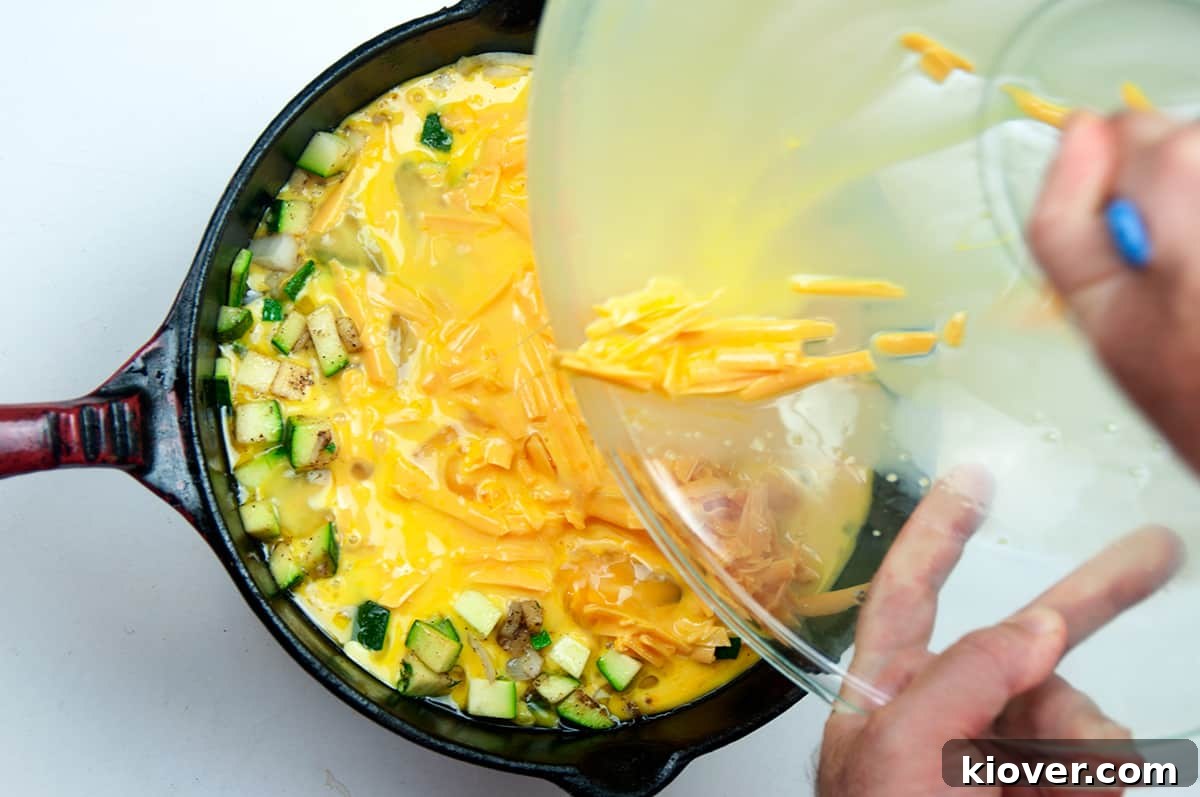
- Prepare the Egg Mixture: While the vegetables are cooking, take a separate large bowl. Whisk together the eggs and whole milk. You don’t need to vigorously beat the eggs; a gentle whisking until the yolks and whites are just combined is sufficient. Over-whisking can introduce too much air, leading to a less dense, almost soufflé-like texture, which is not what we’re aiming for here. Then, stir in the shredded cheddar cheese, ensuring it’s well-incorporated into the egg mixture.
- Combine and Start on the Stovetop: Once the zucchini is perfectly glassy, pour the egg and cheese mixture directly into the hot pan with the vegetables. Reduce the stovetop heat to medium-low.
- Initiate Cooking on the Stovetop: Allow the frittata to cook undisturbed on the stovetop for about five minutes, or until the edges of the egg mixture begin to set and pull away slightly from the sides of the pan. During this initial cooking phase, gently use a spatula to stir the center of the frittata a few times. This prevents the eggs directly over the burner from burning or sticking, ensuring even cooking across the base. The eggs will gradually start to firm up around the edges, but the center will remain quite liquid. This delicate balance indicates it’s almost ready for the oven. You’ll know it’s ready for the oven when a metal spatula can easily slide around the perimeter, and the eggs feel more solid at the edges but still very soft in the middle.
- Bake to Perfection: Carefully remove the pan from the stovetop and transfer it to your preheated oven. Bake for approximately 25 minutes. The frittata will puff slightly, and the top will turn a beautiful golden brown. To confirm doneness, you can insert a thin knife or toothpick into the center; if it comes out mostly clean with no raw egg, it’s ready.
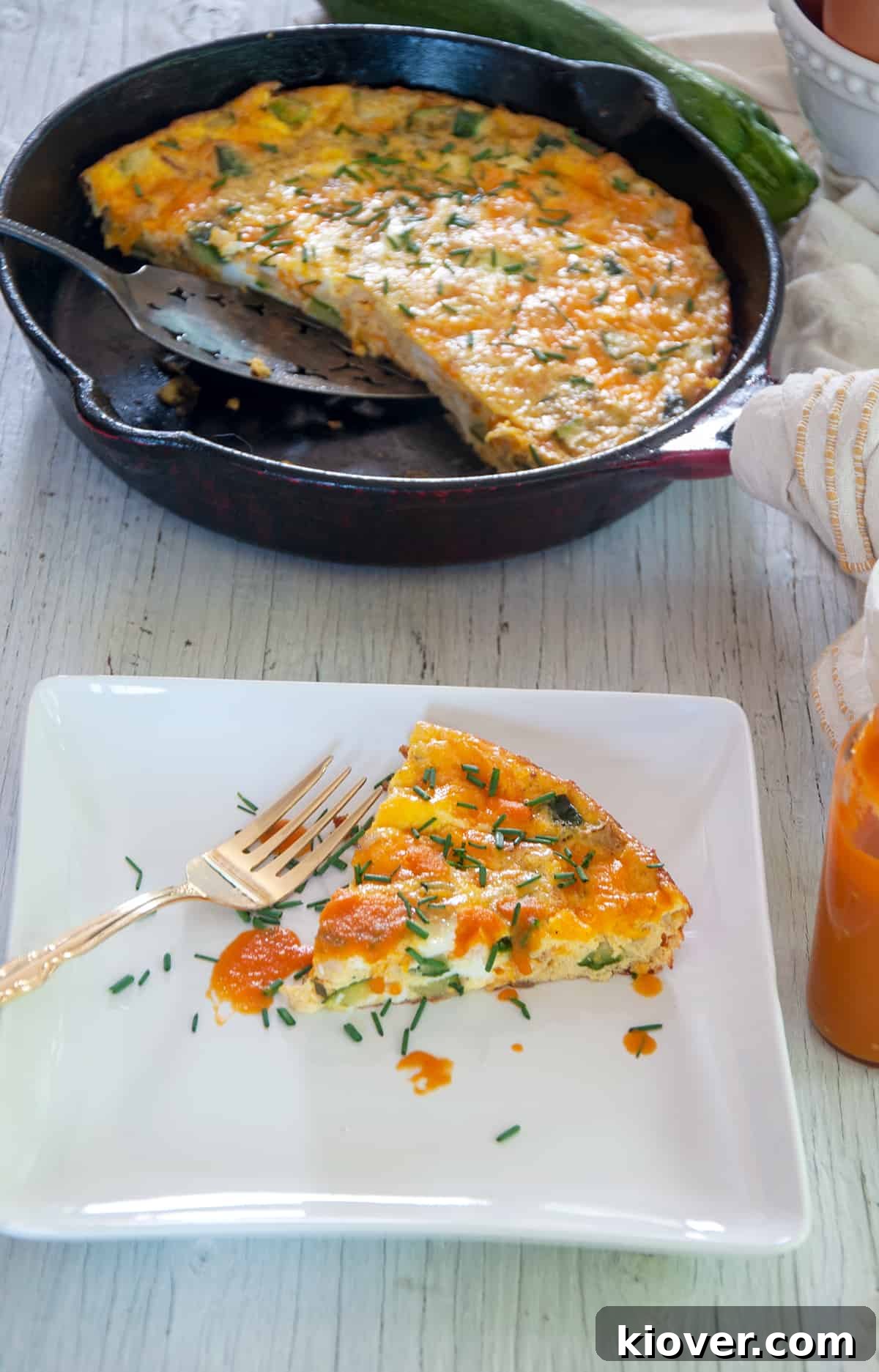
- Rest and Serve: Once baked, carefully remove the hot pan from the oven. Let the frittata rest in the pan for five minutes. This crucial resting period allows the eggs to fully set and the internal heat to distribute, resulting in a more stable and perfectly textured frittata. After resting, slice, and serve your magnificent Zucchini Frittata warm.
🤷 Substitutions and Variations: Unleash Your Culinary Creativity
One of the most appealing aspects of a frittata is its incredible versatility. It’s a truly forgiving dish, making it perfect for utilizing whatever fresh ingredients you have on hand or need to use up in your refrigerator. Think of this Zucchini Frittata recipe as a foundational guide, inviting you to experiment and personalize it to your taste and available produce.
While I’ve chosen to highlight zucchini due to its seasonal abundance in our garden and its delightful texture in this dish (it’s fantastic grilled or baked into zucchini bread, too!), the possibilities for adaptation are virtually endless.
Vegetable Substitutes or Additions
The beauty of a frittata lies in its adaptability to nearly any sauté-friendly vegetable. Feel free to swap out or add to the zucchini base. Consider incorporating tender spinach or kale (wilt them down first), earthy mushrooms, colorful bell peppers (red, yellow, or orange add sweetness), chopped asparagus spears, or even diced sweet potatoes (pre-cook these slightly to ensure tenderness). For an extra layer of flavor and texture, you could add more onions, perhaps a mix of red and yellow, or finely chopped leeks. The key is to pre-sauté any harder vegetables until they are tender and have released some of their moisture, ensuring they cook through evenly with the eggs. Don’t be shy about adding some cooked protein either – diced ham, crumbled sausage, or shredded chicken can turn this into a heartier, meat-eater’s delight, perfect for a fulfilling dinner.
Cheese Substitutes
While trusty cheddar cheese brings a delightful tang and creaminess, the world of cheese offers a myriad of exciting alternatives. Any cheese that shreds well and melts beautifully will work wonders in a frittata. Explore options like spicy Pepper Jack for a subtle kick, creamy Monterey Jack, nutty Swiss or Gruyere, sharp Parmesan, or even a salty crumbled feta. Each cheese will impart its unique character to the dish. A blend of cheeses, such as cheddar and a touch of Parmesan, can also create a more complex flavor profile. Don’t be afraid to experiment with your favorites!
Herb Substitutes
Thyme, with its warm, earthy, and slightly peppery notes, is a personal favorite for this frittata. However, you can easily customize the herb profile to suit your palate. Robust herbs like fresh rosemary offer a piney, fragrant aroma that pairs wonderfully with eggs and vegetables, though use it sparingly as it’s quite potent. Oregano provides a classic Mediterranean flair, while fresh sage offers a slightly peppery, savory depth, particularly complementary if you add a meat like sausage. Consider a blend of finely chopped chives and parsley for a lighter, fresher taste. Use what you love, and feel free to mix and match!
Oil Substitutes
Olive oil is a fantastic base for sautéing the vegetables, lending a subtle fruity note. However, if you’re looking for alternatives, consider coconut oil, which can add a delicate sweetness and a hint of tropical fruitiness, creating an interesting twist on the flavor profile. Avocado oil is another excellent choice, known for its high smoke point and neutral flavor, making it a healthy and versatile option. Grapeseed oil or even a good quality butter can also be used, depending on your preferred taste and dietary needs. The most important thing is to use an oil appropriate for medium-high heat cooking.
Condiments That Work
A frittata is a blank canvas for condiments, allowing you to tailor each serving to individual preferences. For me, hot sauce is an absolute must with most egg dishes, adding a vibrant kick. Beyond that, the possibilities are vast! Consider a dollop of fresh salsa for a zesty, refreshing topping, or creamy avocado slices for a rich, satisfying contrast. A spoonful of sour cream or Greek yogurt can add a cool, tangy element. Ketchup, with its classic tomato sweetness, is always a crowd-pleaser, especially for those who prefer traditional pairings. A sprinkle of extra shredded cheese or freshly chopped herbs like parsley or cilantro can also brighten and finish the dish beautifully. Given its similarity to an omelet, almost anything that enhances an omelet will work perfectly with this versatile frittata.
📦 Storing Your Delicious Zucchini Frittata
One of the many advantages of a Zucchini Frittata is how well it stores, making it perfect for meal prep or enjoying leftovers throughout the week. Properly storing your frittata ensures it remains fresh, delicious, and ready for a quick reheat.
Refrigeration: Once your frittata has cooled completely to room temperature, you can easily transfer it to an airtight container. This is crucial to prevent it from absorbing other odors in your fridge and to maintain its moisture. Stored in the refrigerator, the frittata will stay fresh and flavorful for up to 4 days. It makes for an excellent grab-and-go breakfast or a quick lunch option.
Freezing for Longer Storage: If you’re looking to extend its shelf life, the freezer is your best friend. To freeze, you have a couple of options: you can freeze the entire frittata or cut it into individual slices. For either method, first ensure the frittata is completely cooled. Then, wrap it tightly in plastic wrap, followed by a layer of aluminum foil. This double-layer protection helps prevent freezer burn. Finally, place the well-wrapped frittata (or slices) into a freezer-safe bag or container. It will maintain its quality in the freezer for up to 2 months. Labeling with the date is always a good practice!
Reheating Instructions: When you’re ready to enjoy your stored frittata, simply thaw it in the refrigerator overnight if it was frozen. For reheating, you have a few choices. A microwave is the quickest option for individual slices; heat on a medium setting until warmed through. For a crisper exterior and more even heating, especially for larger portions, reheat it in an oven or toaster oven at 300-325°F (150-160°C) until heated throughout, usually about 10-15 minutes for slices. Enjoy your homemade frittata anytime, whether it’s fresh from the oven or perfectly reheated!
🎓 A Brief History of the Frittata
The term “frittata” is distinctly Italian, derived from the Italian word “fritto,” meaning “fried.” This linguistic origin points to its preparation method, typically started on the stovetop and often finished in the oven. However, attributing the dish’s sole origin to Italy is a nuanced discussion. The concept of cooking eggs with other ingredients in a pan is incredibly ancient and likely predates any national culinary identity. Given the simplicity and practicality of a frittata – essentially a large, open-faced omelet or crustless quiche – it’s easy to imagine similar egg dishes emerging shortly after the invention of the cooking pan itself, across various cultures.
Indeed, my research into the history of this versatile dish reveals a long and rich culinary lineage. Early references to egg-based recipes cooked in a pan can be traced back centuries. A notable example comes from the renowned Italian chef Bartolomeo Scappi, who served as a cook for several popes. In 1570, Scappi published an influential cookbook, Opera dell’arte del cucinare (The Art of Cooking), which contained several recipes recognizable as frittatas. These early versions demonstrate the enduring appeal and adaptability of combining eggs with available ingredients to create a satisfying meal. While the modern frittata, as we know it, has evolved, its core principles remain a testament to the timeless appeal of simple, wholesome cooking.
❓ Frequently Asked Questions about Zucchini Frittata
A frittata is a classic Italian egg dish, often likened to a large, thick omelet or a crustless quiche. It’s made by combining beaten eggs with various ingredients like vegetables, meats, or cheeses. The mixture is typically started on the stovetop to set the bottom and then finished in the oven to cook through and achieve a beautiful golden top. It’s known for its versatility and ease of preparation.
Absolutely! Frittatas are incredibly adaptable to almost any vegetable you have on hand. Feel free to substitute or add bell peppers, mushrooms, spinach, kale, broccoli florets, asparagus, or even diced potatoes. The key is to pre-cook or sauté any denser vegetables like potatoes or carrots beforehand to ensure they become tender within the frittata’s cooking time.
While a cast iron pan is highly recommended for its excellent heat retention and seamless transition from stovetop to oven, it’s not strictly necessary. Any oven-safe skillet will work equally well. Just be sure that your chosen pan’s handle and any other components are designed to withstand high oven temperatures.
A watery frittata usually occurs when vegetables with high moisture content, like zucchini, release too much liquid into the egg mixture during cooking. To prevent this, it’s crucial to properly sauté your vegetables on the stovetop before adding the eggs. Cook them until they are tender and have lost a good amount of their moisture, becoming slightly “glassy.” This step helps ensure a firm and flavorful frittata.
Definitely! While cheddar cheese offers a fantastic flavor, frittatas welcome a wide array of cheeses. Consider using feta for a salty tang, mozzarella for a milder, stretchier texture, Parmesan for a sharp, nutty kick, or even a blend of your favorites. Each cheese variety will bring its own unique taste and character to your frittata, encouraging endless delicious combinations.
📝 Pro Tips and Tricks for Frittata Perfection
- Embrace Customization: As highlighted throughout this article, the frittata is wonderfully adaptable. Don’t hesitate to explore the many opportunities for substitutions and additions using vegetables, cheeses, herbs, and even meats you have on hand. It’s a fantastic way to clean out your fridge!
- Master the Stovetop-to-Oven Transition: A key indicator for knowing when your frittata is ready to move from the stovetop to the oven is by gently sliding a spatula around the edges of the pan. When the egg mixture easily separates from the pan’s sides and appears mostly set but still wobbly in the center, it’s the perfect time to transfer it for baking. This ensures a beautifully set base without overcooking the bottom.
- Test for Doneness with Confidence: To verify that your frittata is perfectly cooked through, insert a thin knife or a clean toothpick into the center of the dish. If it comes out mostly clean, with no runny liquid egg, your frittata has reached optimal doneness. A slight moistness is fine, indicating a creamy interior, but avoid any raw egg.
- Allow for Essential Resting Time: Once your frittata is out of the oven, resist the urge to slice into it immediately. Allowing it to rest in the pan for at least 5 minutes is crucial. This resting period allows the eggs to fully set and the internal heat to redistribute, resulting in a more stable frittata that holds its shape better and boasts a superior, creamier texture when served.
🛠 Recommended Kitchen Tools for This Recipe
- 10 ¼ inch cast iron skillet: Essential for stovetop-to-oven cooking and even heat distribution.
- Spatula: Indispensable for sautéing vegetables and checking the frittata’s edges.
- Pie server: Ideal for cleanly slicing and serving perfect portions of frittata.
😋 Share Your Zucchini Frittata Experience!
We are absolutely thrilled that you decided to give this Fresh Zucchini Frittata recipe a try! Your cooking adventures mean a lot to us. If you enjoyed preparing and tasting this delicious dish, please consider leaving a rating in the comment section below. Your feedback is incredibly valuable, helping us understand how we’re doing and guiding other home cooks in their recipe choices. Thank you for visiting Ramshackle Pantry – we hope to see you back for more culinary inspiration soon!

Zucchini Frittata Recipe
5 Stars
5 from 4 reviews
- Author: Ben
- Prep Time: 15 minutes
- Cook Time: 30 minutes
- Total Time: 45 minutes
- Yield: 6 Servings
- Category: Breakfast
- Method: Baking
- Cuisine: Italian
Description
A Zucchini Frittata is an excellent choice for breakfast, brunch, or dinner, and this recipe makes it incredibly easy to prepare. In just about 45 minutes, you can have this flavorful Italian-inspired dish ready to enjoy on your plate, offering both convenience and delicious taste.
Ingredients
- 3 tablespoons olive oil
- 2 cups chopped zucchini (about 1 medium to medium large zucchini or about 9 ounces)
- 1/2 cup chopped onions (2 ounces)
- 2 garlic cloves minced
- 1/2 teaspoon salt
- 1/2 teaspoon pepper
- 1 teaspoon thyme dried or 1 tablespoon fresh
- 1/2 cup whole milk
- 8 eggs
- 4 ounces cheddar cheese, shredded
Instructions
- Preheat oven: Preheat to 350° Fahrenheit.
- Add olive oil: Add oil to cast iron pan and heat to medium to medium high.
- Add zucchini, onion, and garlic: Mix and cook zucchini, onion, and garlic.
- Add salt, pepper, and thyme.
- Cook zucchini: Cook until zucchini is glassy.
- Whisk milk and eggs: While zucchini is cooking, mix together milk and eggs. Use a hand whisk, but don’t over whisk; just enough so that all ingredients are incorporated.
- Add cheese: Mix in cheese to the milk and egg mixture.
- Once zucchini is glassy, add egg mixture to pan.
- Cook on stovetop: Cook until edges start to separate from the skillet. Stir the middle a bit to help ensure it doesn’t burn. When ready for the oven, eggs will appear partially set around the edges but still mostly uncooked in the center.
- Bake: Transfer to oven and cook at 350° Fahrenheit for 25 minutes on the middle-upper oven rack.
- Remove from oven: Remove and allow to cool for five minutes before serving.
Notes
- Explore the rest of this post for numerous opportunities to customize this recipe with various substitutions.
- To determine the ideal moment to transfer to the oven, use a spatula to check when the cooked egg edges easily separate from the pan.
- You can test for doneness by inserting a toothpick into the center. If it comes out mostly clean with no runny egg, it should be done.
- Allowing the frittata to rest for 5 minutes after baking is important for it to finish setting and for optimal texture.