
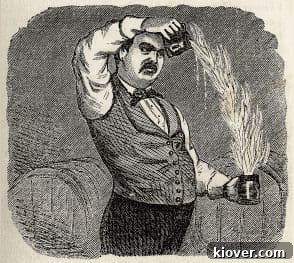
The Old Fashioned stands as an undeniable cornerstone in the vast and vibrant universe of cocktails. For any bartender worth their salt, mastering this iconic drink is as fundamental as understanding the rhythm of a bustling bar. Often grouped alongside venerable classics like the Manhattan and the Martini, it forms what many connoisseurs fondly refer to as “the inaugural cocktail trinity.” Yet, what sets the Old Fashioned apart from its distinguished peers is its profound adaptability, a quality that allows for an astonishing array of variations. A single visit to a bar might present a drinker with a dizzying spectrum of choices: some prefer a bright zest of orange, others a sweet cherry, or perhaps a veritable fruit salad in their glass. The choice of dilution, too, varies wildly – a splash of water, a touch of soda, or even none at all. These diverse preferences are not random quirks but are deeply rooted in a rich and fascinating history that reflects the very evolution of cocktail culture itself. Today, we embark on a journey to explore the captivating Old Fashioned cocktail history, aiming to uncover the true spirit and timeless essence of this quintessential drink.
The Old Fashioned: The Genesis of Cocktail Culture
Imagine, for a moment, that the Old Fashioned is not merely an old cocktail, but *the* original cocktail. This bold assertion, surprisingly, holds a significant degree of truth. The concept of the “cocktail” as a distinct beverage category truly ignited in the early 19th century. The earliest recorded description, a landmark moment in mixology, appeared in an 1806 periodic in Hudson, New York. This pivotal definition laid the groundwork for all future mixed drinks, describing a cocktail as:
“[A] Cocktail is a stimulating liquor, composed of spirits of any kind, sugar, water, and bitters.”
This simple yet profound definition reveals a starkly different landscape from today’s expansive cocktail menus. At that nascent stage of cocktail history, the vibrant creations we now take for granted—the tropical Mai Tais, the lively Alabama Slammers, or even the sophisticated Manhattans—simply did not exist. Instead, you would find variations like a ‘gin cocktail,’ a ‘whiskey cocktail,’ or a ‘rum cocktail,’ each adhering to this fundamental four-ingredient template, distinguished only by the base spirit. If you had bellied up to a bar in 1806 and requested a Margarita, you would likely have been met with a bewildered stare.
While minor differences in component ratios or sugar types (some used gum or gomme syrup, a precursor to today’s simple syrup, instead of granulated sugar) might have existed, the 1806 description remains remarkably precise and enduring. It encapsulates the very DNA of what would become the Old Fashioned, a testament to its foundational role. This period marked the birth of a global phenomenon, setting in motion the creative evolution that would define cocktail culture for centuries to come.
The Dynamic Evolution of the Classic Cocktail
As the 19th century progressed, the simple elegance of the original cocktail began to evolve. Human nature, ever eager to innovate and experiment, spurred bartenders and patrons alike to subtly transform this nascent drink. This era saw the rise of legendary figures like Dr. Jerry Thomas – though not a medical doctor, he was certainly a doctor of drinks. Thomas cemented his legacy by including a “Whiskey Cocktail” in the first published drink recipe book, How to Mix Drinks or The Bon-Vivant’s Companion, published in the early 1860s. His recipe offers a fascinating glimpse into the whiskey cocktail’s form during this transitional period, still maintaining the core elements of spirit, sugar, water, and bitters.
However, within the very pages of Thomas’s influential tome, a fascinating trend emerges. Alongside the traditional whiskey cocktail, several other recipes feature the introduction of additional ingredients, with liqueurs like curaçao gaining particular popularity. This signaled a shift; drinkers were no longer content with the bare essentials. They desired customization, a hint of novelty, and a dash of complexity. One can easily imagine a scenario akin to certain regions of the USA where all carbonated beverages are simply referred to as “Coke.” Instead of ordering a specific brand, patrons might order a “Coke” with a further qualifier. Similarly, the term “Whiskey Cocktail” began to encompass a broader, more ambiguous range of preparations. A customer asking for a “Whiskey Cocktail” might no longer expect the original simple concoction, but rather a version enhanced with curaçao or another experimental addition.
This period of innovation was crucial, a necessary diversion in the rich Old Fashioned cocktail history. It was a time of spirited experimentation, where various ingredients and new recipes took root, many of which would eventually give rise to the diverse array of cocktails we enjoy today. Yet, amidst this wave of modernization, a contingent of purists emerged, yearning for the unadulterated simplicity of the past.
A Return to Roots: The Birth of the “Old Fashioned”
It was precisely this yearning for the unembellished, original cocktail that gave rise to the enduring term “Old Fashioned.” As drinks became increasingly elaborate, adorned with myriad additional ingredients, some discerning patrons simply desired a cocktail – specifically, an *Old Fashioned* cocktail. They wished to return to the fundamental definition: “spirits of any kind, sugar, water, and bitters.” This was a conscious rejection of the newfangled, a plea for authenticity in an evolving world of mixology.
The sentiment gained significant traction, captured eloquently in 1886 by an author named Leander Richardson. Writing in a periodical, Richardson passionately articulated this burgeoning movement, his words, as chronicled in Robert Simonson’s comprehensive book on the subject, sounding less like an observation and more like a fervent declaration:
“The modern cocktail has become to be so complex a beverage that people are beginning to desert it,” he declared, continuing with a powerful testament to the shift in popular taste: “A bartender in one of the most widely-known New York establishments for the dispensation of drinks was telling me the other day that there had set in an unmistakable stampede in favor of old-fashioned cocktails.”
This widely felt sentiment solidified the name. While the term may have circulated in certain circles prior, Richardson’s writings marked a definitive line in the sand, distinguishing those who championed tradition from those who embraced novelty. The name “Old Fashioned cocktails” quickly stuck, and by 1888, the term was officially codified, finding its way into printed cocktail recipe books, thus formally birthing the Old Fashioned as we know it.
Like many aspects of cocktail history, the exact time and place of the Old Fashioned’s creation, in both ingredient and name, remain subject to delightful historical ambiguity. One of the most cherished legends attributes its origin to the Pendennis Club in Louisville, Kentucky. The historical timeline aligns, and the club certainly embodies the era’s sophisticated drinking culture. However, definitive, unequivocal evidence proving it as the sole birthplace is elusive, a common characteristic in the often-fuzzy annals of mixology. Today, rather than dissecting individual claims, it’s more enlightening to appreciate the collective narrative: the Old Fashioned emerged from a desire to preserve the purity of the original cocktail, a testament to its enduring appeal.
The “New” Old Fashioned: Refinement and Ritual
Even as the “Old Fashioned” name emerged to signify a return to basics, the drink continued its subtle evolution throughout the late 1800s. This period saw the development of preparation techniques that would define the Old Fashioned for generations. Drinkers began to favor raw sugar, often a sugar cube or granulated sugar, muddled directly in the serving glass with bitters and a splash of water or spirit. This direct-in-glass preparation created a delightful slurry of sugar and bitters at the bottom, lending a richer texture and allowing the flavors to meld beautifully. For many, including myself, this hands-on, interactive preparation remains the preferred method, offering a captivating visual and aromatic prelude to the first sip as the sugar slowly dissolves and crumbles under the muddle stick.
Another significant innovation of this era was the integration of ice. While early 19th-century cocktails might have been served without ice or with minimal chilling, the late 1800s witnessed the widespread adoption of large, substantial ice chunks in the Old Fashioned. As chronicled by esteemed cocktail historian Robert Simonson, this shift was more than just practical; it reflected a changing social landscape. The early 1800s saw a less leisurely approach to drinking, where cocktails were consumed relatively quickly. However, with increasing affluence and a cultural shift towards more refined leisure, drinkers had more time to savor their beverages. Large ice cubes served a dual purpose: they provided sustained chilling without excessive dilution, allowing the drink to be enjoyed slowly, and they significantly enhanced the aesthetic appeal, transforming the cocktail into a visually arresting experience. The appreciation for the elegance and functionality of ice became an integral part of the Old Fashioned ritual.
This attention to detail extended to the serving implements as well. It became fashionable to serve the Old Fashioned with a small silver spoon. This seemingly minor addition made perfect sense, especially when using raw sugar. As the drink was savored, a delightful, concentrated slurry of sugar and bitters would often accumulate at the bottom of the glass. The spoon offered an elegant solution, allowing the drinker to retrieve and enjoy every last drop of that rich, flavorful essence, ensuring nothing went to waste.
Prohibition: A Dark Age for American Cocktail Culture
Just as American cocktail culture reached its golden age, a shadow loomed large: the onset of Prohibition in 1920. This monumental legislative act, which banned the production, sale, and transportation of alcoholic beverages, brought the burgeoning craft of mixology to an abrupt and devastating halt. While speakeasies and illicit drinking establishments certainly proliferated, the very nature of the industry was irrevocably altered. The focus shifted from quality and craftsmanship to mere availability and secrecy.
The challenges were immense. Sourcing decent quality alcohol became a significant hurdle; much of what was available was hastily produced, often of dubious quality, and sometimes even dangerous. When merely acquiring a drinkable bottle of whiskey became a perilous endeavor, the meticulous attention to detail that defined the pre-Prohibition cocktail — the precise proportions, the carefully selected garnishes, the appropriate glassware, and the perfectly sculpted ice — largely evaporated. Bartenders, many of whom had been highly skilled artisans, were forced underground, often working with inferior ingredients and under constant threat of raids. The rich cultural tapestry that surrounded cocktails, the elaborate rituals, and the shared knowledge base were severely disrupted. For any classic cocktail, including the resilient Old Fashioned, these were indeed dark times, a period of survival rather than flourishing.
Post-Prohibition Resurgence and the “Fruit Salad” Era
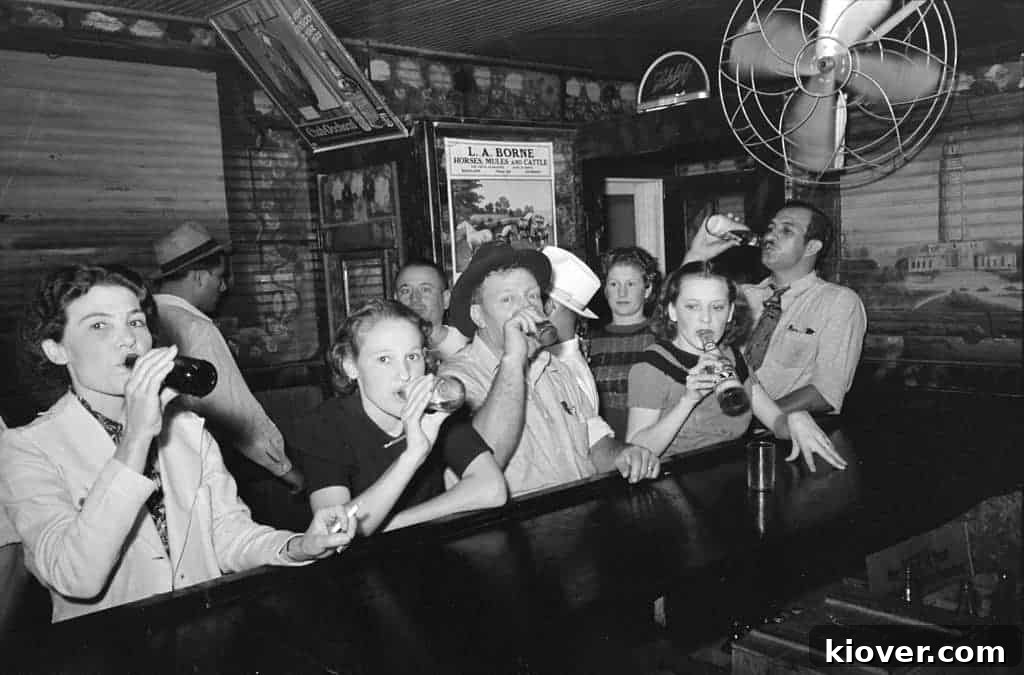
The repeal of Prohibition in 1933 brought a collective sigh of relief and ushered in a vibrant period of societal transformation. The Old Fashioned, along with other classic libations, returned with a renewed vigor, eager to reclaim its rightful place. Beyond the mere reintroduction of alcohol, significant social changes were sweeping across the nation. Women’s suffrage had already been achieved years prior, and their role in public life, including social drinking, became increasingly prominent. A whole new demographic of cocktail drinkers emerged, eager to explore the world of spirits and mixed drinks.
With this cultural reawakening came a new generation of bartenders and enthusiasts, many of whom, perhaps unfamiliar with the pre-Prohibition standards or simply driven by a desire for novelty, began to reinterpret existing classics. The traditional Whiskey Cocktail, now widely known as the Old Fashioned, became a canvas for fresh experimentation. This post-Prohibition era is particularly notable for the increased prominence of fruit in the Old Fashioned. What started as a simple twist of citrus peel or a single cherry often escalated into a more generous inclusion of muddled orange slices, multiple cherries, or even other fruits. This trend, sometimes referred to as the “fruit salad” Old Fashioned, likely stemmed from various factors: a desire to mask the lingering taste of lower-quality spirits that were still prevalent post-Prohibition, an attempt to appeal to a broader audience, or simply a new aesthetic preference.
Today, this heritage is still evident. It’s common to encounter an Old Fashioned garnished with a bright orange slice, a ruby-red cherry, or sometimes both. While this fruit-forward style may not resonate with every palate, it is an undeniable and historically significant chapter in the Old Fashioned cocktail history, showcasing the drink’s remarkable capacity for adaptation and reinvention through changing times.
The Enduring Legacy of Today’s Old Fashioned
In the vast tapestry of its history, the Old Fashioned has taken many forms, each reflecting the tastes and trends of its era. Whether it’s the austere 1806 “cocktail,” the Jerry Thomas-inspired version with a hint of curaçao, the back-to-basics muddled sugar rendition of the late 1800s, or the fruit-laden interpretations of the post-Prohibition years, I contend that each of these variations holds a legitimate claim to the title of a “true” Old Fashioned. The ultimate arbiter of how an Old Fashioned should be enjoyed rests firmly with the individual drinker, their bartender, their discerning palate, and their personal preference.
My quest has been to trace the spirit and essence of the Old Fashioned cocktail history, and in doing so, I’ve found a particular fondness for the late 1800s period. That era, often considered a golden age of cocktails, perfectly balanced tradition with refinement, offering a drink that was both simple and sophisticated, robust and elegant. Moving forward, this historical appreciation will heavily influence my approach to crafting and enjoying Old Fashioned recipes.
The Old Fashioned remains more than just a drink; it is a living historical document, a testament to enduring taste and the dynamic evolution of cocktail culture. Its simple formula—spirit, sugar, water, bitters—has proven to be endlessly adaptable, allowing it to transcend trends and maintain its revered status for over two centuries. From its humble origins as “the cocktail” to its current position as a global icon, the Old Fashioned stands as a timeless classic, continually inviting new generations to discover its rich past and make it their own.