
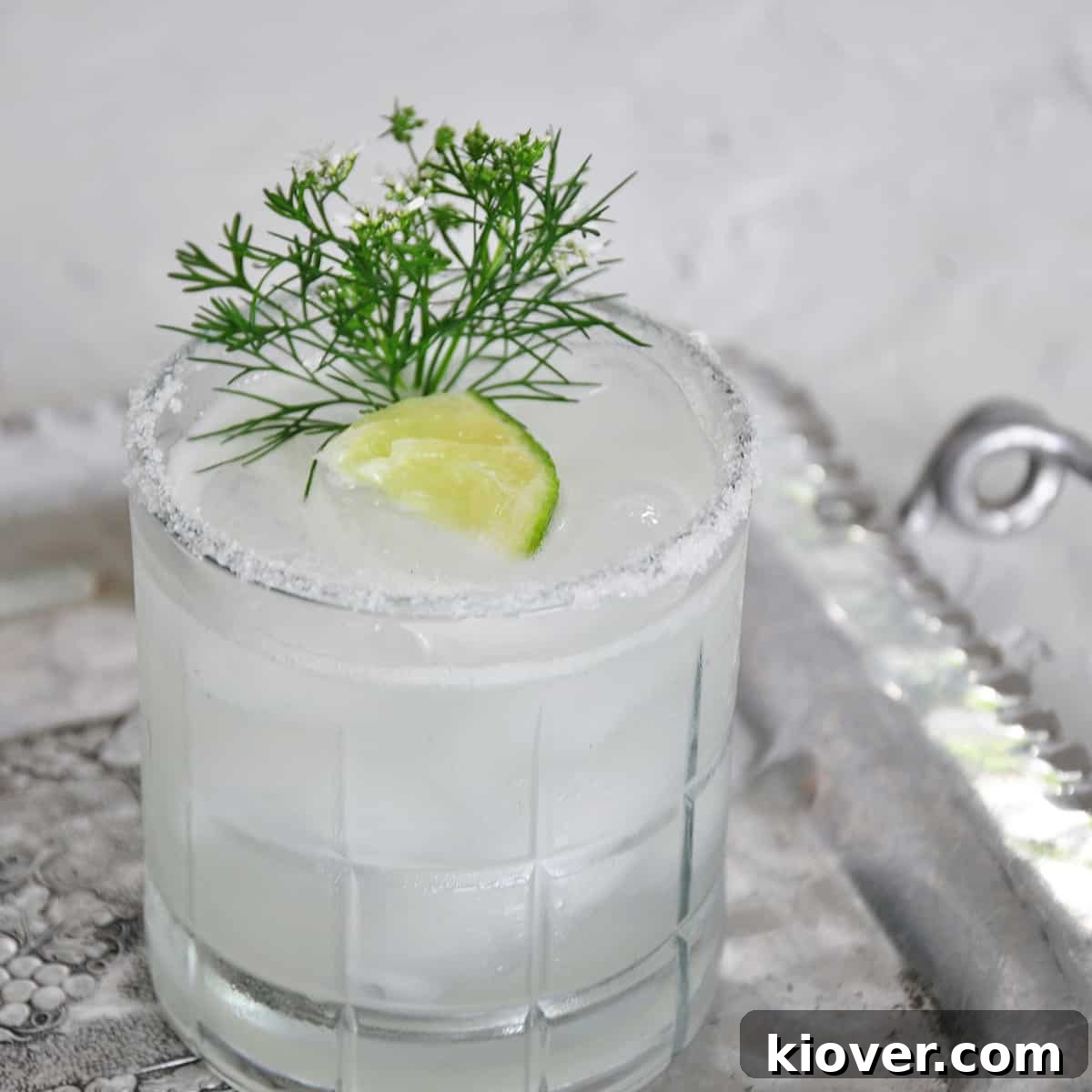
There are few cocktails as iconic and universally adored as the Margarita. A true staple for any home bartender, a **Perfect Margarita recipe** embodies the essence of refreshing indulgence. Whether you’re basking in the warmth of a sun-drenched day or longing for a taste of summer during the colder months, this timeless concoction promises to transport you to a vibrant, festive state of mind.
Throughout history, the Margarita has secured its place as one of the **best and most beloved drinks** worldwide. Its delightful balance of sweet, sour, and savory notes creates an unparalleled drinking experience that lingers long after the last sip. It’s a testament to simplicity and quality ingredients, proving that sometimes, the most extraordinary pleasures are born from the purest combinations. Prepare your finest tequila and embark on a journey to craft the ultimate Margarita today!
🍹 What Makes This Perfect Margarita Recipe So Special?
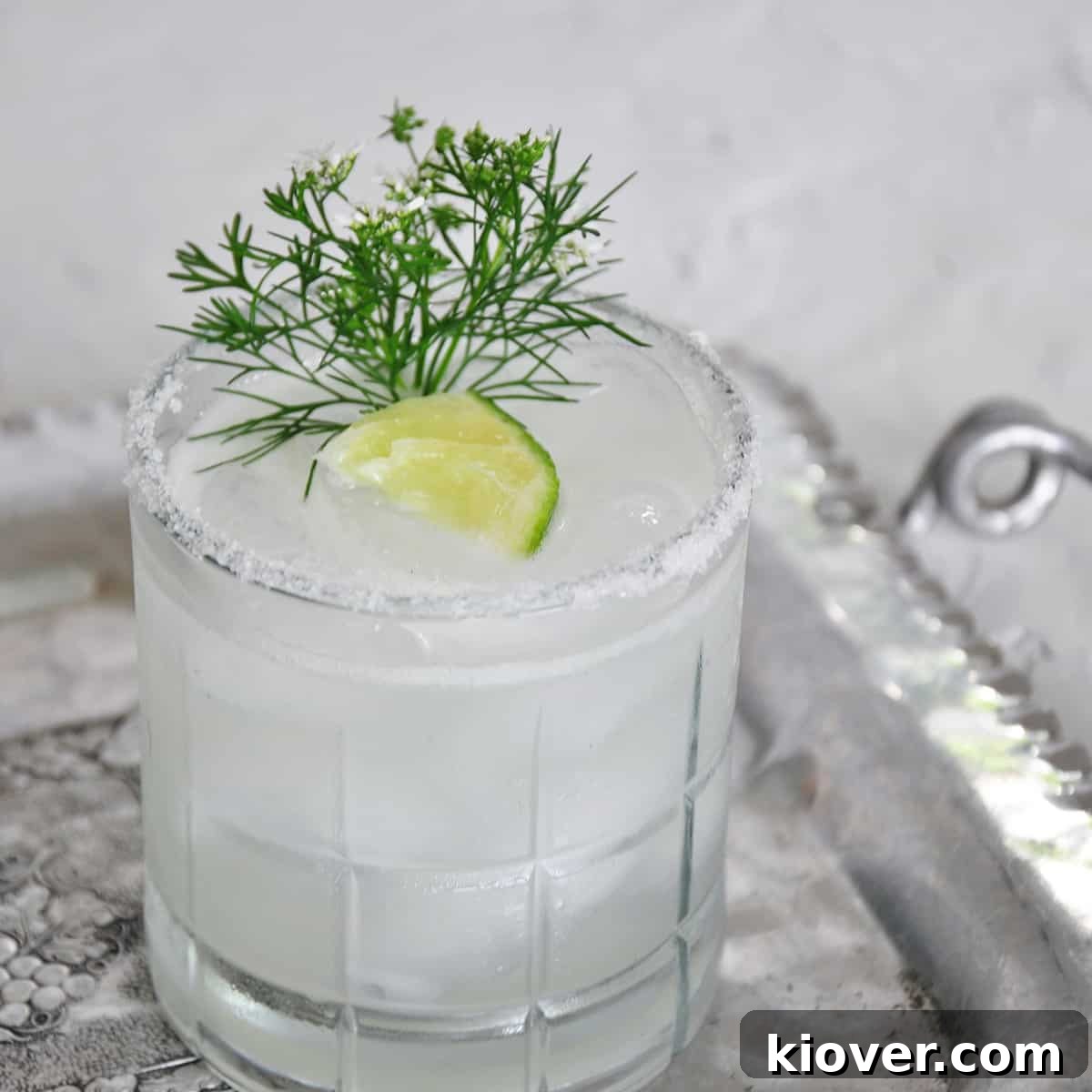
Our featured Margarita recipe stands out precisely because it embraces tradition and purity. In a world increasingly saturated with elaborate, often overly sweetened, or artificially flavored cocktail variations, the beauty of a truly classic Margarita shines brightest through its inherent simplicity. Like many legendary drinks, the magic lies not in complex additions but in the harmonious interplay of a few high-quality components, all brought to life within the cocktail shaker.
Many contemporary Margarita recipes introduce a myriad of sweeteners, exotic fruit purees, or intricate flavor infusions, attempting to reinvent a classic that, in its original form, already achieves perfection. While these variations can be enjoyable, they often obscure the elegant balance of the core ingredients. This recipe honors the traditional approach, letting the natural flavors of premium tequila, fresh lime, and quality orange liqueur speak for themselves. It’s this unadulterated taste that has cemented the Margarita’s legacy and makes our rendition exceptionally memorable.
By focusing on authentic ingredients and precise ratios, we create a Margarita that is refreshingly crisp, perfectly balanced, and utterly invigorating. It’s a testament to the idea that sometimes, less truly is more, especially when it comes to crafting a cocktail that has captivated palates for decades. This is not just a drink; it’s an experience—a vibrant symphony of taste that celebrates the very best of Mexican spirits and citrus.
If you’re seeking to explore beyond the classic, we offer delightful twists for every palate. For those who crave a fiery kick, try our Simple Spicy Margarita with Jalapenos recipe. Or, for a refreshing, icy treat, our Strawberry Frozen Margarita is an absolute must-try. No matter your preference, ensure you treat yourself to a beautifully crafted cocktail!
Table of Contents
- 🍹 What Makes This Perfect Margarita Recipe So Special?
- 🧂 Essential Ingredients for a Perfect Margarita
- 🍲 Step-by-Step Instructions to Craft Your Margarita
- 🤷 Substitutions and Creative Variations
- 🎓 The Intriguing History of the Margarita
- ❓ Frequently Asked Questions About Margaritas
- 📝 Expert Tips and Tricks for Margarita Perfection
- 🛠 Recommended Products for Your Margarita Bar
- 😋 Share Your Margarita Masterpiece!
- How to Make a Perfect Margarita Recipe
🧂 Essential Ingredients for a Perfect Margarita
Crafting a truly exceptional Margarita requires only a handful of key ingredients, each playing a crucial role in the symphony of flavors. While tequila undoubtedly takes center stage, the supporting cast is equally vital in achieving that coveted balance. Here’s a detailed look at what you’ll need to create your masterpiece:
- Ice (for shaking and serving)
- Salt (specifically for rimming the glass)
- Premium Blanco Tequila
- High-Quality Orange Liqueur (Triple Sec, ideally Cointreau)
- Freshly Squeezed Lime Juice
- A fresh lime wedge (for garnish)
Please refer to the detailed recipe card below for precise quantities and measurements.
Choosing the Right Tequila for Your Margarita
The type of tequila you select is paramount to the quality of your Margarita. You might have noticed some tequilas sporting a rich brown hue. This color typically signifies aging in oak barrels, a process that imparts complex flavors and aromas from the wood to the spirit. The longer tequila rests in these barrels, the more pronounced these characteristics become.
While barrel-aged tequilas (like Reposado, Añejo, or Extra Añejo) are exquisite for sipping neat and appreciated by connoisseurs, they introduce a distinct oakiness and caramel notes that aren’t ideal for the vibrant, fresh profile we seek in a perfect Margarita. For our purposes, we desire a tequila that reflects the pure essence of the agave plant as closely as possible.
This is where **Blanco Tequila**, also known as silver or white tequila, comes into play. Blanco tequilas are typically aged for a very short period (less than two months) or not at all, preserving their bright, vegetal, and peppery notes that are characteristic of pure agave. Opting for an excellent Blanco Tequila ensures your Margarita will be crisp, clean, and truly refreshing.
Can you still make a good Margarita with other tequilas? Absolutely. However, be mindful that the bolder the oak flavor in your tequila, the more it will influence the overall taste of your Margarita. Consider the quintessential Margarita experience: a tropical, poolside libation. Does the thought of a robust, oaky flavor evoke images of sun-drenched beaches and refreshing breezes? Probably not. Stick with a bright, unaged Blanco for that authentic, invigorating tropical sensation.
Finally, for an uncompromisingly perfect Margarita, invest in a **100% blue agave tequila**. While it might carry a slightly higher price tag, the superior quality and depth of flavor are well worth the investment when striving for perfection. Brands committed to 100% blue agave deliver a smoother, more complex spirit free from artificial additives or mixto blends.
For this recipe, we highly recommend Espolon Tequila. It’s a reasonably priced, pure agave tequila that consistently receives stellar reviews for its quality and flavor profile. Plus, it’s hard to ignore the absolutely captivating label featuring a skeleton charging into battle on a rooster – a fun detail that adds character!
The Indispensable Role of Triple Sec (Orange Liqueur)
Triple Sec is an essential orange-flavored liqueur that contributes sweetness and a crucial citrus depth to the Margarita. Among the various brands available, Cointreau stands out as a premium choice, boasting a rich history that dates back to 1849. This extensive timeline speaks volumes about its enduring quality and popularity.
Not only is Cointreau a heritage brand, but many cocktail historians also suggest that it might have been the specific brand of orange liqueur used in the very first Margarita recipes, lending an authentic touch to your cocktail. Beyond its historical significance, Cointreau delivers an exquisitely balanced orange flavor—neither too sweet nor too bitter—with a smooth finish that generic triple secs often lack. For these compelling reasons, we wholeheartedly recommend Cointreau for achieving the ultimate perfect Margarita.
The Perfect Pinch of Salt
While many contemporary recipes might call for a sugar rim on their Margaritas—and we’ve even experimented with unique rimming salts like this bacon salt recipe—a true perfect Margarita demands salt. Sugar, while appealing to some, can overpower the delicate balance of the drink, making it overly sweet and losing its signature tang.
Salt, on the other hand, provides a powerful and complementary accent. It doesn’t just add flavor; it magically enhances the bold notes of the agave tequila, the zesty lime, and the bright orange liqueur. A salt rim acts as a crucial counterpoint, cutting through the sweetness and acidity, and elevating the overall flavor profile with a delightful savory zing. Without that traditional salty kiss, a Margarita simply isn’t complete, nor is it truly traditional. Consider using flaky sea salt or coarse kosher salt for the best texture and adherence to the rim.
🍲 Step-by-Step Instructions to Craft Your Perfect Margarita
Creating a classic Margarita is wonderfully straightforward, requiring minimal fuss but maximum attention to detail. The beauty lies in its simplicity. Follow these easy steps to mix our cocktail ingredients into an ice-filled shaker and prepare to enjoy a truly outstanding drink.
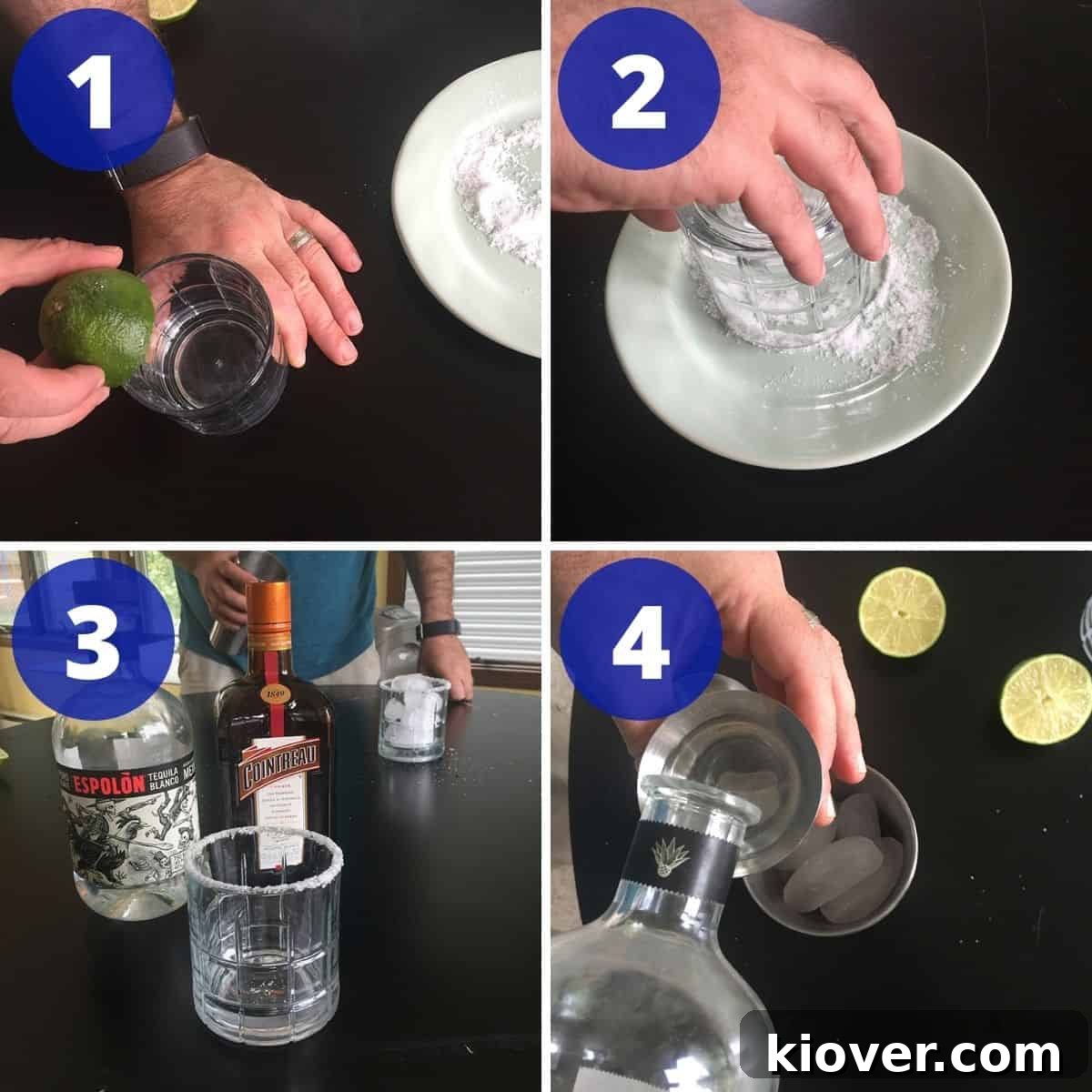
First, you’ll want to prepare your serving glass. Take a lowball or coupe glass and gently moisten the rim with a lime wedge. Then, invert the glass into a shallow plate of salt, rotating it gently to create an even, frosty salt rim. This step is crucial for that authentic Margarita experience.
Next, fill your prepared, salt-rimmed glass with fresh ice. In a separate cocktail shaker, combine your chosen Blanco Tequila, premium orange liqueur (Cointreau, of course!), and freshly squeezed lime juice over a generous amount of ice. Secure the lid tightly and shake vigorously for about 15-20 seconds. This ensures thorough chilling and proper dilution of the ingredients.
Finally, strain the perfectly chilled concoction into your prepared, ice-filled, salt-rimmed glass. Garnish with a fresh lime wedge or wheel to complete the presentation. And just like that, you’re ready to savor every sip of your homemade masterpiece!
🤷 Substitutions and Creative Variations for Your Margarita
While our classic Margarita recipe is a celebration of tradition, the world of cocktails is ripe for creative experimentation. Here are a few ways you can customize your Margarita to suit your personal taste or available ingredients:
- Tequila Brand & Type: We highly recommend Blanco Tequila for its crisp, clean profile. However, if you enjoy more complexity, a lightly aged Reposado can add subtle notes of vanilla and oak, though it will alter the classic taste. Avoid heavily aged Añejo tequilas as their robust flavors tend to overpower the delicate balance of a Margarita. Feel free to experiment with different Blanco brands to find your personal favorite; each offers unique nuances.
- Orange Liqueur Options: While Cointreau is our top pick for its premium quality and historical connection, you can certainly use other triple secs or orange liqueurs. Grand Marnier, a blend of cognac and orange liqueur, provides a richer, more luxurious flavor. Alternatively, a good quality Triple Sec from a reputable brand will also yield a delicious drink, though perhaps with a slightly less refined orange essence.
- Rim Enhancements: Traditionally, a Margarita is rimmed with coarse salt, which beautifully balances the drink’s sweetness and acidity. For a different experience, you could try a sugar rim for a sweeter profile. Get creative with flavored salts: chili-lime salt for a spicy kick, smoked salt for depth, or even a blend of salt and citrus zest. You can also opt for a half-salt, half-naked rim to offer contrasting sips.
- Citrus Swaps: Fresh lime juice is non-negotiable for a classic Margarita, but you can introduce other citrus elements. A splash of fresh orange juice or grapefruit juice can add a new dimension, or a squeeze of lemon alongside the lime for a brighter, tarter profile.
- Fruit Infusions: For a fruitier Margarita, consider muddling fresh fruit directly in the shaker before adding other ingredients. Berries like strawberries or raspberries, slices of mango, or even watermelon chunks can create delightful variations. Simply muddle the fruit, then proceed with the recipe, perhaps slightly adjusting the amount of lime juice or sweetener to taste.
- Spicy Kick: Infuse your Margarita with heat by muddling a few slices of fresh jalapeño or serrano pepper in the shaker. For a more subtle warmth, rim your glass with chili-lime salt. Remember to remove seeds from the peppers for less intense heat.
- Herbal Notes: Fresh herbs like cilantro or basil can add an unexpected and sophisticated twist. Muddle a few leaves in the shaker for an aromatic depth that complements the tequila beautifully.
🎓 The Intriguing History of the Margarita
The history of food and cocktails is often a fascinating tapestry woven with threads of myth, clever marketing, and genuine discovery. The Margarita’s origin story is no exception, shrouded in numerous legends and conflicting accounts. Our goal today is to unravel some of these tales and illuminate the likely origins of this iconic cocktail.
Margarita History Baseline – Tequila and Triple Sec!
Undeniably, a Margarita cannot exist without its core components: tequila and lime. By tracing the historical emergence of these key ingredients, we can establish a definitive timeline for when this beloved classic drink could have first appeared.
Tequila Origins – The 1500s
The story of tequila begins in the 16th century with the arrival of Spanish conquistadors in North America. Accustomed to distilled spirits like brandy (double-distilled grapes), they encountered indigenous communities already producing a fermented beverage from the agave plant. This cultural fusion led to the distillation of agave, giving birth to what we now recognize as tequila. Historical records indicate that tequila, in its rudimentary form, has been present since the 1500s.
However, it’s crucial to understand that the Margarita didn’t instantly materialize with the advent of tequila. It wasn’t as if a 16th-century troubadour akin to Jimmy Buffet was merely awaiting tequila’s arrival to pen a hit like “Let me doth take ye, kind sir, to Margaritaville.” Many other cultural and culinary developments were necessary before the cocktail, as we know and love it today, could come into being.
Triple Sec – 1834
I consider triple Sec to be an absolutely integral part of the Margarita, and its invention provides a critical clue in narrowing down the cocktail’s history. Triple Sec, an orange liqueur, was reportedly invented in 1834 by the Combier distillery in France, a company that continues to operate today. By the late 1800s, Triple Sec had become a common and versatile liquor in bartenders’ arsenals across Europe and beyond.
This information allows us to confidently place the earliest possible creation of the Margarita from 1834 onwards. However, it’s highly probable that the cocktail emerged much later. Triple Sec, born in Europe, still needed to gain notoriety and travel across continents to meet tequila, which, at that time, was predominantly a regional drink consumed in Mexico. The geographical and cultural gap between these two key ingredients suggests a later confluence.
General Accounts of Margarita History: Exploring the Legends
Most popular accounts regarding the origin of the Margarita place its invention sometime between the 1930s and 1955. To navigate these various claims, we will list the most prominent origin stories and assess their historical feasibility. It’s worth noting that any claims dating after 1945 can likely be discounted as true origin stories, given that Jose Cuervo launched an advertising campaign featuring the Margarita in that very year, indicating the drink was already established and recognized. Therefore, we will focus our attention on narratives predating this pivotal advertising milestone.
Carlos Herrera and Marjorie King – The Allergy Story
One compelling origin story attributes the Margarita’s creation to Carlos Herrera, a bar owner. According to this account, Herrera invented the cocktail in the early 1940s (some sources suggest 1938) for Marjorie King, a prominent actress and dancer of the era. King reportedly suffered from an allergy to all spirits except tequila, but found the taste of neat tequila challenging. To make tequila palatable for her, Herrera masterfully combined it with lime juice and Cointreau, thus creating the Margarita. The name itself is said to be the Spanish equivalent of Marjorie. While Herrera passed away in 1992, making a direct interview impossible, this story holds a degree of plausibility due to its specific details and logical premise. **Possible Origin Truth? This account seems quite plausible.**
Prohibition’s Influence and The Tequila Daisy
Cocktail historian David Wondrich, in his authoritative book *Imbibe!*, proposes that the Margarita might simply be a natural evolution spurred by the Prohibition era in the United States. During Prohibition (1920-1933), Americans would often cross the border into Mexico to legally enjoy alcoholic beverages. Reportedly, a casino and golf course just south of the border began serving tequila-based drinks as a house specialty.
An intriguing aspect of this theory revolves around the Spanish word for daisy, which is “Margarita.” Coincidentally, there was (and still is) a well-known cocktail family called the Daisy, with variations like the Gin Daisy, Whiskey Daisy, and even a Rum Daisy recipe. The Daisy cocktail typically features a base spirit, citrus juice, and a liqueur (often orange liqueur or grenadine), sharing a striking resemblance in ingredients to our modern Margarita, minus the specific spirit. In the old days of cocktails, spirits were often interchangeable in recipes. It’s plausible that a “Tequila Daisy” was created to utilize the abundant tequila available in Mexico. The transition from calling it a “Tequila Daisy” to simply “Margarita” (the Spanish translation for Daisy) makes intuitive sense and could explain its rise in the early 1930s. **Possible Origin Truth? This theory is highly plausible and well-supported by cocktail history.**
Francisco Morales at Tommy’s Place Bar: An Accidental Masterpiece
I find this origin story particularly charming and compelling. The tale recounts that Francisco Morales, a bartender, invented the drink on July 4th, 1942. A woman at Tommy’s Place Bar ordered a “Magnolia” cocktail, a drink Francisco was unfamiliar with. Rather than admitting his lack of knowledge, he improvised, mixing a concoction of tequila, Cointreau, and lime juice. Because “Margarita” sounded somewhat similar to “Magnolia,” he named his new creation after it. Fortunately, the woman loved it, and thus, Margarita history was sealed.
What makes this story stand out is the concrete evidence: a 1974 interview with Francisco Morales himself, published in Texas Monthly, where he recounts the story in his own words. A poignant detail is that Morales later immigrated to the United States, became a citizen, and led a working-class life as a milkman for 25 years before his passing in 1997. Hearing the story directly from the alleged creator lends significant credibility. **Possible Origin Truth? Highly plausible, and the direct testimony adds considerable weight. This is a strong contender!**
Hussong’s Cafe: Debunking a Popular Myth
Another widely circulated origin story claims the Margarita was created in 1941 at Hussong’s Cantina in Ensenada, Baja California, Mexico. The legend states that bartender Don Carlos Orozco mixed the drink for Margarita Henkel, the daughter of the German Ambassador to Mexico, who then lent her name to the cocktail.
While this is a compelling narrative, several factors raise significant doubts. Firstly, Hussong’s itself doesn’t actively champion this origin story as their own, which is peculiar for an establishment claiming to have invented such a globally famous drink. This hesitation in self-promotion immediately triggers suspicion.
Secondly, outside of posts specifically discussing Margarita history, there is a distinct lack of independent historical references to a “Margarita Henkel” in connection with a German Ambassador during that period. While I did find mention of a Margarita Henkel from the 1970s linked to Baja, confirming this as the same person from the 1940s myth is challenging. What truly undermines this story is the fact that lists of German Ambassadors to Mexico reveal no ambassador with the surname Henkel. It’s highly unlikely that the daughter of an ambassador would have a different surname from her father, or that a lesser diplomatic role would be misrepresented in such a specific way.
A typical investigation might stop there, but my curiosity led me to further research. I utilized a free trial on Ancestry.com to conduct a deeper search for Margarita Henkel. While I did locate a few individuals with that name, none aligned with the ambassador’s daughter narrative. One Margarita Henkel had a father named Eduardo Schweitzer, another from Germany had a maiden name of Bolst – neither connected to German diplomatic service in Mexico. Two other Margarita Henkels were found: one with a 1930s wedding certificate in Arizona, USA, marrying a Lindsay Gillis (no German or Mexican diplomatic ties found for him), and another on a 1940 US census form in Cincinnati, Ohio. While it’s technically *possible* the Ohio resident could have been a globetrotter during WWII, it’s highly improbable she was the ambassador’s daughter in Baja. Based on this thorough search, I can state with reasonable certainty that the “Margarita Henkel” associated with the Hussong’s myth likely never existed in that specific role. **Possible Origin Truth? I strongly doubt it. I believe this popular historical myth has been effectively debunked.**
While numerous other origin stories exist, if they postdate 1945, they are generally not considered true origins, given Jose Cuervo’s established advertising campaign by that time. Although we may never pinpoint the single, definitive origin of the Margarita, this exploration brings us closer to understanding the rich and complex history of this universally adored classic cocktail. Now, it’s time to enjoy one!
❓ Frequently Asked Questions About Margaritas
The secret lies in the quality of your ingredients and adhering to the correct ratios. There’s no need for complexity or fancy frills. The three pillars are: freshly squeezed lime juice, a high-quality Blanco tequila, and premium orange liqueur (like Cointreau). A classic Margarita shines brightest when these elements are balanced perfectly. The ideal ratio is often considered 2 parts tequila, 1 part orange liqueur, and 1 part fresh lime juice, though some prefer slightly less lime for a sweeter profile, or more lime for a tarter kick.
For a perfectly balanced classic Margarita, a widely accepted ratio is 2 parts tequila, 1 part orange liqueur (Triple Sec/Cointreau), and 1 part freshly squeezed lime juice. For example, if you’re making a single cocktail, this would translate to 2 ounces of tequila, 1 ounce of Cointreau, and 1 ounce of lime juice. This specific recipe suggests 2 ounces of tequila for a robust flavor, balancing it perfectly with the other components.
Traditionally, a classic Margarita is served “on the rocks,” meaning over ice. This method allows the flavors to subtly evolve as the ice melts, providing a refreshing chill and slight dilution without over-blending the distinct tastes. Frozen Margaritas, blended with ice to a slushy consistency, are a popular modern adaptation, offering a different textural experience that is particularly refreshing in hot weather. Both are delicious, but for a true classic, “on the rocks” is the way to go.
A bitter Margarita usually stems from two main issues: using bottled lime juice (which can contain preservatives that affect flavor) or over-squeezing fresh limes, releasing bitter oils from the rind. Always use freshly squeezed lime juice, and avoid pressing the lime peel too forcefully into the drink. Also, ensure your orange liqueur is of good quality; cheaper triple secs can sometimes have a harsh, bitter aftertaste.
📝 Expert Tips and Tricks for Margarita Perfection
Elevating your Margarita game from good to unforgettable is all about paying attention to a few crucial details. Here are some expert tips and tricks to help you craft the perfect cocktail every single time:
- Embrace Blanco Tequila: For a crisp, authentic, and vibrant Margarita, always opt for a young, unaged Blanco tequila. Its pure agave flavor is the perfect foundation, ensuring your drink is bright and refreshing without overpowering oak notes.
- Cointreau is Key: When it comes to orange liqueur, Cointreau is our unwavering recommendation. Its perfectly balanced sweetness and intense orange flavor are unparalleled, making a significant difference in the final taste profile compared to generic triple secs.
- Fresh Limes are Non-Negotiable: This cannot be stressed enough – use only freshly squeezed lime juice. Bottled lime juice simply doesn’t compare in terms of brightness, aroma, and natural acidity. Freshly squeezed juice is the heart and soul of a truly great Margarita.
- Master the Salt Rim: Don’t just slap salt on the rim. Use a lime wedge to moisten only the outer edge of the glass, then gently roll it in coarse salt (like kosher or flaky sea salt). This prevents salt from falling into the drink, where it can make it overly salty.
- Shake, Don’t Stir: Margaritas are meant to be vigorously shaken with ice. This not only chills the drink rapidly but also properly dilutes and aerates the ingredients, creating a smoother, more integrated flavor and a pleasing froth. Shake for a good 15-20 seconds until the shaker is thoroughly frosty.
- Chill Your Glass: For an extra touch of sophistication and to keep your drink colder for longer, chill your serving glass in the freezer for a few minutes before preparing your Margarita.
- Experiment with Ratios (Carefully!): While our recommended ratio is a perfect starting point, feel free to slightly adjust the lime or Cointreau to suit your personal preference for sweetness or tartness. Just change one variable at a time!
🛠 Recommended Products for Your Margarita Bar
To craft the perfect Margarita, having the right tools makes all the difference. These essential items will help you achieve professional-level results at home:
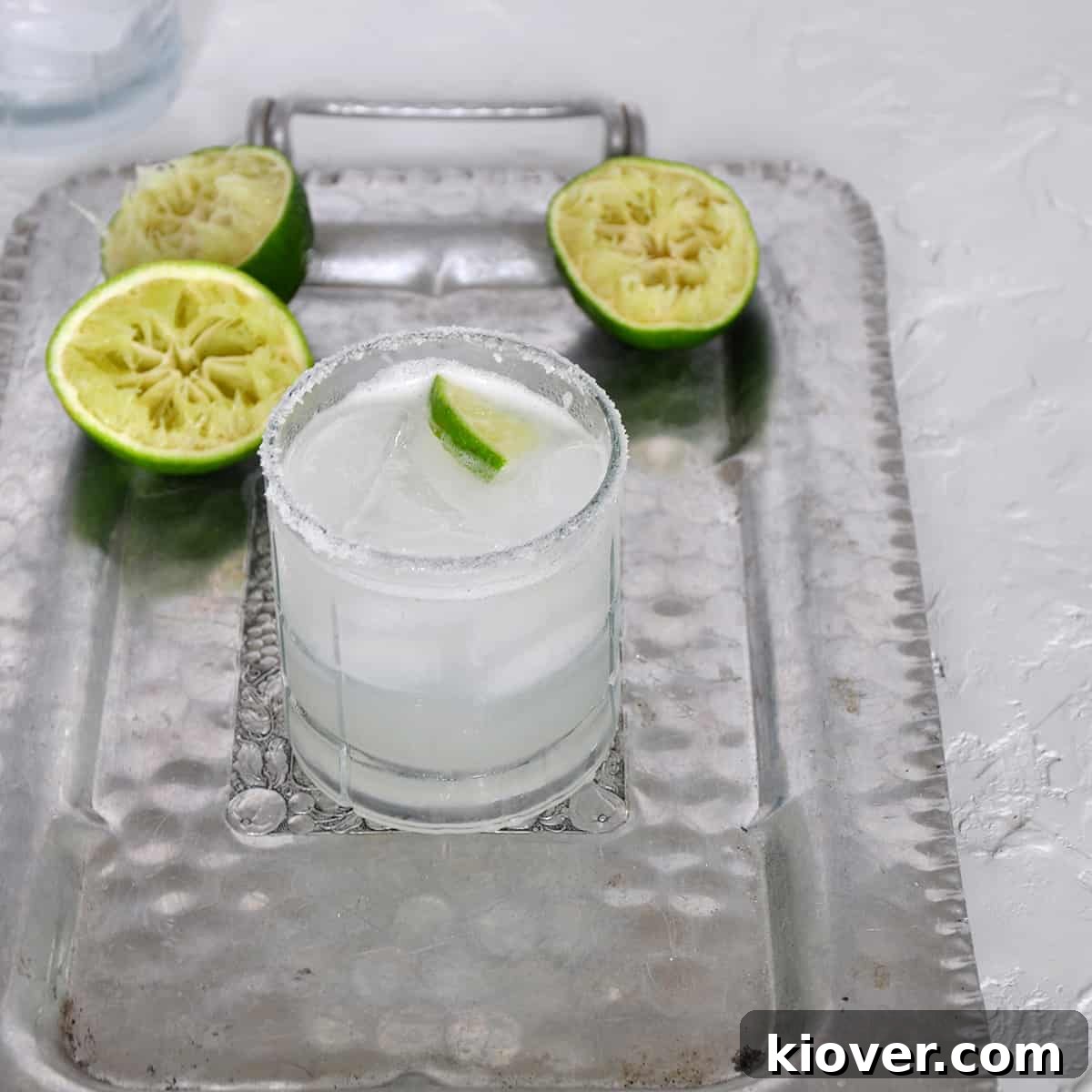
- Lowball Glasses: The ideal vessel for serving Margaritas on the rocks. Their sturdy base and wide rim are perfect for salt and showcasing the vibrant drink.
- Cocktail Shaker: An indispensable tool for mixing and chilling cocktails. A good shaker ensures your ingredients are perfectly blended and icy cold.
😋 Share Your Margarita Masterpiece!
We absolutely love hearing from our community! If you’ve given this Perfect Margarita recipe a try, we’d be thrilled to hear about your experience. Please consider leaving a rating and sharing your thoughts in the comment section below. Your feedback not only helps us understand what you enjoy but also guides other aspiring home bartenders in their cocktail-making journey. Thank you for visiting Ramshackle Pantry and for trusting us with your culinary adventures!
Print Recipe
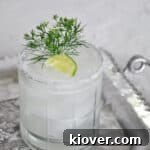
How to Make a Perfect Margarita
5 Stars
4 Stars
3 Stars
2 Stars
1 Star
5 from 1 review
- Author: Ben Myhre
Prep Time: 3 Minutes
Cook Time: 2 Minutes
Total Time: 5 Minutes
Yield: 1 Cocktail
Category: Cocktails
Method: Shake
Cuisine: Mexican
Description
This classic cocktail is a perfect Summertime sipper and tropical favorite. The Perfect Margarita Recipe is a beautiful thing and I have you covered right here with this recipe!
Ingredients
- Ice
- Salt, for rimming
- 2 Ounces Tequila
- 1 Ounce of Cointreau Triple Sec
- ½ Ounce Lime Juice (about ½ lime)
- Small lime wedge, for garnish
Instructions
- Fill a lowball glass with ice.
- Cut a whole lime in half and run the juicy side along the rim of the glass.
- Salt the moistened rim by dipping it into a shallow plate of coarse salt, rotating gently to coat evenly.
- Fill a cocktail shaker with fresh ice.
- Add the measured Tequila, Cointreau, and freshly squeezed Lime Juice to the shaker.
- Shake vigorously for 15-20 seconds until the shaker is thoroughly chilled and frosty on the outside.
- Strain the perfectly mixed cocktail into your prepared, salt-rimmed glass filled with fresh ice.
- Garnish and serve immediately with a small lime wedge on the rim.
Notes
- Always use a young, unaged Blanco tequila for the purest, crispest Margarita flavor.
- Cointreau is highly recommended as the orange liqueur for its superior quality and balanced taste.
- Freshly squeezed limes are essential; avoid bottled lime juice for an authentic, vibrant flavor.