
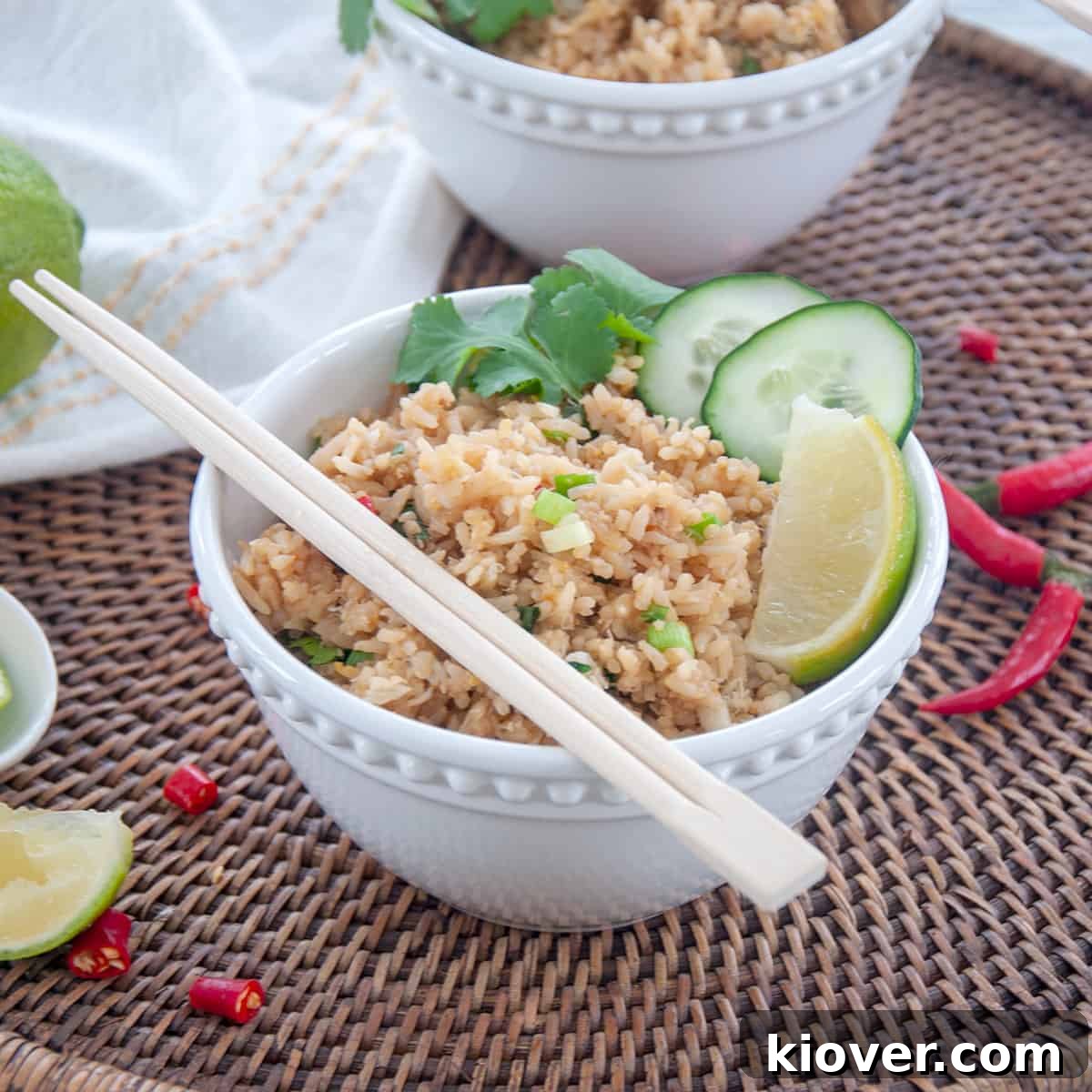
Crab Fried Rice is a classic dish that beautifully marries the vibrant flavors of Thai cuisine with the comforting familiarity of fried rice. This Asian classic transcends a simple meal, combining fluffy rice with succulent crab, aromatic Thai chilis, savory fish sauce, rich soy sauce, and a thoughtful selection of other ingredients to create an experience that is nothing short of spectacular. If you’re looking for a dish that is both quick to prepare and bursting with exotic taste, this Thai Crab Fried Rice recipe is an absolute must-try. Prepare to embark on a culinary journey that tantalizes your taste buds and leaves you craving more.
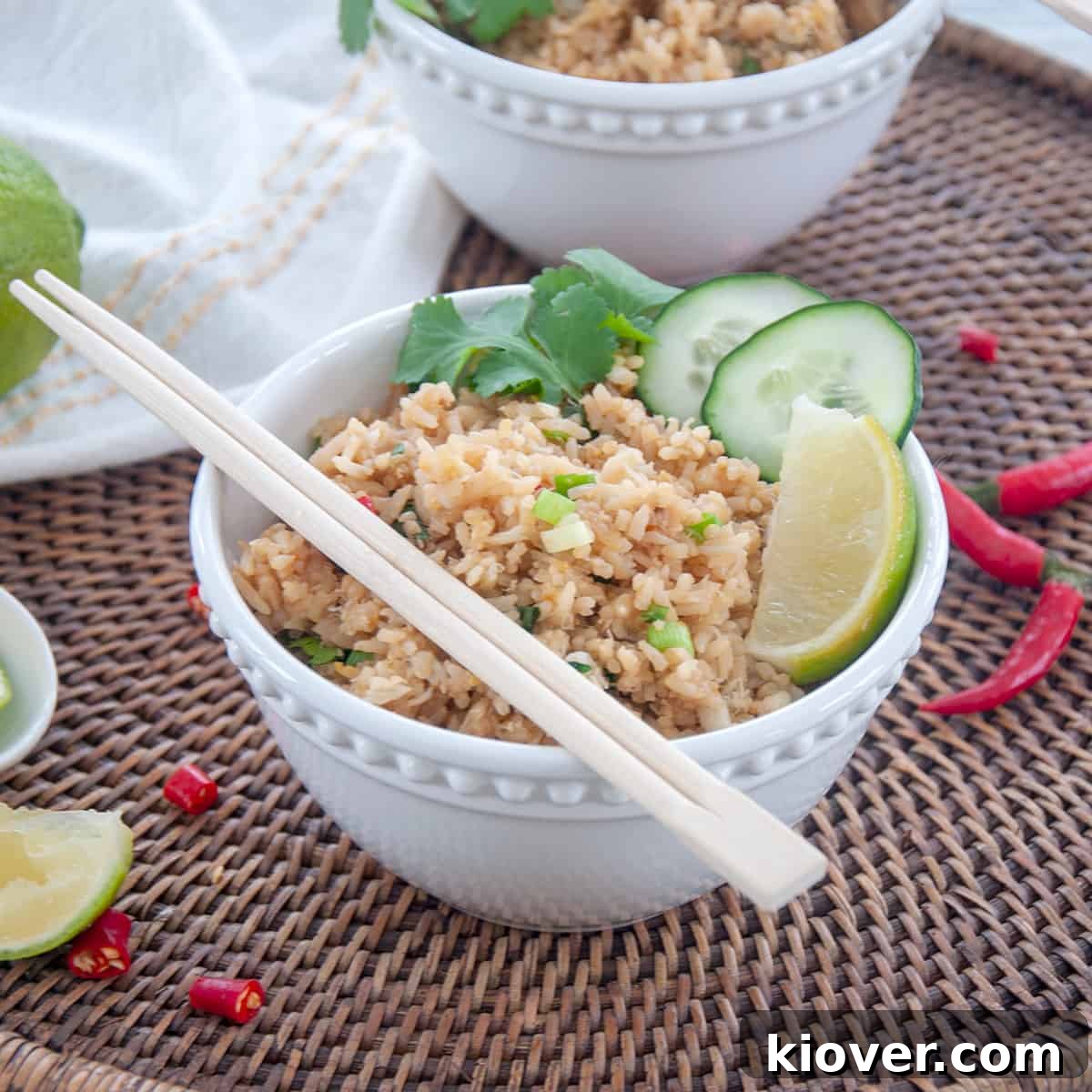
Unveiling the Delights of Crab Fried Rice
As the name suggests, this dish centers around pan-frying rice and infusing it with generous portions of delicious crab meat. However, the magic truly unfolds with the addition of a carefully curated selection of ingredients and seasonings that elevate it far beyond a basic fried rice. What’s even more impressive is that the active cooking time for this recipe is remarkably swift, often completed in under 10 minutes. This makes it an ideal choice for a weeknight meal or when you need a quick, flavorful dish. The key to success lies in preparation, ensuring all your ingredients are ready to go before the wok even hits the heat.
The Art of Preparation: Mise en Place for Success
Cooking Crab Fried Rice is a dynamic and fast-paced process, which means thorough preparation is paramount. In the culinary world, this is known as “mise en place” – everything in its place. Because the dish comes together so rapidly, having all your ingredients measured, chopped, and organized before you begin frying is crucial. Imagine trying to dice an onion or measure soy sauce while your wok is blazing hot; it’s a recipe for stress and potential burning. By taking a few extra minutes at the start to prepare everything, you transform the cooking experience into an enjoyable and efficient endeavor, guaranteeing a delicious outcome without the last-minute rush.
What Gives This Dish Its Distinctly Thai Identity?
Many of us are familiar with various types of fried rice, but Thai Crab Fried Rice stands apart with its unique characteristics. The quintessential Thai elements that distinguish this dish from a standard fried rice include the choice of rice, the foundational sauces, and the vibrant aromatics. Specifically, the use of fragrant Jasmine rice, the salty depth of fish sauce, the bright zest of fresh lime, and the fiery kick of Thai chilis are what truly define its authentic Thai profile. And, of course, the star ingredient – succulent crab meat – plays a significant role in making this a luxurious and memorable variation.
Prik Nam Pla: A Taste of Thai Authenticity
Another layer of Thai authenticity in this dish comes from the influence of Prik Nam Pla. Traditionally, Prik Nam Pla is a popular side condiment in Thai cuisine, a pungent and spicy sauce made from fish sauce, minced Thai chilis, garlic, and lime juice. While our recipe integrates these key flavors directly into the fried rice itself rather than serving it as a separate side, it ensures that every spoonful carries the unmistakable, complex, and invigorating taste profile that is characteristic of this beloved Thai condiment. It’s a testament to how essential these components are to the overall Thai flavor experience.
Understanding Your Wok: The Heart of Fried Rice
The wok is more than just a pan; it’s a specialized cooking vessel designed for high-heat, rapid cooking. However, every wok has its own personality, and understanding yours is key to mastering fried rice. Factors like the material of your wok, its seasoning, and the heat output of your stovetop all influence how it performs. For instance, if your wok tends to stick, vigorous and continuous stirring becomes essential to prevent ingredients from burning and to ensure even cooking. Adapt this recipe to your specific equipment – don’t be afraid to adjust stirring frequency or heat levels to achieve the perfect texture and flavor. Your familiarity with your wok will be your greatest asset in achieving wok mastery.
Choosing the Ideal Rice for Crab Fried Rice
For an authentic Thai Crab Fried Rice, Jasmine rice is highly recommended. Its delicate fragrance and slightly sticky, yet individual, grains are a hallmark of Thai cuisine and perfectly complement the other flavors in this dish. That said, culinary flexibility is always an option. If Jasmine rice isn’t available, most any medium to long-grain white rice will yield a satisfying result. The most important factor, more than the specific type, is how the rice is prepared before it hits the wok.
The Debate: Leftover Rice vs. Freshly Cooked Rice
Seasoned fried rice enthusiasts often swear by leftover, day-old rice, and for good reason. Chilled, leftover rice has less moisture content, which prevents it from becoming mushy when stir-fried and helps achieve those coveted distinct, slightly crispy grains. If you’re planning ahead, cook your rice the day before and let it cool completely before refrigerating it overnight. However, don’t let a lack of leftover rice deter you. If you need to cook rice specifically for this dish today, simply spread the freshly cooked rice thinly on a baking sheet to cool down rapidly for about 30 minutes to an hour. This quick cooling helps to dry out the grains, making them more suitable for frying.
Breaking Up the Rice: A Crucial Step
Regardless of whether you use leftover or freshly cooked rice, achieving the right texture is paramount for excellent fried rice. The goal is for each grain to be separate and distinct, not clumped together. Chilled rice, in particular, can be quite clumpy, so it’s important to break it up thoroughly before adding it to the wok. Don’t shy away from using your clean hands to gently separate the grains; this ensures an even distribution of heat and flavor throughout the dish. Individual grains lead to a superior mouthfeel and better absorption of the delicious sauces.
Frying Rice in Batches: Maximizing Wok Performance
One advanced technique that can significantly improve the quality of your fried rice, especially if your home stove doesn’t deliver restaurant-grade heat, is to fry the rice in two separate batches. This strategy, often championed by culinary experts, ensures that the wok’s temperature remains consistently high enough to achieve a beautiful, even fry on all the rice. Overcrowding the wok can drastically drop its temperature, leading to steamed rather than fried rice. By cooking in batches, you allow each portion of rice to make proper contact with the hot oil, promoting a desirable slightly crisp exterior and preventing sticking, resulting in perfectly textured fried rice.
The Importance of Quality Crab Meat
As with any recipe where a specific ingredient is the star, the quality of your crab meat directly impacts the final taste and texture of your Crab Fried Rice. Investing in good quality crab will truly elevate the dish. If you have access to a local seafood market, fresh, hand-picked lump crab meat is undoubtedly the best choice, offering a sweet, delicate flavor and tender texture. If fresh crab isn’t an option, opt for the highest quality packaged or canned lump crab meat available, ensuring it’s free from shell fragments and excess liquid. The difference in taste and experience will be notable.
Mastering Garlic: Don’t Burn the Flavor Base
Garlic is often the first ingredient added to a hot wok, setting the aromatic foundation for the entire dish. However, it’s a delicate ingredient that can burn very quickly, turning bitter and unpleasant. The trick is to give it just a brief moment in the hot oil – literally a second or two – to release its fragrance before other ingredients, like the rice, are added to buffer the heat. This quick sauté infuses the cooking oil with a deep, savory garlic flavor that permeates the whole dish. While some prefer to add garlic later, introducing it at the very beginning, with careful timing, ensures that its robust aroma is perfectly integrated.
Strategic Addition of Thai Chilis for Optimal Heat
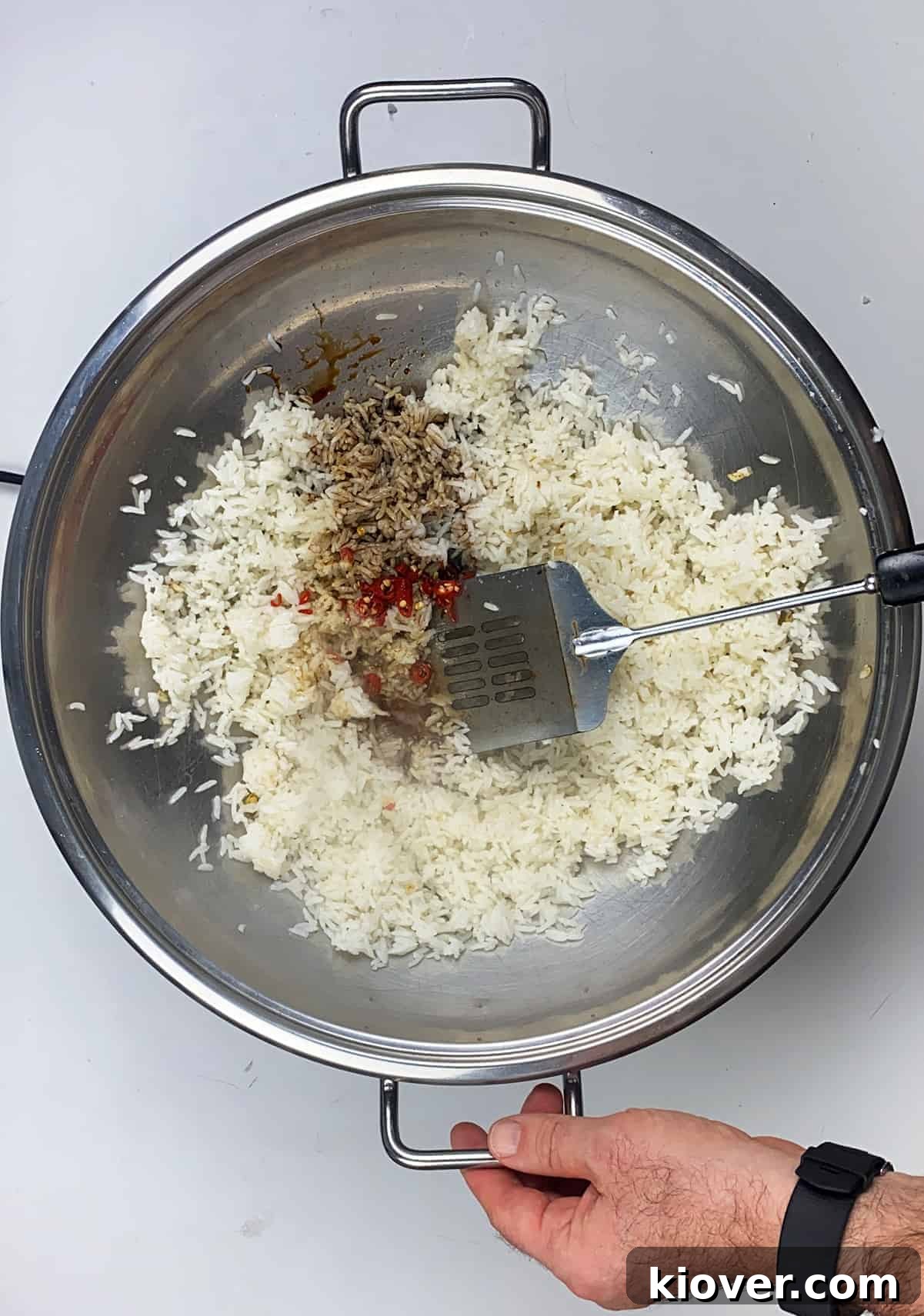
Thai chilis are essential for that characteristic Thai heat and flavor, but their addition requires careful consideration. Adding minced Thai chilis directly to hot oil at the beginning of cooking can create an intense “pepper bomb” effect, releasing volatile compounds that can cause discomfort (watering eyes, coughing). To mitigate this, it’s best to introduce the chilis later in the cooking process, after other ingredients like rice have been added. This allows their heat to infuse the dish more gently, providing a pleasant spice without overwhelming the kitchen or the cook. Adjust the quantity of chilis to suit your preferred level of spiciness – more for a fiery kick, less for a milder warmth.
Scrambling Eggs Directly in the Wok
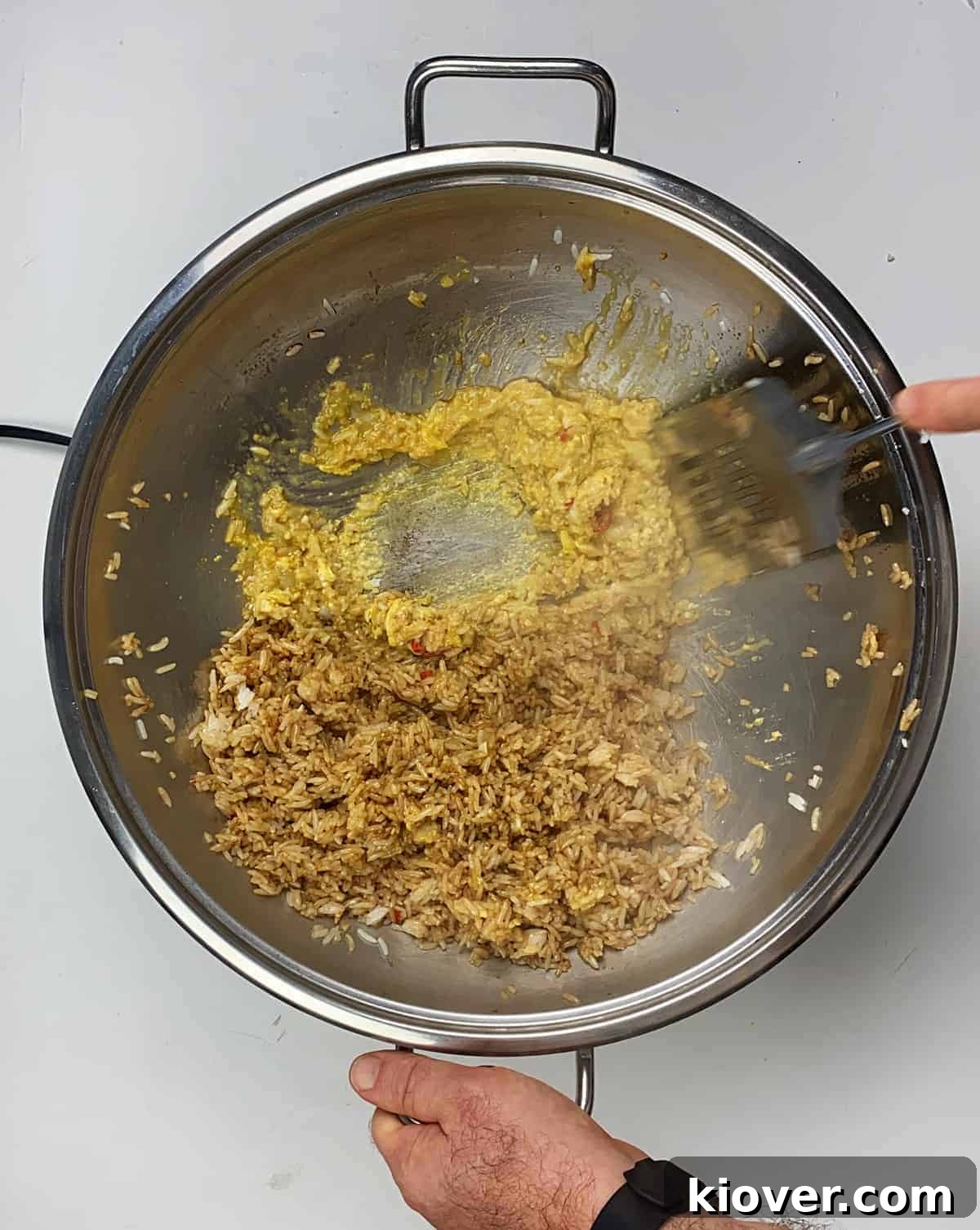
Eggs are a common and welcome addition to many fried rice dishes, adding richness and protein. While you could whisk them separately before adding, a popular technique for wok cooking is to scramble them directly in the wok alongside the other ingredients. To do this, simply push the cooked rice and other ingredients to one side of the wok, create a clear space, add a touch more oil, and let it heat for a moment. Then, crack two whole eggs directly into this hot spot and quickly scramble them with your spatula until just set. Once cooked, gently fold the scrambled eggs into the rest of the fried rice, ensuring they are evenly distributed throughout the dish.
MSG: Flavor Enhancer or Misunderstood Ingredient?
Monosodium Glutamate, commonly known as MSG, is a widely used flavor enhancer that often carries a misguided reputation. Despite a debunked myth about its adverse effects, reputable sources like the Mayo Clinic confirm that MSG is “generally recognized as safe.” While some individuals may have a sensitivity to it, many culinary enthusiasts appreciate its ability to add a profound depth of savory, umami flavor that elevates dishes significantly. If you’re open to exploring new flavor dimensions, a small amount of MSG can enhance the complexity of your Crab Fried Rice. You can often find it in the spice aisle of your local grocery store or online, sometimes under brand names like Accent.
Understanding Serving Sizes for Your Meal
Determining the right serving size for Crab Fried Rice depends on its role in your meal. As a substantial side dish, this recipe yields approximately four servings. However, if Crab Fried Rice is the primary component of your meal, or if you’re not pairing it with other dishes, it might comfortably serve two individuals. To calculate, consider that ¼ cup of uncooked rice typically constitutes one serving. Since this recipe calls for 3 cups of cooked rice, this translates to about ¾ cup of cooked rice per serving once prepared. When you factor in the additional ingredients like crab, eggs, and vegetables, each serving comes out to roughly one cup of delicious Crab Fried Rice, a satisfying portion for a main course.
Is Crab Fried Rice a Healthy Choice? A Nutritional Perspective
There’s a common misconception that fried rice is inherently unhealthy, a notion worth examining. When consumed in moderation as part of a balanced diet, Crab Fried Rice can certainly be a healthy and fulfilling meal. Let’s break down its components:
- Rice: While white rice is often criticized for being carb-heavy, it is a fundamental staple in many cultures and provides essential energy. For those seeking more fiber and nutrients, swapping white rice for brown rice is an easy modification.
- Oils: This recipe uses a modest amount of peanut oil (2 tablespoons) and sesame oil (1 tablespoon). While oils contribute calories and fat, peanut oil is known for its potential health benefits, including monounsaturated and polyunsaturated fats. With approximately 0.75 tablespoons of total oil per serving, the fat content is quite reasonable.
- Crab: Crab meat is an excellent source of lean protein, essential vitamins, and minerals, making it a highly nutritious ingredient that contributes positively to the dish’s health profile.
- Sodium: The primary area of concern for some might be the sodium content, due to the inclusion of soy sauce and fish sauce. If sodium intake is a dietary consideration, opting for low-sodium soy sauce is a simple and effective adjustment.
In summary, Crab Fried Rice is far from an unhealthy indulgence. Its ingredients offer a good balance of macronutrients, and with mindful consumption, it can be a delicious and nutritious part of your regular diet.
Storage and Longevity of Crab Fried Rice
Given that Crab Fried Rice contains seafood, it’s best enjoyed fresh. For optimal taste and safety, any leftovers should be refrigerated promptly and consumed within 2 to 3 days. However, experience suggests that this dish is so irresistibly delicious, it’s unlikely to last that long in your fridge!
A Journey Through Time: The History of Fried Rice
The story of fried rice is deeply intertwined with human civilization and the cultivation of its primary ingredient. Rice itself boasts an ancient lineage, with cultivation in Asia dating back over 10,000 years, making it one of humanity’s most enduring food staples. The iconic cooking vessel for fried rice, the wok, is believed to have originated in China during the Han dynasty, approximately 2000 years ago, revolutionizing stir-frying techniques.
Fried rice as a dish is thought to have emerged in the Sui dynasty in China, around 1400 years ago, likely as a way to repurpose leftover rice. While these origins point to China, culinary traditions are fluid, migrating across borders and evolving with local tastes. Thus, it’s no surprise that fried rice found a natural home in Thailand, where distinct Thai flavors and ingredients began to express themselves in new and delicious variations, leading to dishes like Crab Fried Rice.
Interestingly, some key ingredients that define today’s Thai cuisine have their own rich histories of global exchange. Chili peppers, a cornerstone of Thai spice, are not native to Asia but trace their roots to Mexico and South America, arriving in Asia via trade routes around the 15th century. Even Jasmine rice, celebrated for its unique aroma, is a relatively modern strain, developed in the 1940s and gaining widespread popularity in Thailand only by the 1950s. This journey of ingredients and techniques highlights how the dish we enjoy today is a beautiful culmination of global sharing and culinary innovation.
Recommended Products to Elevate Your Cooking
To help you achieve the best results with this Crab Fried Rice recipe, here are some recommended tools and ingredients:
- Accent flavor enhancer (MSG): For that extra layer of umami depth.
- Wok: An essential for authentic stir-frying.
- Rice Cooker: For perfectly cooked rice every time.
- Metal Spatula: Ideal for vigorously stirring and scraping in a hot wok.
Crab Fried Rice: Essential Tips for a Perfect Dish
- Always separate your cooked rice into individual grains before you begin stir-frying.
- Practice mise en place: measure and prepare all your ingredients ahead of time.
- When adding garlic, fry it for only a brief moment (a second or two) to avoid burning and bitterness.
- Adjust the amount of minced Thai peppers to match your desired level of heat.
- Use a sturdy metal spatula and stir continuously and vigorously to prevent sticking and ensure even cooking.
- While the recipe lists 1 hour of prep time for cooking rice, this time is not needed if you use leftover, chilled rice. This dish is incredibly quick to cook once the rice is ready.
Share Your Culinary Creation!
Thank you for trying this Crab Fried Rice recipe! Your feedback is invaluable. If you enjoyed preparing and tasting this Thai delight, please consider leaving a rating and sharing your experience in the comments section below. Your support by sharing this recipe on Pinterest and Facebook helps spread the joy of cooking and culinary exploration. Don’t forget to explore our other wok-based recipes, such as our delicious Chow Mein variations. We deeply appreciate your trust in our recipes and your visit to Ramshackle Pantry!
Print Recipe
Crab Fried Rice
5 Stars
5 from 1 review
- Author: Ben Myhre
- Prep Time: 1 hour 30 minutes
- Cook Time: 10 minutes
- Total Time: 1 hour 10 minutes
- Yield: 4 Servings
- Category: Dinner
- Method: Stir Fry
- Cuisine: Thai
Description
Crab Fried rice is a delicious, classic Thai dish. While crab is the star of this recipe, it is enhanced by lovely flavors like Thai chili, fish sauce, soy sauce, lime, scallions, and cilantro. If you love fried rice and Thai food, this recipe is a keeper.
Ingredients
- 2 Tablespoons peanut oil
- 3 garlic cloves, minced (about 20g)
- 3 cups cooked White rice or Jasmine rice (550g), broken up into individual pieces and chilled
- 2 thai chilis, minced (about 5g)
- 1 Tablespoons sesame oil
- 1/4 cup of soy sauce
- 1/4 teaspoons msg (optional)
- 1/4 teaspoons white pepper
- 1/2 tablespoons fish sauce
- 2 eggs
- 2 scallions, chopped
- 6 ounces cooked crab meat
- 1/4 cup cilantro, chopped plus more for garnish
- Cucumber, thinly sliced for garnish (optional)
- 1 lime, cut into sections for garnish
Instructions
- Add 1 tablespoon of peanut oil to a wok and heat until just smoking.
- Add minced garlic and stir-fry for just a brief second to release its aroma without burning.
- Immediately follow by adding ½ of the prepared rice and stir vigorously to combine with the garlic and oil.
- Cook this batch for approximately 20 seconds, ensuring constant motion.
- Remove the first batch of rice and garlic from the wok and set aside.
- Add the remaining ½ tablespoon of peanut oil to the wok and allow it to heat again.
- Add the second half of the rice and cook for another 20 seconds, stirring vigorously.
- Return the first half of the rice and garlic to the wok and stir vigorously with the second batch.
- While continuously stirring, add the minced Thai chilis, white pepper, optional MSG, fish sauce, sesame oil, and soy sauce. Continue to cook for about 15 seconds, ensuring all ingredients are well combined and the sauces coat the rice.
- Push the rice mixture to one side of the wok, creating a clear space. Add the final ½ tablespoon of oil to this empty spot and allow it to heat for a moment.
- Crack the two eggs directly into the hot oil and use your spatula to quickly scramble them until just set.
- Once the eggs are scrambled, mix them thoroughly with the rest of the fried rice, continuing to stir well.
- Add the cooked crab meat to the wok and stir until the crab meat is warmed through, typically a minute or two.
- Finally, add the chopped cilantro and scallions. Stir for about 30 seconds to incorporate the fresh herbs.
- Remove the wok from the heat and dish up the Crab Fried Rice into serving bowls.
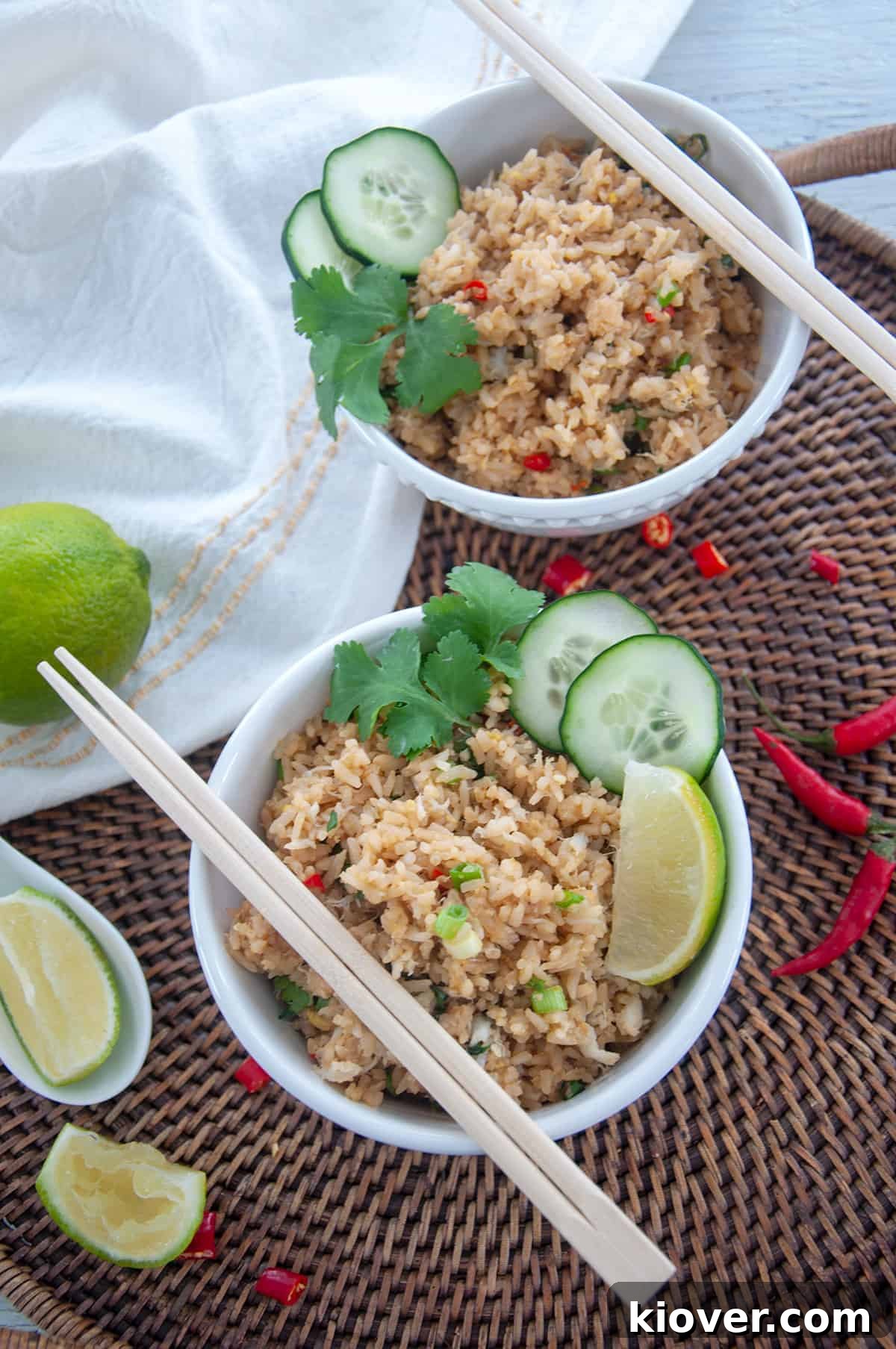
- Garnish each serving with fresh lime wedges, thinly sliced cucumber, and extra cilantro, if desired.
Notes
- For the best texture, always separate your cooked rice into individual grains before you begin stir-frying.
- Ensure all your ingredients are measured and prepared (mise en place) before starting to cook, as the dish comes together very quickly.
- Be mindful when frying garlic; give it only a brief moment in the hot oil to prevent it from burning and becoming bitter.
- Adjust the quantity of Thai peppers to match your personal preference for spiciness.
- Utilize a metal spatula and stir continuously and vigorously to prevent the rice from sticking to the wok and to ensure even cooking.
- The total preparation time includes an hour for cooking and chilling fresh rice. This hour is not necessary if you are using pre-cooked, leftover rice, making the dish even quicker to prepare.
Nutrition
- Serving Size: 1 Cup
- Calories: 348 Calories
- Sugar: 2 g
- Sodium: 1121 mg
- Fat: 12 g
- Saturated Fat: 2 g
- Unsaturated Fat: 10 g
- Carbohydrates: 51 g
- Fiber: 1 g
- Protein: 9 g
- Cholesterol: 51 g